15-18th June 2025
This trip had been 25+ years in the making.
We had been talking about going on safari since we moved to the UK in 1999 but it had always been too expensive. This time around Africa was on the ‘long list’ with the girls, but hadn’t quite made it to the top – a combination of time and cost keeping it below other destinations.
A few months ago we were playing with destinations for our (now annual) long weekend away without the kids (previously having gone to Rome and last year the Northern Lights). We were discussing a trip to Svalbard to see some polar bears (looks spectacular, but with a low likelihood of polar bear related success).
Suddenly polar bears pivoted to gorillas and wilderbeest, and we were booking a ‘long weekend’ (by which we mean 9 days) in East Africa. Oops.
These trips were getting more elaborate by the year – at least we’ve been clear to the kids that there will be no inheritance, so there should be no surprises on that front.
What about the kids? We hear you ask.
Not to worry.
Emily, our resident dog walker and sitter, and Gus’s favourite person in the universe was there to broaden her role, supported by a very detailed spreadsheet.
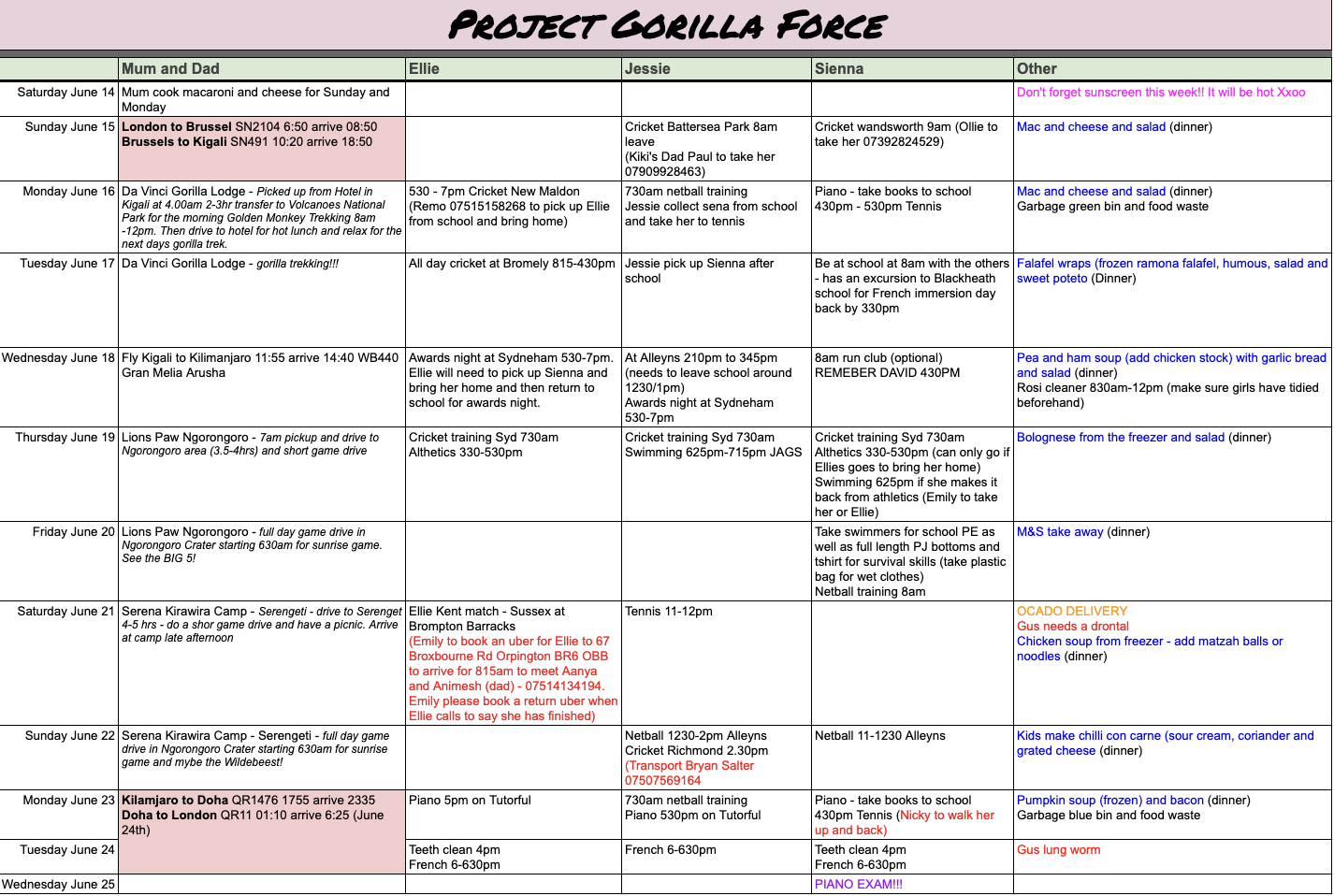
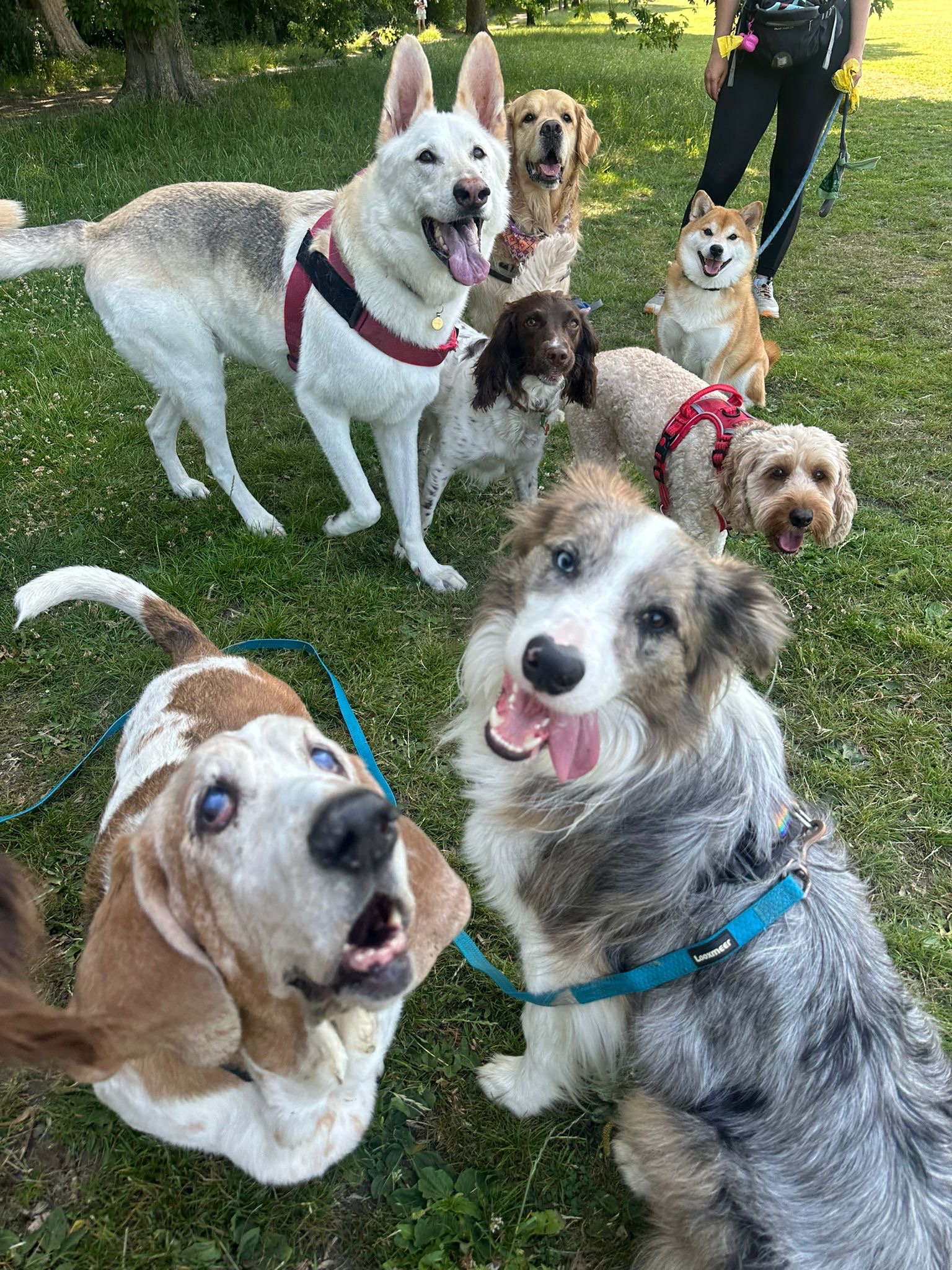
We figured that the only one that really needed to be cared for was Gus. For his part, he was beside himself with anticipation, as excited as Sena before a residential.
The girls were slightly less convinced, but we had confidence that they could largely care for themselves this week, particularly with a freezer full of food, most of the local East Dulwich population prepped to play their role in transport and logistics (it takes a village, particularly with 8 cricket matches to be played all over southern England) and M&S down the road ready to fill in any food related gaps.
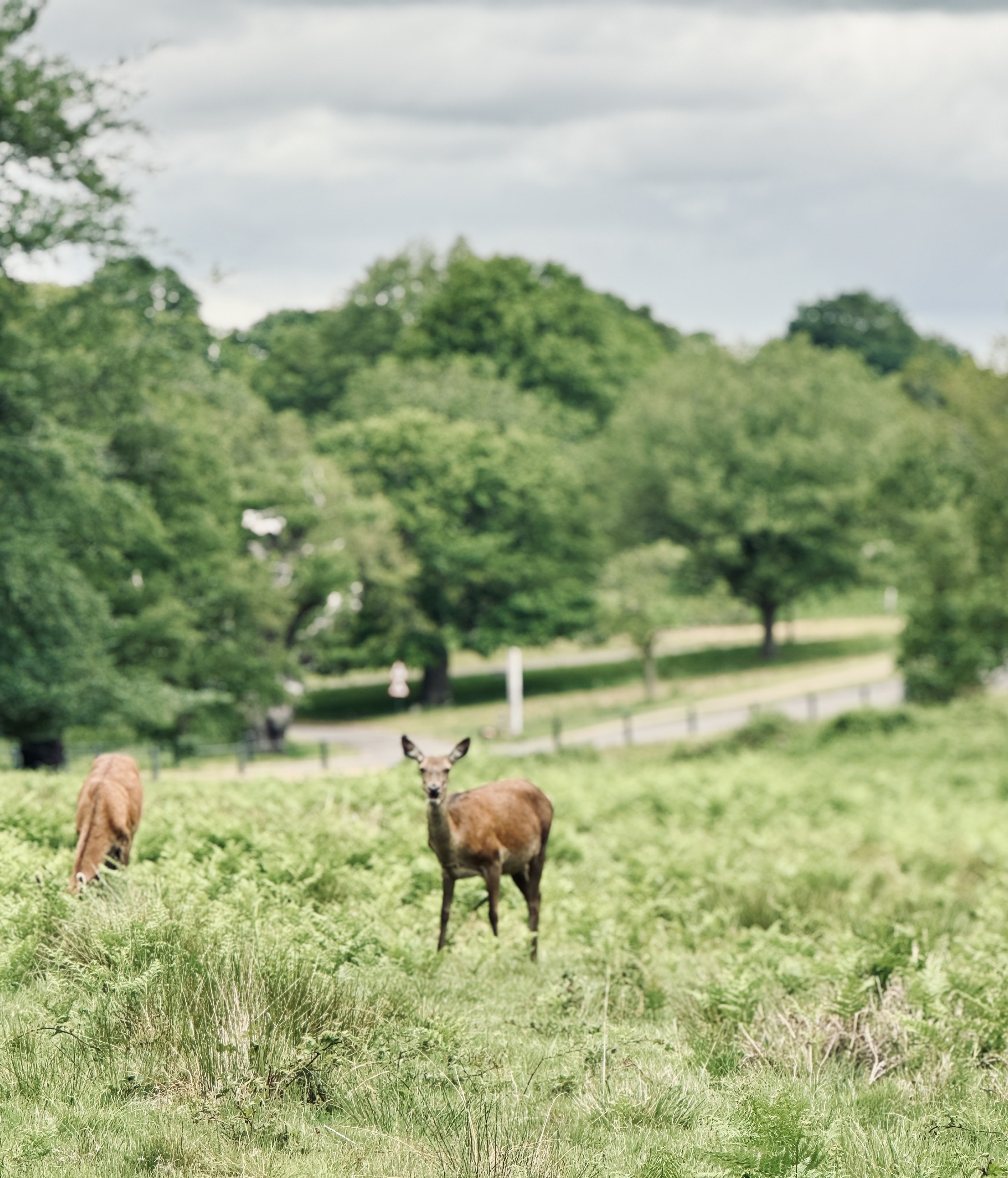
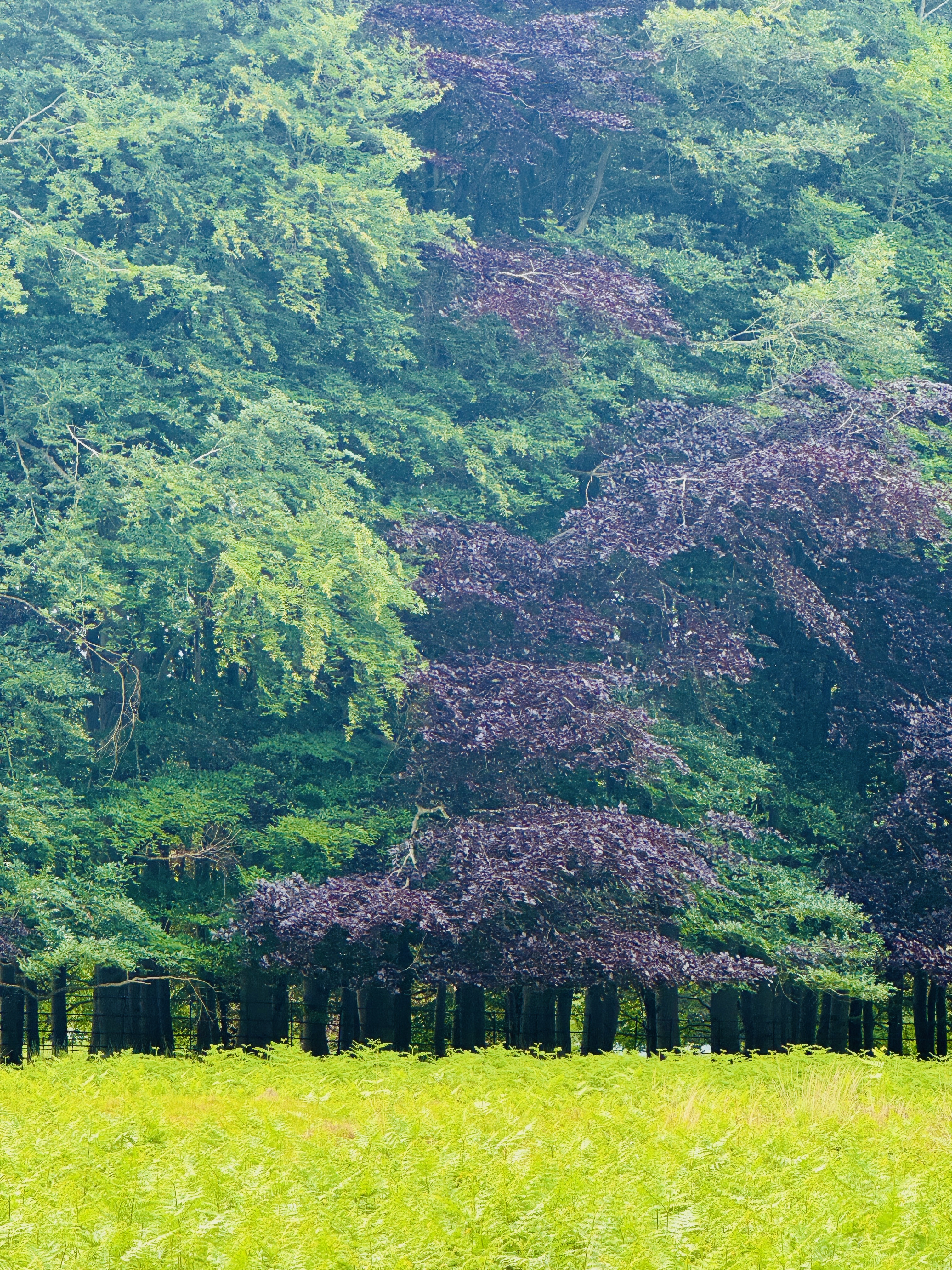
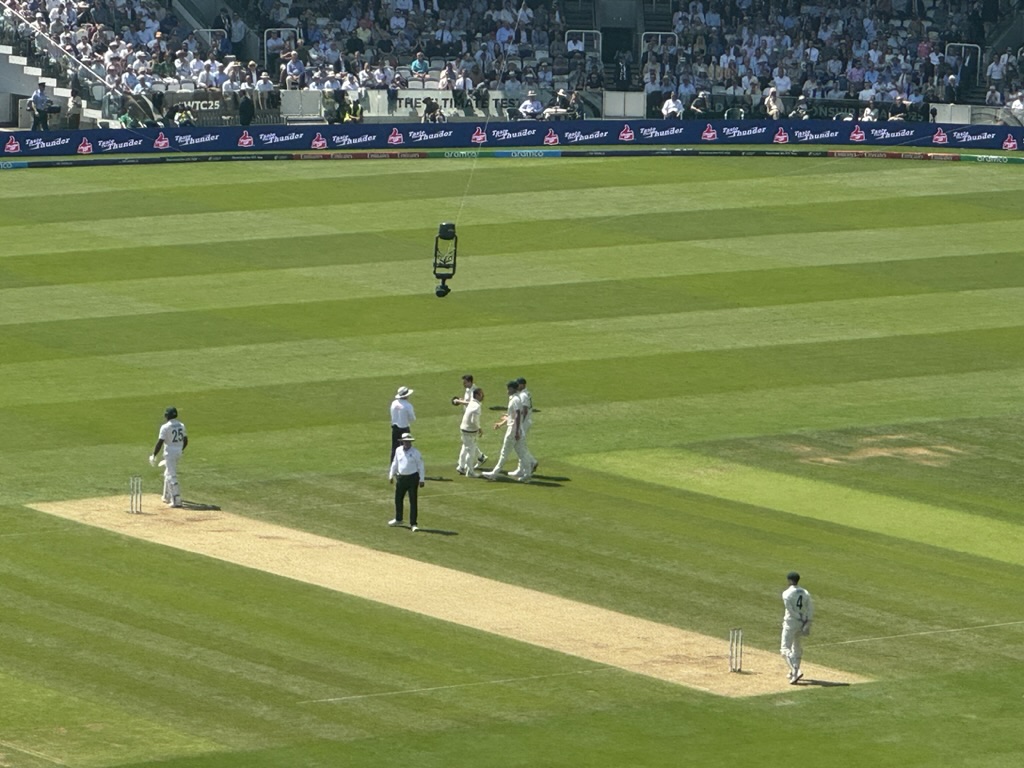
In predictable London style, the trip rolled around out of nowhere, with the final week before we left filled with work, walks at Richmond Park, trips to Lord’s to watch the World Test Championship and to the O2 to see Pulp. Life here continues to not be boring.
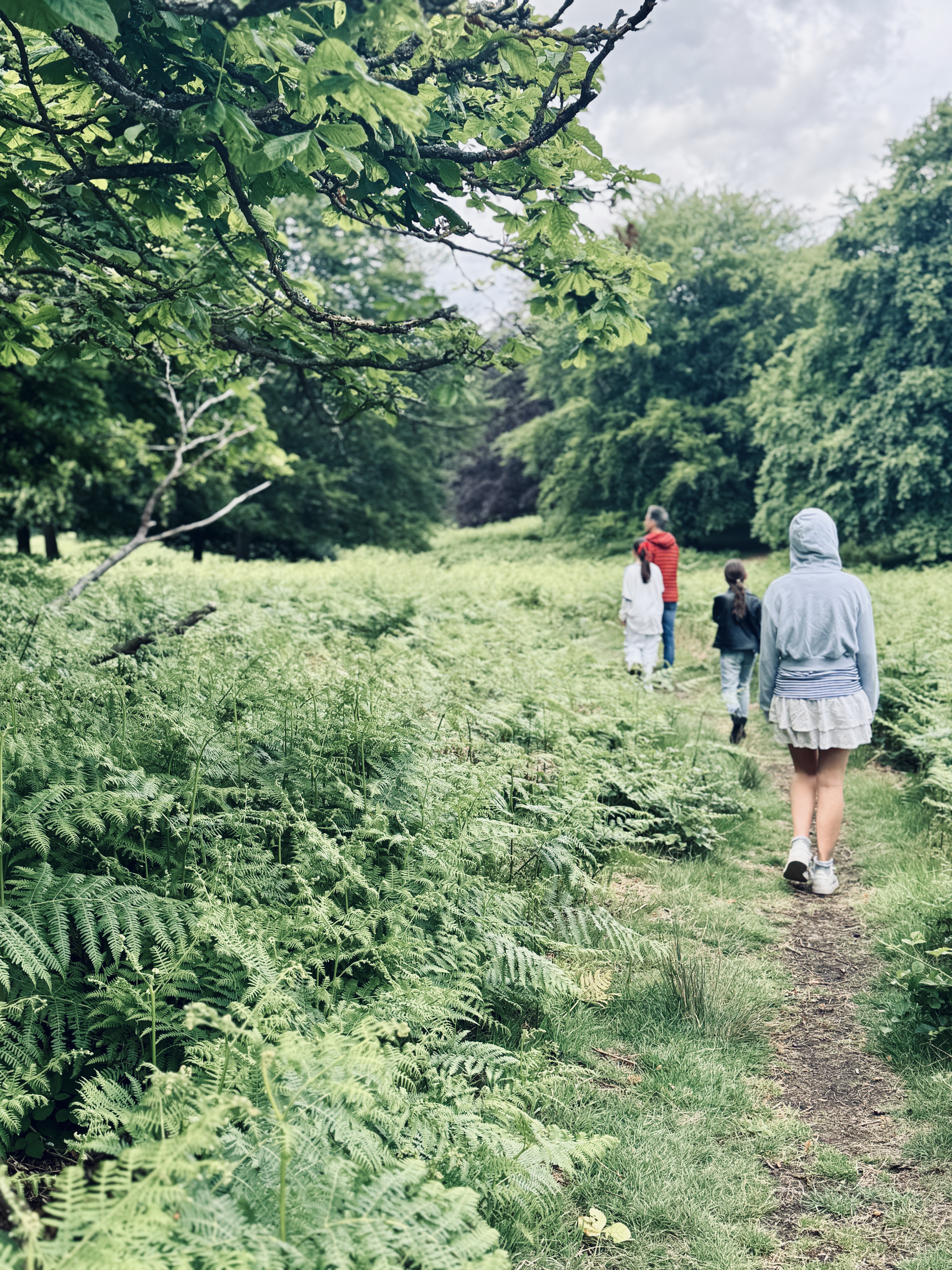

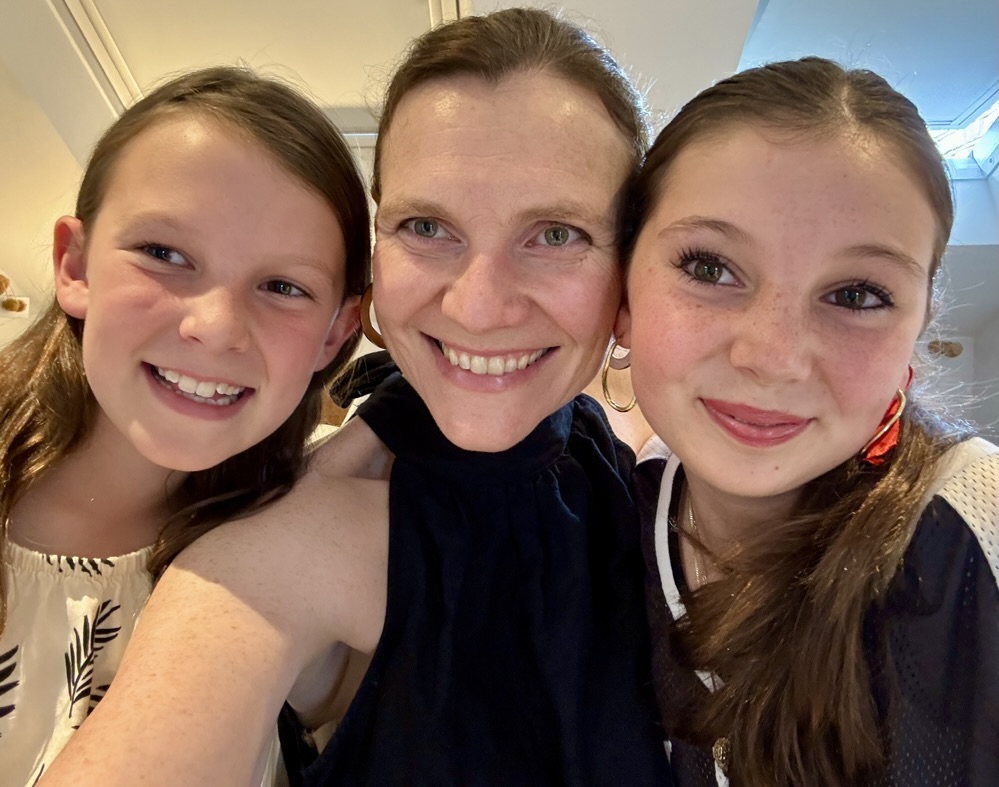
Before we knew it, we had bid some slightly tearful farewells to the girls (including having to promise Sena that I would ‘keep Mummy Safe’) and we were off to the airport for our early morning flight to Brussels before bouncing to Kigali.
Fair to say that at this point we had almost no idea what to expect from Rwanda. The only things we knew about this small, landlocked east Africa country (population 12 million) were the horrific genocide that occurred here in 1994 and the fact that they (apparently) had mountain gorillas that lived in the forests of the Volcanos National Park on the border of Uganda and the DRC (either that or we’d been massively over sold on this trip).
We had never been to sub Saharan Africa (having only nibbled at the top and bottom of this massive continent) and couldn’t wait to see what it was like.
The flight with Brussels Airlines was uneventful. We can’t even say that it was because the kids weren’t there – to be honest they are pretty self amusing on flights now so we are largely left to our own devices to drink canned rose. Before we knew it we were coming into land into a dark Kigali, nestled in amongst a range of hills. We couldn’t wait to see what it would be like.
We exited the terminal expecting to find the chaos that is ubiquitous outside airports in the developing world, but it was all pretty measured. Immediately you are struck by how clean and orderly it all looked. There was no rubbish and no noise. The gardens around the airport are meticulously tended. The gutters are painted white and black. Cars are driven sensibly. Not a honk to be heard.
It felt calm and not what we expected – particularly fresh from our trip to Egypt.
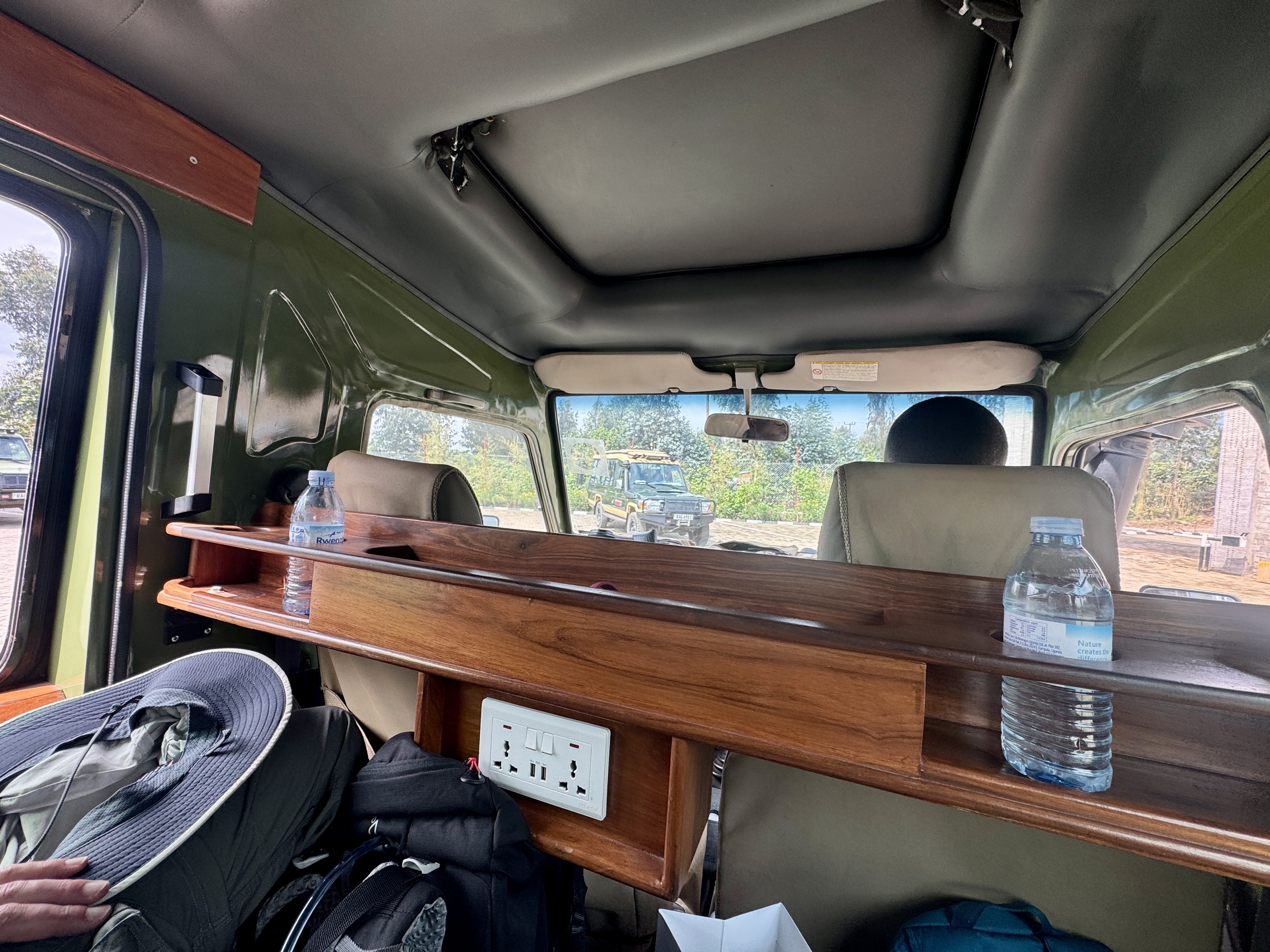
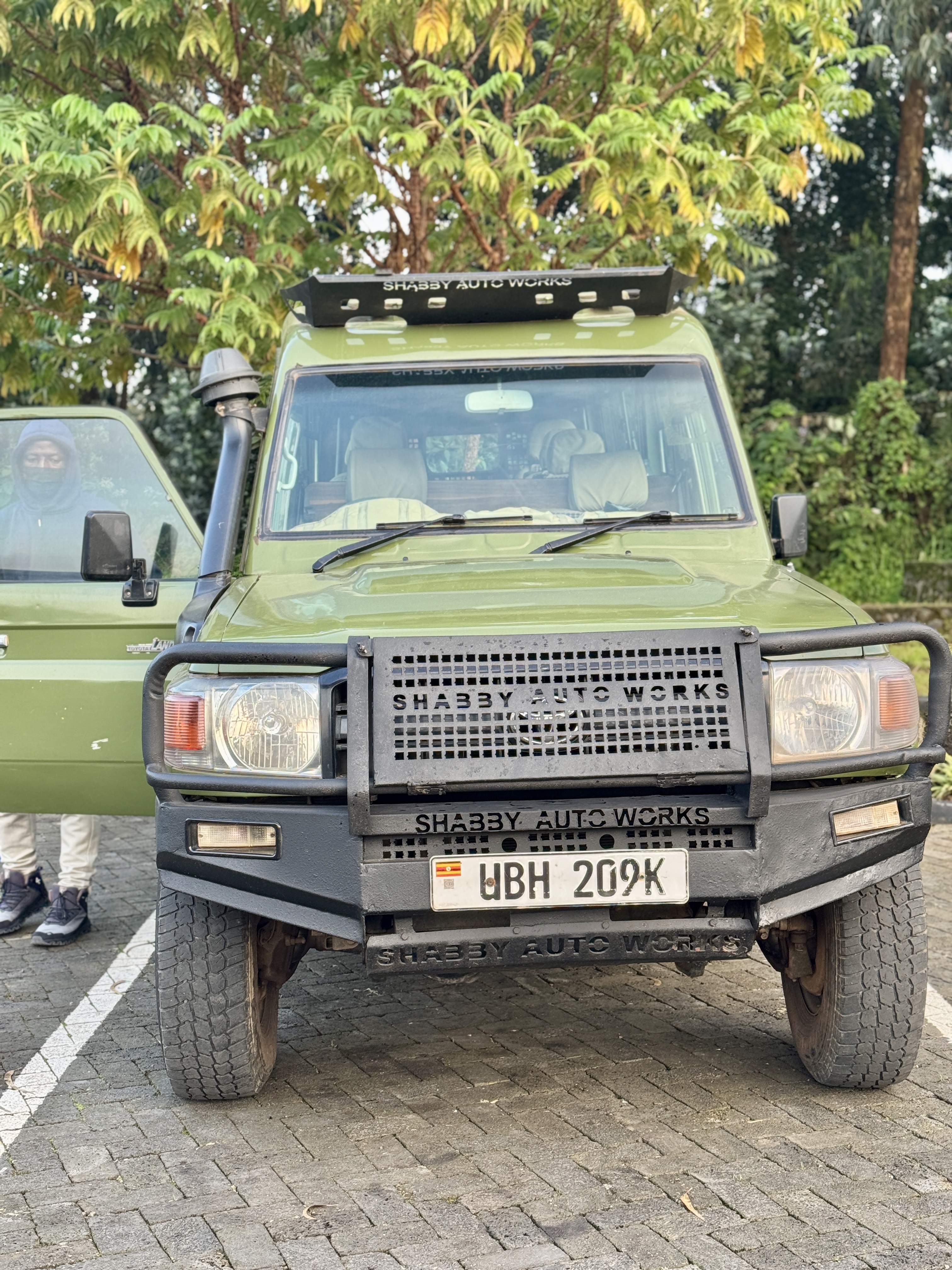
We were met by our guide/driver Godfrey and the Land Cruiser that would be our transport whilst we were here. All very civilised.
The car navigated us through the spotless streets of Kagali – motorcycles were everywhere (it turns out these are taxis) but overall the traffic seemed relatively calm and polite. Behind the well maintained nature strips and hand swept pavements were a selection of market stalls, relatively ramshackle buildings and some gated, official looking residences. We could see a few modest ‘sky scrapers’ on the skyline overlooking the city, along with a couple of cranes. It was clearly ‘developing’ but with an element of care that we hadn’t seen in other developing countries.
A short way from the airport was the shiny Radisson Blue hotel next to the equally shiny Convention Centre, lit up in Rwanda’s colours of blue, green and yellow. This area was obviously developed to project a city ‘on the move’.
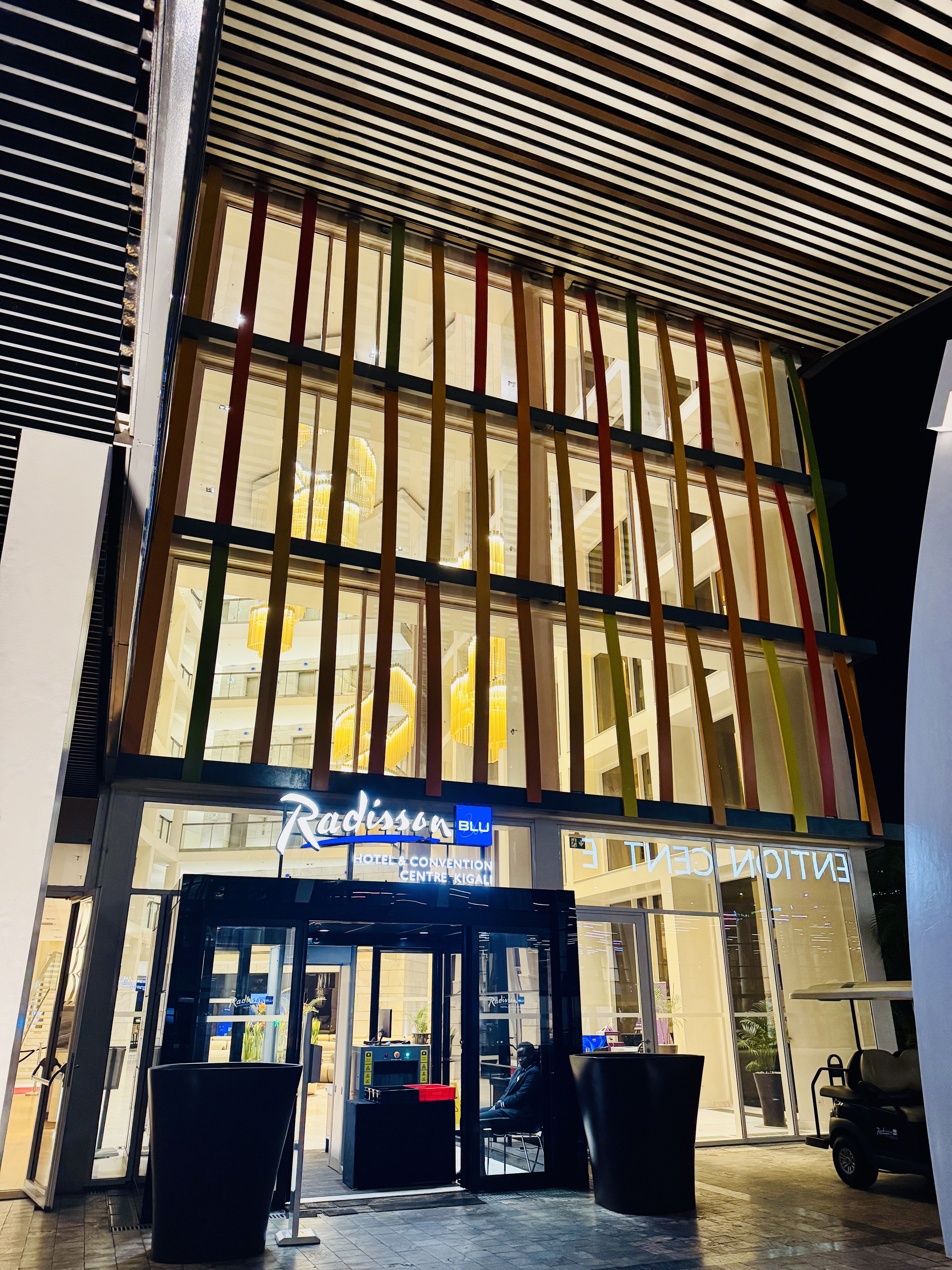
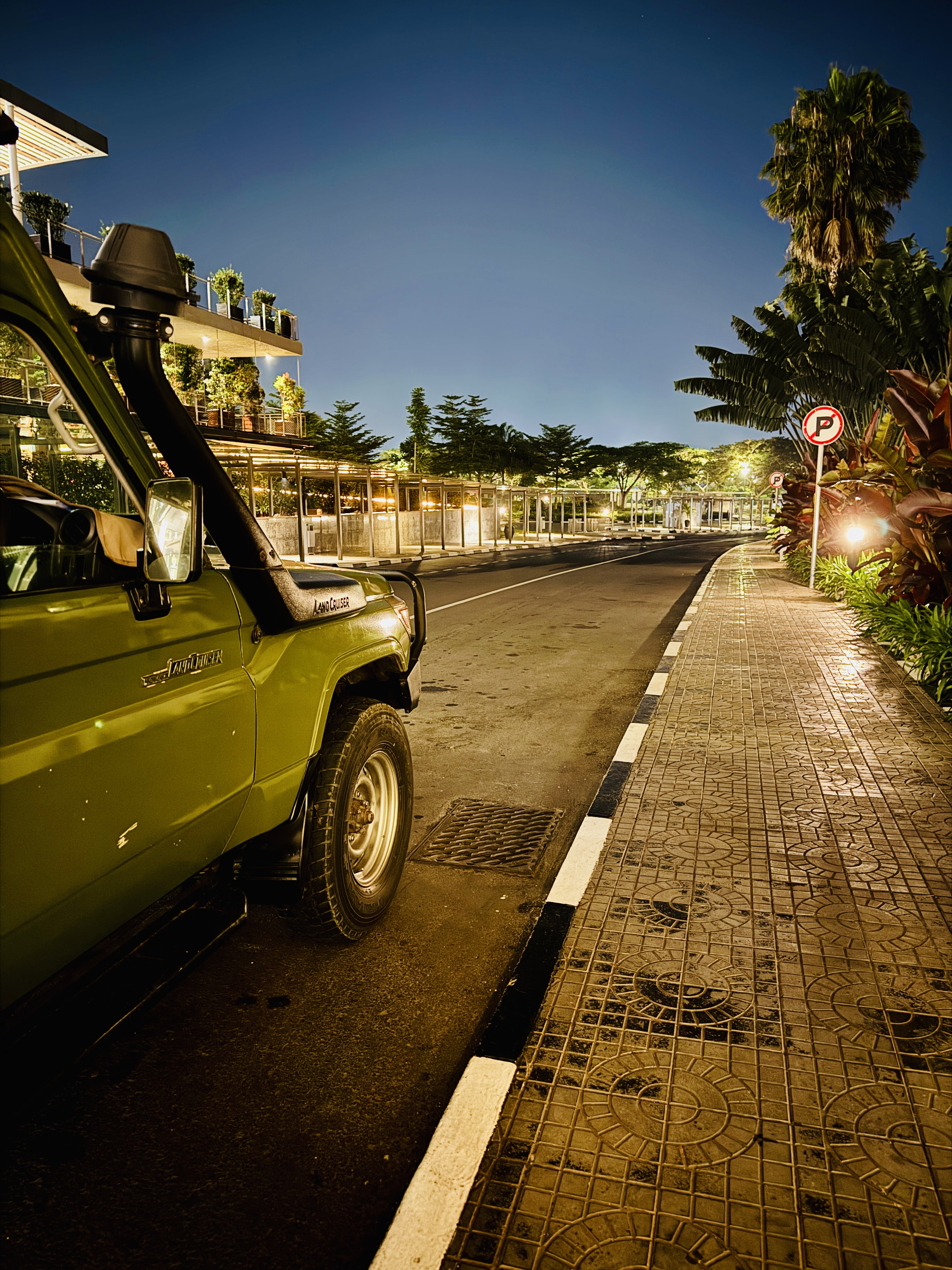
I’m not sure what we expected from our first sub Saharan country, but it wasn’t this. We wondered what it would be like off the tourist trail. Sadly on this trip we would probably not get the chance to find out.
On the trip from the airport we peppered Godfrey with questions. We then started aggressively ChatGPT’ing when we got to the hotel.
A few fun facts about Rwanda for the uninitiated:
- It has 12 million people who are overwhelmingly young (>50% under 20) and rural – you can really see this on the streets… teeming with kids and without an elderly person in sight. Watch out for the future however, as Rwandan’s average 4 children per female… so you expect that number to jump over the next decade or two
- It is the 2nd most densely populated country in Africa, and one of the most densely populated in the world (No. 11, just after South Korea)
- The economy is mostly rural and tourism, propped up by international development support
- Whilst their current GDP is modest (even by African standards) it is a country ‘on the up’ with one of the strongest growth rates in Africa
- Despite (or perhaps partly a result of) the horrific genocide that occurred 30 years ago (almost 1 million killed over 100 days) Rwandans are now renowned for their sense of community. This includes Umuganda – the monthly day of community service followed by all citizens (including the President, at least on occasion) to clean up and maintain the country. In the areas we have been to, there is literally no rubbish anywhere on the streets, and the level of ‘upkeep’ of roads, gardens etc is like nothing we have seen in the developing world
- Rwanda has led Africa in banning single use plastic bags … in a country that is still struggling to provide electricity or drinking water to a large percentage of its population
OK, education over.
The next morning dawned dark and early as we drove out at 4am to head to the Volcano National Park and our first trek to see the Golden Monkeys. The sunrise over the mountainous terrain was stunning as we made our way 3 hours north west towards the border of the DRC and Uganda.
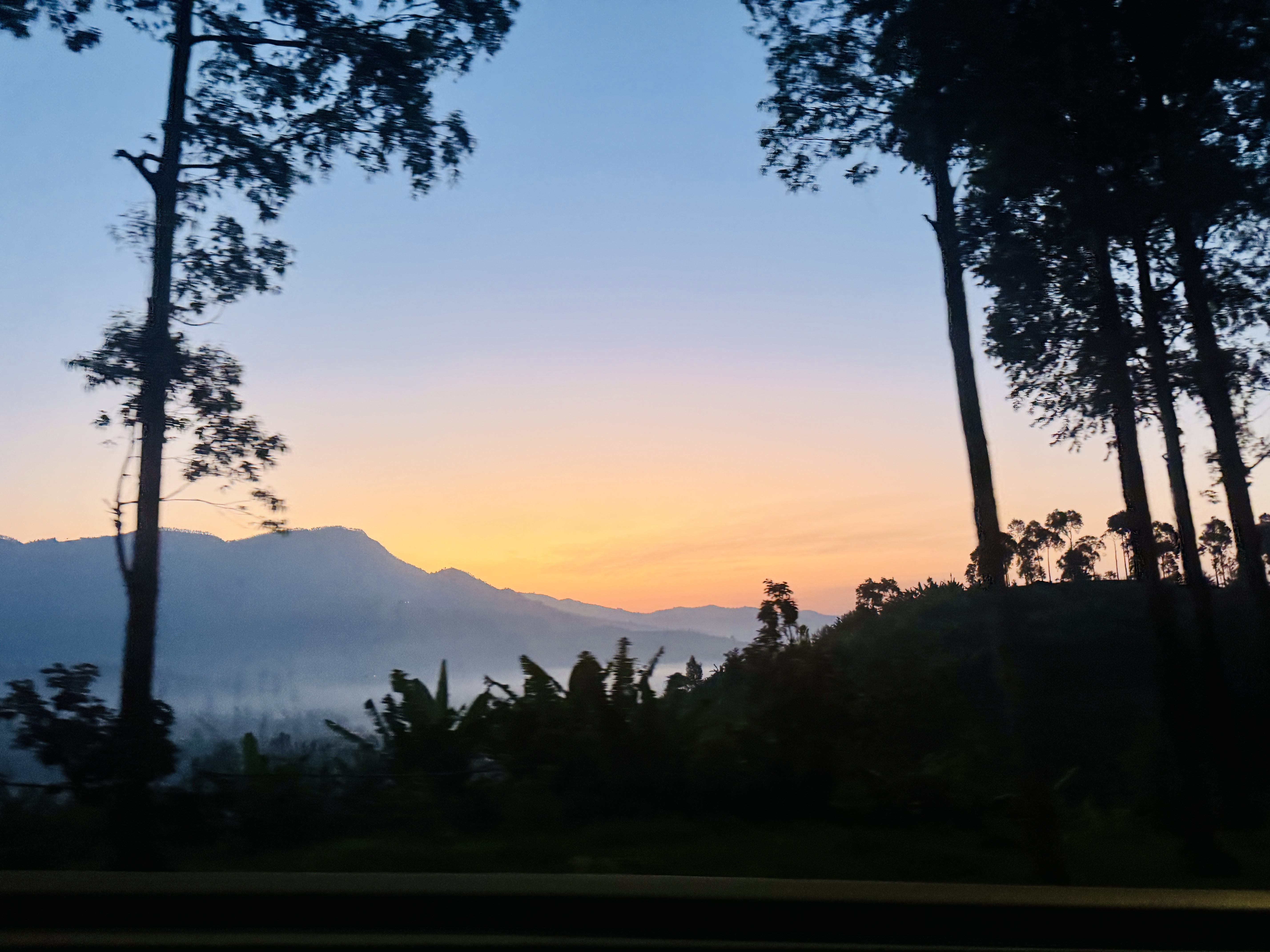
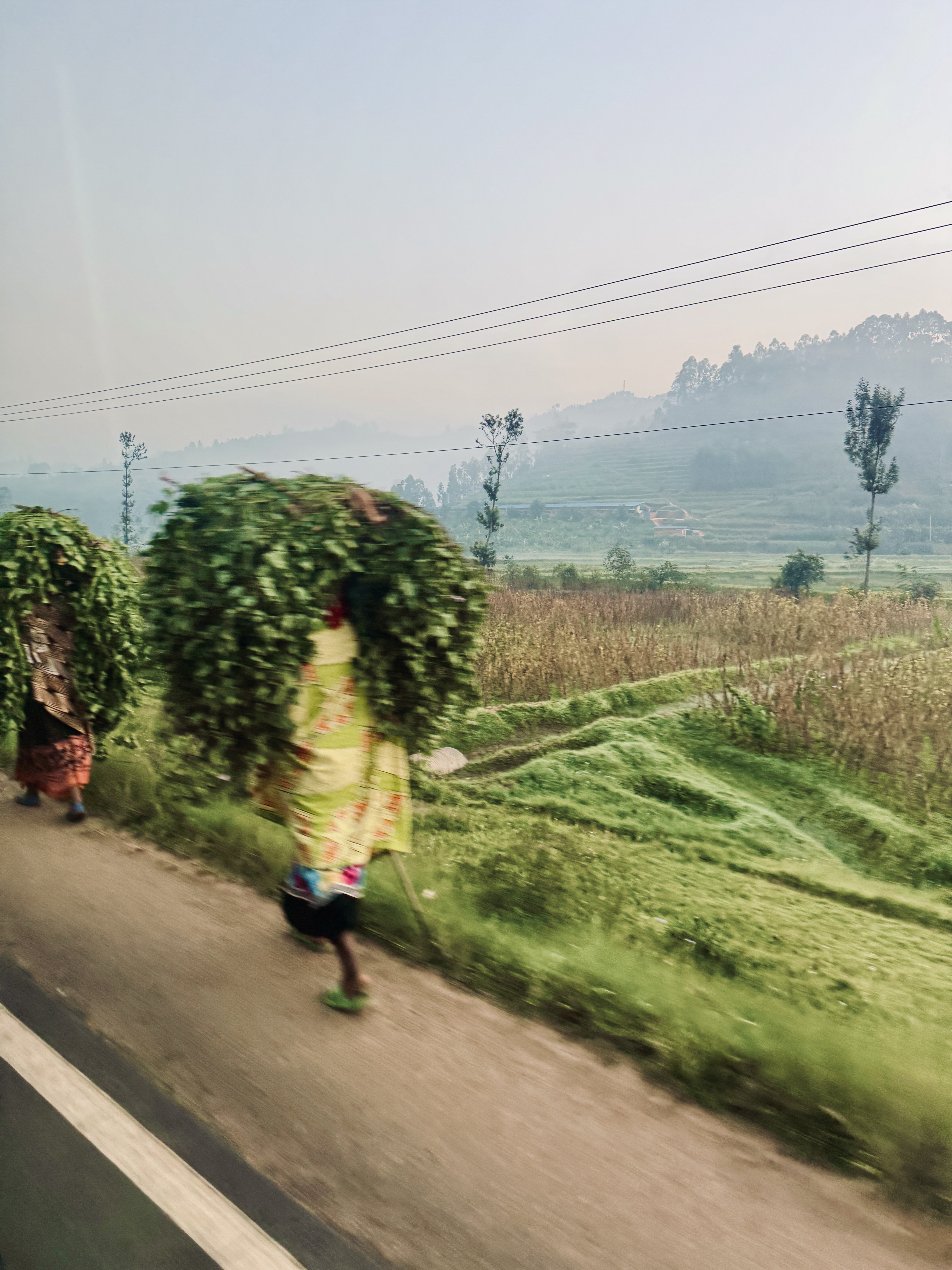
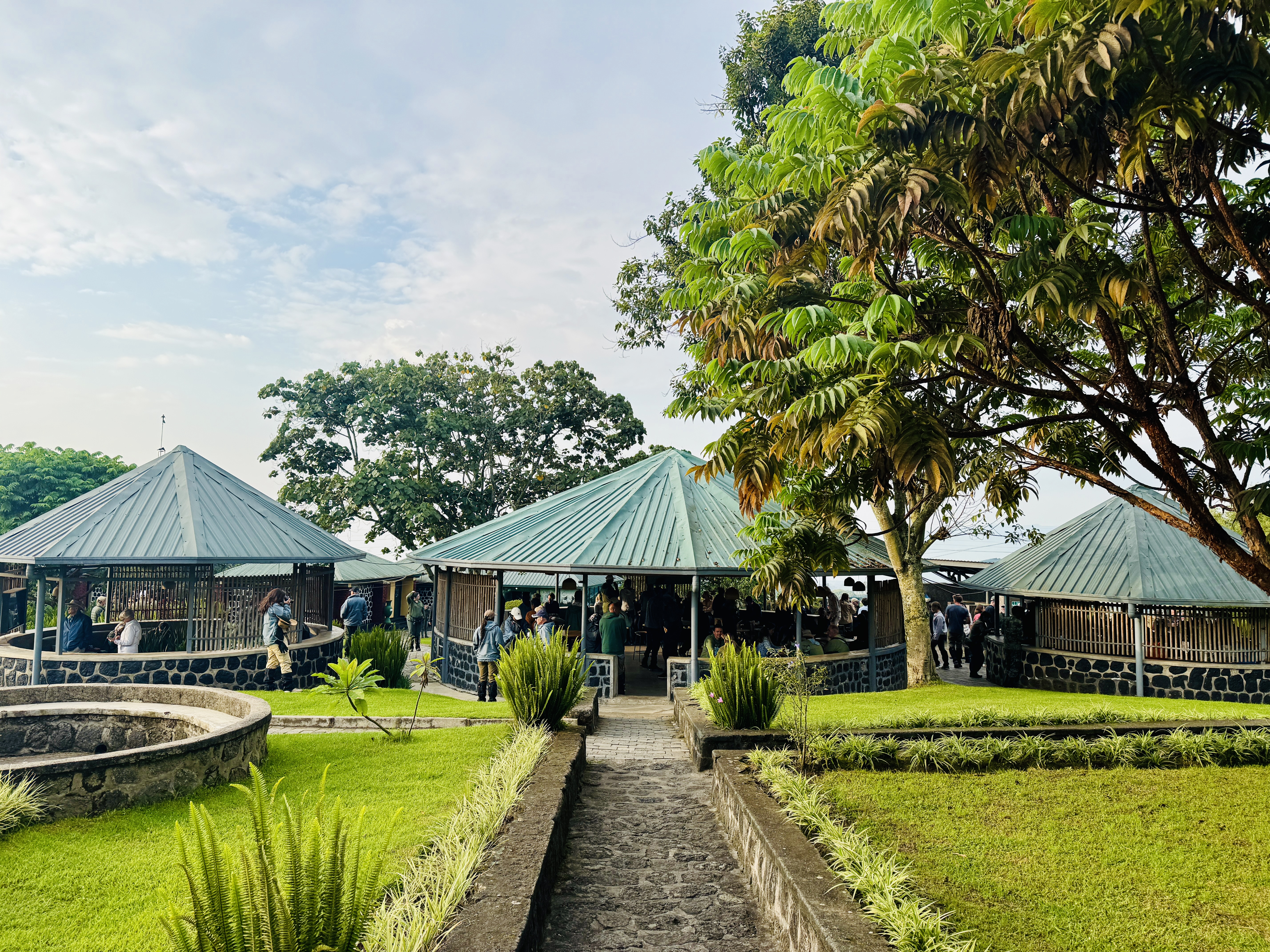
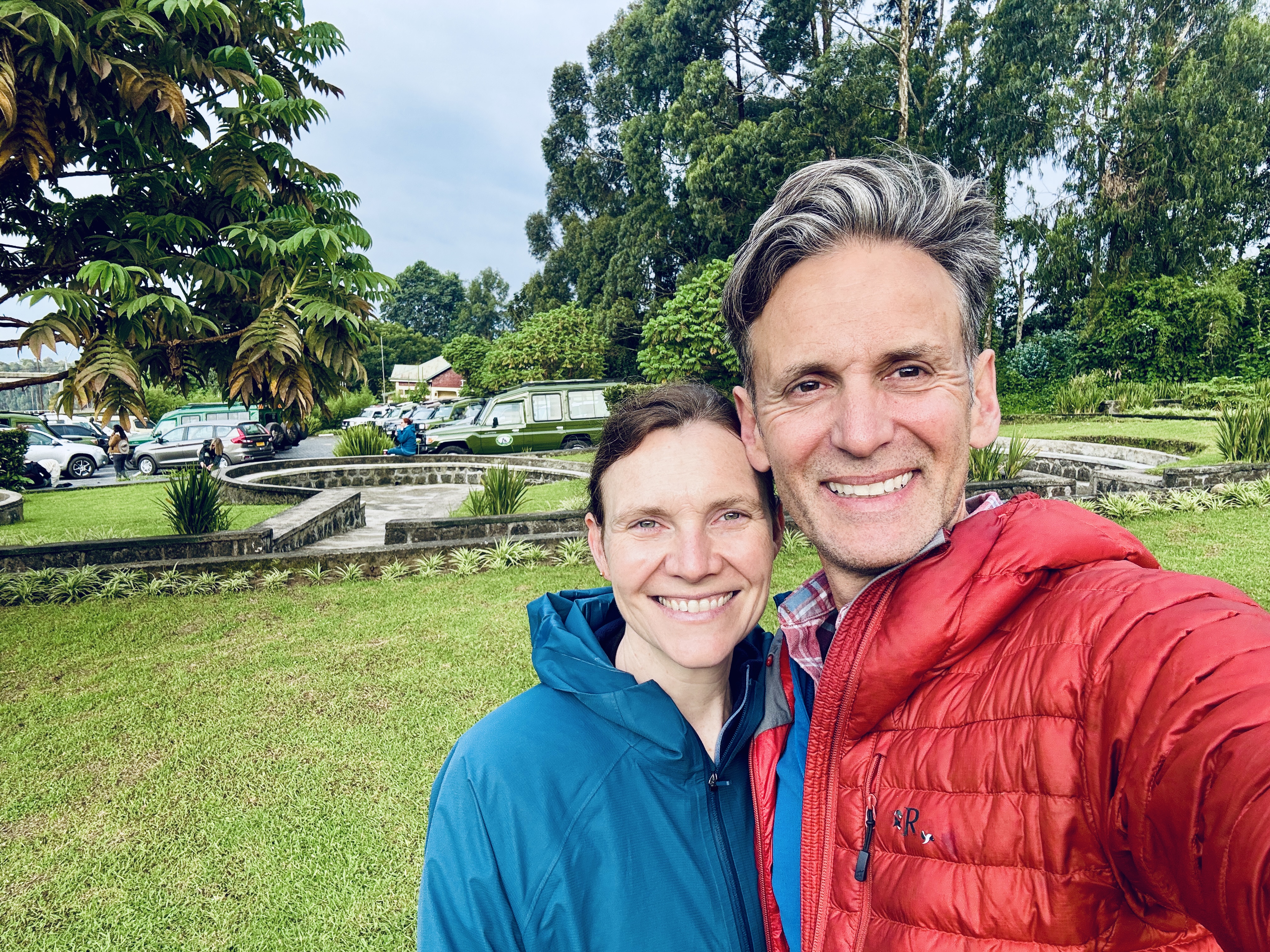
We arrived at the welcome station for the monkey and gorilla treks around 6.30am and were the first group to arrive. The welcome station itself was spotless, with little huts set among manicured gardens and including a coffee station serving complimentary, perfect cappuccinos made with local Rwandan coffee. This was a long way from what we expected.
Side note here – gorilla trekking (with a golden monkey and chimpanzee side hustle) is important business here. It accounted for approximately 60% of Rwanda’s $500 million tourism earnings in 2023. Numbers are tightly controlled, but what they lack in quantity they make up for in revenue per client … it is expensive. It turns out this is an intentional strategy – go ‘high end’ and limit numbers – and they go all out to create a ‘premium ’experience in a very people powered way.
Back to the check in station and our fresh coffee… before long another 30 or so tourists arrived and the queue for the coffee line grew. We sat and watched the demographic, Ant sipping his excellent cappuccino. The visitors were almost all ‘mature’ – mostly 40+, decked out in expensive Gortex and without children (you have to be 15+ to trek with the gorillas). Surprisingly North American accents dominated with very few Europeans.
We were split into gorilla and monkey groups and sent on our way to our starting points – the monkey one being a 20 mins drive away. We jumped back into the Land Cruiser with Godfrey and set off up the road.
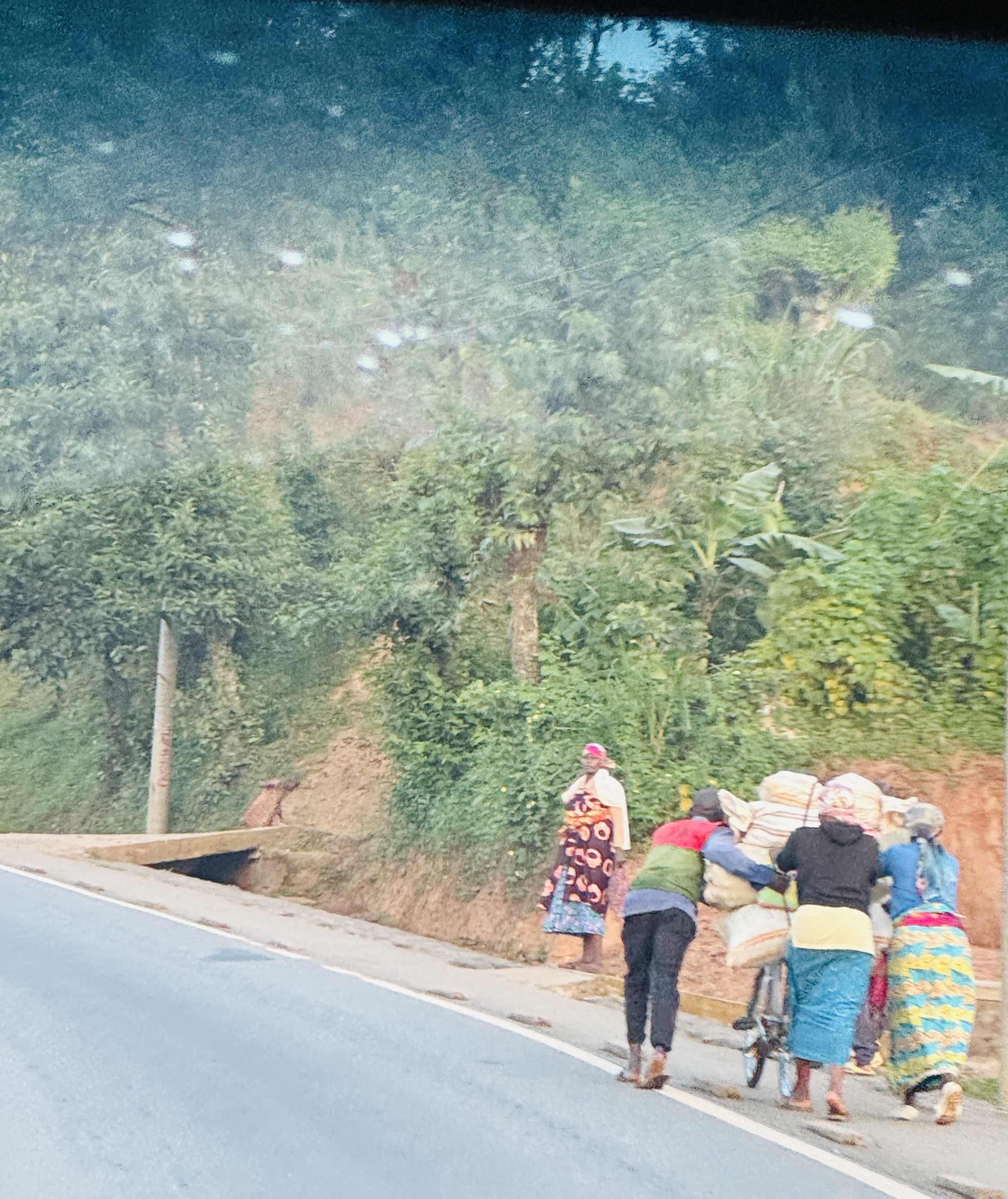
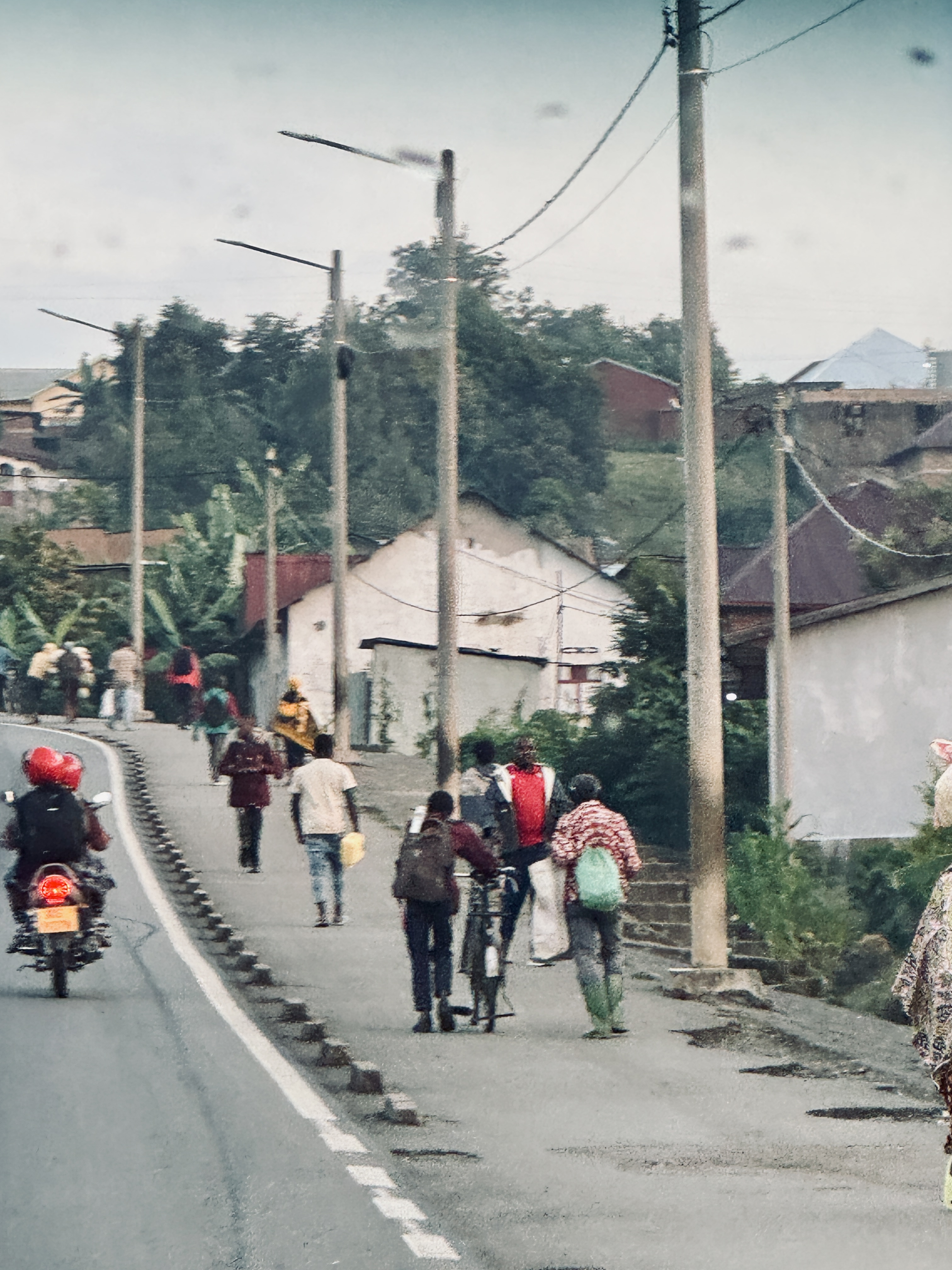
The streets around us were now awake and the side of the road was thronged with people pushing bikes laden high with agricultural supplies, people walking to markets or kids walking to school. The main traffic was the ubiquitous Land Cruiser filled with tourists and the odd truck. There was no public transport in sight, nor personal use cars. Even the motorbikes of Kigali had disappeared. I guess the cost of fuel ($1.70 / litre) made anything mechanically powered prohibitive.
We turned off the main road onto a dirt track. The volume of uniform clad kids increased as we approached a nearby school. Almost every child we passed would wave and say ‘hello’ with a big smile on their face. They seemed genuinely happy, even excited to see tourists.
Weird.
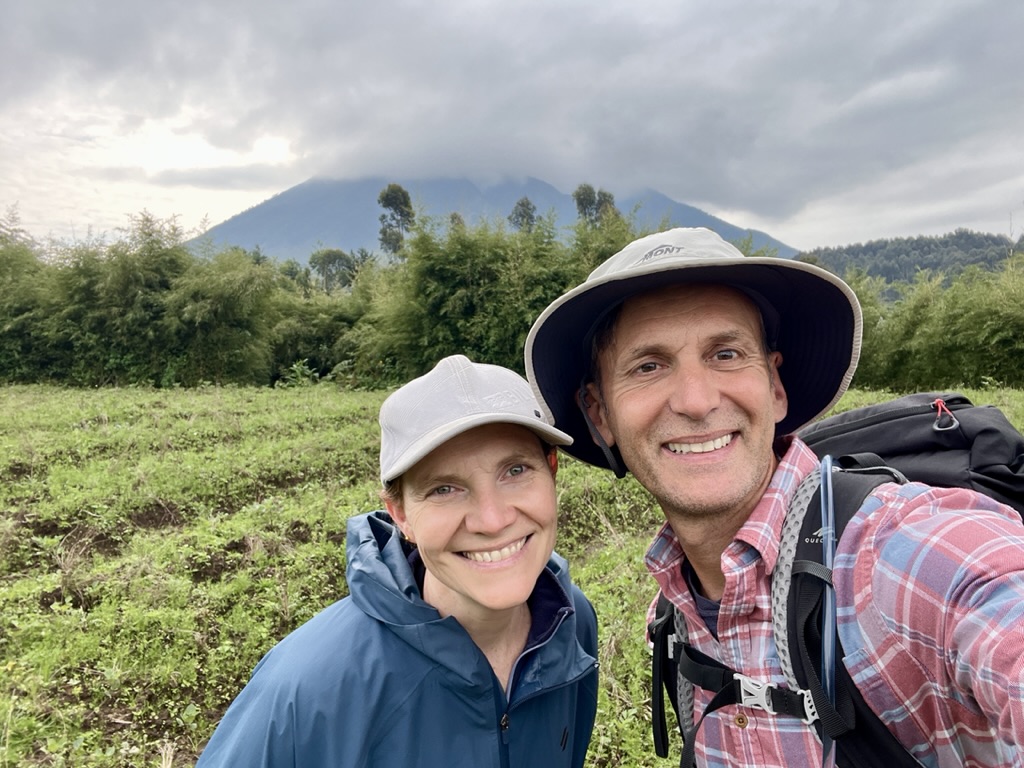
We parked the car and met our group – comprised entirely of North American silver surfers/grey nomads. The first conversation we overheard was the American couple (from Las Vegas) apologising to a large group of Canadians about Trump. We just backed off and left them to it.
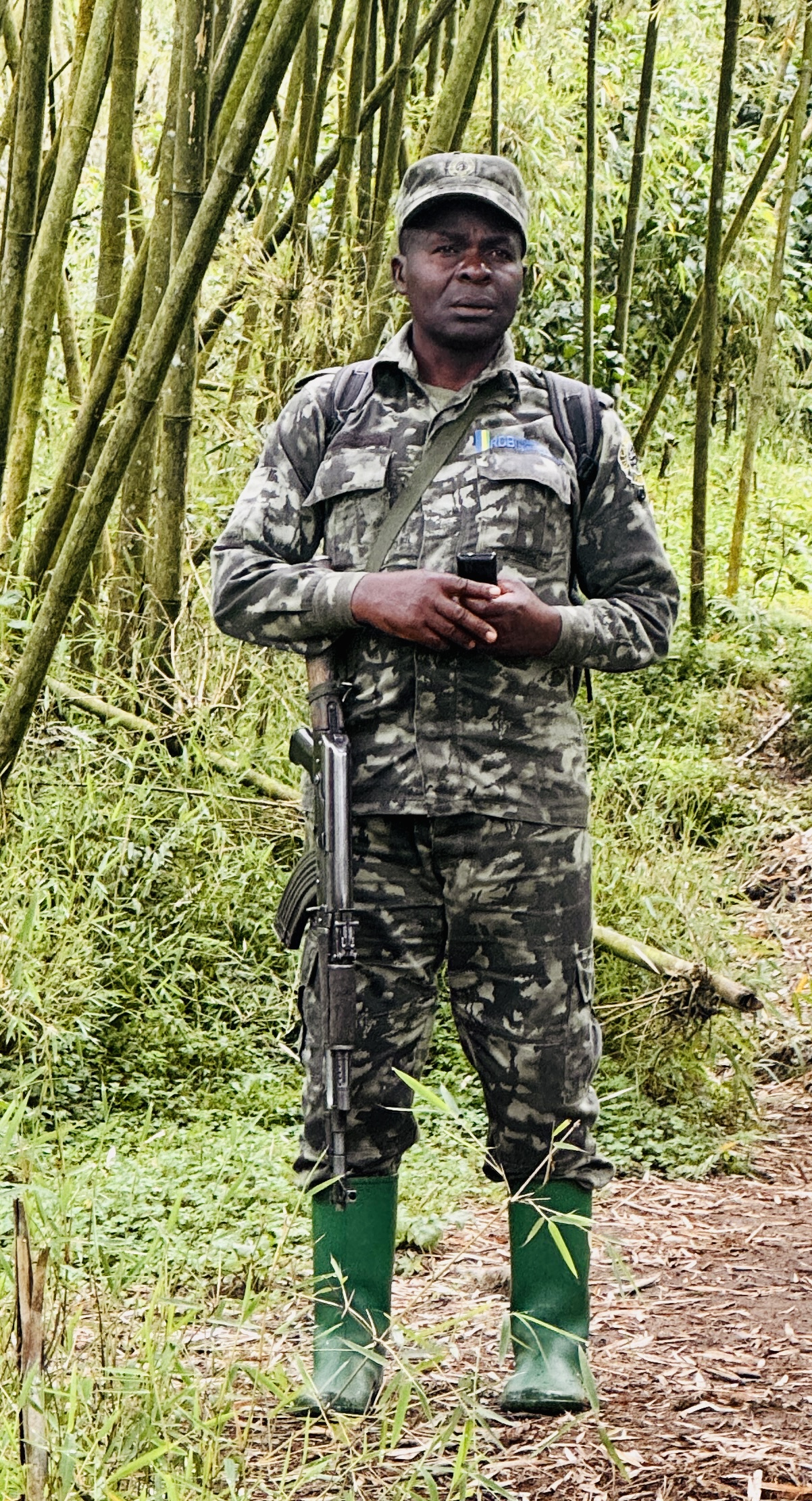
Our guiding team (all decked out in camouflage gear and gumboots, in stark contrast to the thousands of dollars of pristine Goretex and Scarpa boots sported by our fellow tourists) comprised a bunch of local guides, trackers, route makers (armed with machetes) and porters (many of whom are ex poachers who are given an alternative form of income to change their ways).
From the car park we started the walk through farmland and up to the entrance to the rainforest encircled by the 7 volcanoes that give the area its name.
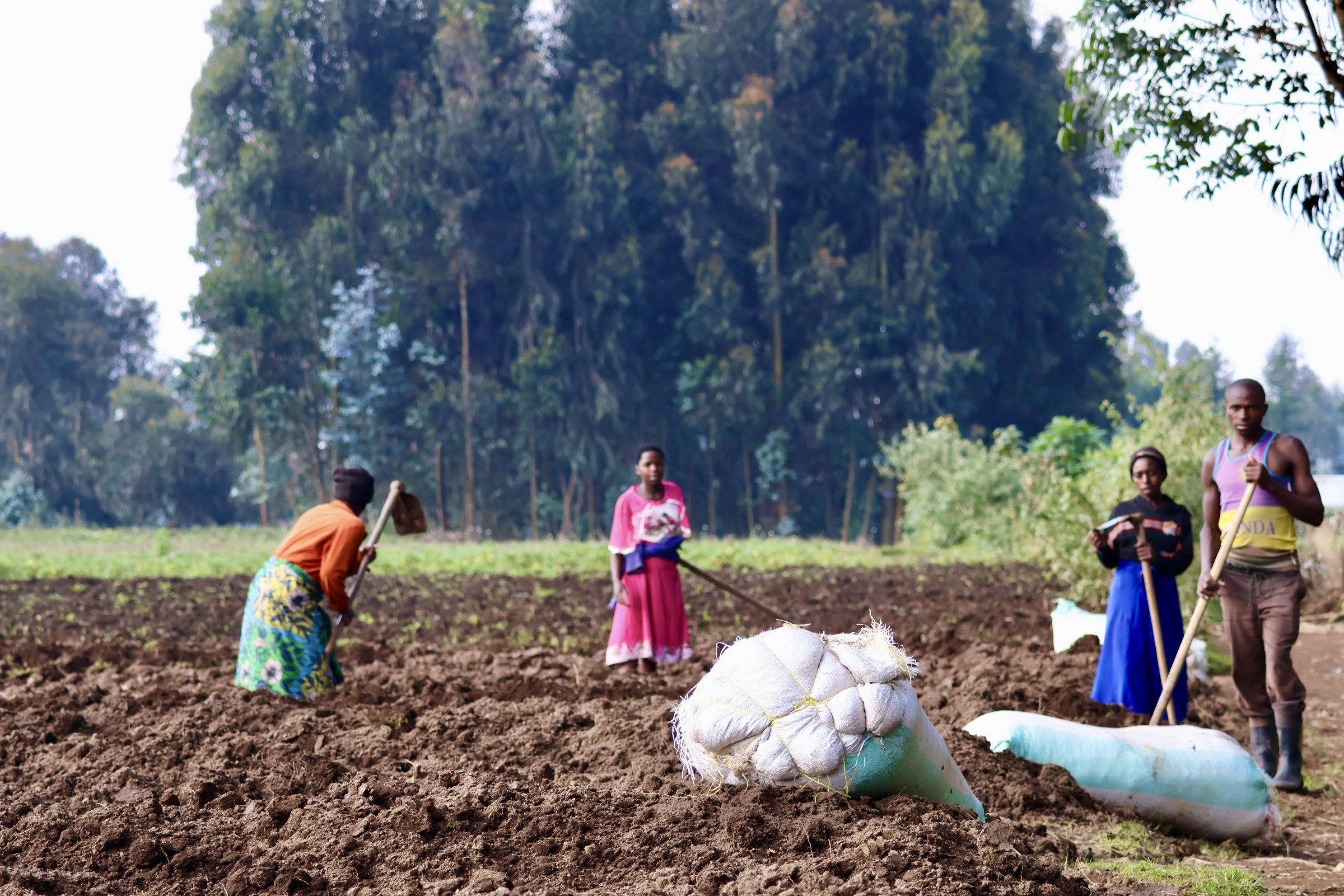
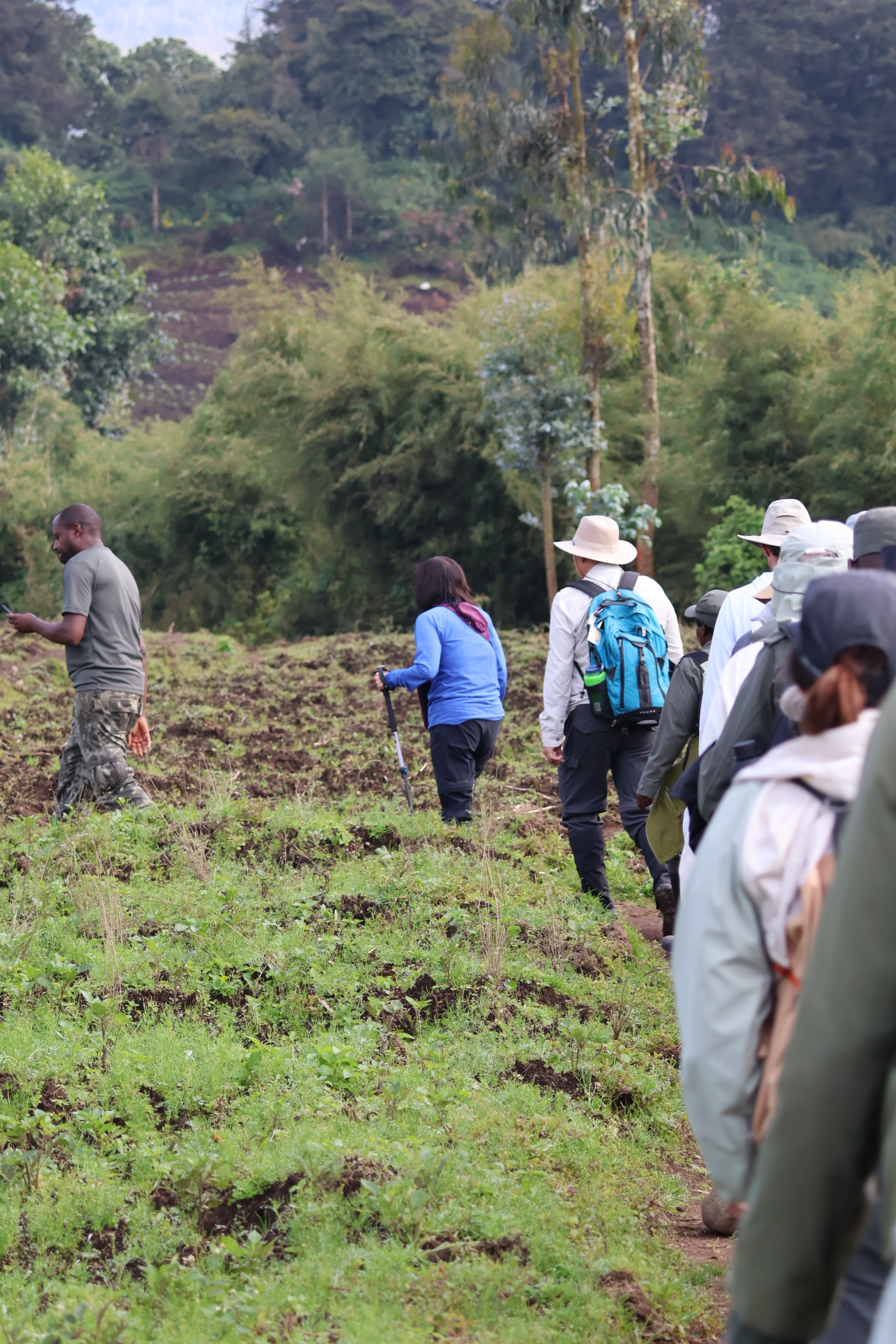
Potatoes are the crop of choice here, thriving in the rich, hilly volcanic soil. Everything here is ‘people powered’ with not a machine (or even a domesticated animal) in sight. Rather the fields were dotted with workers (earning $3-5 per day) weeding, hoeing and fertilising crops, and occasionally moving individual sheep or the odd cow to pasture. The ground is literally bursting with life.
A number of farmers we passed looked up from their manual labour, smiled and waved. So much so that it was weird. We were not used to this level of attention or welcome as a tourist.
Surely they must be more jaded than this?
Side note: we subsequently did some more research and asked around a bit. It appears that this is a combination of the social contract, trickle down economics in play or the hope that the odd tourist might offer up some cash or gifts – locals either recognise the importance of having tourists traipsing over their lands (or are coerced into accepting it).
Either way they mostly smiled and waved enthusiastically as we navigated our way around their potato plants, being careful not to trample their seedlings.
Back on track now, and after half an hour or so weaving our way through farmland we made our way to a gate guarded by a guy with a machine gun (apparently to protect tour groups from errant buffalo).
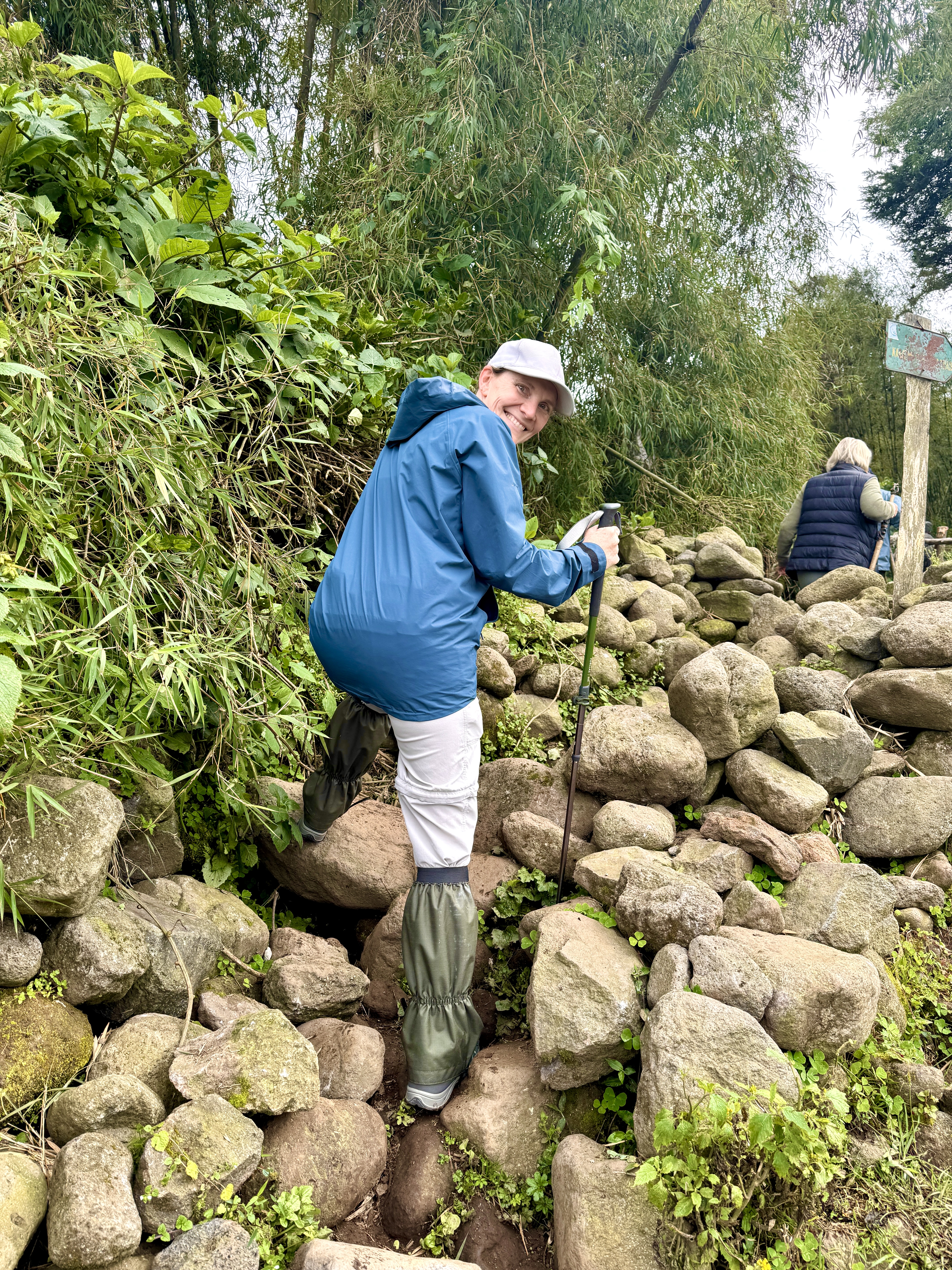
We crossed a rickety bridge into the National Park and within minutes were surrounded by dozens of golden monkeys, going about their day munching on bamboo shoots, unperturbed by the swarm of aging western tourists (present company excluded of course) with expensive cameras invading their habitat. They were clearly used to the sound of tourists tramping and shutters clicking, and they basically ignore us as well ogled and scrambled for the perfect shot.
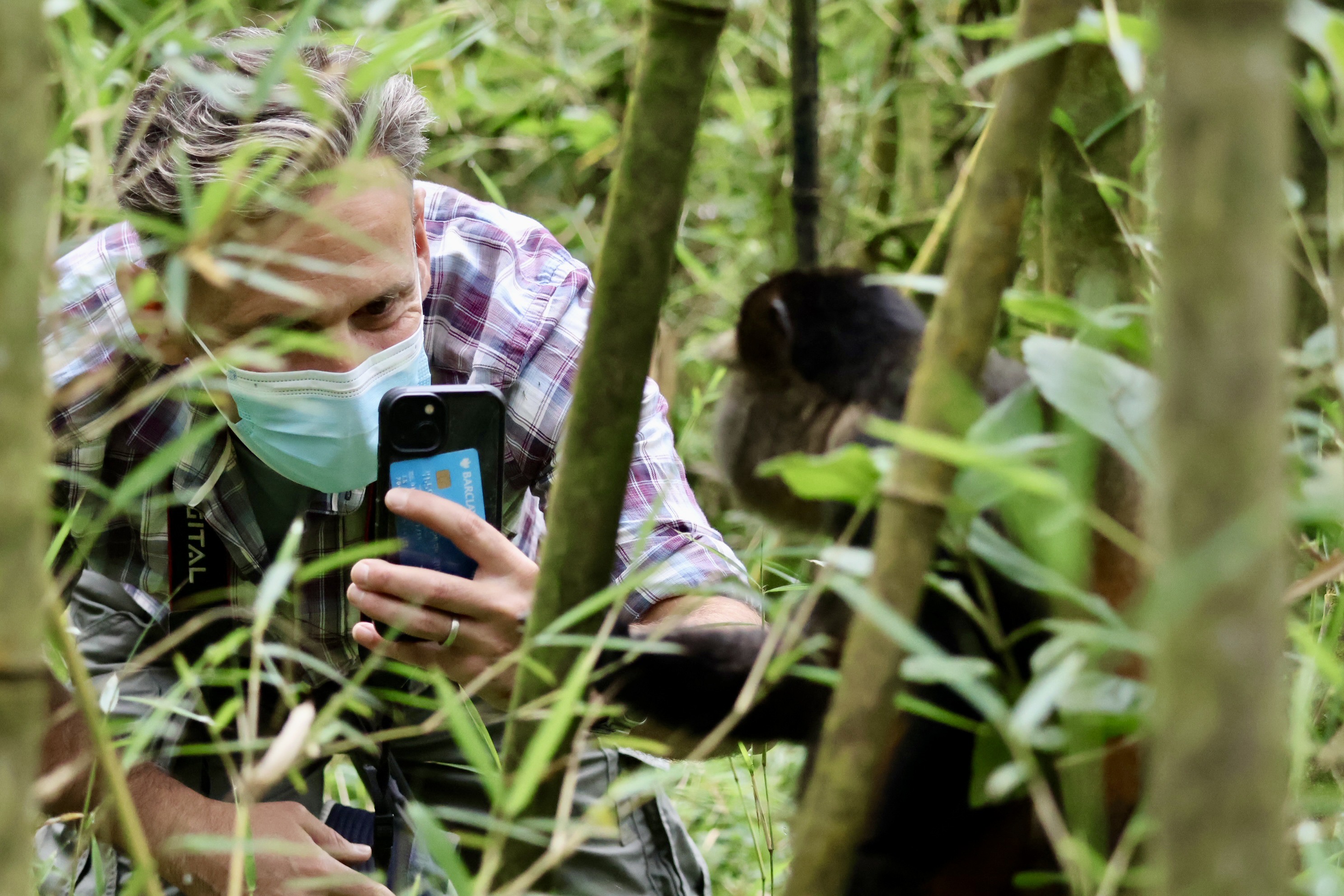
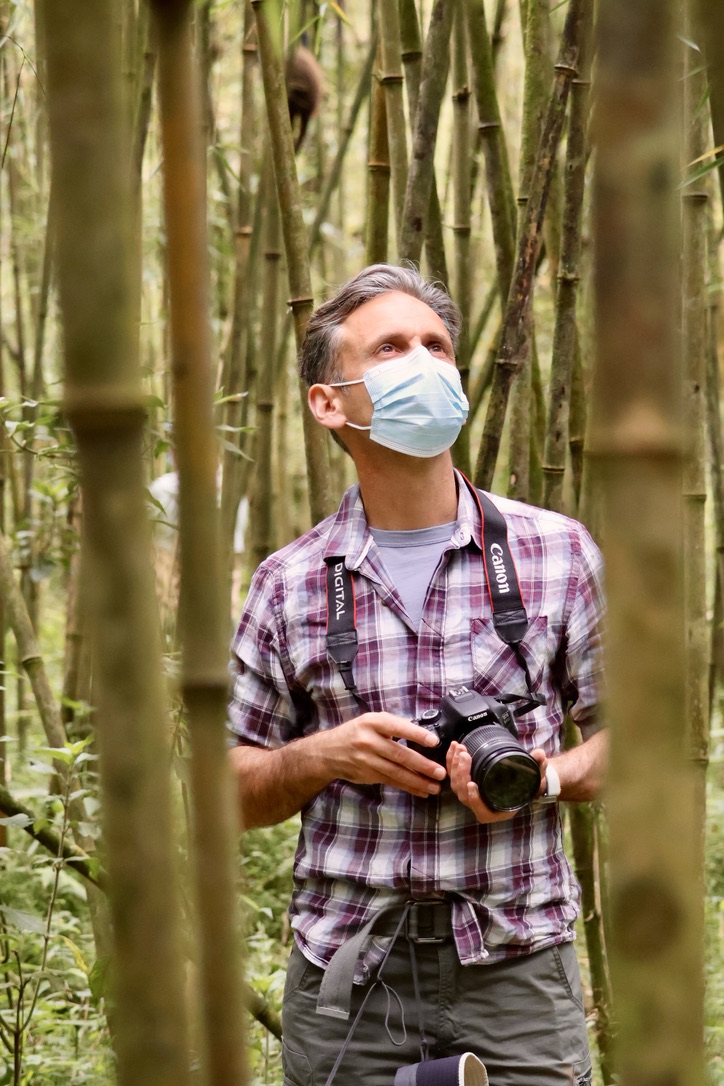
That said, their primary defence mechanism towards the threat of participating in the perfect photo was to turn their backs … resulting in us taking dozens of photos of monkey butts. Luckily Liz is faster to the shutter than I am!
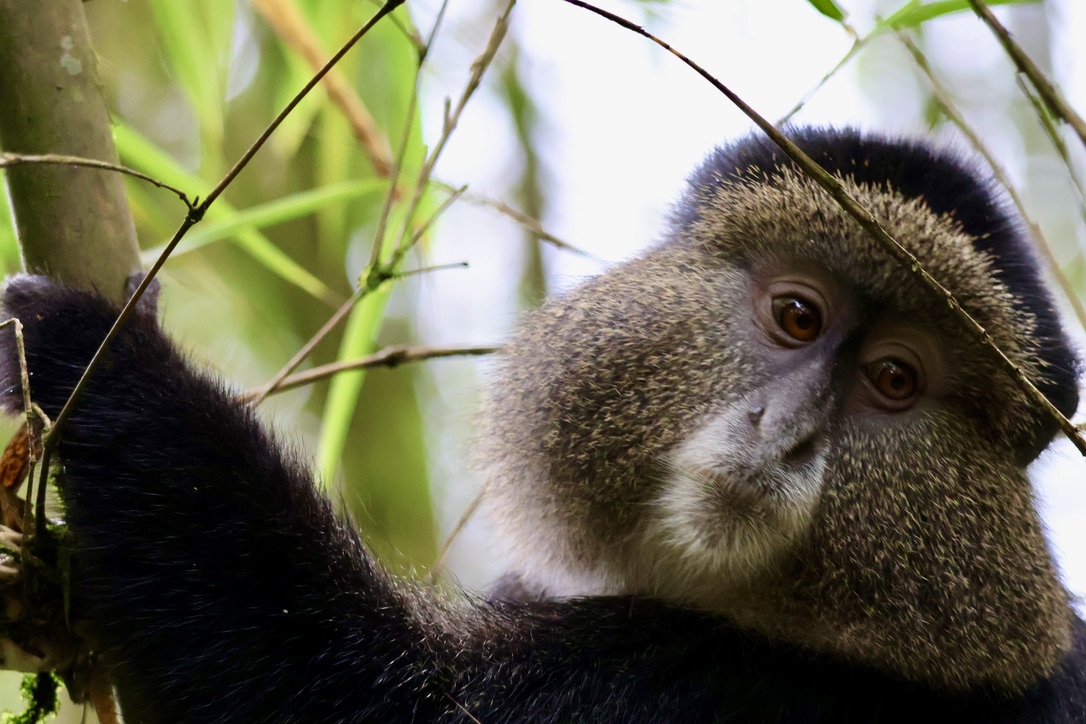
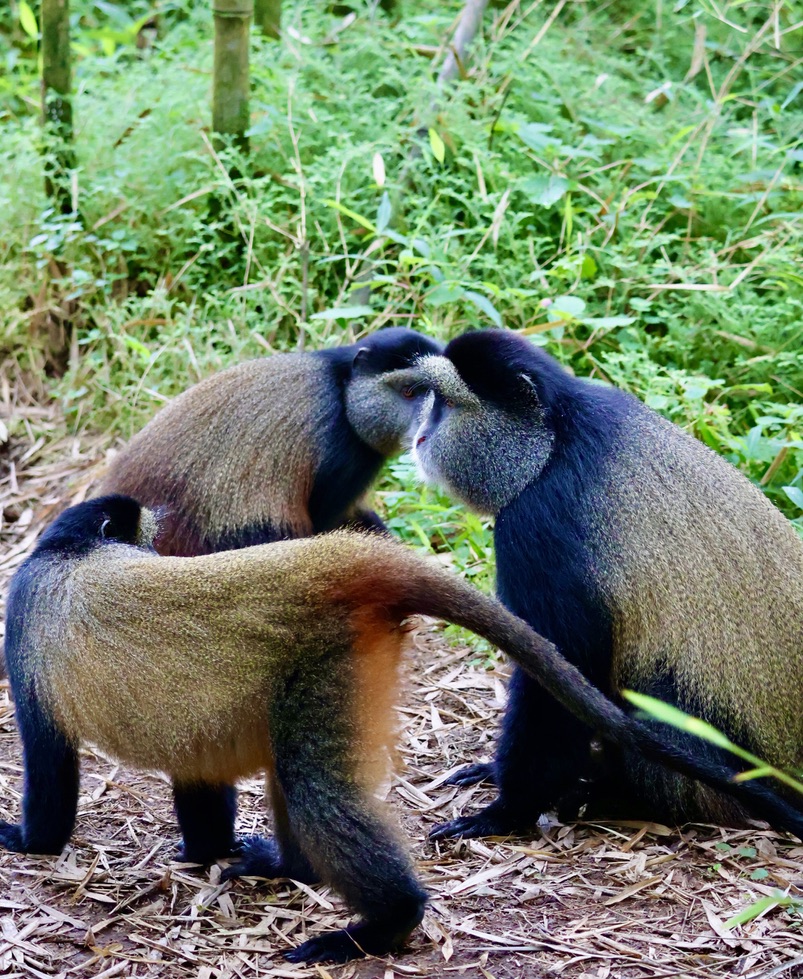
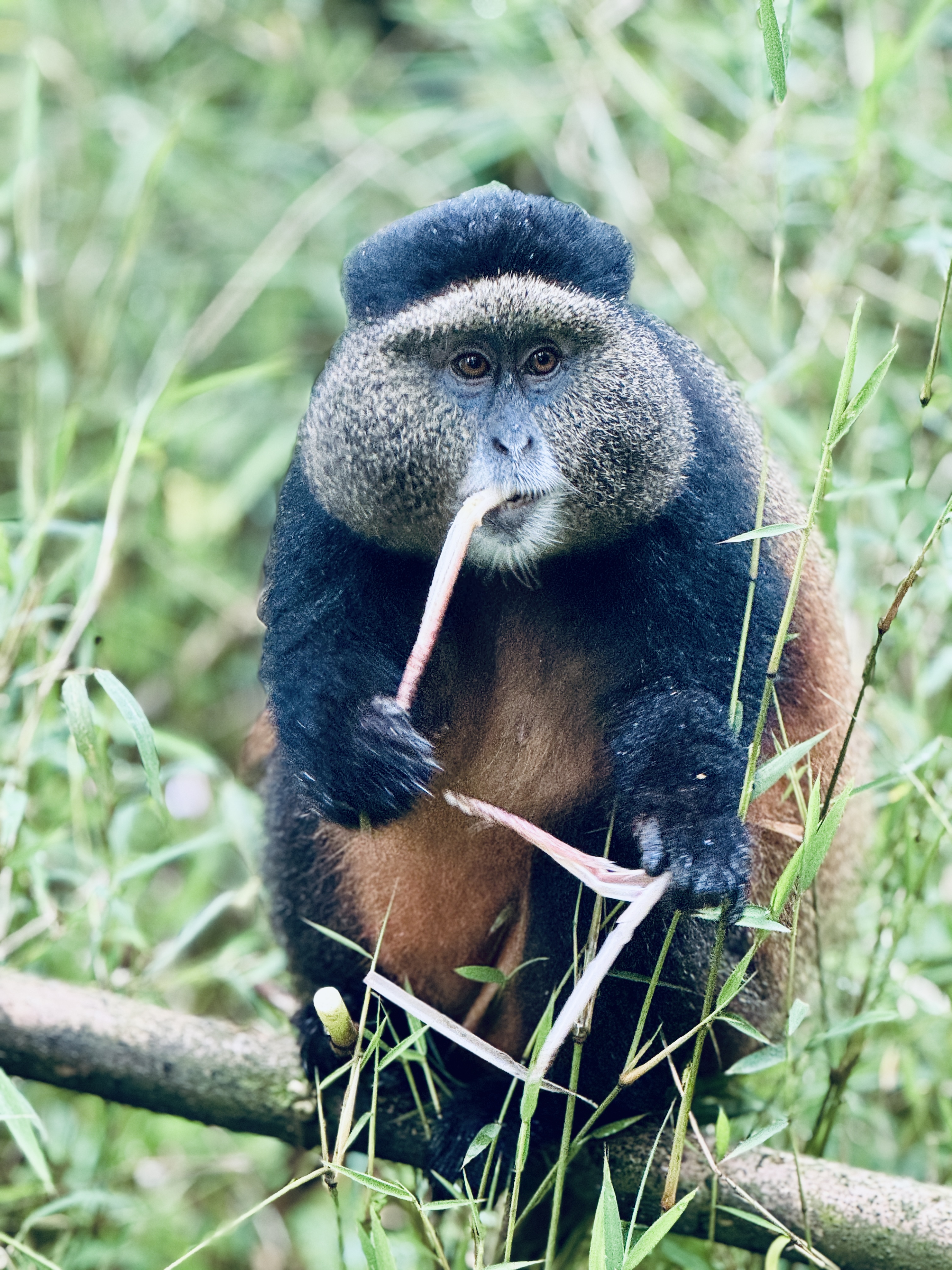
We had a lovely hour or so with the monkeys and then made our way back down through the stunning landscape and back to the waiting Land Cruisers.
Not exactly a ‘trek’ but a lovely morning’s walk.
We made our way to the Da Vinci Gorilla Lodge that would be our home for the next 2 nights. It turns out we had the place pretty much to ourselves, with only 15 people to look after us.
How ever would we manage?
This was travelling like we had never done before.
When we first arrived we were given a hot face cloth and cool juice. Strong start.
From there we sat to remove our muddy boots and gaiters, and 2 women immediately pounced on us to provide support. Before we knew it our boots had been whisked away for cleaning. We drew the line at the cleansing foot bath and massage that was offered, and instead transferred into some waiting Crocs and went to check in.
The main building of the lodge was 2 story and open upstairs, with a thatched roof that was proudly starting to sprout various grasses. It had lovely views of the surrounding forest and volcanos. Our hut – a short walk through beautifully manicured gardens – had a similarly thatched roof and its own fireplace – truly spectacular.
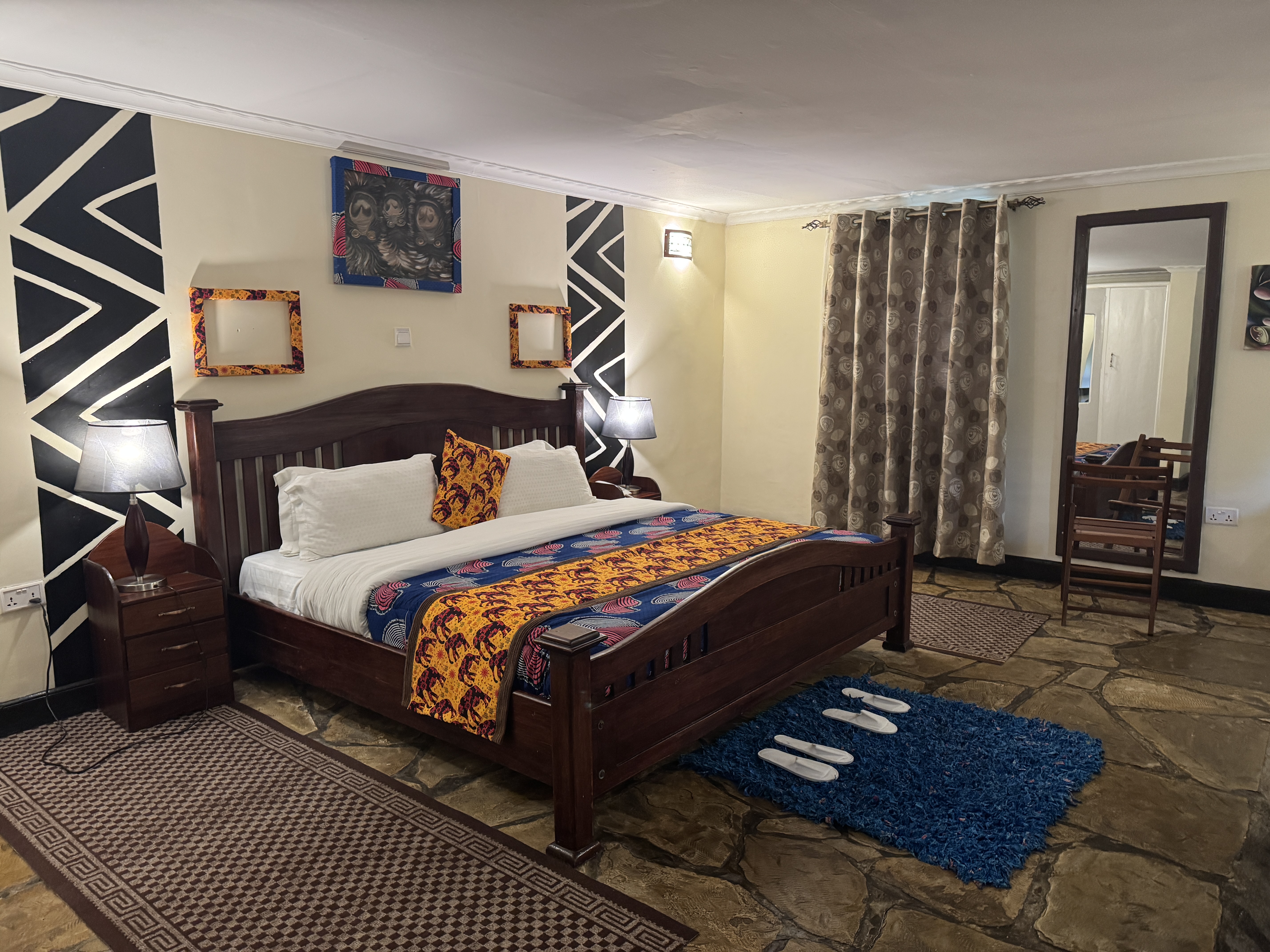
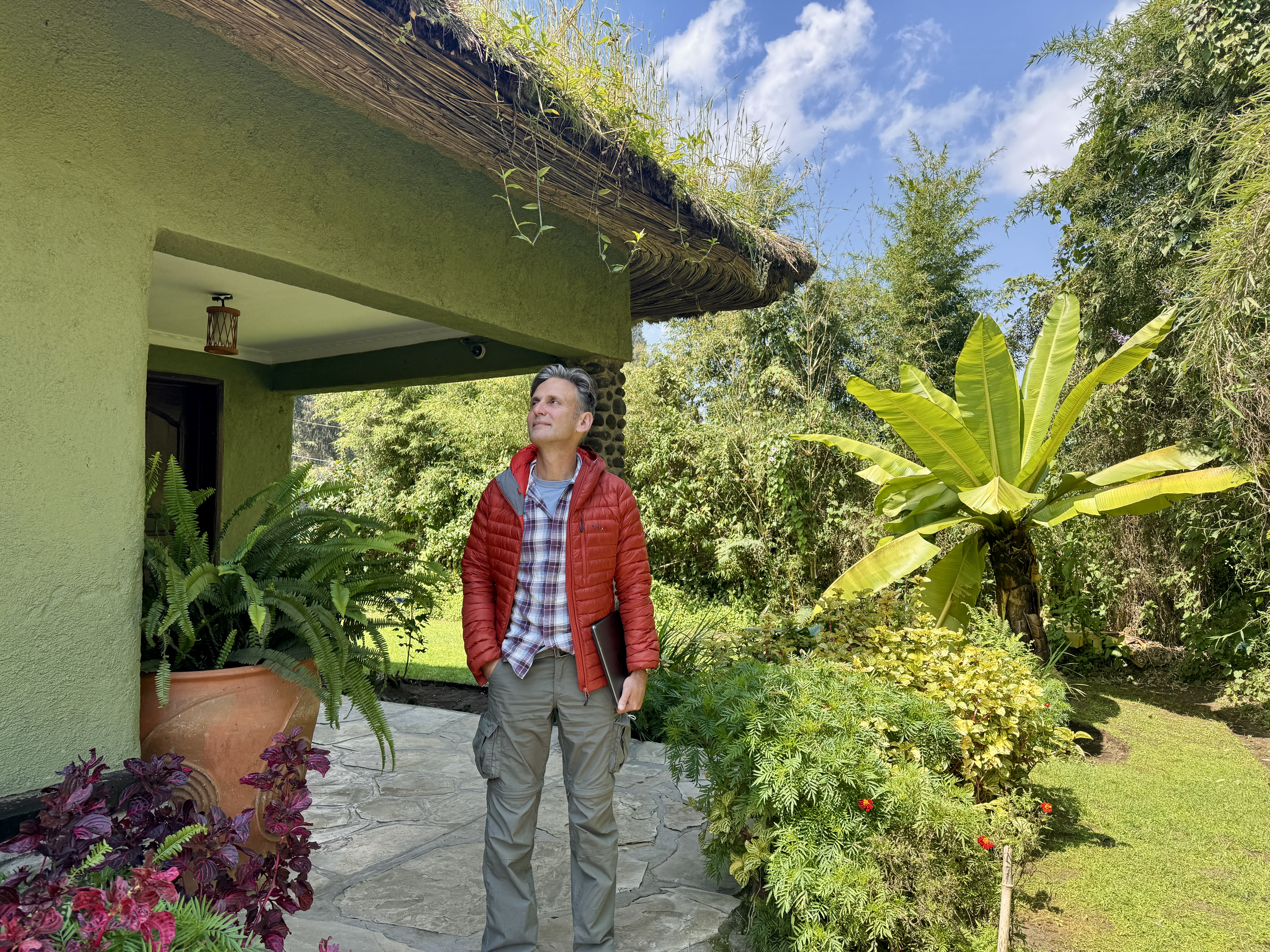
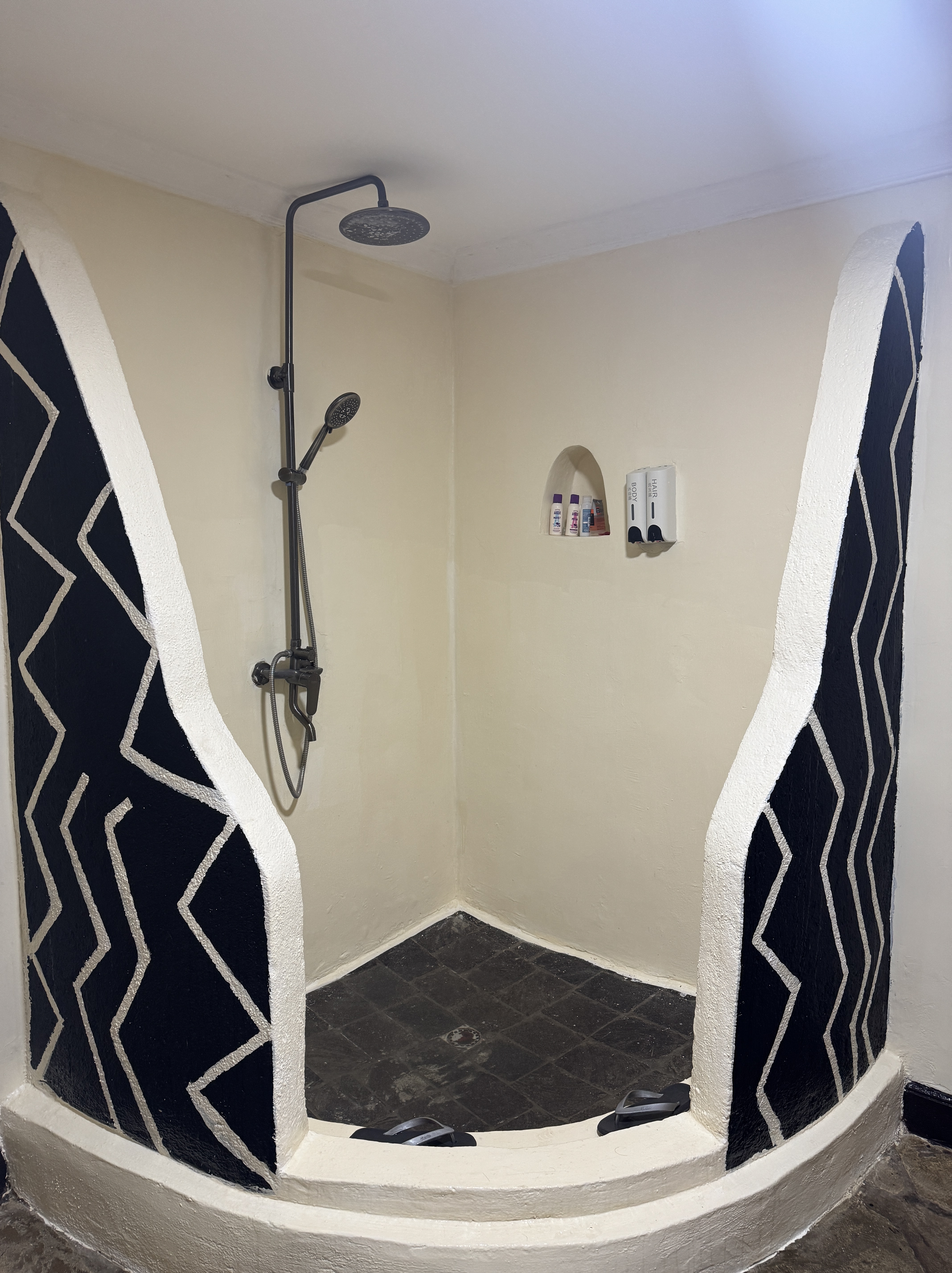
After lunch we decided to go exploring. We asked the reception staff where we should go and they looked at us strangely.
Go outside? Without the Land Cruiser?
This apparently was not expected behaviour.
We timed our run well with school finishing for the day. Within seconds we were thronged by local school kids of various ages, all wanting to talk, some wanting to try and see what they could get from these strange tourists. It felt a bit like being the Pied Piper walking down the street as we chatted to these kids, talking about school, checking out their latest test papers and avoiding the attempts to exchange contact details.
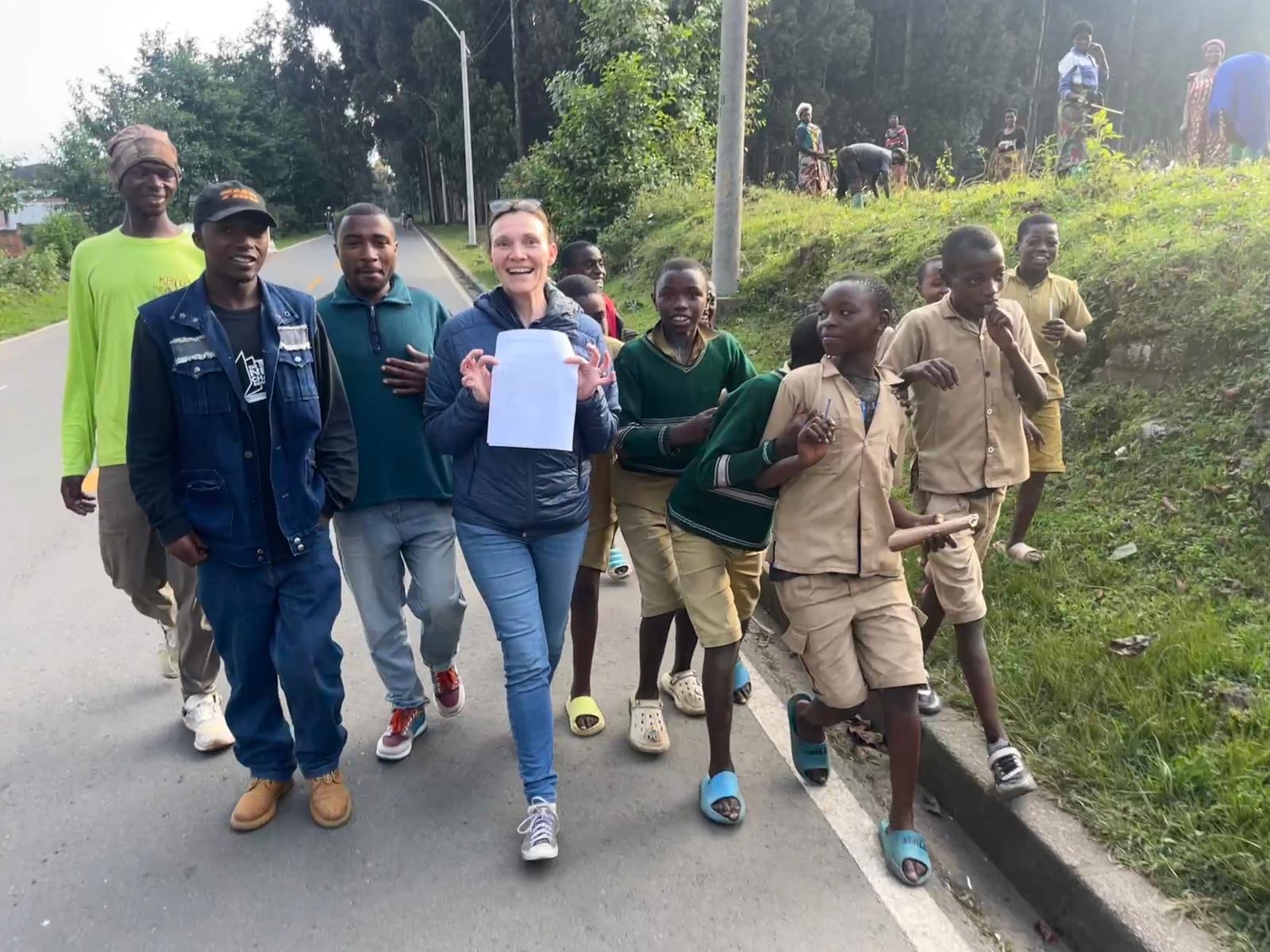
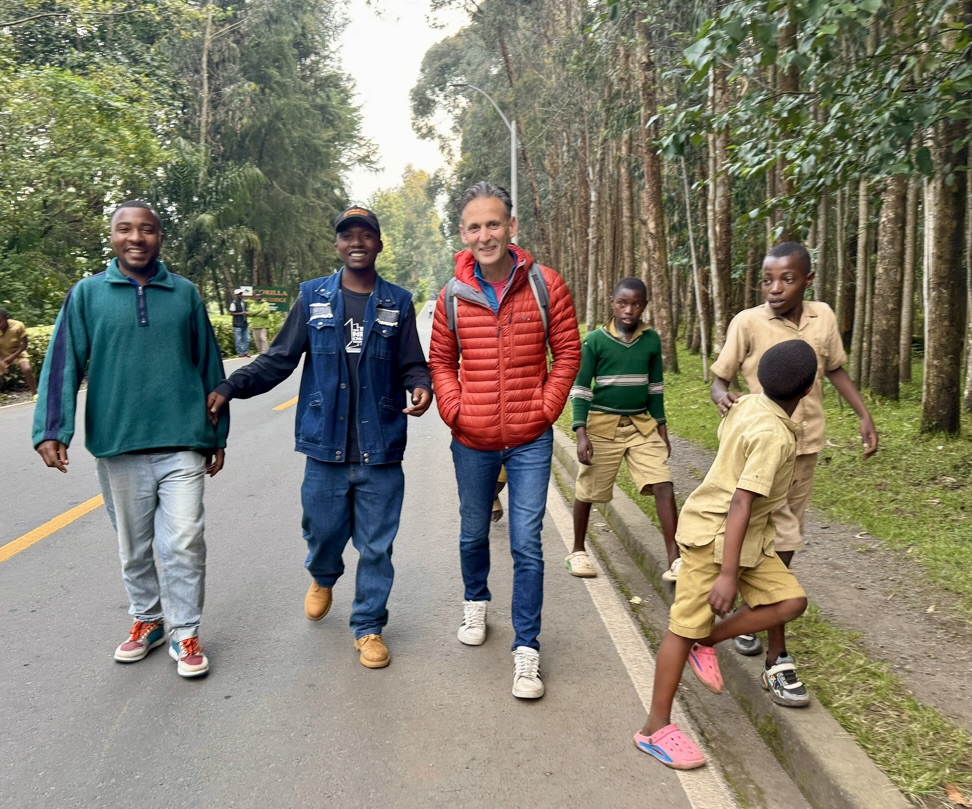
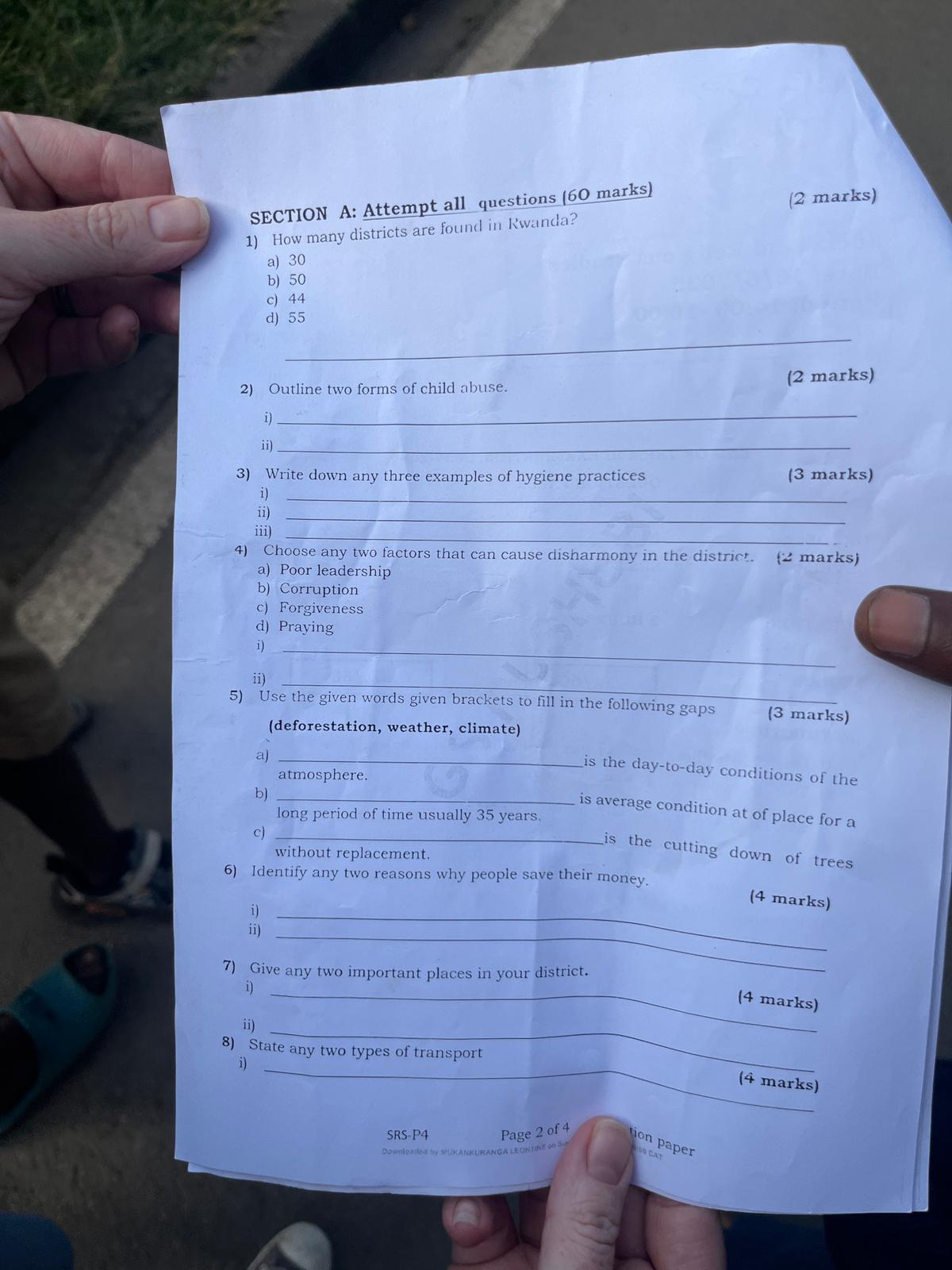
Fun fact – the scam of choice here is to try and get tourists WhatsApp details with a promise of sharing photos and ongoing correspondence. These can then be provided to other groups who will then bombard the recipient with requests for funding or general spam. We had been warned numerous times over.
We spent the rest of the afternoon back at the lodge, making friends with ‘Sparky’ the resident dog (the only one we’d seen so far in the country) and hanging out.
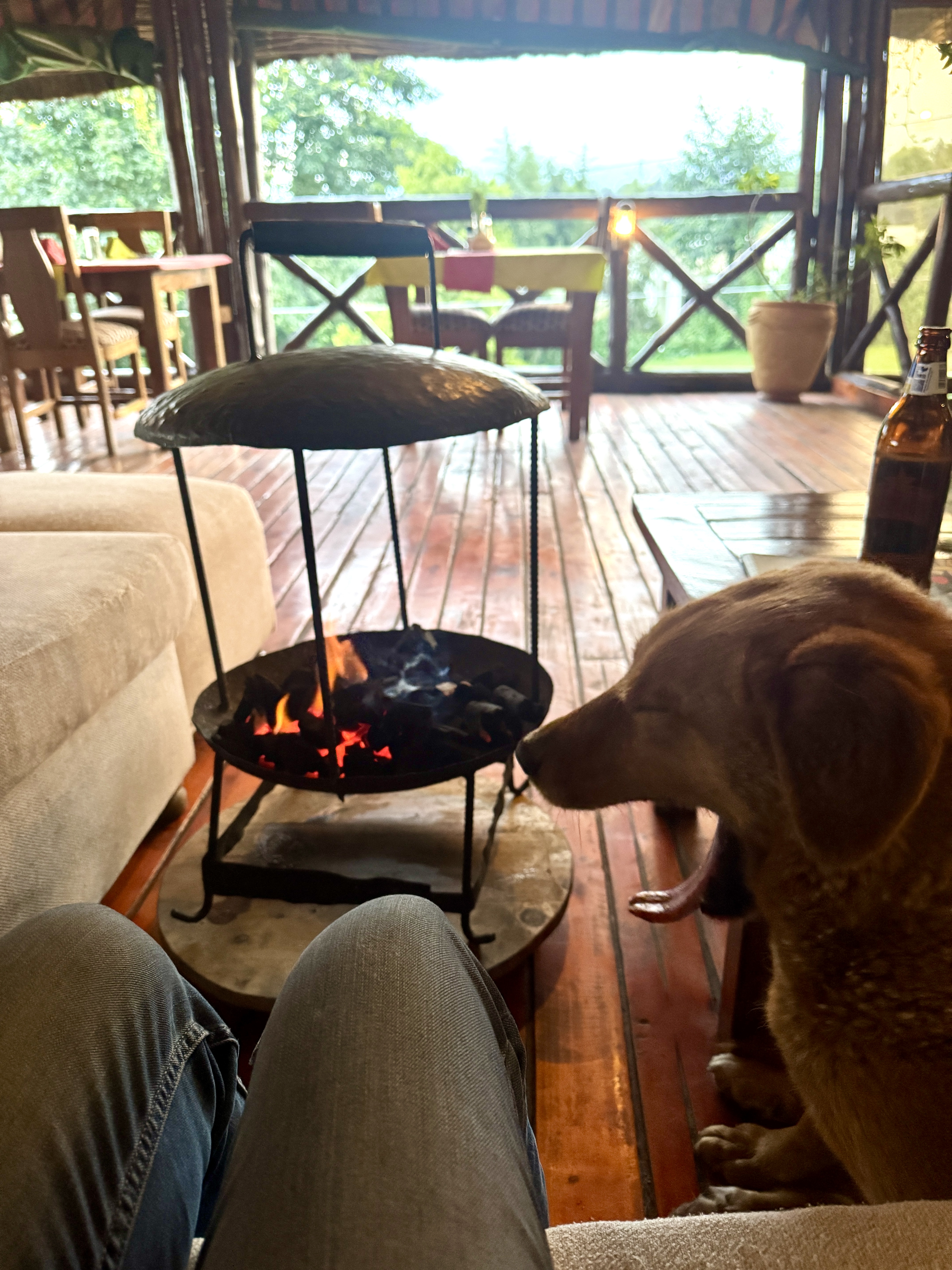
After dinner, all of Liz’s dreams came true when we returned to our hut to find a fire going and 2 hot water bottles in her bed.
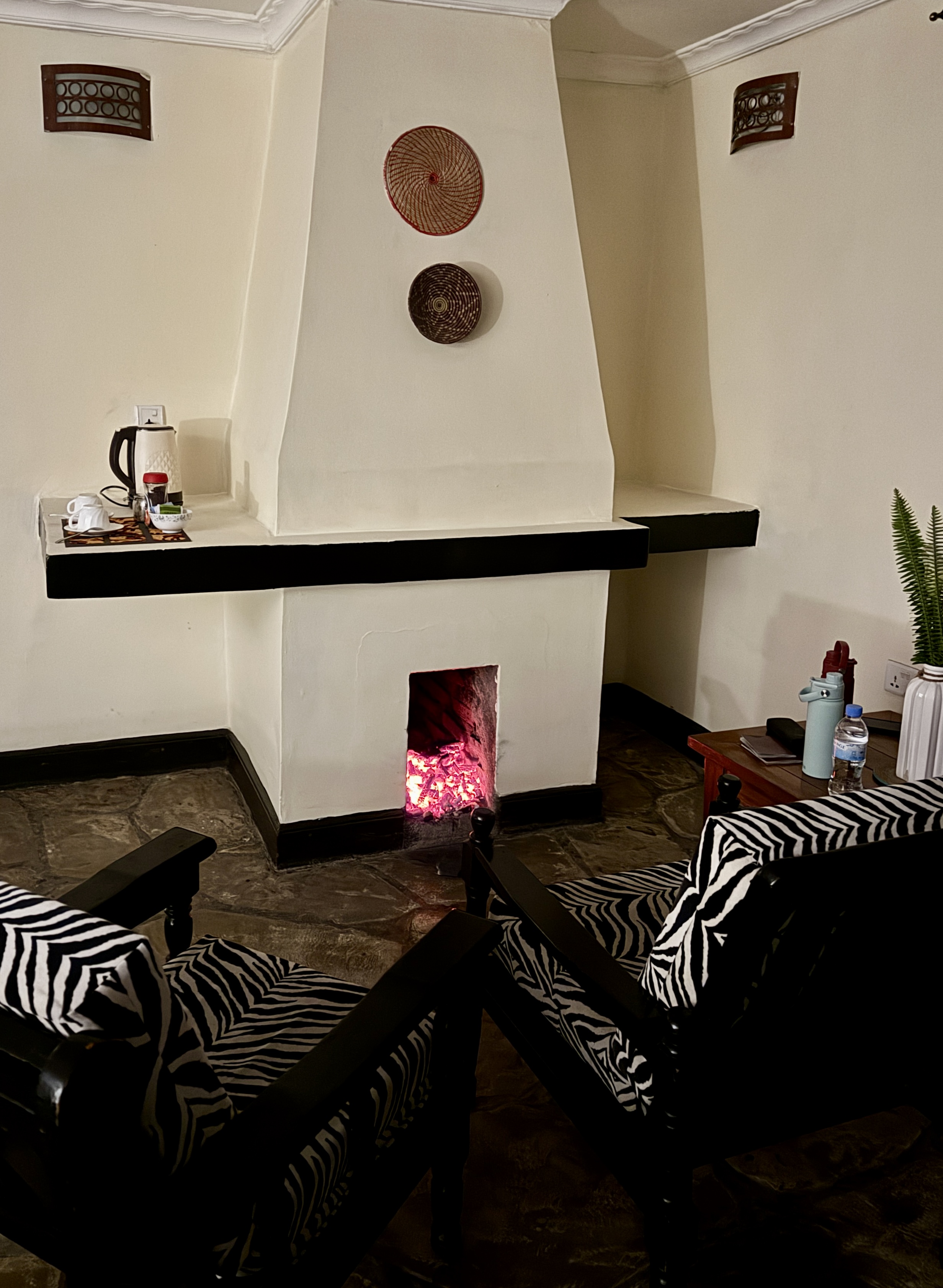
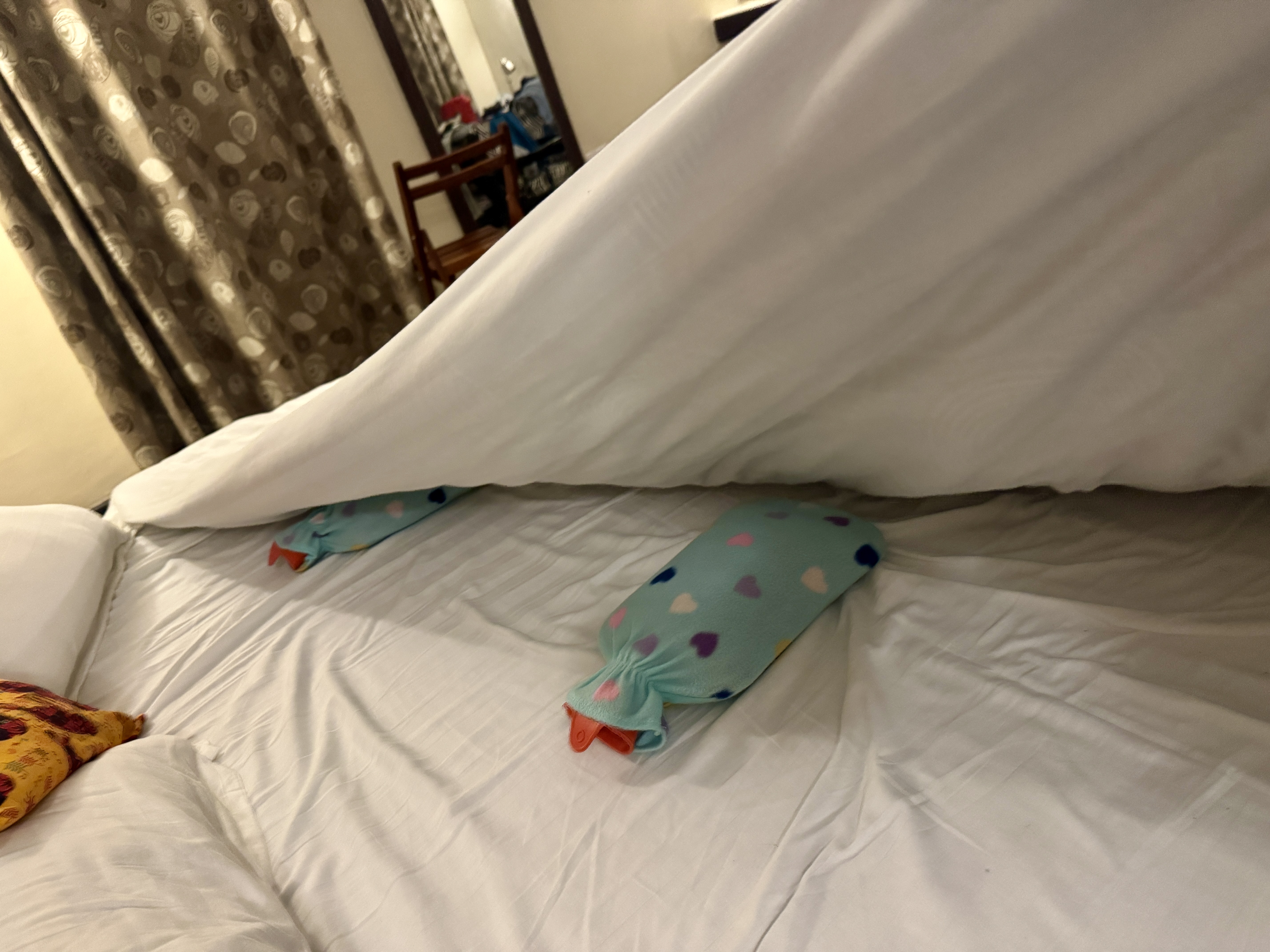
That was it. She was moving in.
It was another early start the next day but we bounced out of bed before the alarm.
Today was the main event. Gorilla Day. And we were excited.
A side note on Gorilla trekking in this region. It has been a conservation success story. In the 1980s the gorilla population in the region had dwindled to 240, it has now increased to well over a thousand. This is due to a combination of habitat protection, community engagement and anti poaching – all of which has been supported and enabled by responsible tourism. Yes, that comes at a significant cost for the tourists, but clearly that was OK, as they had no trouble filling the available slots.
After a quick breakfast (painstakely prepared and served by our ever attentive hosts) we made our way down to the boot area. Our aged hiking boots had literally never looked so good… they had certainly never looked so clean. They sparkled.
We made our way to the gorilla staging area to meet our group and get our briefing. Our group today showed a wee bit more diversity – a pair of Canadians, a pair of Brits and another pair of Aussies.
Our guide Patrick would help us meet with the Muhoza family which comprised some 15 gorillas from the silverback, his various partners and offspring down to a couple of infants from 8 weeks old. The trek would be around 4 hours round trip (preferable to some which could be up to 6 hours) – we couldn’t wait.
Side note here: trekking with Gorillas is, as the name suggests, not a passive activity. The treks range from ‘easy’ – perhaps 90 mins through farmland and forest, up moderate inclines; to ‘hard’ which can be 5+ hours cutting trail up steep volcanic slopes to 4000m+. Either way you have to walk. We saw a guy at the reception who was walking with the aid of a ‘zimmer frame’ and wondered how that would work. No problem – a team of 4 porters put him in a stretcher and carried him up. All for $150 (they totally should have charged 10x for that, especially considering the cost of the permits – $1300). Amazing from a customer service and an accessibility point of view, and seemingly typical of this region – people power will overcome most challenges.
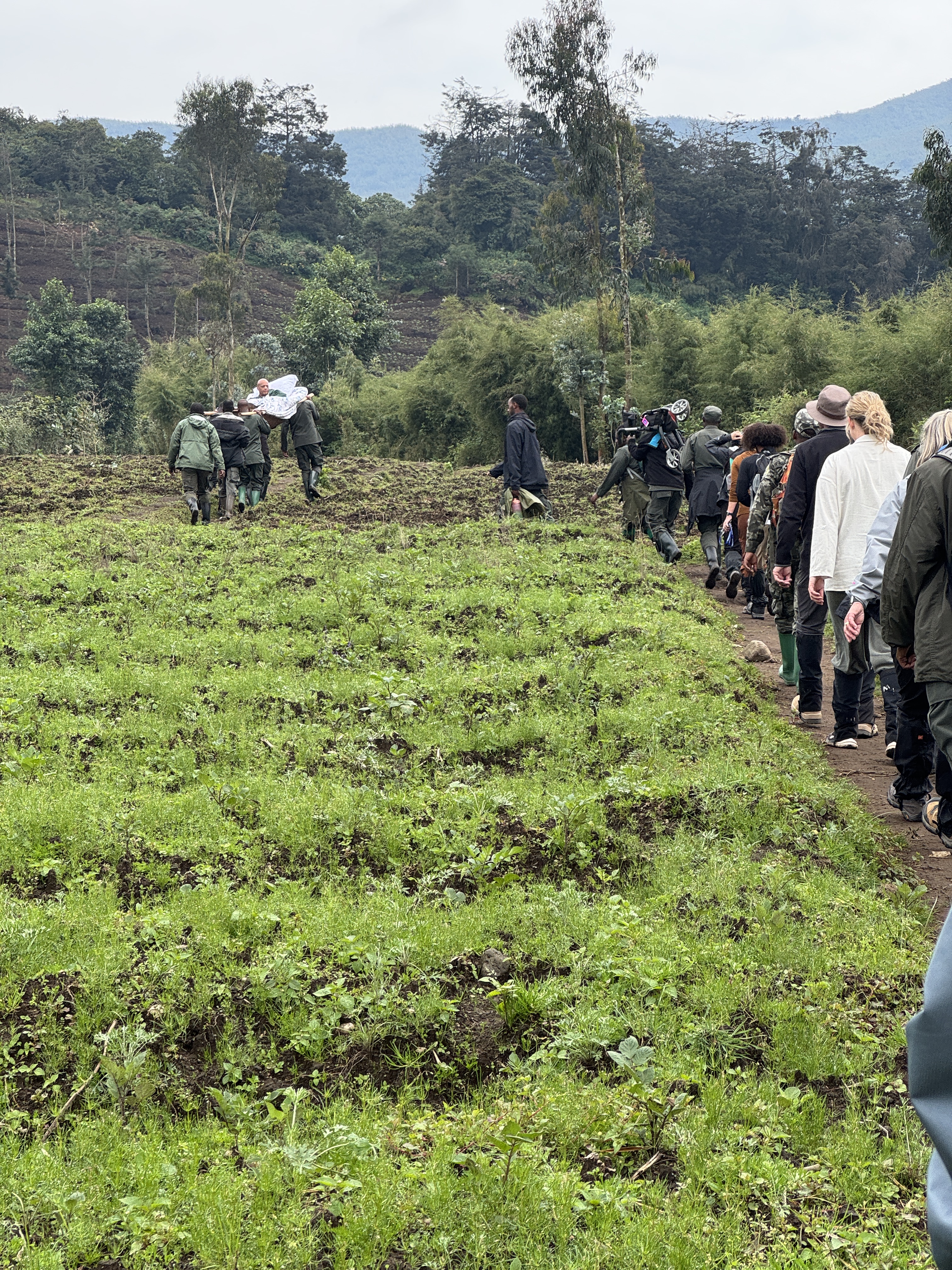
Back to our hike now – we made our way through the farmland, passed the guard with his machine gun and into the national park. We were joined by a group of porters, some trail breakers (armed with machetes to cut through the undergrowth) and we would be joined by a group of trackers who were currently locating the family (NB: the gorillas can move up to 2 kms per day and tend to nest in a different location each night, so every morning the trackers have to go ahead and find the groups). So many people to support our group of 8.
We had done our research here and were pretty well prepared to trek in the jungle. Boots and gaiters to limit bull ants, mud and thorns. Walking sticks to help with ascent and descent of the rough trails (when they were there at all). Thorn proof gardening gloves to protect from the nettles. Long sleeves to protect arms. Waterproof jackets and hats for the rain. And of course industrial strength mosquito repellent to protect from the insects that threatened to pick you up and carry you home.
The first part of the trek was similar to yesterday, trekking up a gentle incline on well established, clear trails through woody terrain. We started questioning whether we really needed all our stuff.
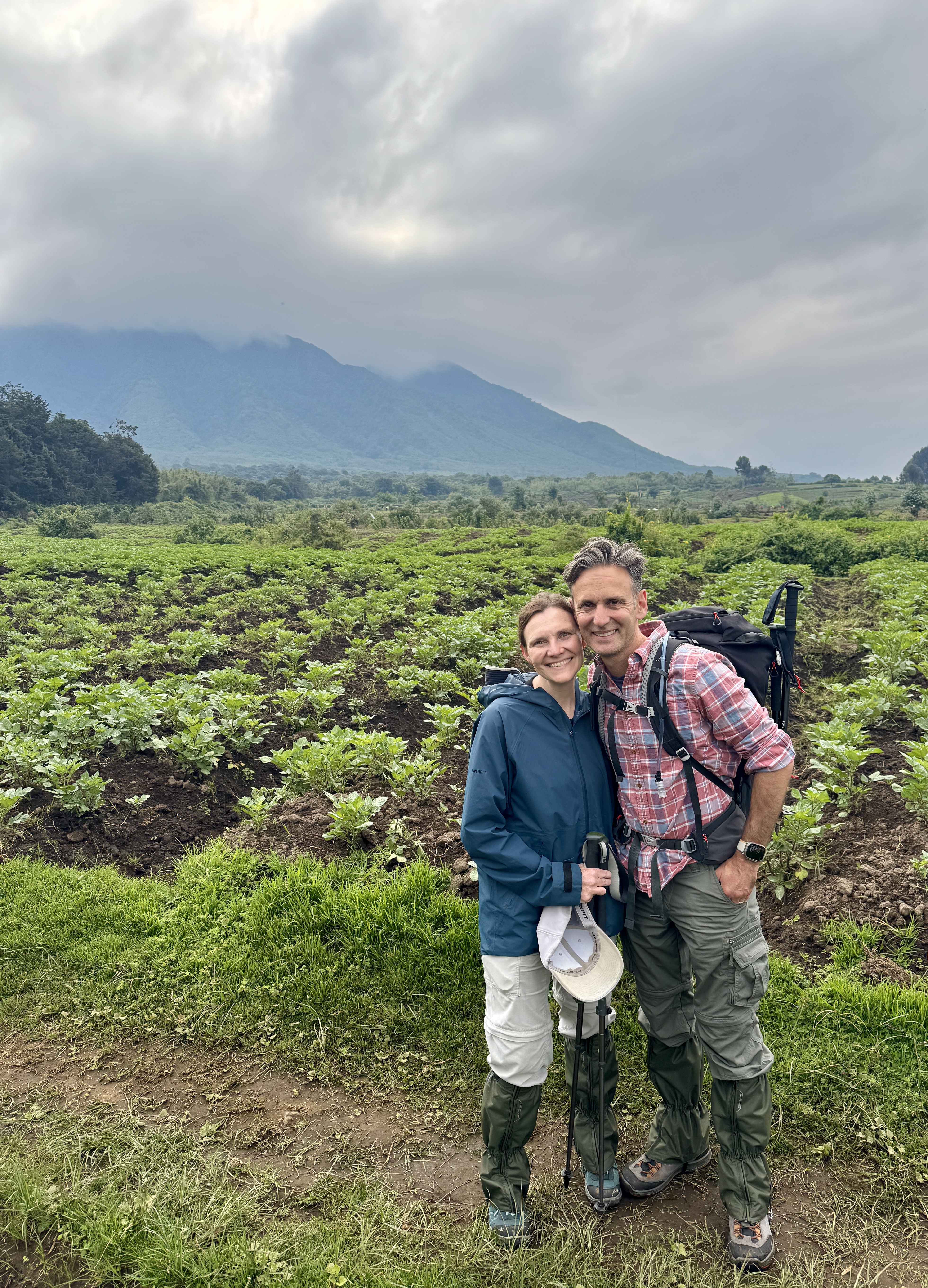
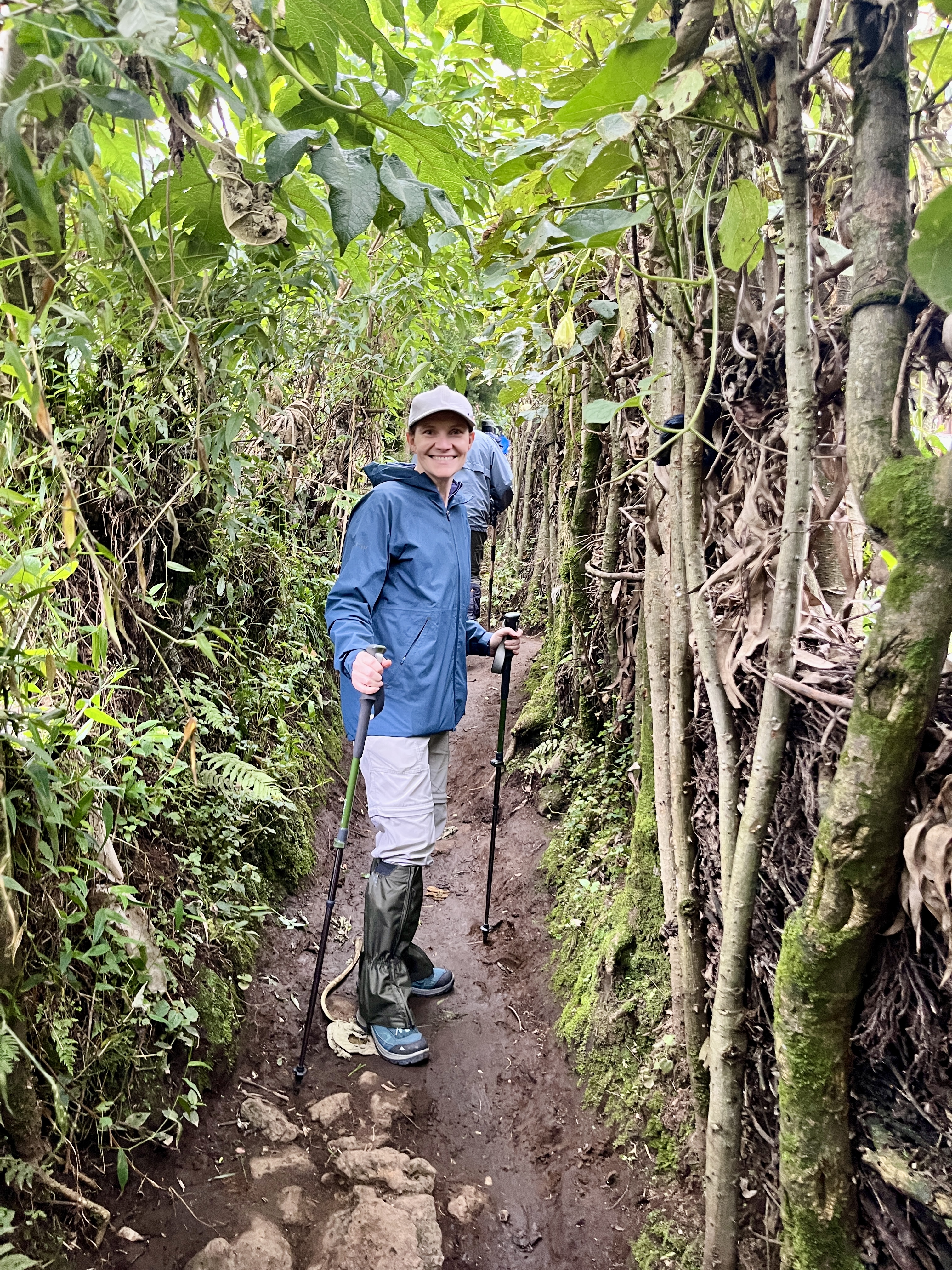
Before long, however, the trails got steeper and the undergrowth got thicker. Our trail finder got busy carving us a path with his machete and the gloves and gaiters came into their own. Only the mosquitos didn’t really eventuate – maybe because of the sheer quantity of DEET that I’m sure was smothered over our entire group.
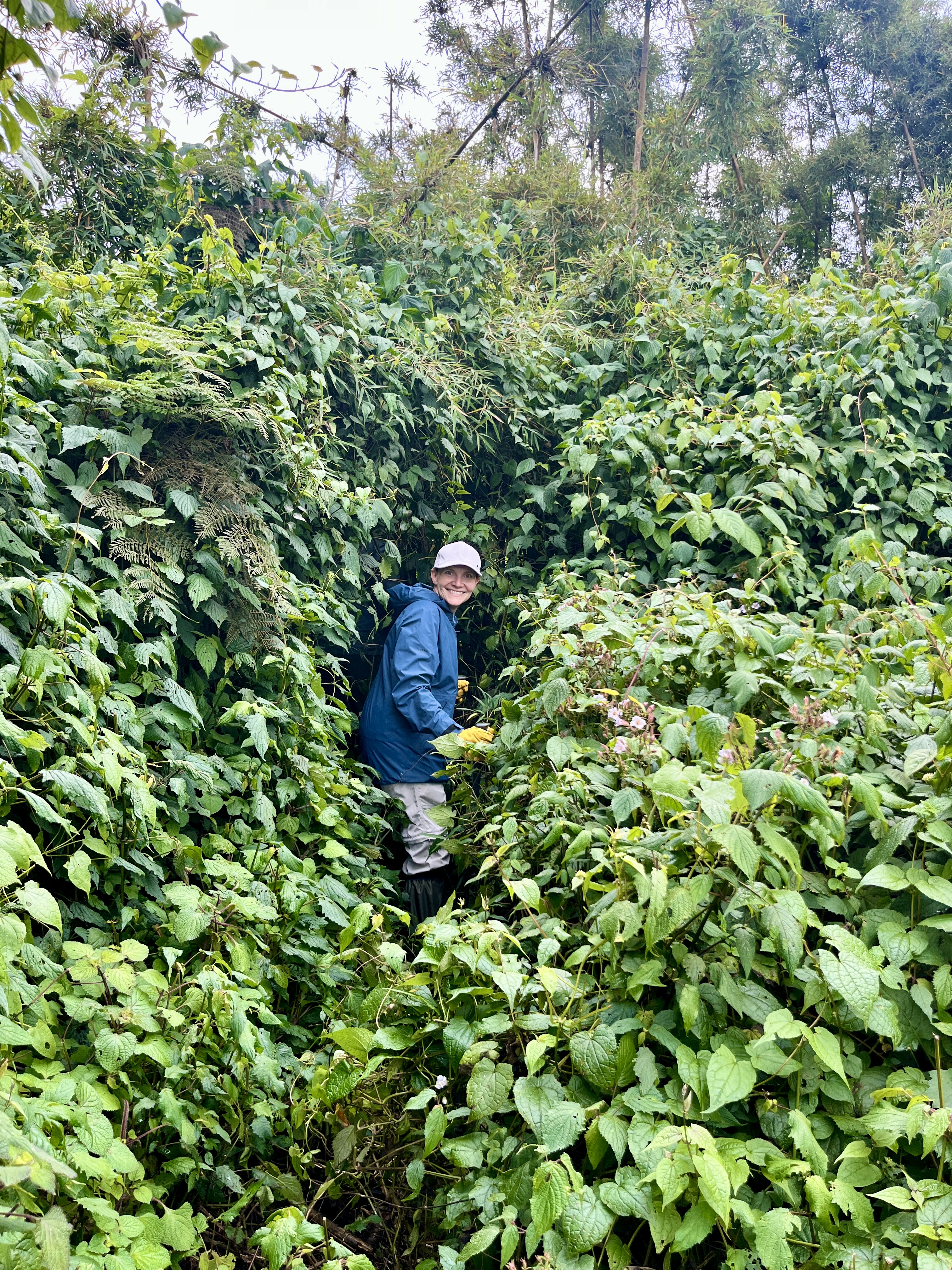
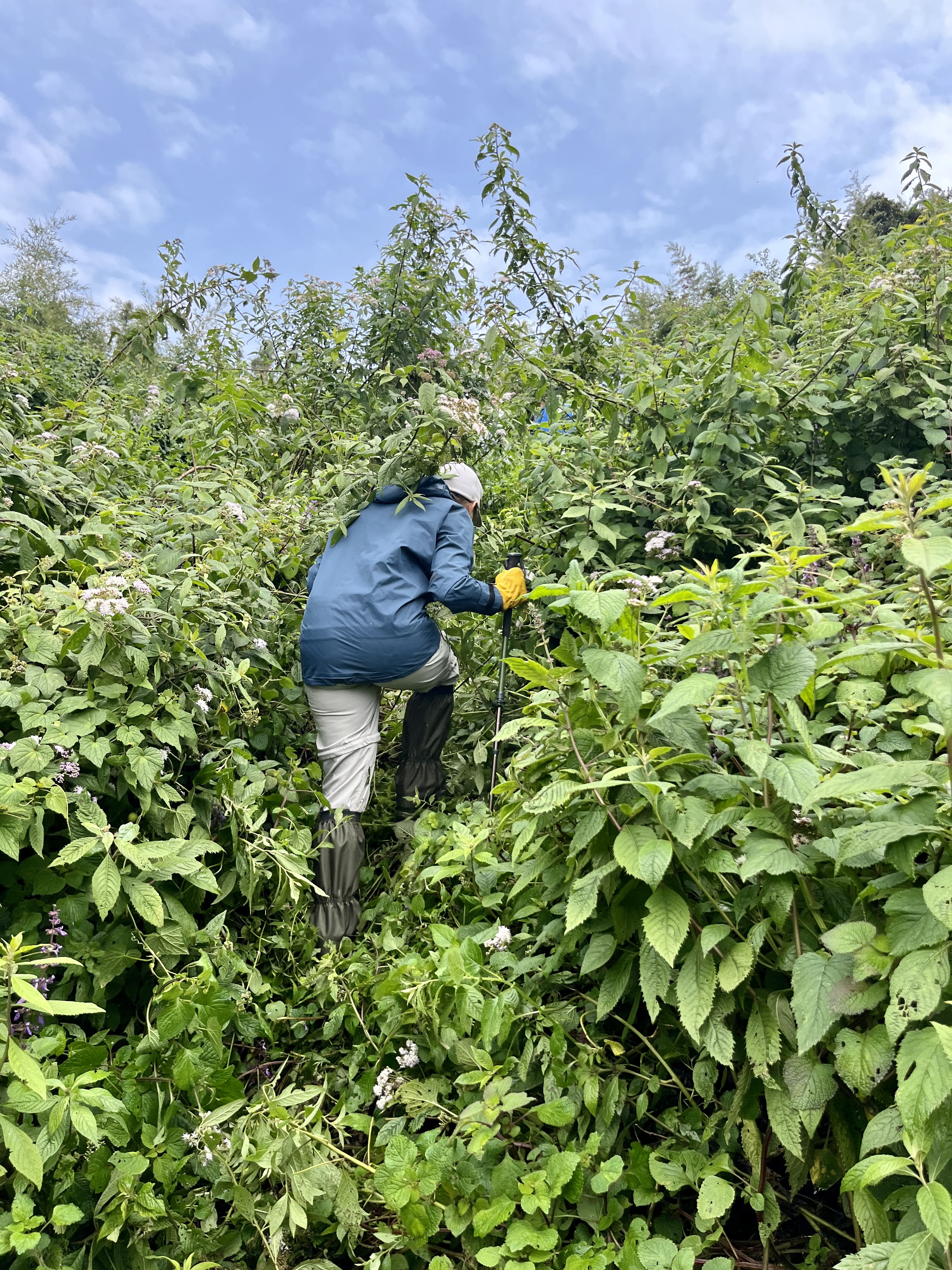
Periodically we were treated to spectacular views as we passed through various natural clearings in the brush – apparently created by buffalo and elephants – but mostly we just trekked our way through the incredibly dense forest. It was both magical and entirely disorienting. Had the guides left us, there is no question we’d still be wandering around in circles, waiting to be eaten by some local fauna.
Eventually we dropped our bags, donned our face masks and were given our final briefing. Don’t go within 10 metres of the gorillas. You can look them in the eye, but if the silverback beats his chest, don’t beat back (seemed sensible).
The best piece of advice we received was to ‘put down the camera’ and just enjoy the interaction with these amazing creatures.
We walked a short distance and heard some rustling in the trees above, and then some grunting on the forest floor.
We had made contact.
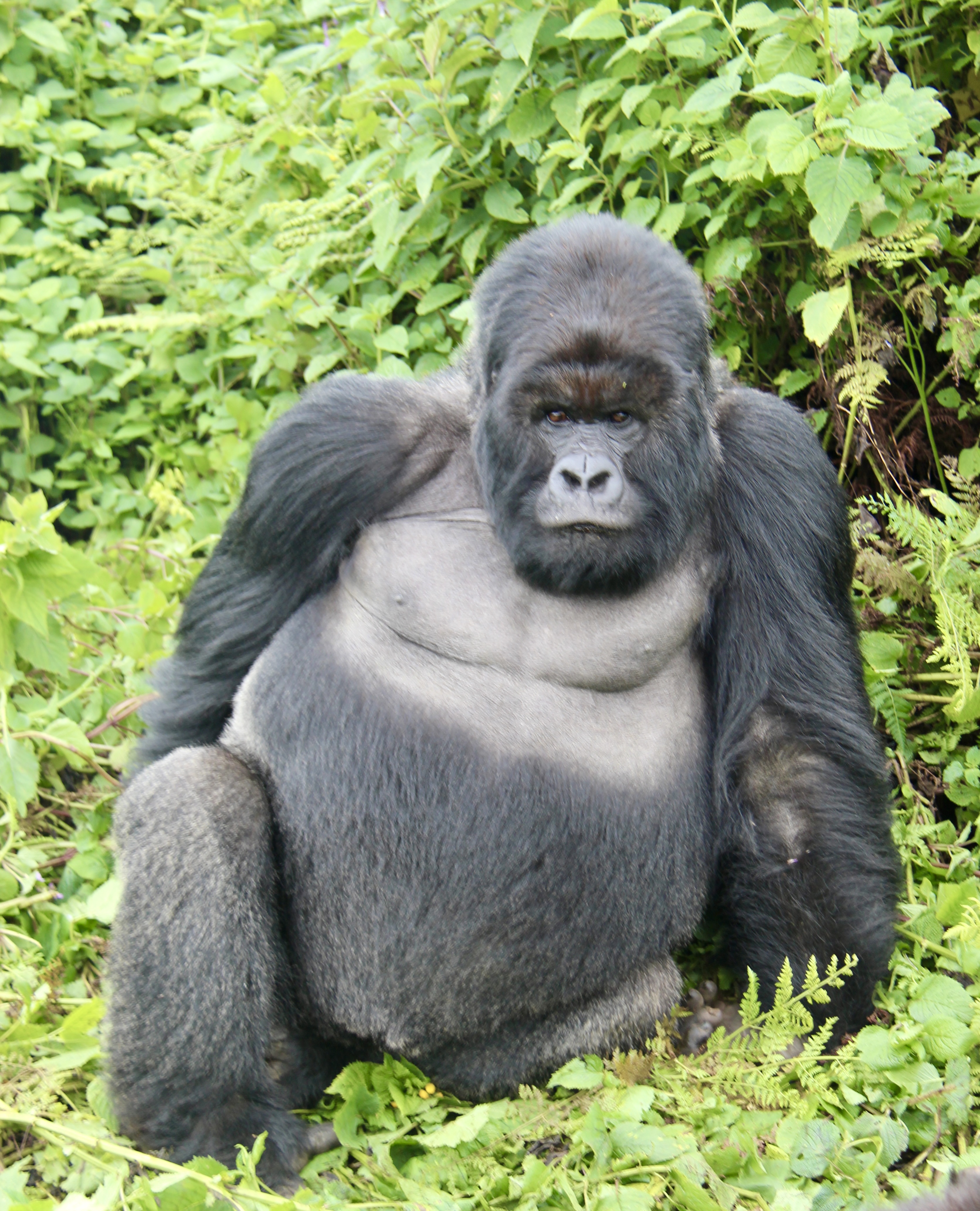
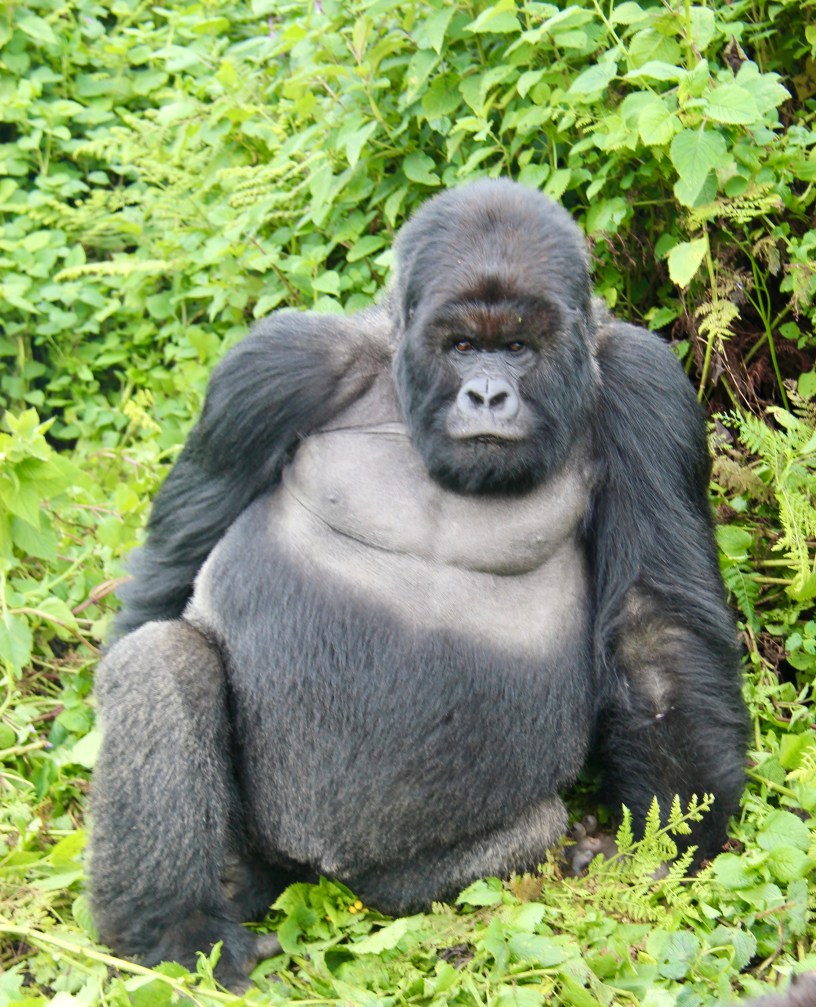
We spend the next hour or so marvelling at these amazing animals – from the impressive silverback male to the tired looking mums and their stunning babies to the adolescents rumbling with each other and trying to imitate dad. Considering they have to eat 15% of their body weight each day in greenery (they are vegetarians) they still find plenty of time to play.
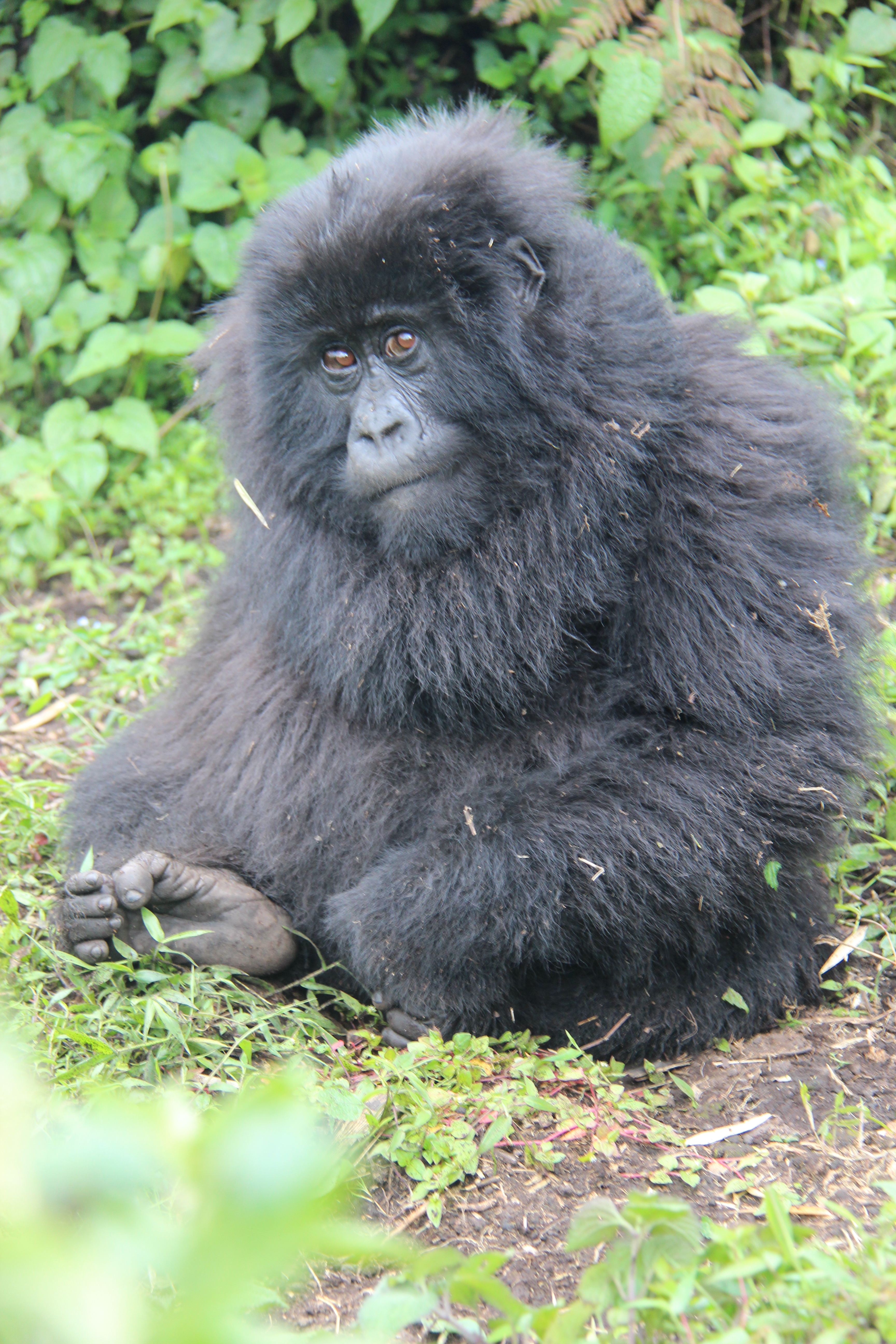
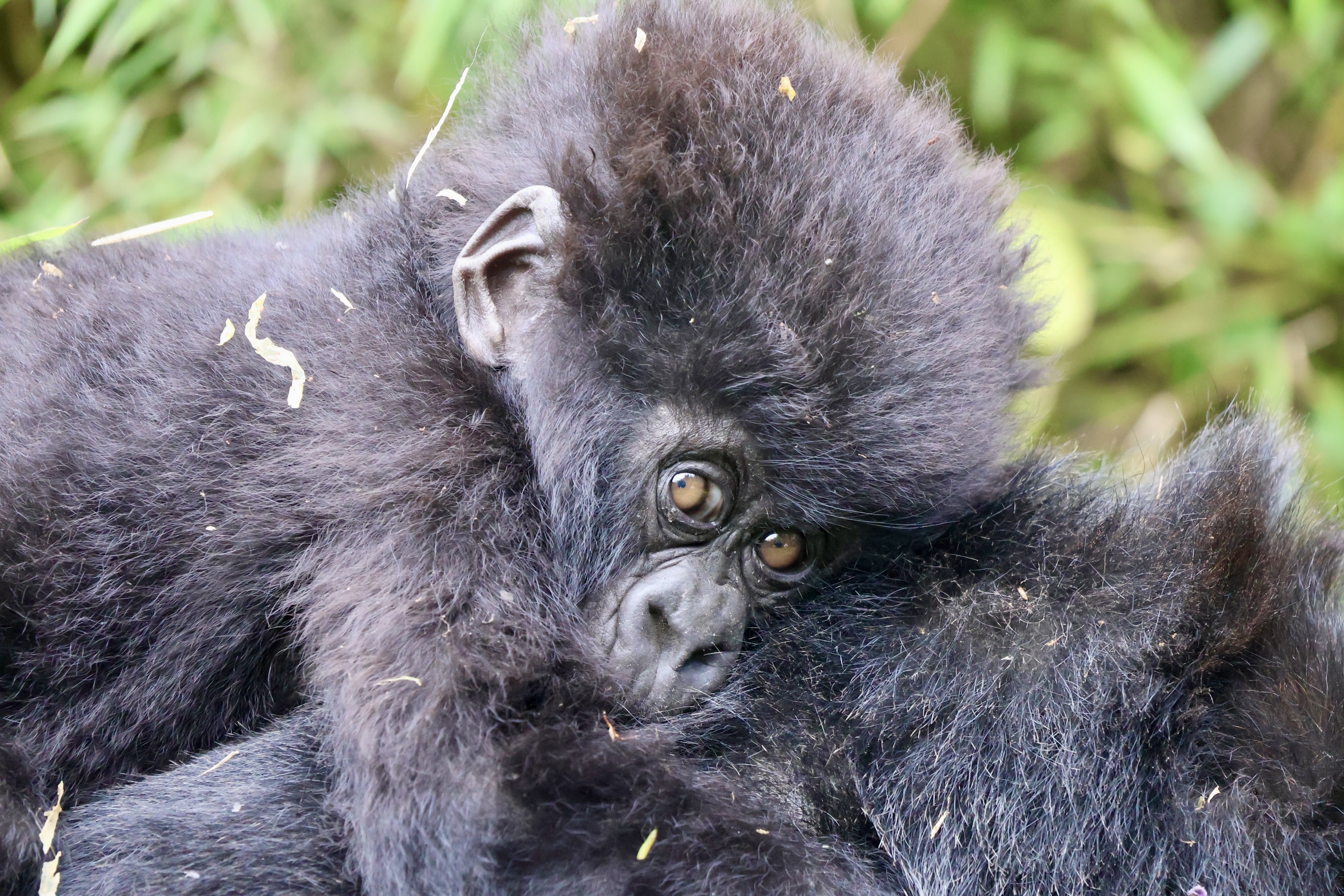
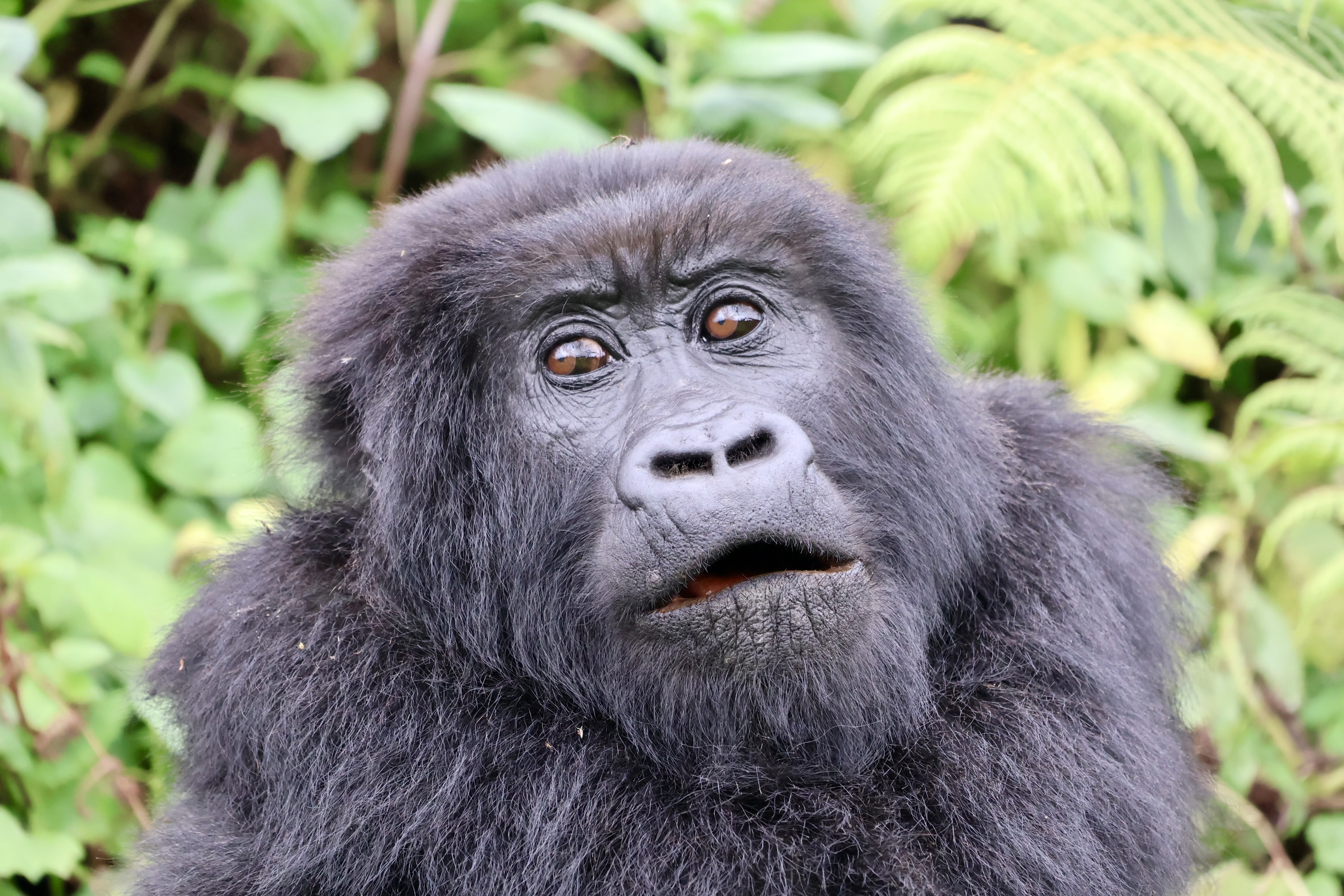
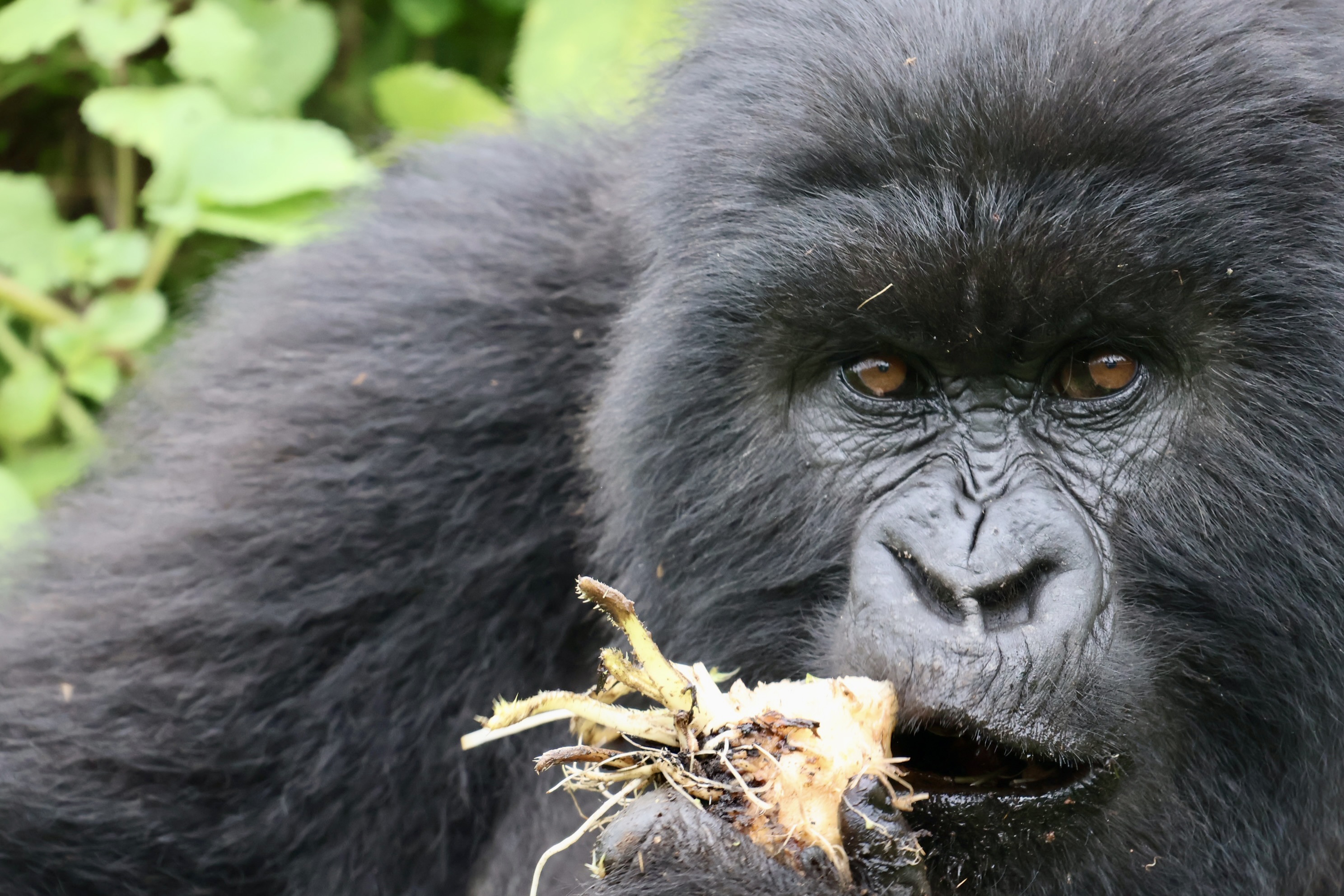
Their faces are incredibly ‘human’, as are their hands and feet.
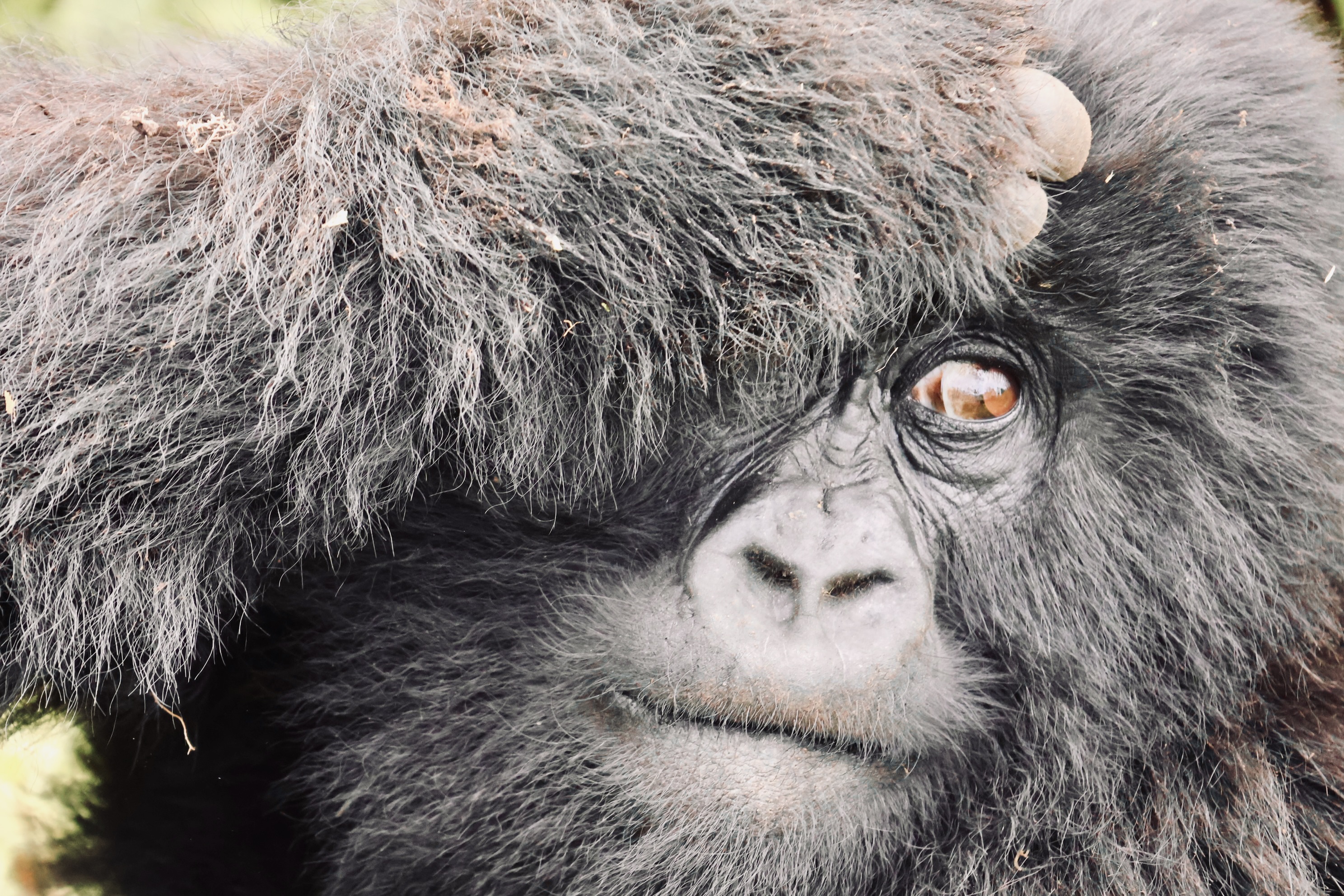
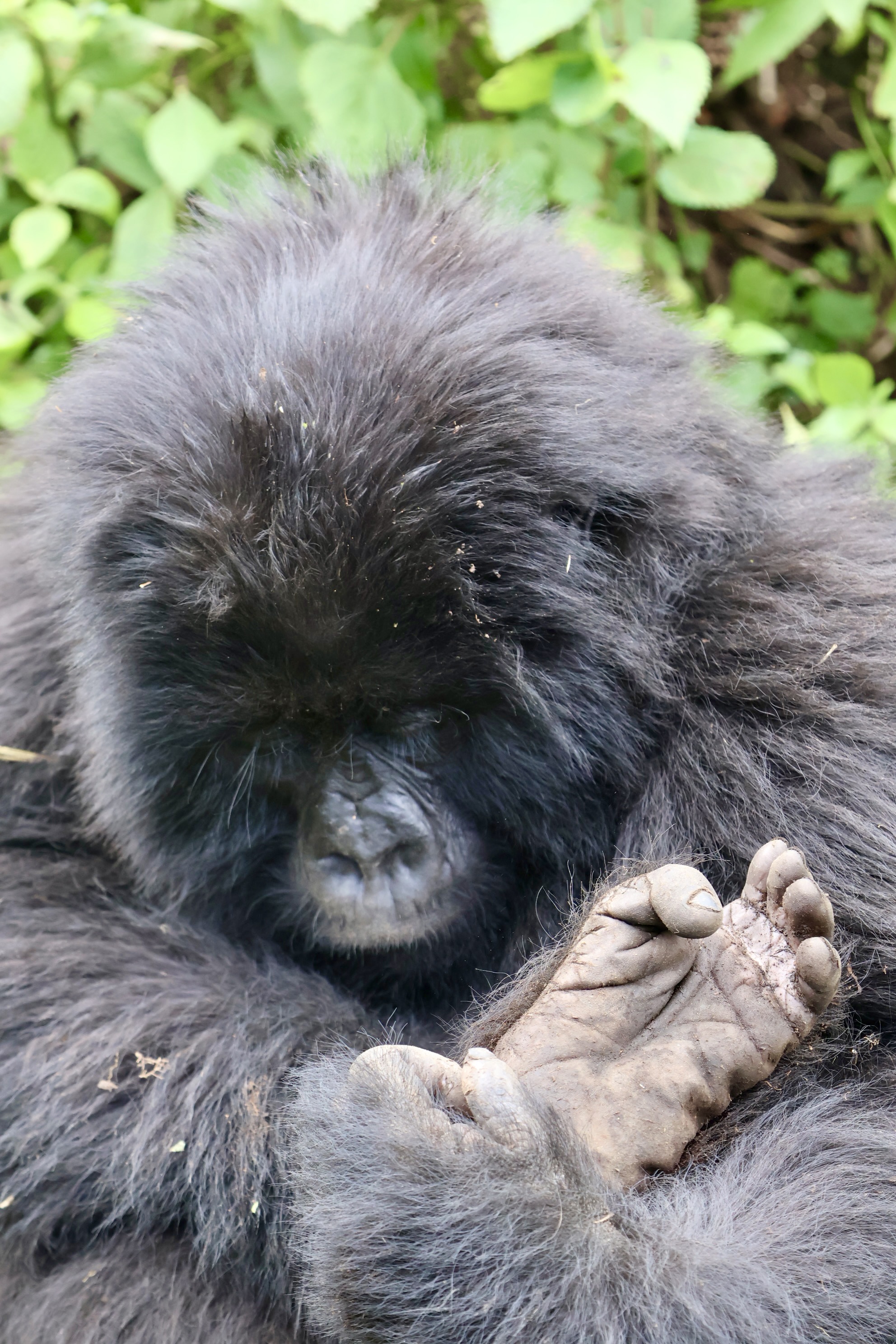
It turns out the 10 metres rule was at best advisory, and no one had explained it to the gorillas.
Within minutes we had some of the family pushing passed us to get their next location and we had adolescent gorillas rolling Kung Fu Panda style (why walk when you can roll?) passed us for no apparent reason. The silverback ambled passed, looked at us, then lay down for a snooze within feet of our group. At one point, one of the gorillas walked past one of our group and gave them a bit of a slap on the leg.
Probably predicatably, the babies stole the show. The 2 month old had a hair style that wouldn’t have been out of place in a boy band and had the same curious stare that you would see in a human baby.
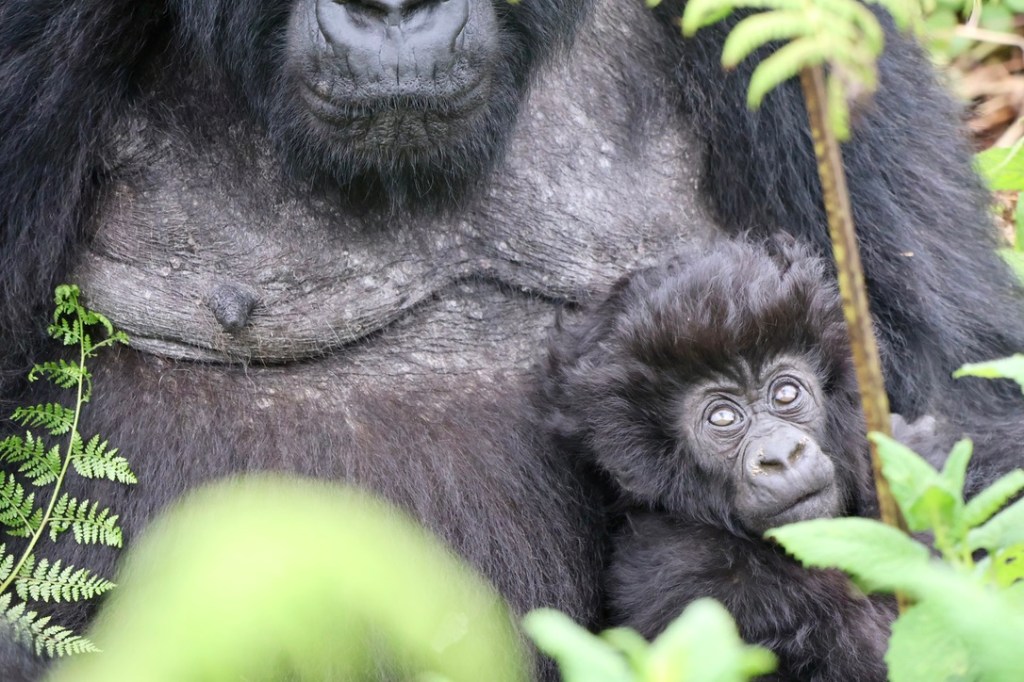
These guys were not phased by our presence.
In what seemed like minutes our time was up and we had to start making our way back through the forest and to the waiting cars.
The experience of being able to spend some time up close and personal with these magnificent animals was amazing, and made the effort and cost of coming here totally worthwhile. We had no comparison to anything we’d done before, and were literally speechless.
One more evening with Sparky,
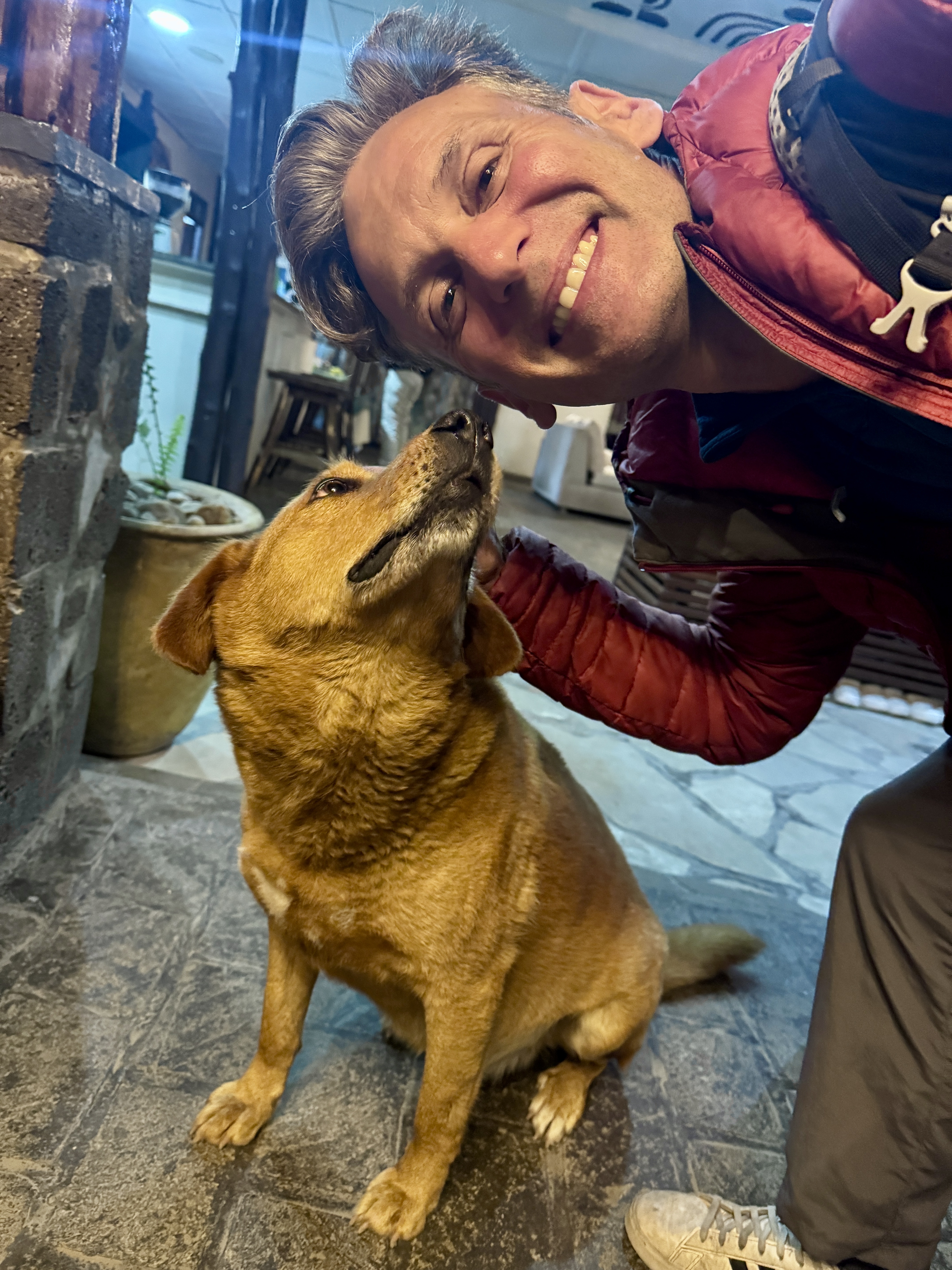
warming fires and hot water bottles and our time in the Volcanos National Park was over. Predictably for a trip this fast, time was already flying.
On the ride back to Kigali we gazed out the window, watching people starting their days and peppering Godfrey with questions.
Outside of Kigali there were literally no cars – the roads were dominated by transport trucks, tourist Land Cruisers, bicycles and pedestrians – often carrying large loads of materials on their heads.
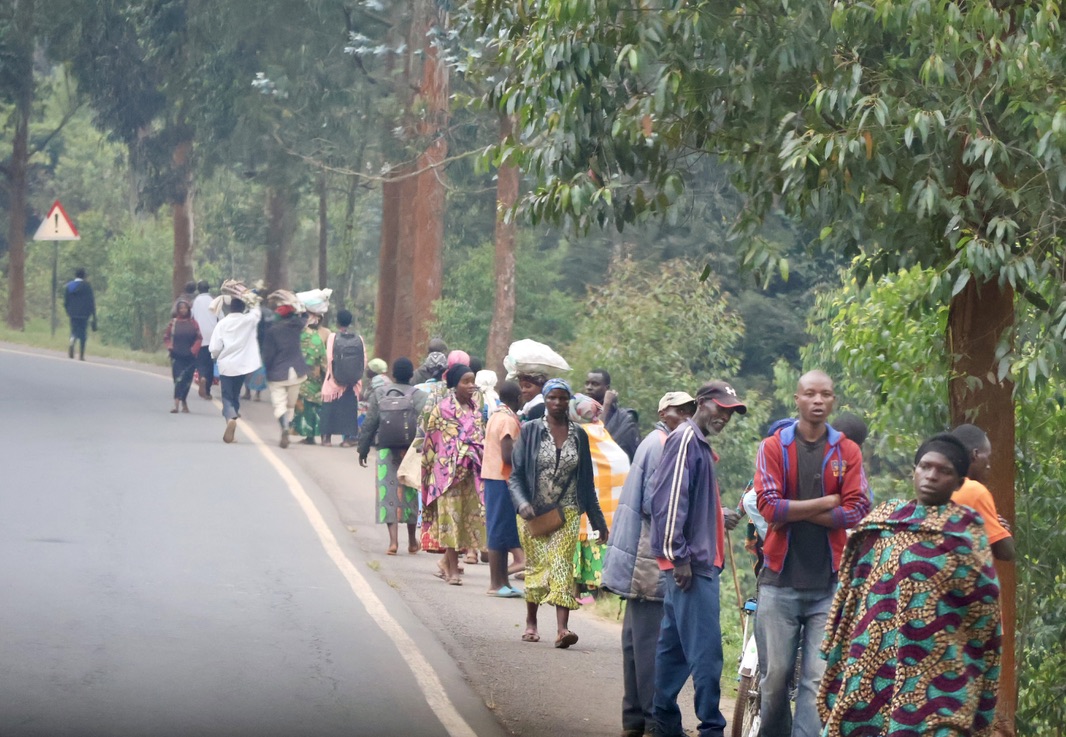
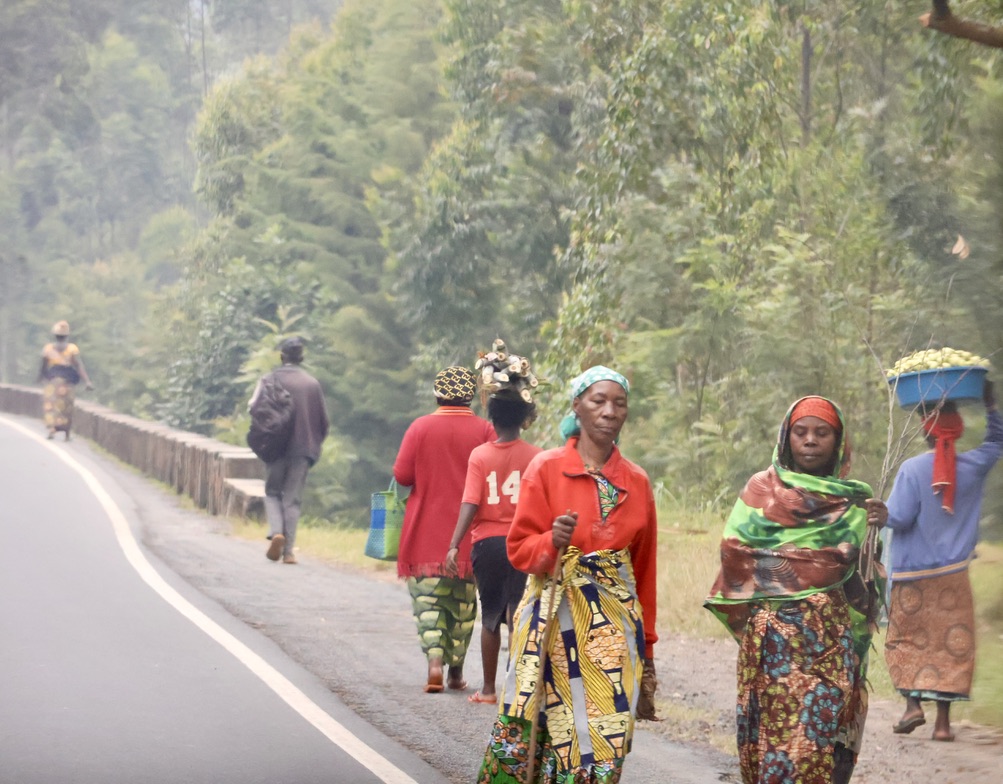
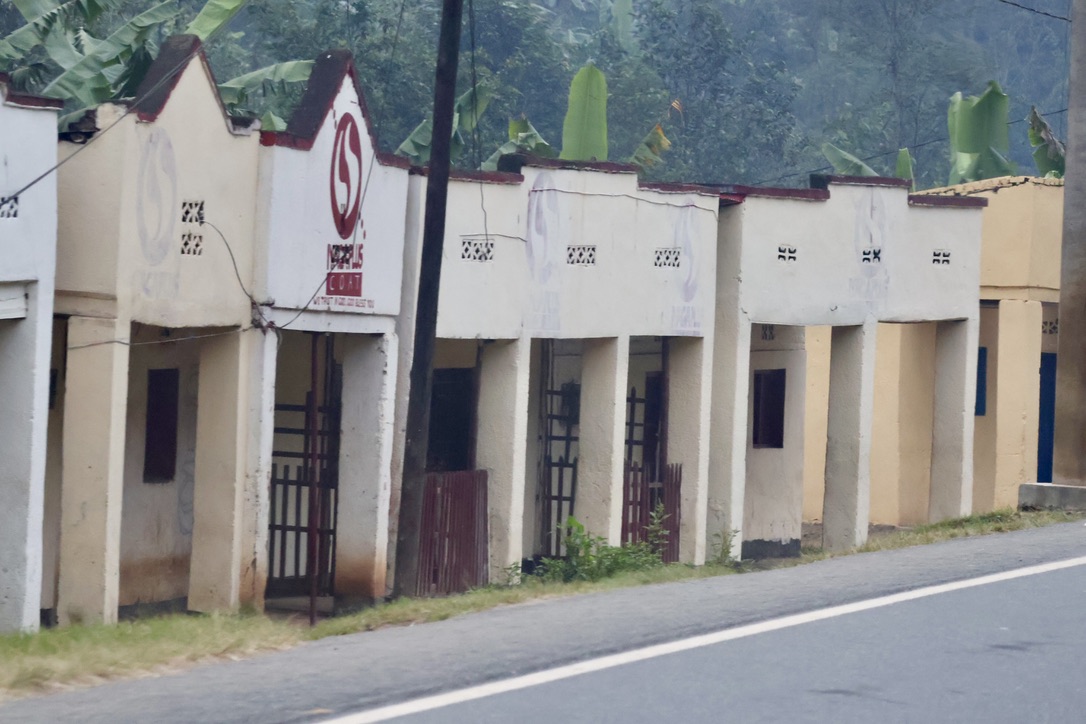
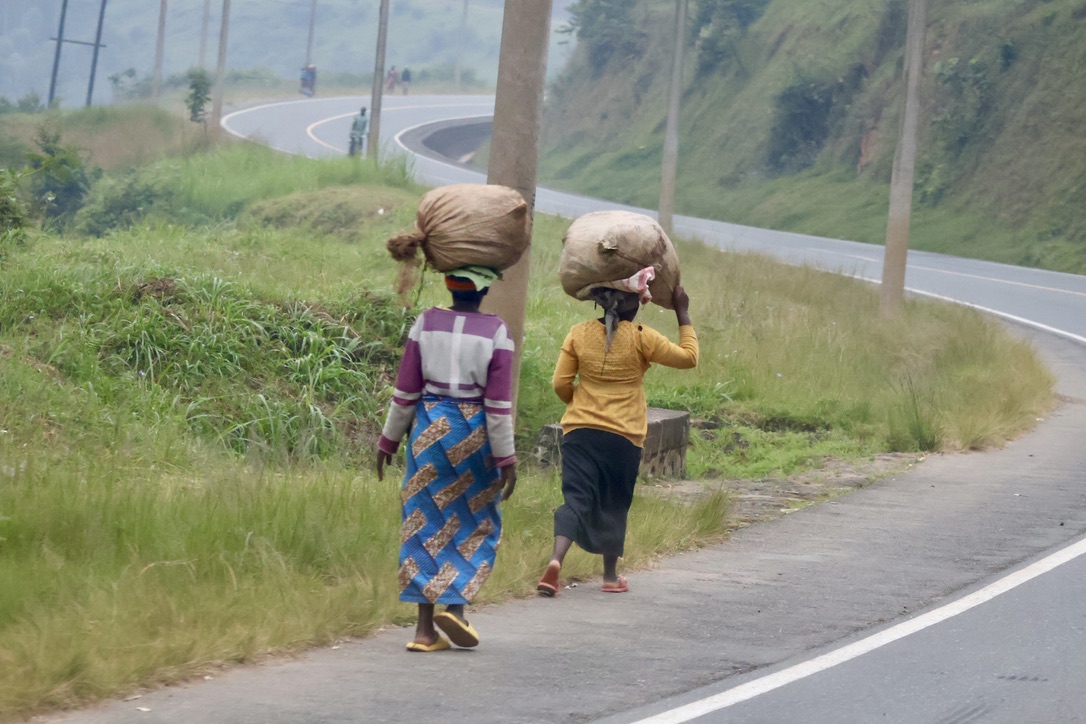
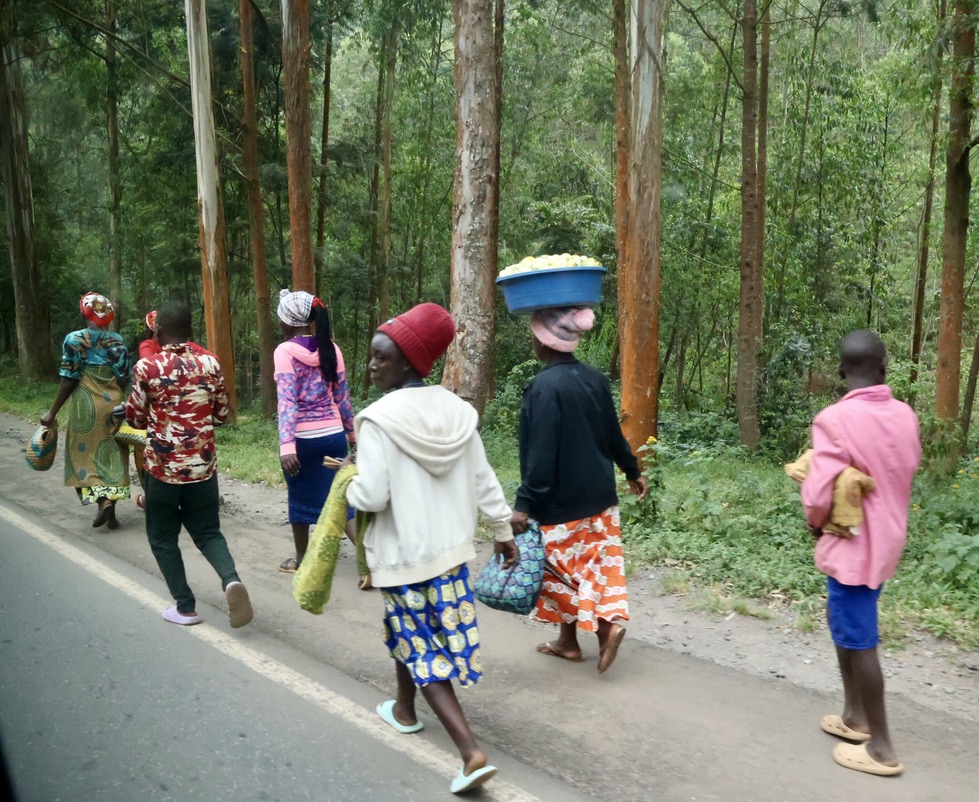
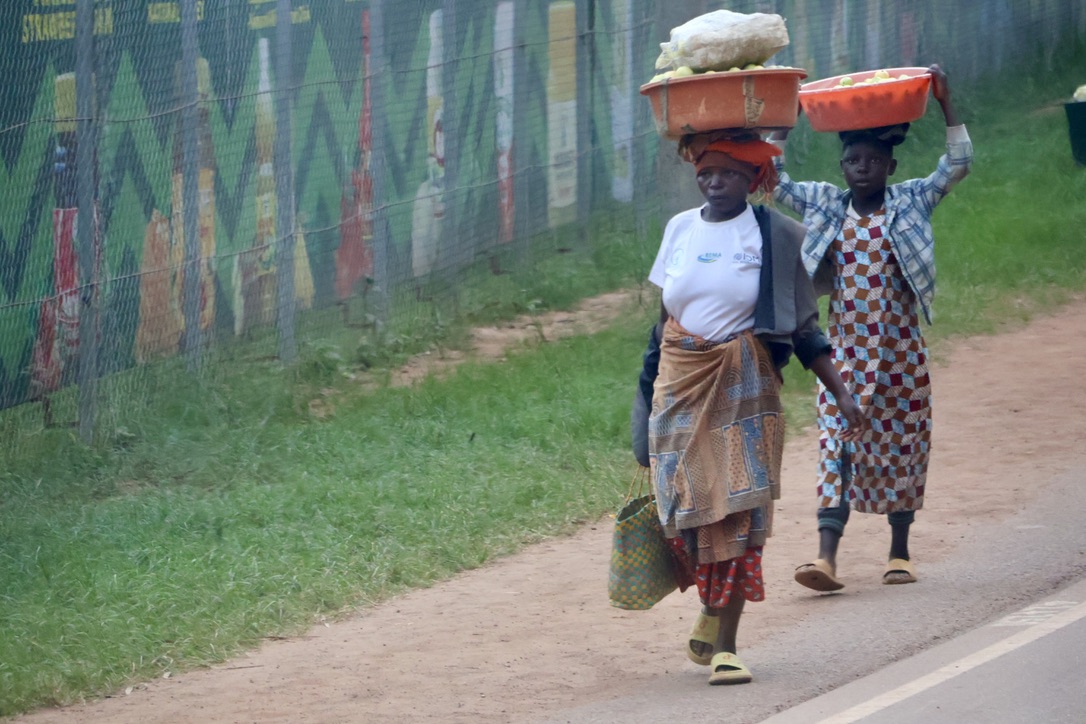
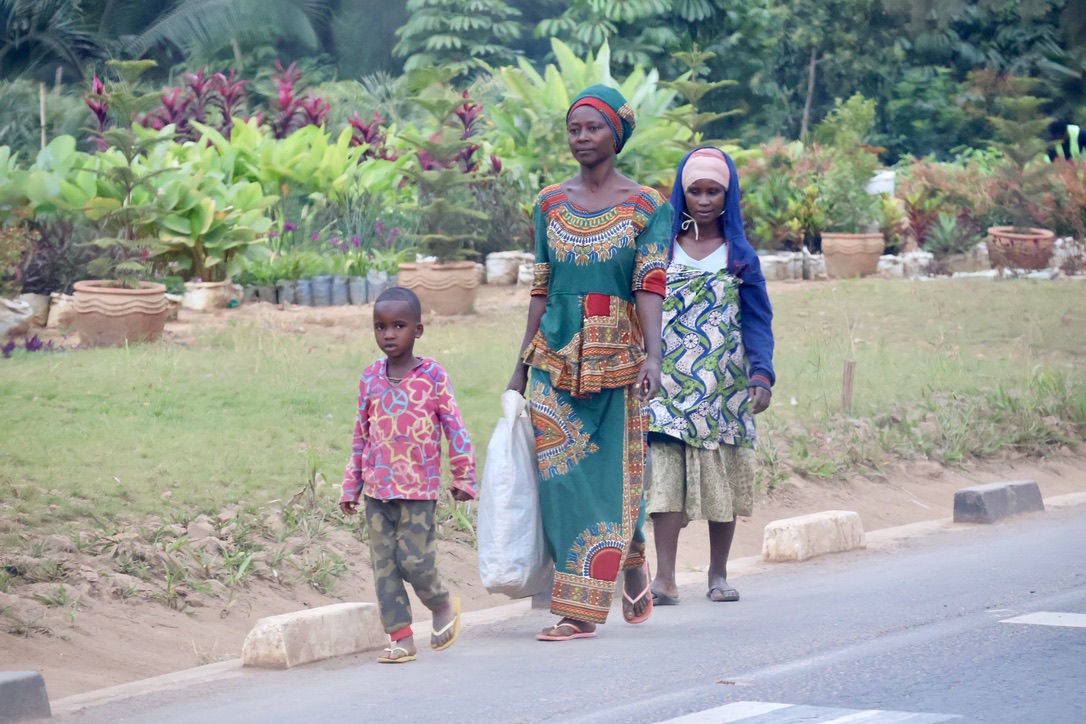
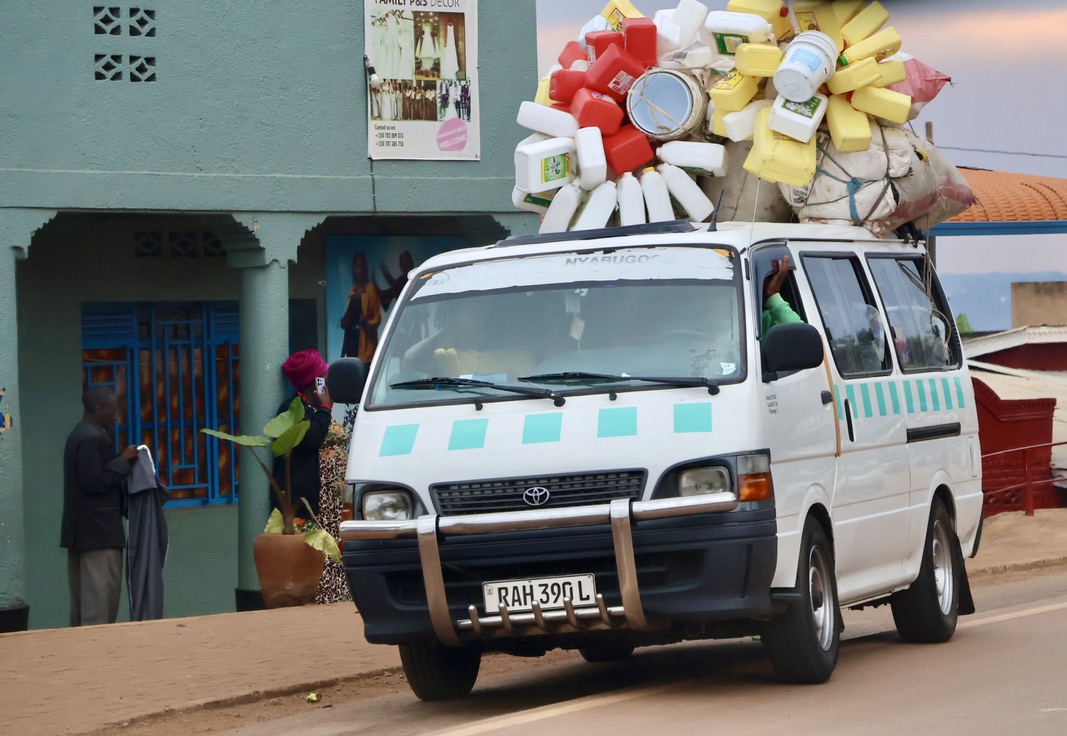
It wasn’t until we hit the outskirts of Kigali that cars and motorbikes started to dominate the roads.
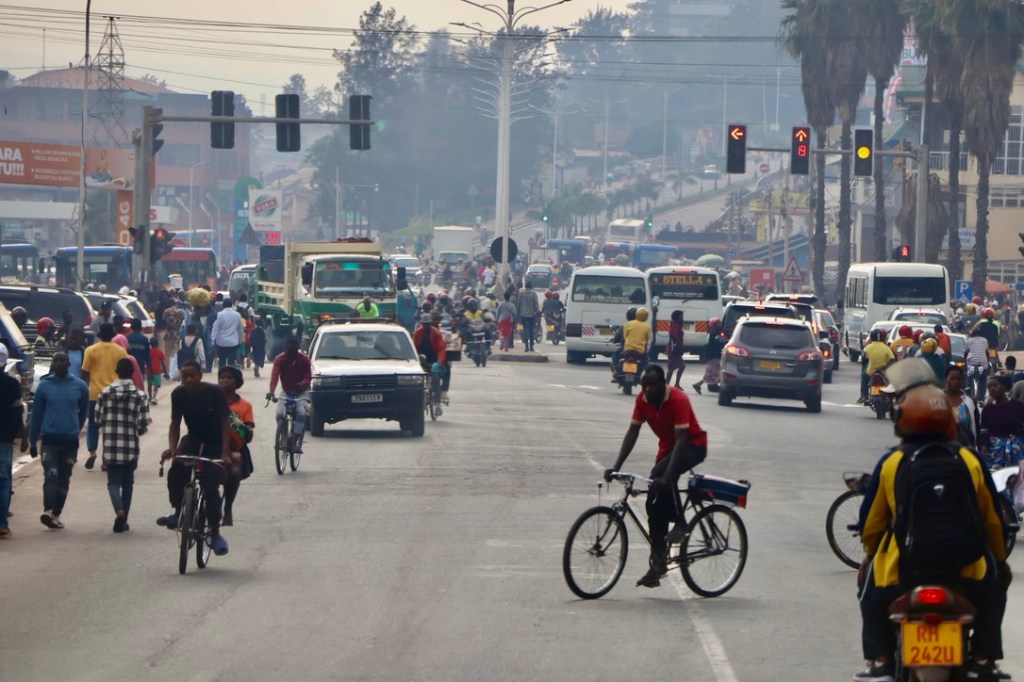
People walked to market. Hundreds of helmet-wearing Uber motorbikes ferried people around. Small children in school uniforms walked themselves to school unsupervised (we’ve really got to lengthen the leash at home!). Whilst the buildings we passed were often ramshackle, the streets continued to be spotless and well maintained.
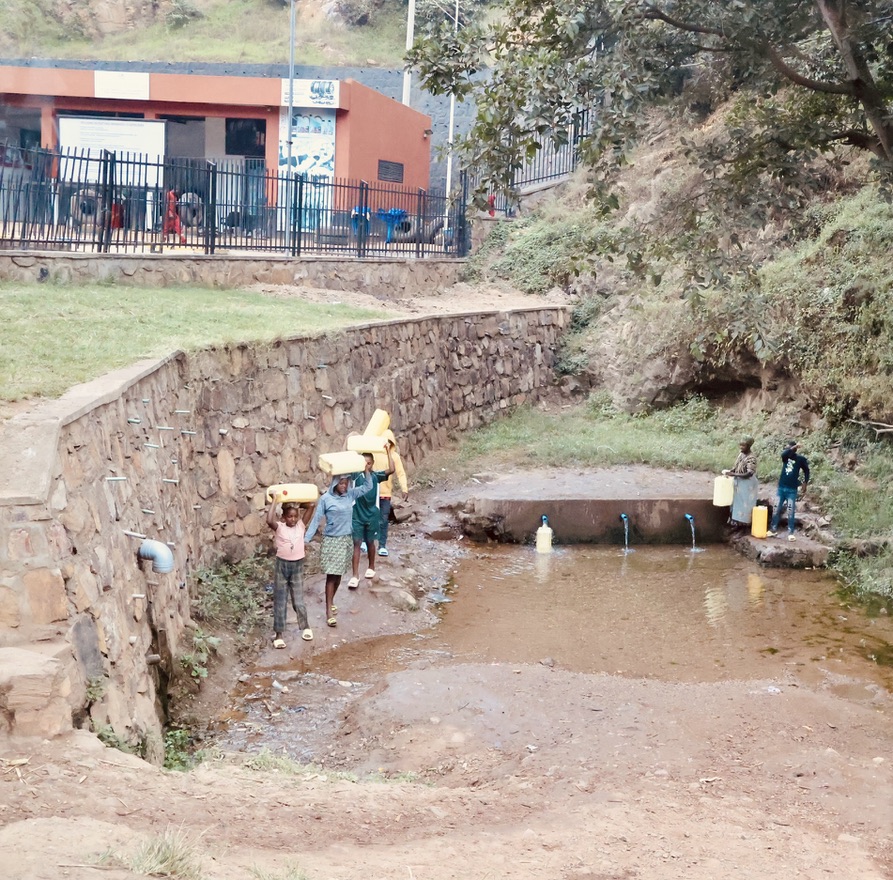
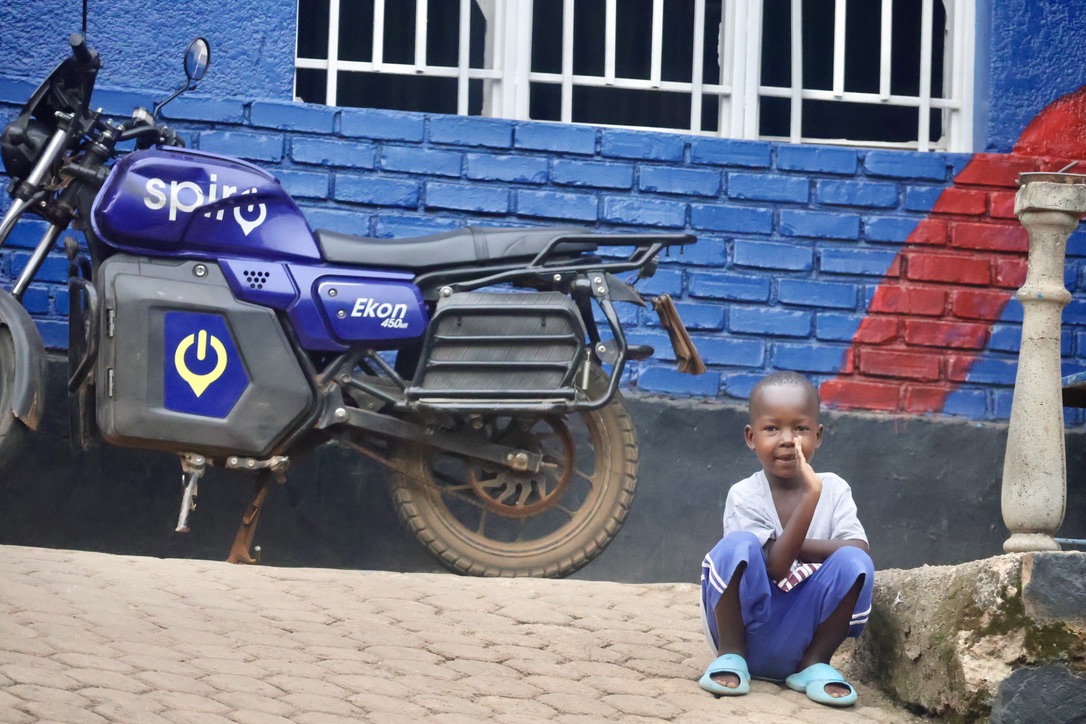
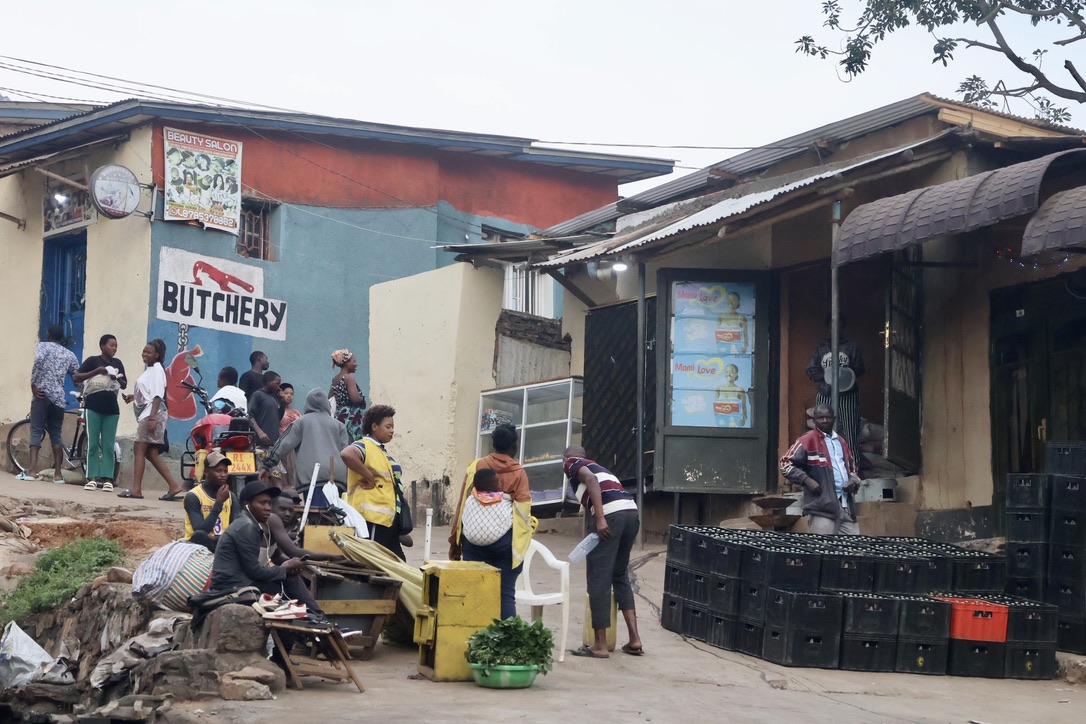
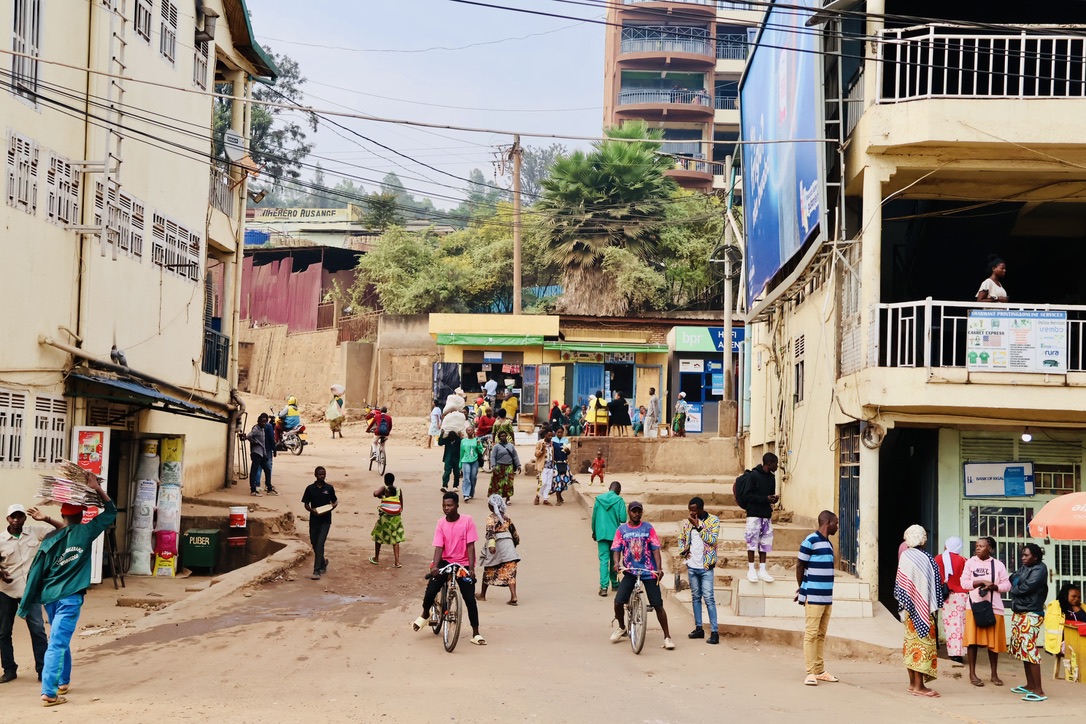
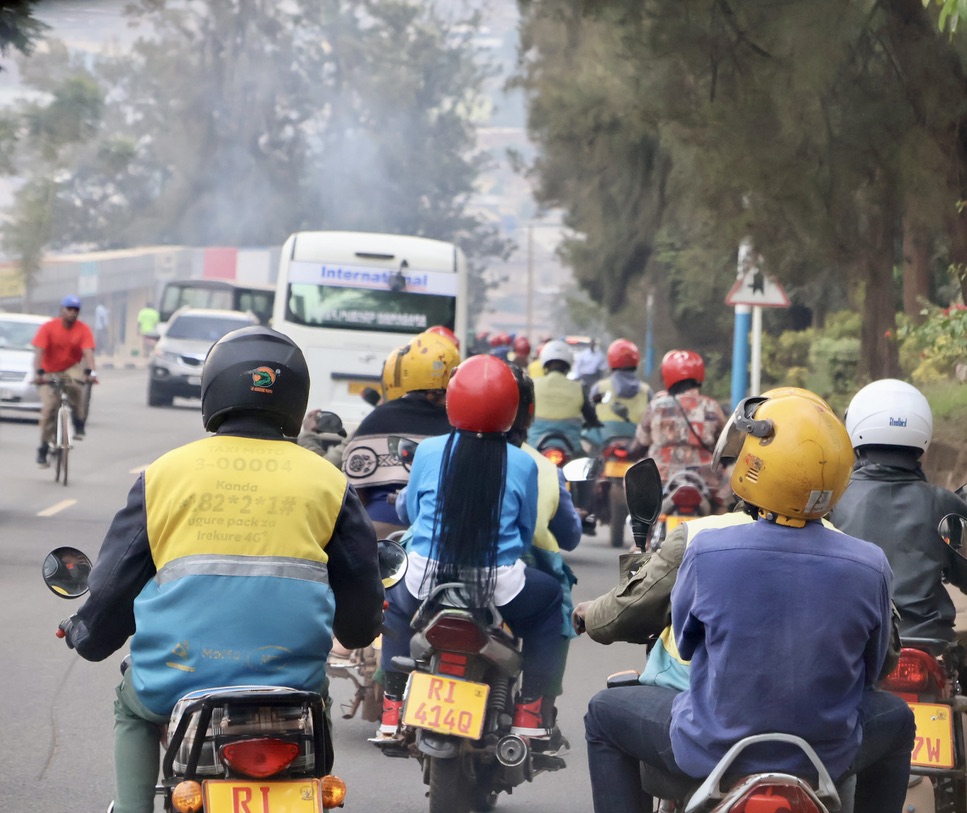
There was no sign of anyone over 30. The level of ethnic homogenaeity was astounding – we saw no variation in colour or ethnicity (except for the tourists) – which is particularly striking coming from Australia or the UK.
Over the 3 hour drive we talked to Godfrey about genocide, reconciliation, the opportunities and risks of tourism and national development, religion and population growth. It was fascinating to get a bit more insight into the country and its transition from it’s tragic past to what will hopefully be a much brighter future for its young, ambitious people.
It was such a privilege to be able to spend a few days here, and we’d love to come back again with the kids.
 Joseph FAMILY ADVENTURES 2023 - 2025
Hi Liz and Art. Really enjoy reading your adventure stories. They are so explanatory that you take us around the world without us leaving home. Thank you for including us. Things have not changed much at our house, Gil needing a lot of care, so no time to be bored. Carrick Road has many new people on the properties close by. Take care all of you and continue to enjoy life. Love Laraine and Gil
LikeLike