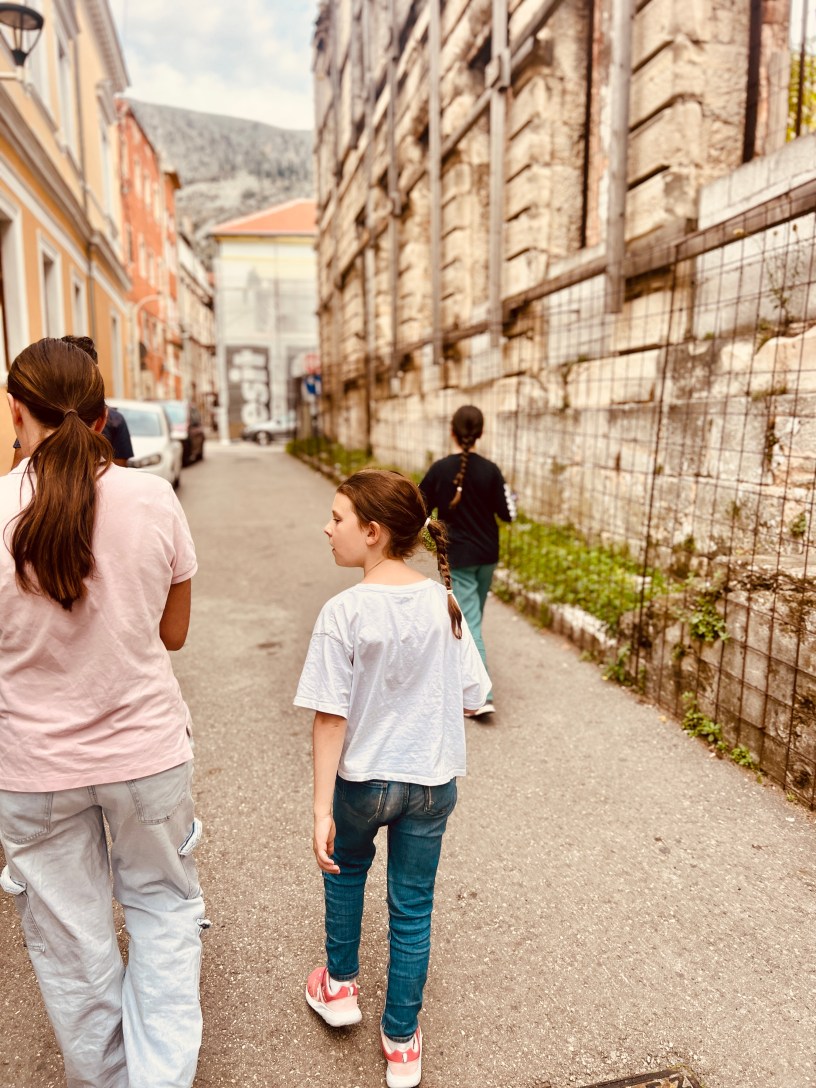
17 October to 29 October 2024
We were excited about our trip to the Balkans. Not only was it a chance to catch up with Alan and Ana, it was the only trip we were doing this year that would see us explore a region that was mostly unknown to us – not to mention the opportunity to get into the incredibly interesting and all-too-recent history. It couldn’t be further away from our recent travels to Club Med!
I think its fair to say that Liz was dreading the flight out. Wizz Air from Luton. Nothing about that seemed easy or convenient from south east London. This sentiment was only reinforced by the number of emails we received changing our flight times – including one moving our flight to Prishtina back a whole day. Amazing.
So it was with some trepidation that we pulled the kids out of school a day before holidays and made our way to Luton Airport.
The journey to the airport was quick and easy from London Bridge – no worse than Gatwick or Heathrow really.
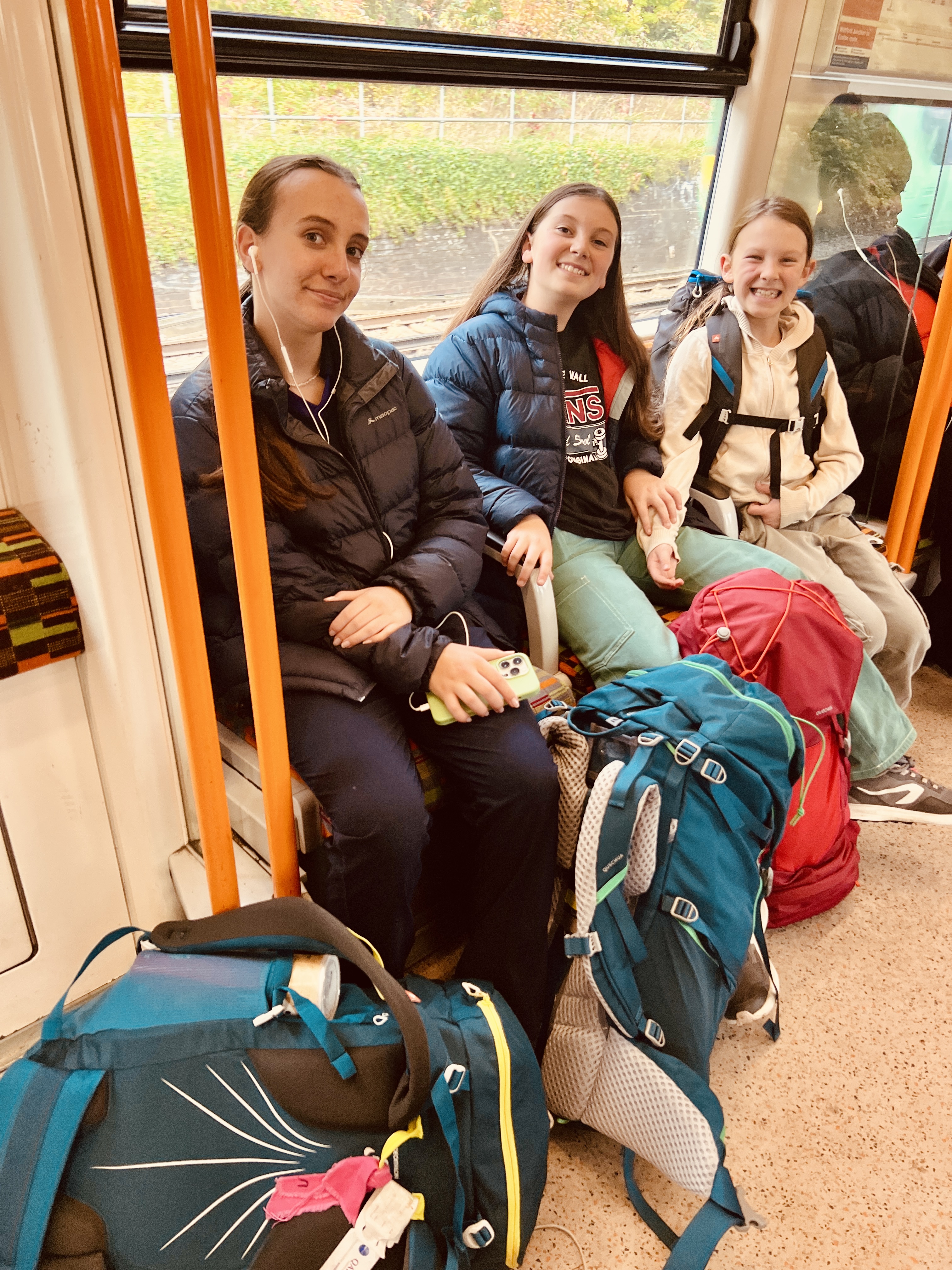
We arrived at Luton expecting Wizz Air to be cancelled or late – or perhaps a sign saying that they had gone out of business or never existed in the first place. In fact the check in process was quick and easy. Ant had drawn the short straw and had the only checked in bag, and so said a wistful goodbye as the bag disappeared along the belt, convinced that we would never meet again.
We made our way through the new security scanners without breaking stride.
There was no passport control.
We sat down at a reasonably priced pub after security and had, according to the kids, ‘the best burger they’d ever had’.
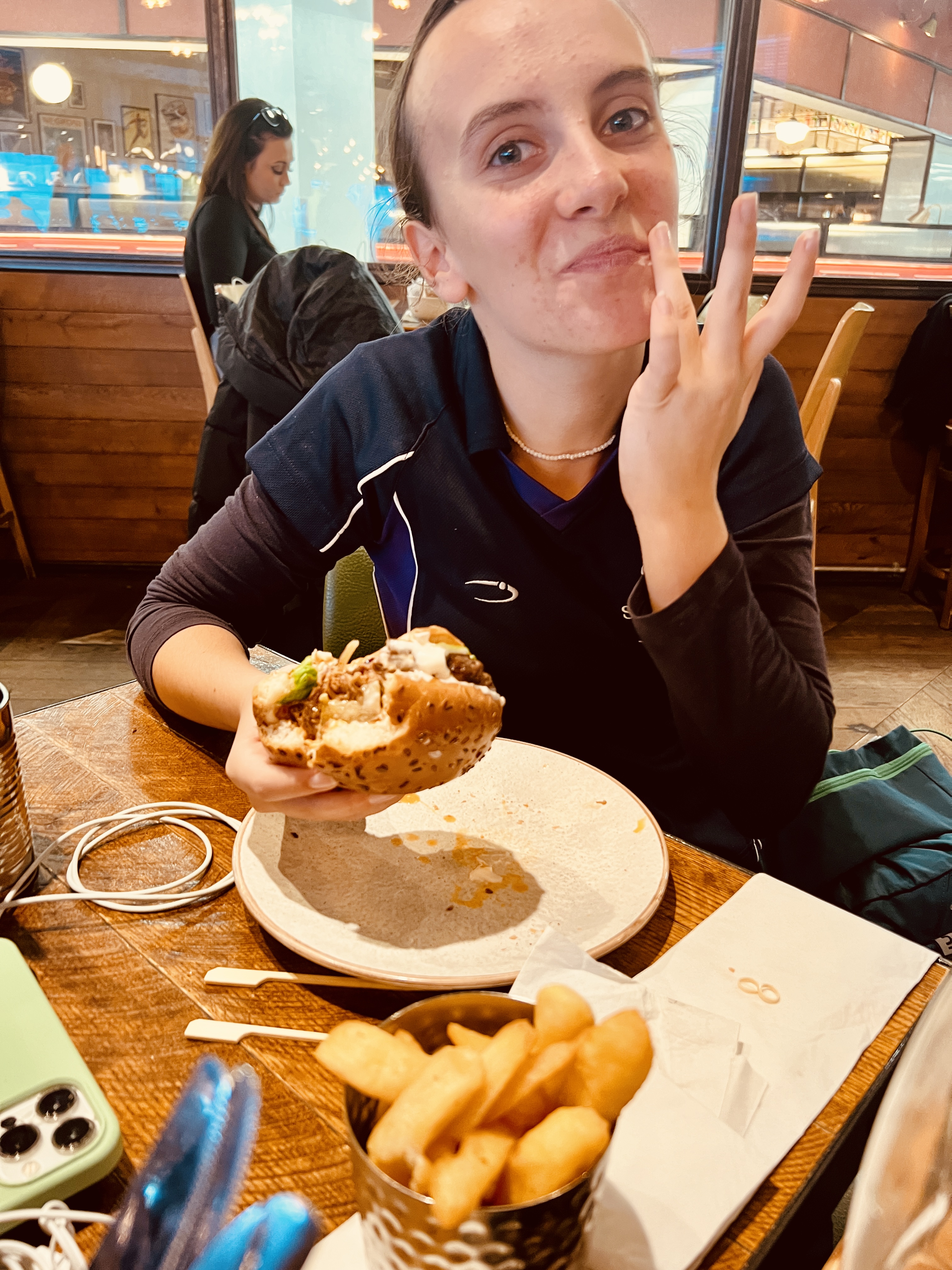
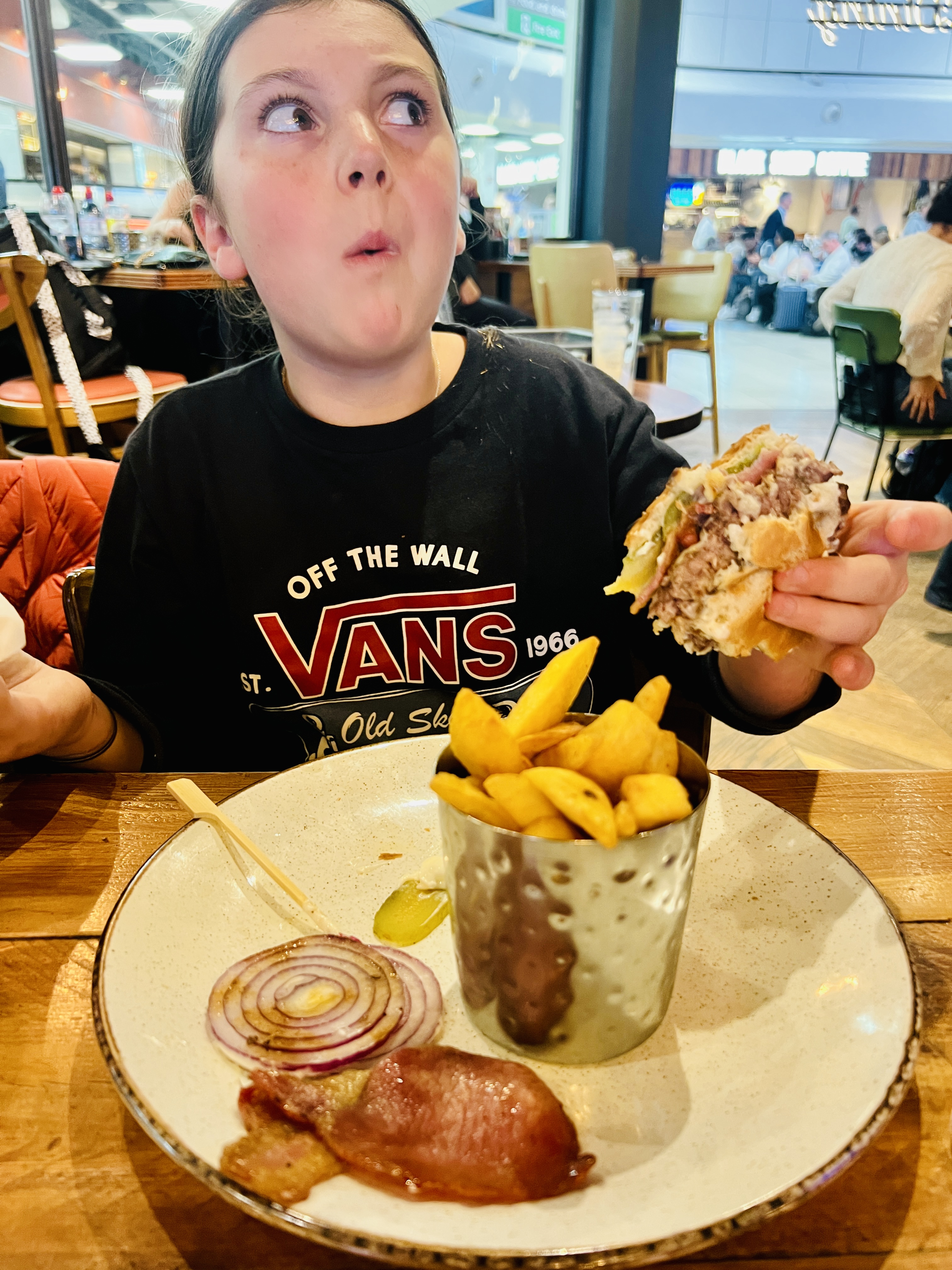
This was way beyond expectations, but we were still expecting our flight to be a hologram, or perhaps a cardboard cutout.
We made our way to the gate, formed an orderly and efficiently moving line with a largely Balkan looking crowd. Clearly this route was targeted at the ‘Kosovans returning home’ rather than the ‘Brits Abroad’ crowd.
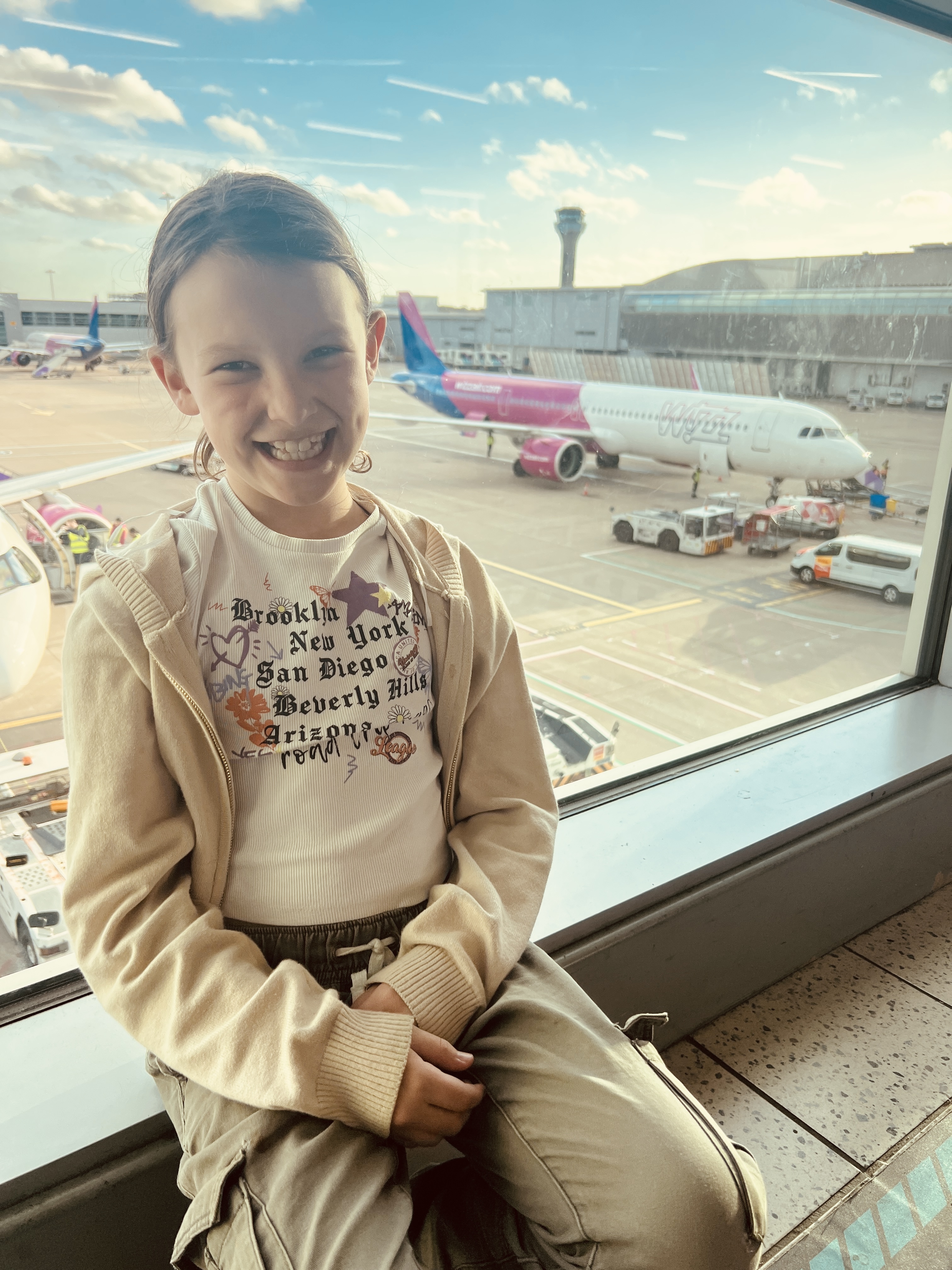
We cleared customs and boarded our brand new Airbus for an on time departure. As we boarded the plane, we tapped on the fuselage – it sounded and felt like metal, rather than wood or thin air, so it seemed to be real.
The cabin crew were zealous and safety conscious. The plane was sparkly clean and shiny – albeit they managed to pack some 300 seats onto a very ‘mid sized’ aircraft.
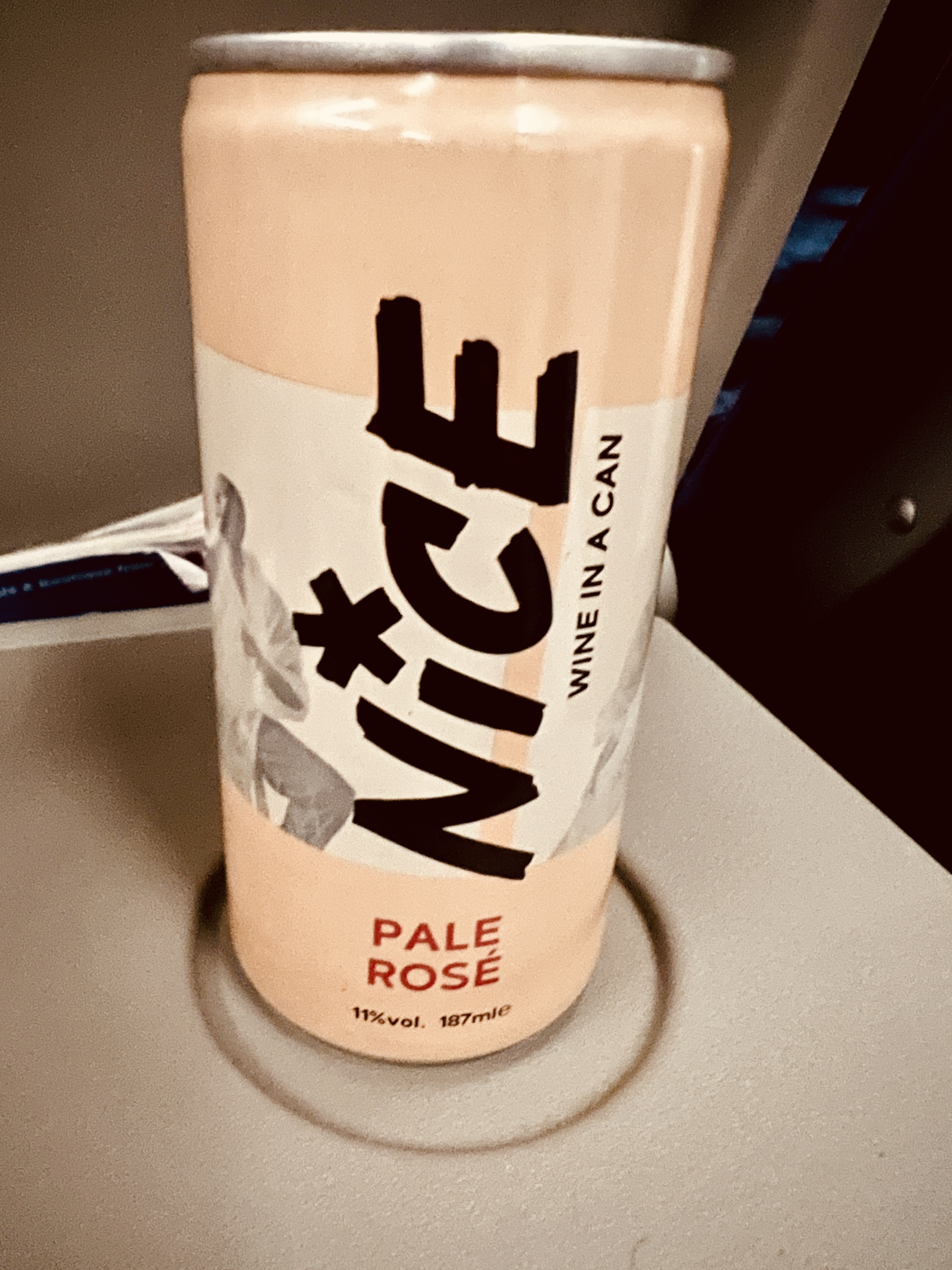
We took off on time, to the minute. The 2.5 hour flight passed quickly, aided no doubt by the fact that the kids were sitting some 10 rows behind us, and the ‘Nice’ branded rose out of a can – which was, in fact, quite nice.
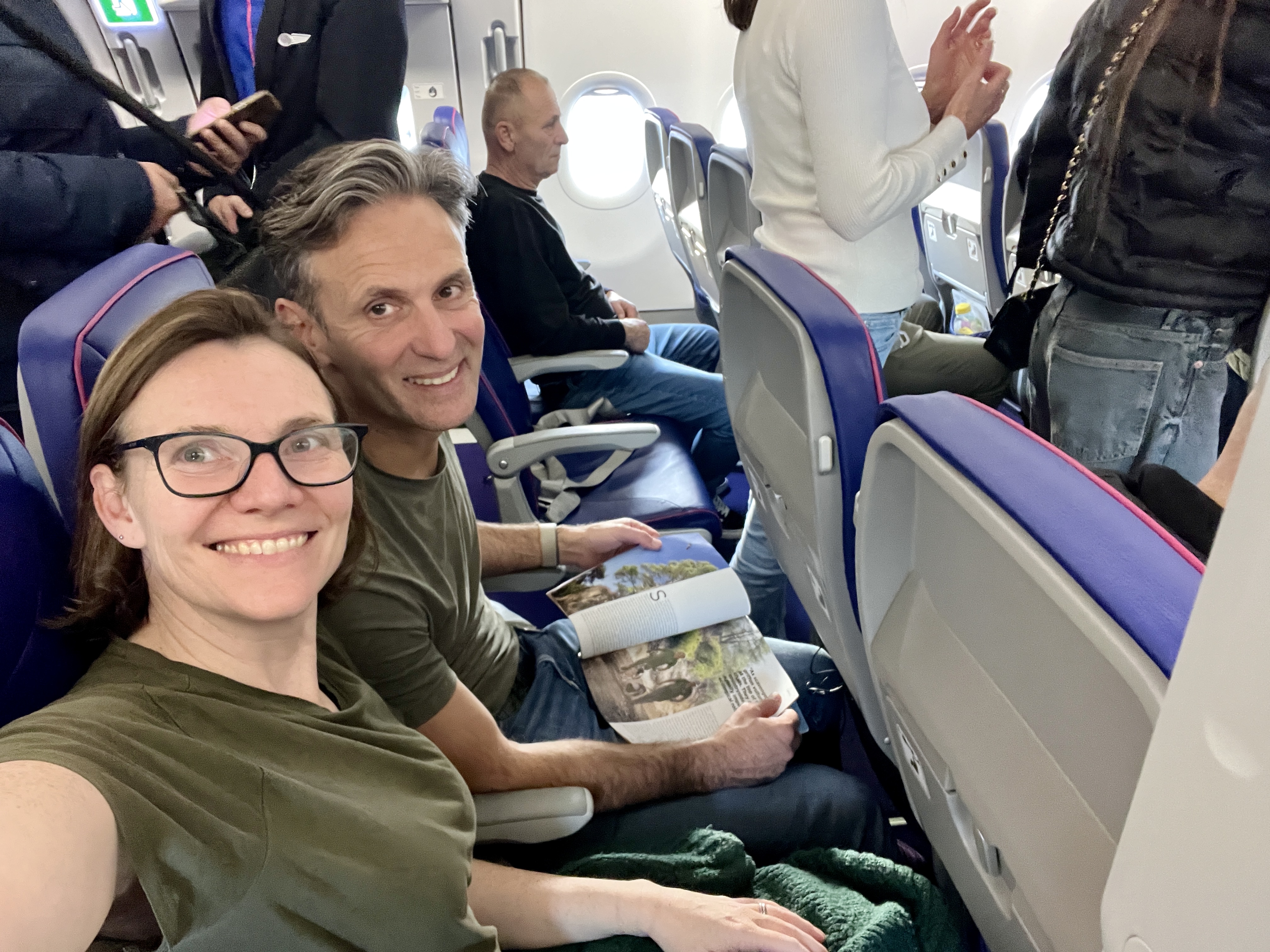
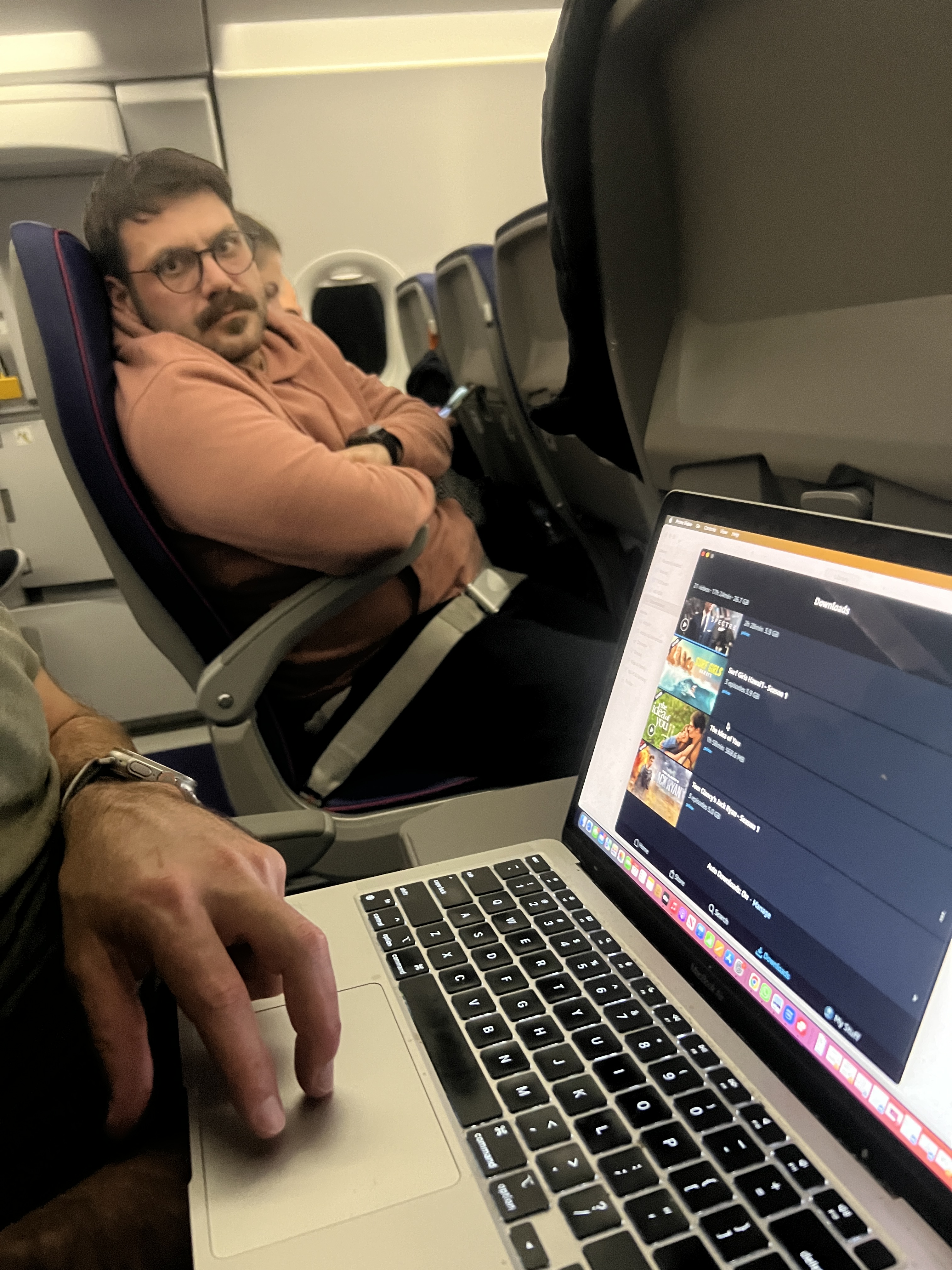
The only downside was the guy opposite us, who literally spent the entire flight staring at Liz,
and the Kosovan family who had a fight in the seats next to Ellie. But you can’t blame the airline for this, can we?
We landed on time, quickly cleared Kosovan customs and collected our bag from the belt without delay.
Any chance of a curse lifted, we immediately started to talk about ‘how good’ our experience had been.
It turns out that Wizz Air (who, it has to be said, rate horribly in most reviews) have quietly grown into a major airline that has cornered the Eastern European market. Their route map from London blankets the Baltics and Eastern Europe – we haven’t checked what it looks like from their native Hungary but imagine it must be even more so.
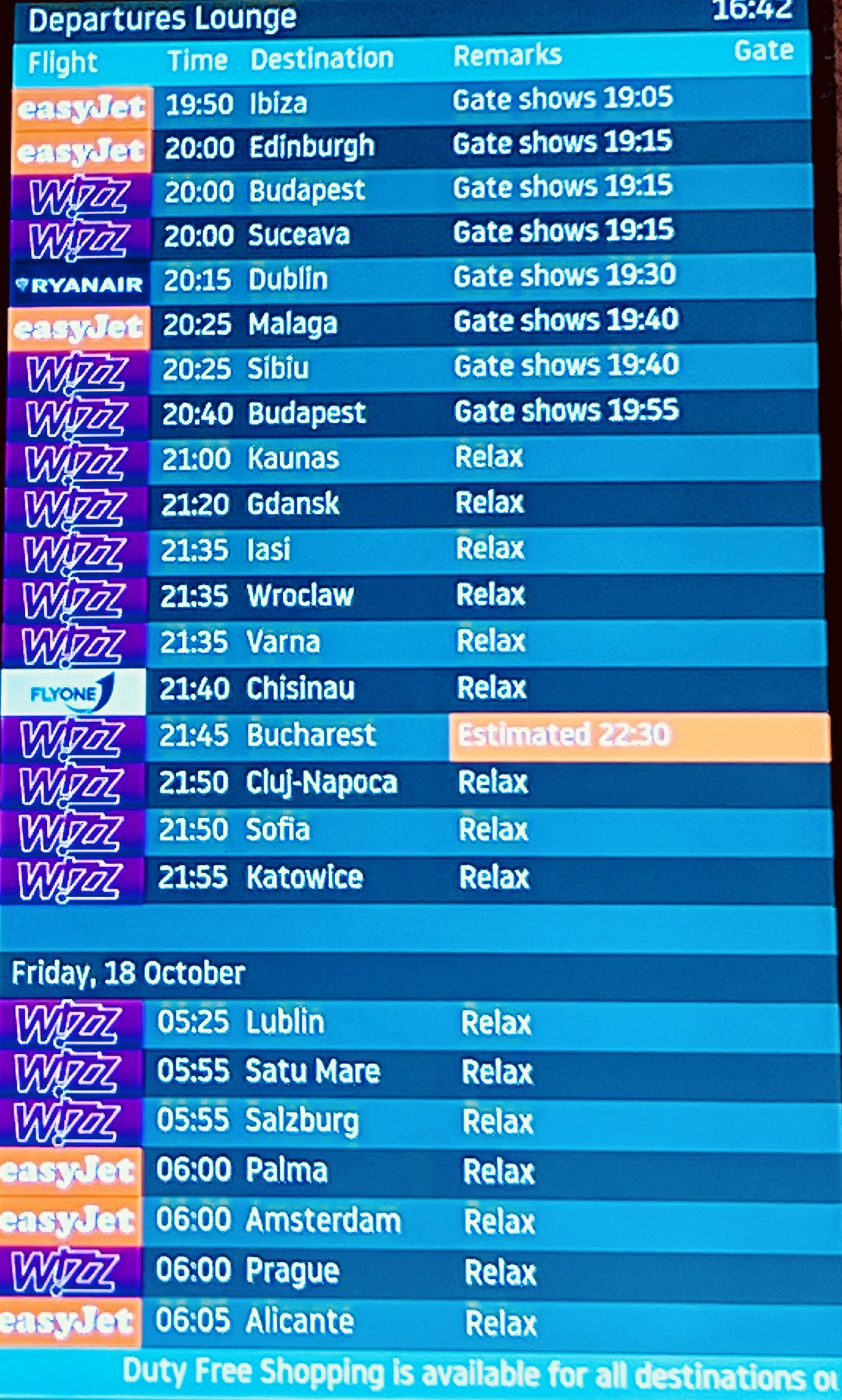
They have the youngest fleet in Europe and have gone to market with an ‘all you can fly’ annual pass… after our experience we might just about get one.
… but there’s still that nagging doubt. Does one good experience counteract all those bad good reviews? Who knows, but when we decide to go to Moldova for a long weekend (or perhaps Cluj-Naopoca in Roumania, just because it sounds fun) then we won’t have the same sense of doom we did this time!
It’s always a bit weird when you arrive in a new country late at night – it’s hard to get a sense for what it’s like, and whether its safe or not. This is particularly the case when you associate the city you’re visiting with war and ethnic cleansing in our life time.
We piled out of the cab around 11pm on to the Boulevard Mother Teresa in downtown Prishtina, half expecting it to look like a post war Stalingrad.
It didn’t.
The Boulevard was pedestrianised and tree lined. The buildings along it were run down, but the cafes at the base were busy, and groups of men were ‘promenading’ alone – the lack of women out at this time was the most striking thing, but it did not feel at all threatening, more remininescent of the Middle East (which makes sense insofar as Kosovo is predominately Muslim) .
As we searched for our apartment (regular street numbering is apparently not their thing) we loitered outside a cafe to ‘borrow’ their wifi and contact our host. Within 2 minutes a women (apparently the only one out in Prishtina after dark) came out and offered to help us.
Fully supported, we made our way to our apartment. On the positive, it was right on the main boulevard. To the negative, the outside was fairly ‘old school communist’ and the entrance was at the back, down a dark, rubbish strewn alley, past a Thai massage parlour and up 5 flights of stairs – fair to say that tension was relatively high with the girls before we entered into our very lovely apartment.
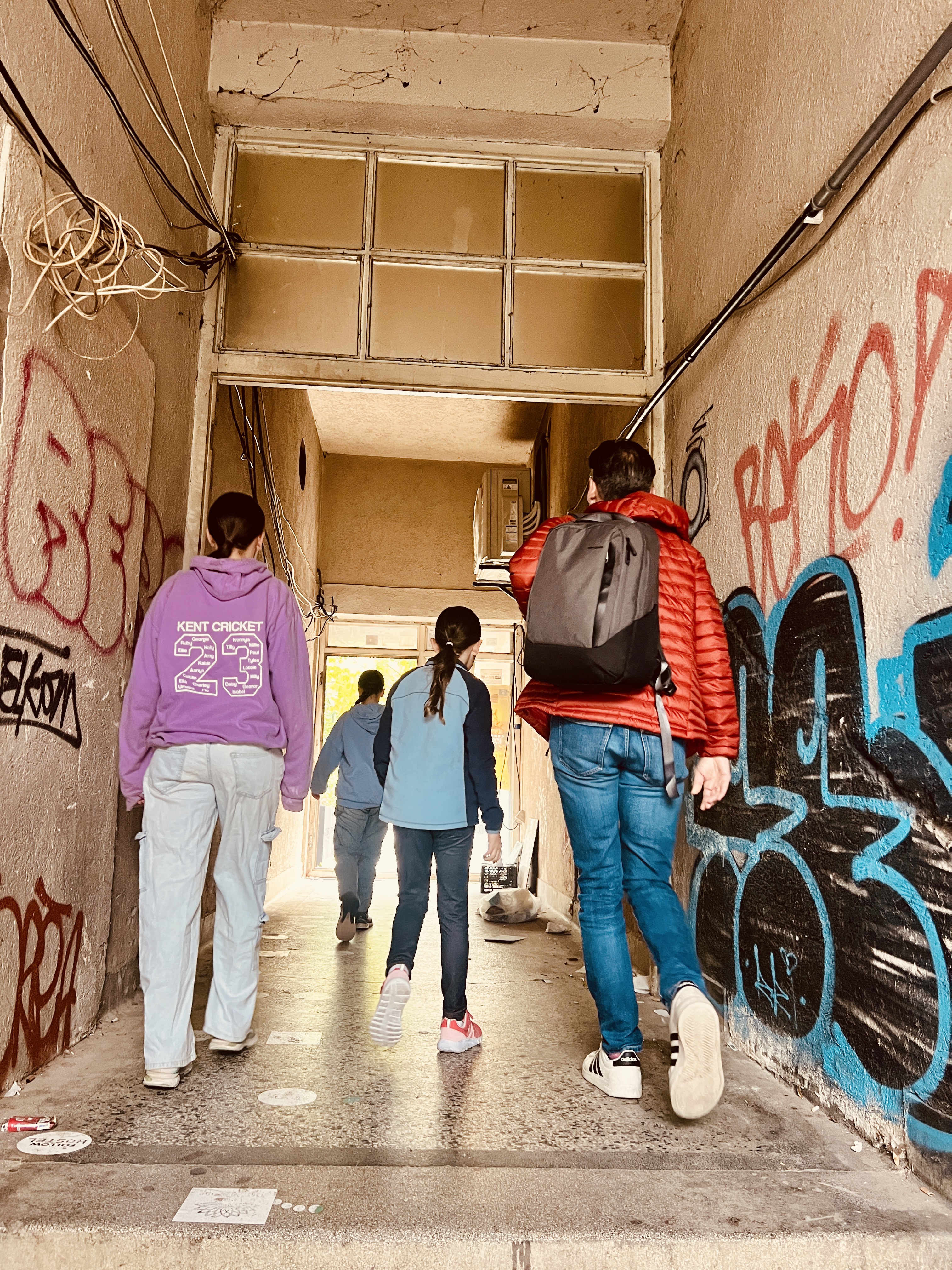
We settled in for the night, curious about what tomorrow would hold.
For our 1 full day in Prishtina, we had engaged Astrit as our guide to show us around the city, and then to take us on a private tour of the countryside around (we would have done this ourselves, but it turns out that you can’t hire a car in Kosovo and take it across any borders, which is not that helpful). We only had our late night observations to go by, and so were excited and curious to see what the day would bring.
A few observations of our time in Prishtina:
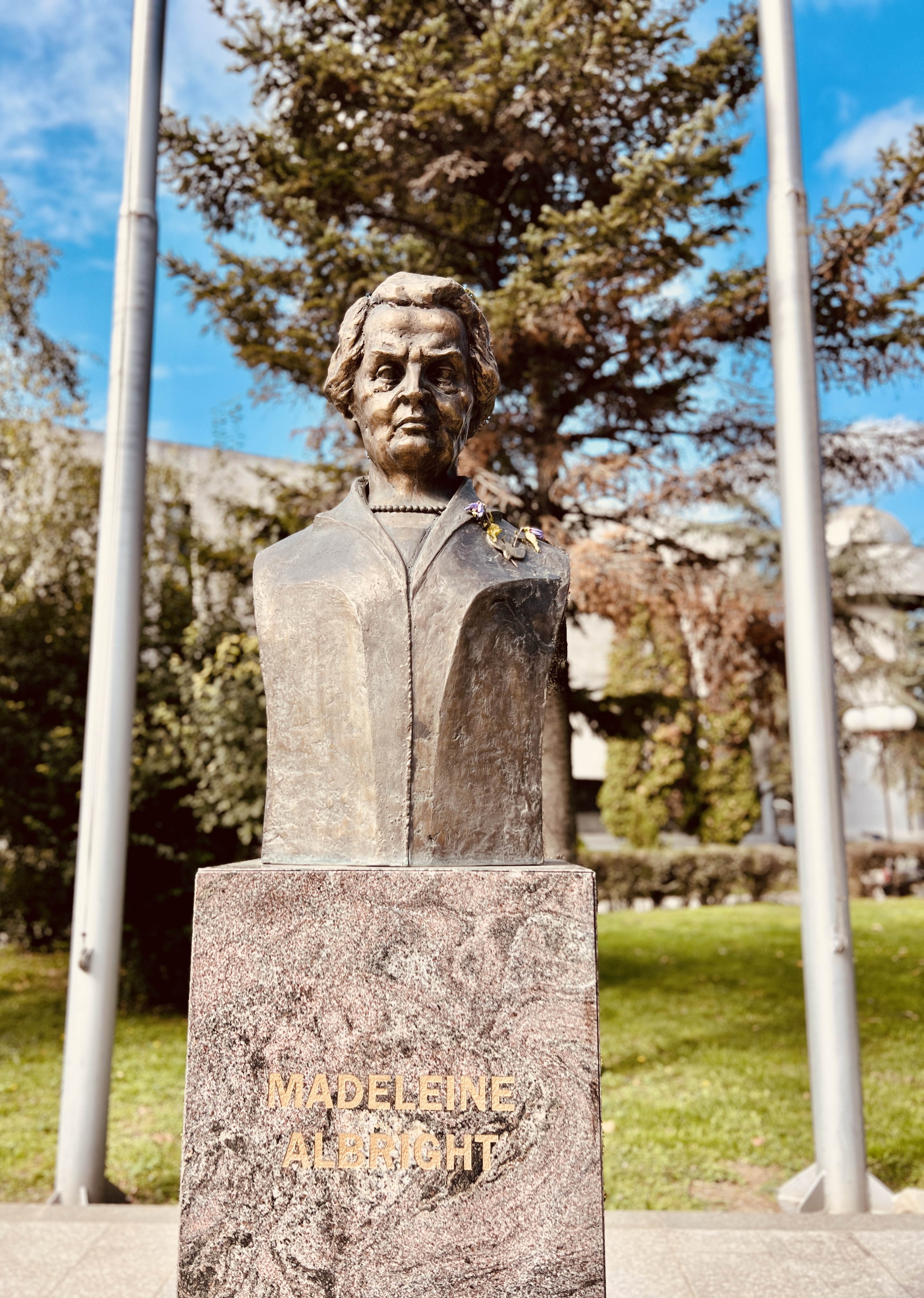
1. Everyone we met was lovely – a combination we think of not much tourism (think the opposite of local attitudes in Paris or Venice) and a general adoration of Americans/Anglophones in general from the role of the US and NATO in stopping the Serbian advances in the Yougoslav War in the 1998 (there are statues and boulevards named after Clinton, Bush and Albright around the city, not to mention a replica of the Statue of Liberty).
2. Prishtina was not significantly damaged in the war. Tragically around 800k Kosovans were forced out in the space of 48 hours by the Serbian forces, but the city itself was largely untouched – so there is not a lot of sign of the war there today (other than the citizens themselves who still tell of being told to ‘leave in 16 minutes or die’ by Serbian militias during the early stages of the war and have subsequently moved back).
3. There is a lot of building projects ‘in flight’ across the town – what is not clear, however, is how long these building projects have been in flight for. On closer enquiry, the population of Kosovo has decreased by around 10% in the last 5 years, and so much of these projects appear to be stalled
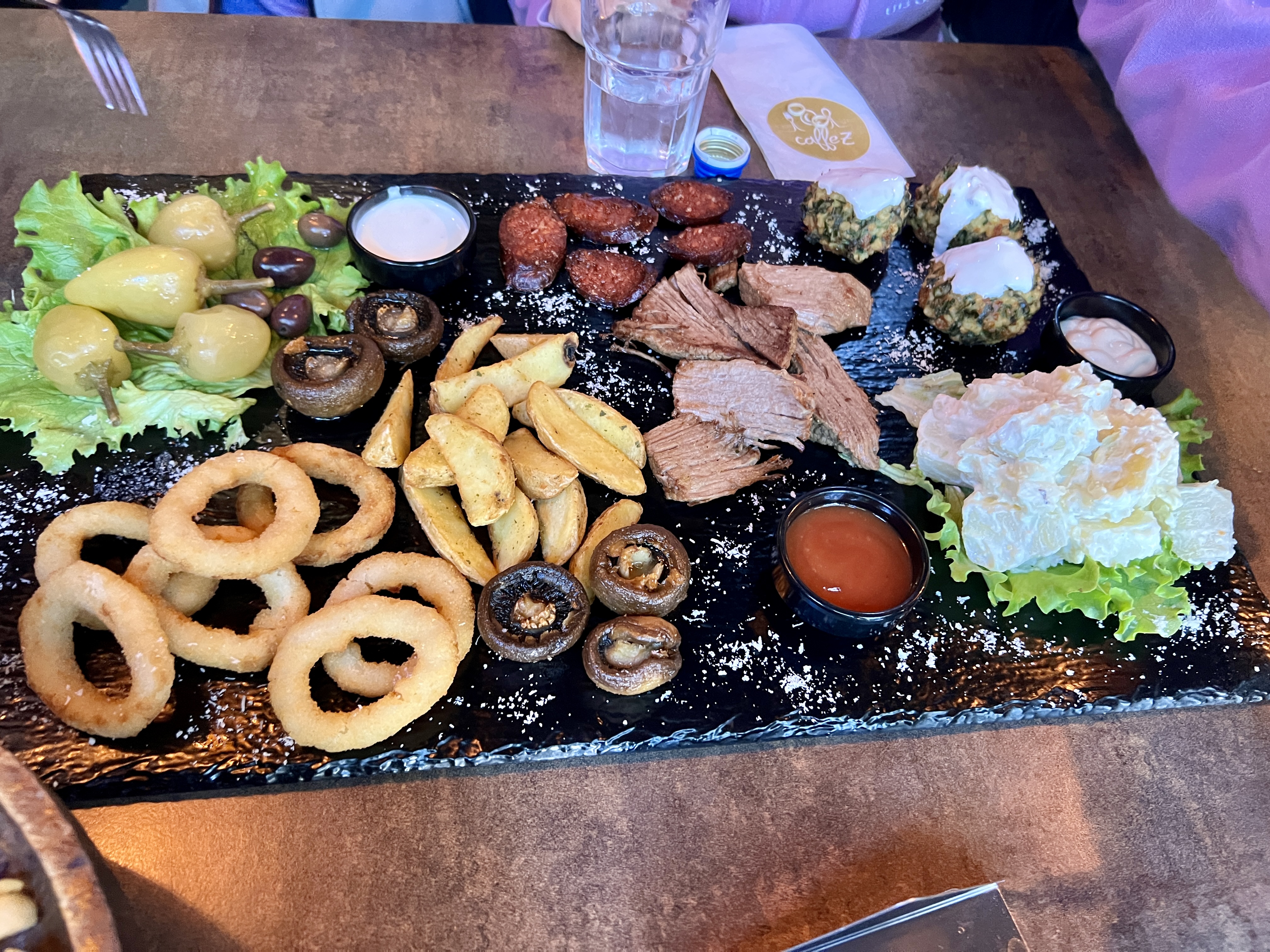
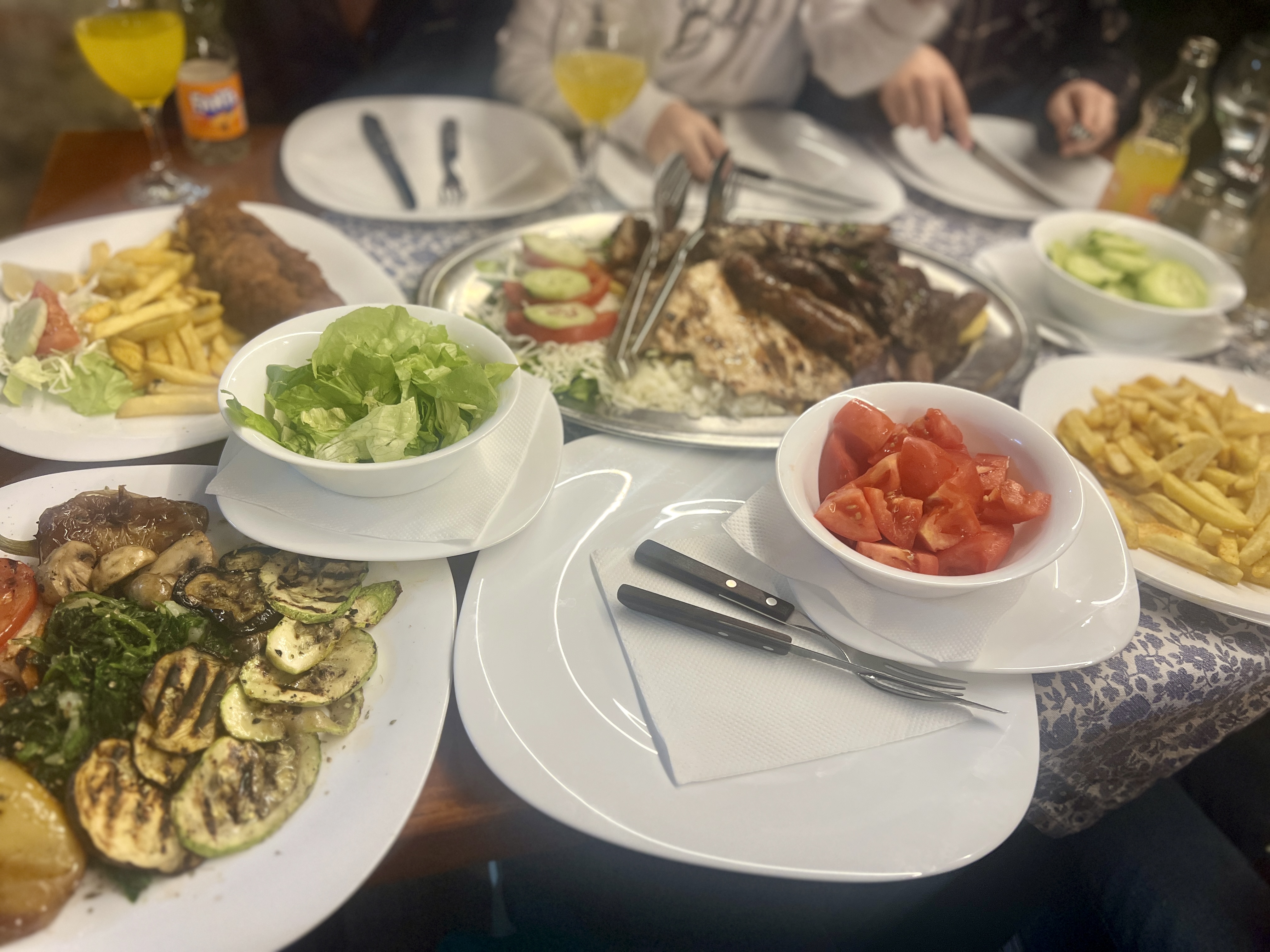
4. The food was great, the local wine very good and the coffee amazing – we had large plates of meat and grilled vegetables, local stews, delicious local desserts… and Ant drank his body weight in Italian quality cappiccinos
5. ‘Stray’ dogs are everywhere. Like in Tbilisi, they are vaccinated, chipped and desexed then released back to the street. They seem to be mostly either aloof or up for pats. Needless to say we spend a lot of time testing who was up for pats, and very almost came home with another 6 dogs to keep Gus company (or perhaps to teach him some manners?)
6. Albanian is not an easy language!
We spent the morning wandering the sights of the city – visiting the old town, noting the mixture of mosques, Eastern Orthodox churches and, notably, an enormous and slightly out of place Cathedral of Mother Teresa (only 5% of the 1.8m Kosovans are Roman Catholic, and this cathedral would have put most churches in Australia or the UK to shame).
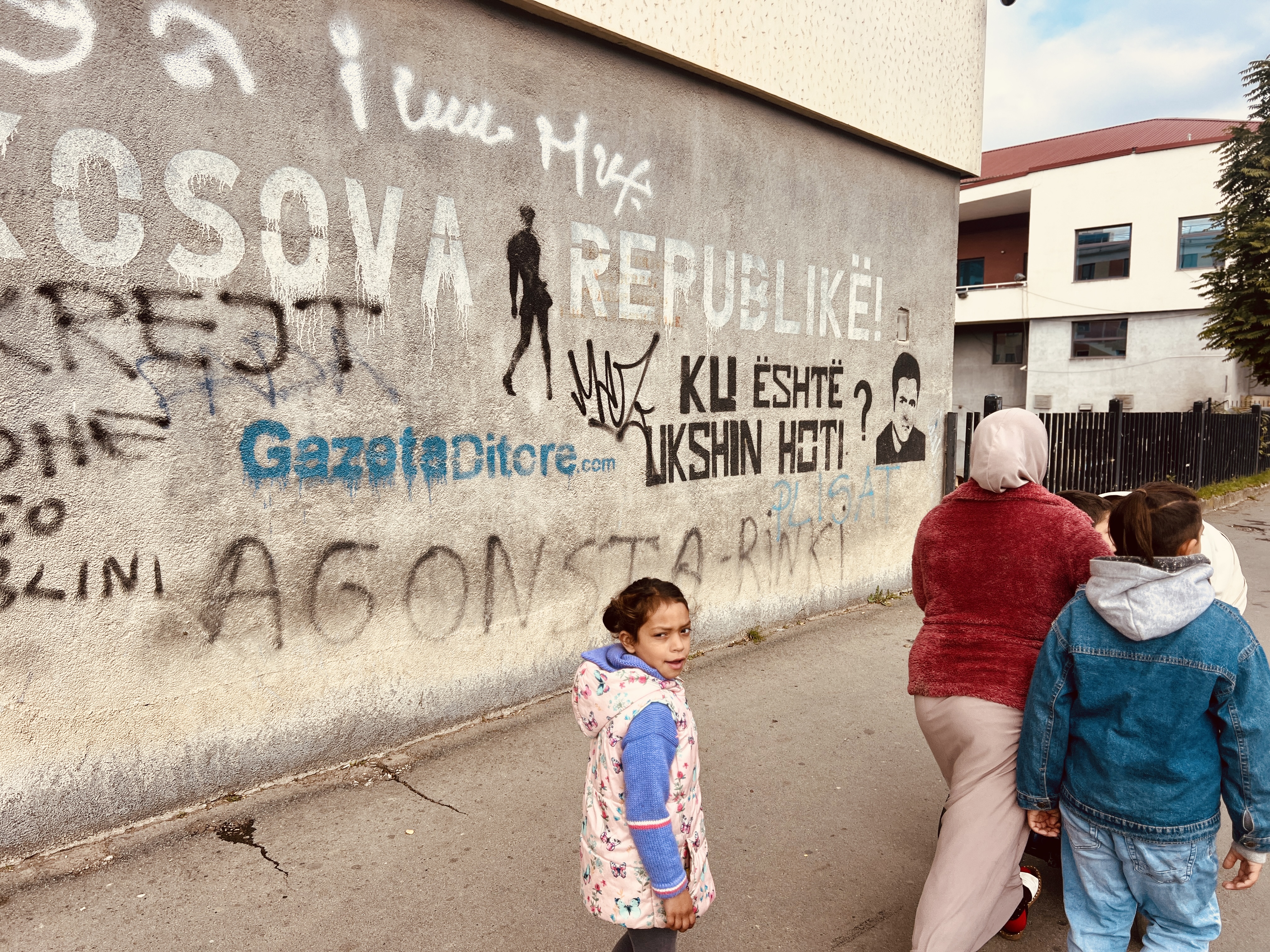
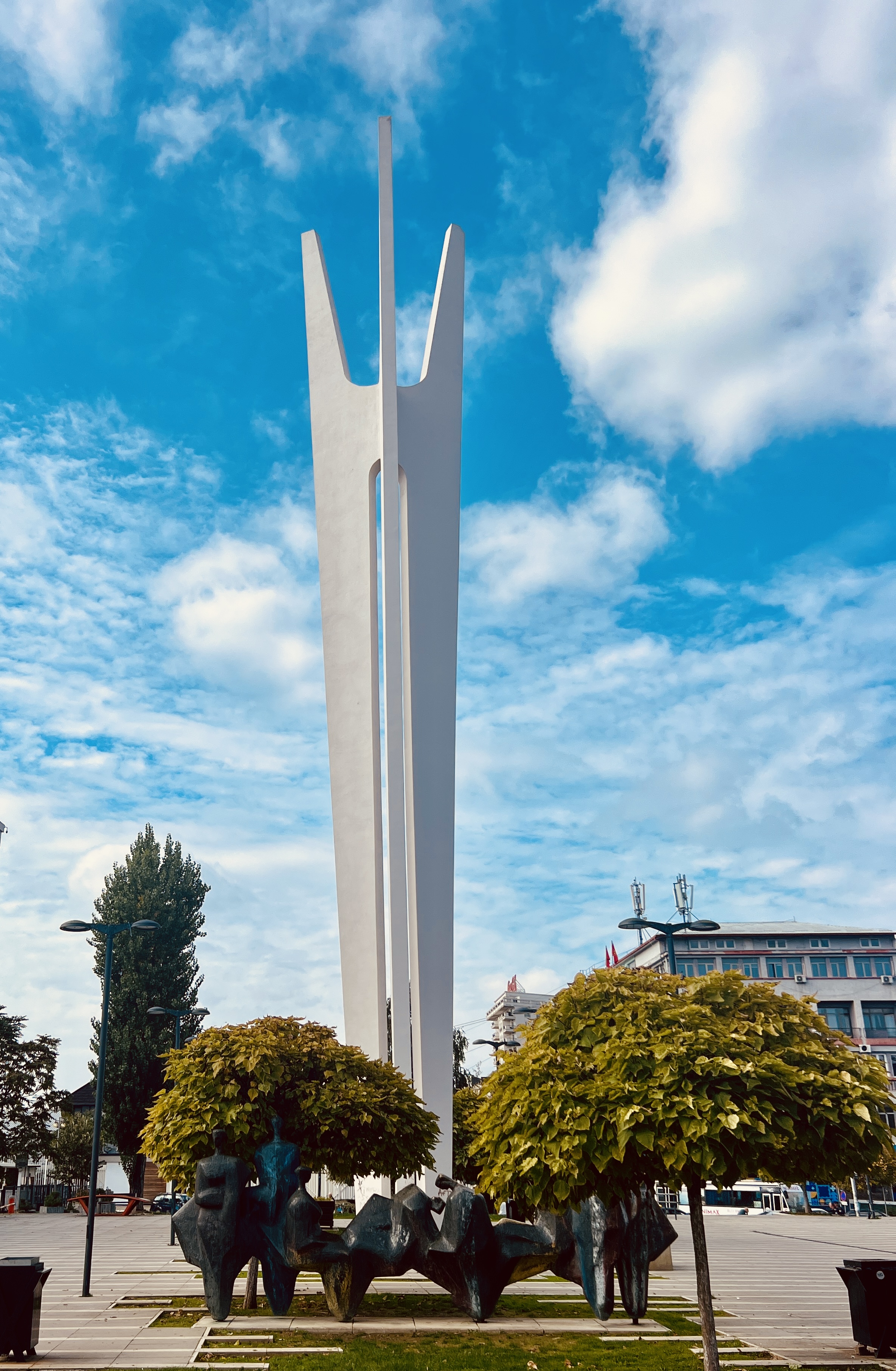
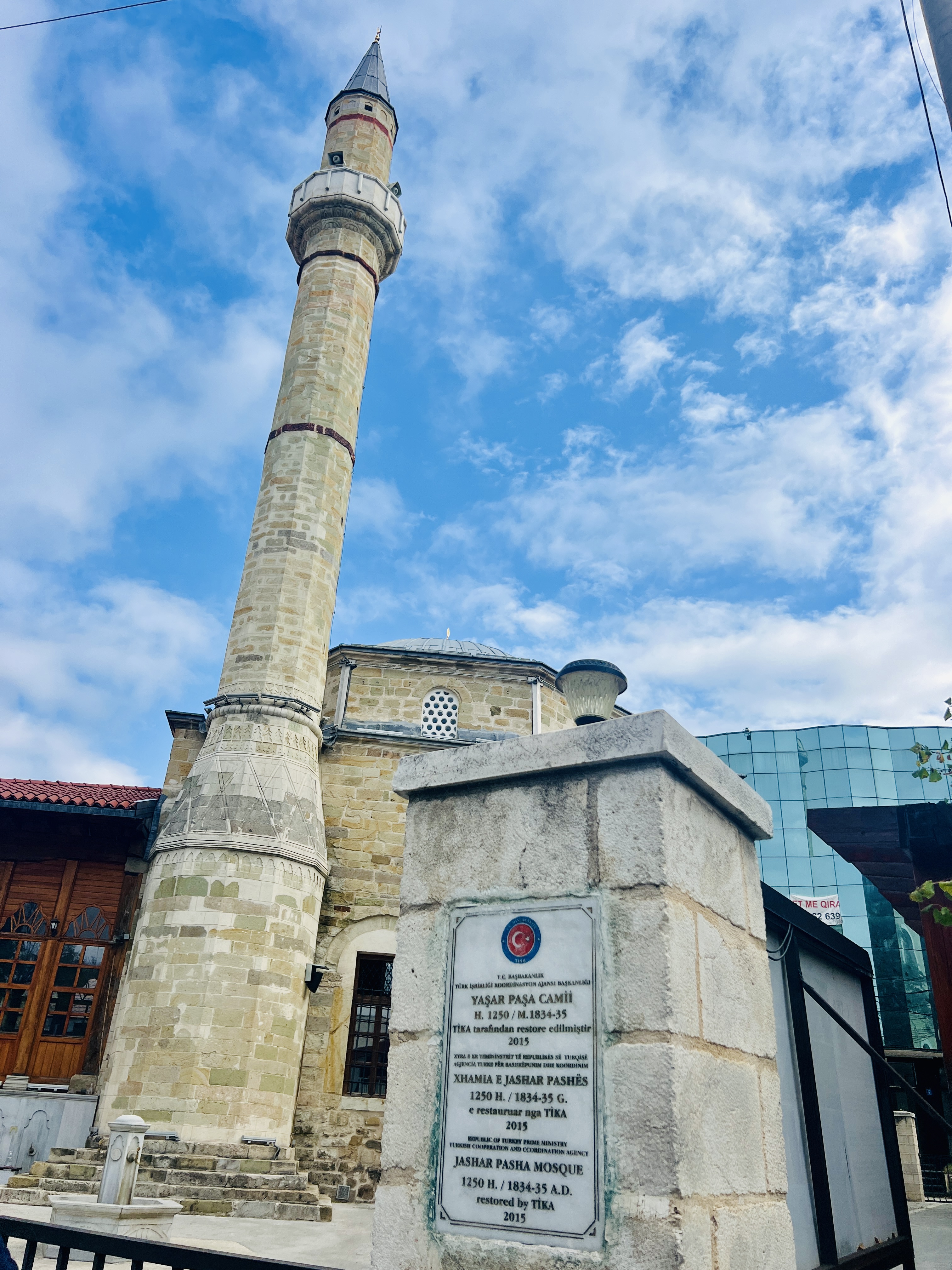
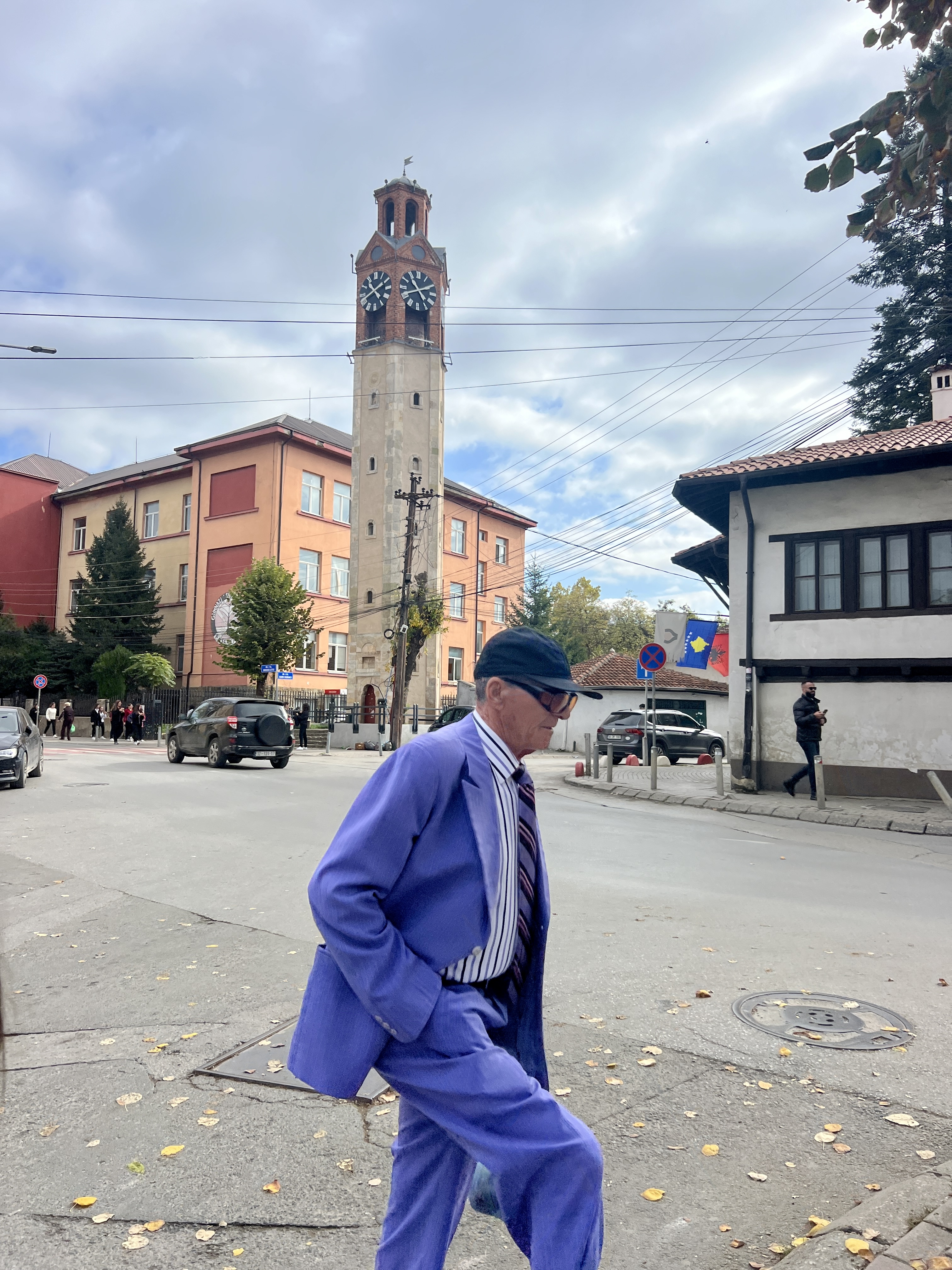
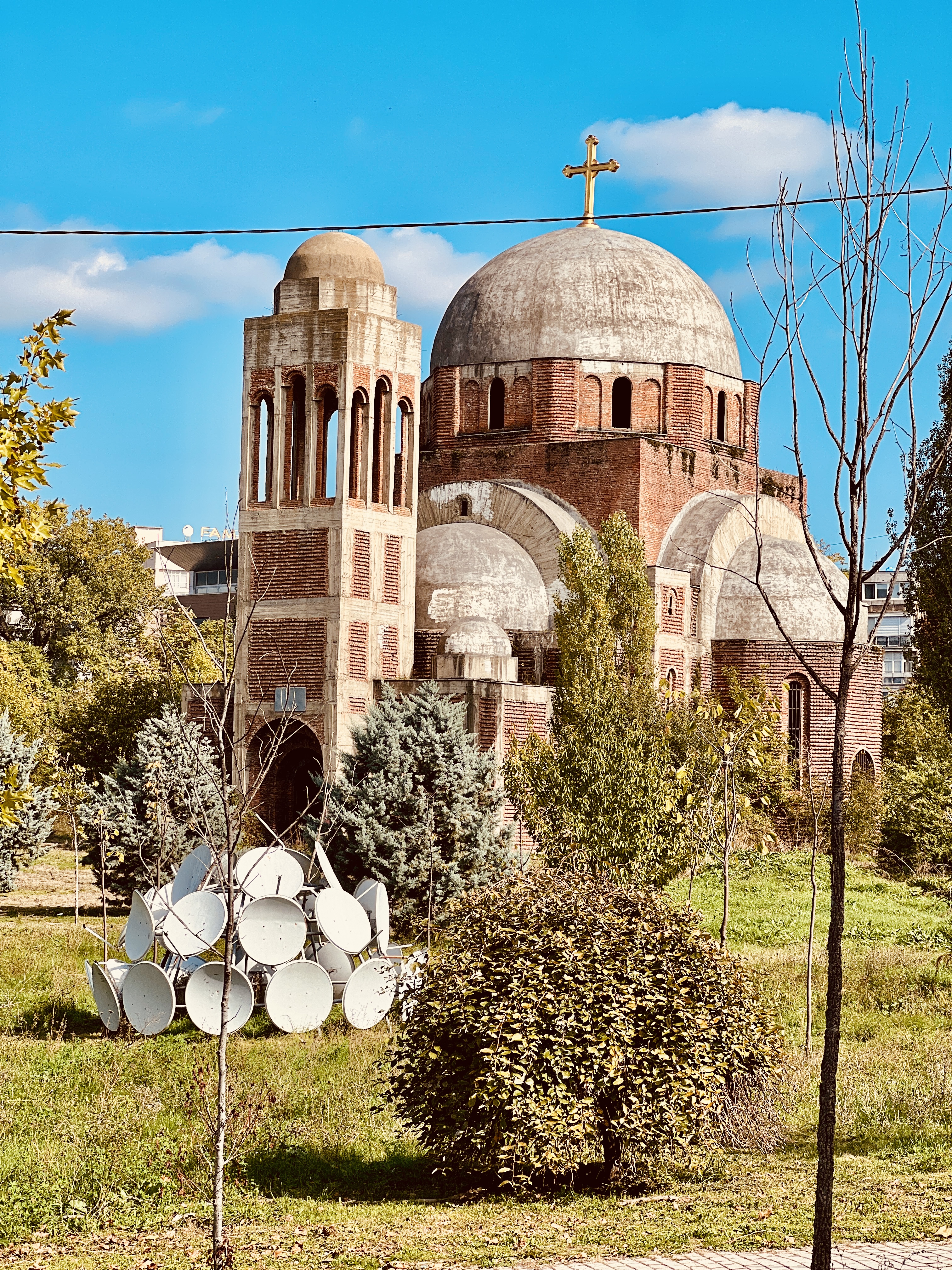
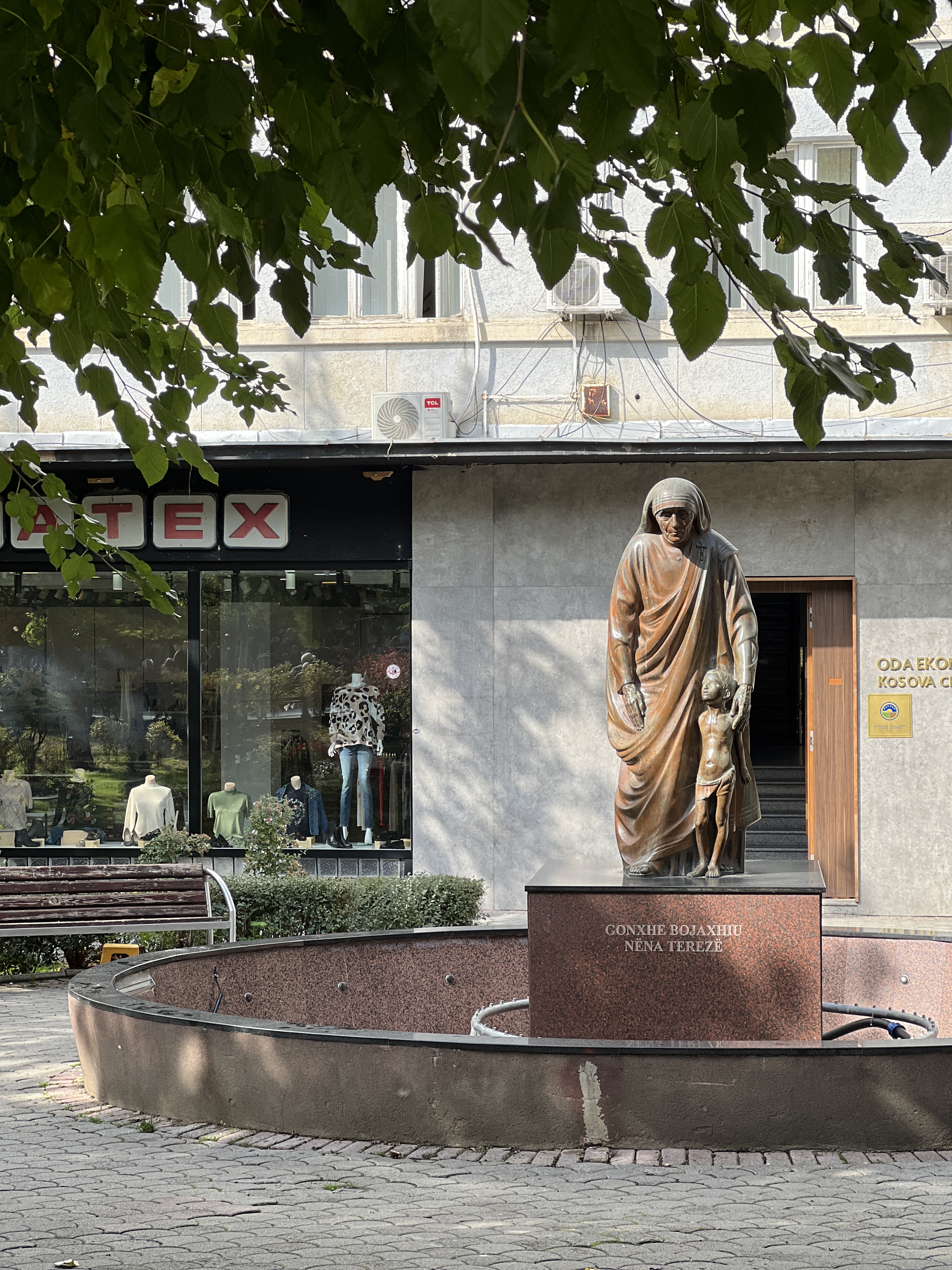
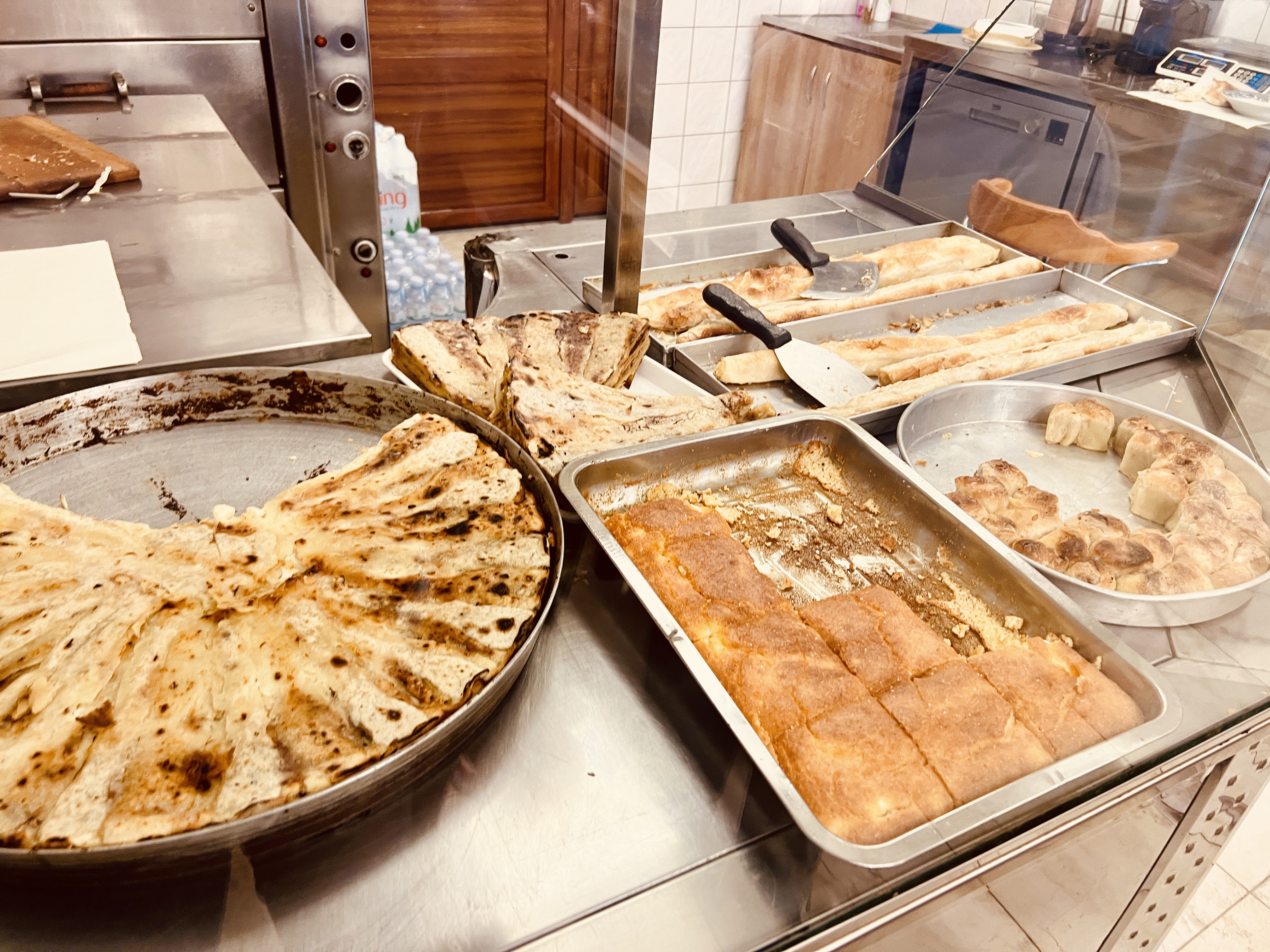
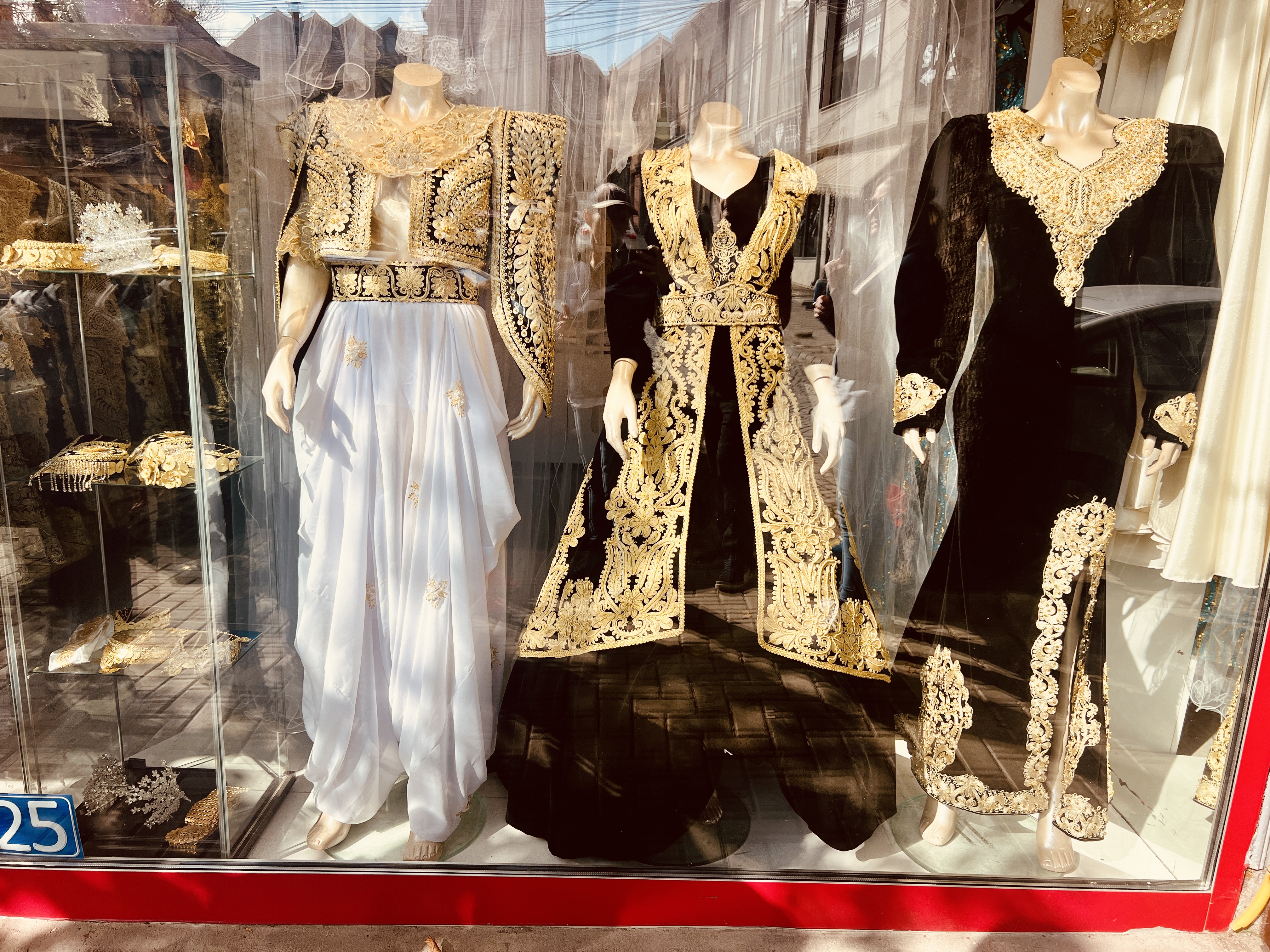
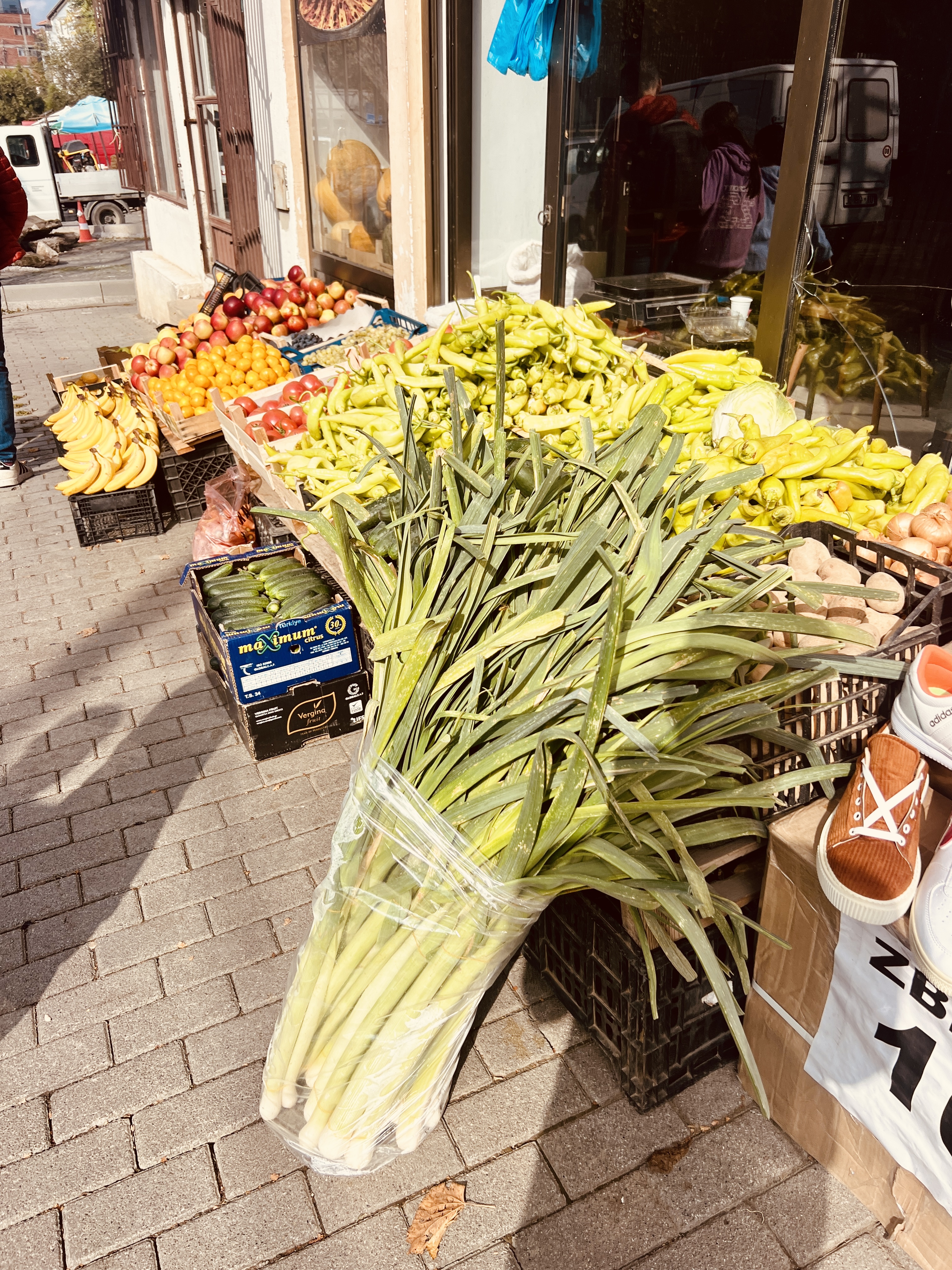
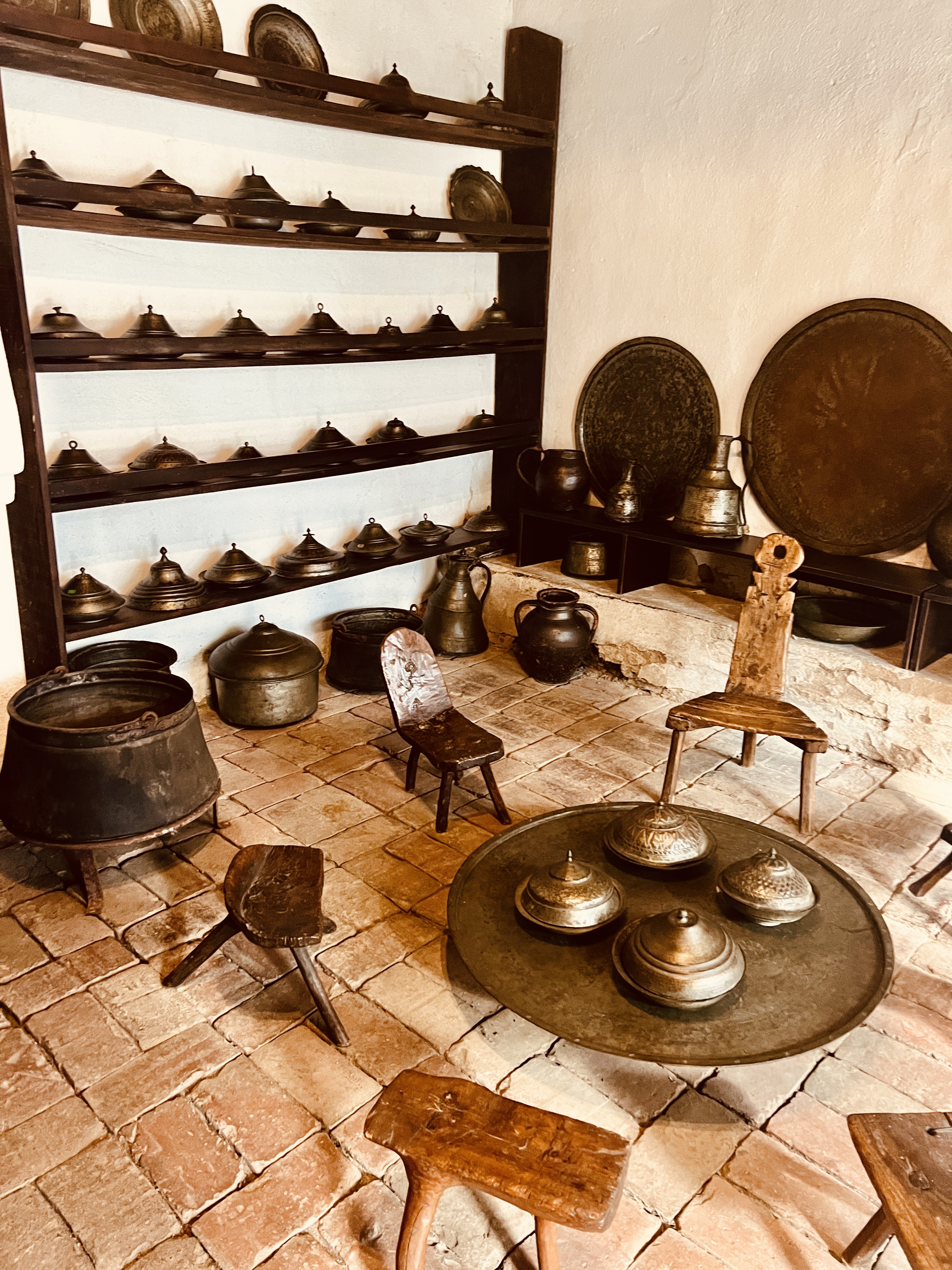
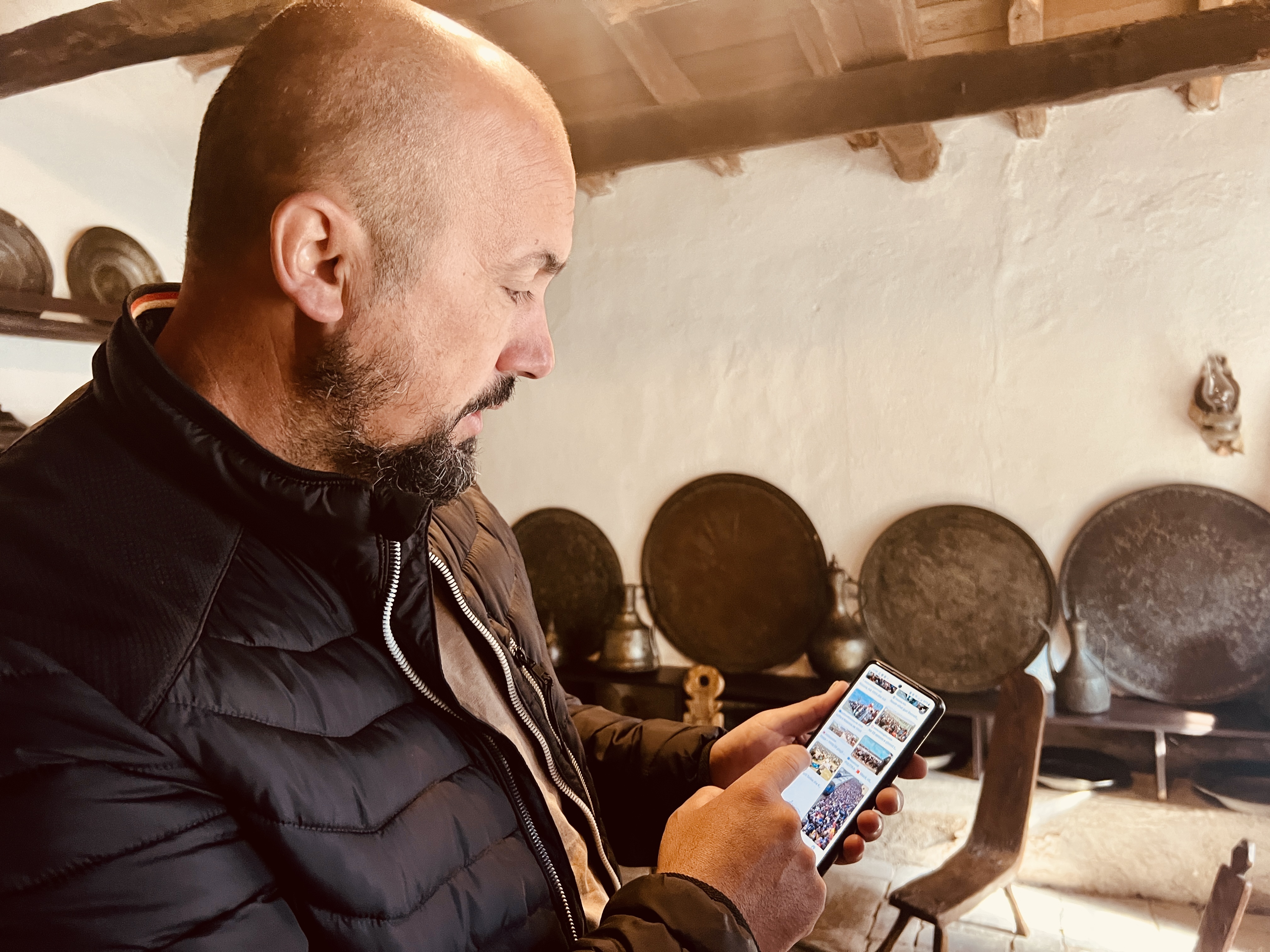
We got a tour around an interesting historical Kosovan house, but by far the most interesting part was the more recent stories of the guide who was 16 when the invading forces came knocking.
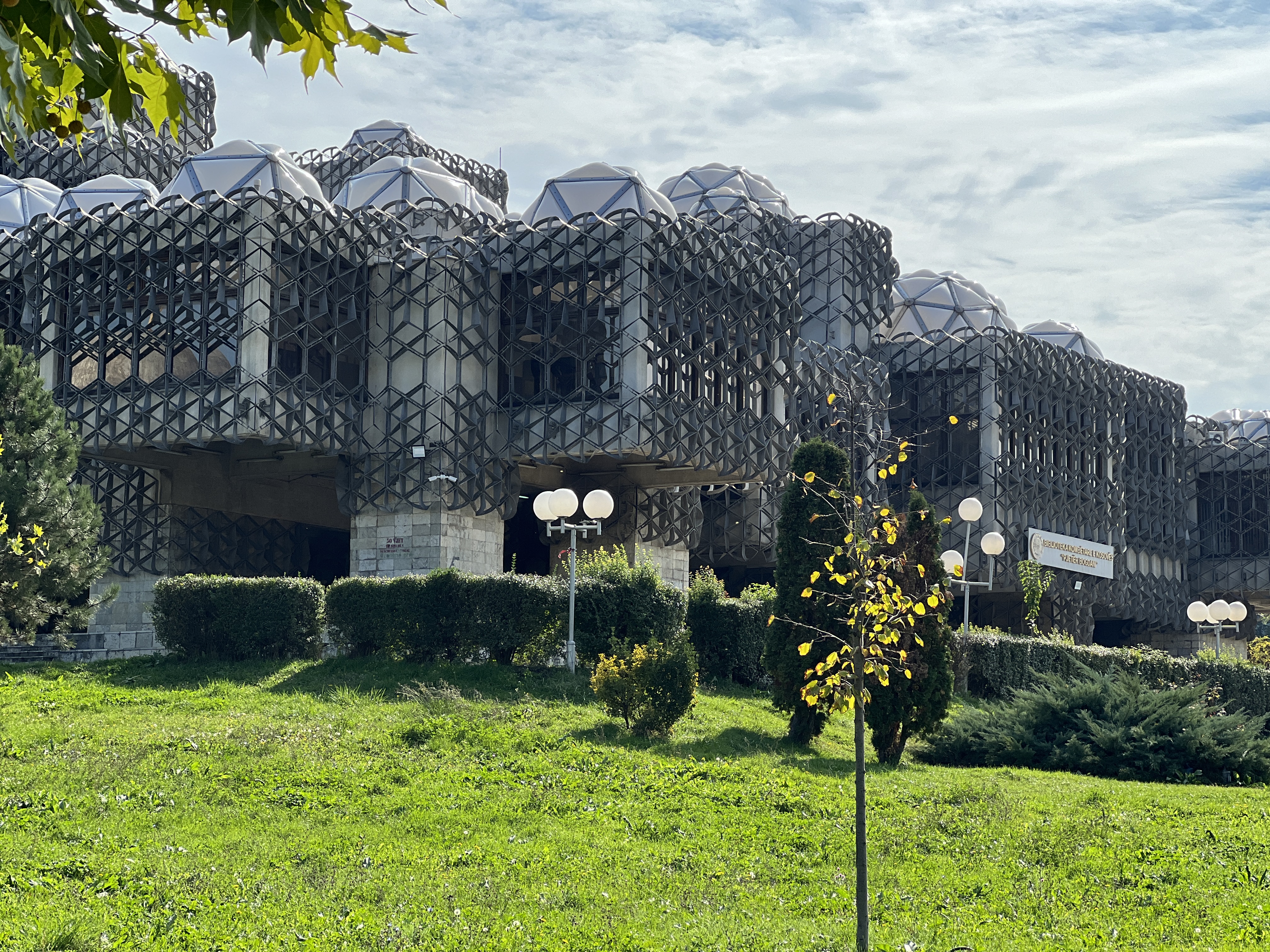
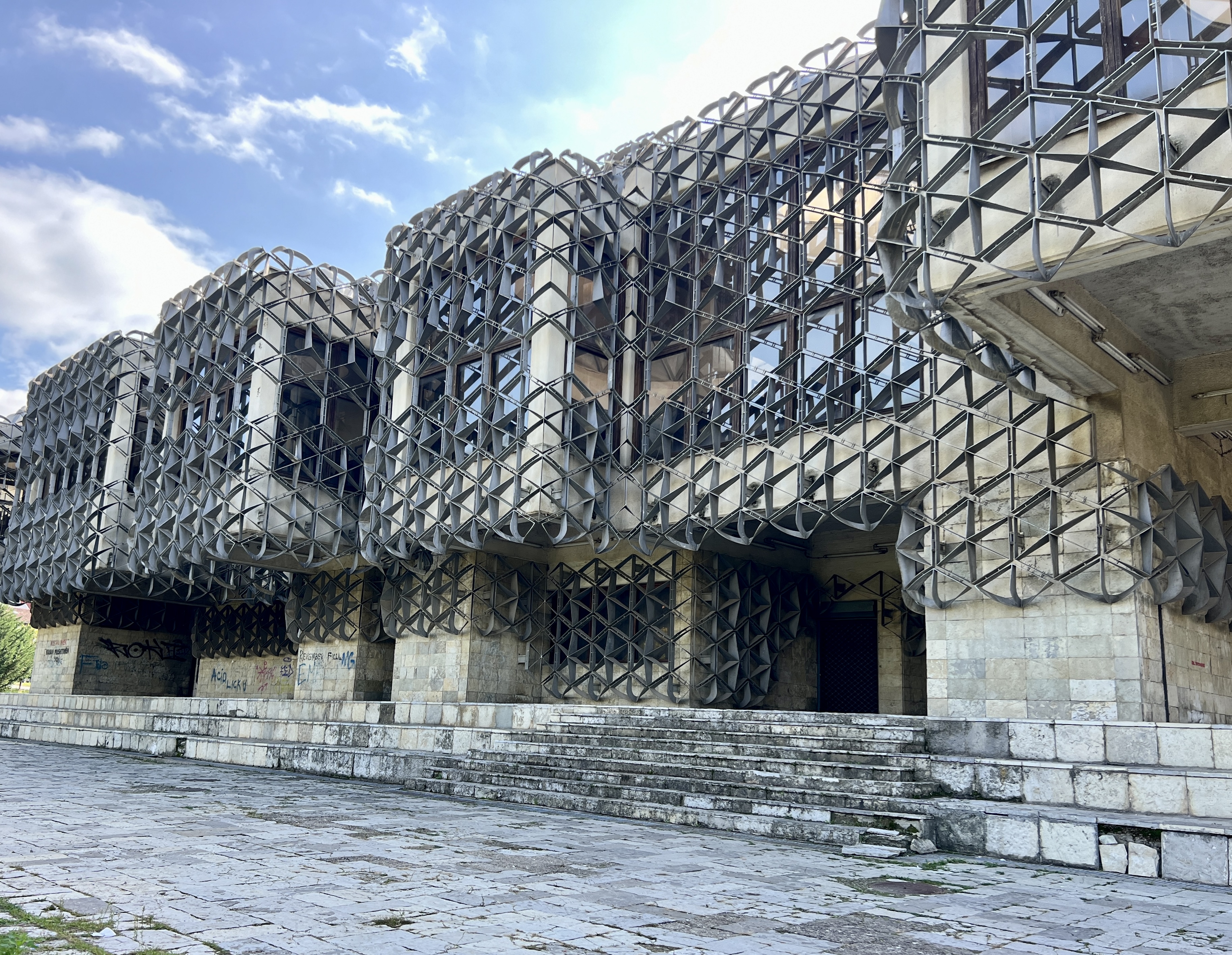
We also visited the university campus and the library which was voted ‘the ugliest building in the world’ – not really in our opinion. The building itself was pretty cool but the level of upkeep around the university more broadly showed a general lack of funding.
Fair to say that Prishtina is not going to rival Paris or London any time soon, but we loved the tour, and in particular loved the stories of those that we met.
After a great lunch (the food, and most importantly the coffee, was amazing) we jumped in our guide Astrit’s car and hit the road… and stopped. For a city of some 250k people, the traffic jams are real.
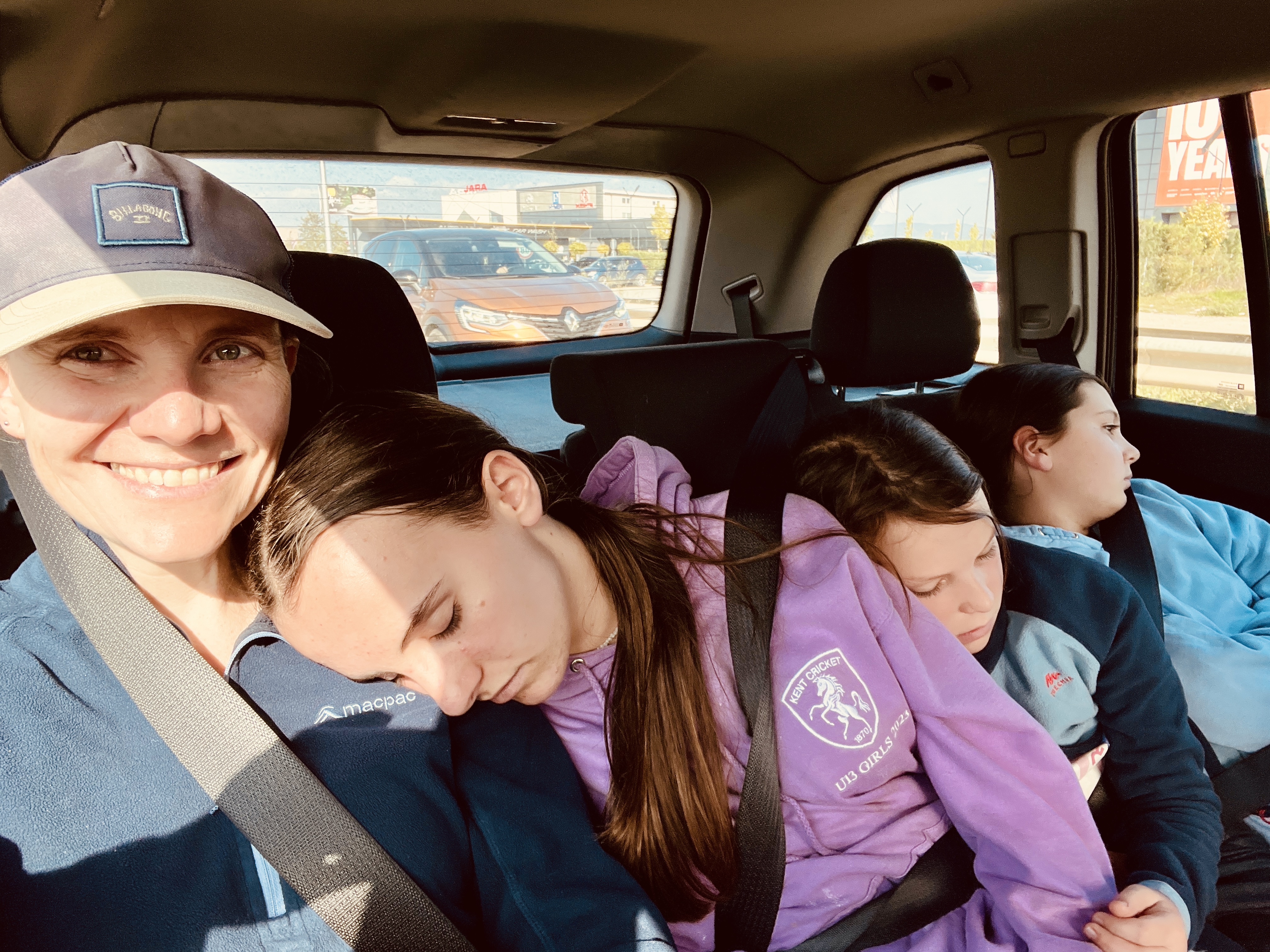
We spent a really fun afternoon touring the sights around Prishtina – almost without exception we were the only ones at each sight, including:
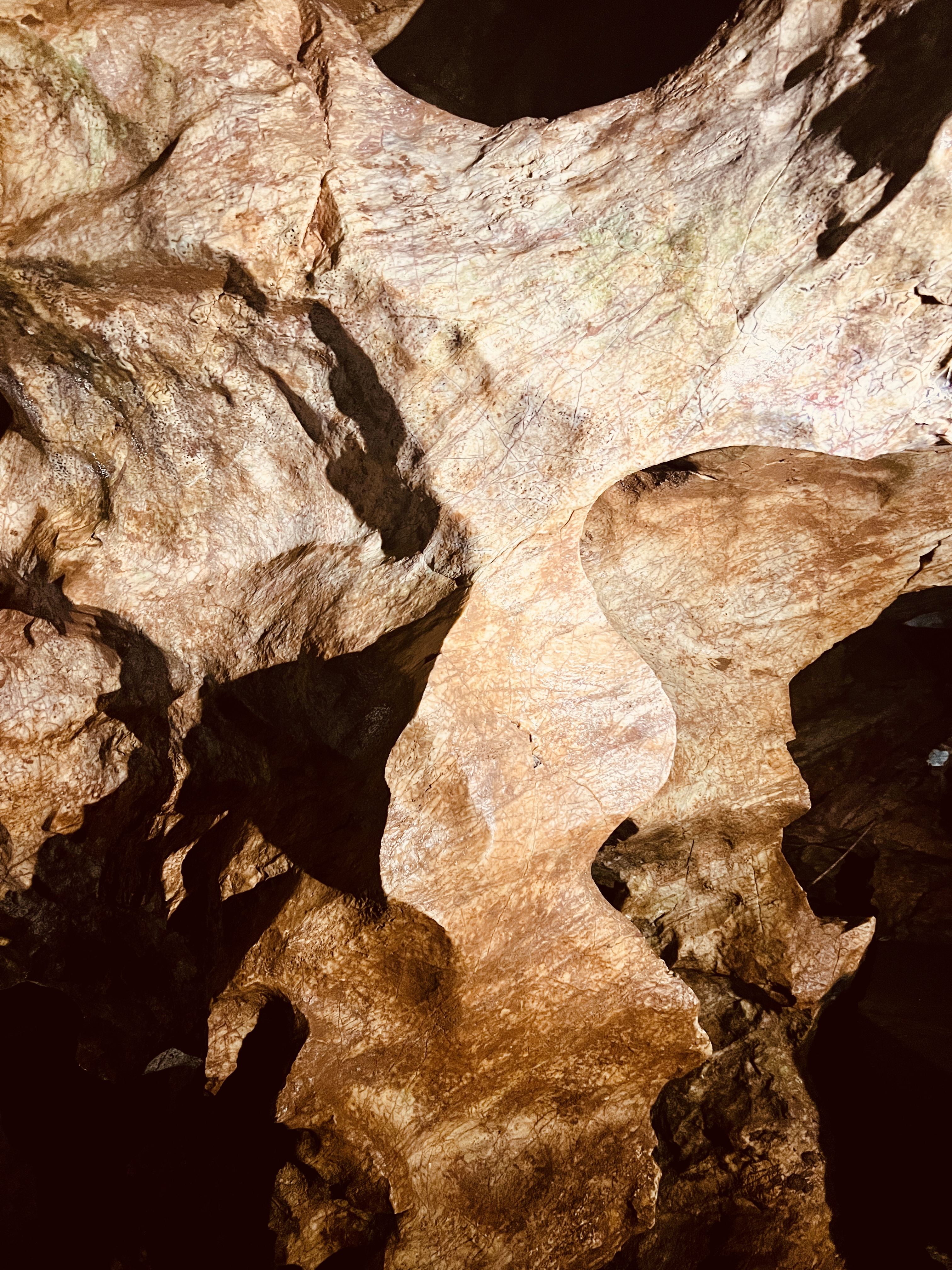
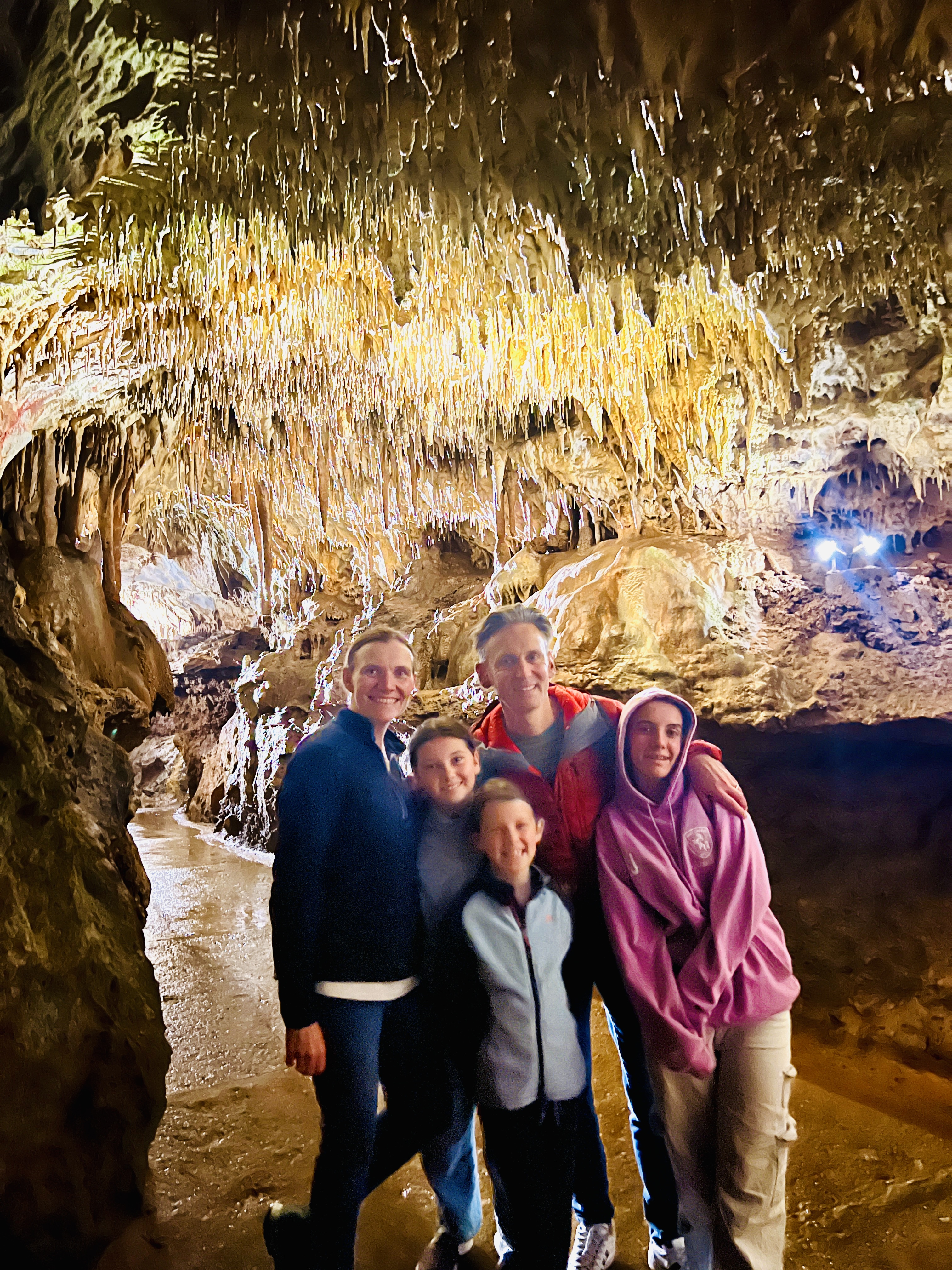
1. Gradime Cave – wonderful limestone caves with interesting caverns filled with stalagmites and stalactites that we had to ourselves
2. Ulpiana Archeological Site – providing a whistle stop tour of the ancient history of the region from the Illyrians to the Romains and into the Bulgarians and Serbians
3. The Gracanica Monastery – probably the highlight of a day of highlights, this spectacular 5 domed monastery built by King Stefan Multin of Serbia in 1391 is set in a beautiful, peaceful walled garden (it was one of 40 monasteries he built in his lifetime). Fun fact – apparently there is a replica of the building in Melbourne. The art on the walls in gobsmacking – literally from floor to ceiling, illustrating the bible as a way of sharing the stories to a largely illiterate population. The incredible frescos are painted on whilst the plaster is still wet, so literally become part of the wall. We apparently looked appropriately interested as the caretaker of the monastery turned all the lights up high and proceeded to give us a personal tour for almost an hour. Such a privilege.
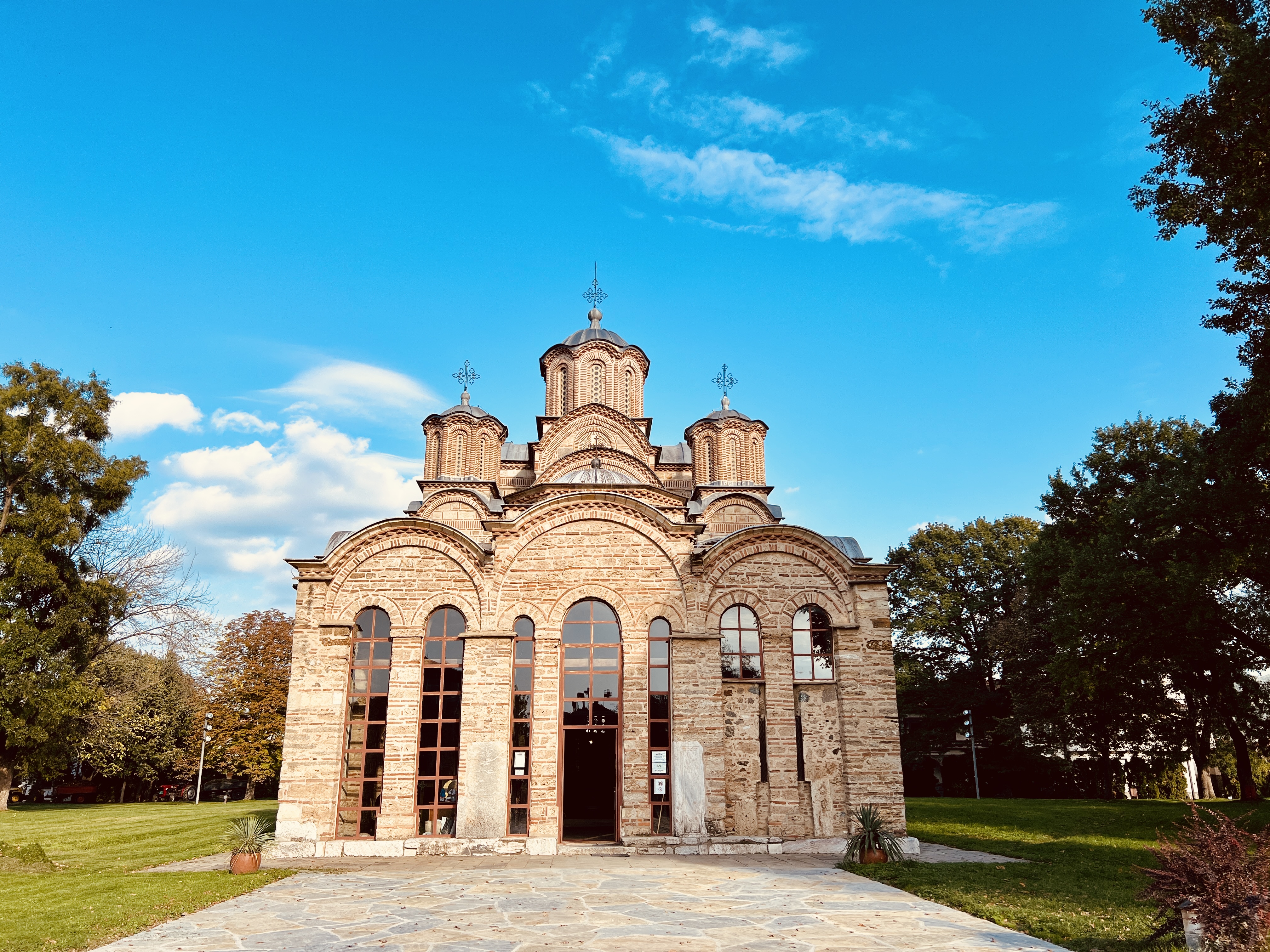
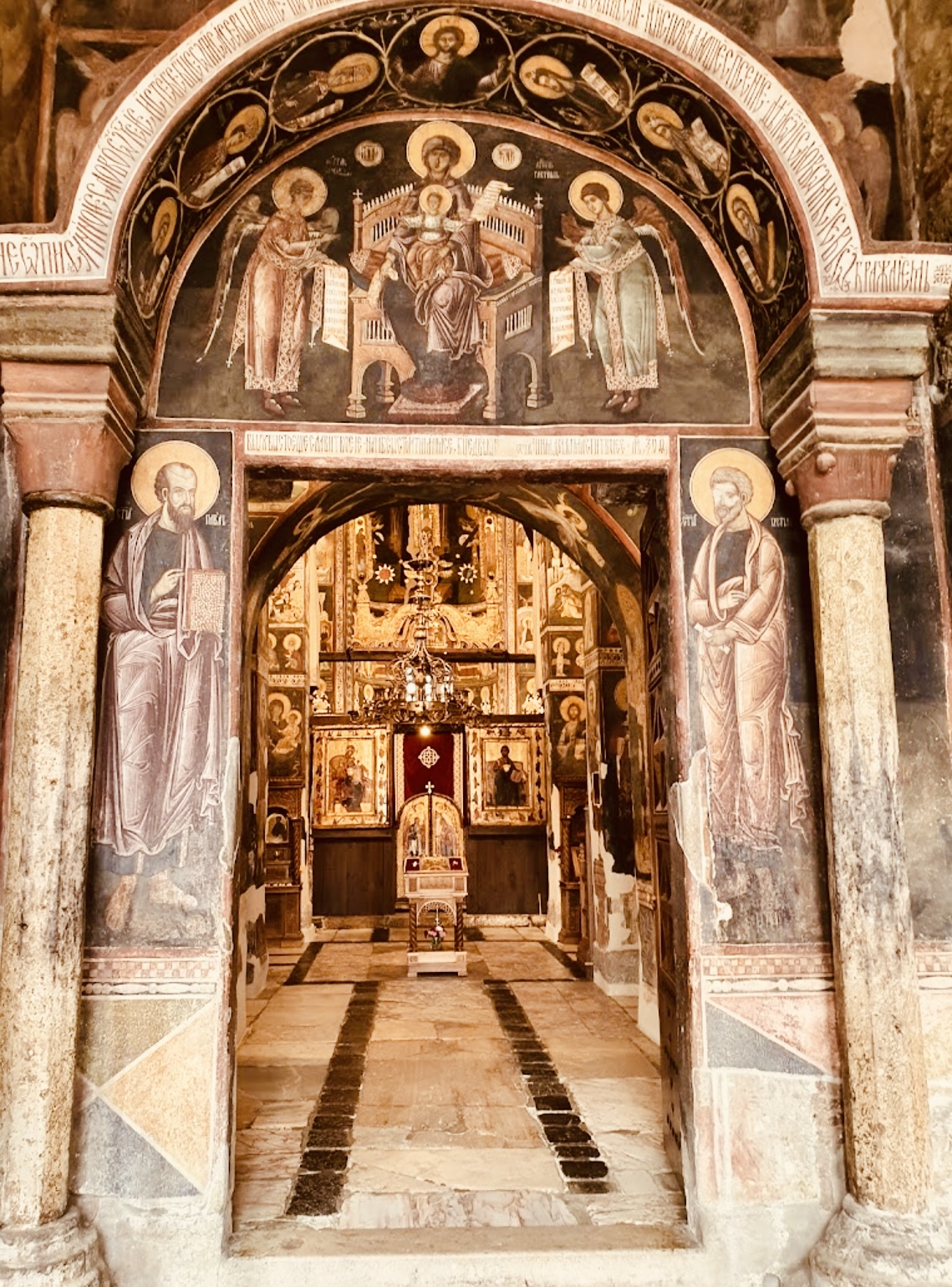
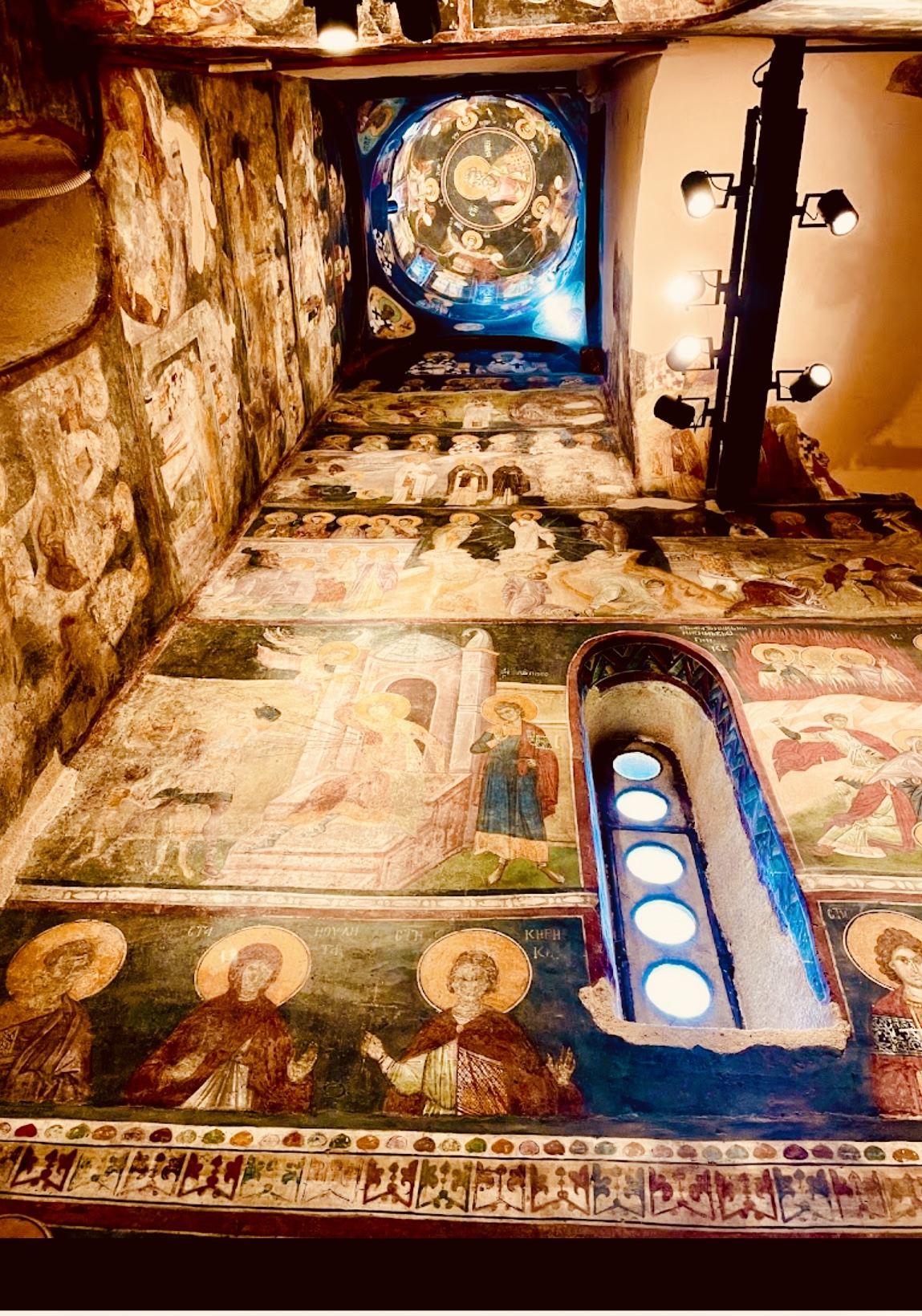
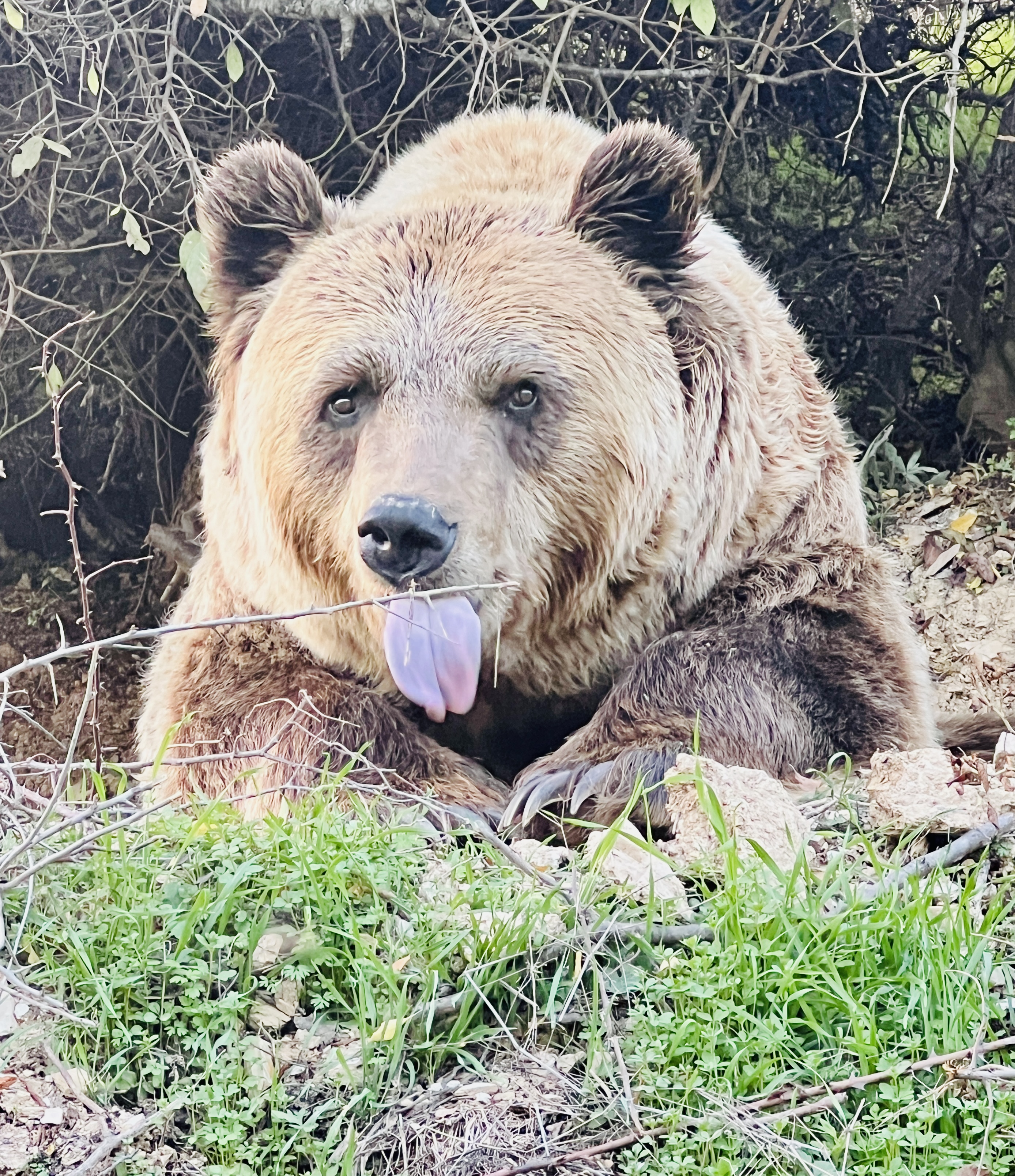
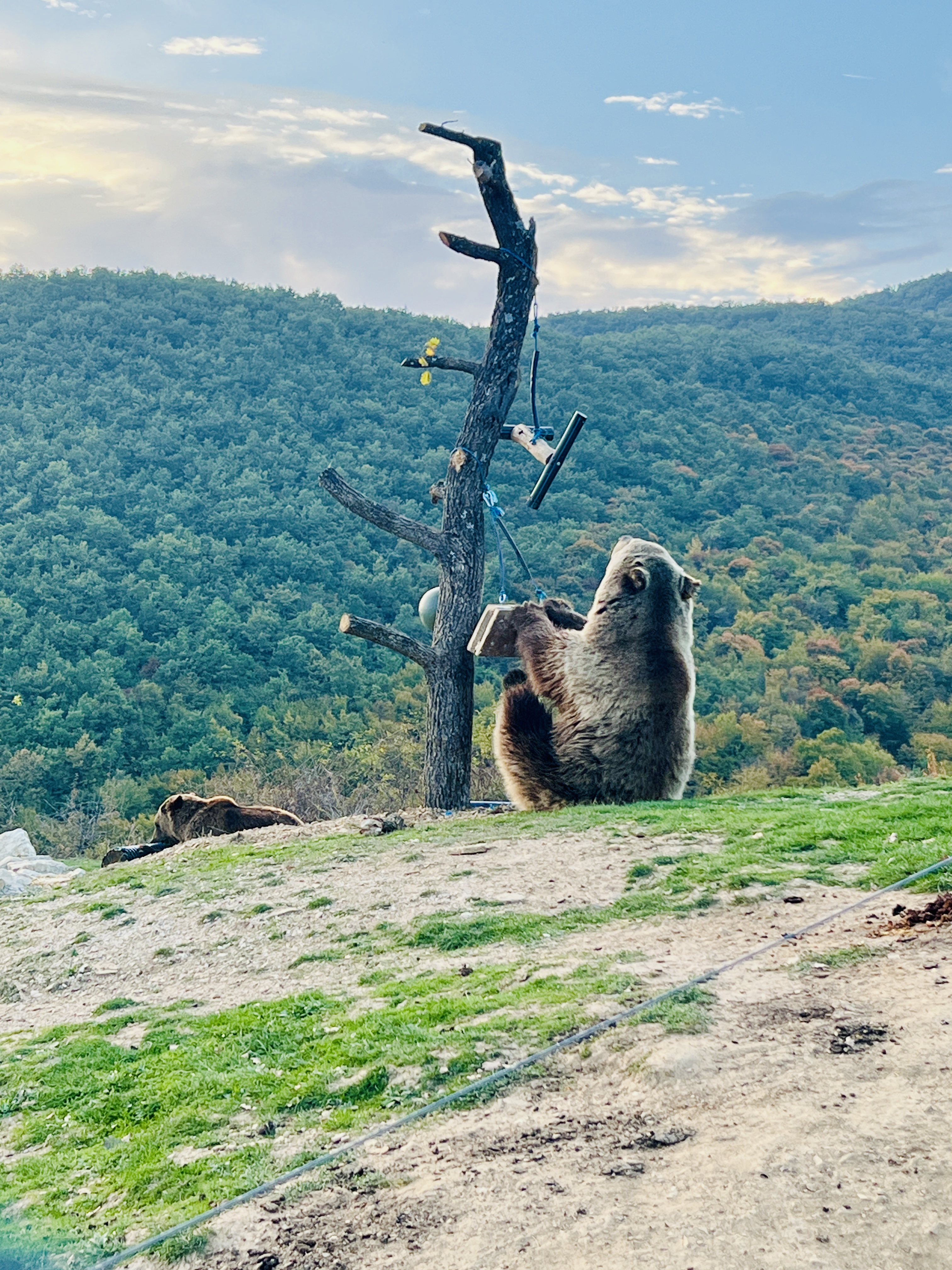
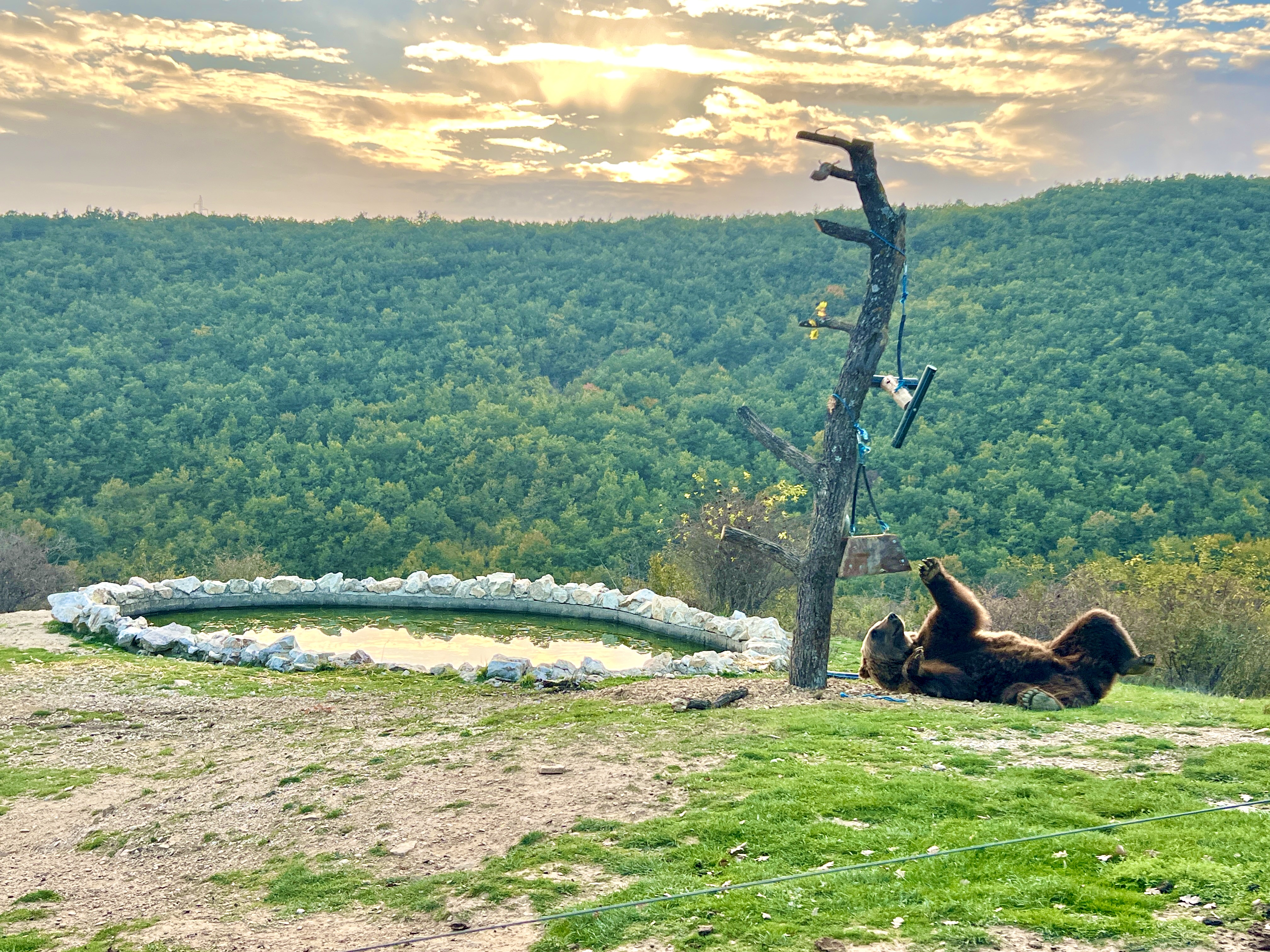
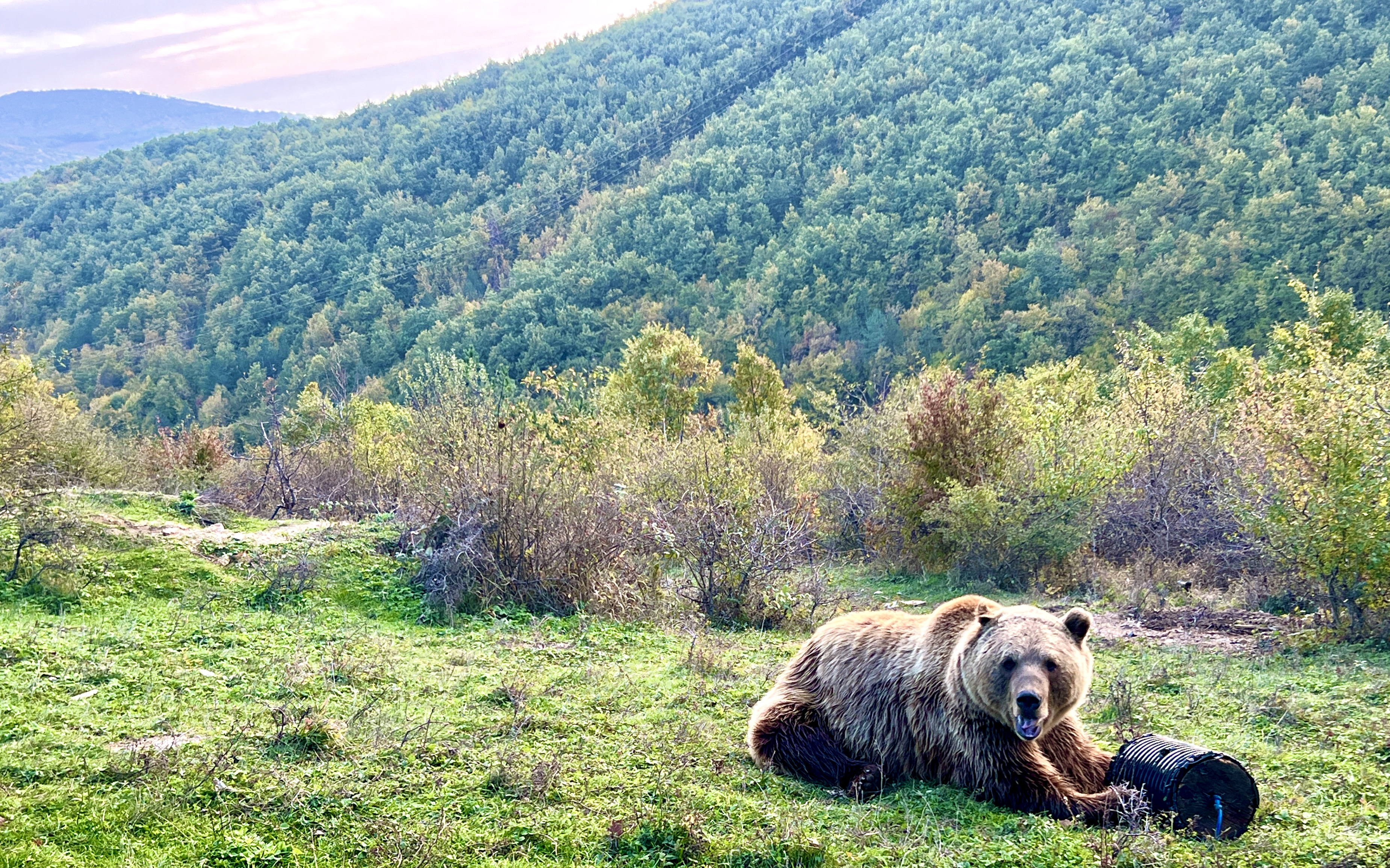
4. Prishtina Bear Sanctuary – a beautiful park in the mountains outside Prishtina that serves as a refuge for bears (and a slightly confused but very vocal lion) that have been rescued from captivity around the region
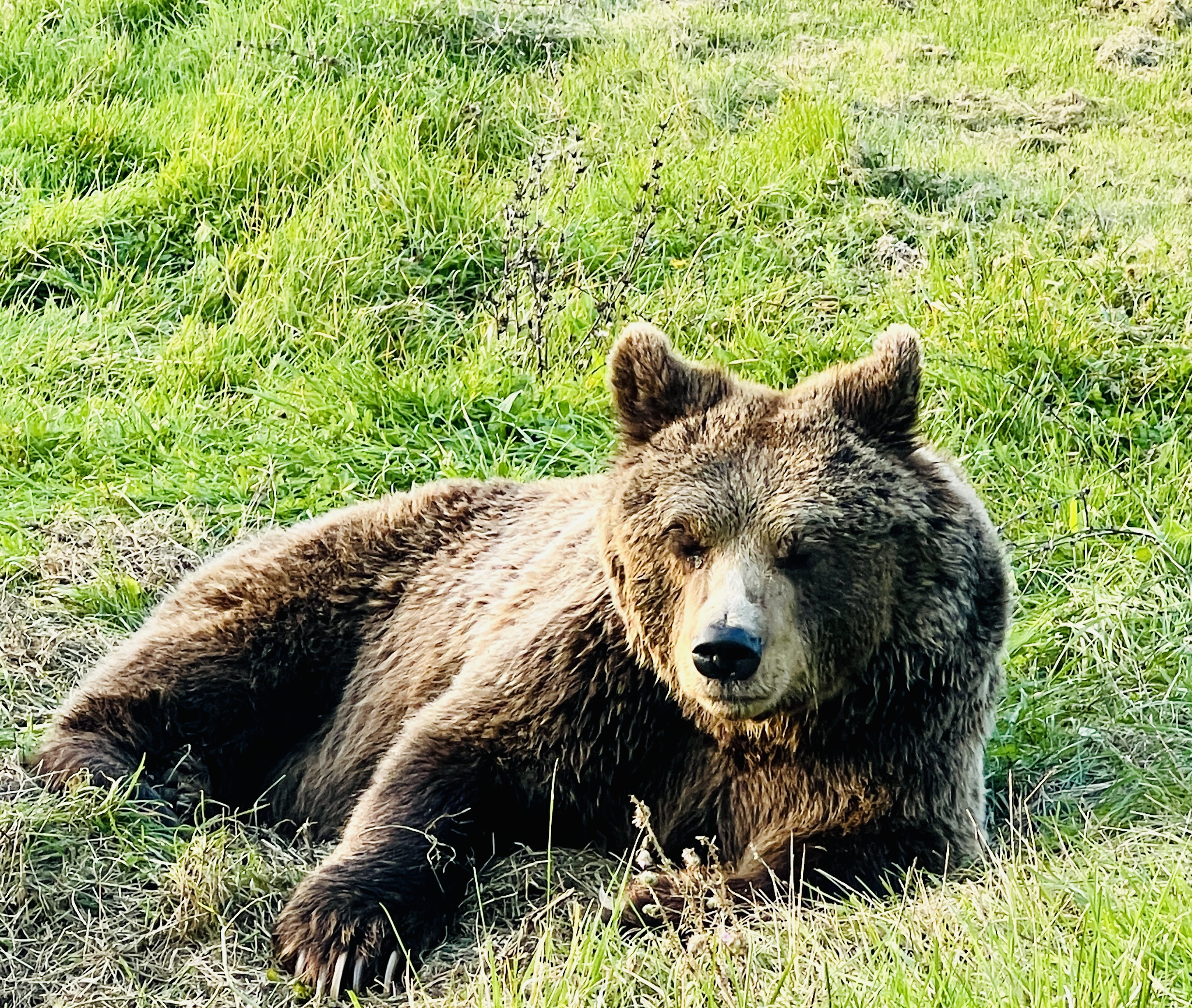
We topped off our day with a fantastic meal at Liburnia before heading back to our apartment and collapsing, exhausted at 10.30.
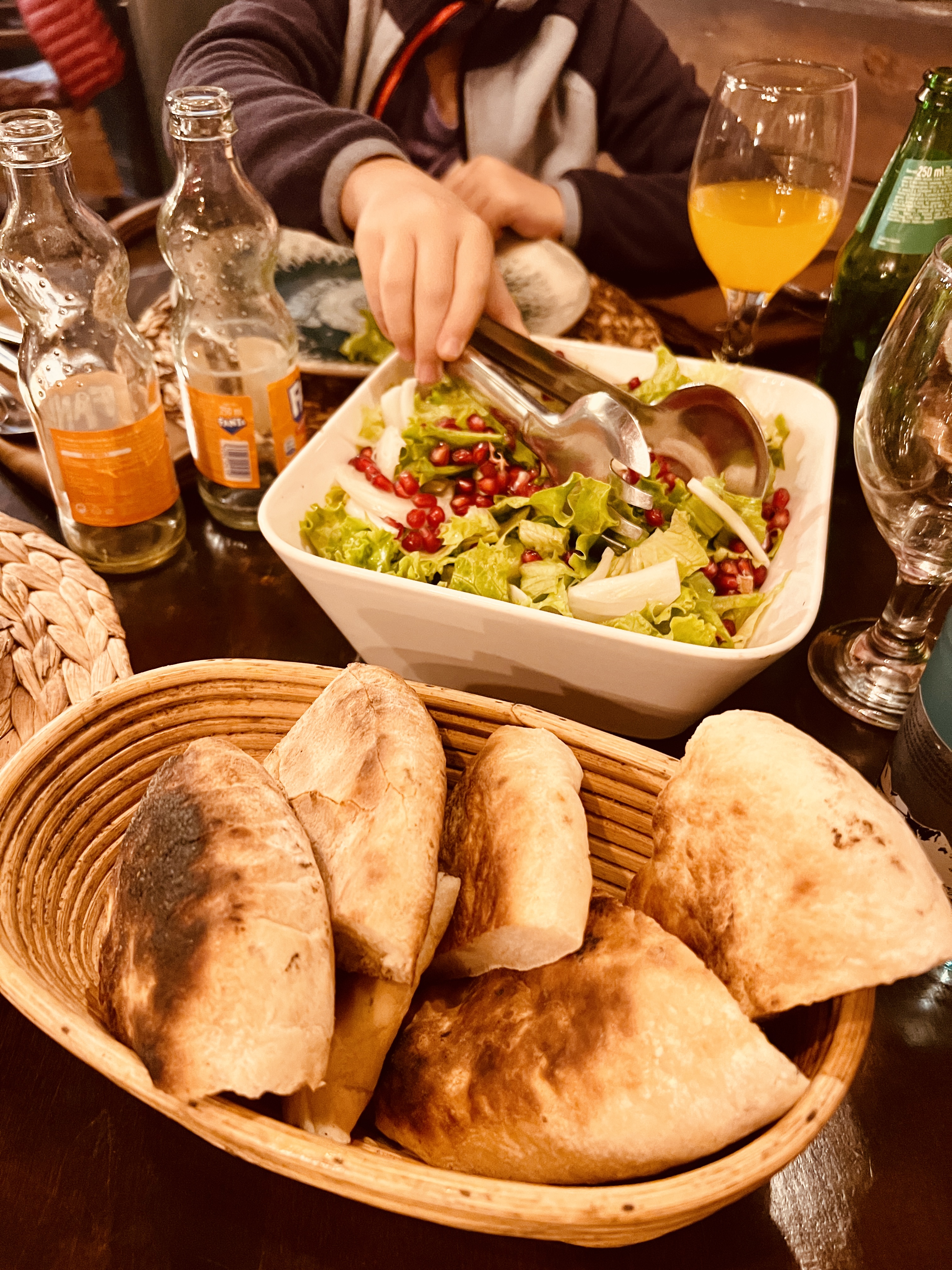
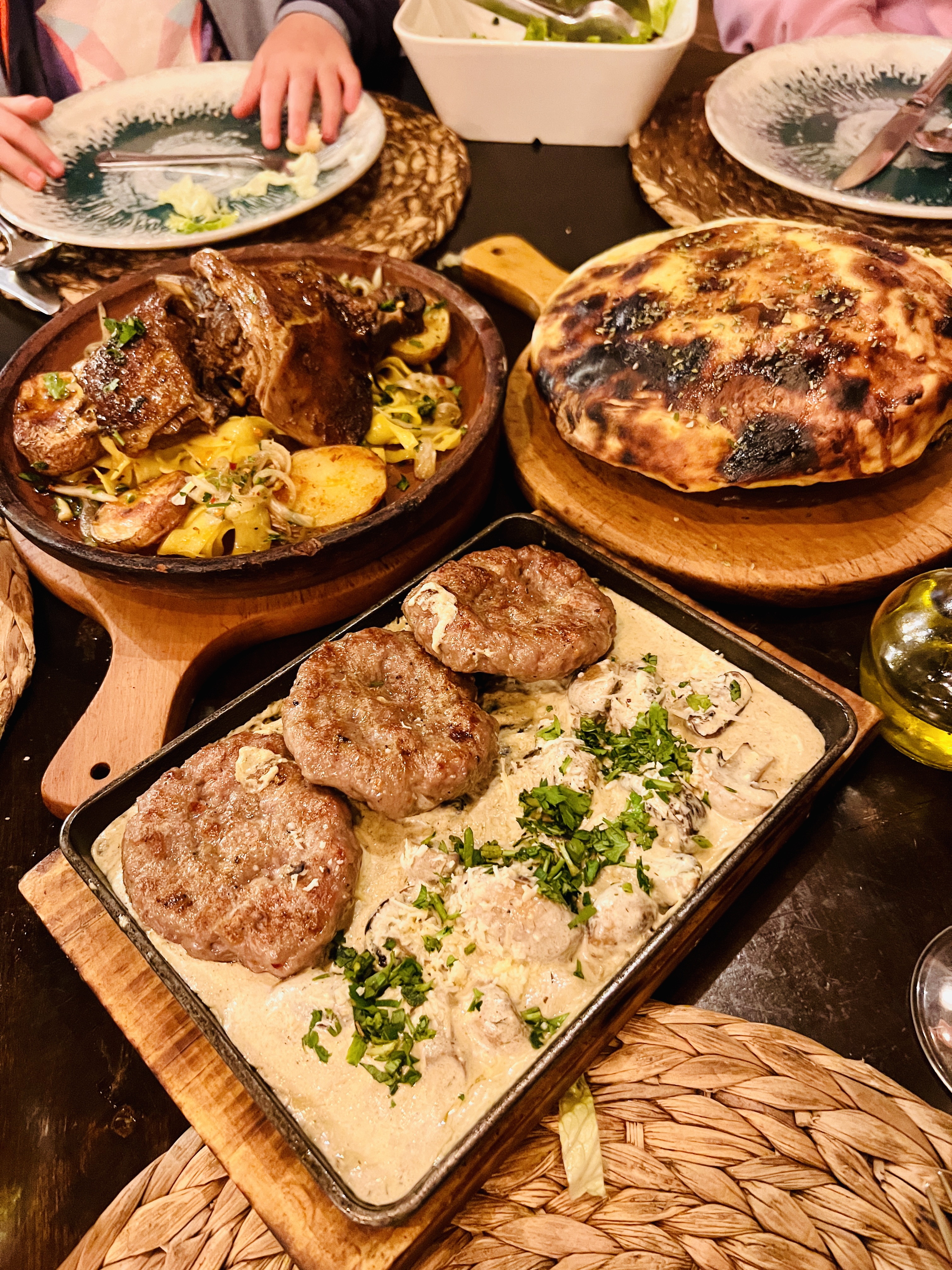
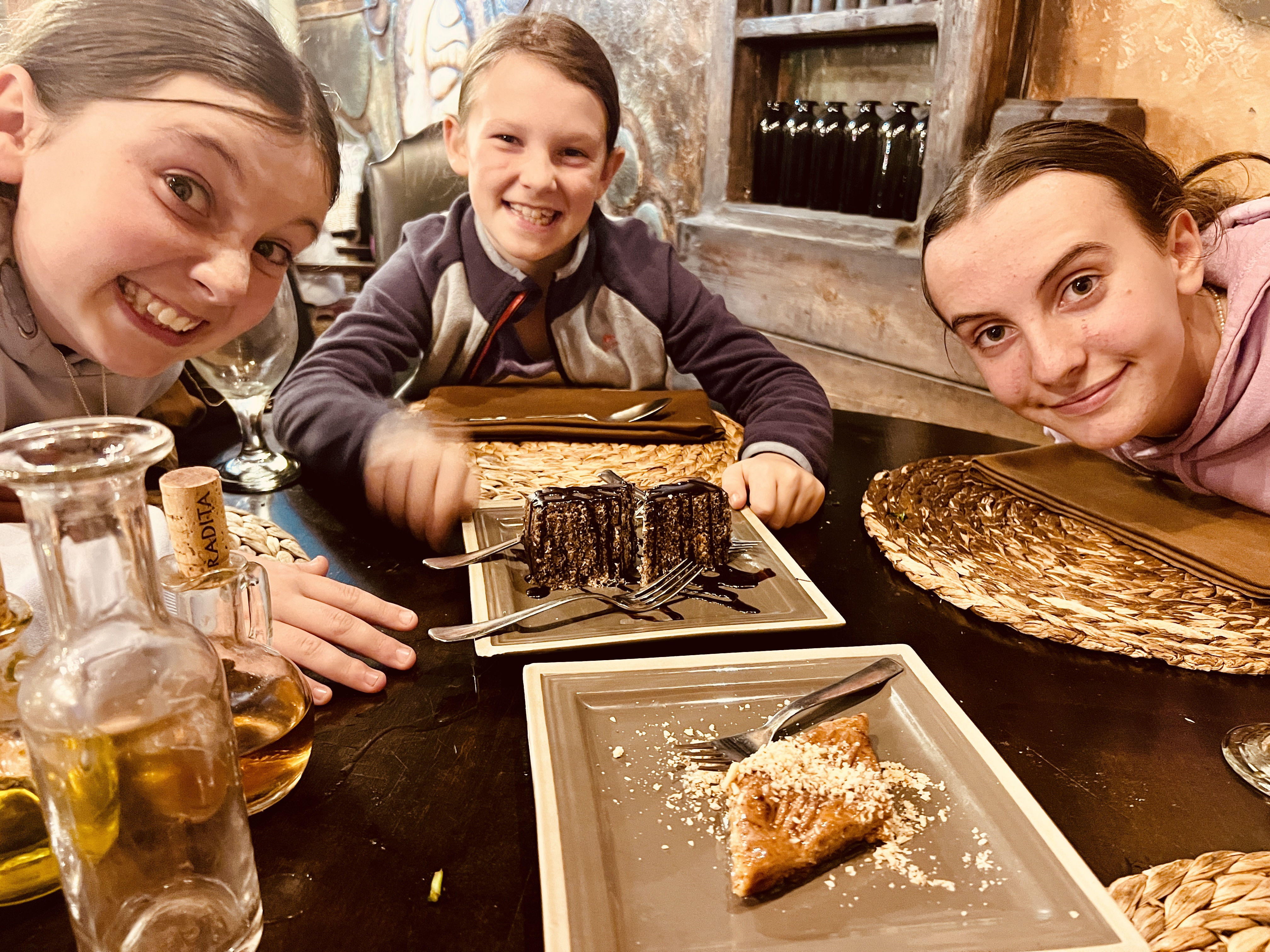
The following morning we were up and out by 7am to get to the bus station for our short, 2 hour trip to Skopje, North Macedonia. The bus made its way south through a mix of light industrial areas and largely disused but vacant blocks to the tune of our respective playlists.
Our brief trip to Prishtina had far exceeded our expectations. We had loved the people, the food, the city itself and its history. We were excited by what the next stop on our trip would bring.

Skopje, North Macedonia
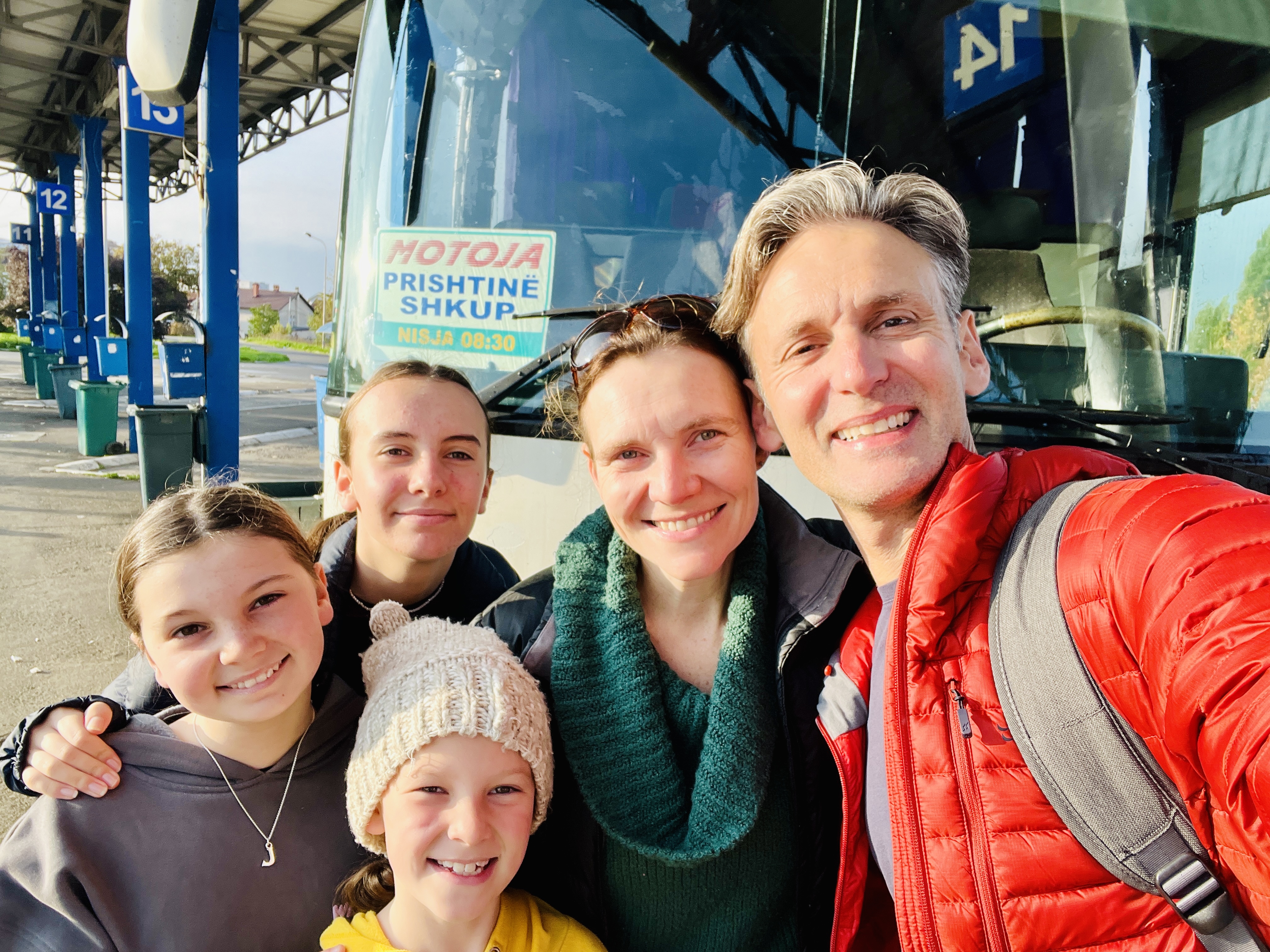
The bus navigated the run down, often derelict side streets as it made its way to the bus station. Between us we had almost no idea of what to expect from Skopje – unlike Kosovo there were literally no preconceptions. The script had turned to Cryllic, the currency had changed and our one word ‘faleminderit’ (thank you) no longer applied.
We got some cash and grabbed a cab to our lovely apartment, which, it turned out, was in a crumbling 7 story soviet style building (complete with lifts from floors 2-6), tucked in slightly randomly behind a triumphal arch.
After dumping our stuff we headed down to explore the city and grab some lunch, before joining a local city tour.
We were immediately struck by the architecture of the center of the city. Gone were the ramshackle streets that we had come through on the bus, replaced now with wide, generally pedestrianised boulevards, lined with stately buildings often adorned with Doric columns. Oversized triumphal statues lined the streets; the main square was dominated by an enormous, mounted Alexander the Great encircled by lion fountains. As we made our way down to the river, we were met with even more triumphal buildings, multiple picturesque bridges lined with yet more statues (think Charles Bridge in Prague), more columns, and several large wooden ships moored against the river bank. The old Stari Bridge looked almost out of place for its stone ‘plain-ness’
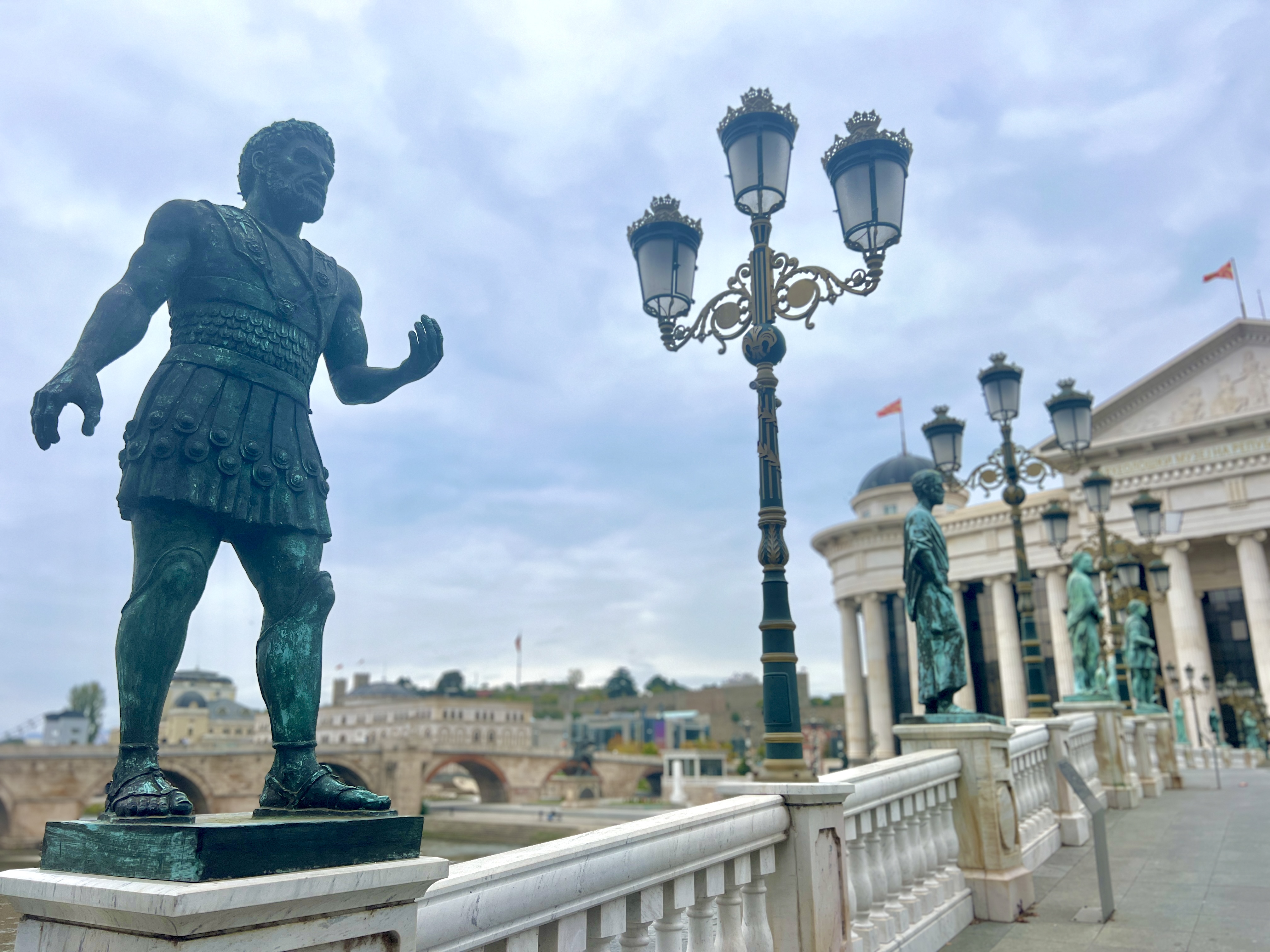
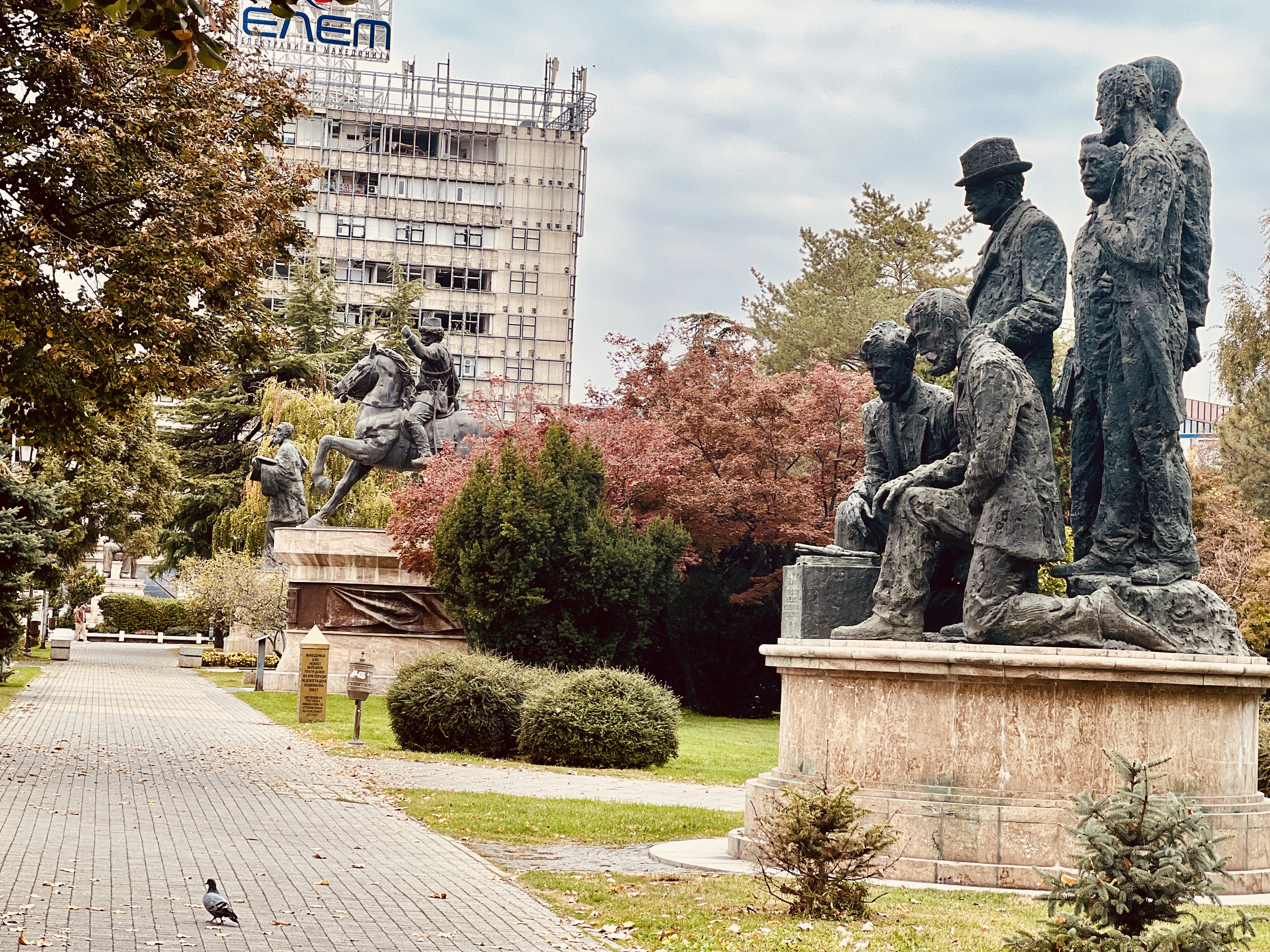
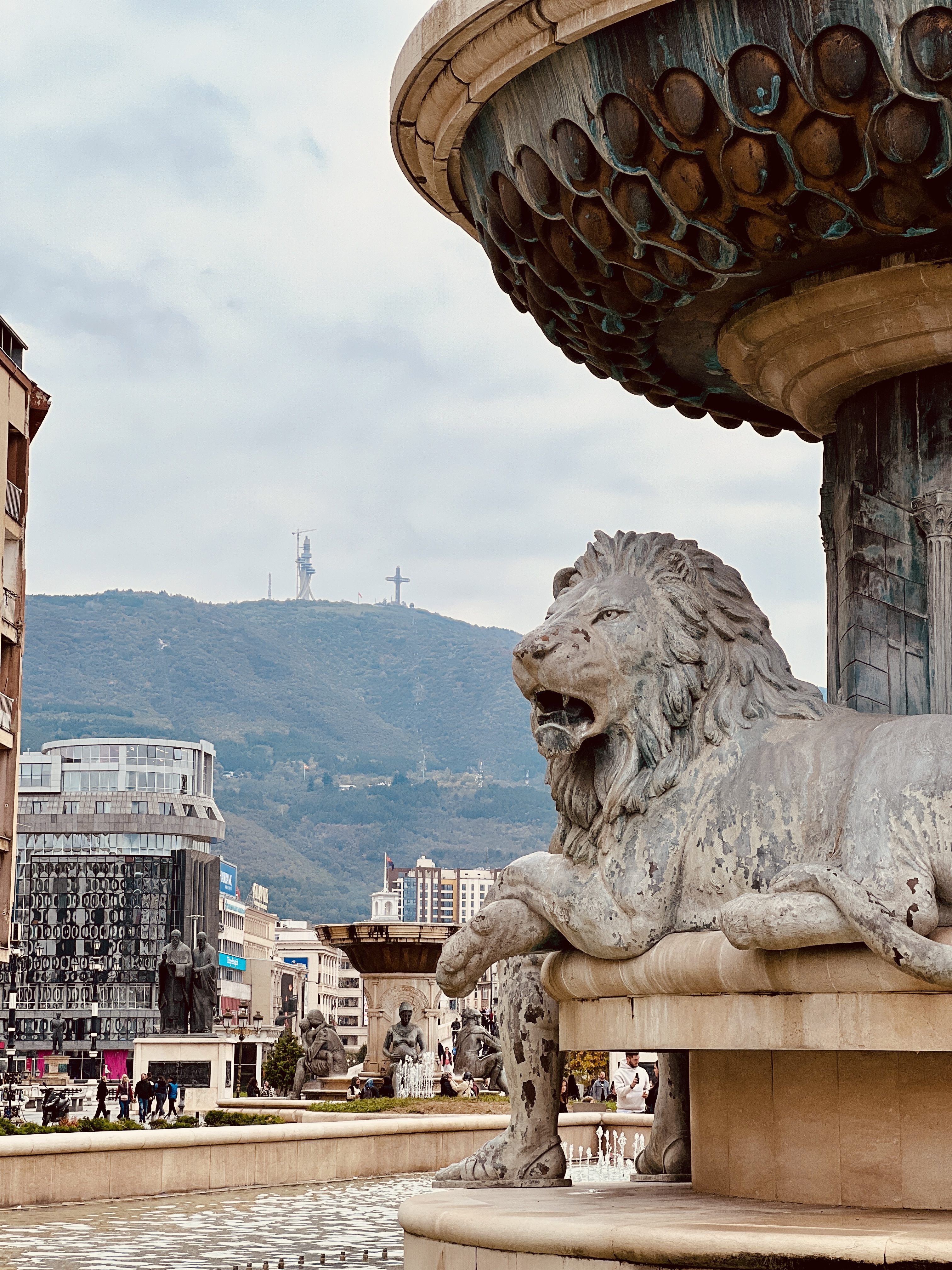
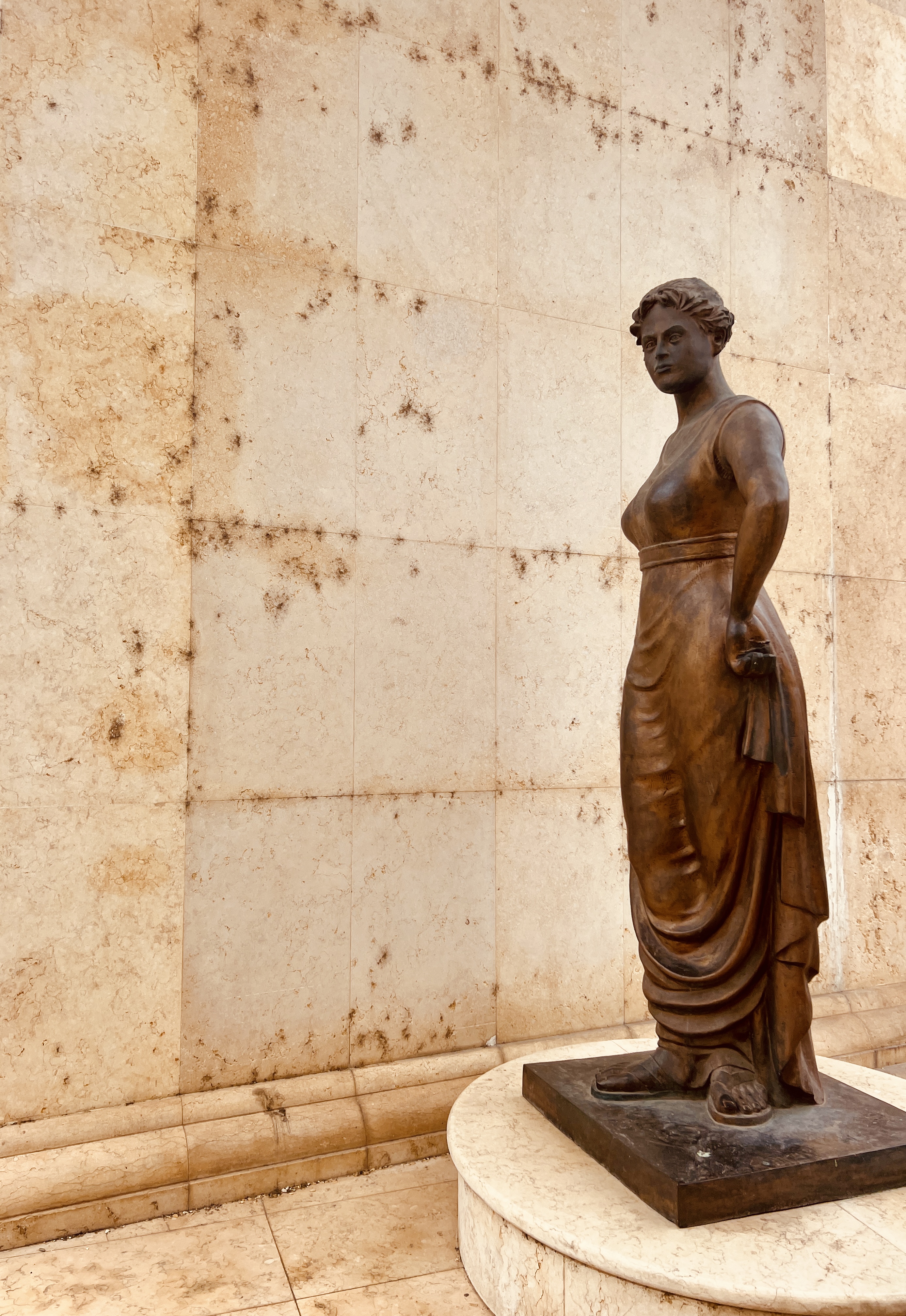
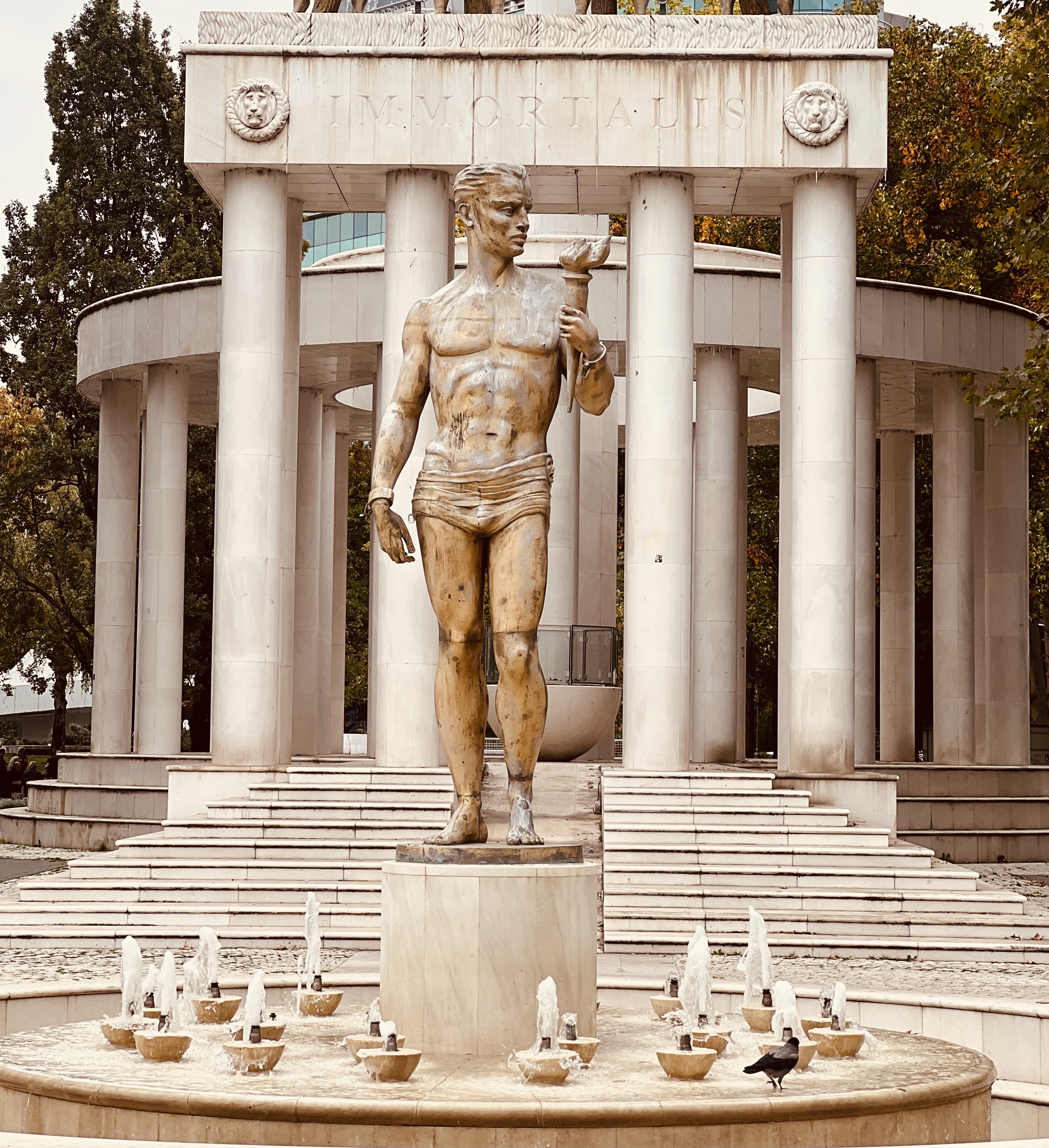
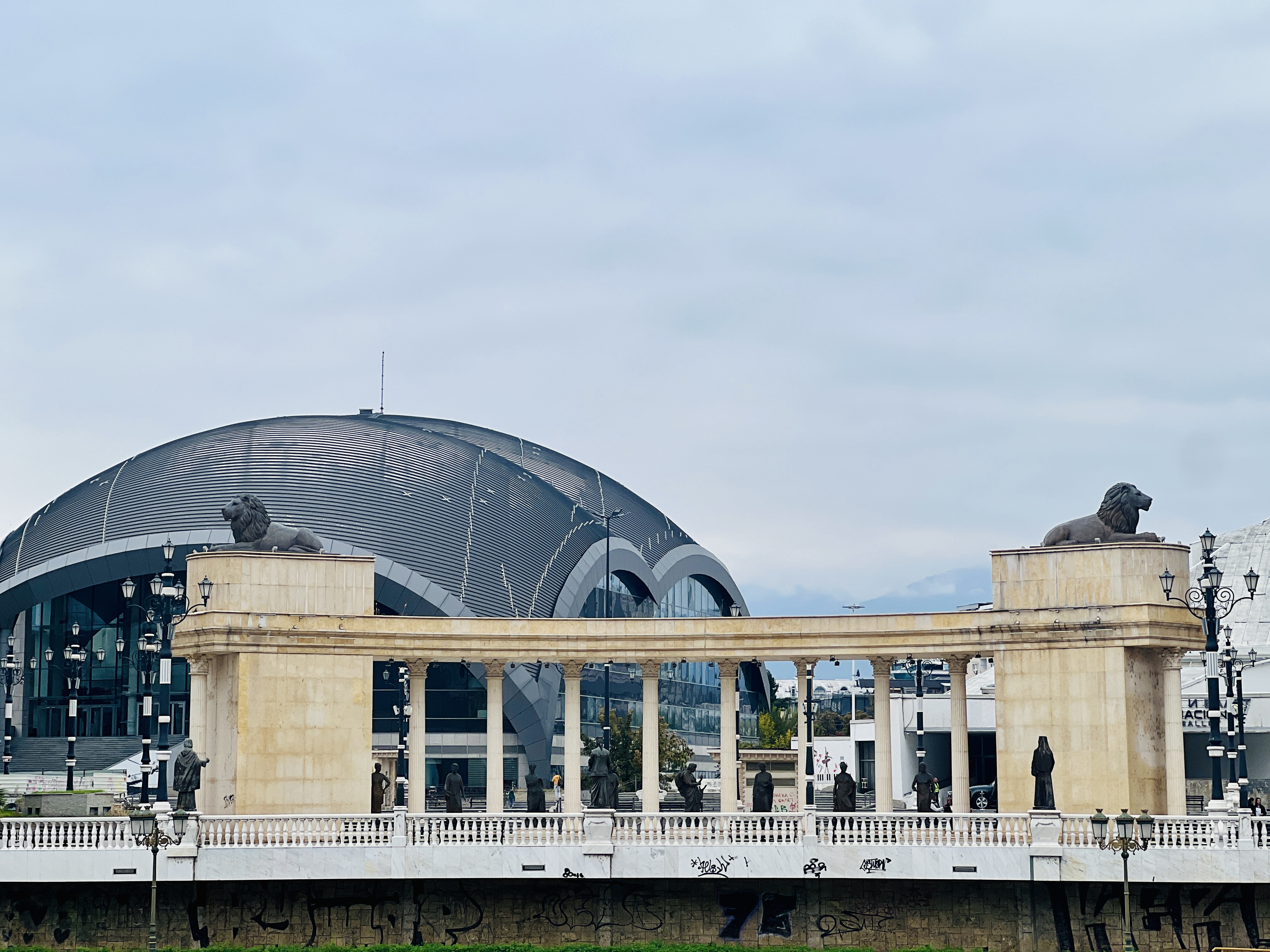
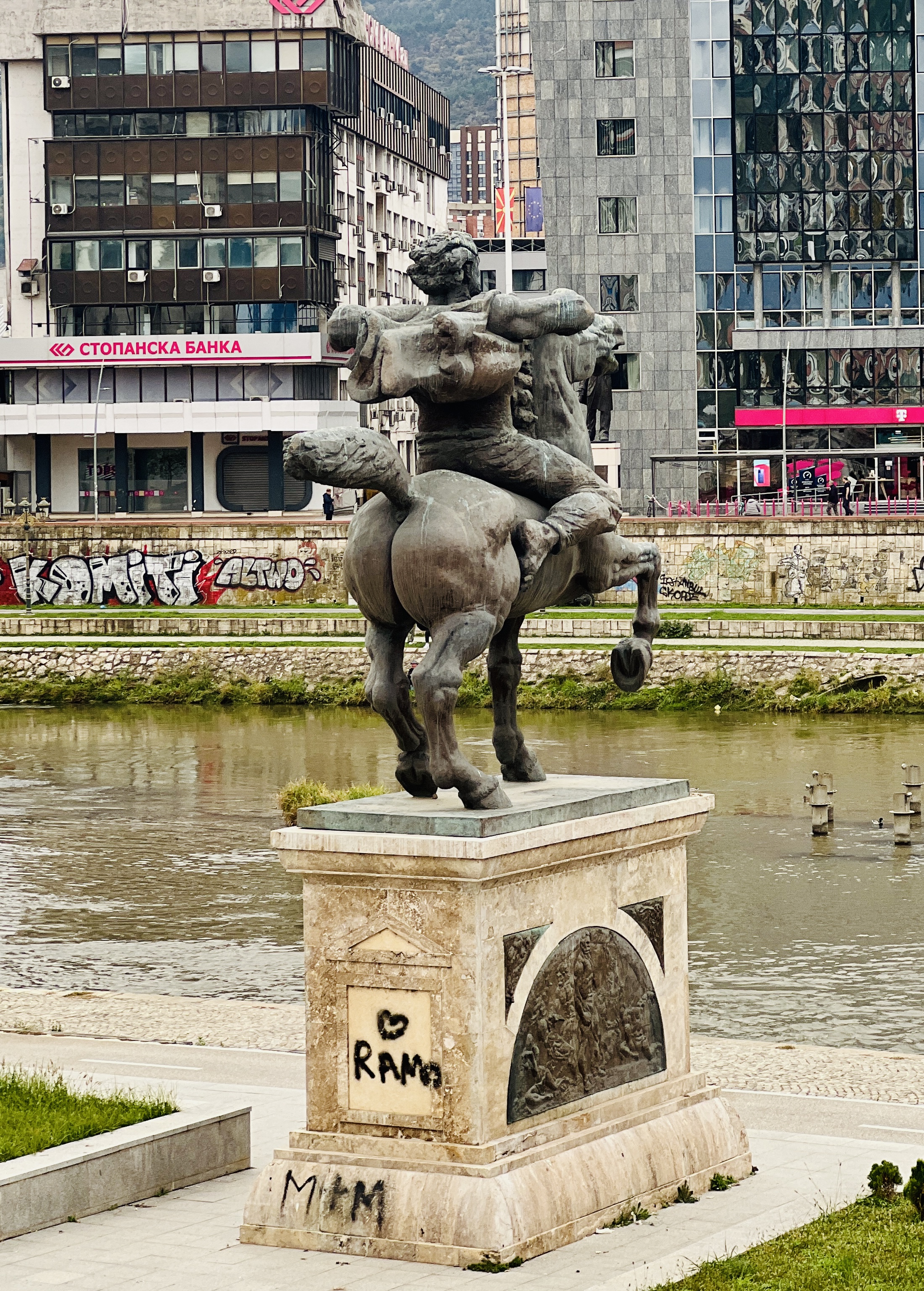
The overall effect felt like they were trying to recreate Ancient Rome, but not quite getting there – instead landed somewhere closer to a Panem vibe from the Hunger Games. It wasn’t unattractive, it was just ‘a lot’ and it didn’t necessarily fit well together. In that way it almost felt like parts of Doha.
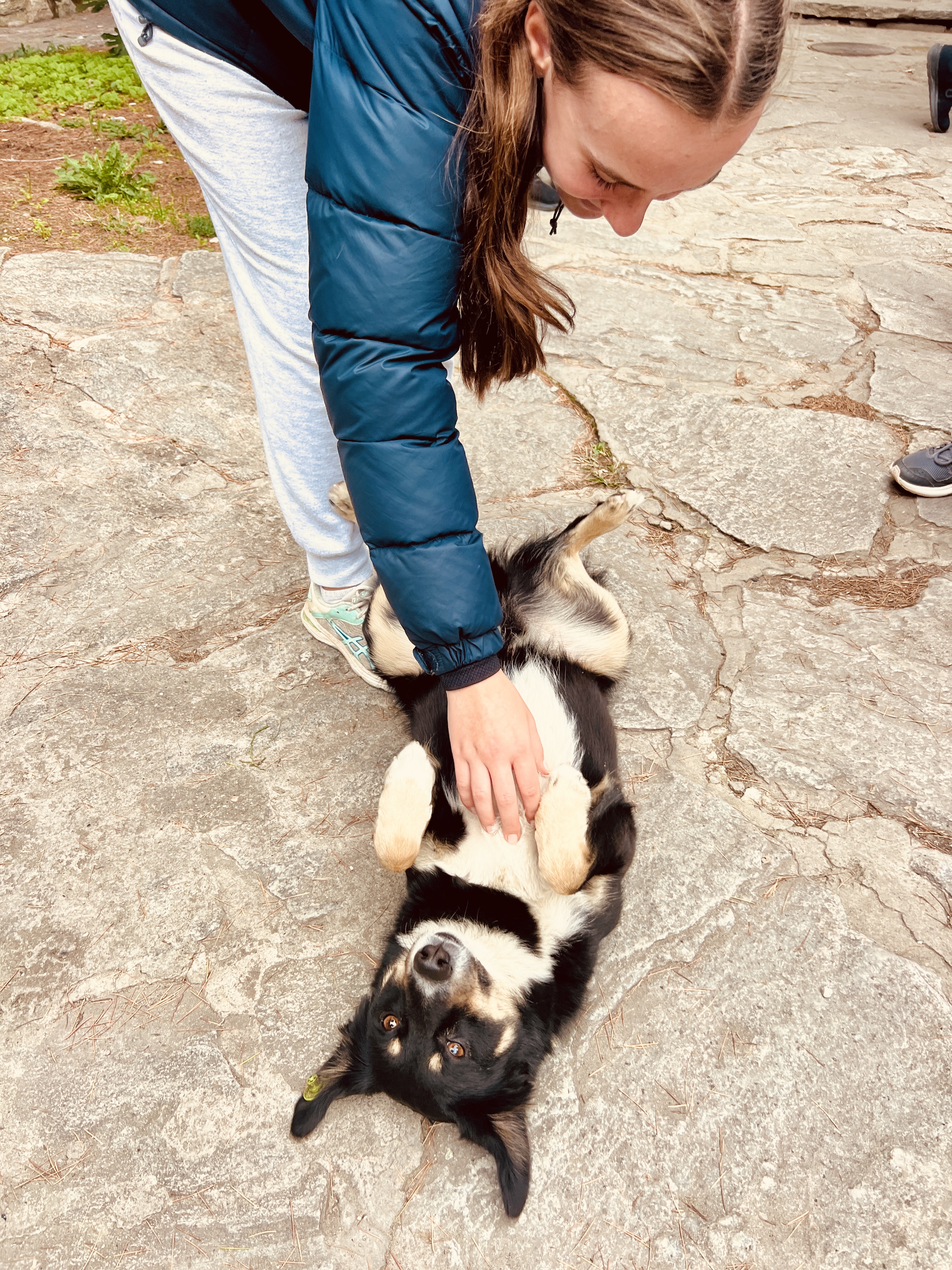
The other thing was the dogs. Like Pristina, Skopje have a programme to vaccinate, desex and chip stray dogs and they are everywhere. Even more than in Prishtina, and just as friendly.
Spirits were high as we sat down for an enormous Turkish breakfast (Ellie’s favourite) at a lovely riverside lunch spot (in the shade of a pirate ship) and started singing along to 1980s power ballads (much to the confusion of our fellow diners).
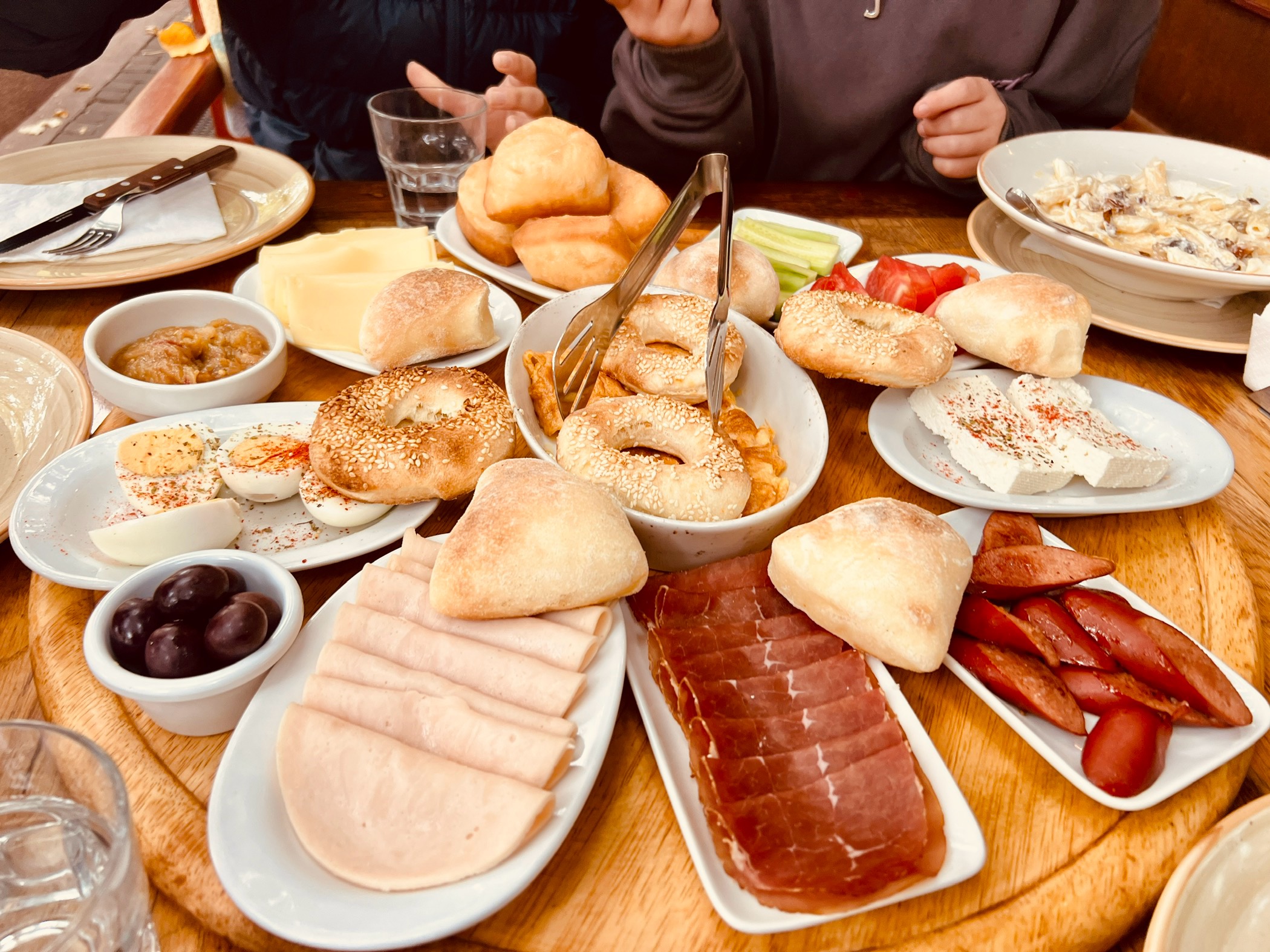
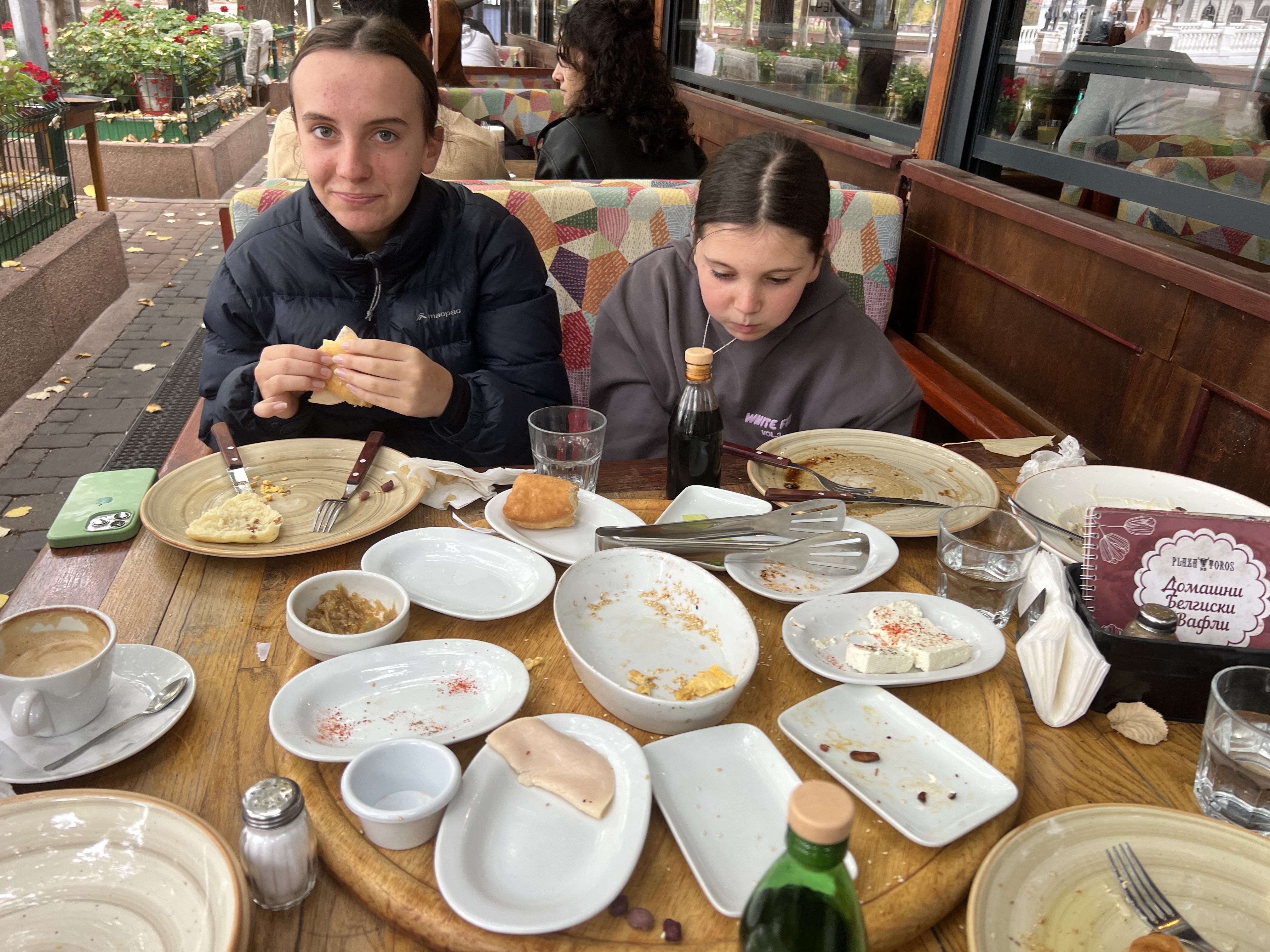
Post lunch we made our way back to the Macedonia Square to meet our guide, conveniently called Aleksander – no doubt in honour of the supersized man on a horse that dominated the main square of town.
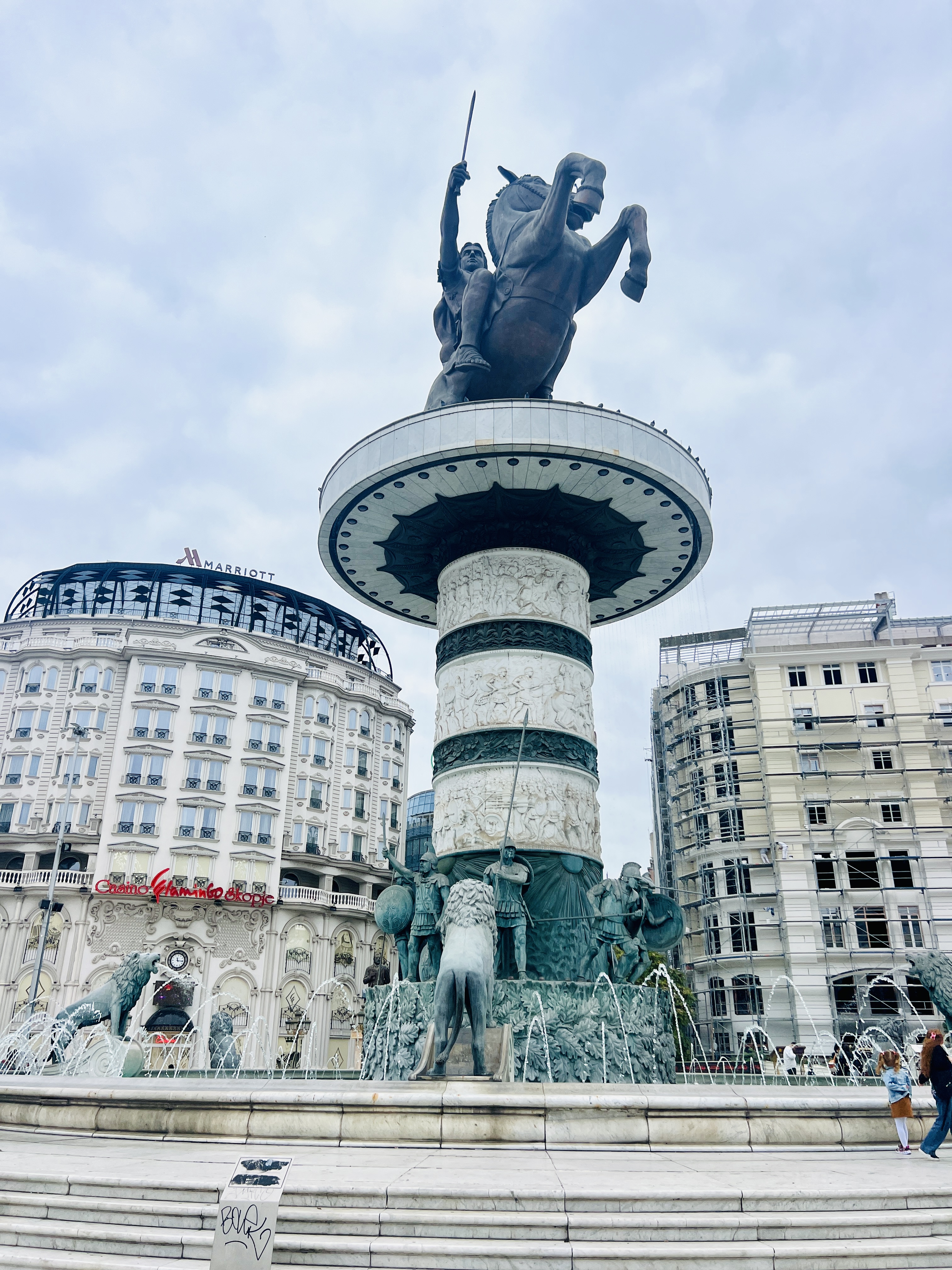
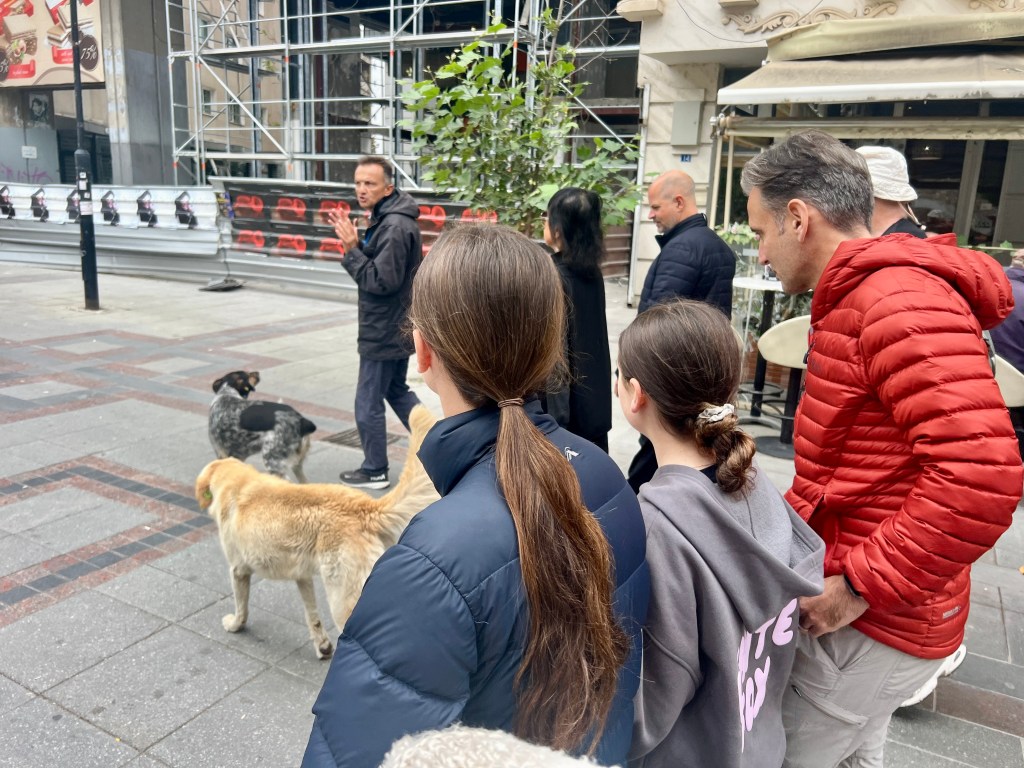
Fair to say that Aleksander was not a man to mince his words. His opening salvo was around why the statue of Aleksander the Great in whose shadow we were standing was now to be referred to as ‘the mounted horseman’ or similar as the locals had signed away their claim to Macedonia or Aleksander in a recent agreement with Greece. Macedonia was now forever to be the claim of Greece, and Aleksander the Great was forever to be referred to as the (anonymous) mounted horseman. And the country needed to add “North” to their name.
We commented on the size of the statue of the now anonymous horseman, expecting something in the mid 19th century.
2011.
2011? Thinking he’d got the century wrong.
2011.
He then turned to the Arc de Triomph that stared at the statue’s butt.
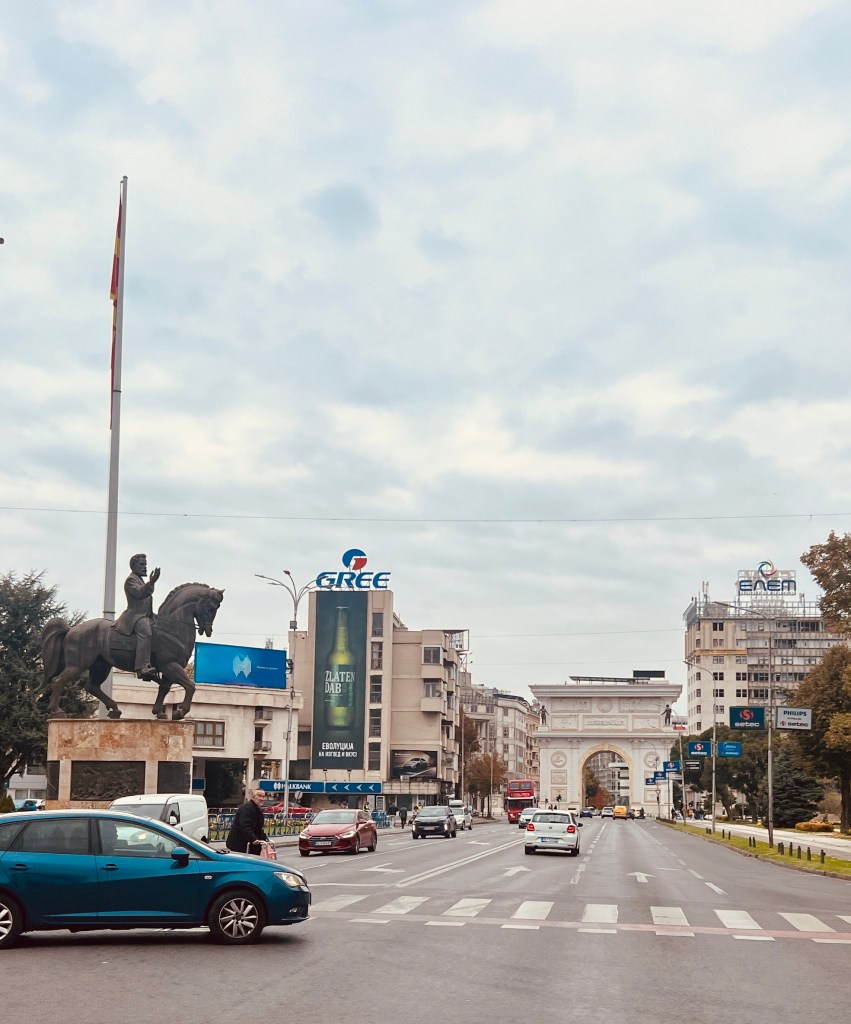
And this was built in 2012 (it turns out for a cost of some 5m EUR)
What?
Much of the rest of the 2 hour tour around Skopje was dedicated to Aleksander unloading about his views of the ‘Skopje 2014’ project which, in his view, was an enormous money laundering scam (along with the casinos on every street corner) which had swindled North Macedonia out of some 1 billion Euros (a third of their national budget) to line the pockets of drug cartels and corrupt politicians.
He eagerly pointed out the hundreds of corroding, hollow statues, the mould ridden rooftops, the cheap doric facades literally falling from the austere communist buildings they covered, and the smashed egg stained government buildings that were literally sinking into the river.
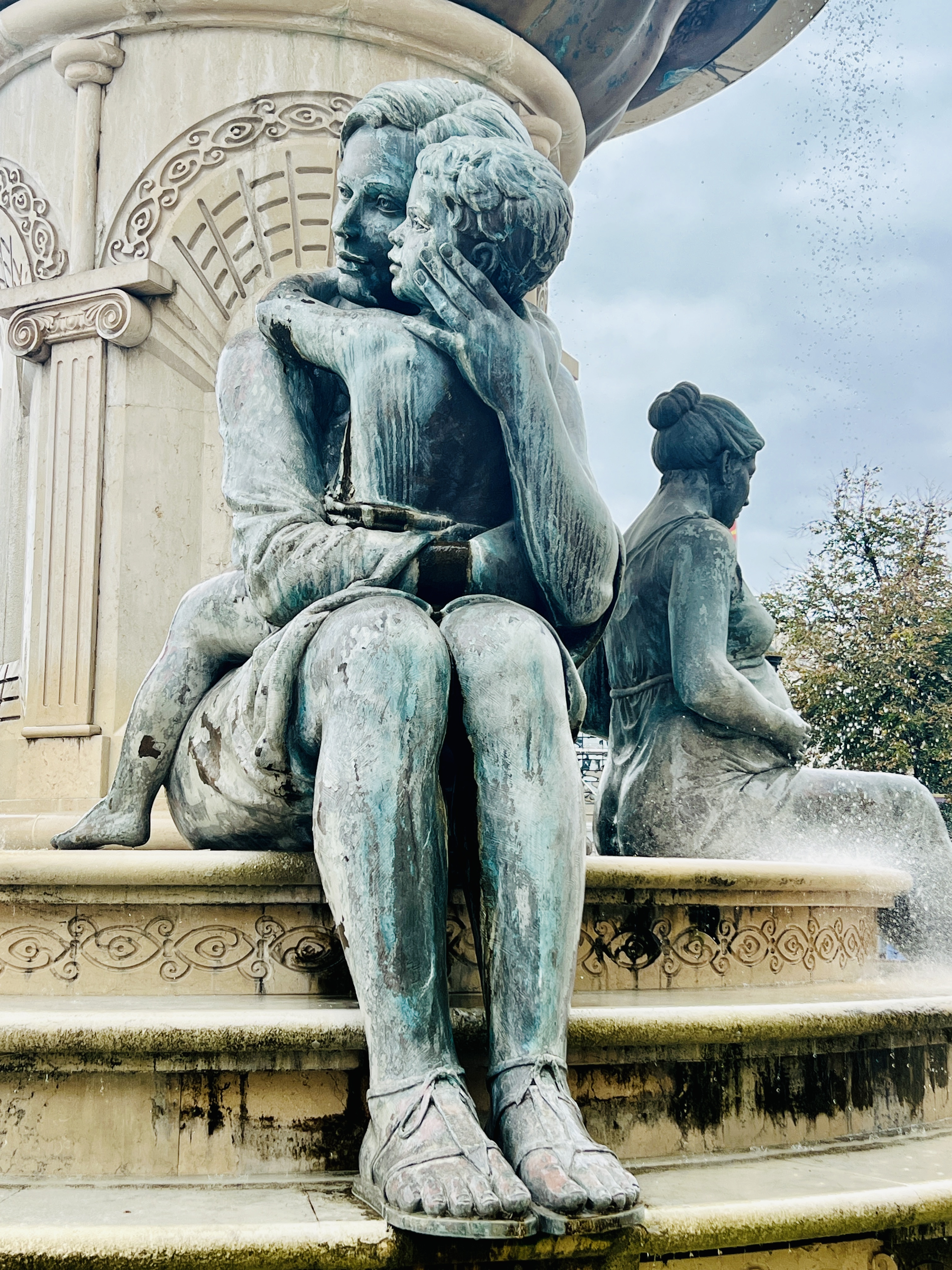
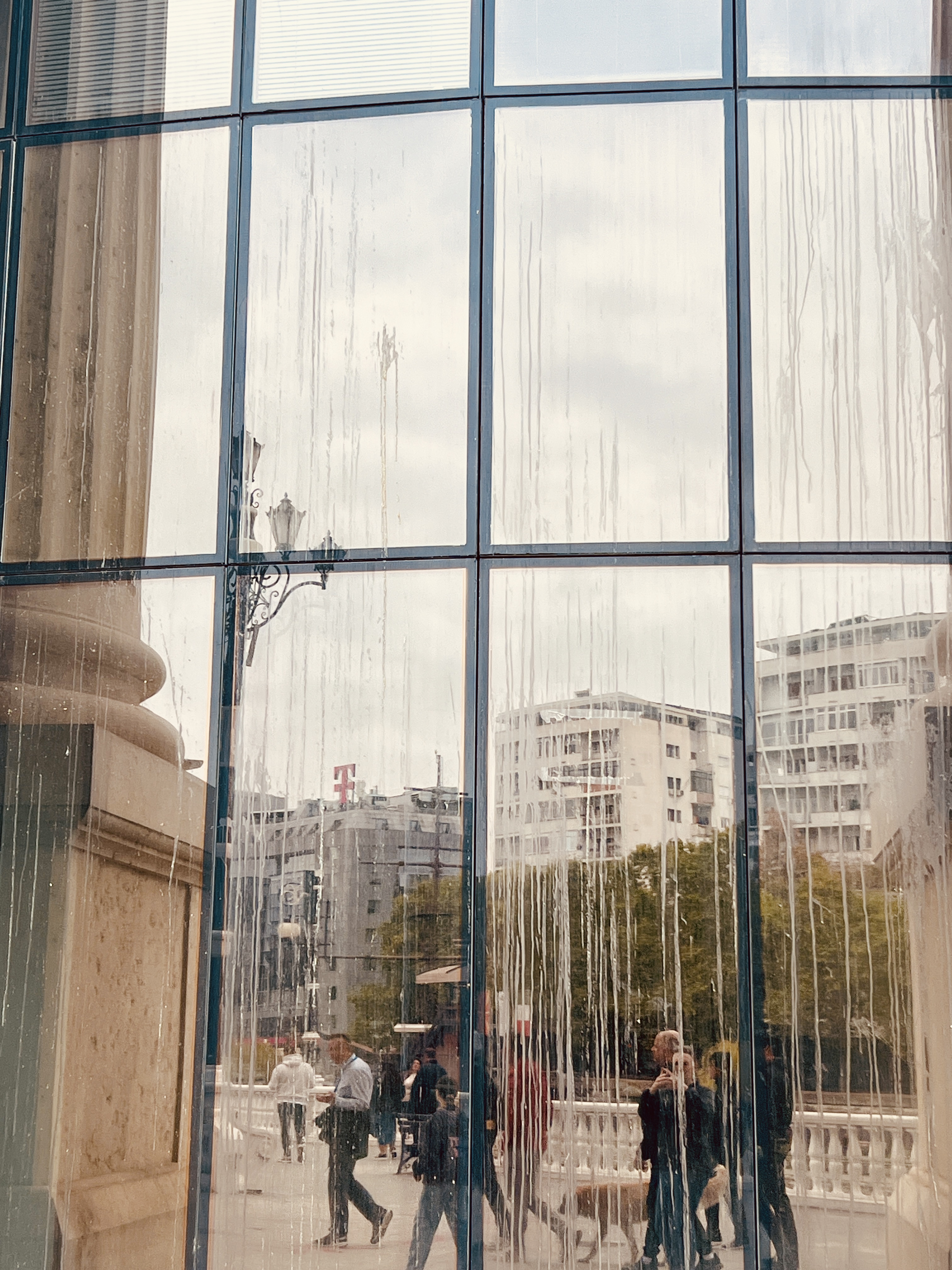
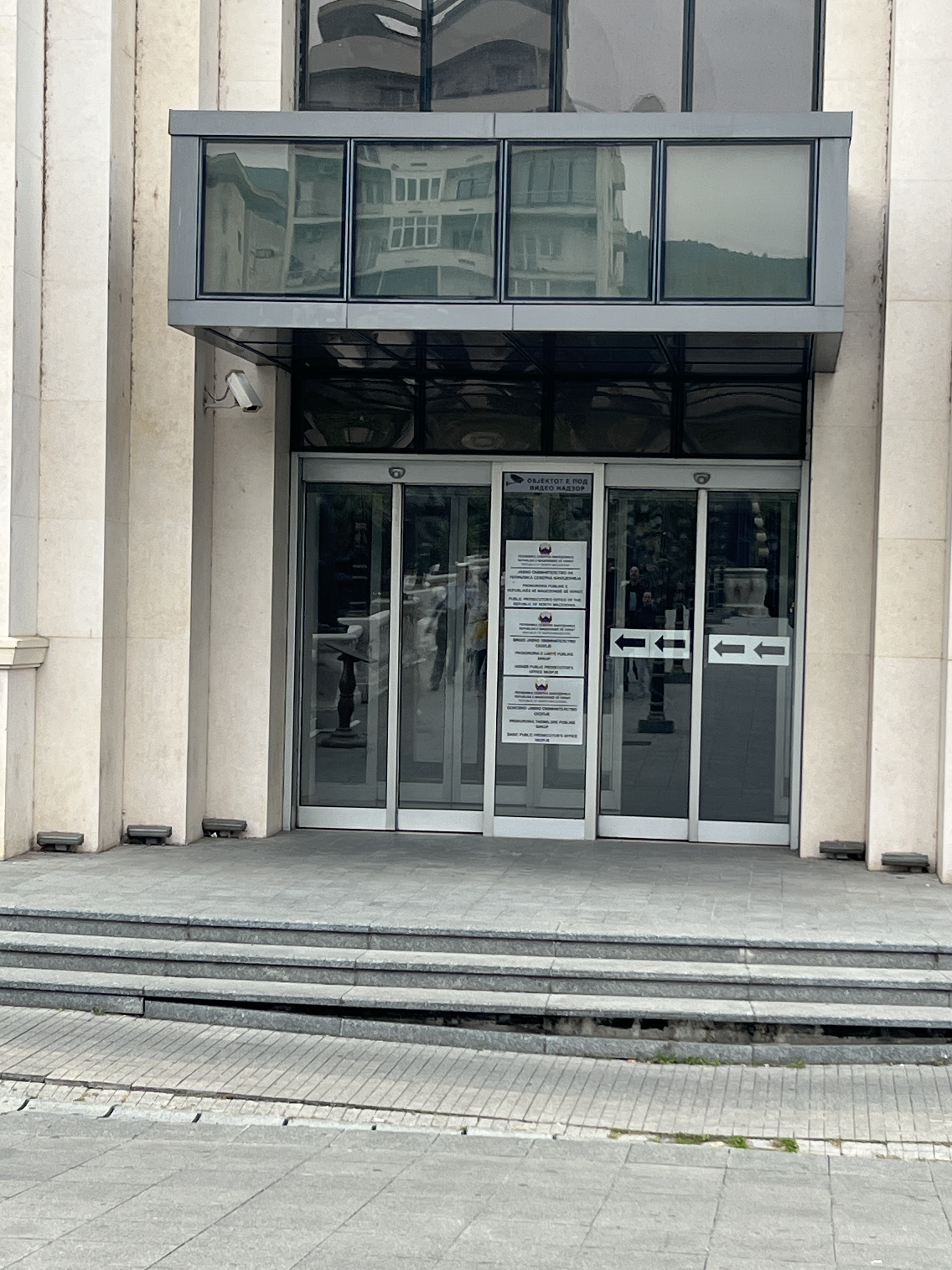
That was before he started on the multiple cheap pedestrian bridges over the knee deep river Varder, interspersed with several wooden pirate ships (note: North Macedonia is a land locked nation with no naval history, let alone pirates) which covered the view to the only ‘original’ thing in the whole town centre – the old stone bridge.
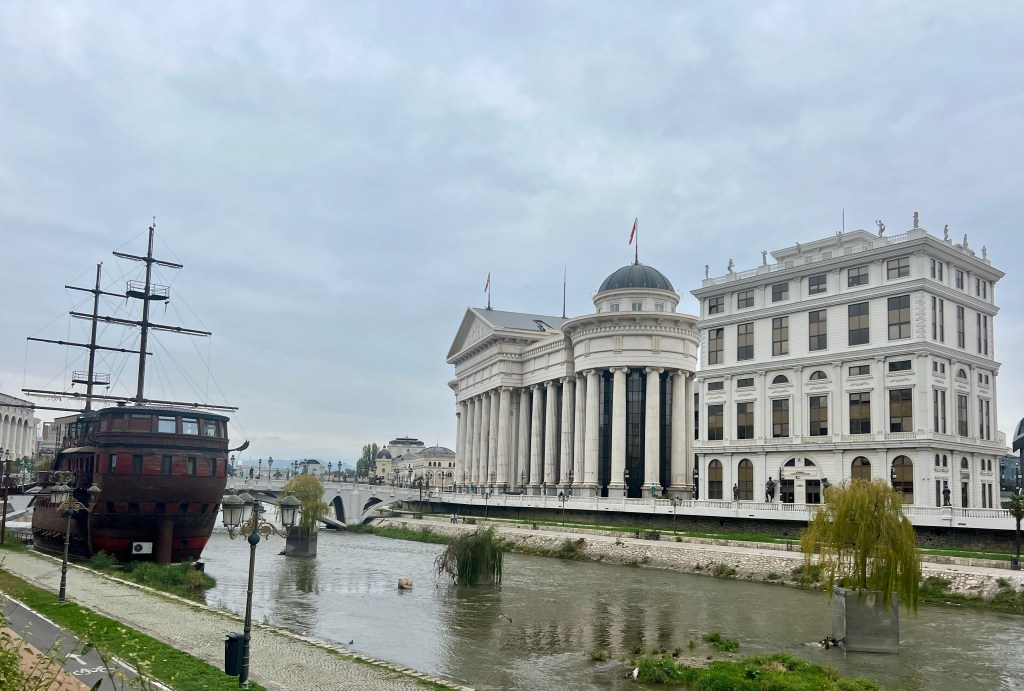
Fair to say he was not a fan, and we were quite concerned that he was going to get hauled away by the secret police mid tour.
Even as we were walking about, we started to fact check him. And whilst he may have been exaggerating somewhat, there was a basis of truth in his narrative.
The following is taken from the Integrity Audit website (https://integrityaudit.org/blog/skopje-2014-unveiling-the-controversial-urban-renewal-project-and-its-corrupt-legacy-38)
The Skopje 2014 project was a massive urban renewal project in the capital of North Macedonia. The project, which was launched in 2010, aimed to give the city a new look, with a focus on its historical and cultural heritage. However, the project was soon mired in controversy, with allegations of corruption and mismanagement.
One of the most controversial aspects of the project was the cost. The initial budget for the project was €80 million, but the final cost is estimated to be as high as €560 million. This massive increase in cost has been attributed to a number of factors, including the lack of transparency in the bidding process, the use of inflated prices, and the construction of unnecessary projects.
In addition to the cost, the project has also been criticized for its aesthetic value. Many critics have accused the project of being “nationalist kitsch,” with its focus on grandiose monuments and buildings that are out of keeping with the city’s traditional character.
The allegations of corruption in the Skopje 2014 project have led to a number of investigations. In 2016, the Special Public Prosecution opened a preliminary investigation into the project, but no charges have been filed. In 2018, the Public Prosecution for Organized Crime and Corruption opened an investigation into the construction of the “Oko” bridge, which is one of the most controversial projects in the Skopje 2014 plan.
The allegations of corruption in the Skopje 2014 project have had a negative impact on the city’s reputation. The project has been used by critics to argue that North Macedonia is a corrupt country, and it has made it more difficult for the country to attract foreign investment.
The future of the Skopje 2014 project is uncertain. The project has been largely completed, but there are still a number of unfinished projects. It is unclear whether the government will continue to fund the project, or whether it will be abandoned.
The Skopje 2014 project is a cautionary tale about the dangers of corruption in public procurement. The project has wasted millions of euros of taxpayers’ money, and it has damaged the city’s reputation. It is a reminder that corruption can have a serious impact on a country’s development.
It certainly gave us plenty to think about over another excellent dinner at Skopski Merck that night. The food in the region just kept on giving.
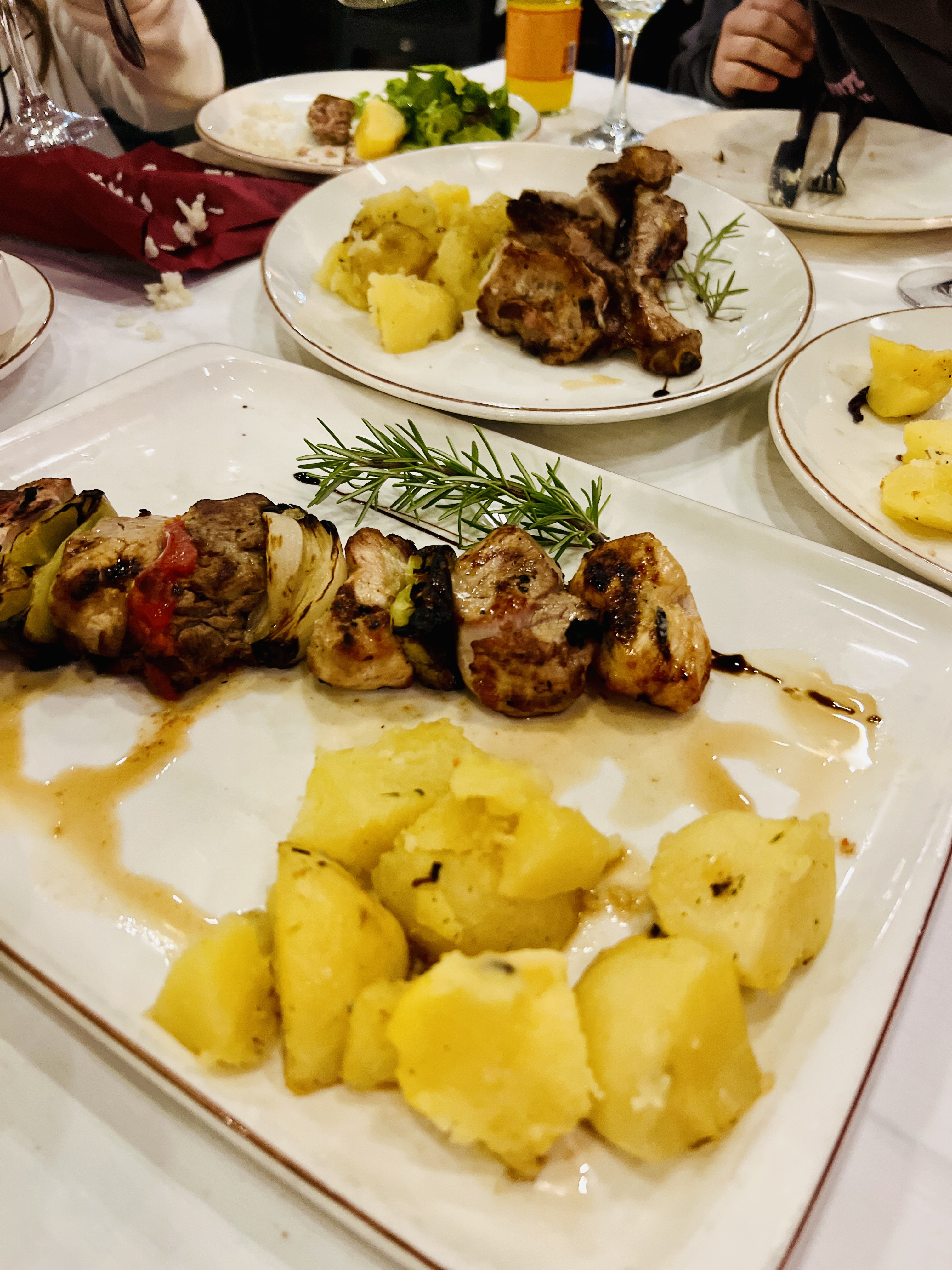
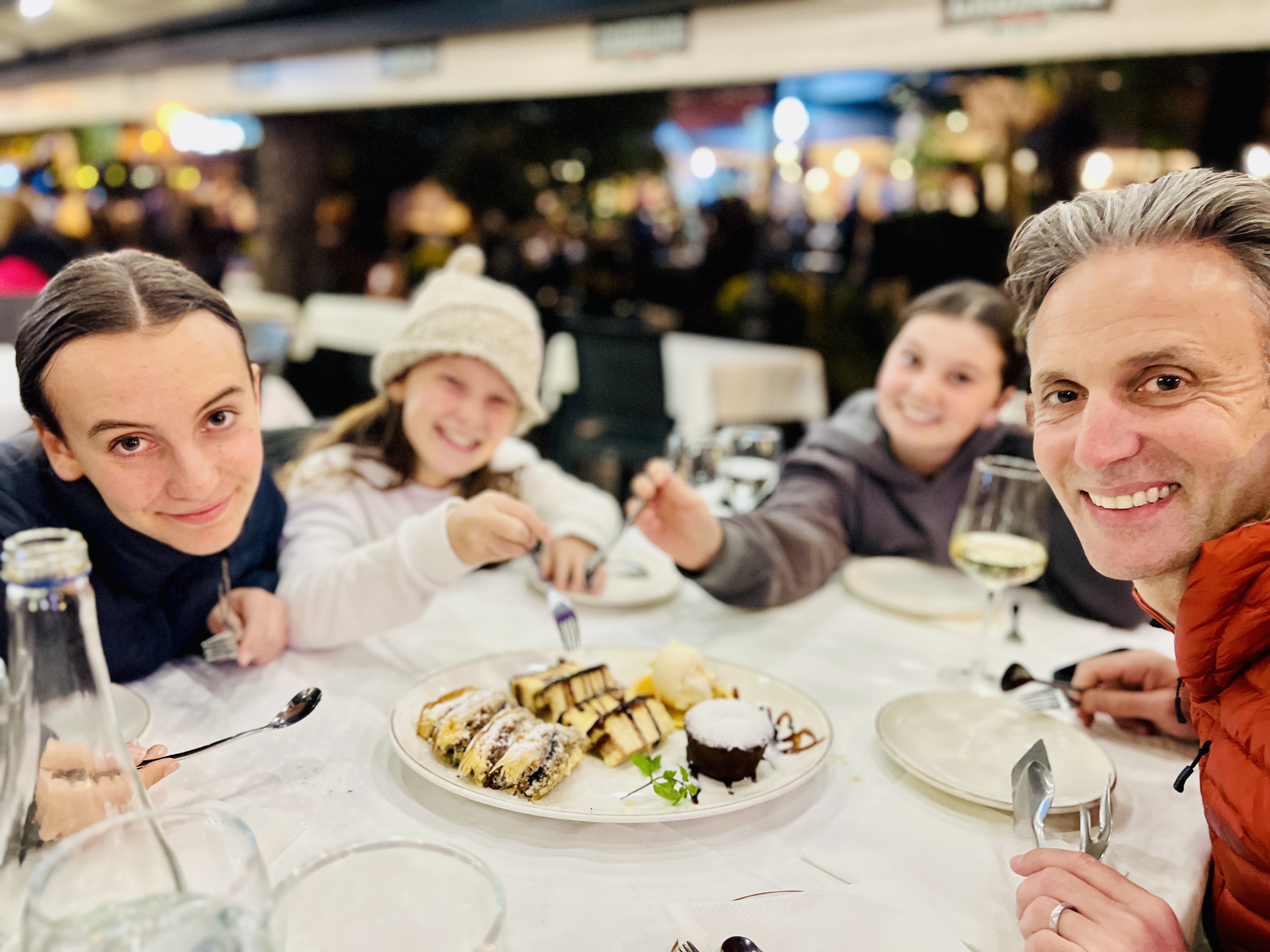
We walked around the city that night trying to understand what we had learned. We didn’t come up with any revalations other than this was without doubt a one of a kind city.
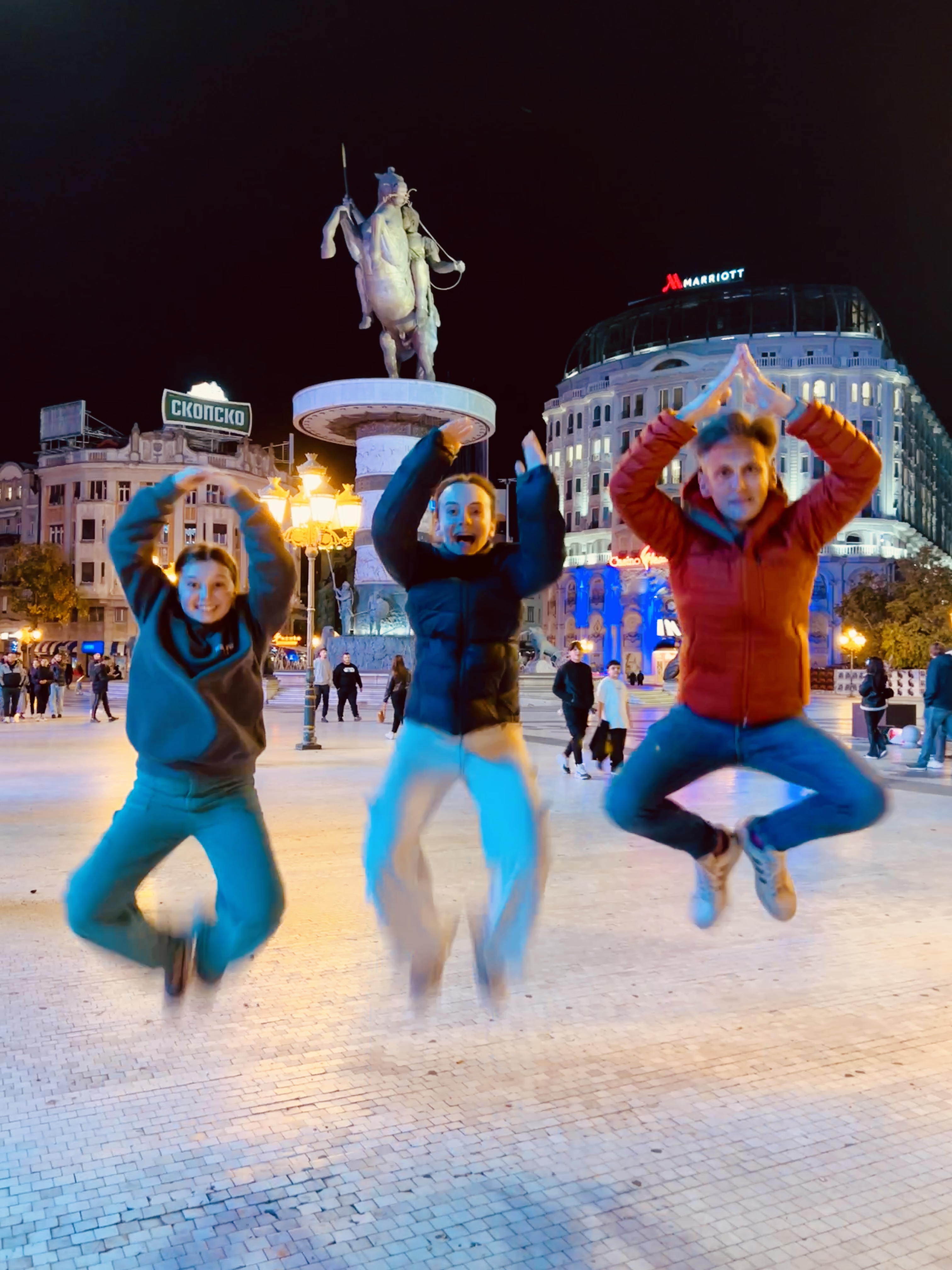
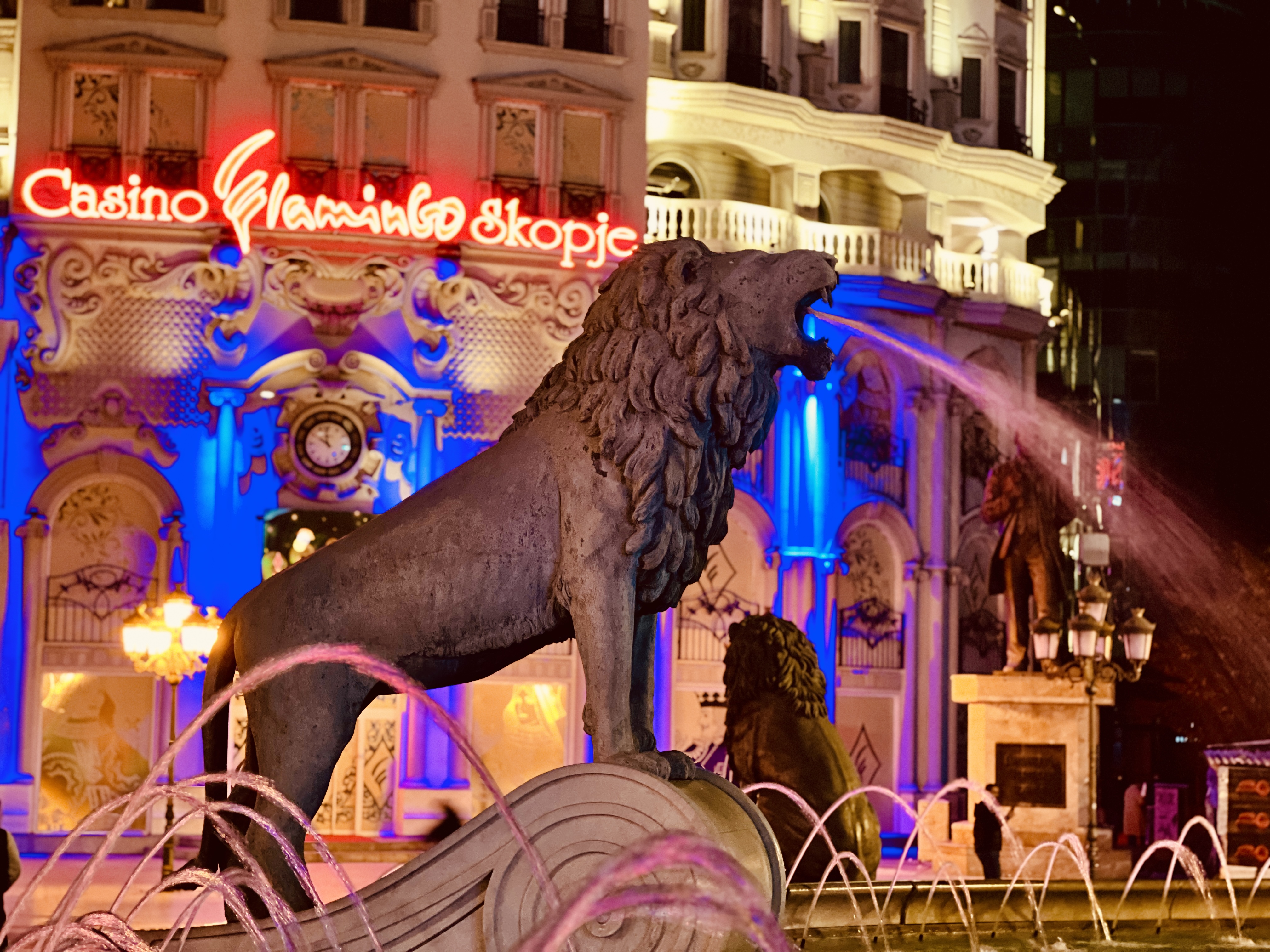
The following morning we were up early to collect our car from just off the main square. Early in the morning the dogs were out in a large pack that was playing tag in the main square – a scene that would not have been out of place in Dulwich Park.
We were intrigued by our short stay in North Macedonia, which had probably left us with more questions than answers. It was certainly not what we had expected coming in and we were super grateful for having had the opportunity to visit.
Tirana, Albania
Whilst we had really enjoyed our very quick foray into public transport on the bus from Prishtina to Skopje it was nice to be loaded into our Kia Santa Fe, which would be our chariot for the remainder of the trip. Much as we’d love the kids to experience more ‘back packing’ we really needed a car to cover as much ground as we were planning to in the time available for this trip (i.e. 1253km or 20 hours driving to 8 cities in 12 nights).
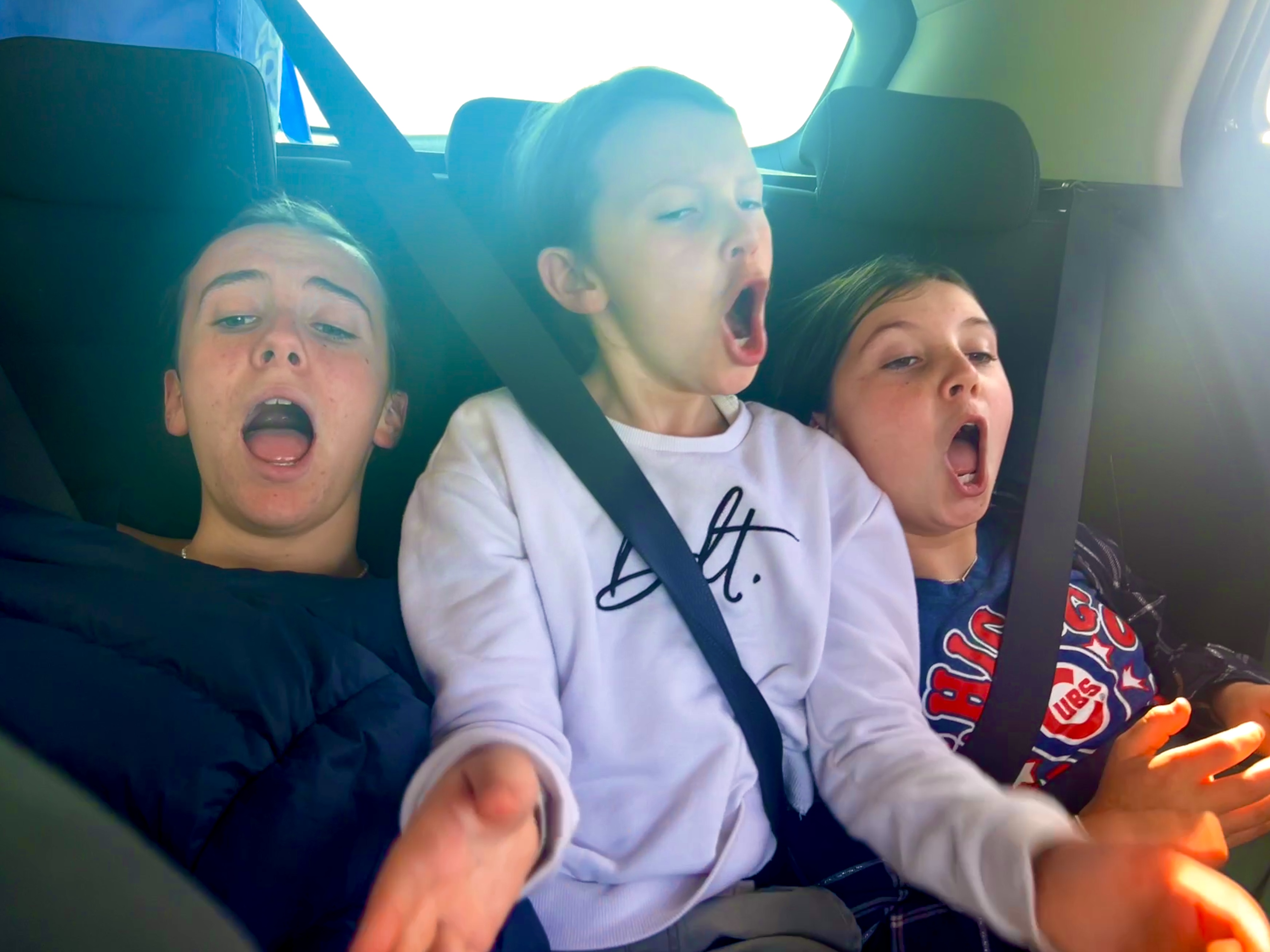
We were trying something different to normal this trip. Historically, car rides had been a bit of ‘anything goes’ with unlimited screens available to the kids. This time would be different. No screens. Everyone had to submit a playlist for each day of travel. Points would be awarded and bragging rights available to the winner each evening. It was all to play for.
The drive from Skopje to Albania took us (with a number of false starts as the GPS really wanted us to go through Kosovo, whereas our insurance did not) up and over the Northern Macedonian mountains and ski fields, around Lake Ohrid and north west into Tirana. The drive was easy, powered by some excellent tunes from the girls. Sadly Ant’s attempt to educate the girls in 1990s grunge resulted in protests then (oddly) all three falling asleep as if charmed by the dulcet tones of Pearl Jam, Smashing Pumpkins and Stone Temple Pilots. In any case, Ant was declared soundly last place in the competition that evening, with Ellie taking out the inaugural prize.
We rolled into Tirana, navigating what felt like a relatively big, bustling and developed city after Prishtina and Skopje. Roadworks conspired against us and we ended up driving down what felt like a number of pedestrianised areas between cafes on our way to our designated ‘parking area’ in an enclosed garden behind a building site. We gave our car keys to some random guy and left, convinced that we would never see our car again.
We dumped our bags at our excellent apartment (Liz was out doing herself on this trip) and went exploring.
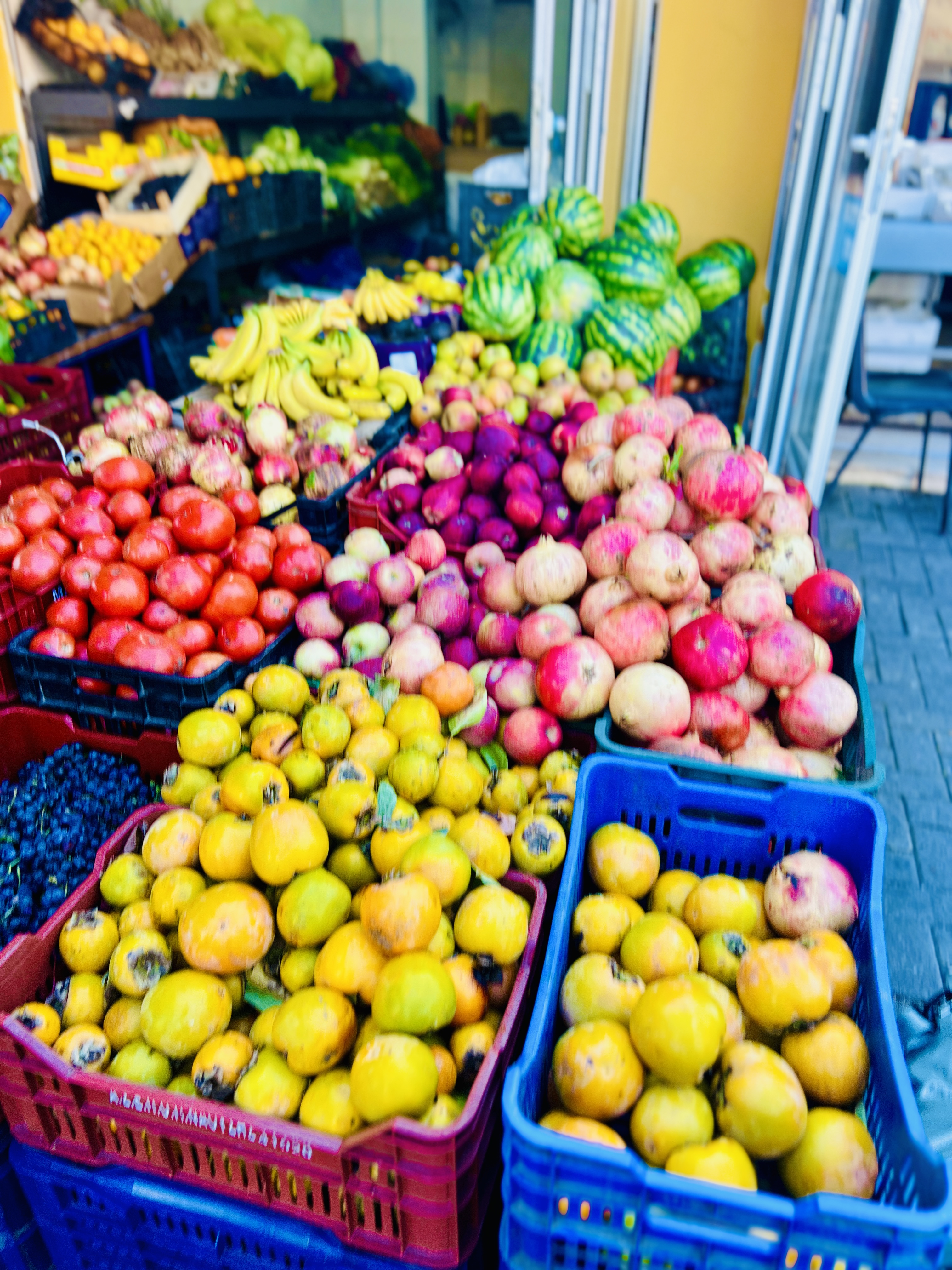
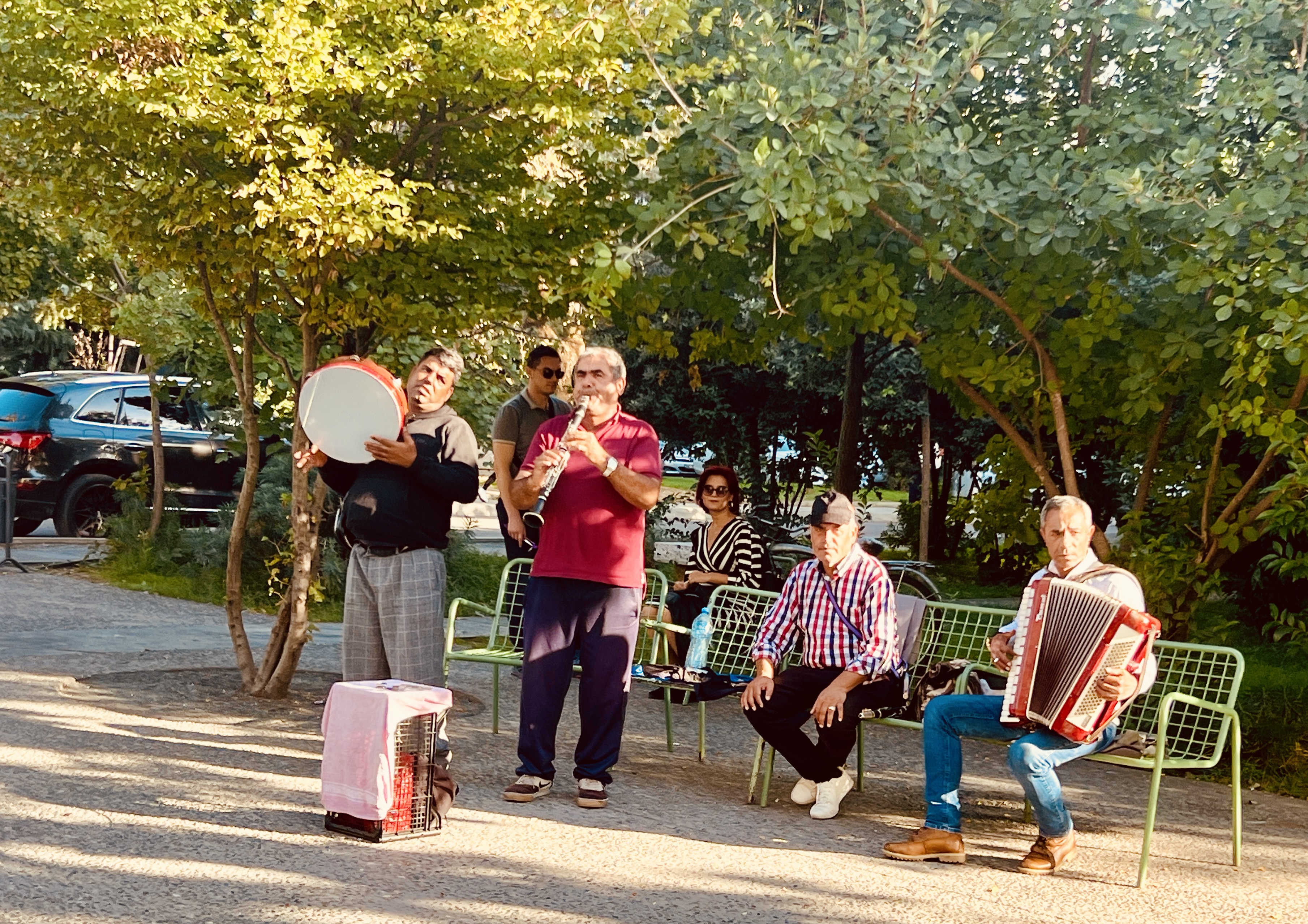
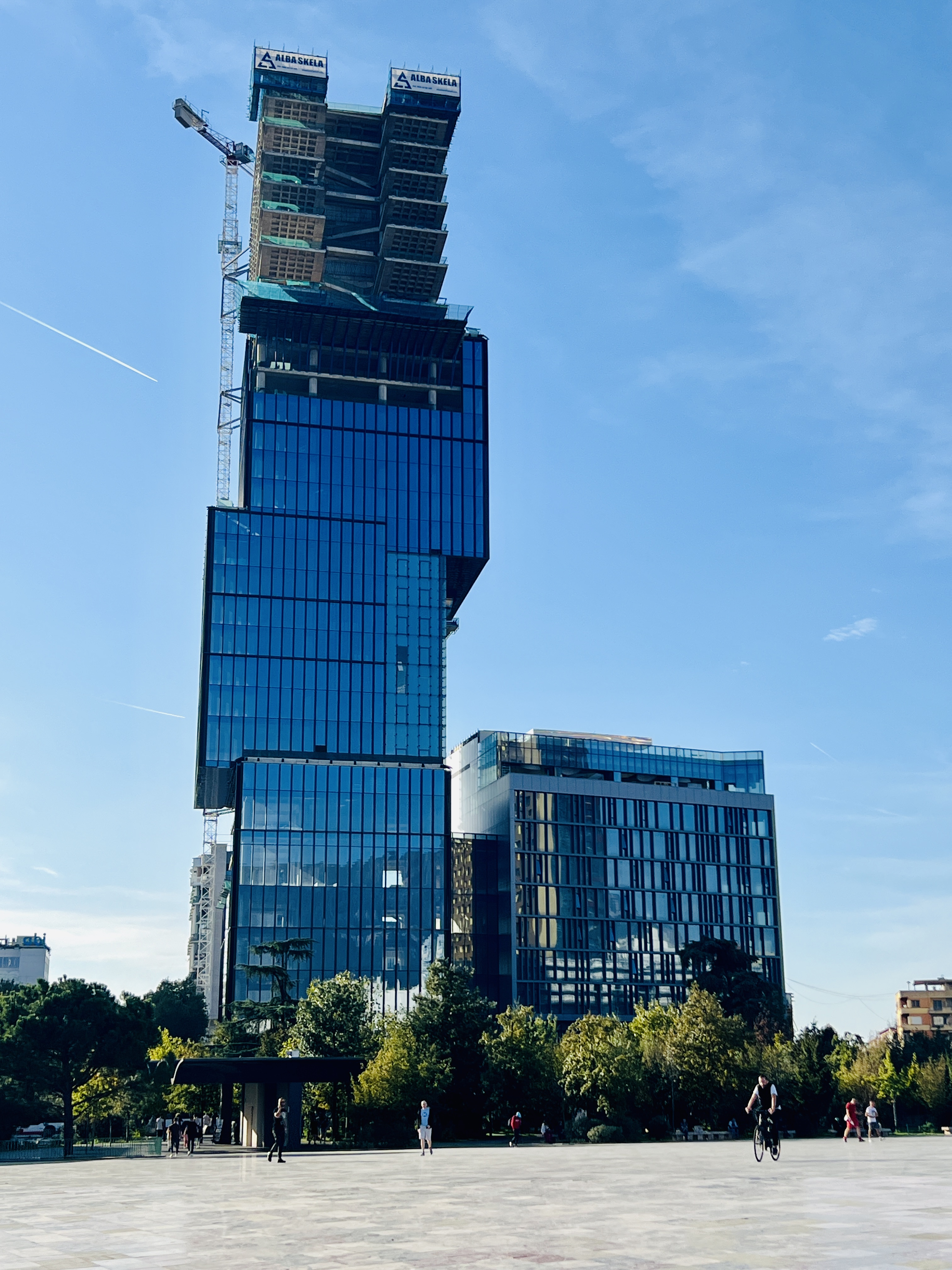
First impressions were that Tirana felt like a step up from where we had been, which was strangely at odds with our expectations. For some reason we felt that Tirana would be bigger, but potentially more dangerous and less developed than most of the other cities we would visit this trip. In fact, it felt relatively modern, with lots of outdoor cafes, tree lined streets and a range of (finished!) modern buildings. It was bustling, and felt a lot bigger than the 250k population we had read.
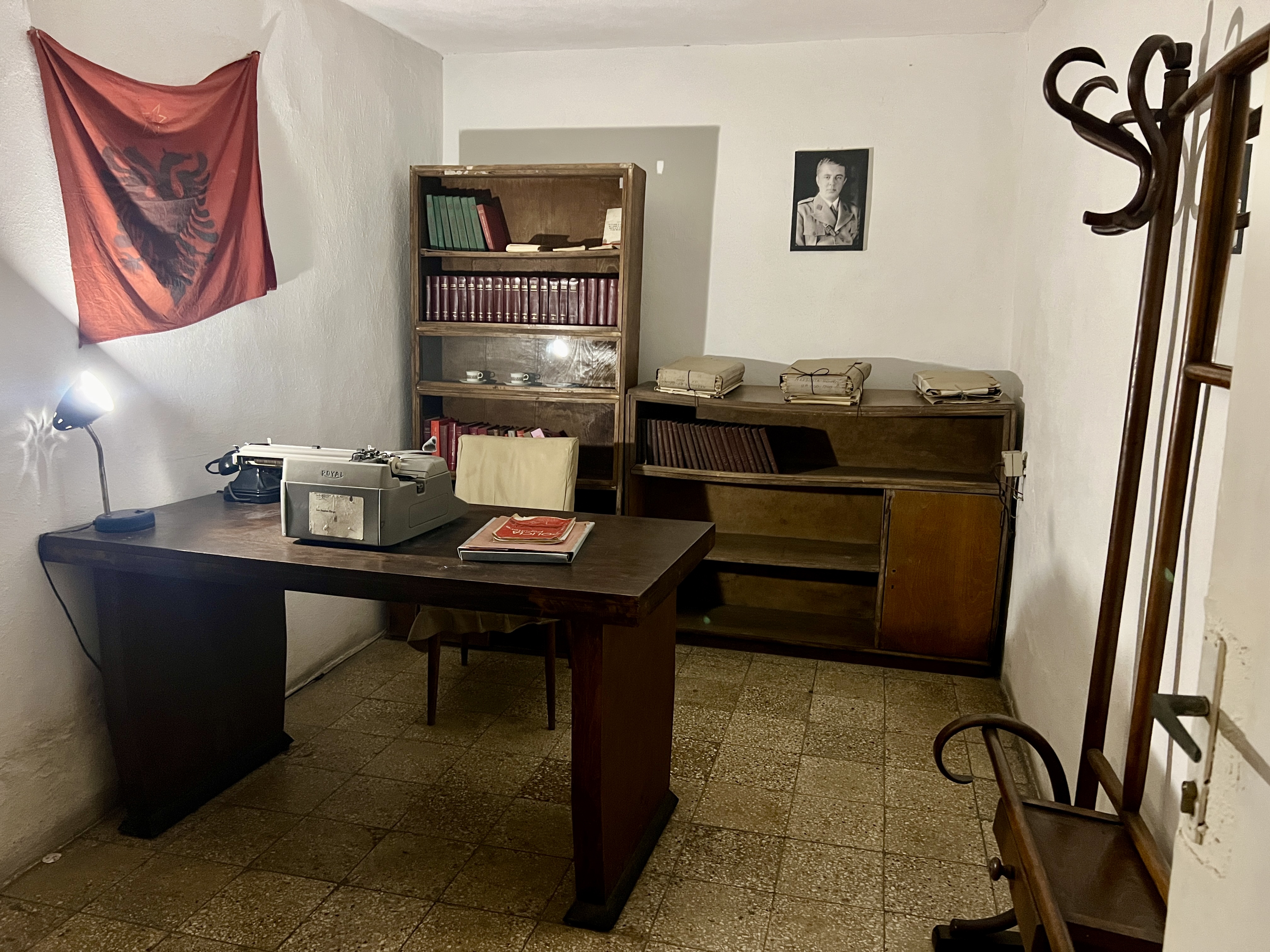
For the uninitiated, Albania since WWII was in the communist sphere of influence but not part of Yugoslavia, led largely by a psychotic hardliner by the name of Enver Hoxha. Over time, Hoxha fell out with Russia in the 1950s (I think finding them both a bit soft and not Stalinist enough) and aligned with China until the 1970s. It was still a hard core communist state into the 1990s after the fall of the Berlin Wall – and one of the poorest countries in Europe.
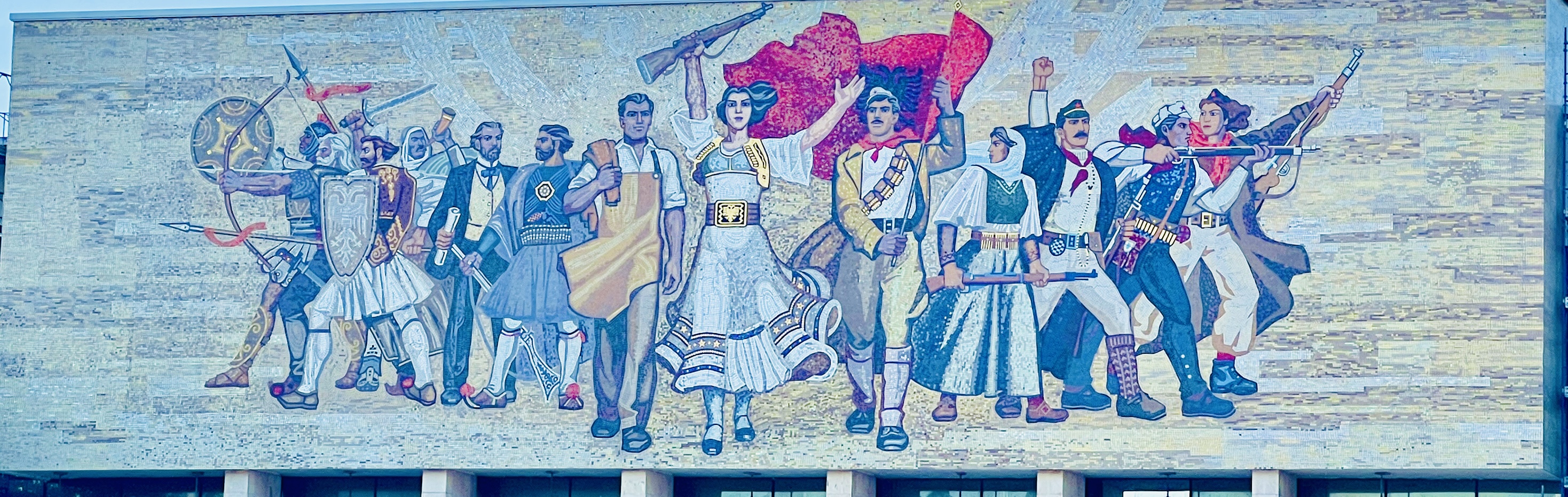
Despite the continuing challenges due to low administration capability and high levels of corruption, the country has improved over the last 20 years – hence the level of development we saw as we drove through it.
Fair to say that we didn’t do the town full justice in the 24 hours we were there. We went on an interesting walking tour around the main square, visited the excellent ‘BunkerArt’ exhibition and learned a bit (a lot!) more than we had previously known about Albanian recent history – to be fair, we were starting from a very low base here, and it was really interesting to get a feel for the country under Enver Hoxha.
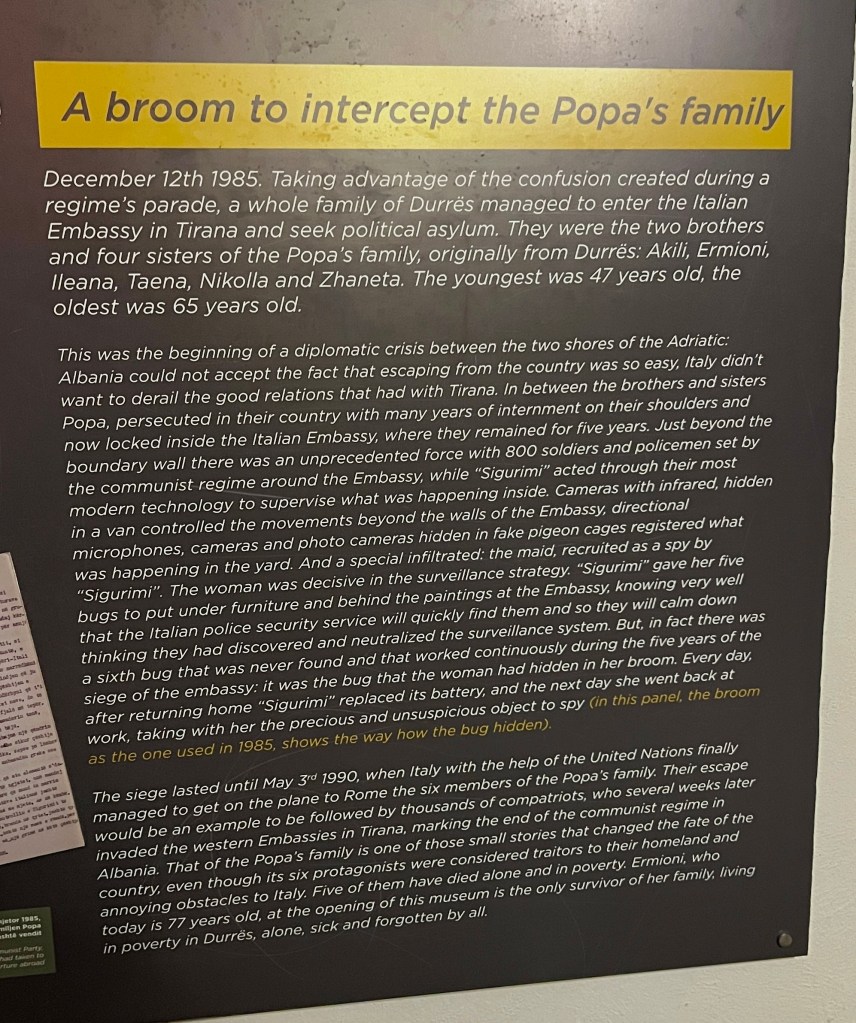
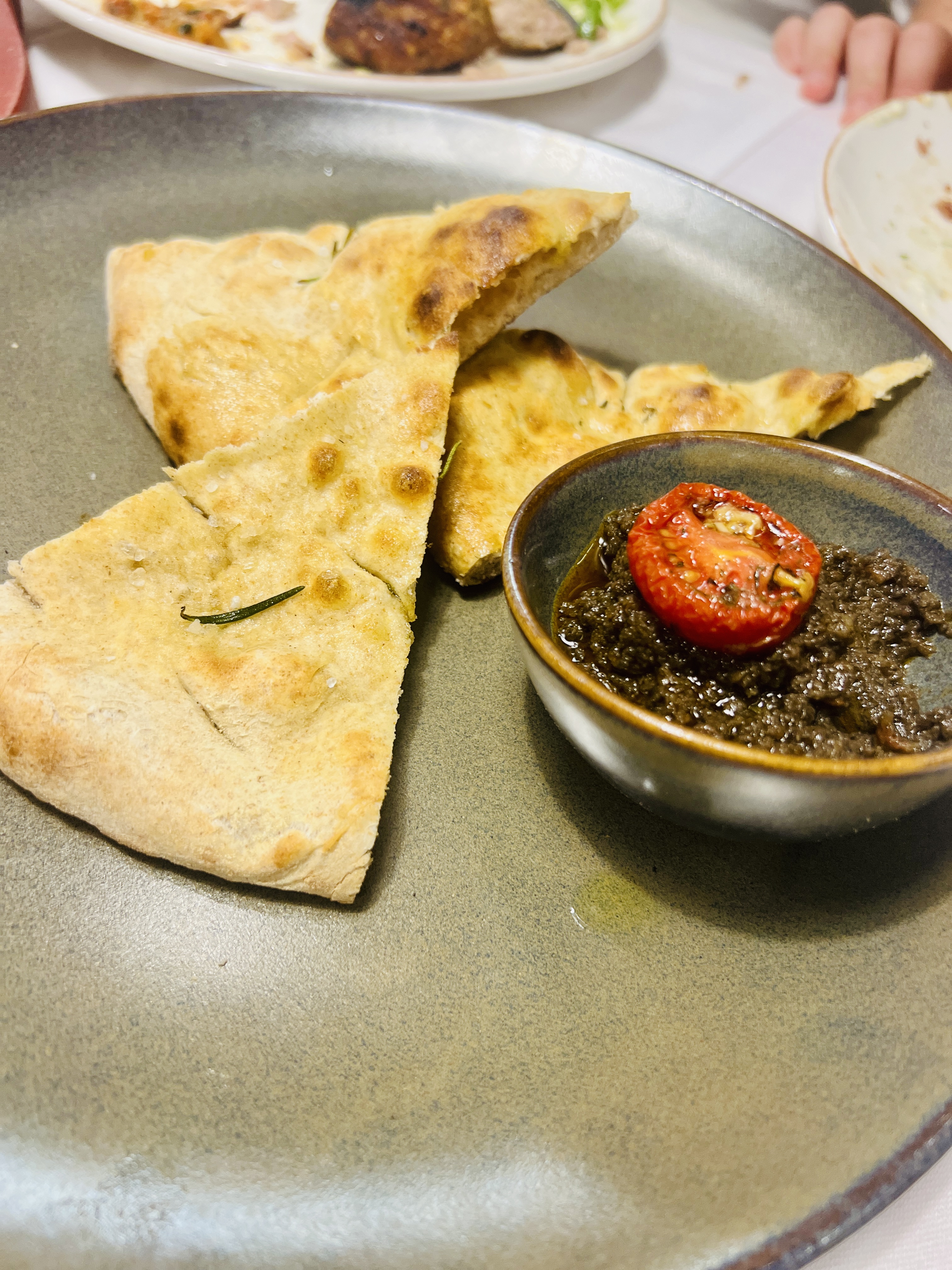
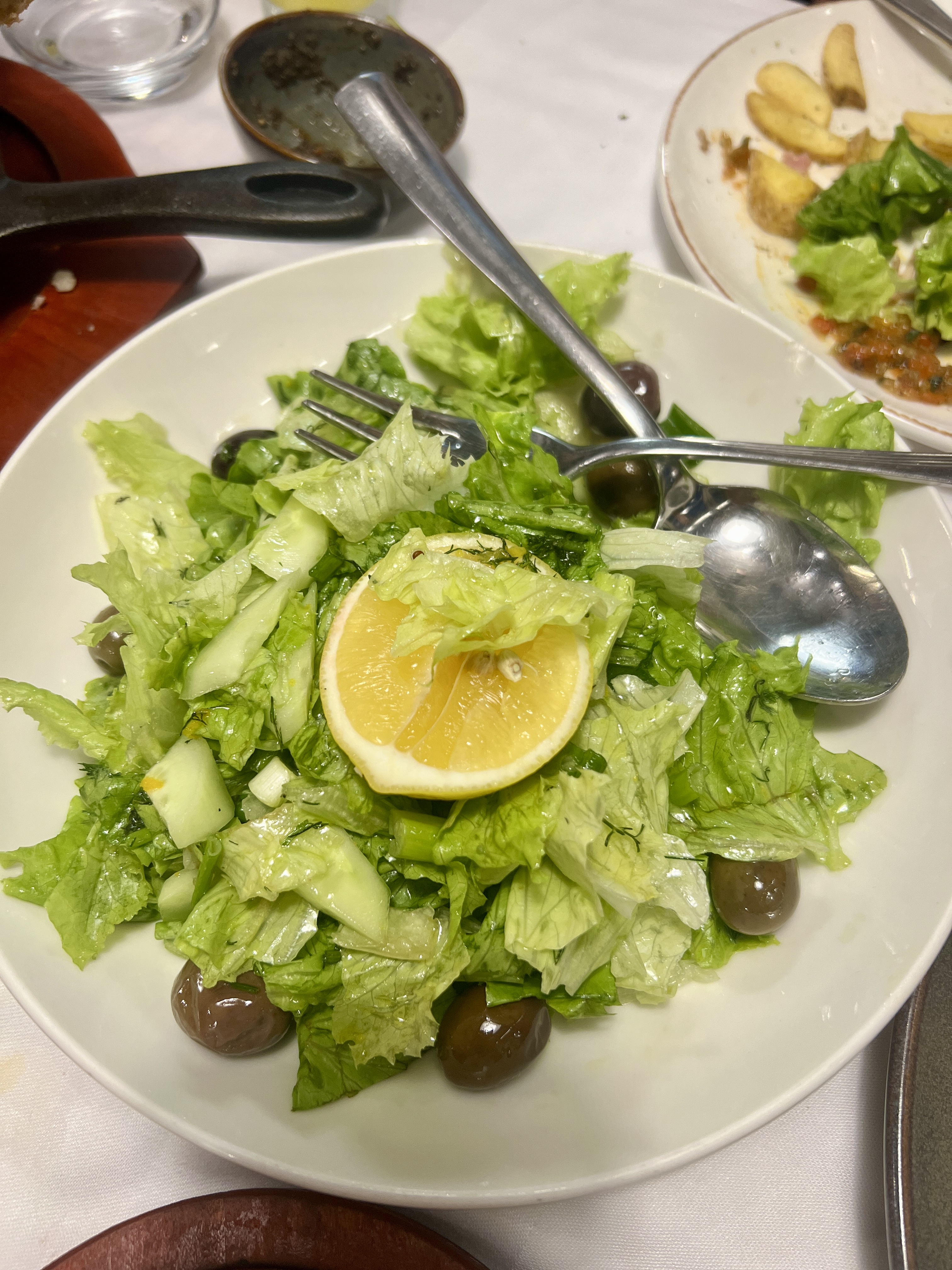
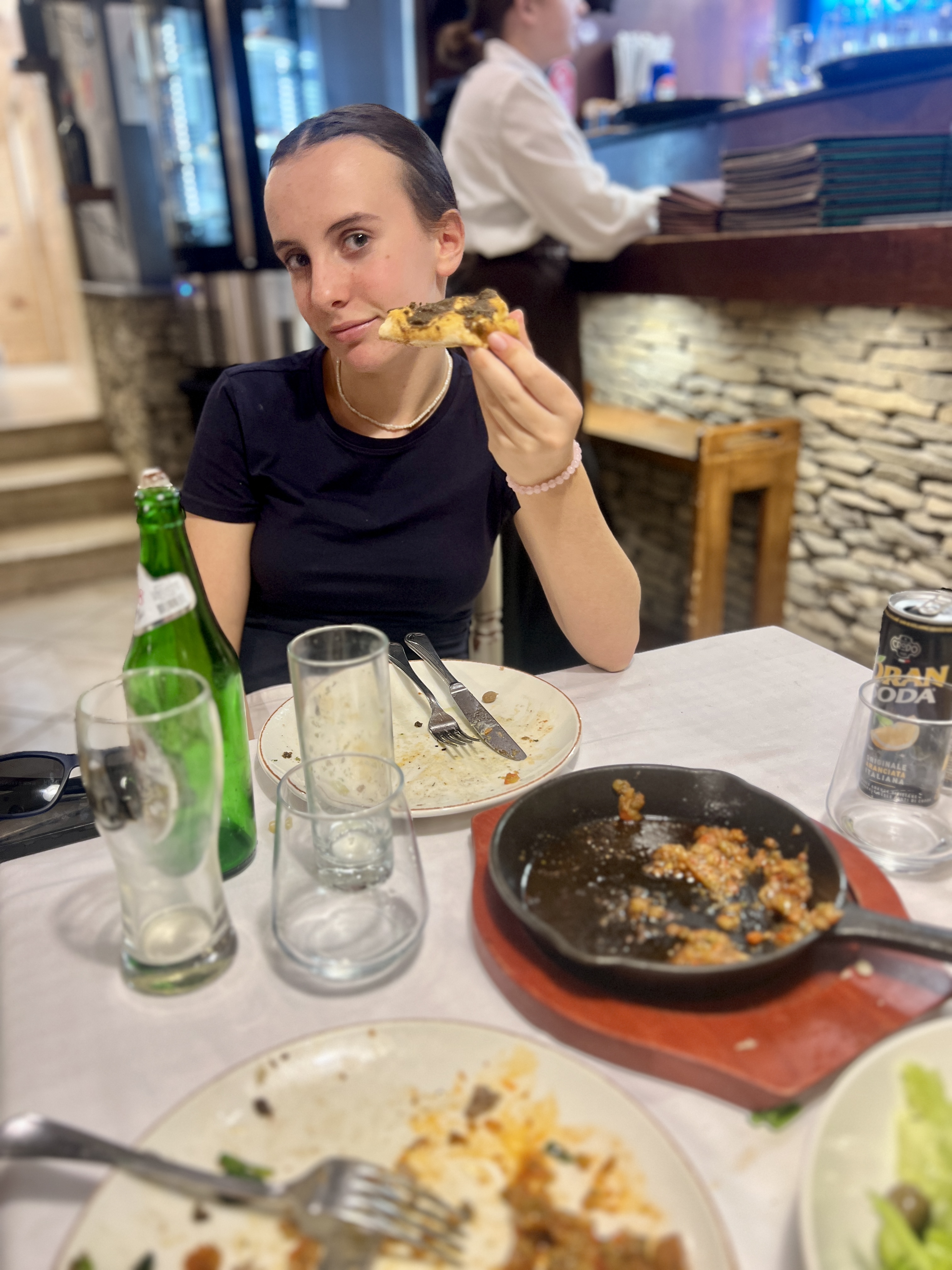
The highlight of our brief visit was definitely dinner at Piceri Era in the interesting Bllokku area – the food was amazing and the district itself quite interesting. Special call out to the lemon and dill salad and the homemade sausages.
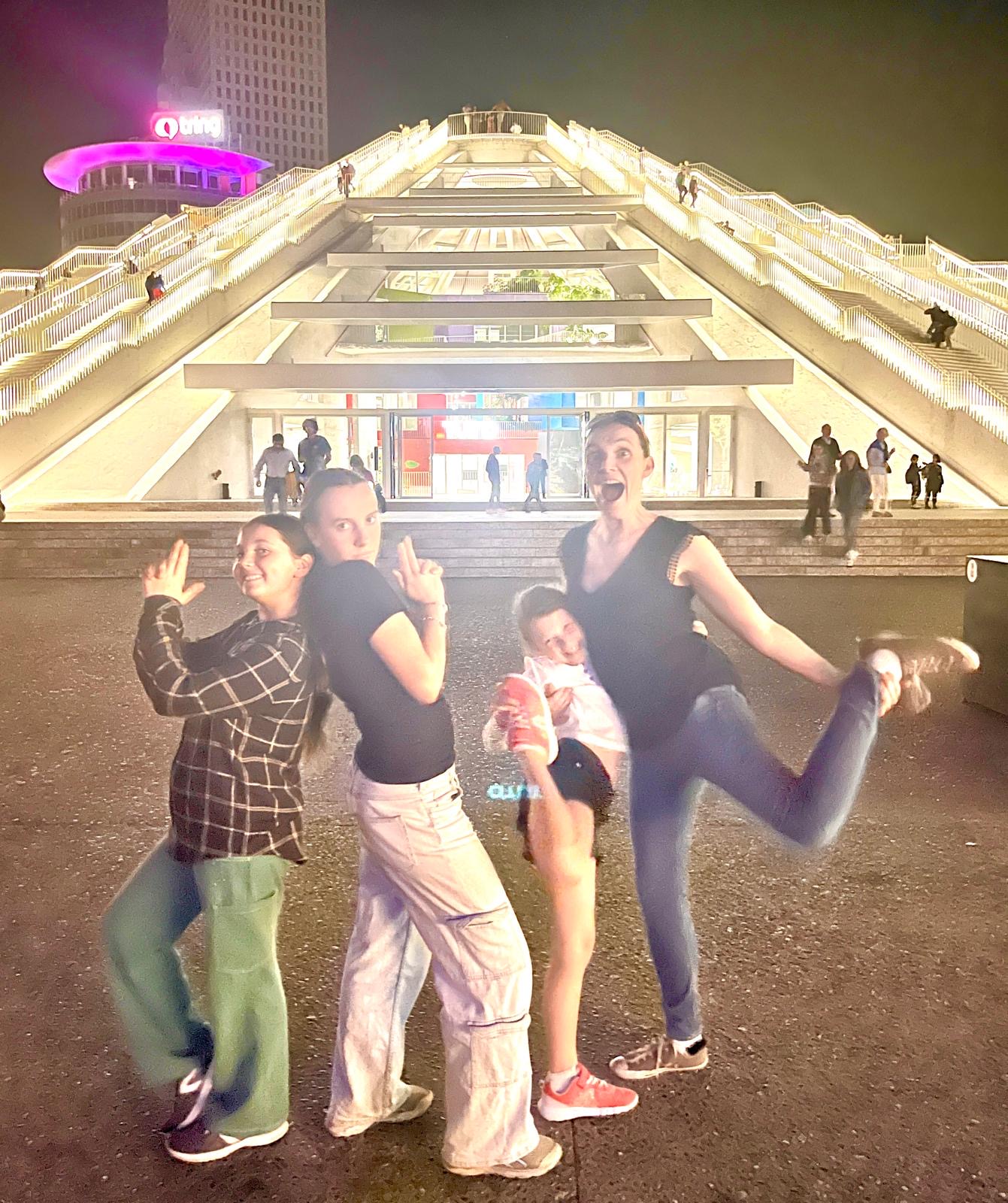
Blloku is where Hoxha and his cronies hung out (when he wasn’t busy purging them) ruling the country from within grand buildings and wide, tree lined boulevards and shops well stocked with western goods. We walked through the area after dinner and came across this pyramid that Hokha’s daughter built in his honour.
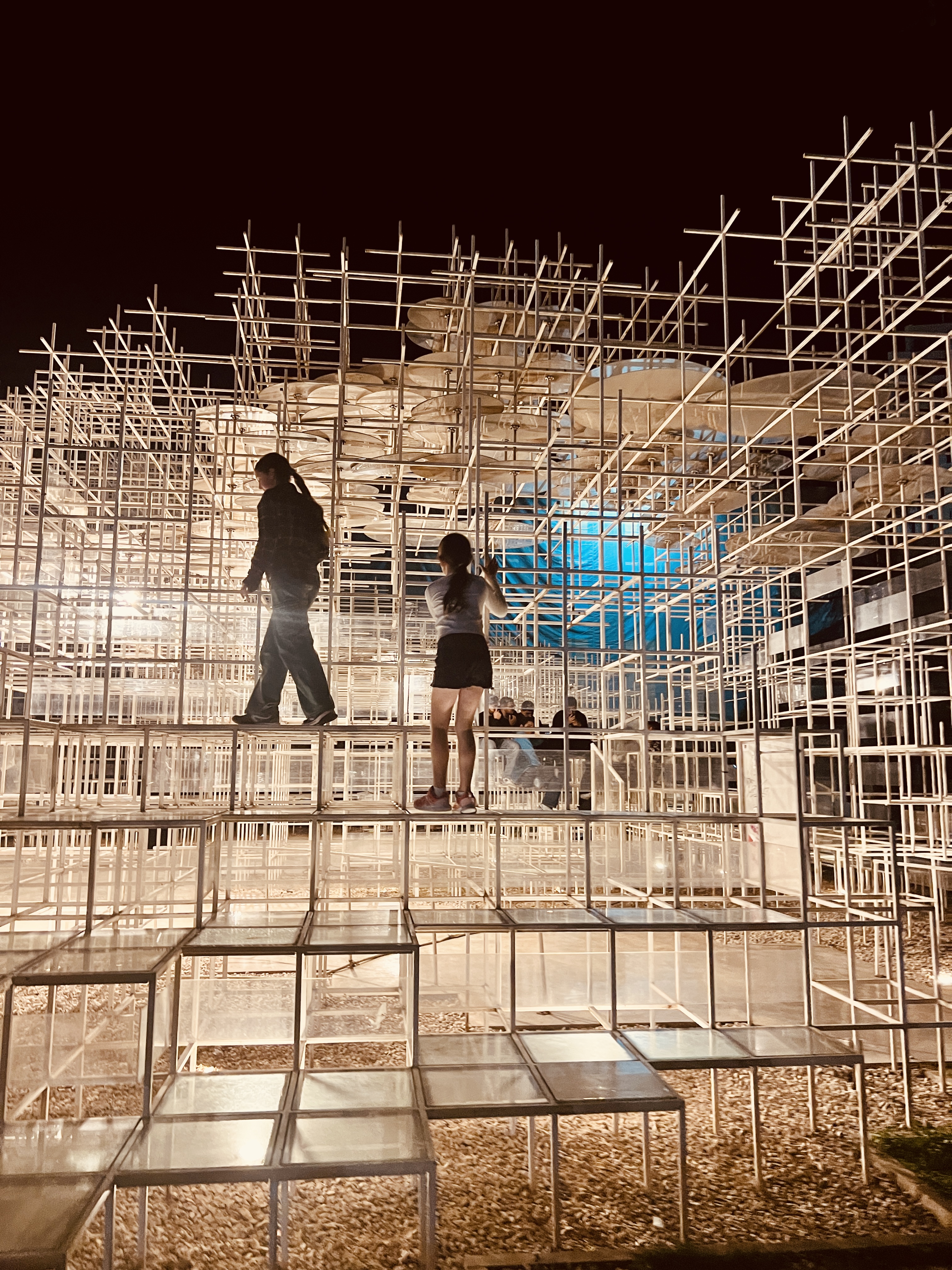
Ant went off for a run around the city the following morning, a quick stop for pancakes and pomegranate juice for breakfast, and that was that.
To our surprise, the car was still where we left it the following morning, and appeared no worse for wear for the experience. We jumped in and started our way north towards Montenegro.
Kotor, Montenegro
We made our way north towards the Montenegrin border, spurred on by the increasingly adventurous playlists curated by competitors keen for bragging rights at tonight’s dinner table. Debates raged as to success criteria – education was unimportant, creating a positive vibe (often reflected by the extent of singing, particularly from the cheap seats in the back) was a plus; in contrast putting the masses to sleep was seen to be bad form.
The 4 hour drive north was relatively uneventful, but passed quickly due to the quality of the curated music. Jessie took first place with heavily rock influenced journey through the Killers and the Kinks, to name but a few. Ant was last again, mainly because the children’s tastes have not sufficiently matured (at least that is my theory, and I’m sticking to it).
The inland landscape was not as spectacular as where we had been or where we were headed, and much of our sightseeing was limited to spying petrol stations with interesting names (our favourite being ‘Kastriti’ because it made us think of Gus and his impending operation in his journey to become less of a shit). We wrapped around Lake Shkodra, crossed the border into Montenegro and hit the stunning coastline.
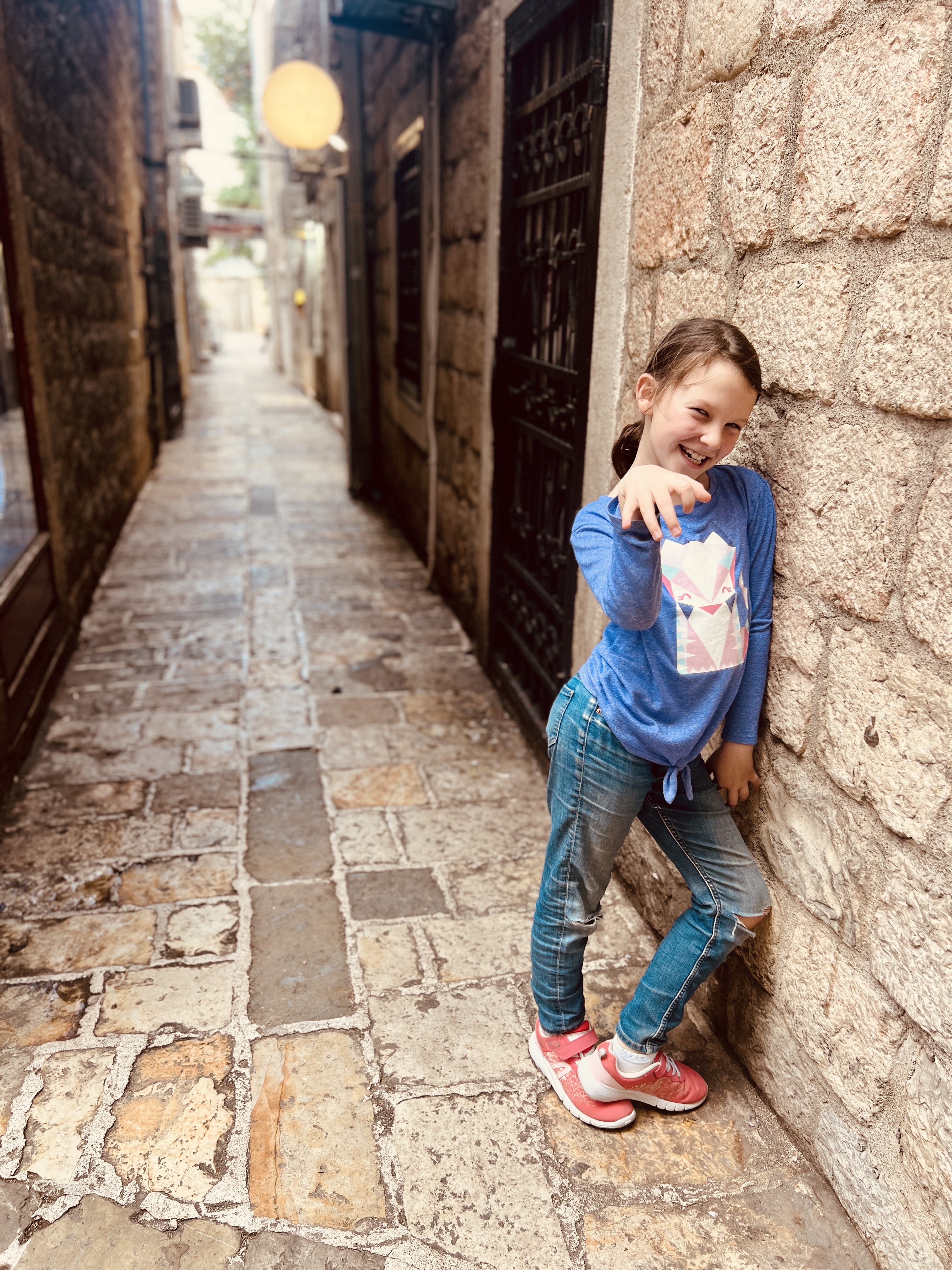
We made our way into the beautiful town of Budva for a quick wander around the Old Town. It reminded us a bit of nearby Dubrovnik or Oia in Santorini – unquestionably beautiful but overrun with other tourists. We crossed our fingers that Kotor would be a bit quieter.
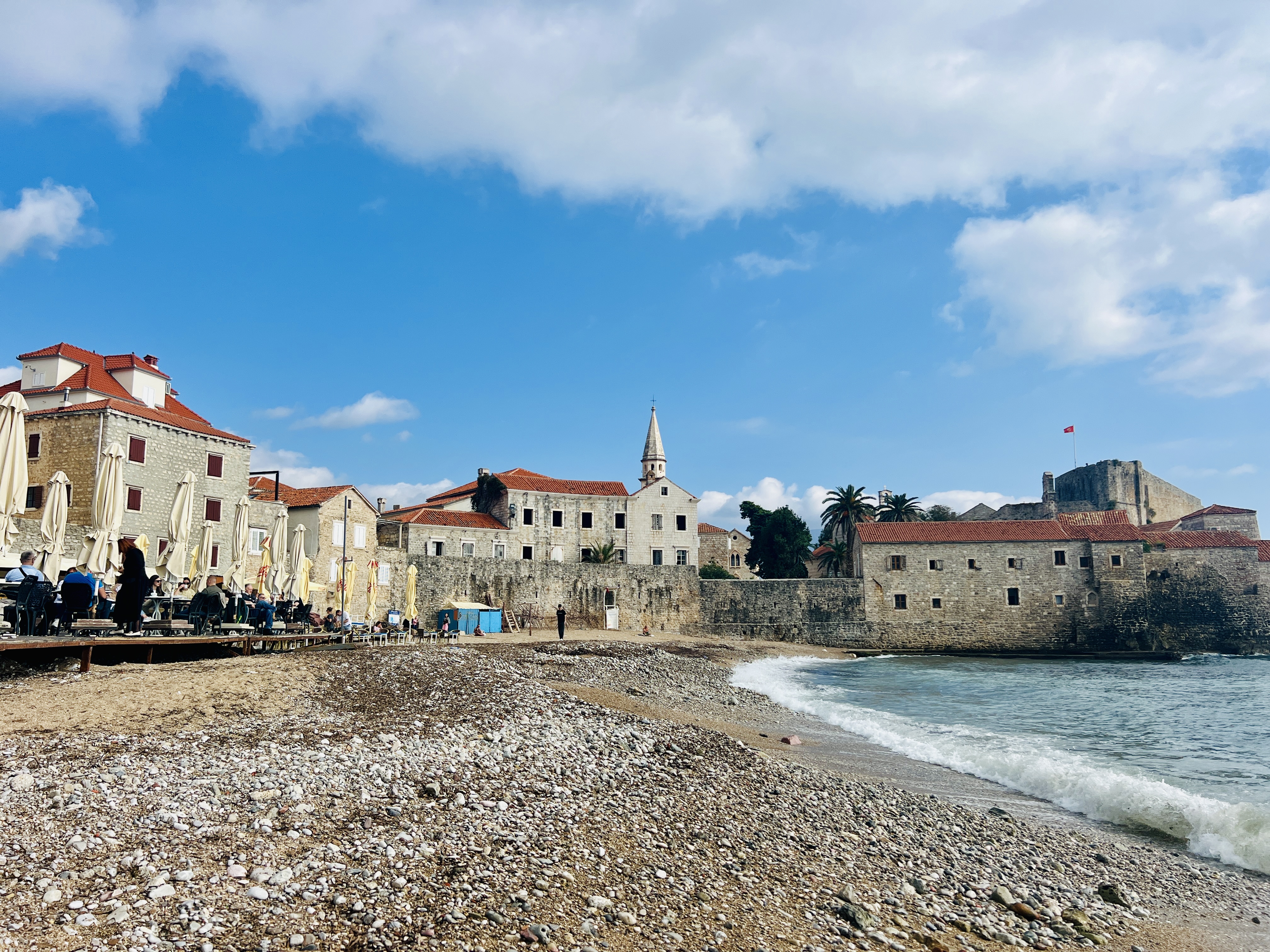
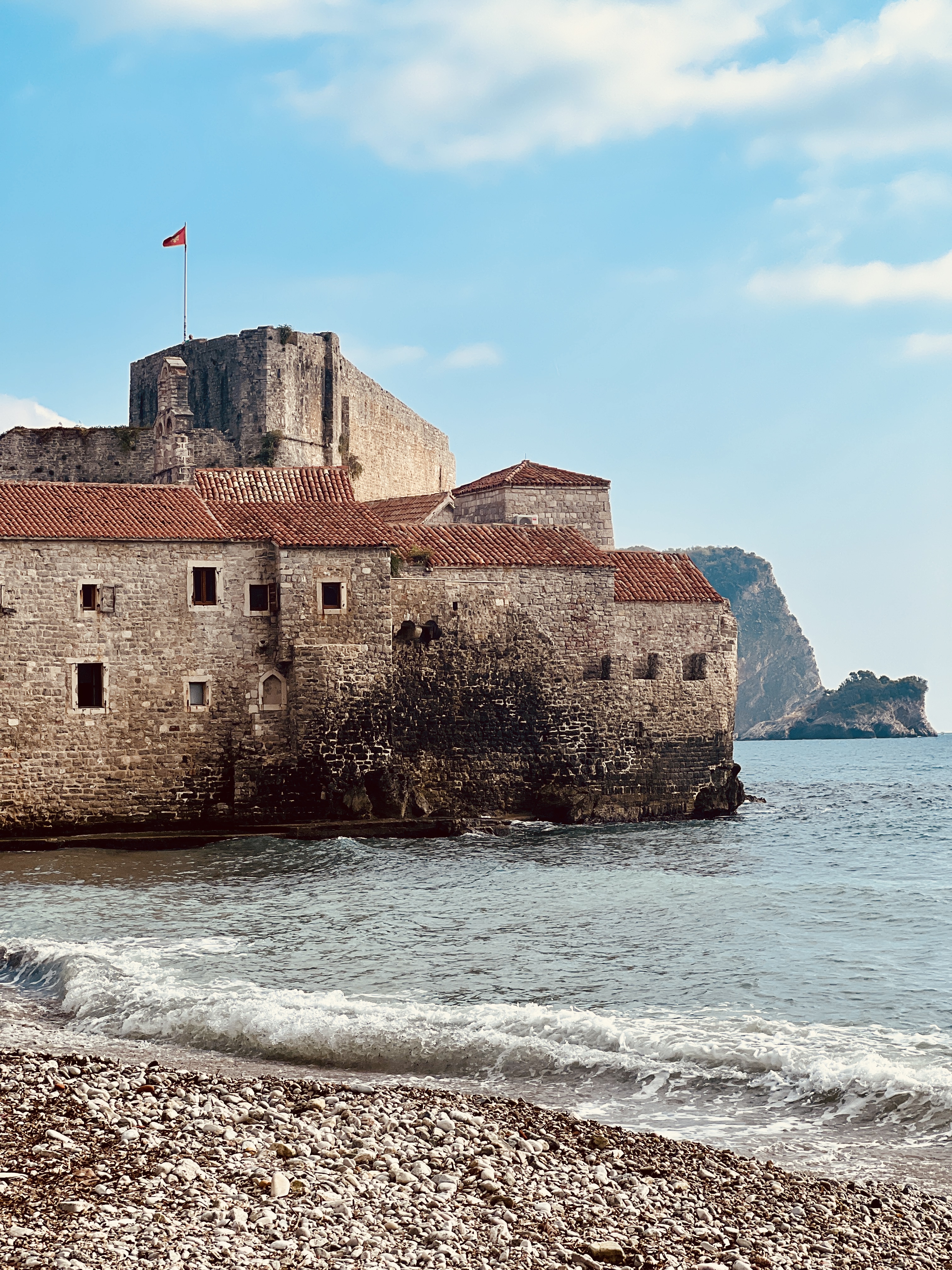
Half an hour or so further up the coast from Budva is the beautiful Bay of Kotor, surrounded by steep mountains.
Nestled at the most easterly point is the Old Town of Kotor, and our apartment (Dekaderon) was directly across the bay.
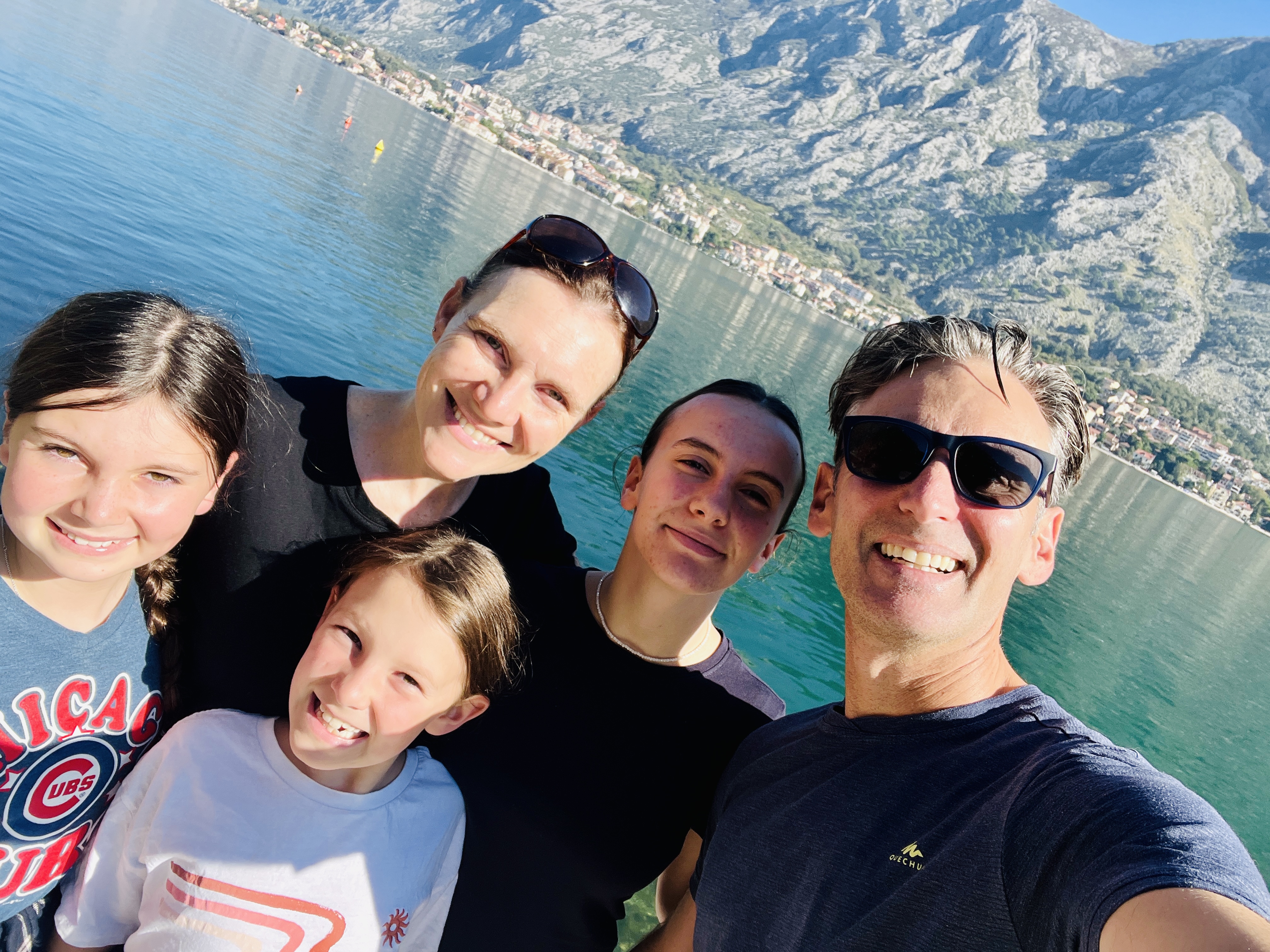
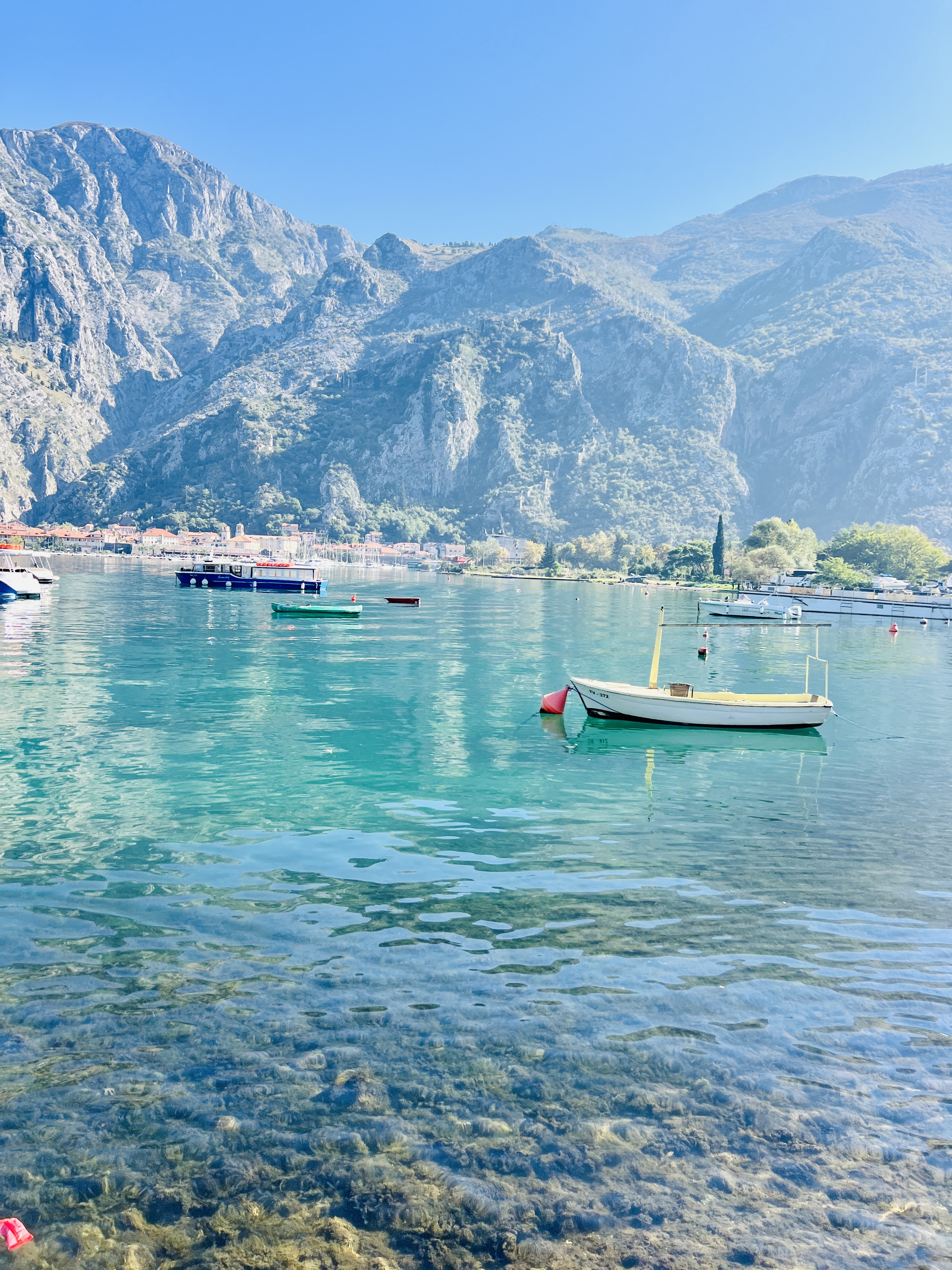
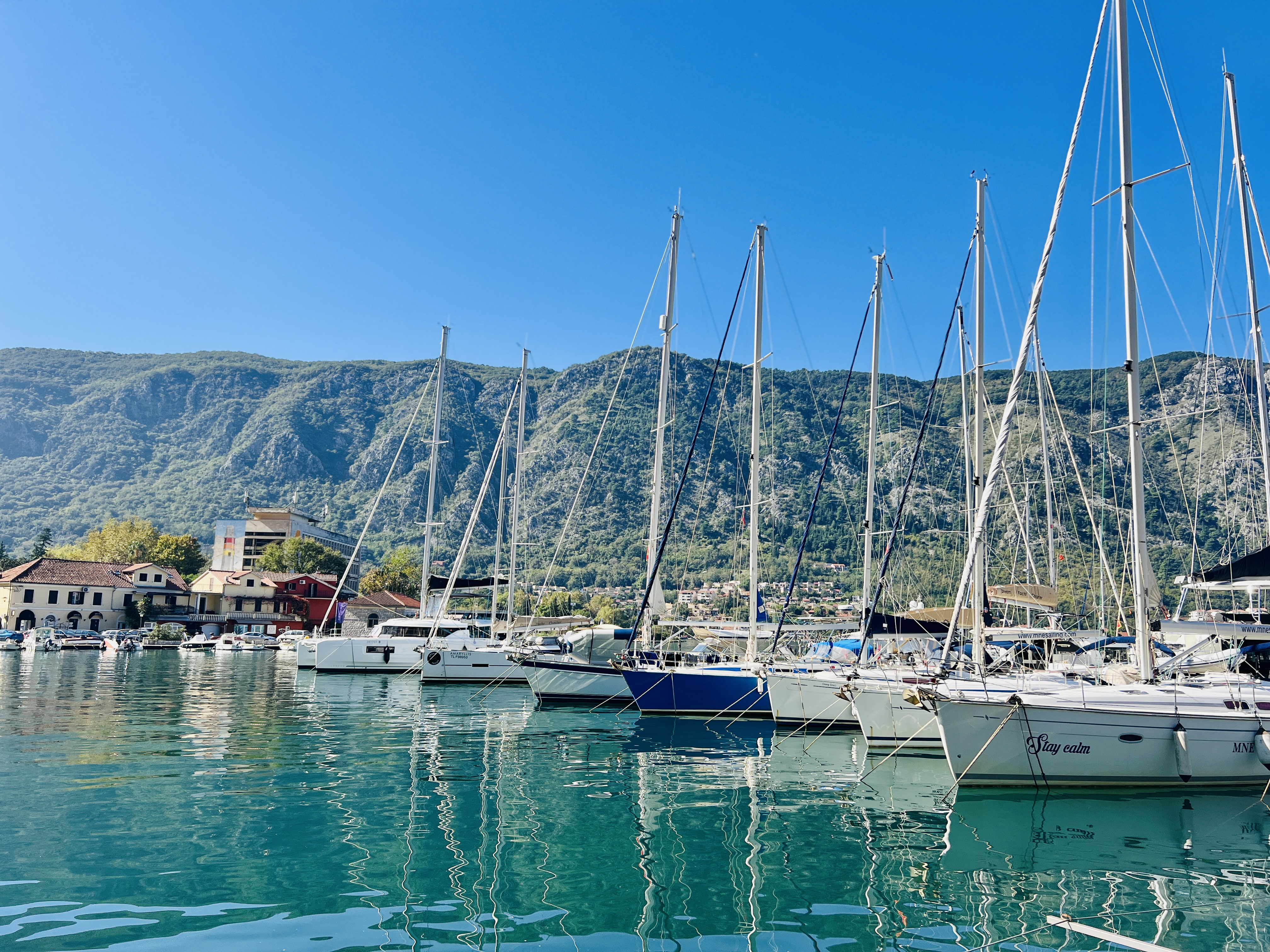
We arrived and checked in, the kids immediately melted into screens and we had a drink on the balcony overlooking the bay, looking slightly nervously across at the cruise ship towering over the port and the old town.
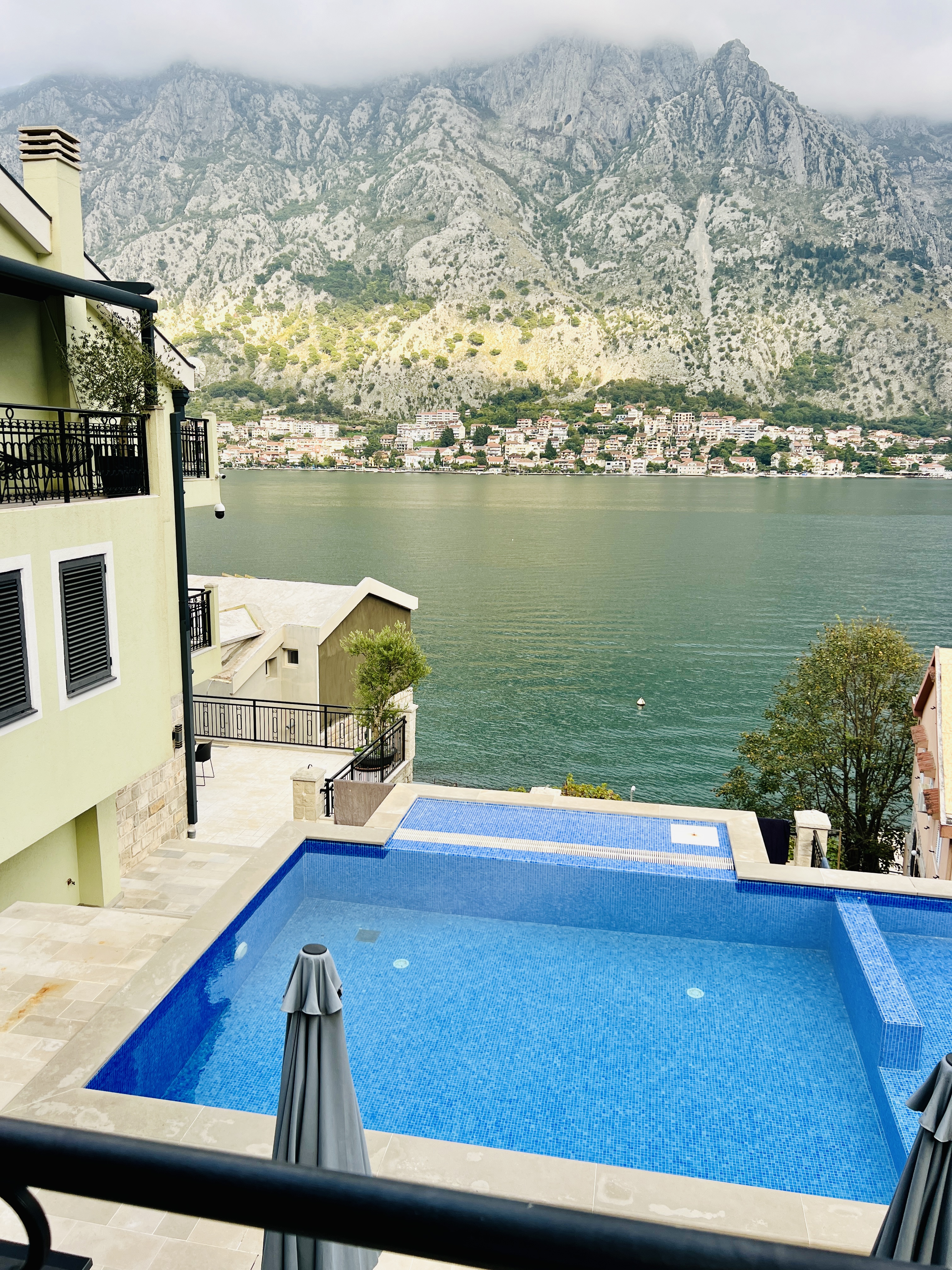
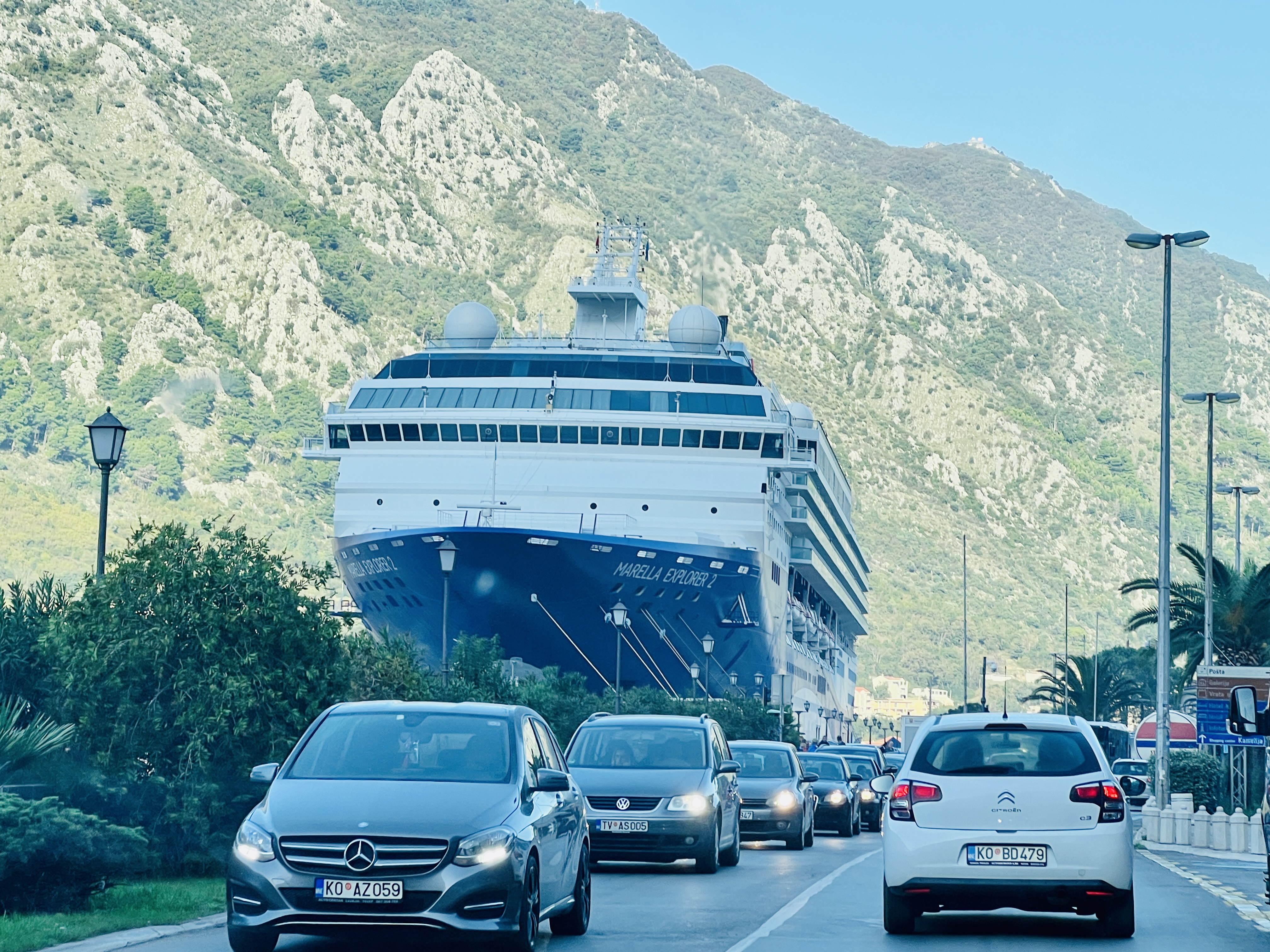
The next morning we awoke to see the cruise ship pull out of port and breathed a sigh of relief. We ventured around the Bay to explore the old town and really enjoyed the well maintained architecture, old churches and city walls.
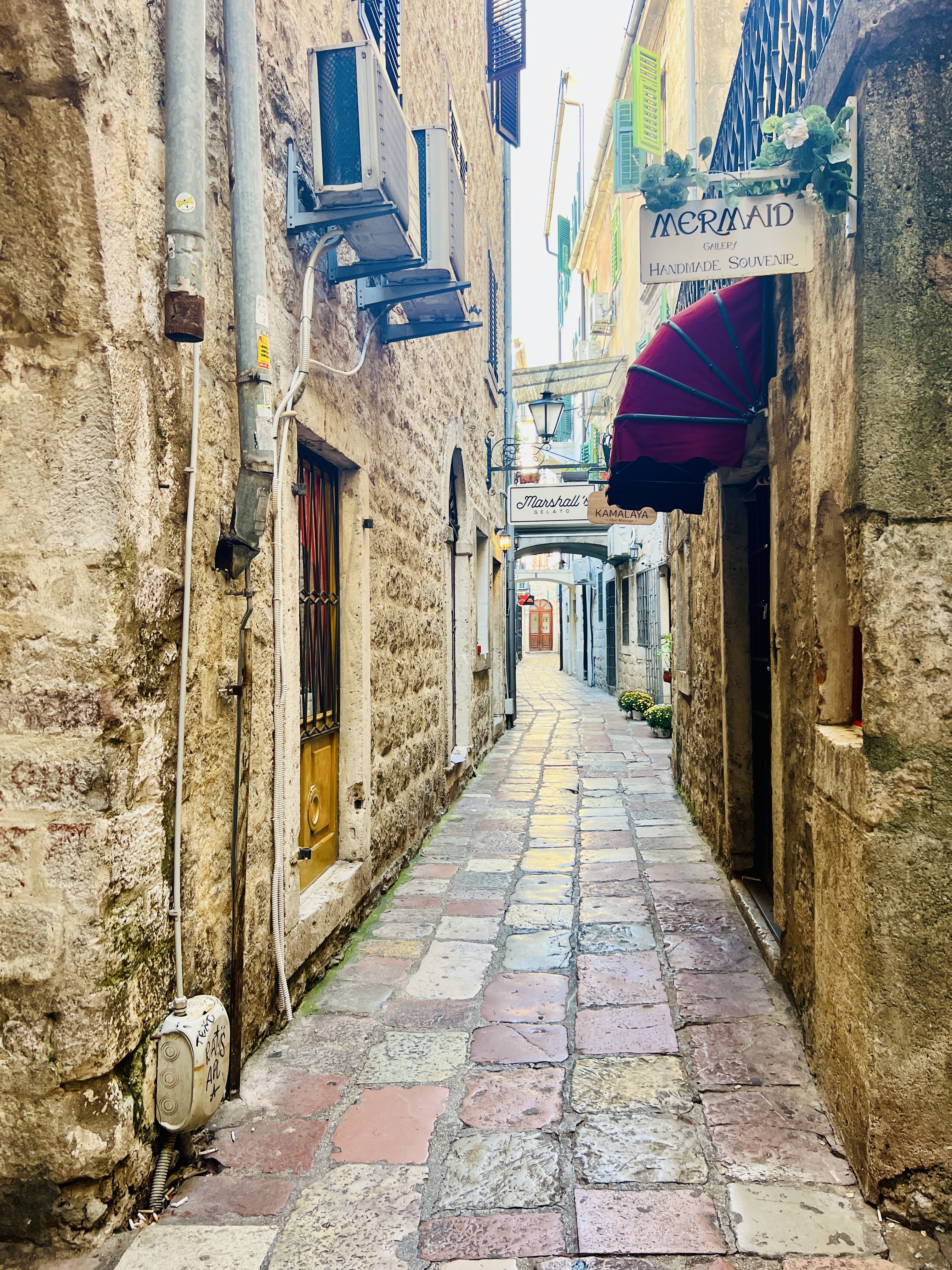
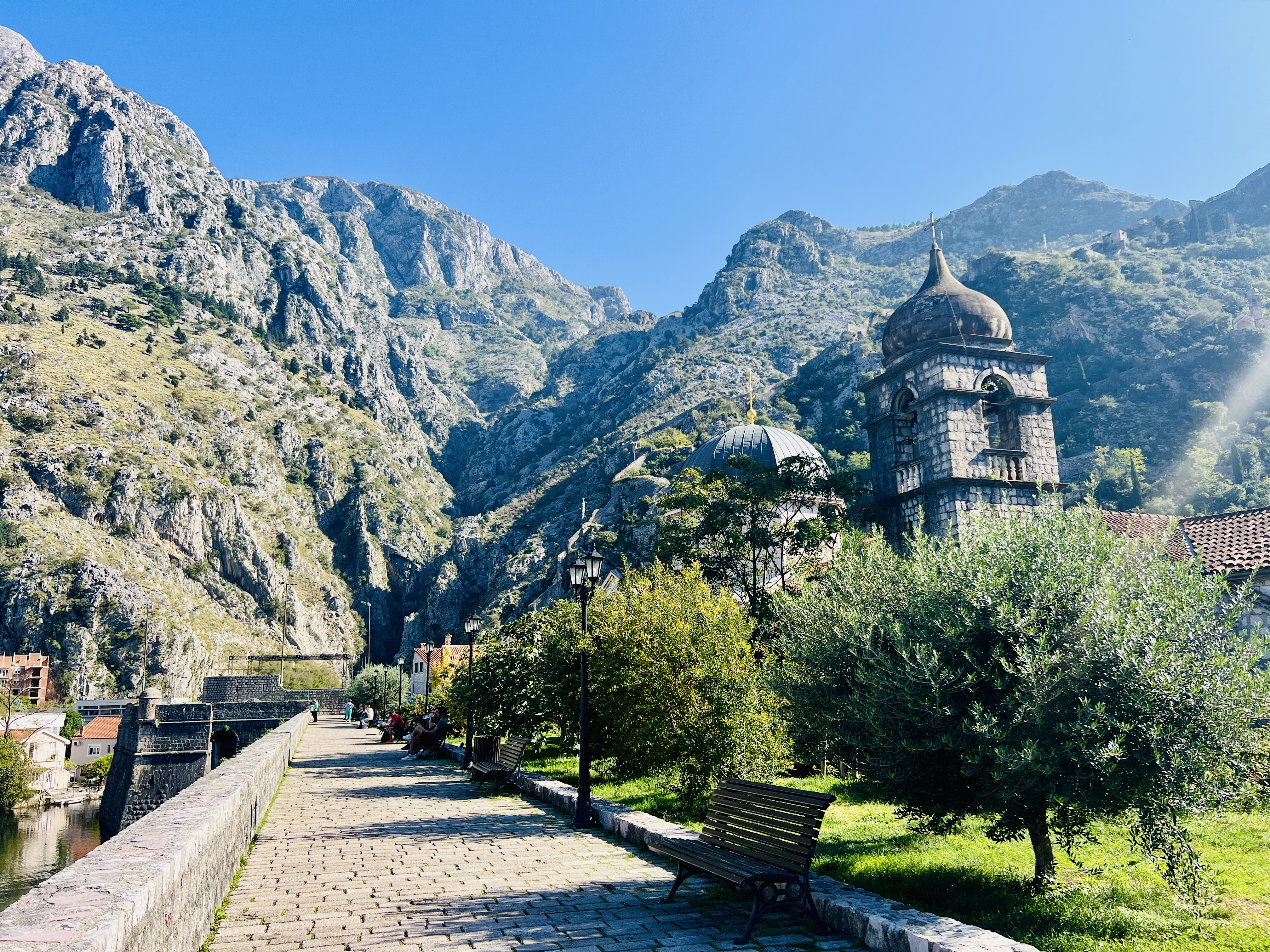
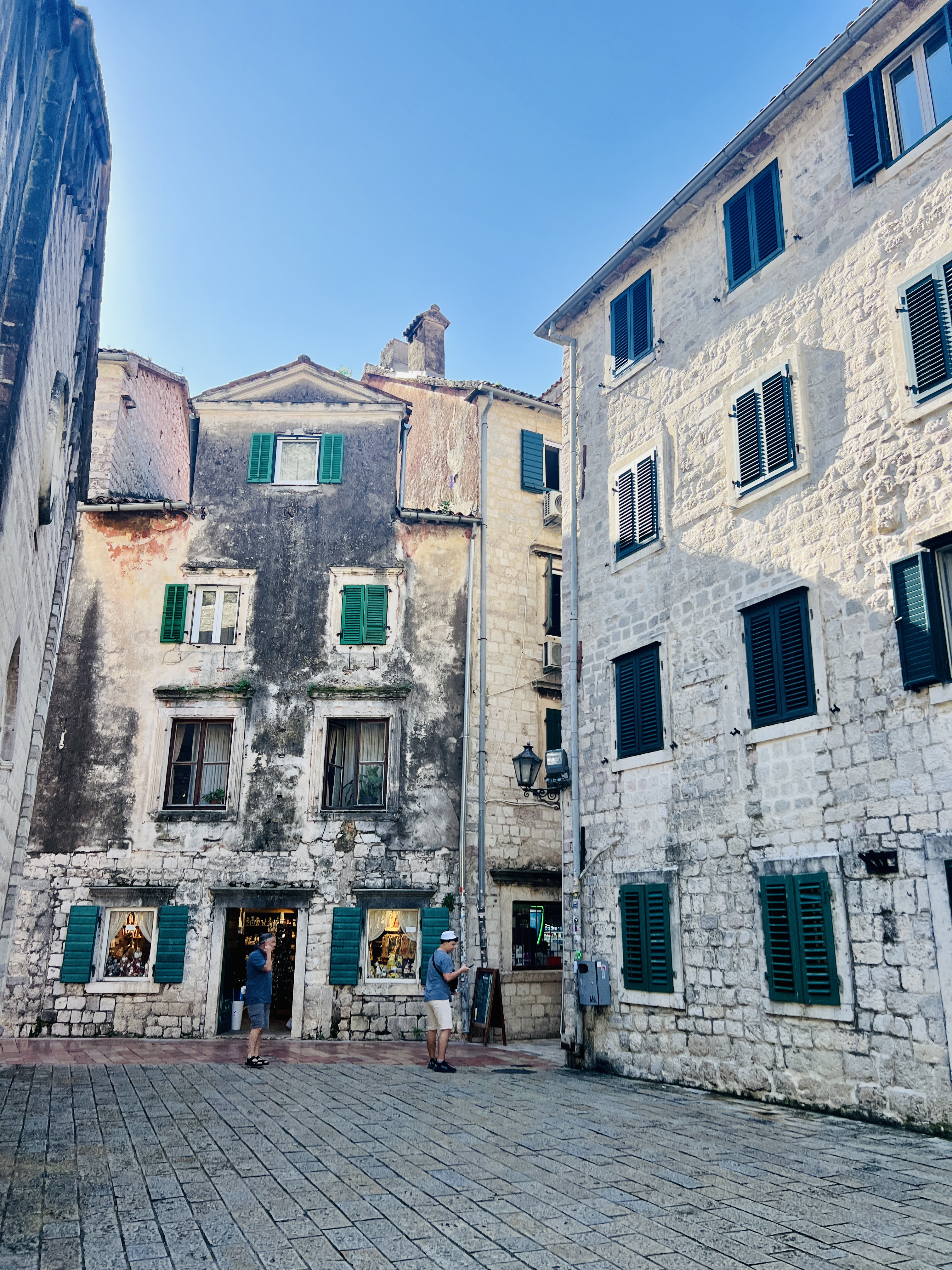
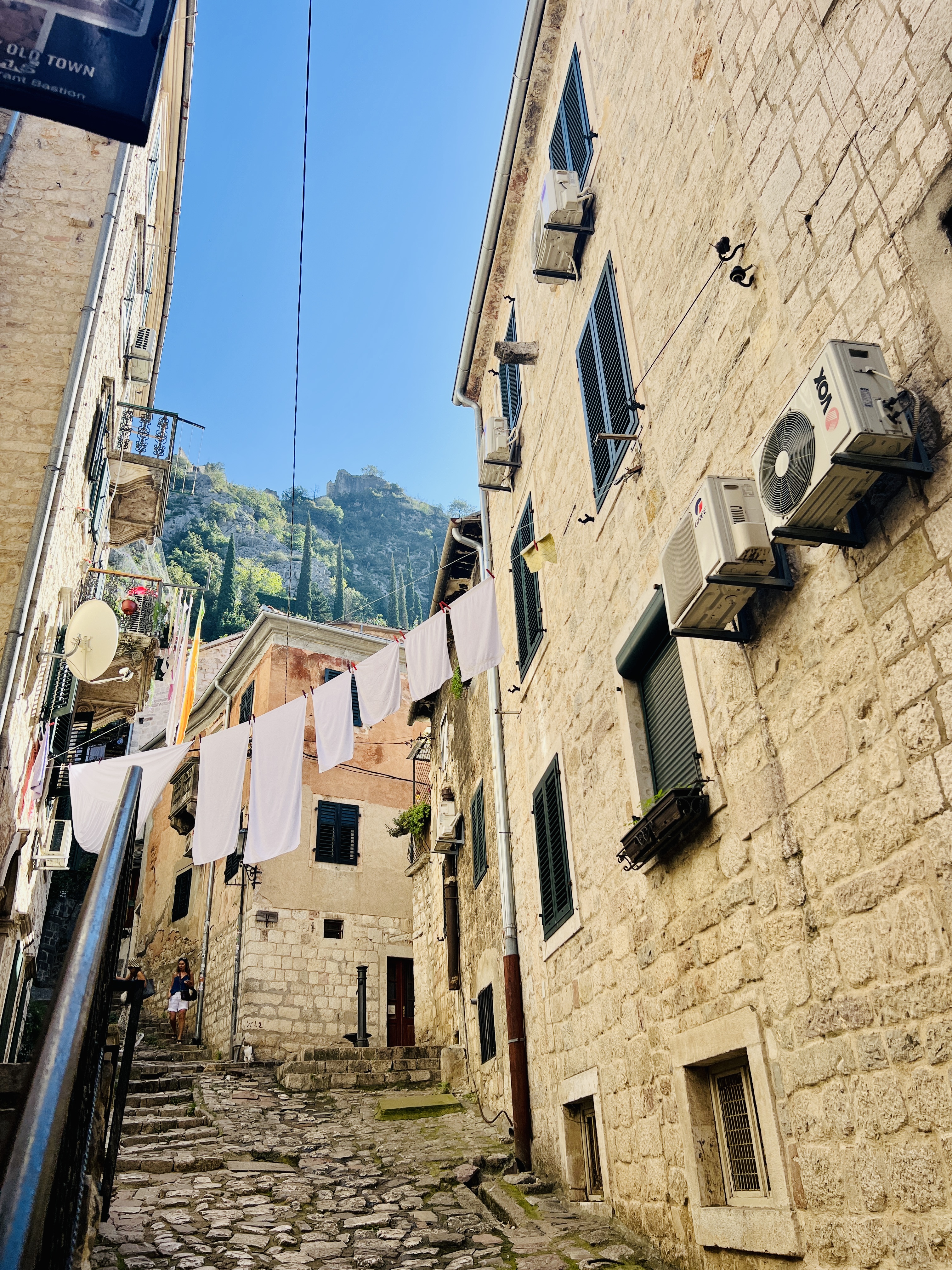
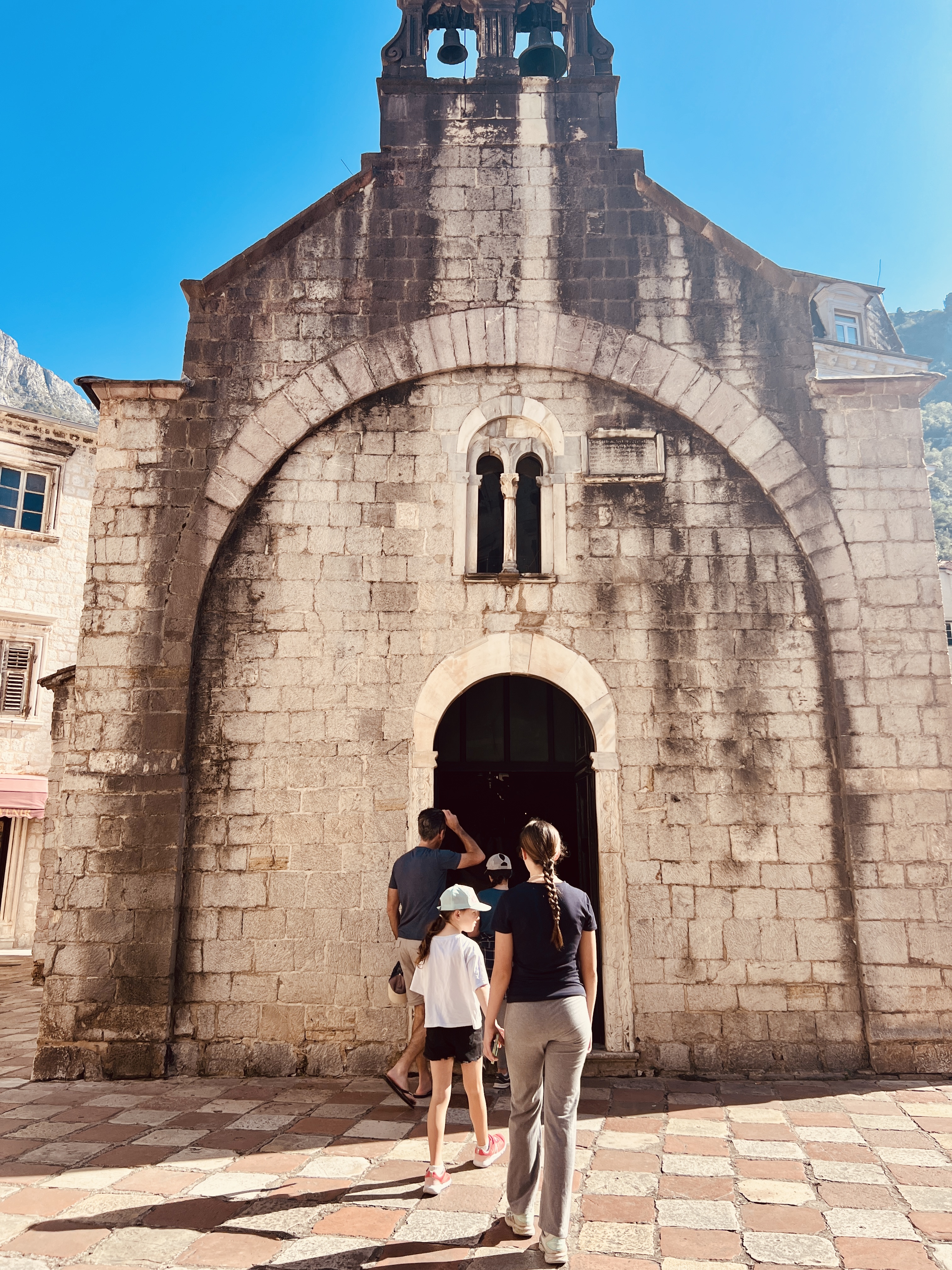
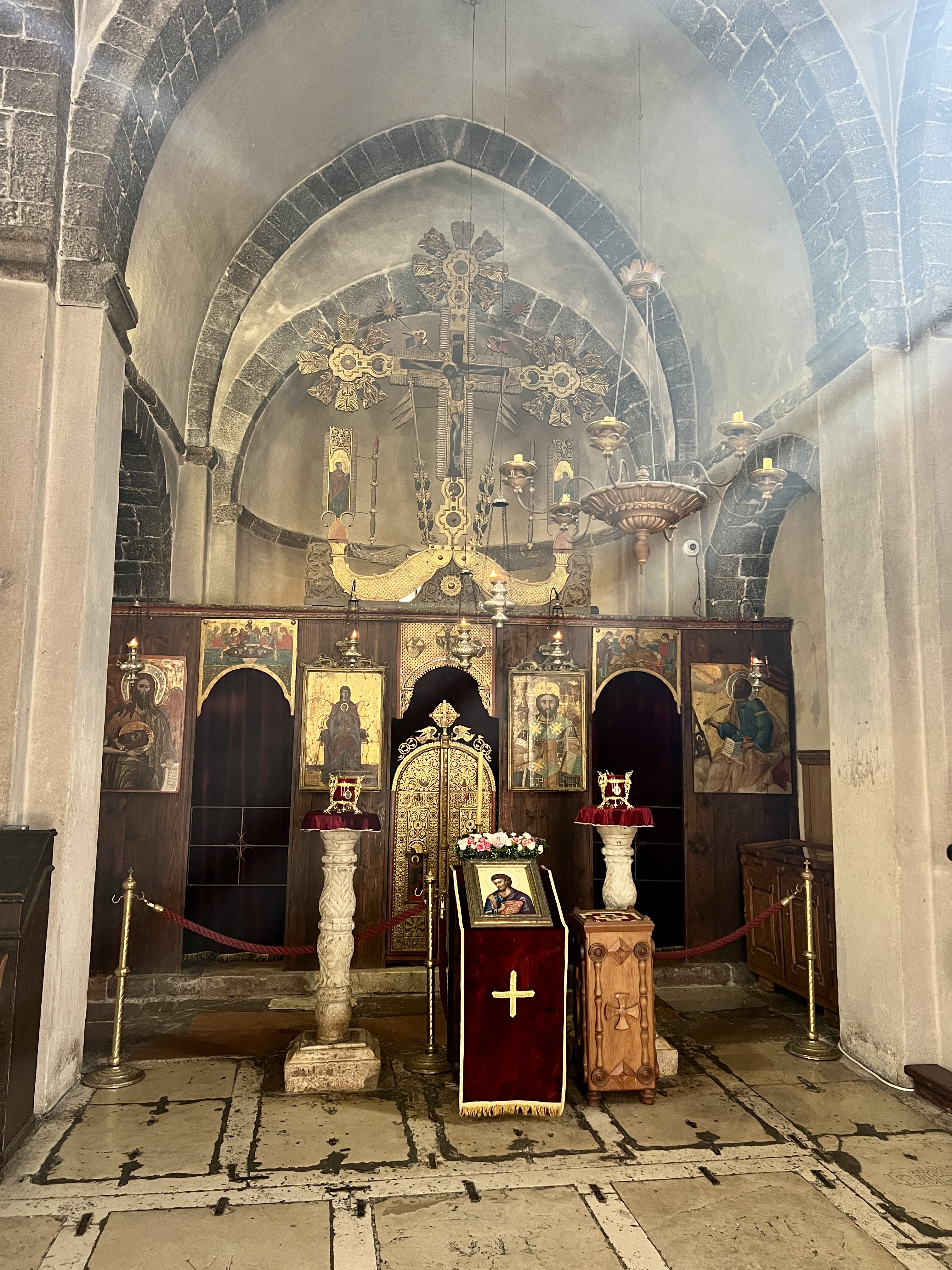
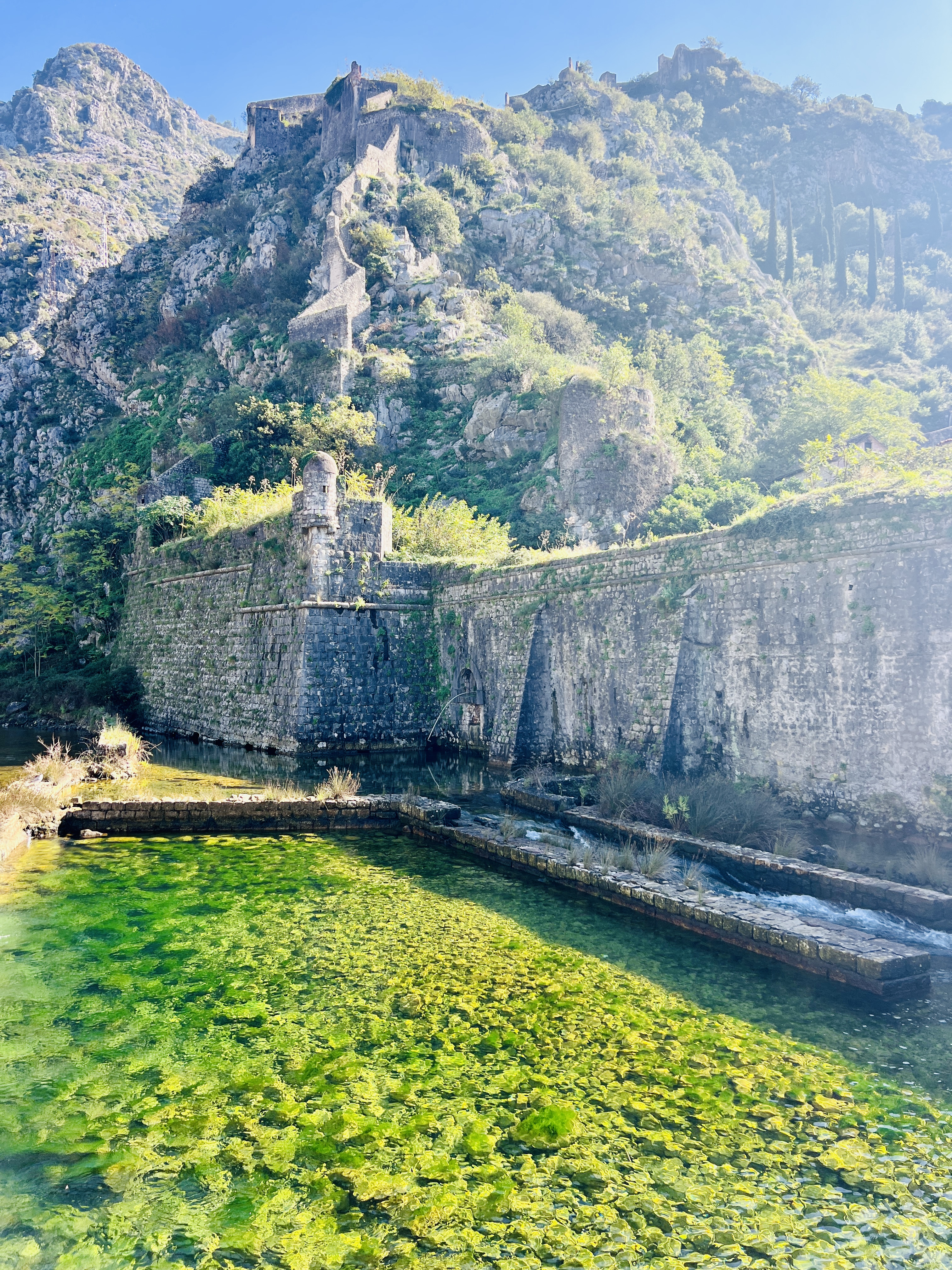
The level of English took a massive step up in Kotor from what we had experienced to date here – no doubt due to the massive flow of cruise ship traffic that passes through the region. We had an amazing lunch at BBQ Tanjga
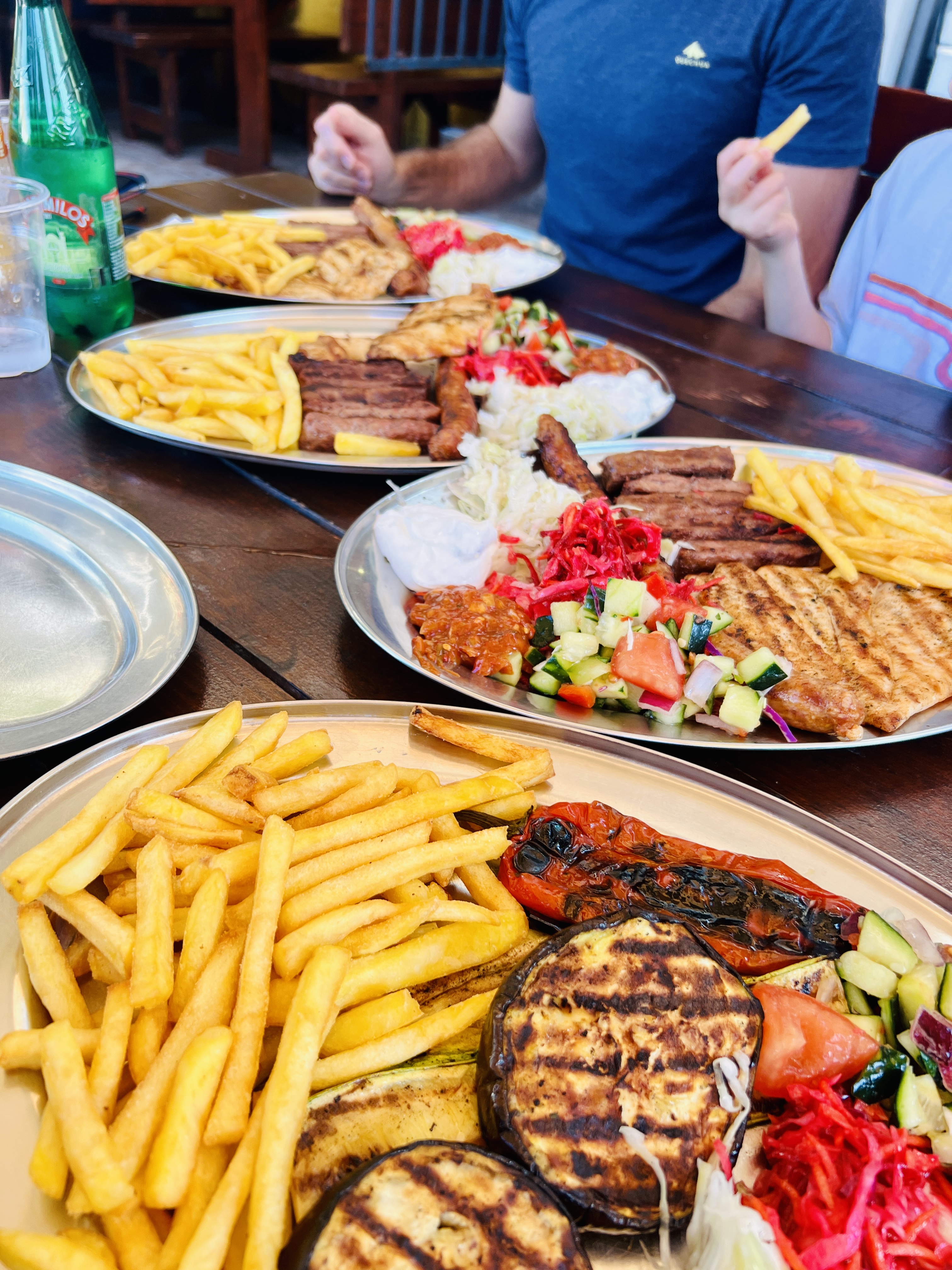
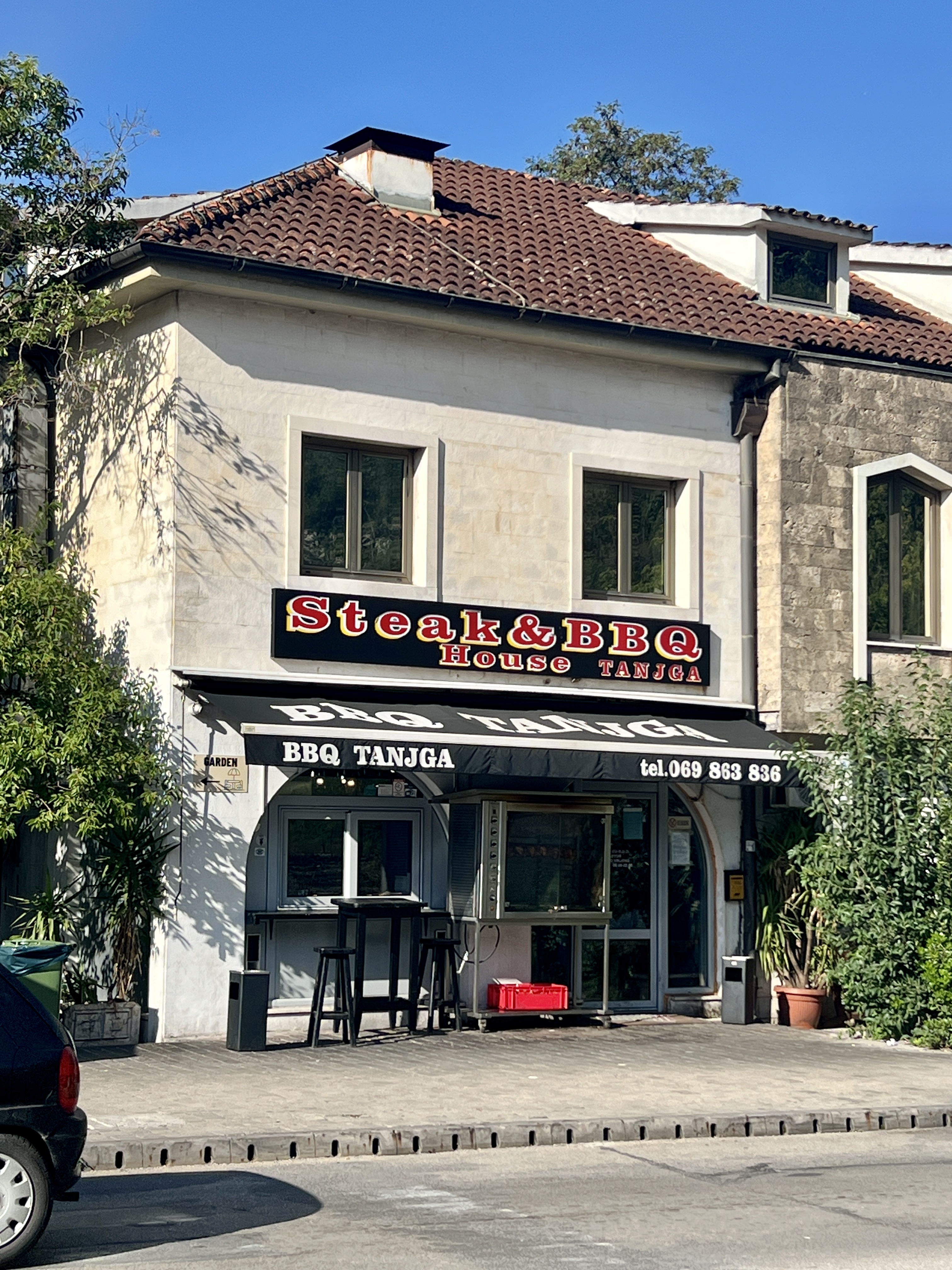
before heading back to our apartment for a bit of a quiet afternoon … the kids were slightly in recovery mode at this point.
The following morning we were on the move again, with another round of playlists queued and ready to go for our trip up to Mostar in Bosnia.
Mostar, Bosnia and Herzegovina
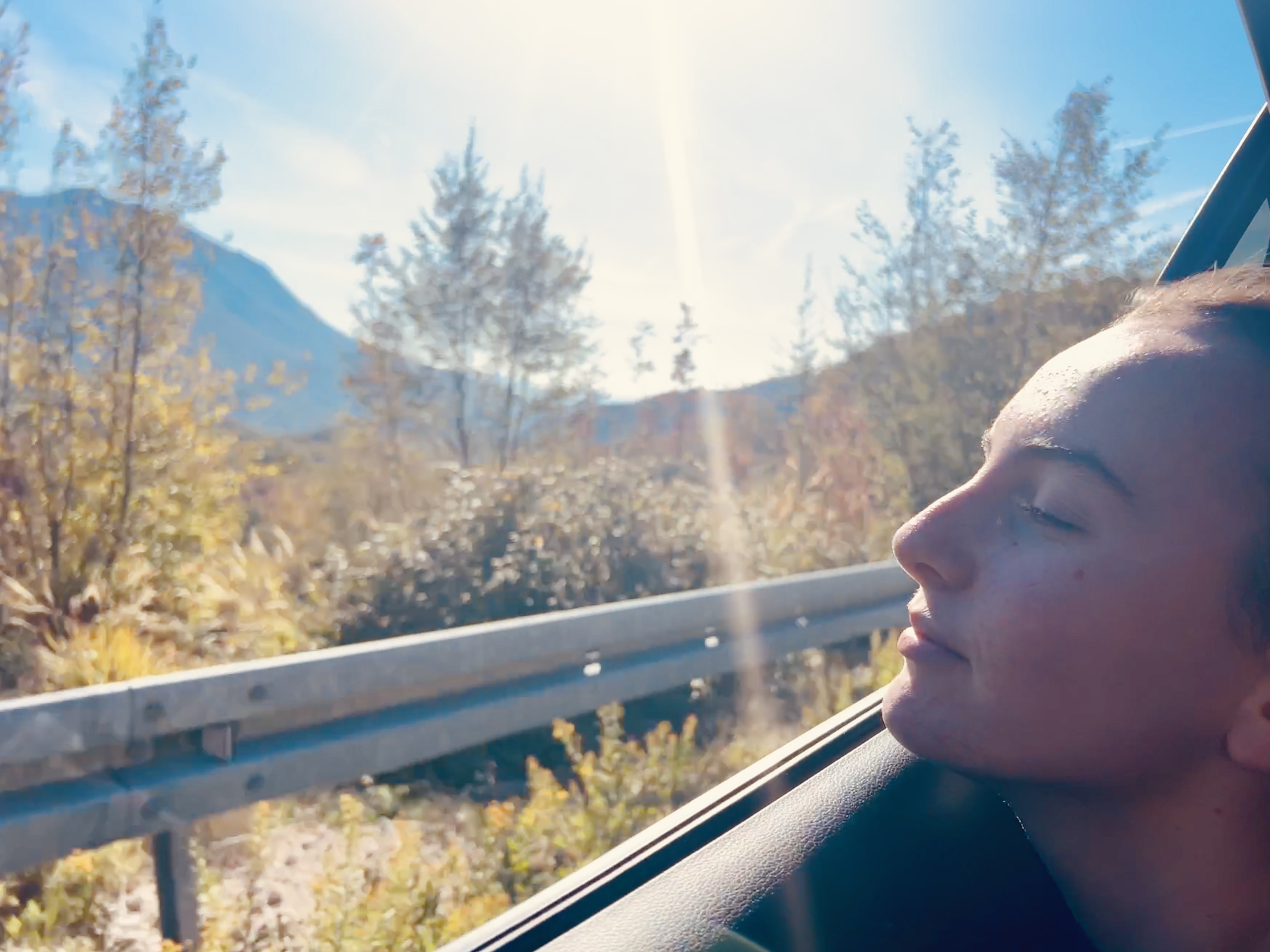
The drive to Mostar from Kotor sent us almost the full way around the Bay of Kotor, before climbing steeply into and across the mountains and into Bosnia and Herzegovina. Without question this was the most spectacular trip we had made to date – the scenery was simply jaw dropping, whether water or mountains.
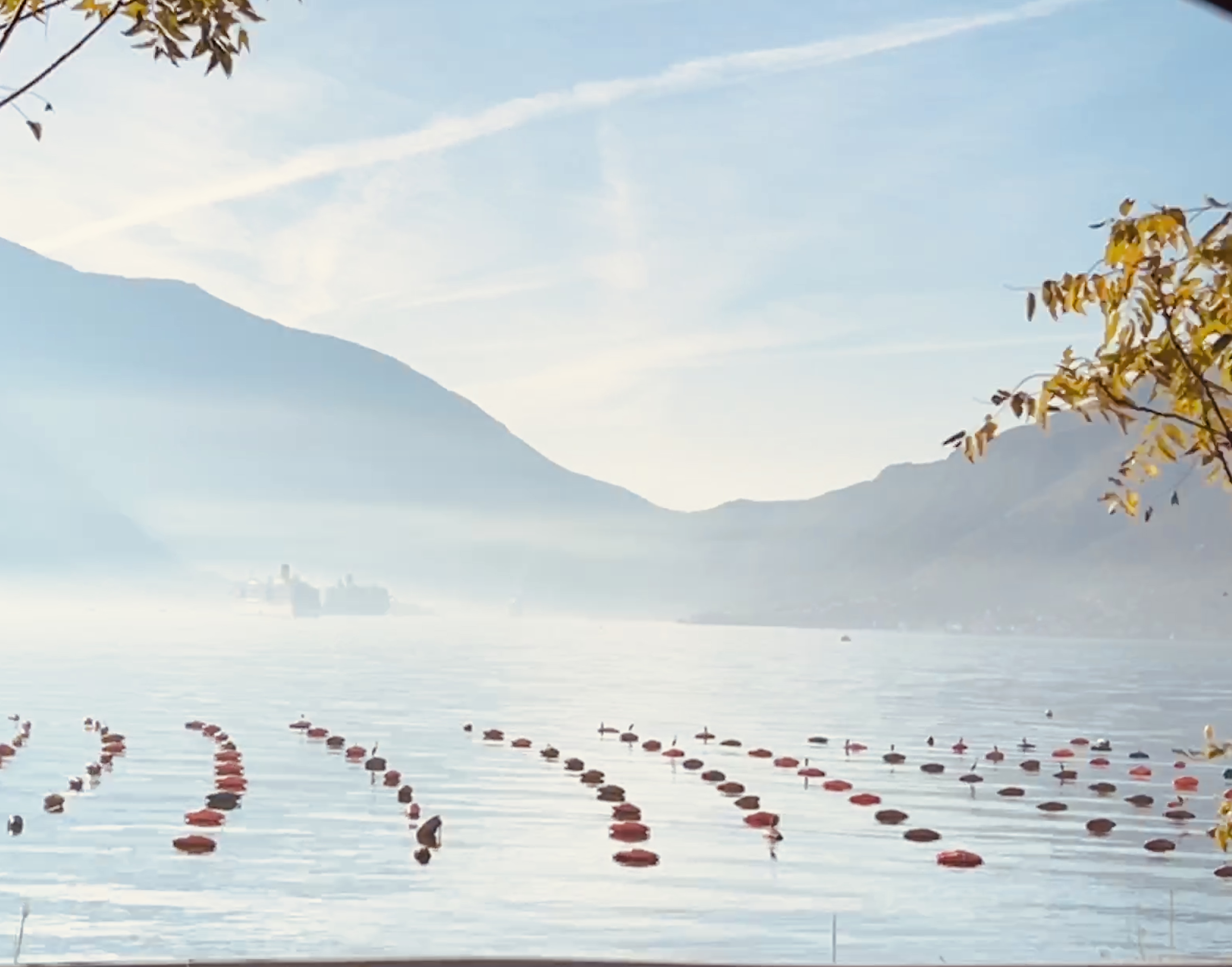
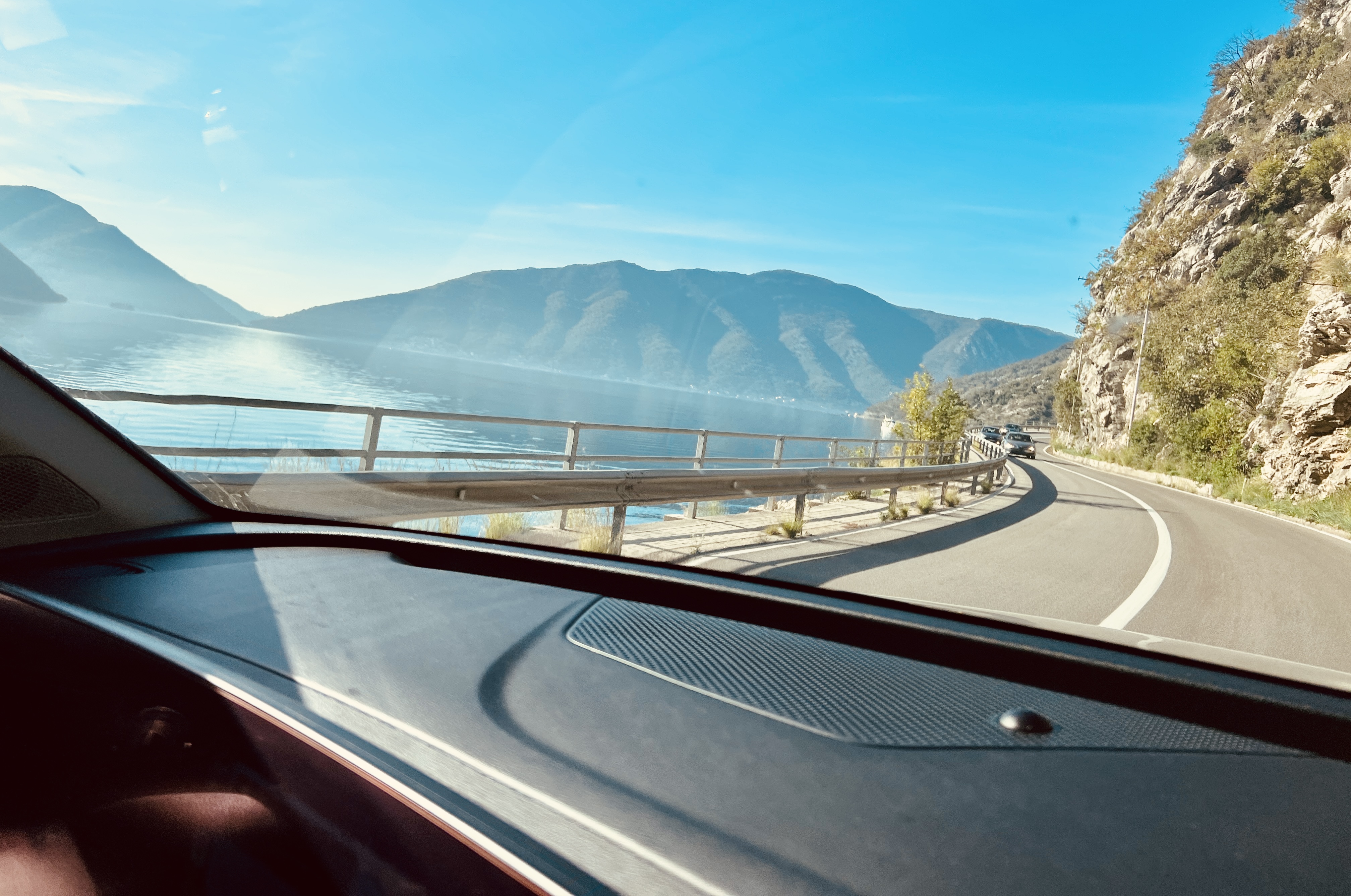
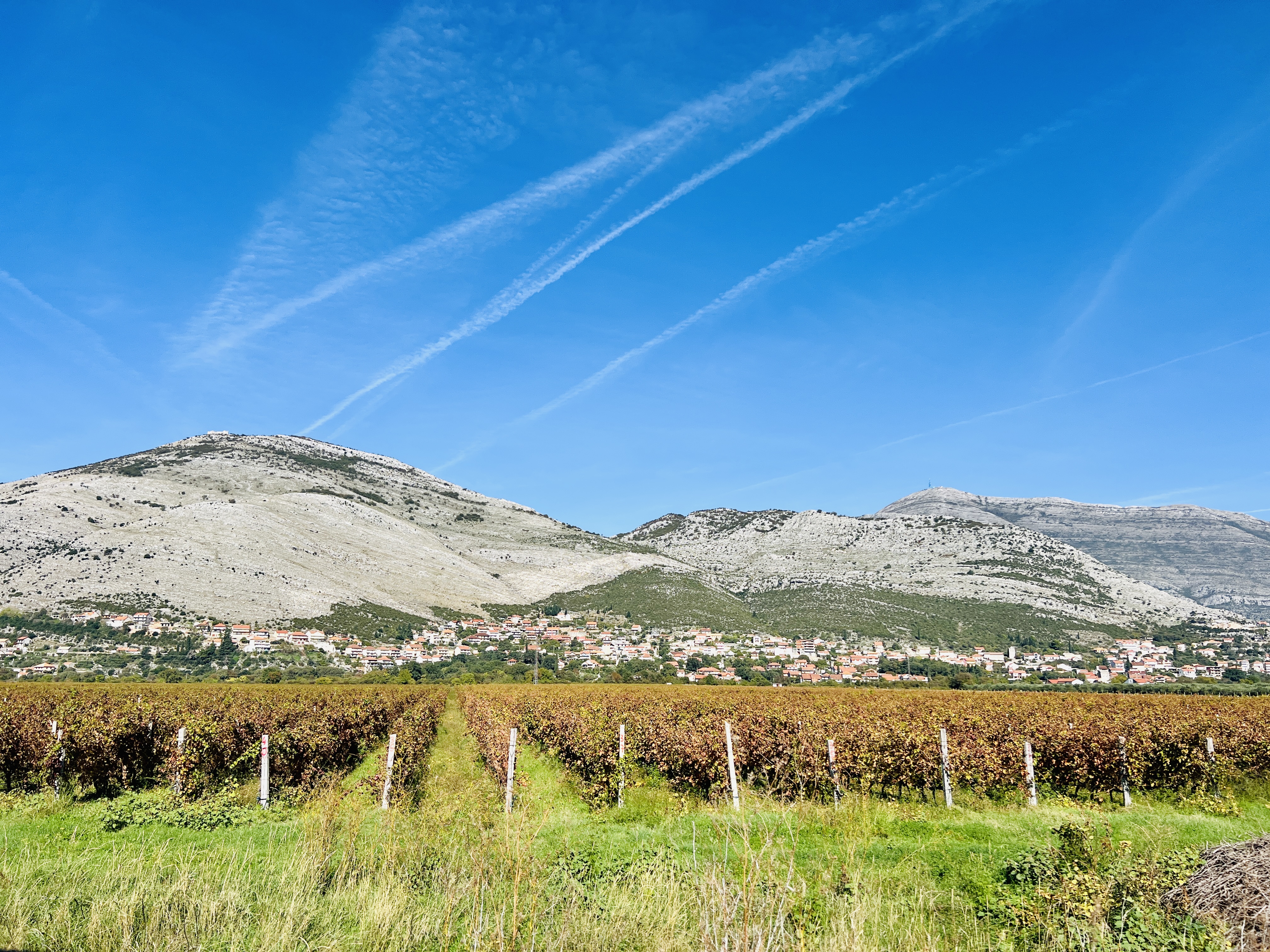
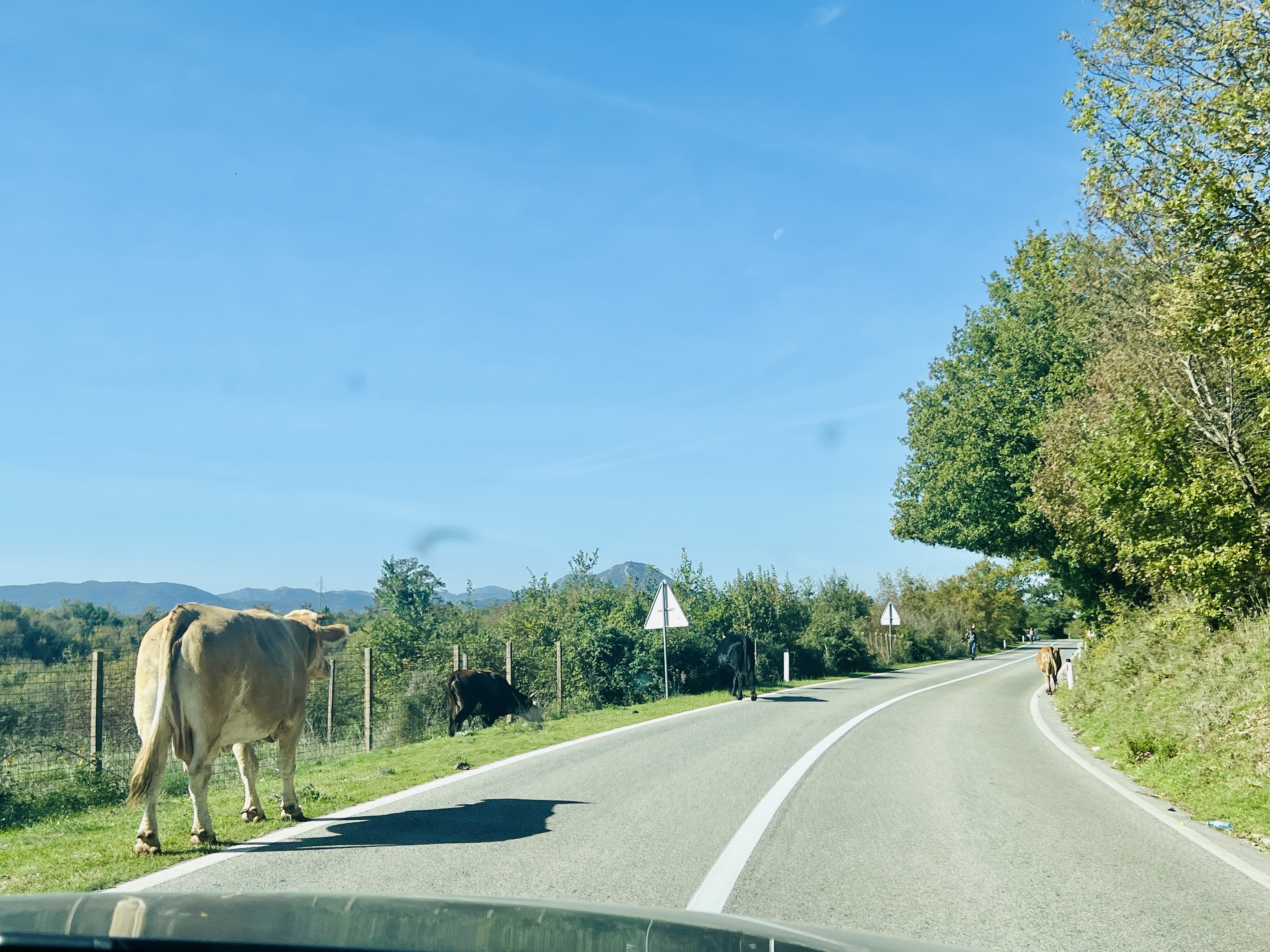
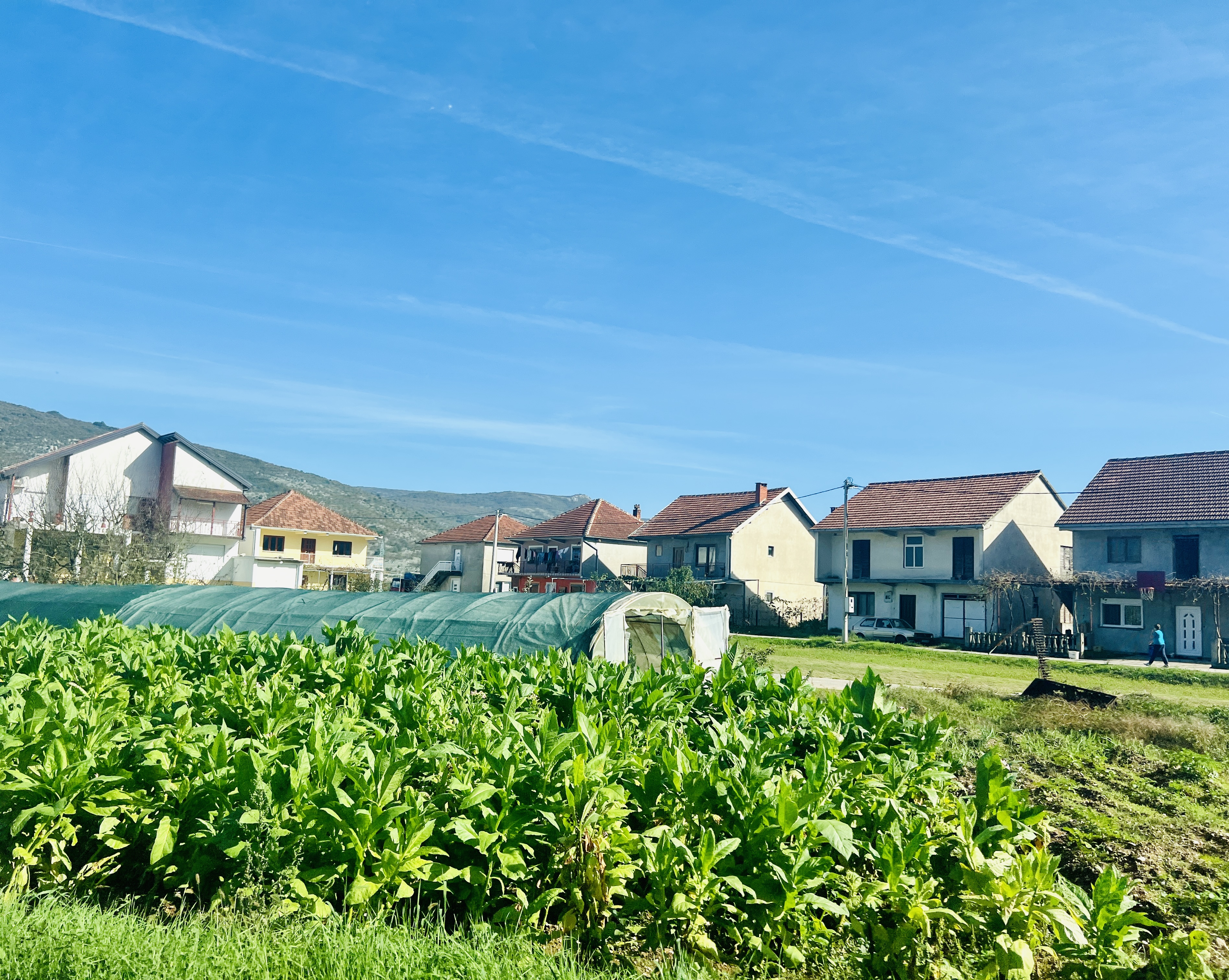
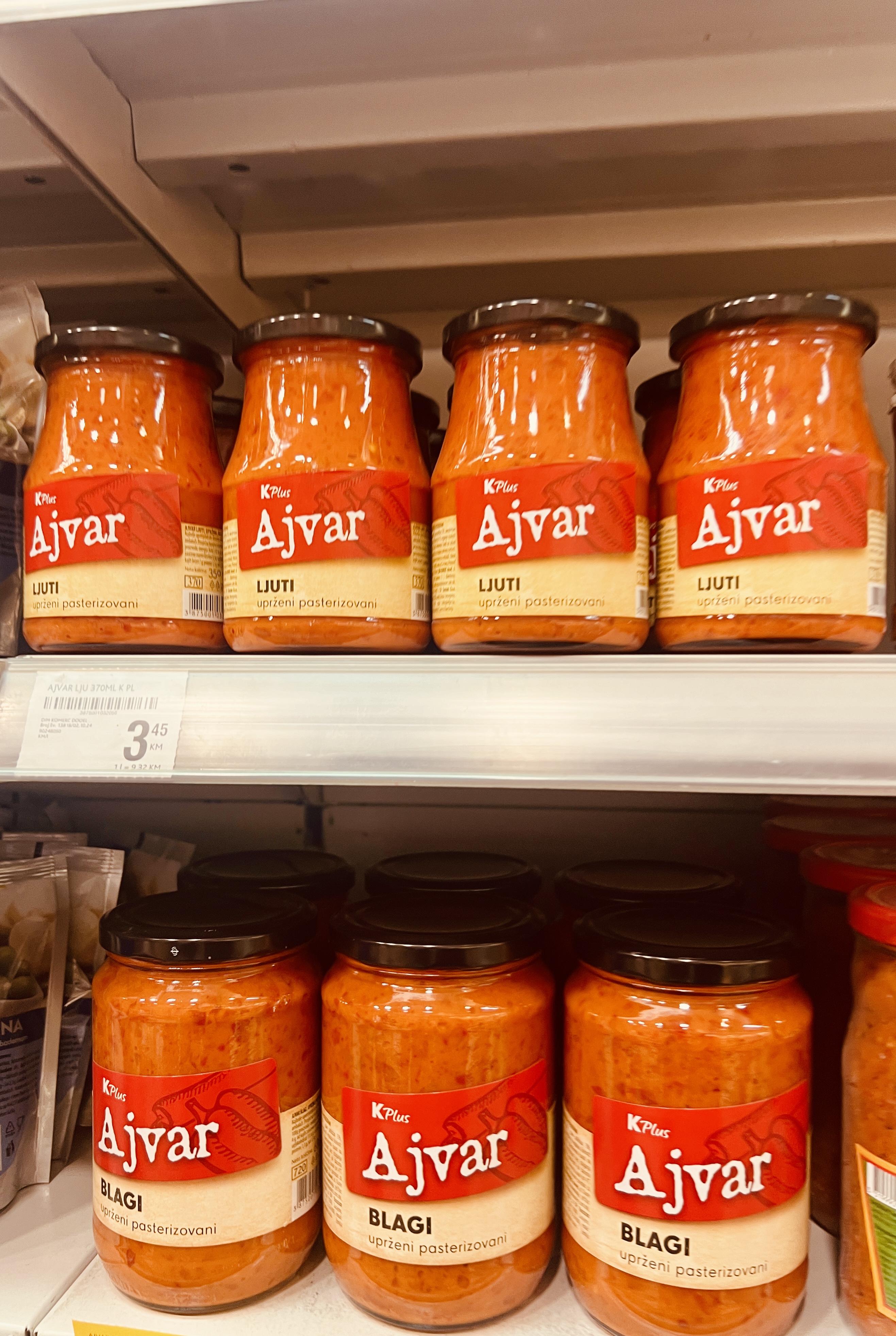
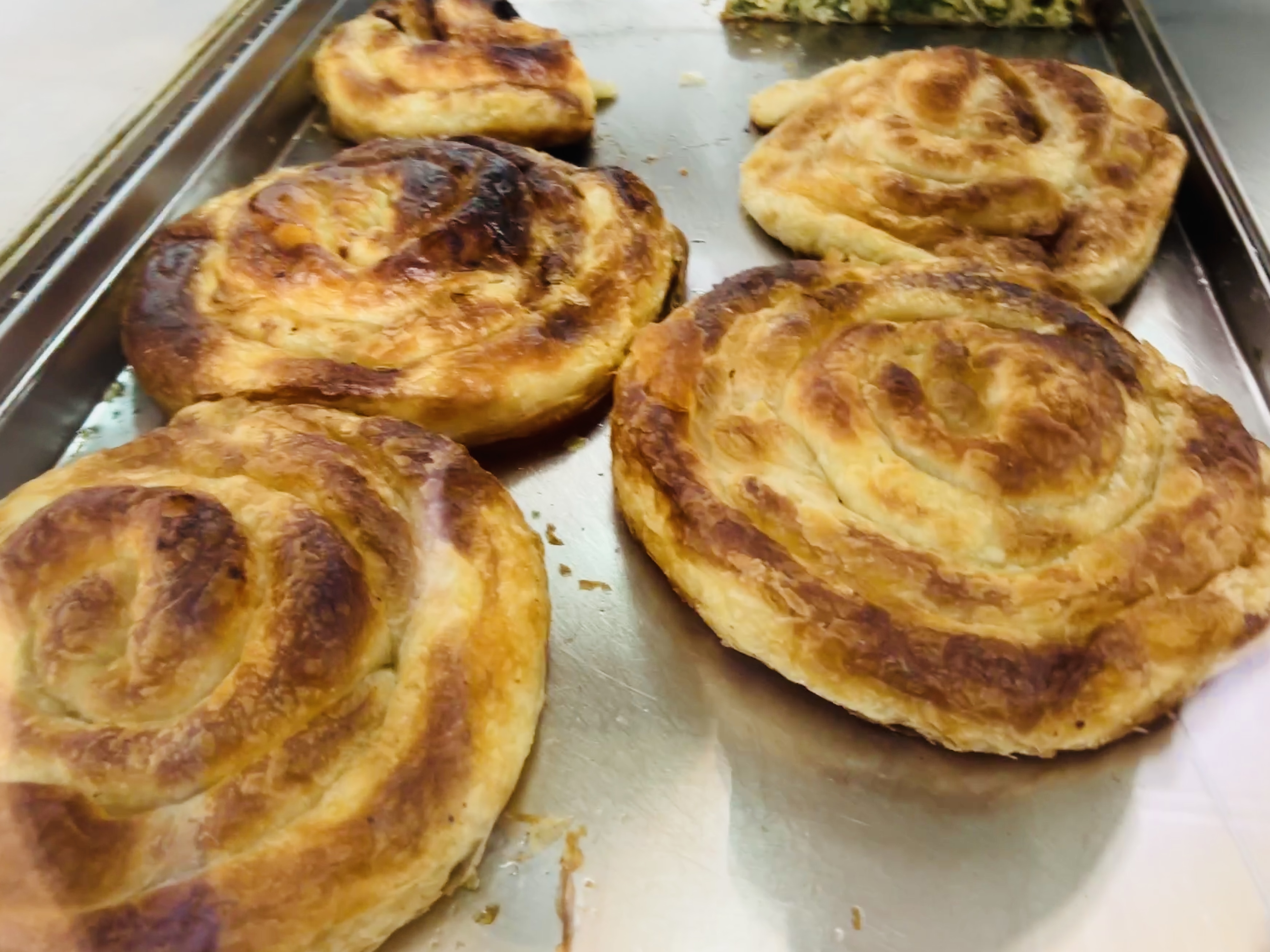
We stopped at a few interesting towns along the way for a Burek lunch at Pekara Bon Appetite in Trebinje (with a side of Plazma Styks and Ajvar for mum).
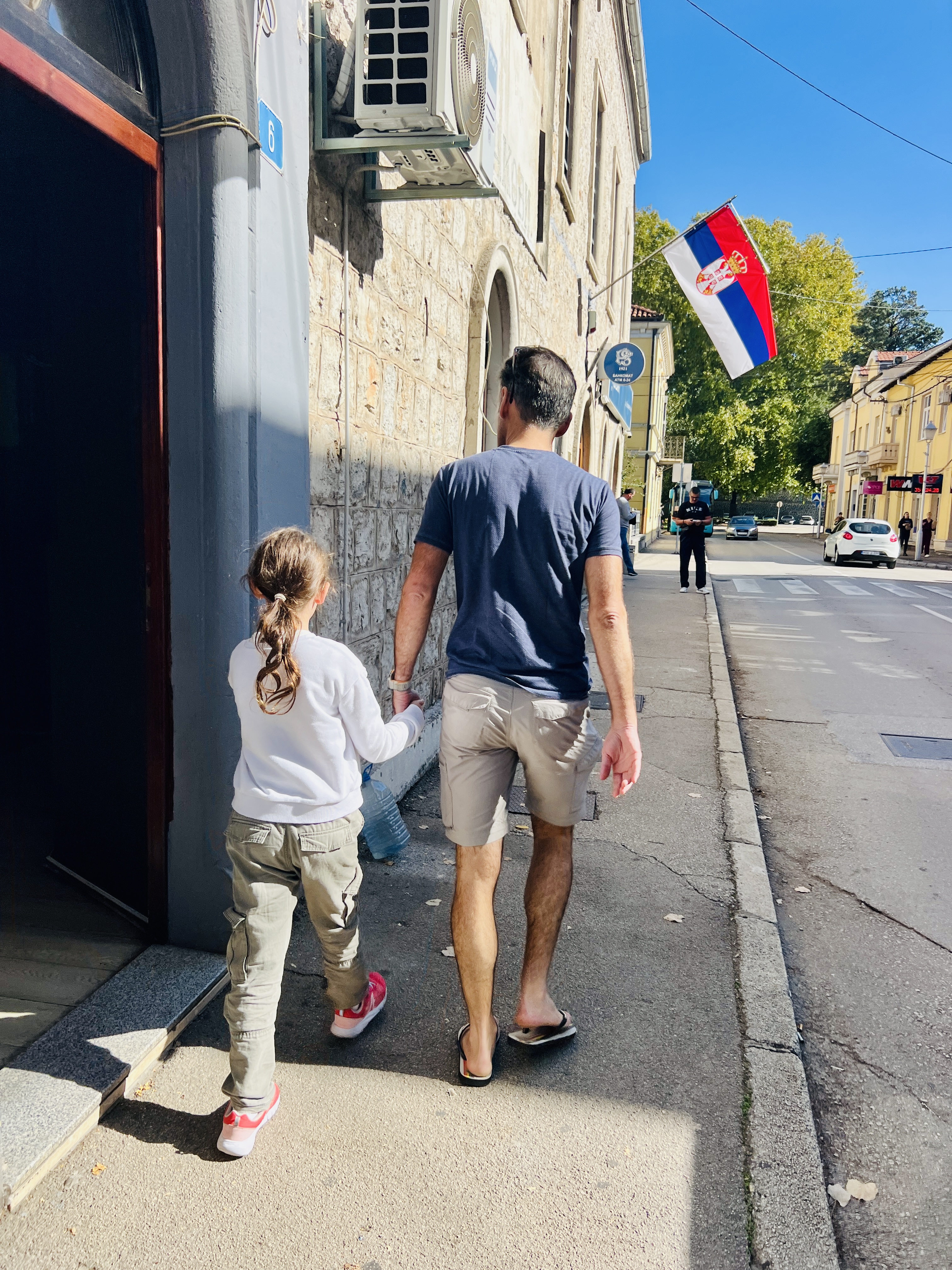

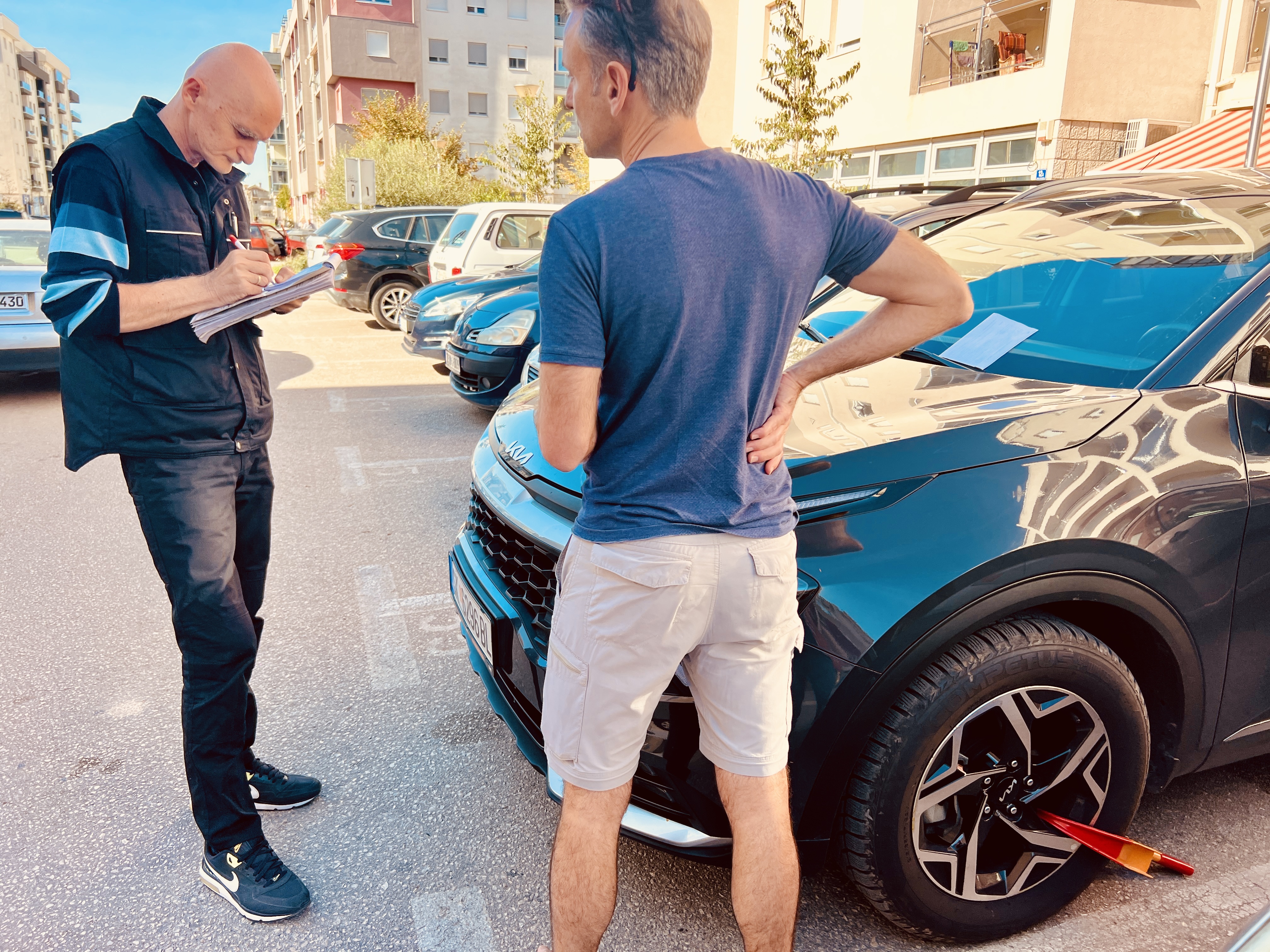
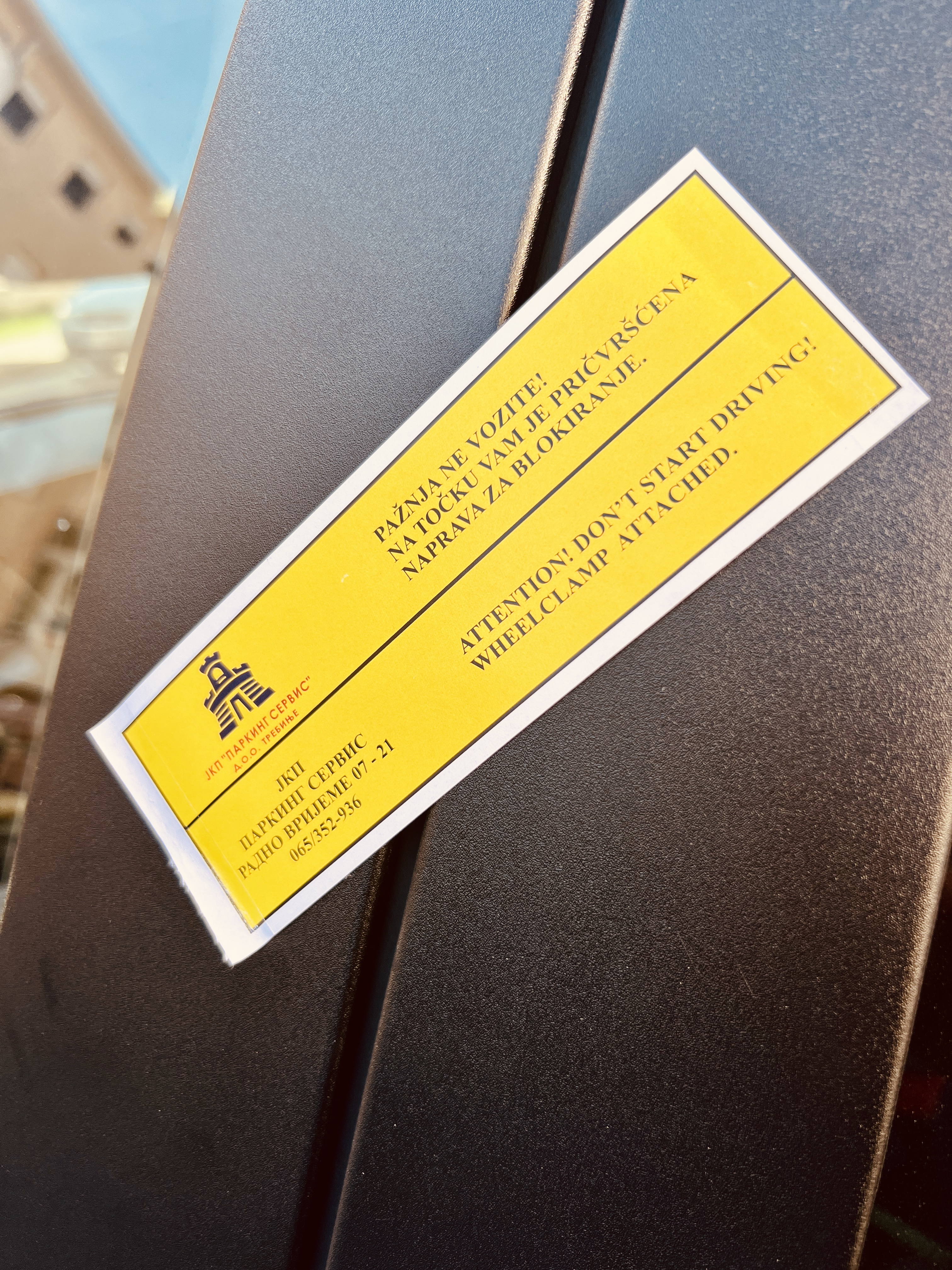
(with a brief encounter with law enforcement following a well justified clamping)
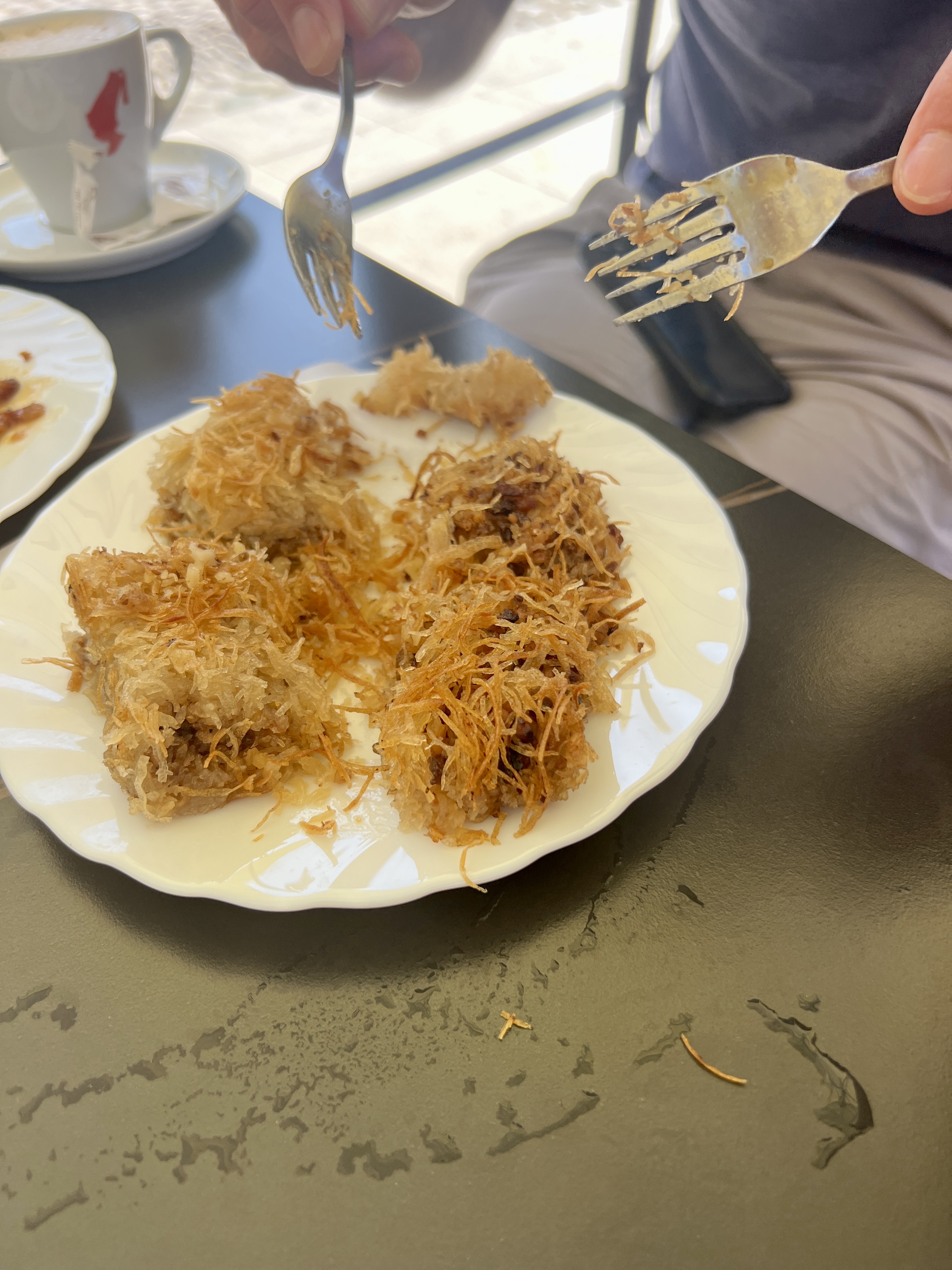
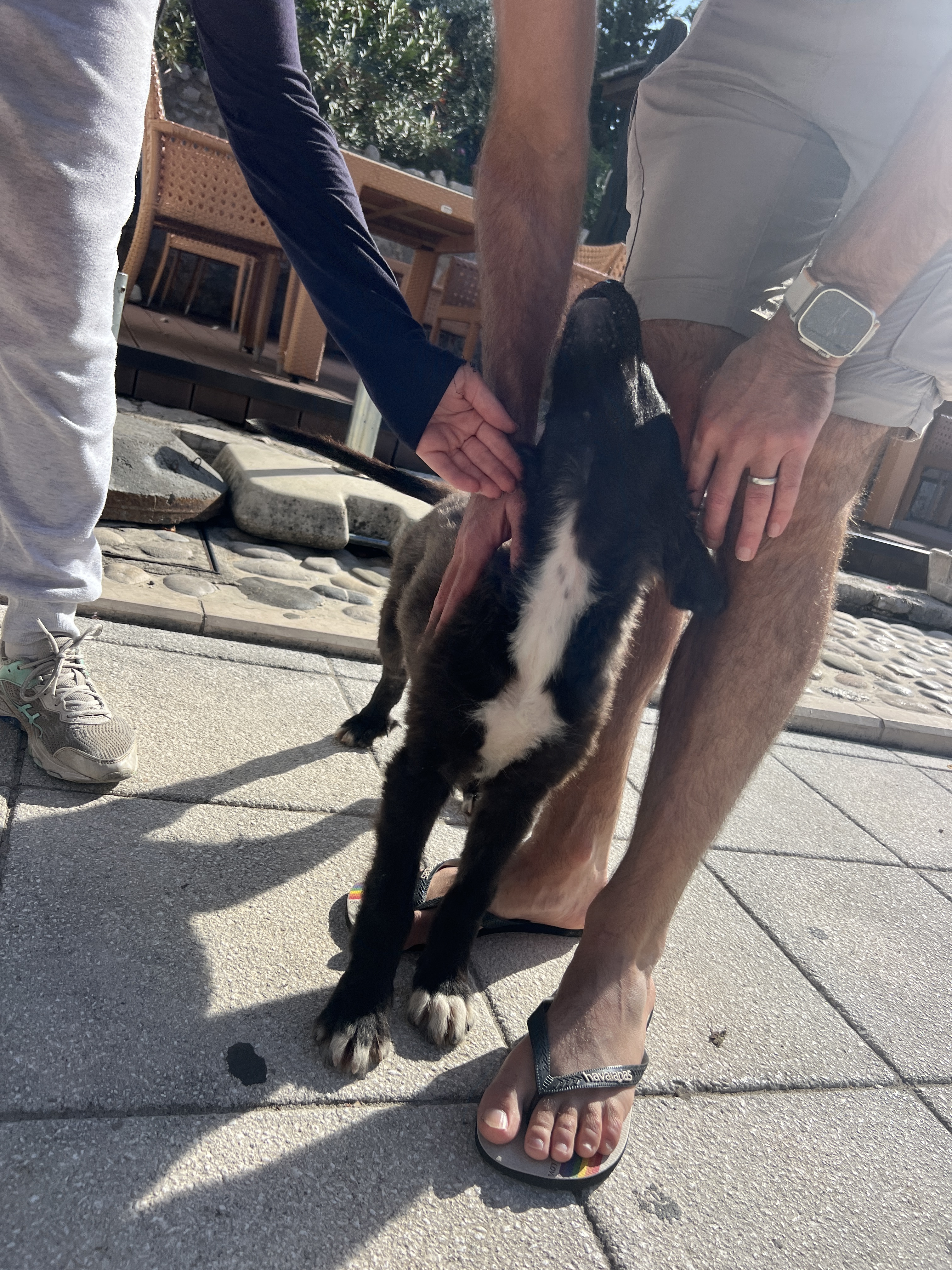
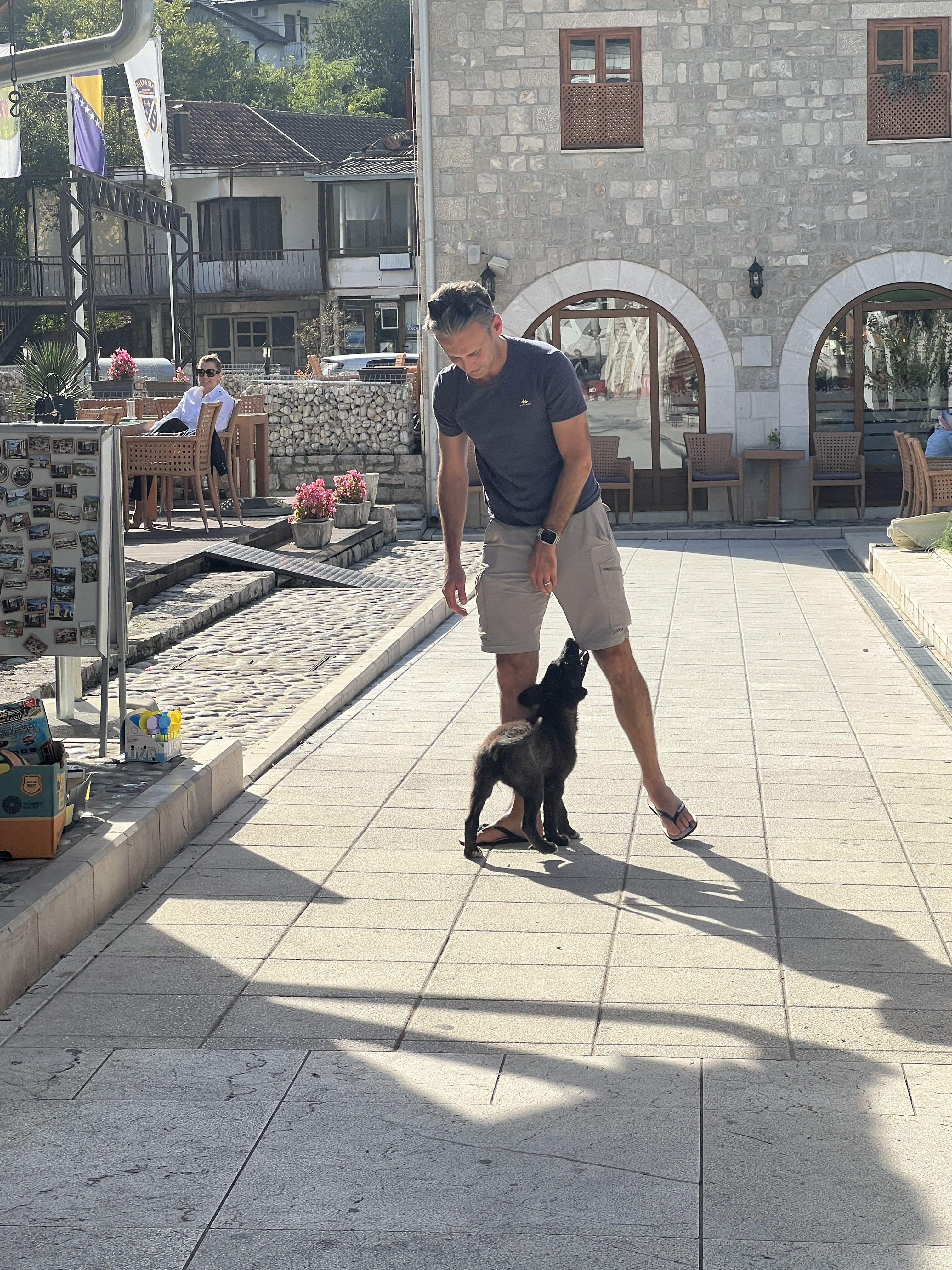
and coffees and cake at Stolac accompanied by a very playful street puppy who tried to come with us.
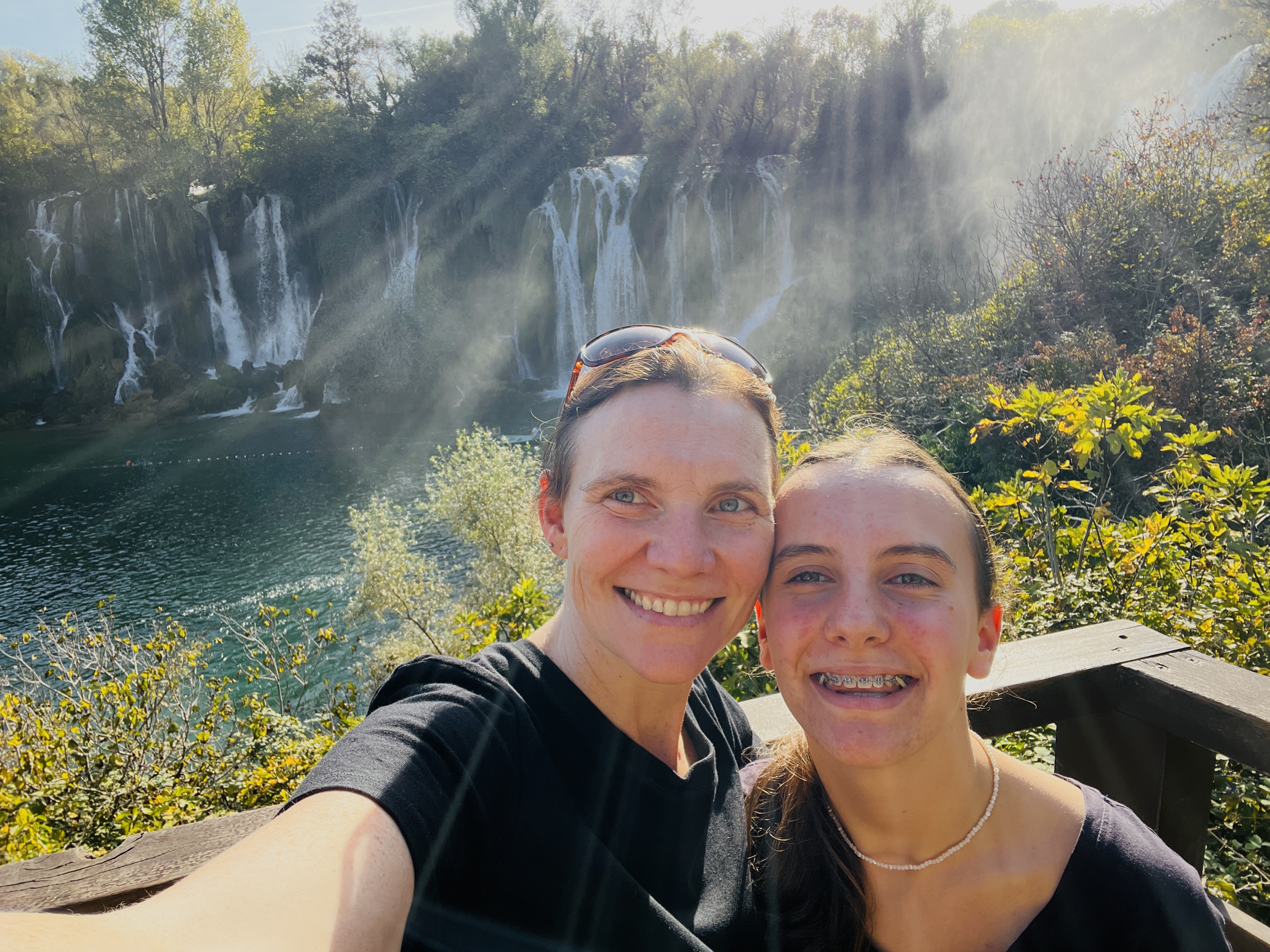
We then made our way to the stunning Kravica Waterfalls on the way into Mostar for a quick dip.
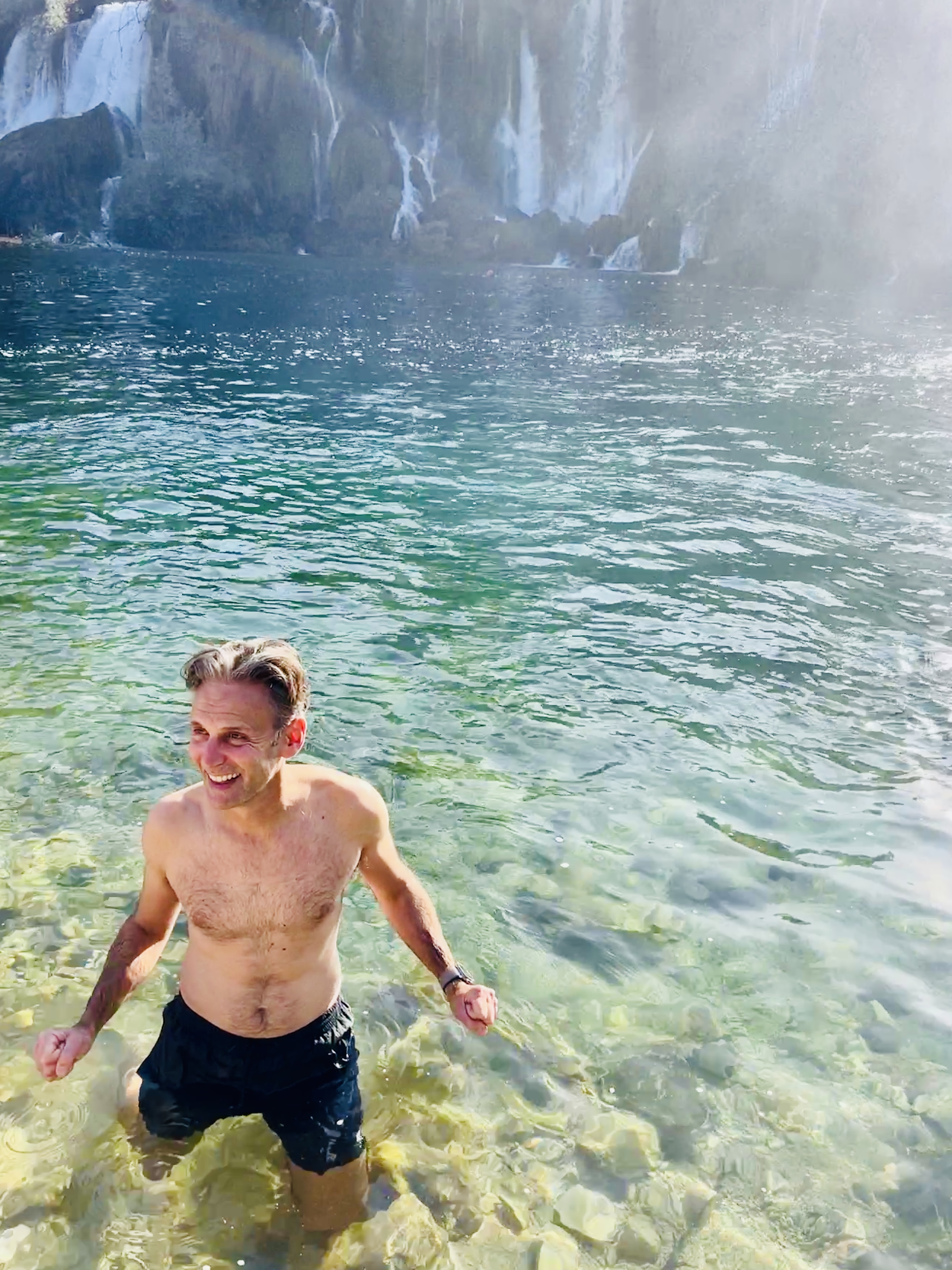
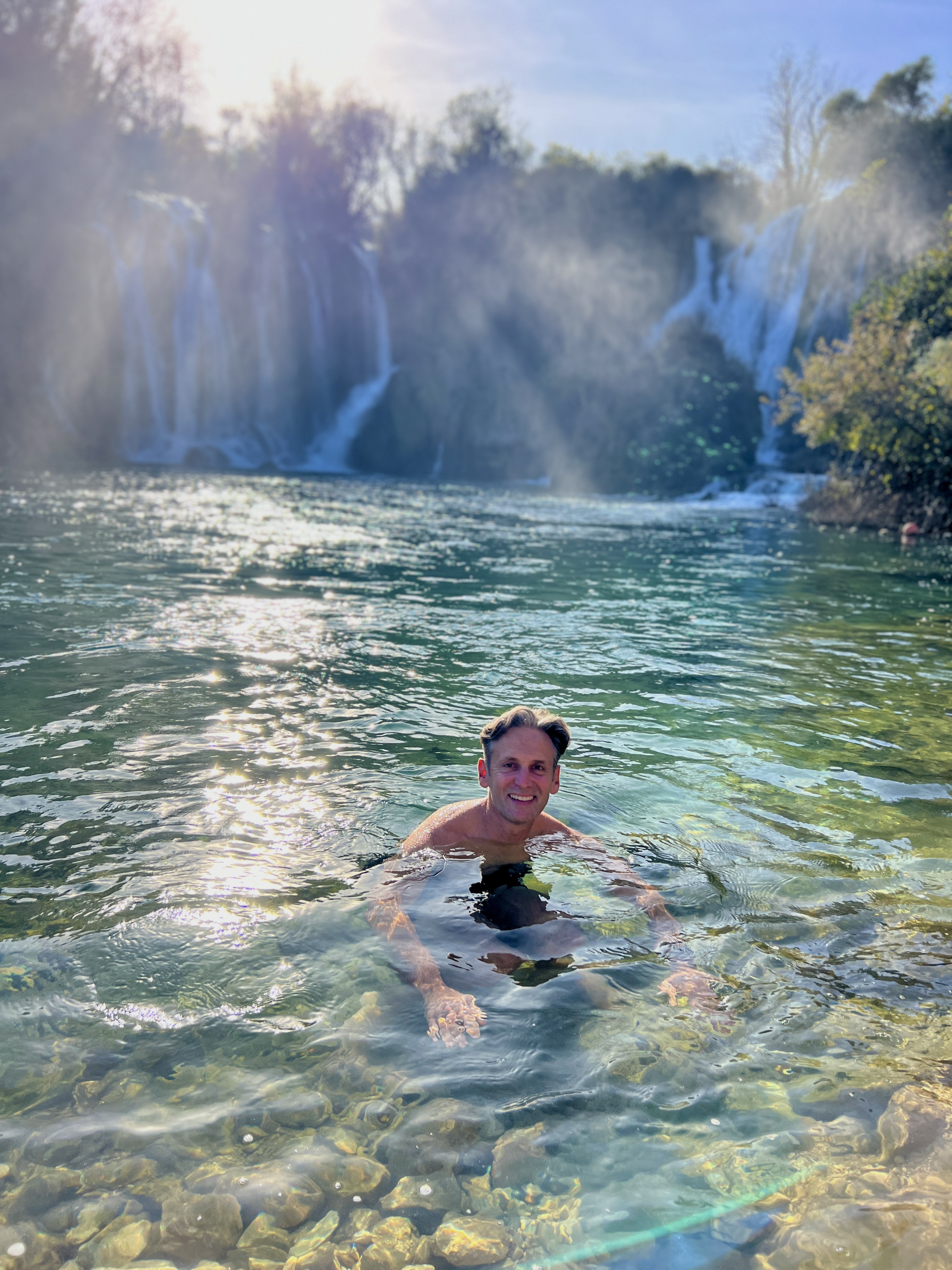
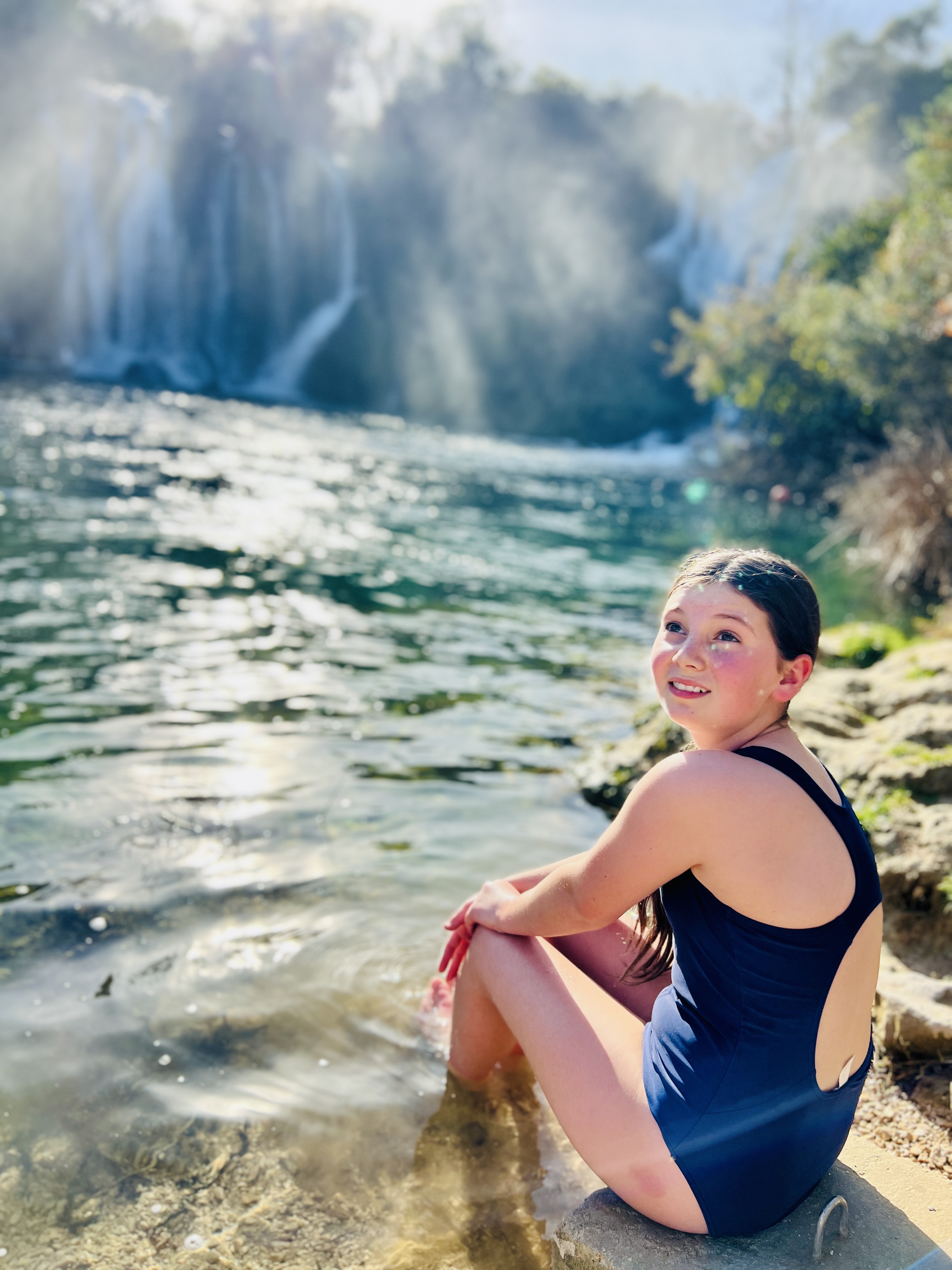
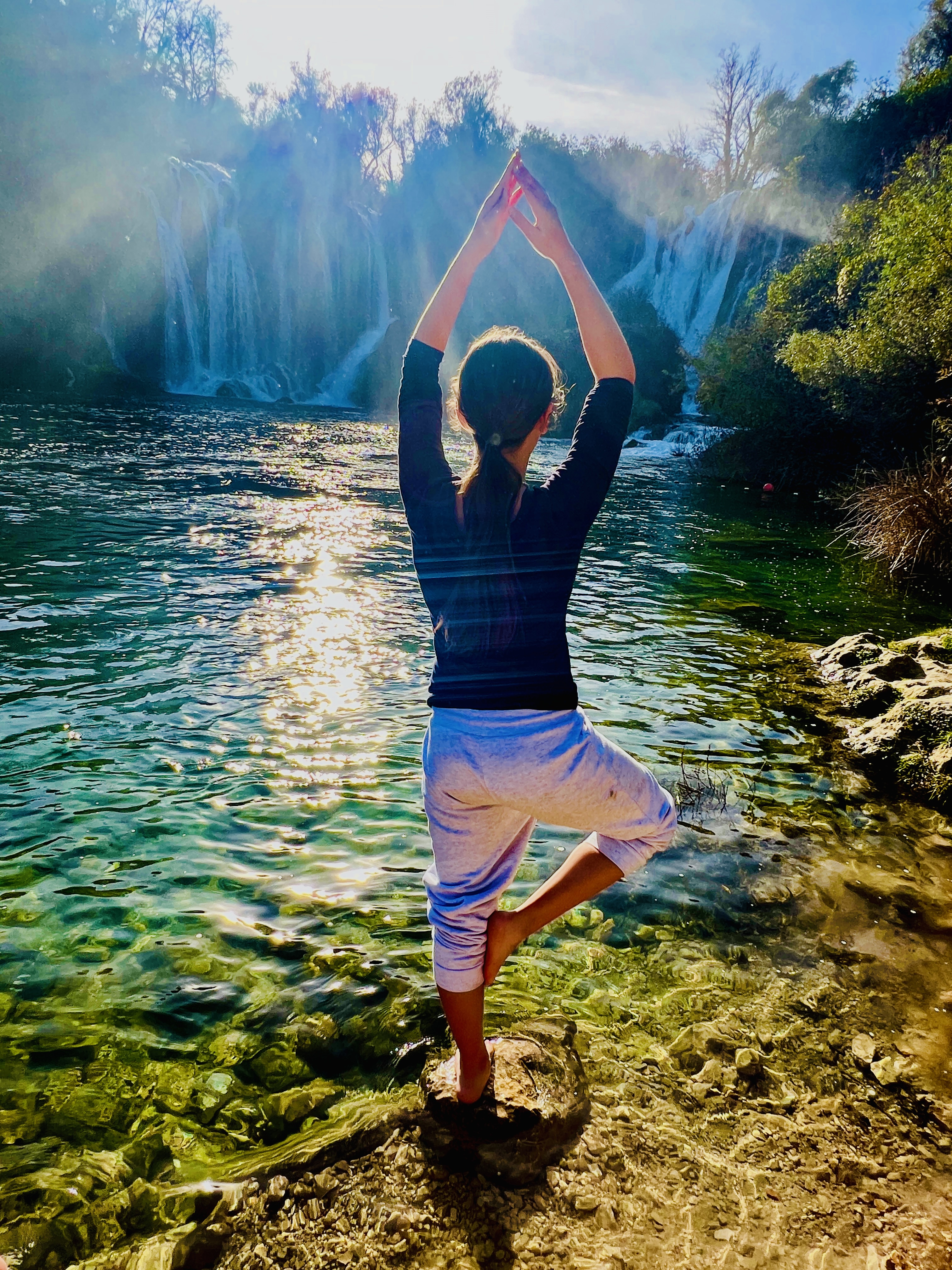
Today’s playlists continued to push the boundaries, with both Liz and Anthony both veering strongly into musical territory (without any collusion). This earned Liz a first place for the day.
Once we arrived we took off for dinner to Hindin Ha as recommended by our host. The meal and the company as always did not disappoint.
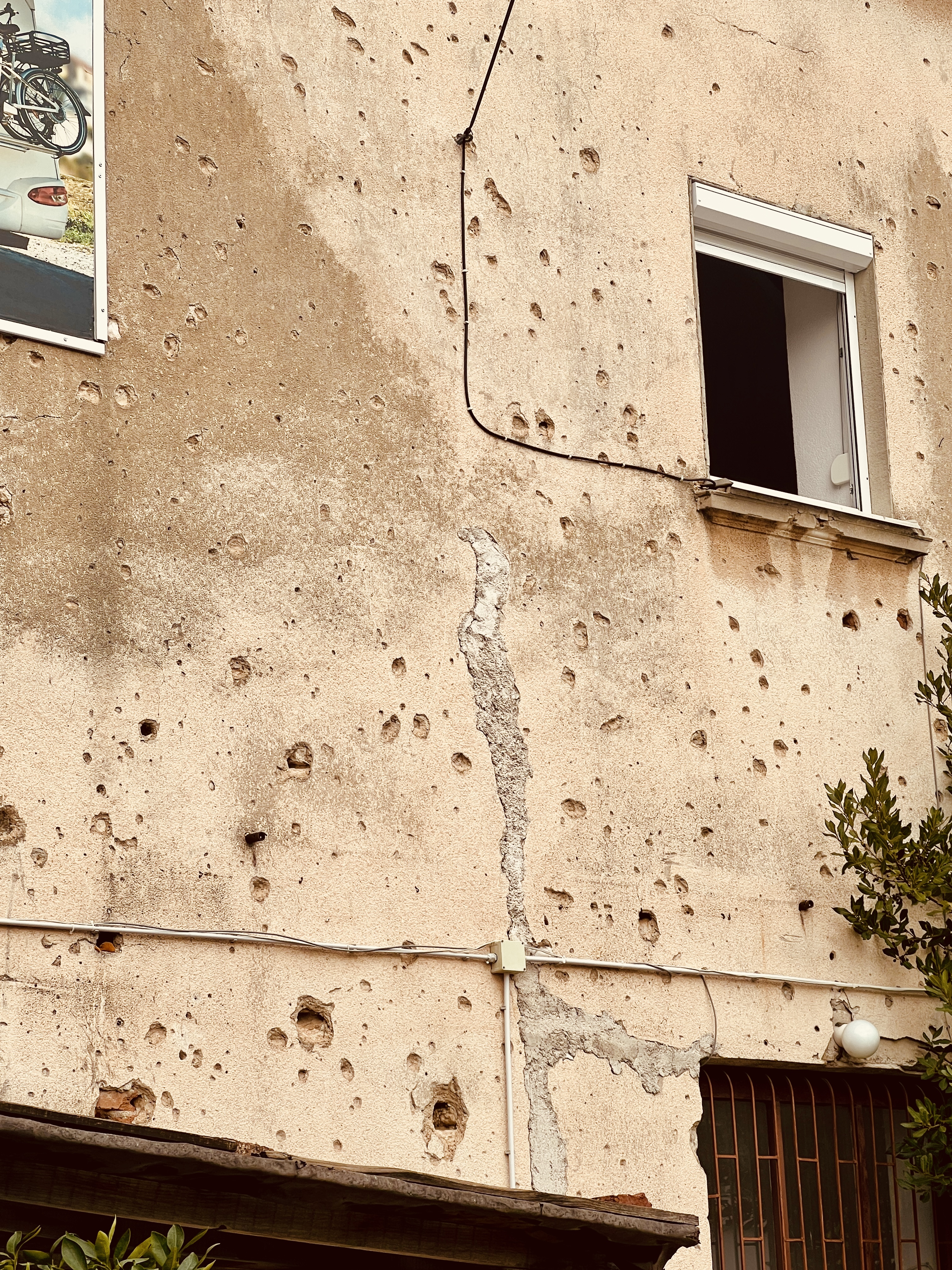
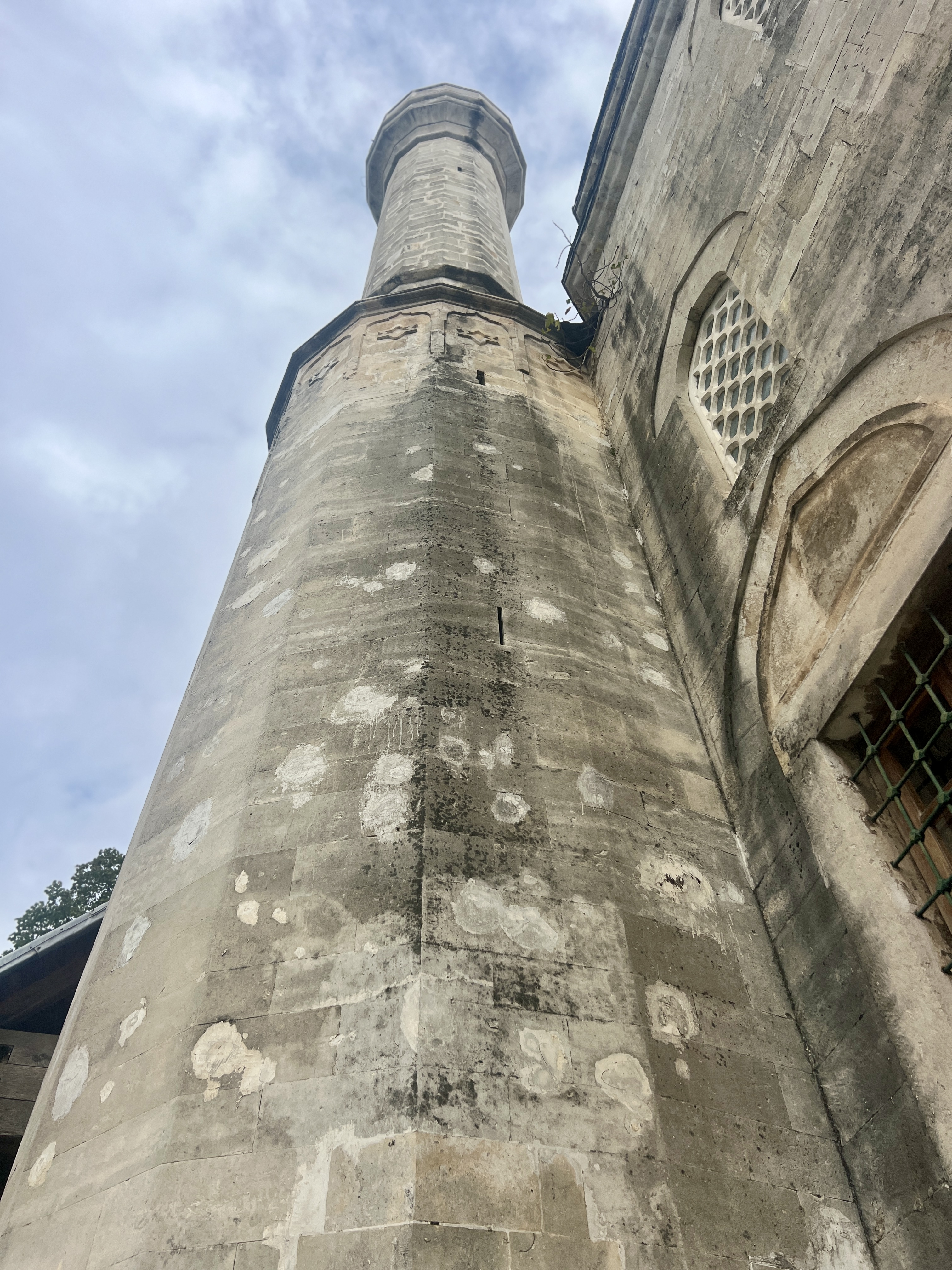
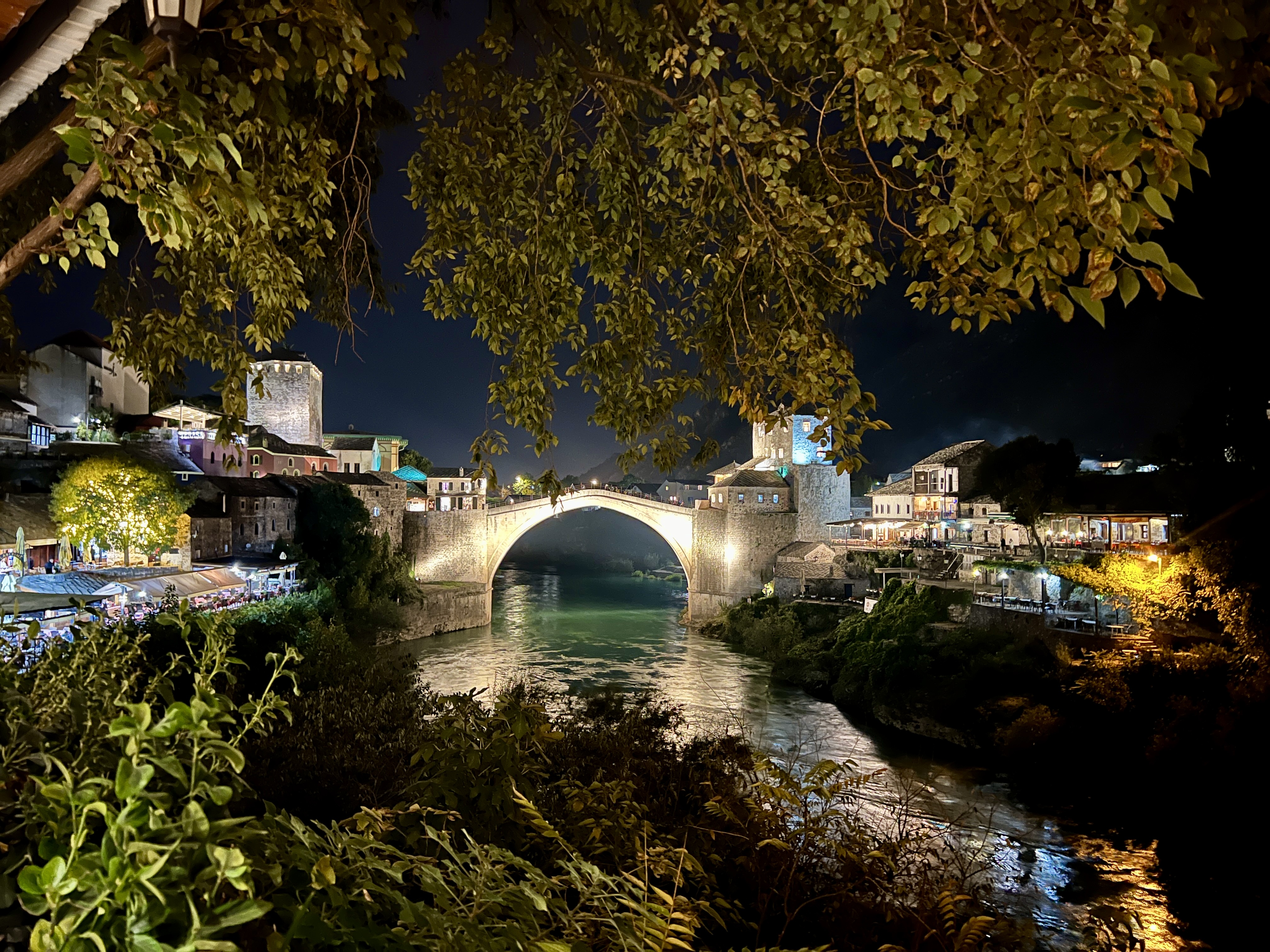
Most of the images we had seen of Mostar are of the stunning old town and iconic Stari Most (Old Bridge) – famous for being the diving platform for slightly crazy locals and tourists alike. What the tourist photos don’t show you is the damage from the Balkans War in the early 1990s that ripped apart the country.
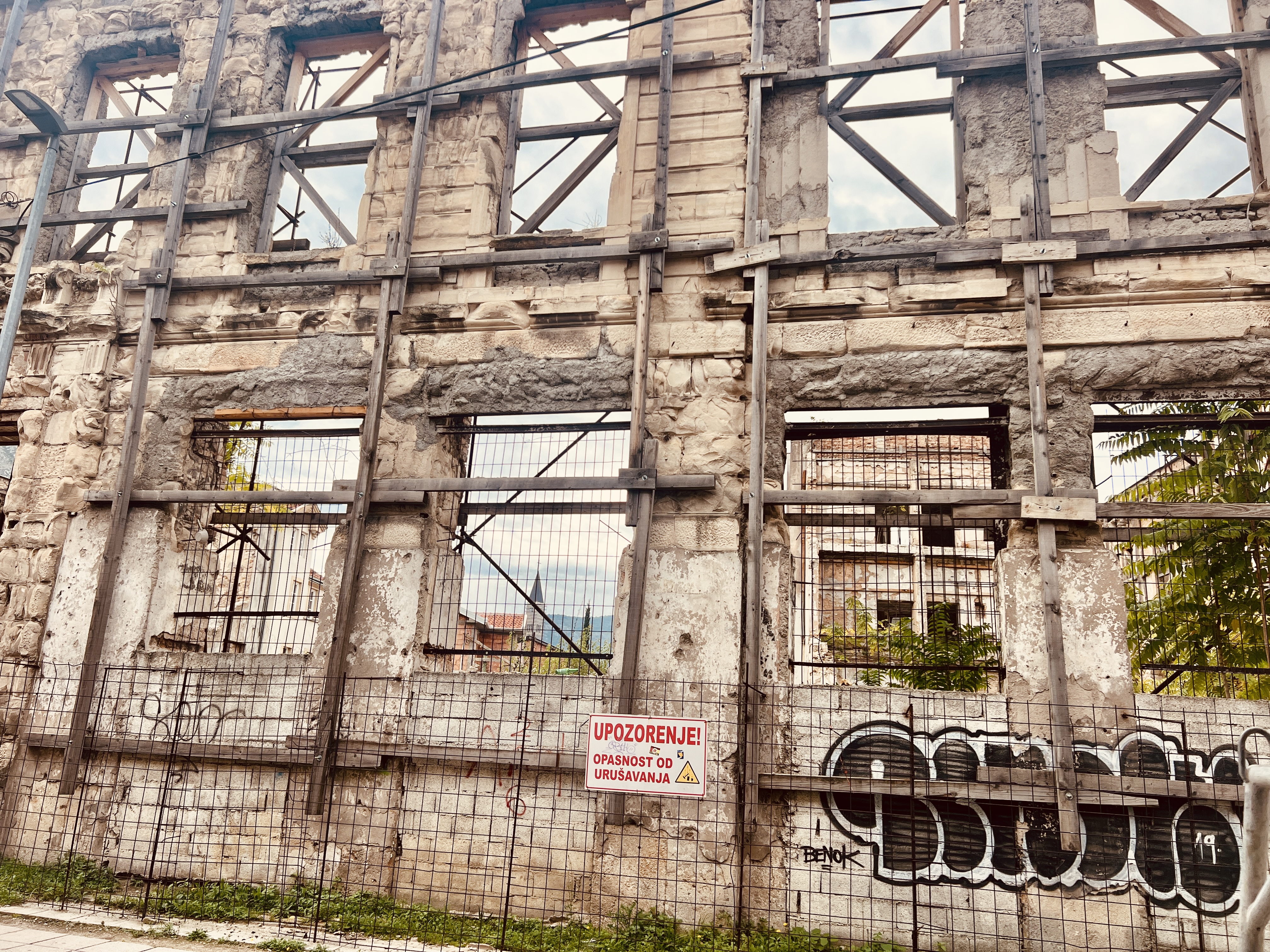
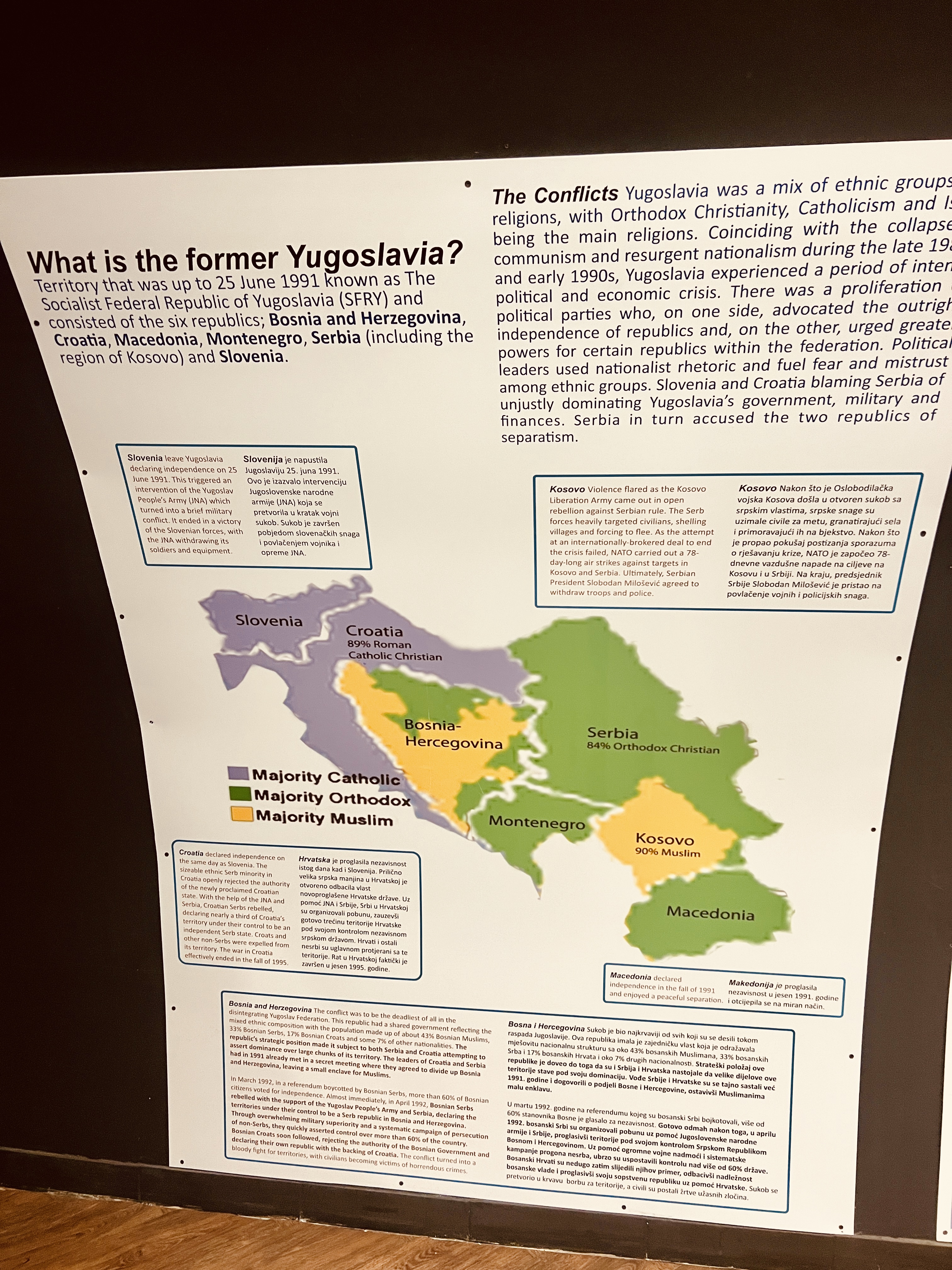
Bosnia and Herzegovina is roughly 50% Bosniac Muslim, 30% Serbian Eastern Orthodox and 15% Roman Catholic Croats… so it is basically a mixing pot on every level. After the collapse of communism, the country sought to declare independence from Yougoslavia – this was supported by the 70% or so of Bosniacs and Croats, but strongly resisted by the Serbian community who enjoyed the full support of the Serbian dominated Yugoslav government.
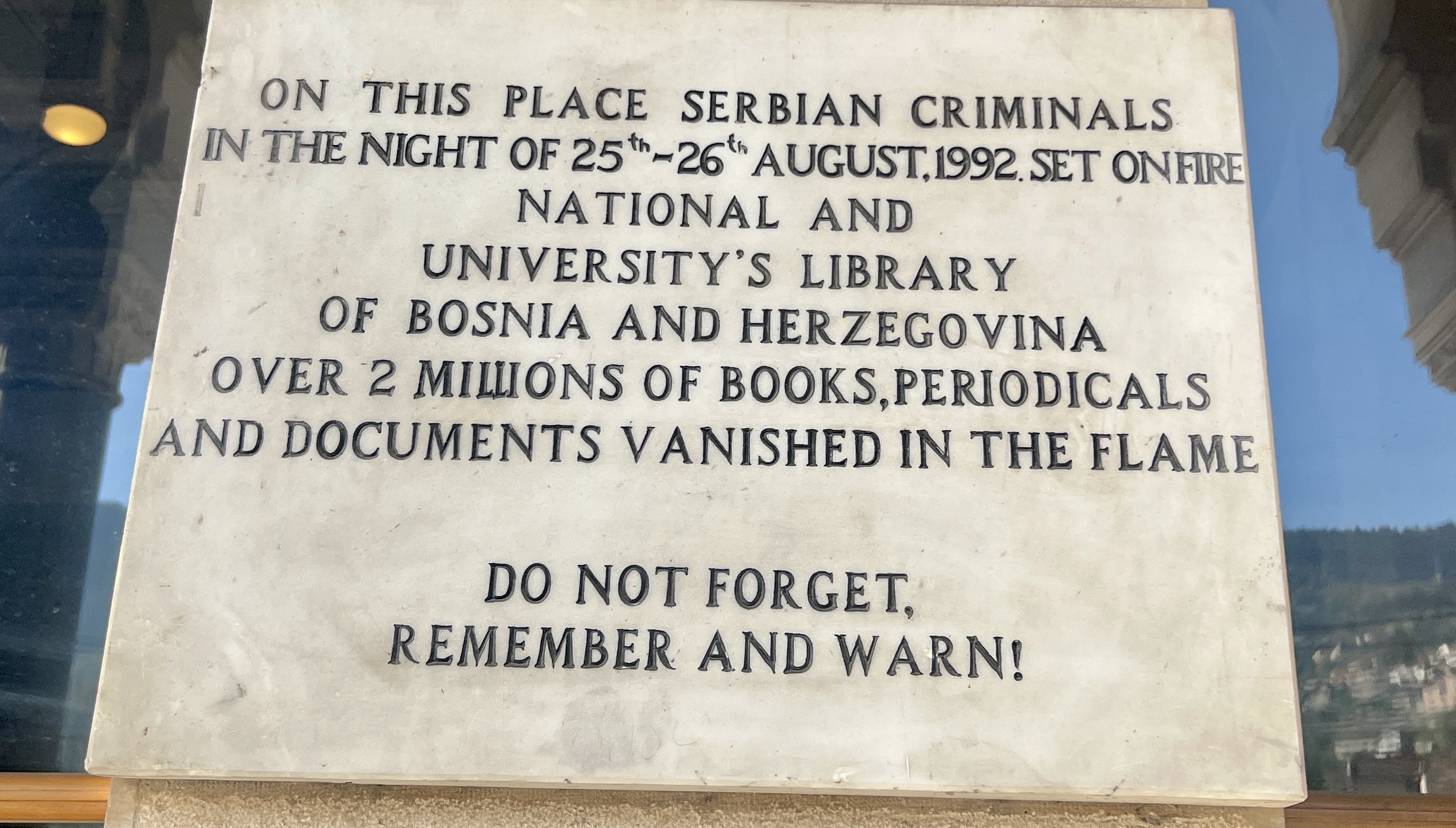
This resulted in an horrific civil war in which 2 million Bosnians were displaced (around 70% of the population) and 200,000 were killed. We still remember the media coverage around the Srebenica massacre and the siege of Sarajevo (our next stop). We didn’t realise that Mostar was also under siege by Croatia for an extended period and most of the old town (including the Stari Most) were destroyed and subsequently rebuilt. Somewhat interestingly, and in contrast to Kosovo, is that there is no ‘America worship here – not a Bill Clinton Boulevard in sight, not even a US flag.
The old town is beautifully curated;
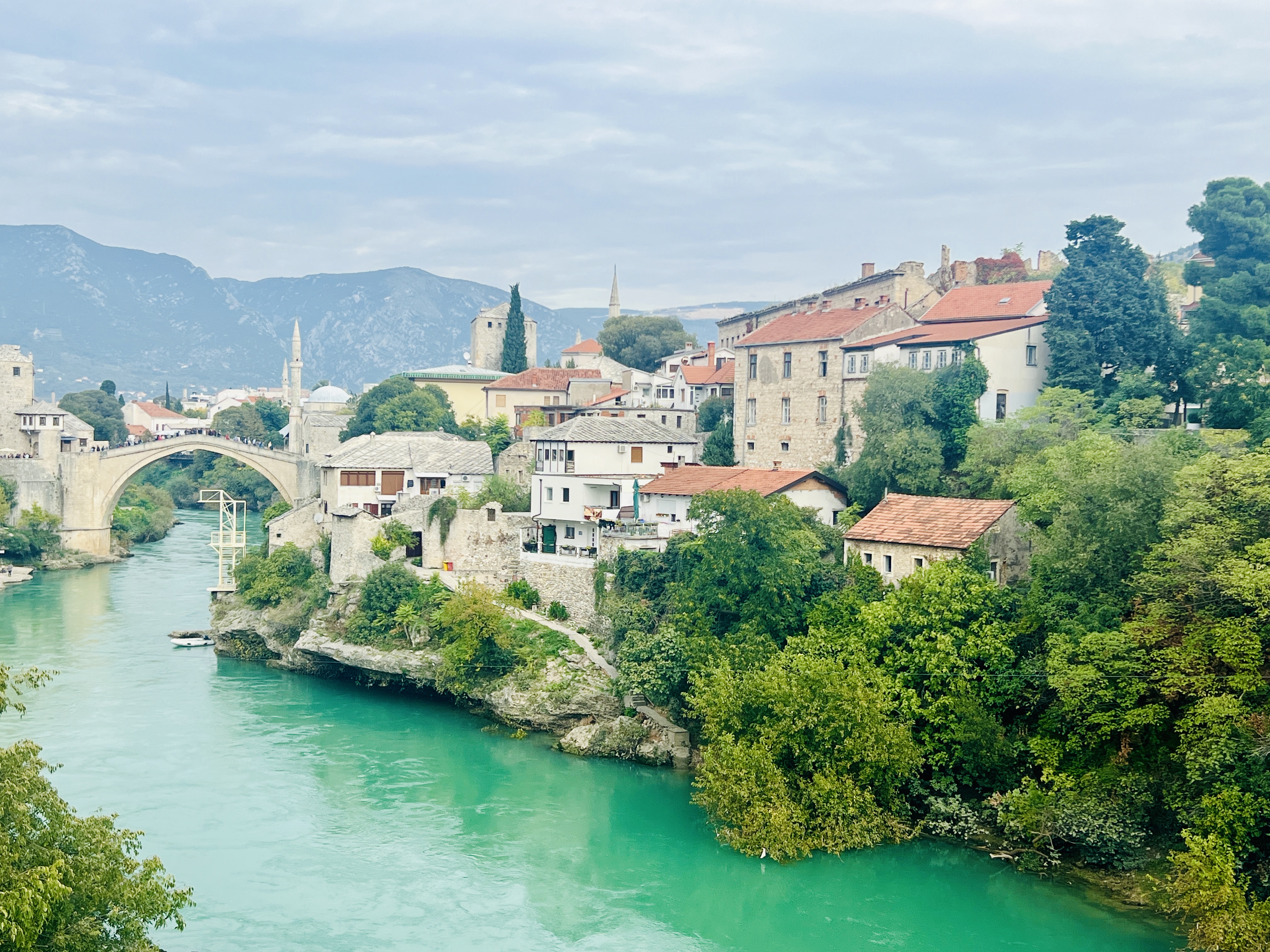
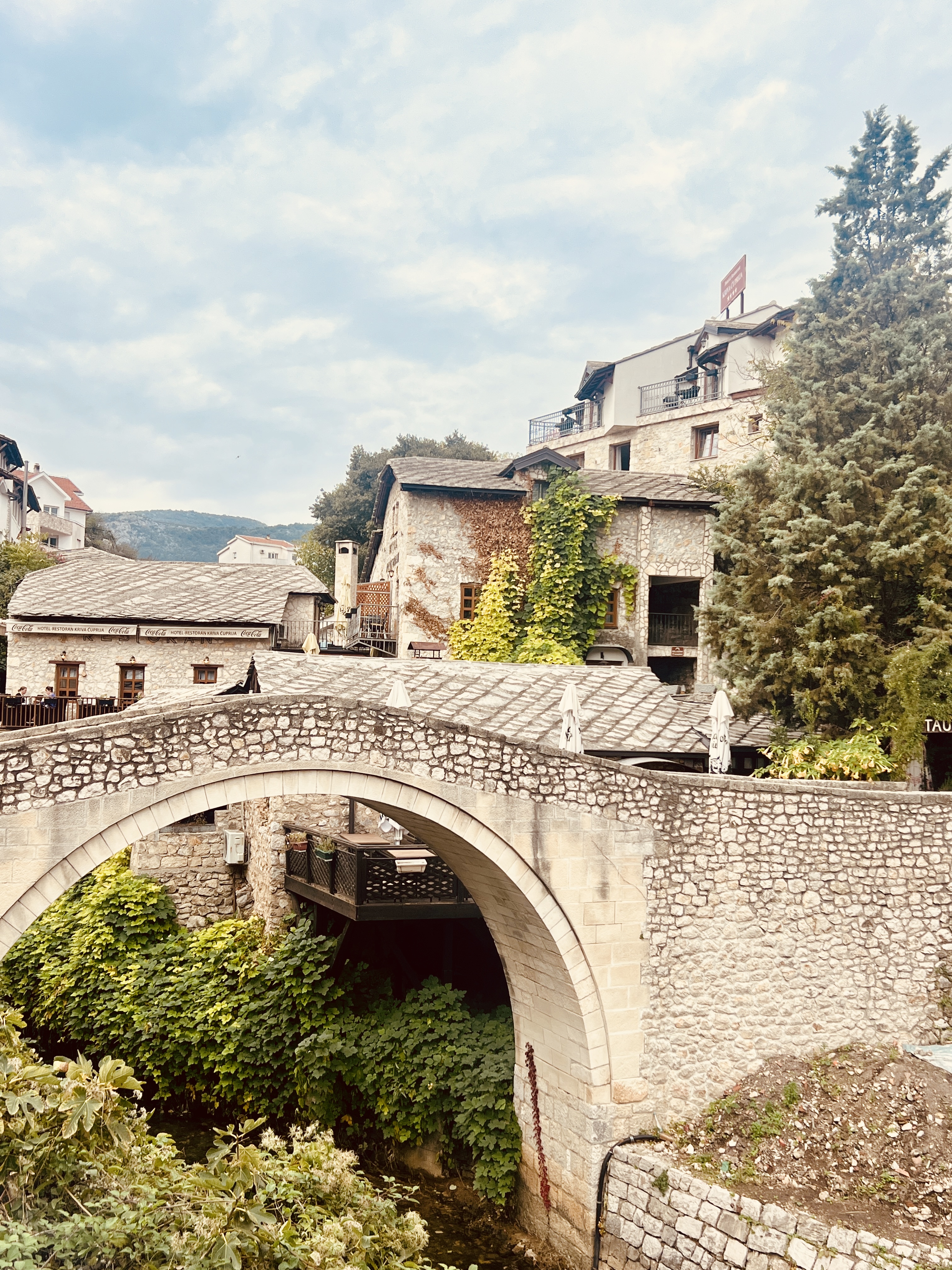
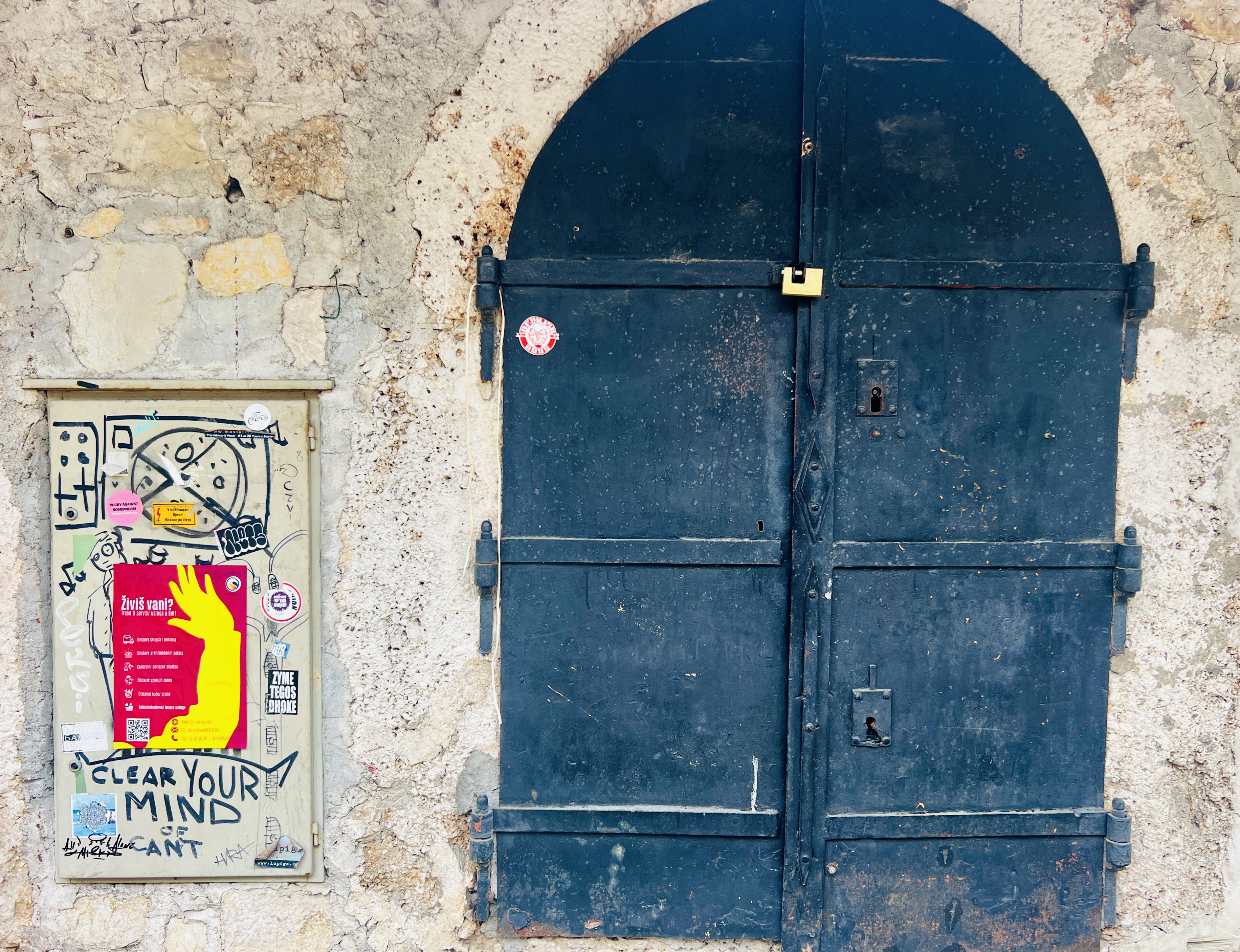
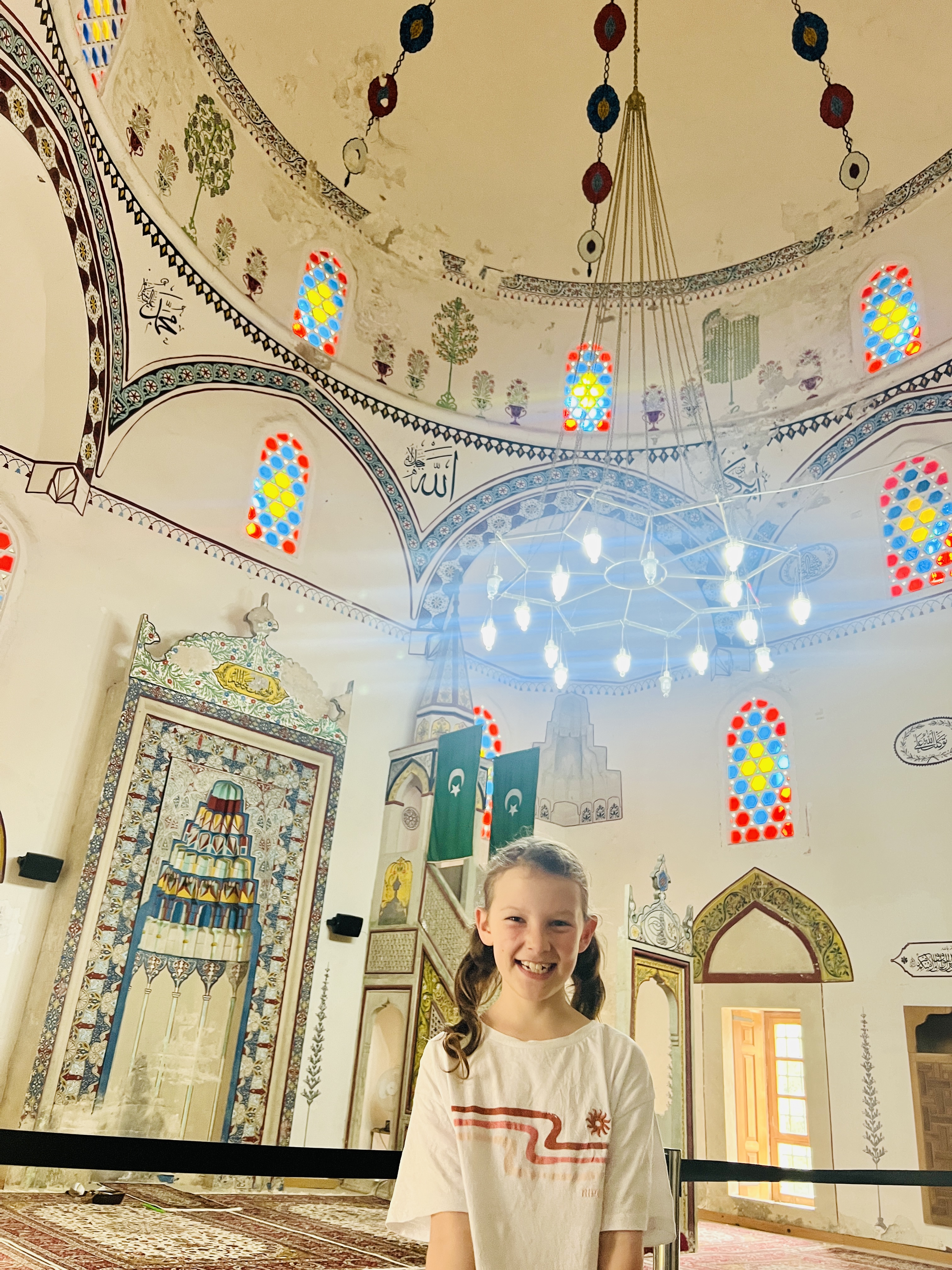
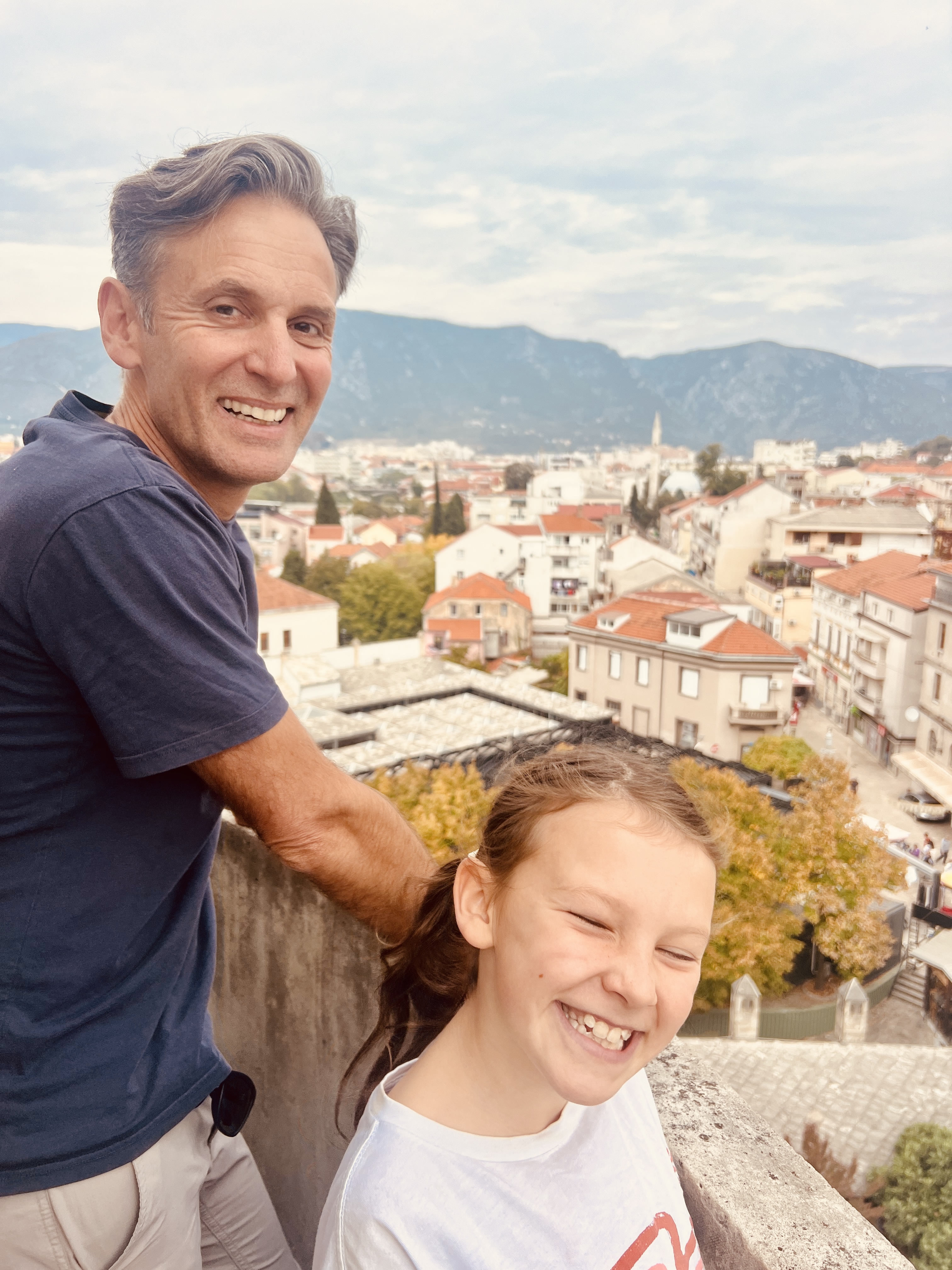
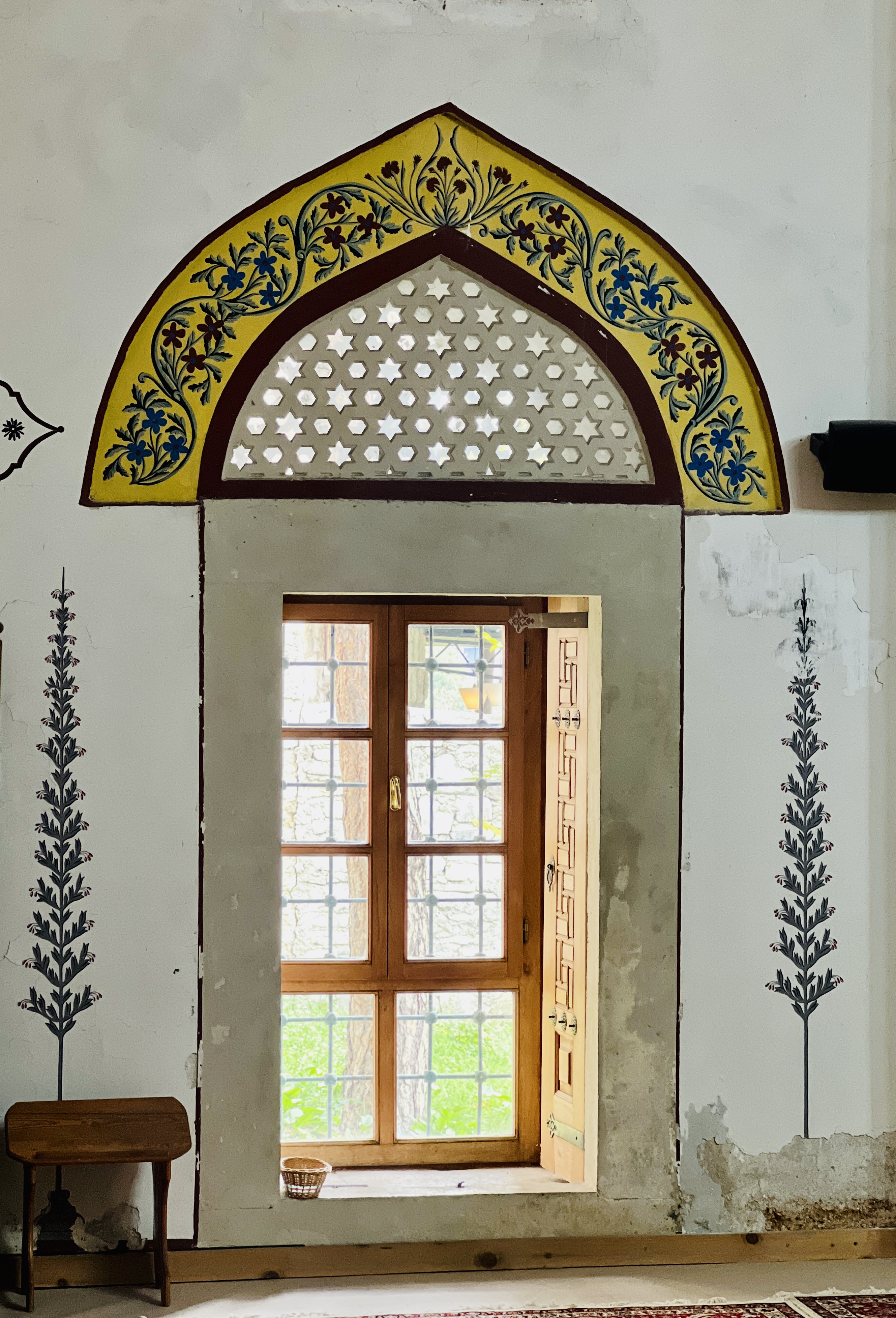
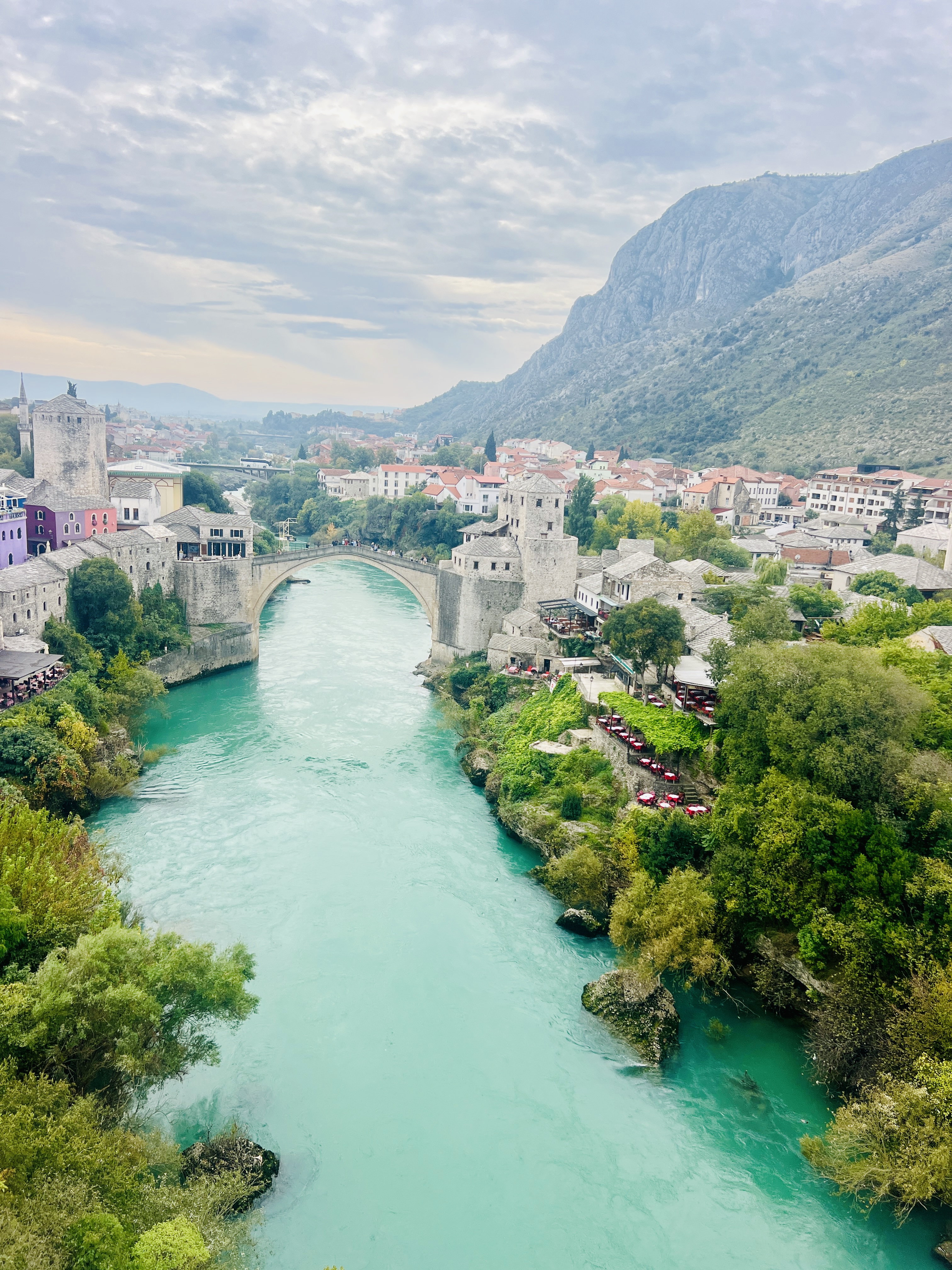
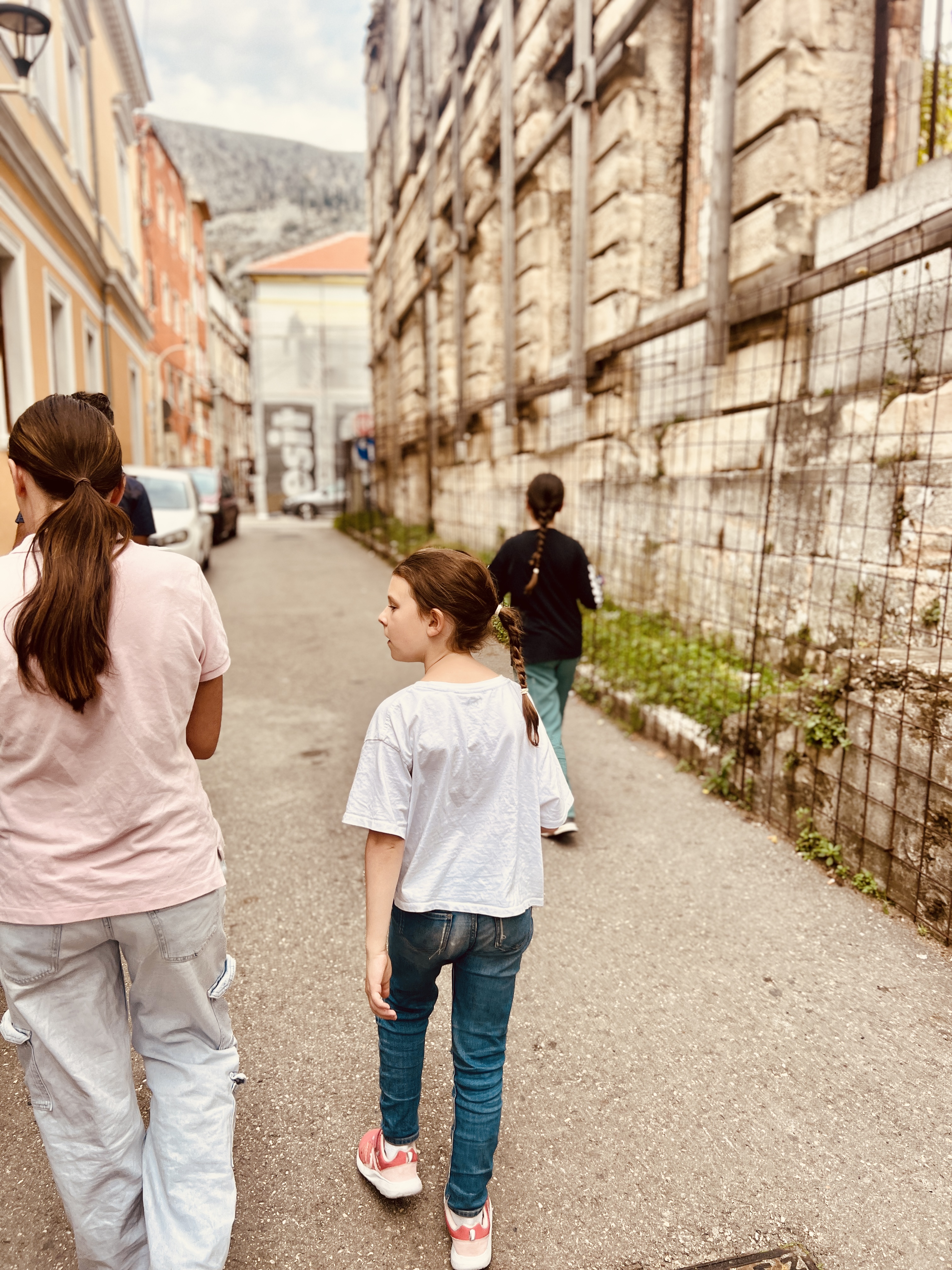
the minute you walk outside this small area of mosques, bridges, castles and fast flowing streams/rivers you quickly get to pock-marked buildings, scaffolded facades and ruined buildings – the sign of the war are still very much front and centre here.
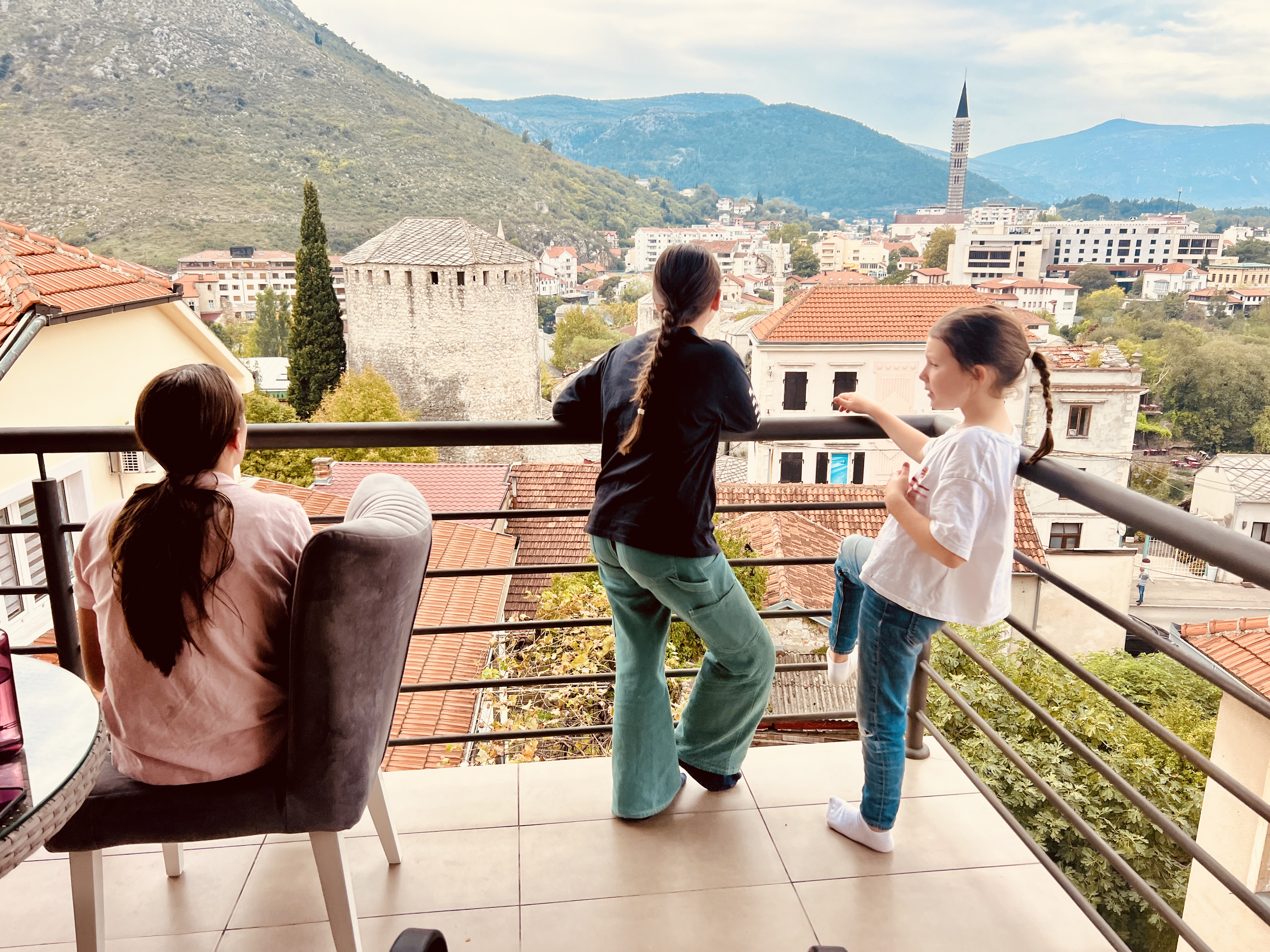
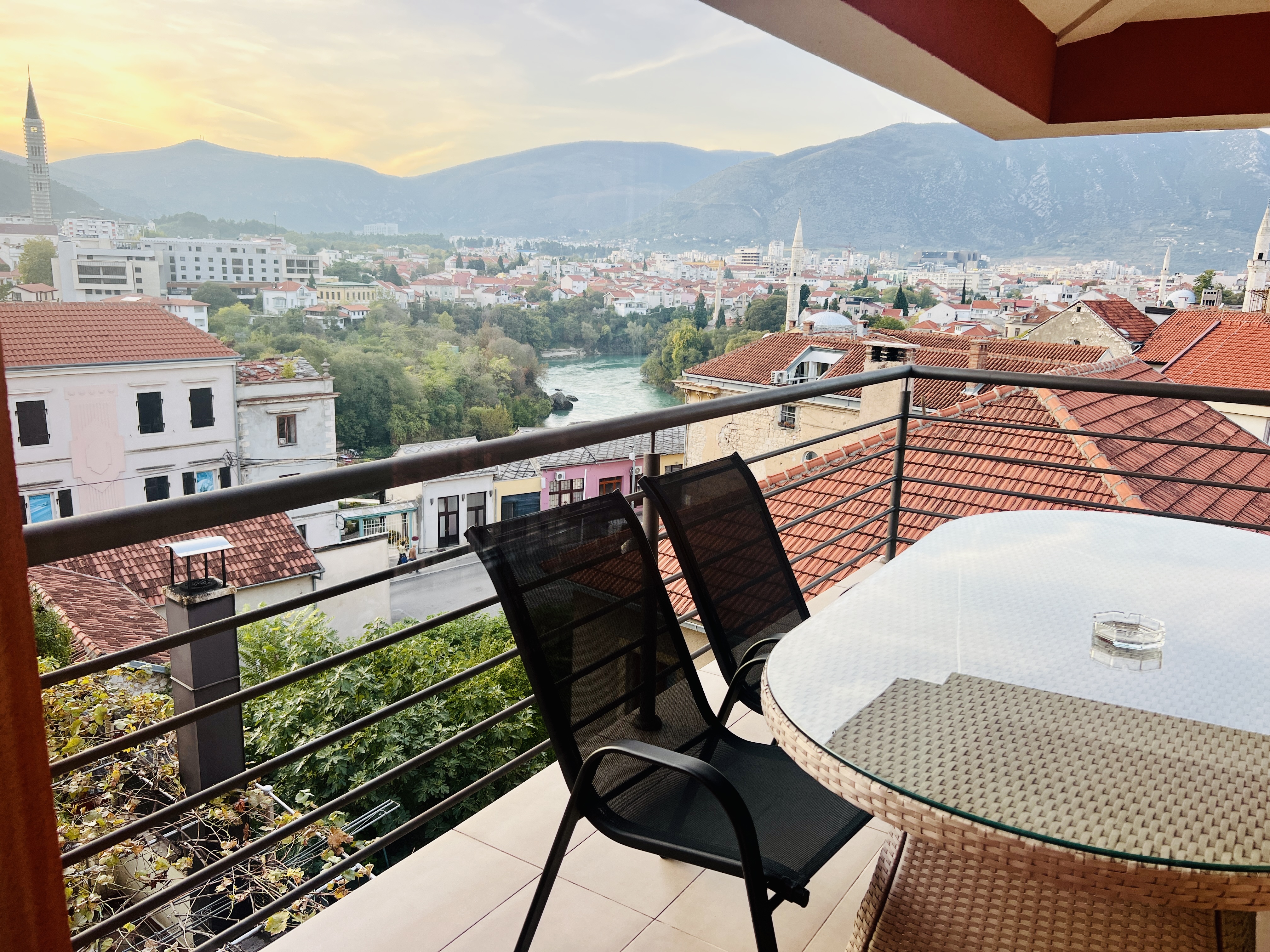
Our apartment here is in a prime position – directly overlooking the old town with its minarets, church towers and even the Stari Most. In the evening, the church bells compete with the call to prayer for the population’s attention – this is the first time we had the privilege to hear both of these things at once, and it seems to summarise the region.
We only had one full day in Mostar. We really enjoyed exploring the stunning old town but the highlight was probably the graphic, disturbing but incredibly interesting Museum of Genocide, which wined through the Bosnian War in a lot of detail.
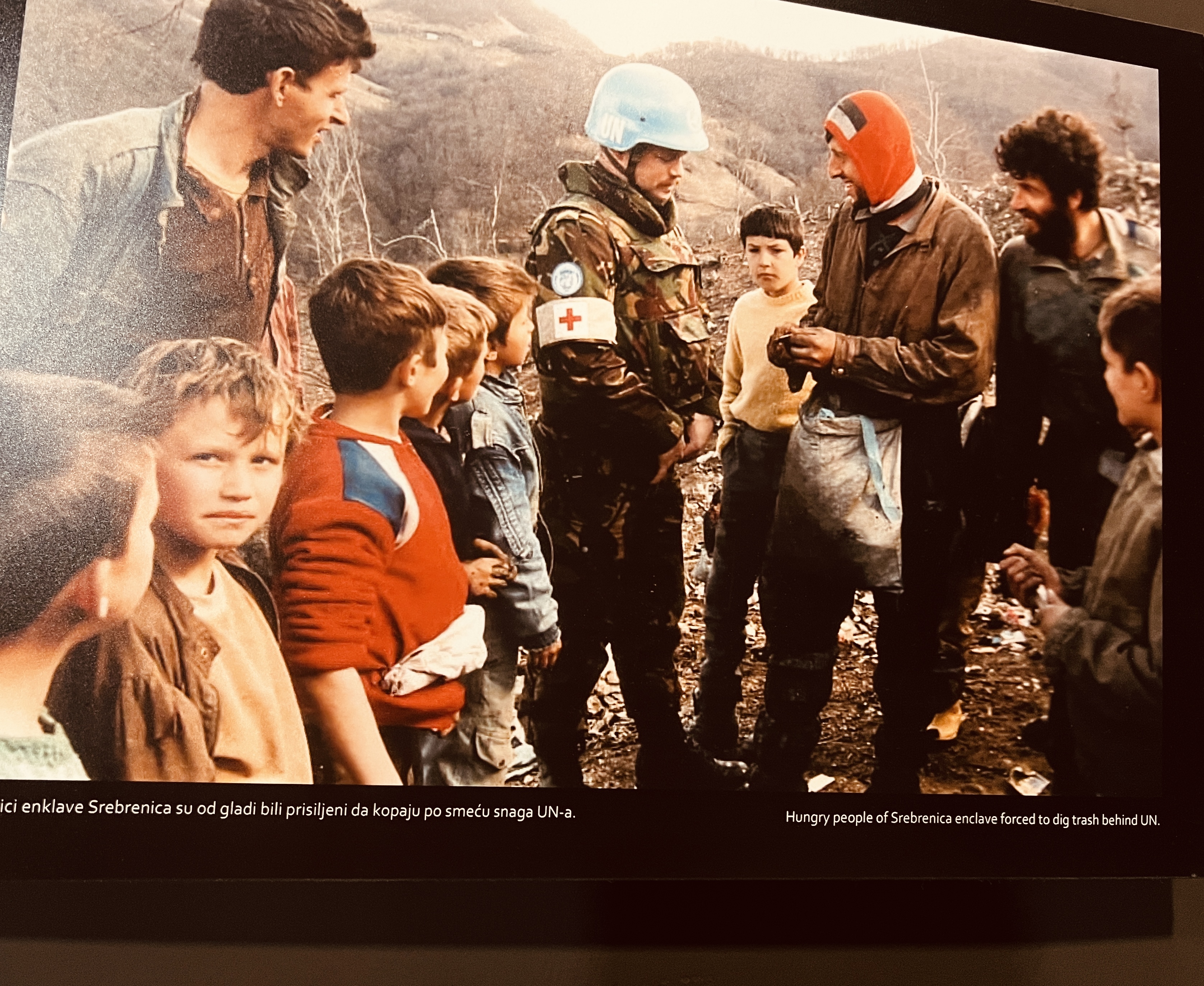
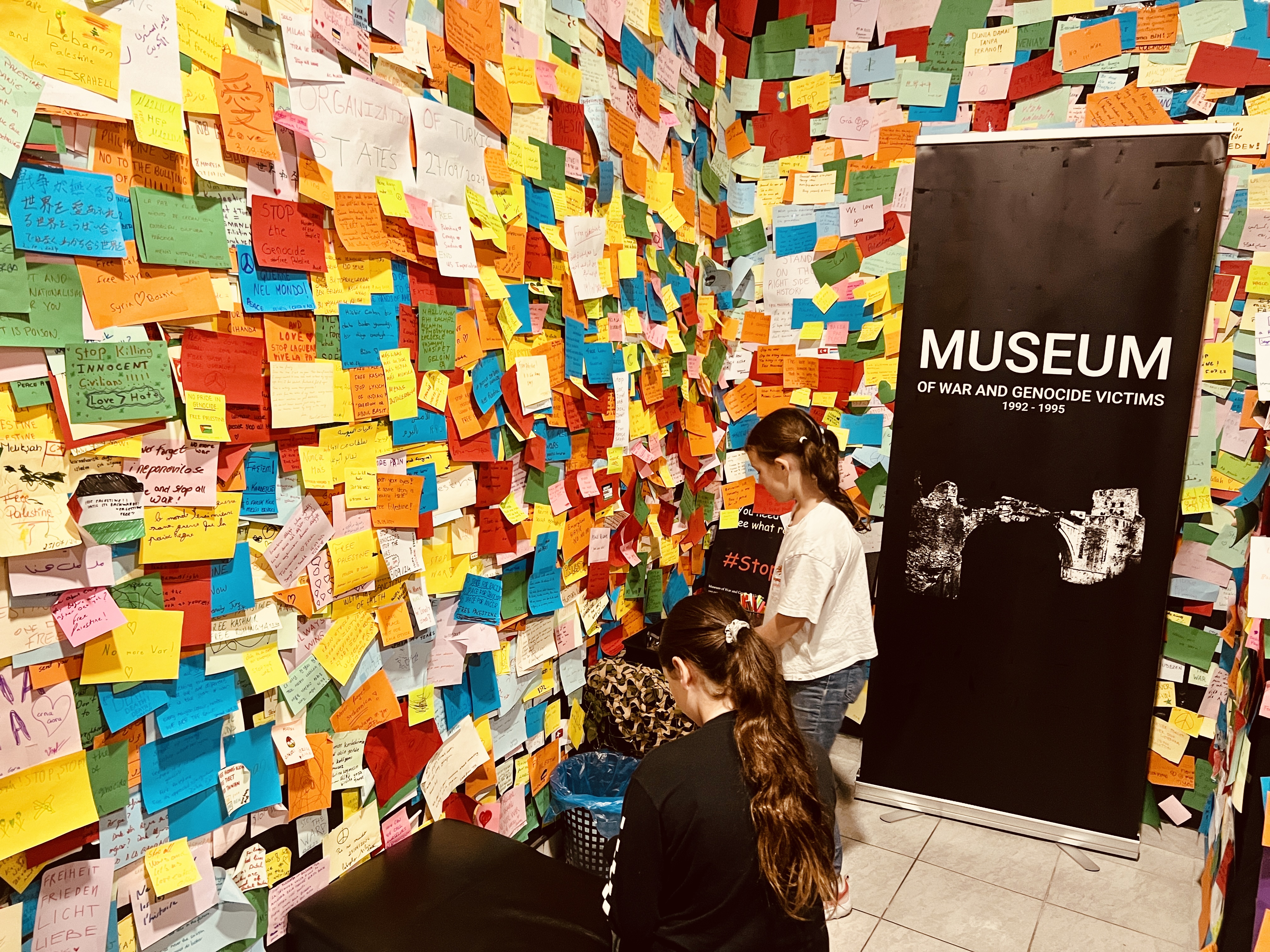
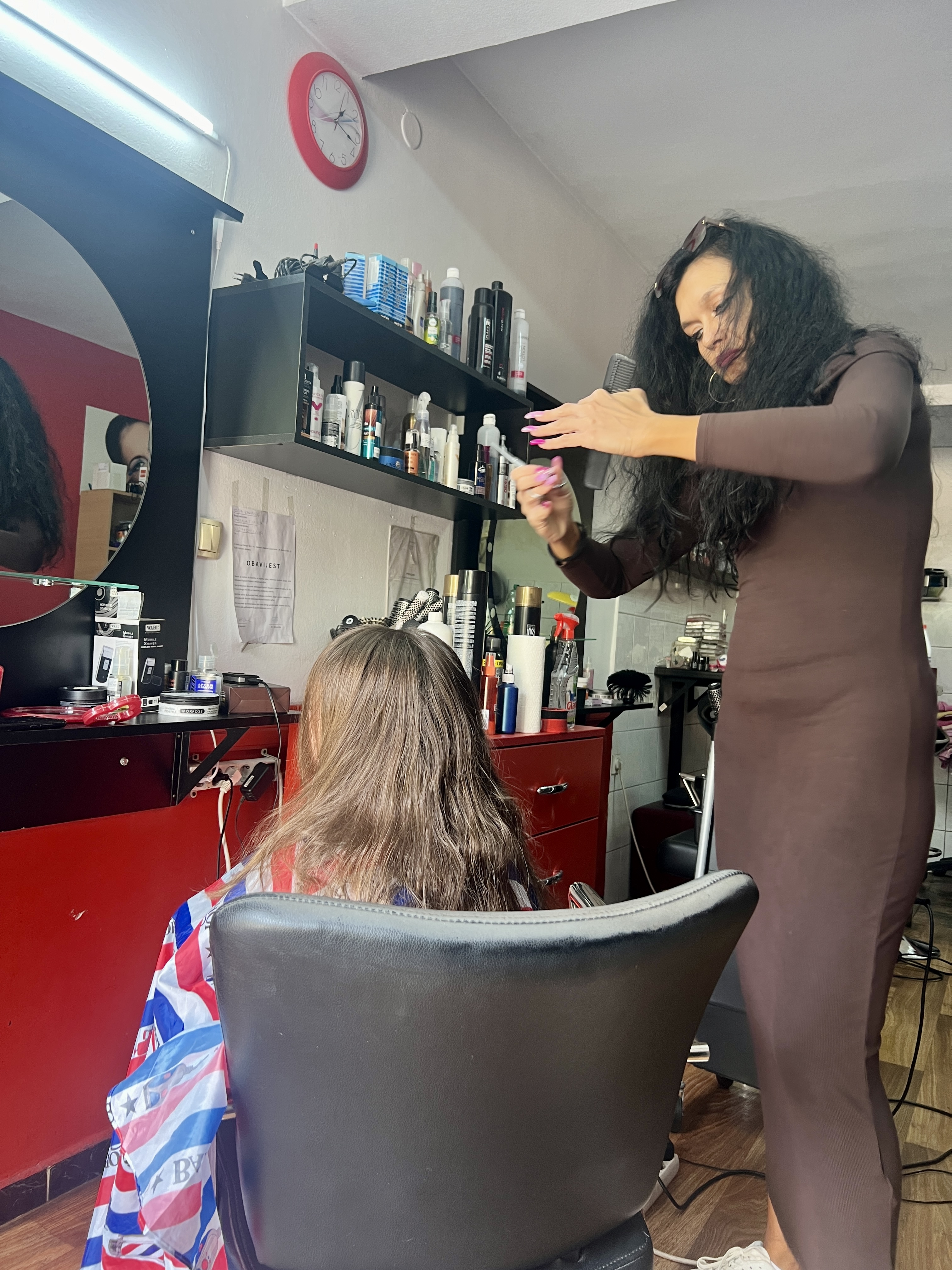
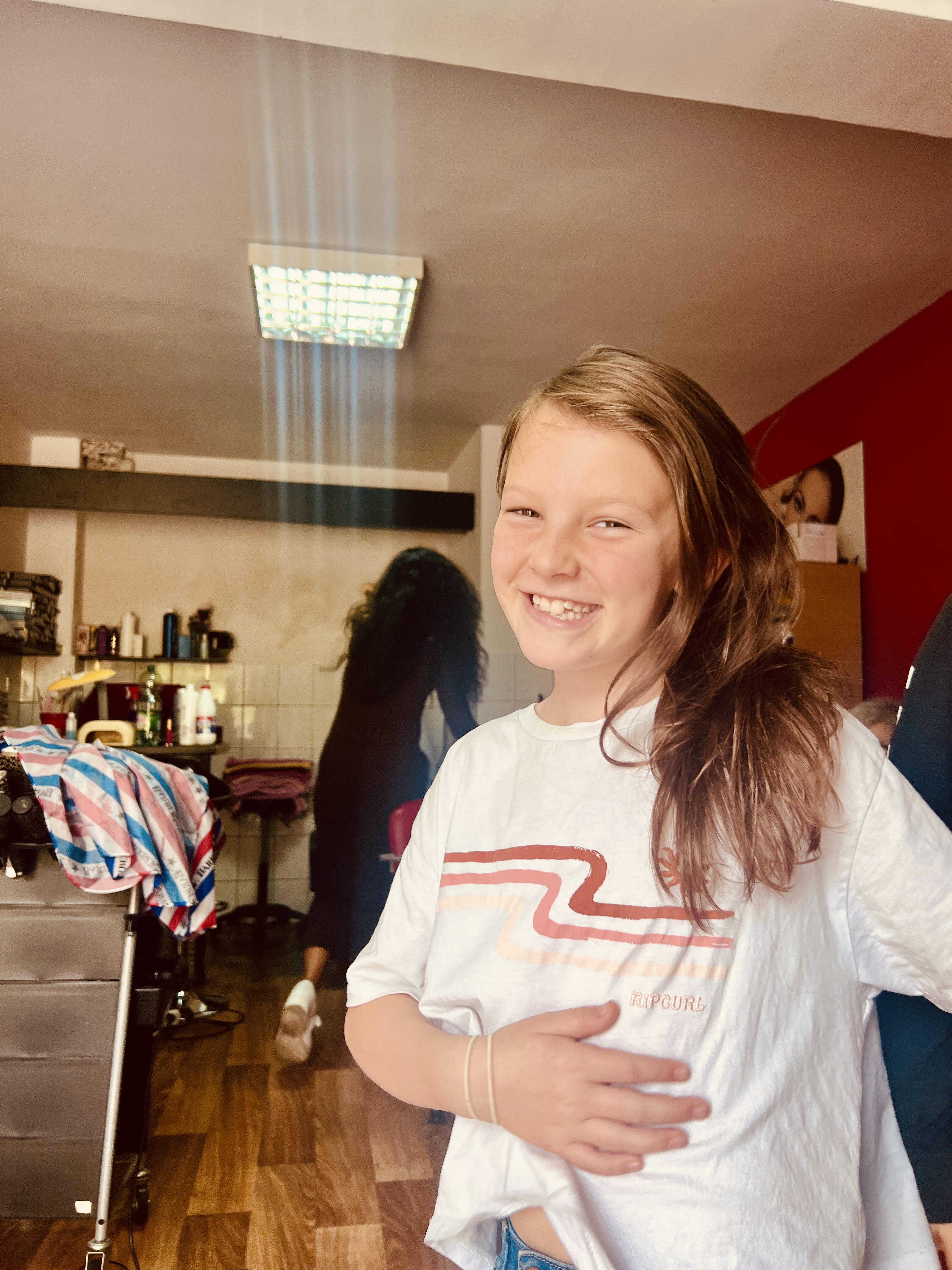
The girls then did the classic tourist activity of getting their hair cut (cheaper than London, and a great opportunity to spend an hour chatting to a local and hearing her stories about growing up in Mostar, and getting moved to Munich as a student before moving back after the war).
Dinner was a traditional ‘dry’ Bosnian restaurant with a jaw dropping view over the river and the famous bridge – just another reminder that this region was a bit ‘different’ to those around it.
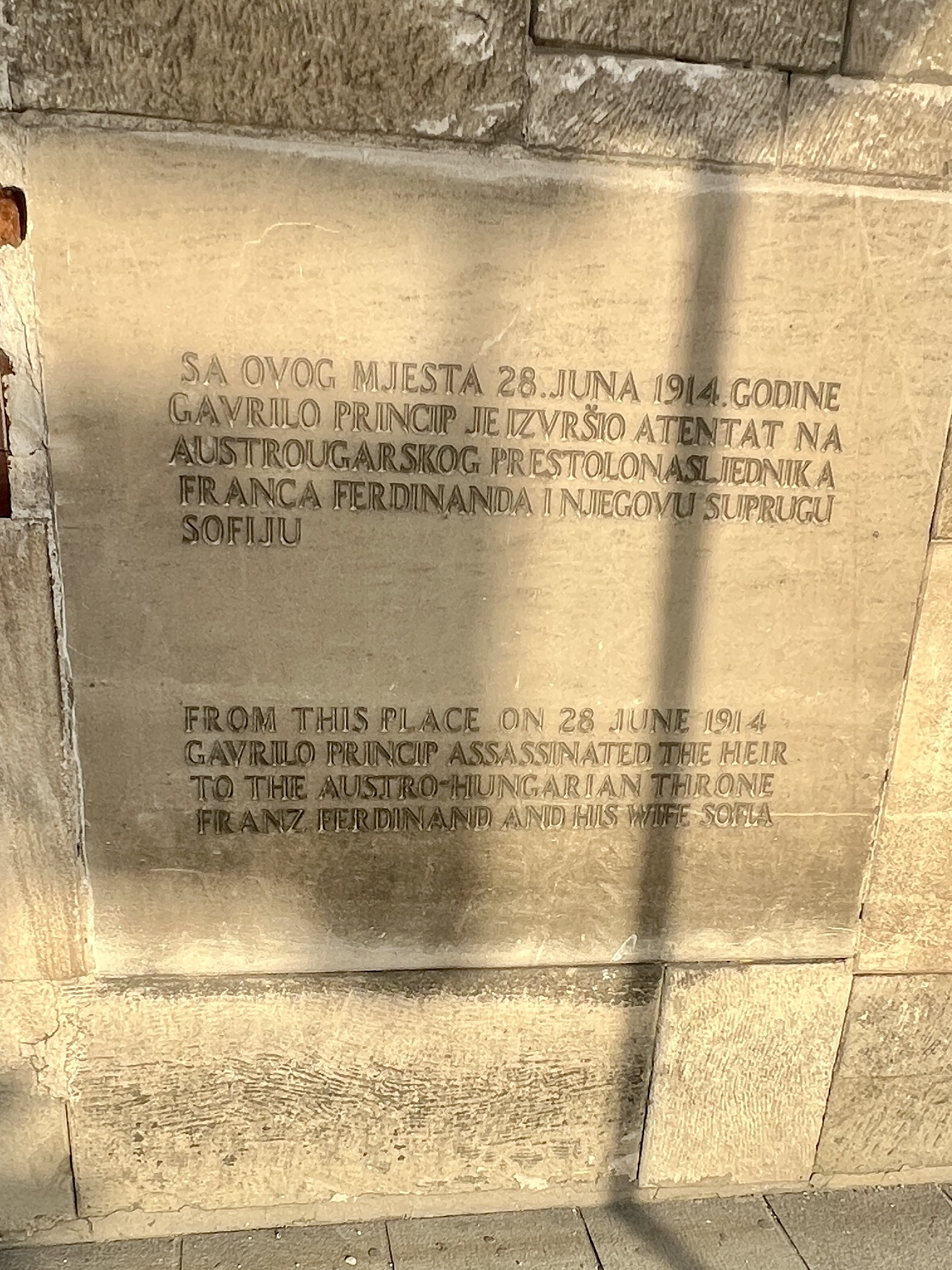
Before we knew it we were back on the road, navigating more of the stunning, mountainous Bosnian countryside on our way to Sarajevo. All we knew about the capital city was that it was subject to the longest siege of any city in modern times (some 1400 days), longer even than the siege of Stalingrad or St Petersburg in WWII; and the fact that it was the site of the assassination of Franz Ferdinand in 1915 which triggered the start of WWI. We had heard mixed reports of the city too, so our expectations had been firmly managed, and we had only given ourselves one night here.
Today was only a short drive of 2 hours, meaning that playlists needed to be heavily curated and there was no room for a misstep. Sienna rose to the challenge with a series of uplifting anthems. Anthony came last (again).
As we pulled into the city, the advice seemed justified. Sarajevo felt bigger than most places we had visited (it is, at 347,000 people), and most buildings show some sign of artillery damage. There are some new builds from the last 30 years that are the exception to this. We pulled into our apartment, some 20 mins walk from the centre, dumped our stuff and headed out to explore.
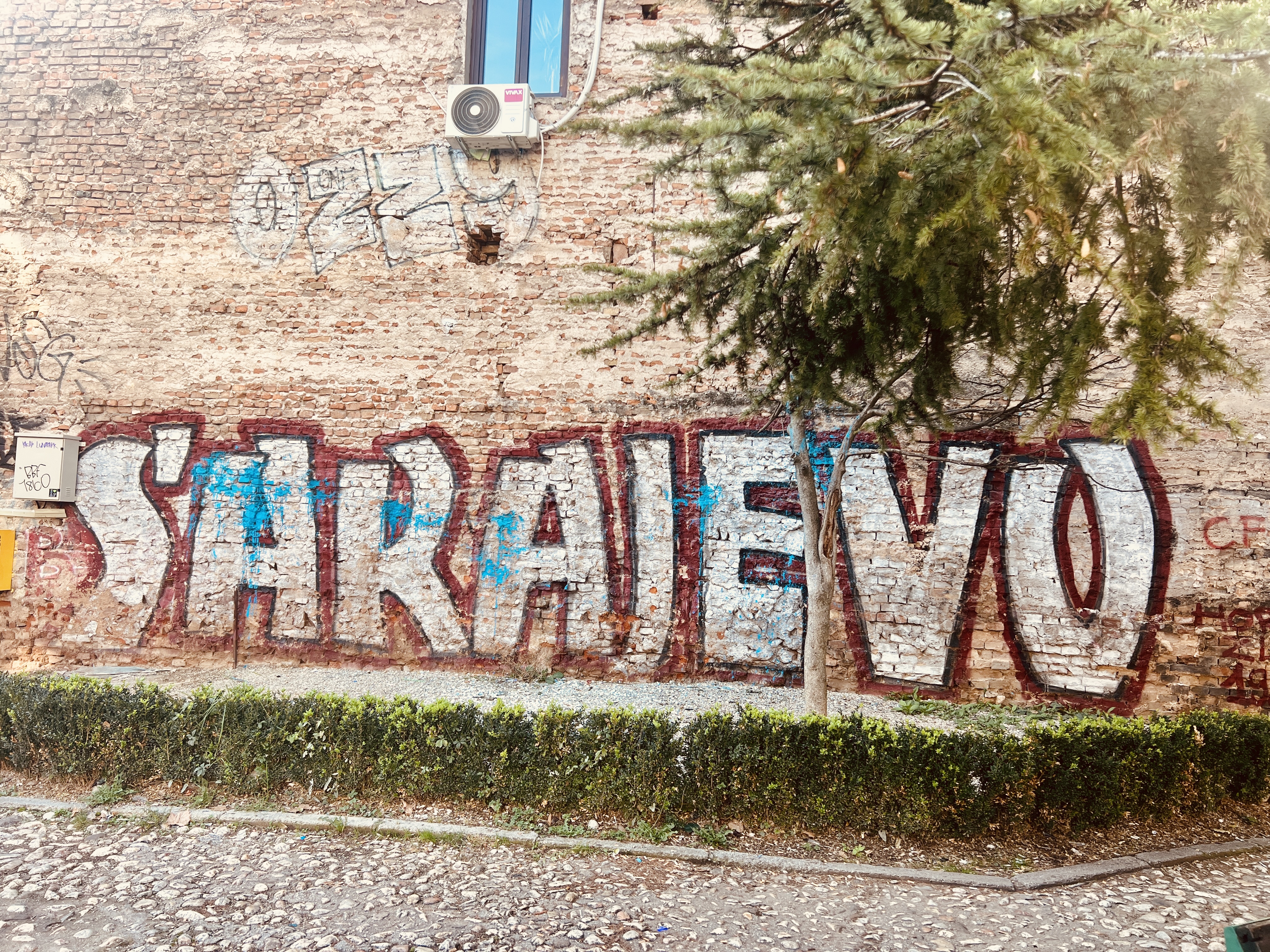
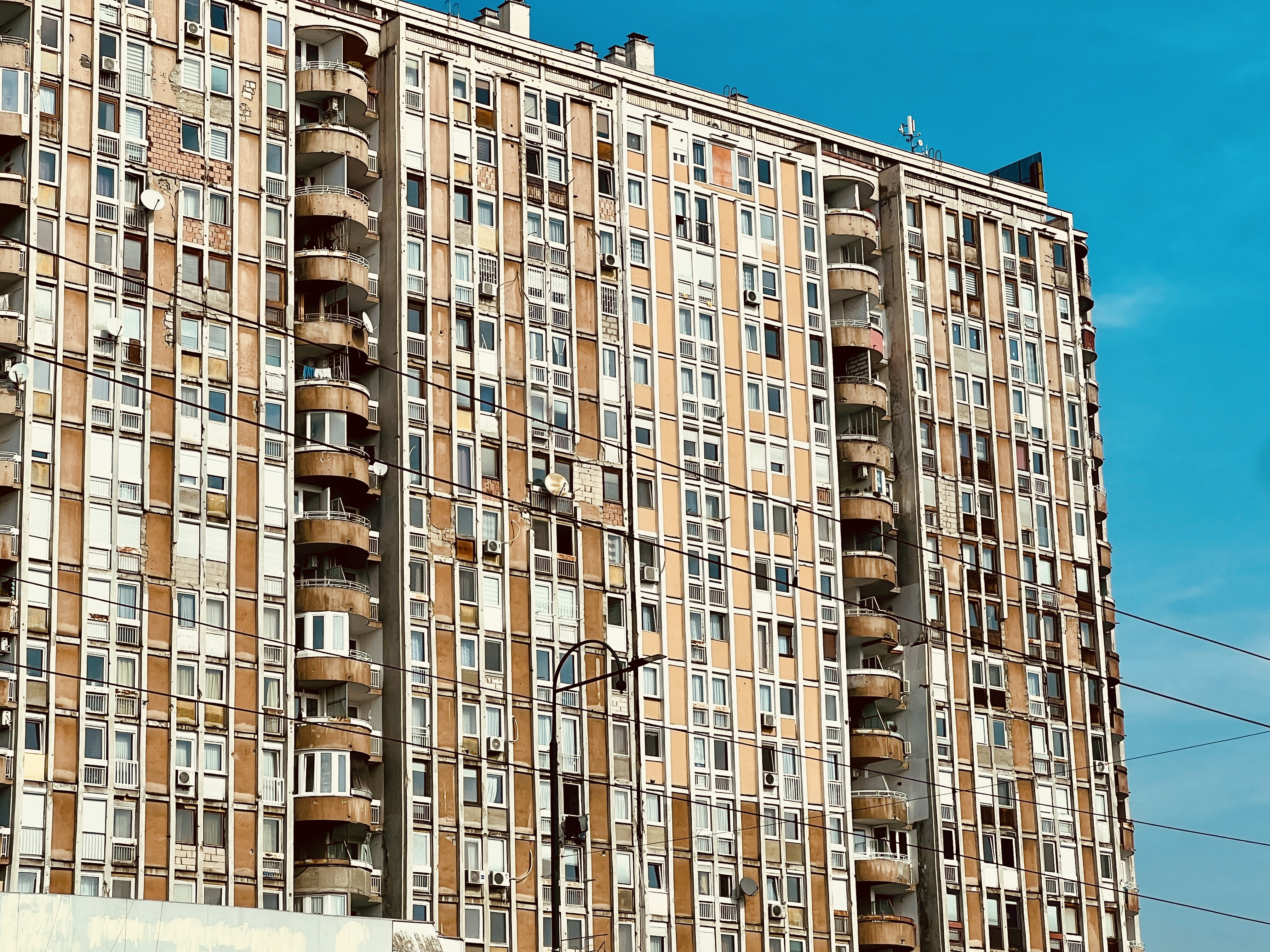
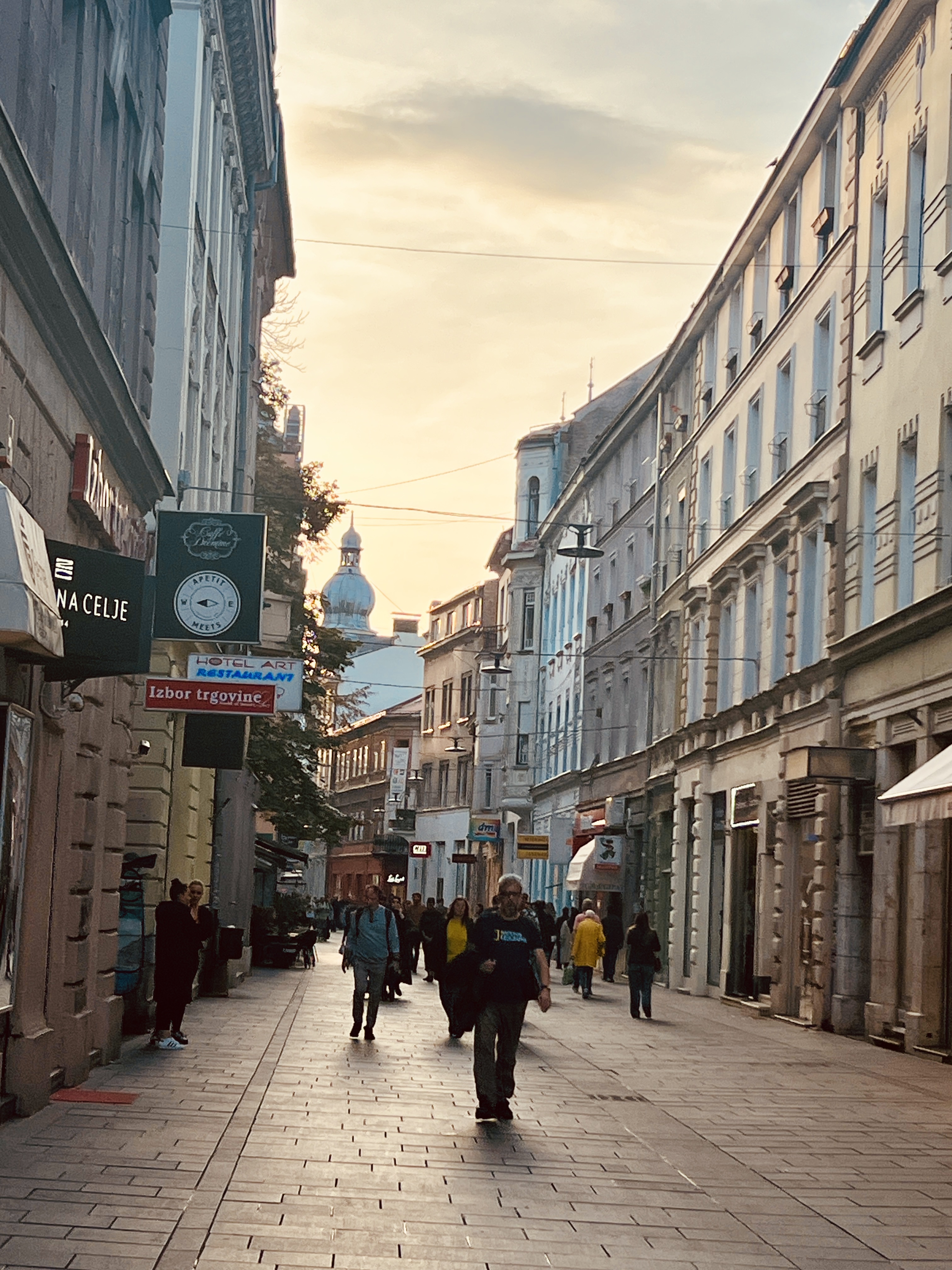
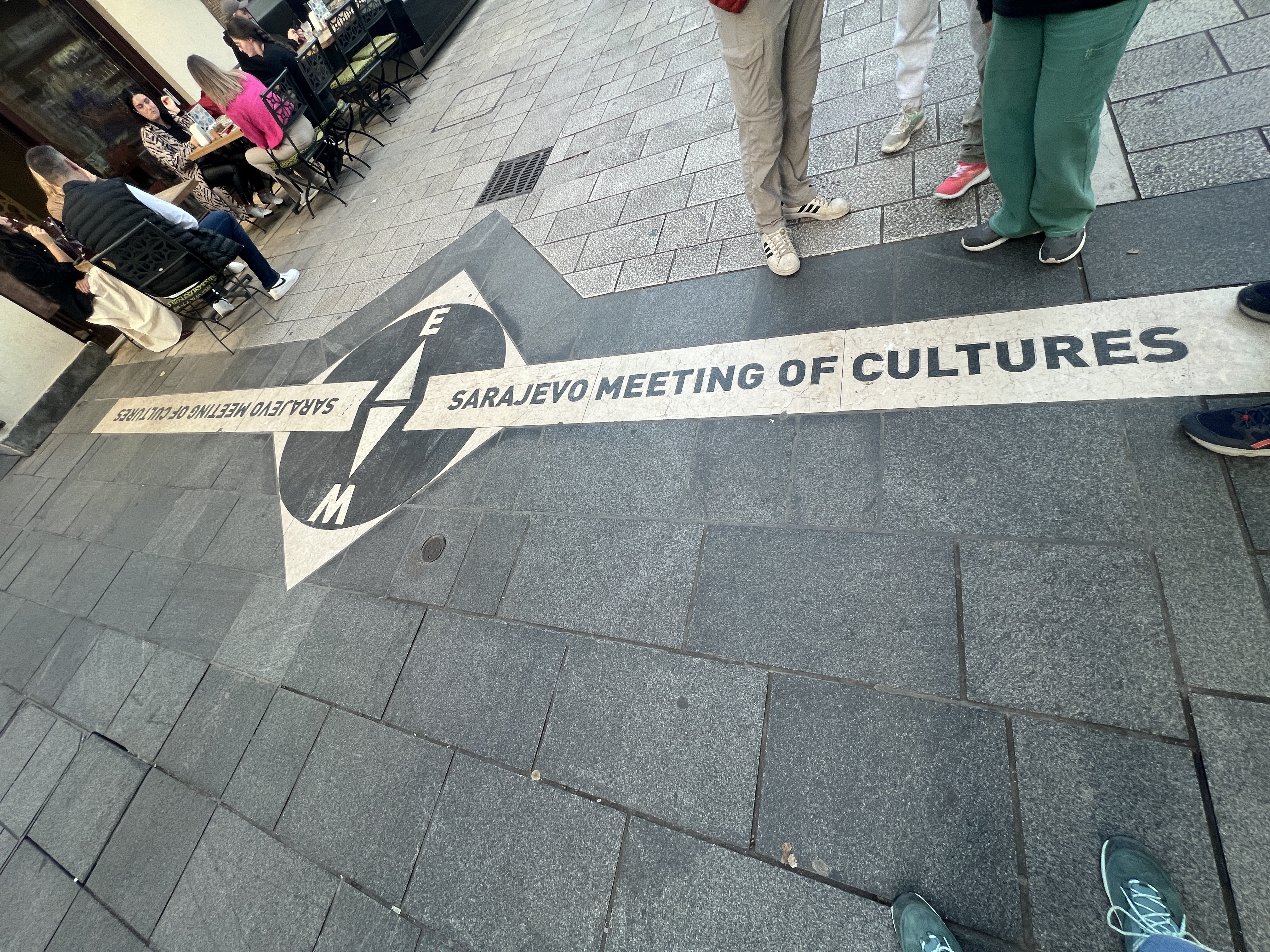
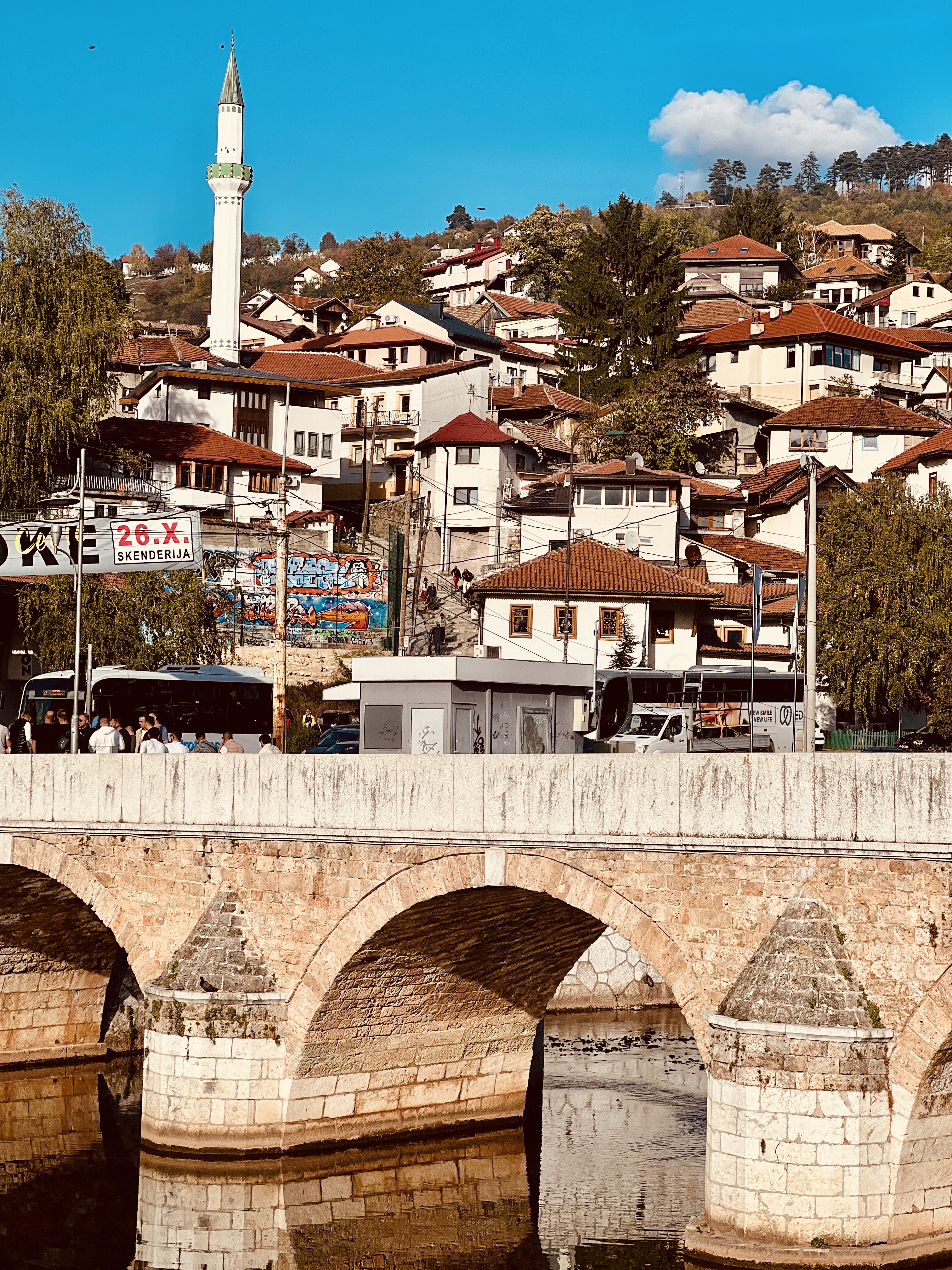
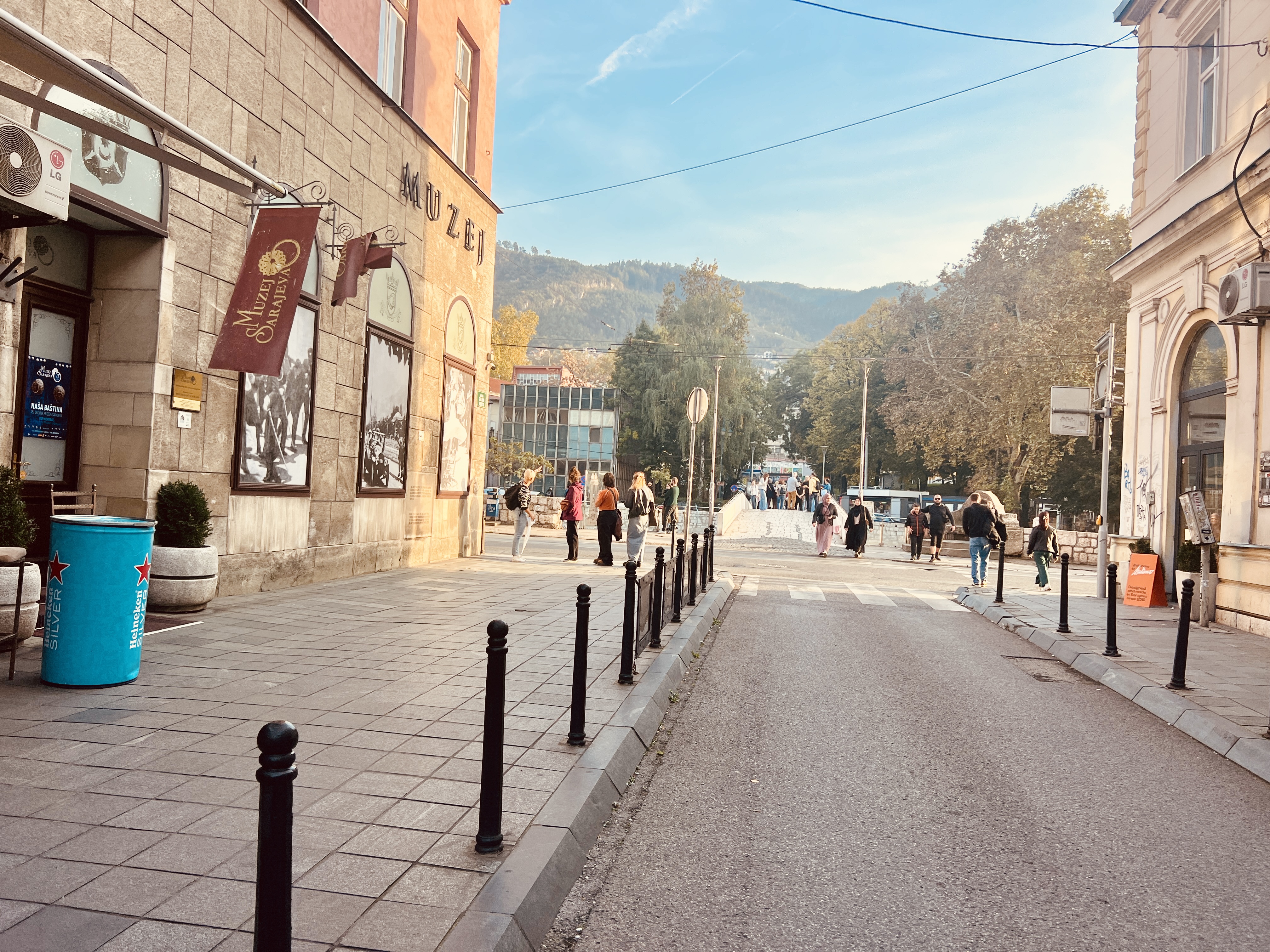
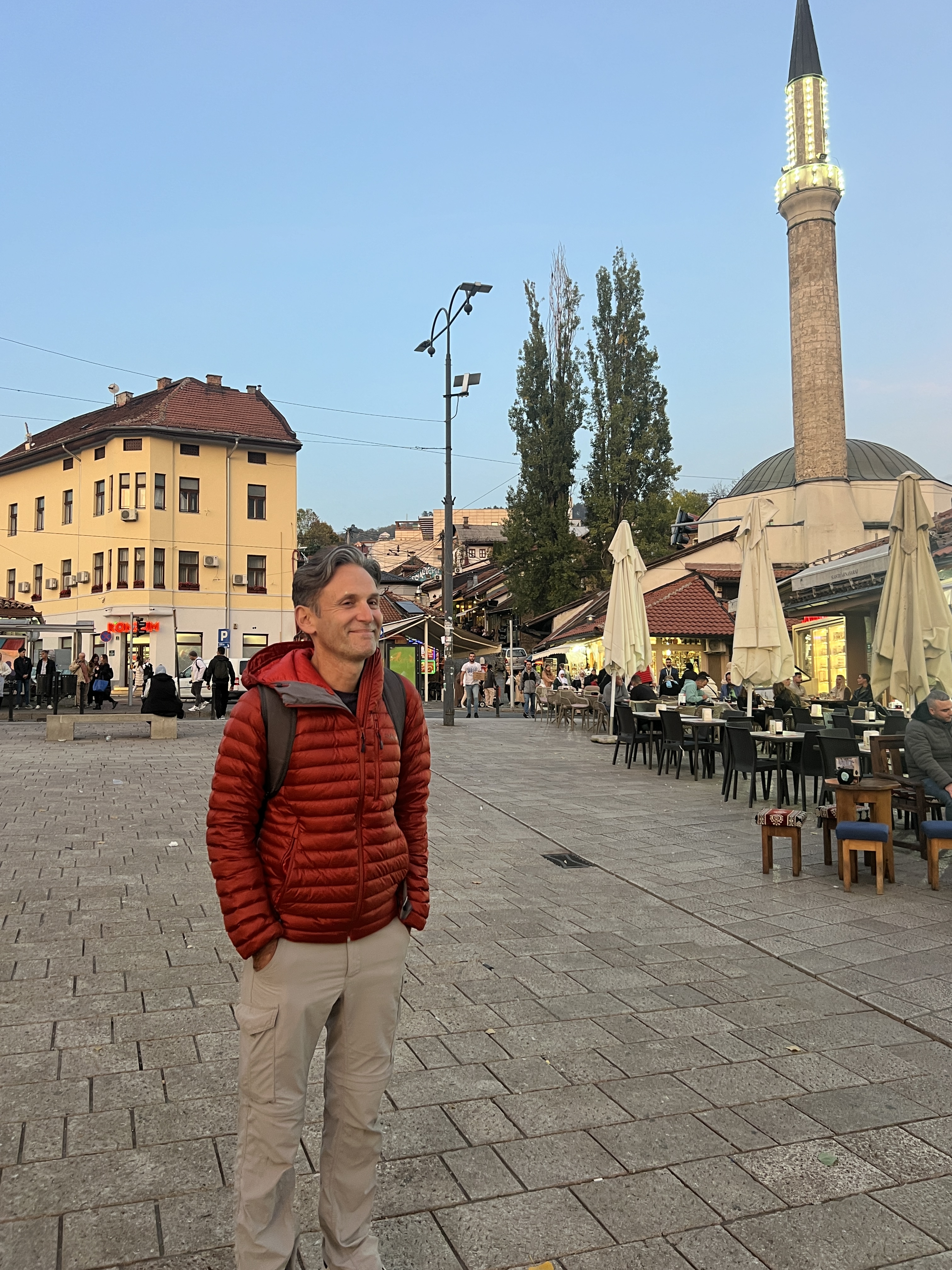
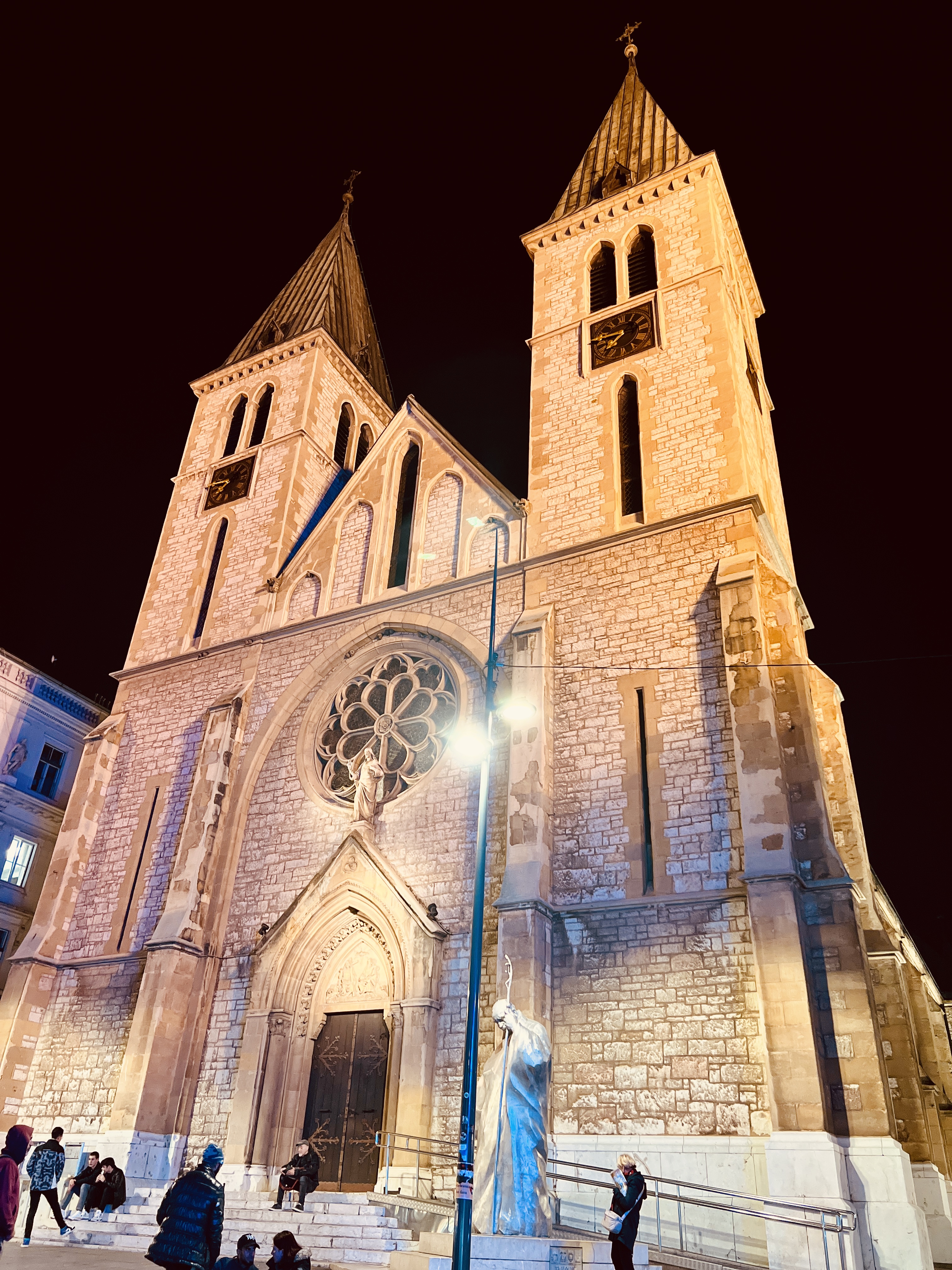
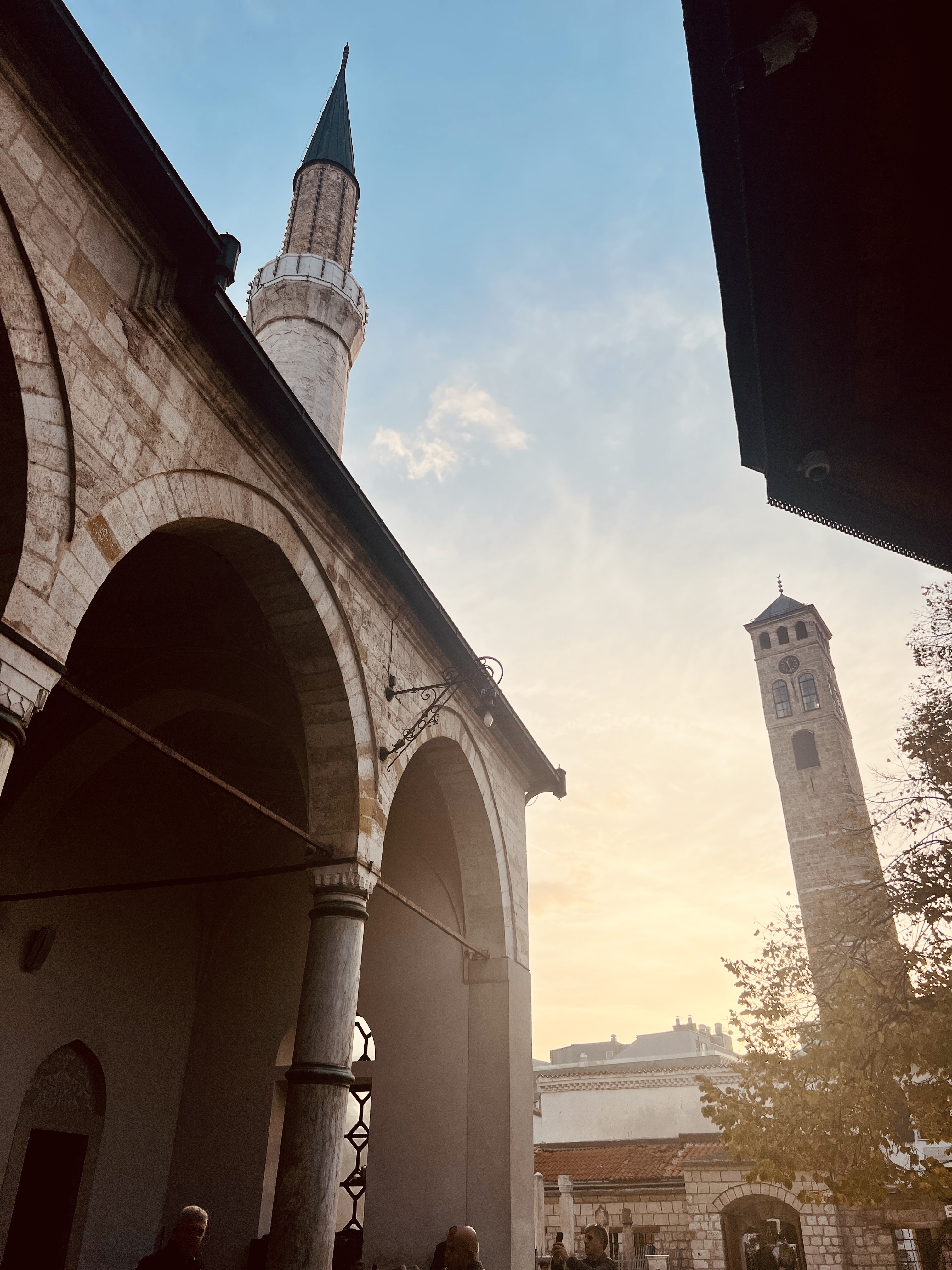
It turns out that the centre of Sarajevo has been restored post the war, and to a much greater scale than has Mostar. The city is divided between the Ottoman section (mostly dating back to the 1400s complete with mosques, souqs, tea shops and a very Middle Eastern vibe) and the Austro Hungarian section where you’ll find modern shops, churches and restaurants. There is literally a line on the street which demarquates the two. The whole place sits alongside a shallow river and is surrounded on all sides by hills – which made it easy for the Bosnian Serb forces to encircle and beseige it.
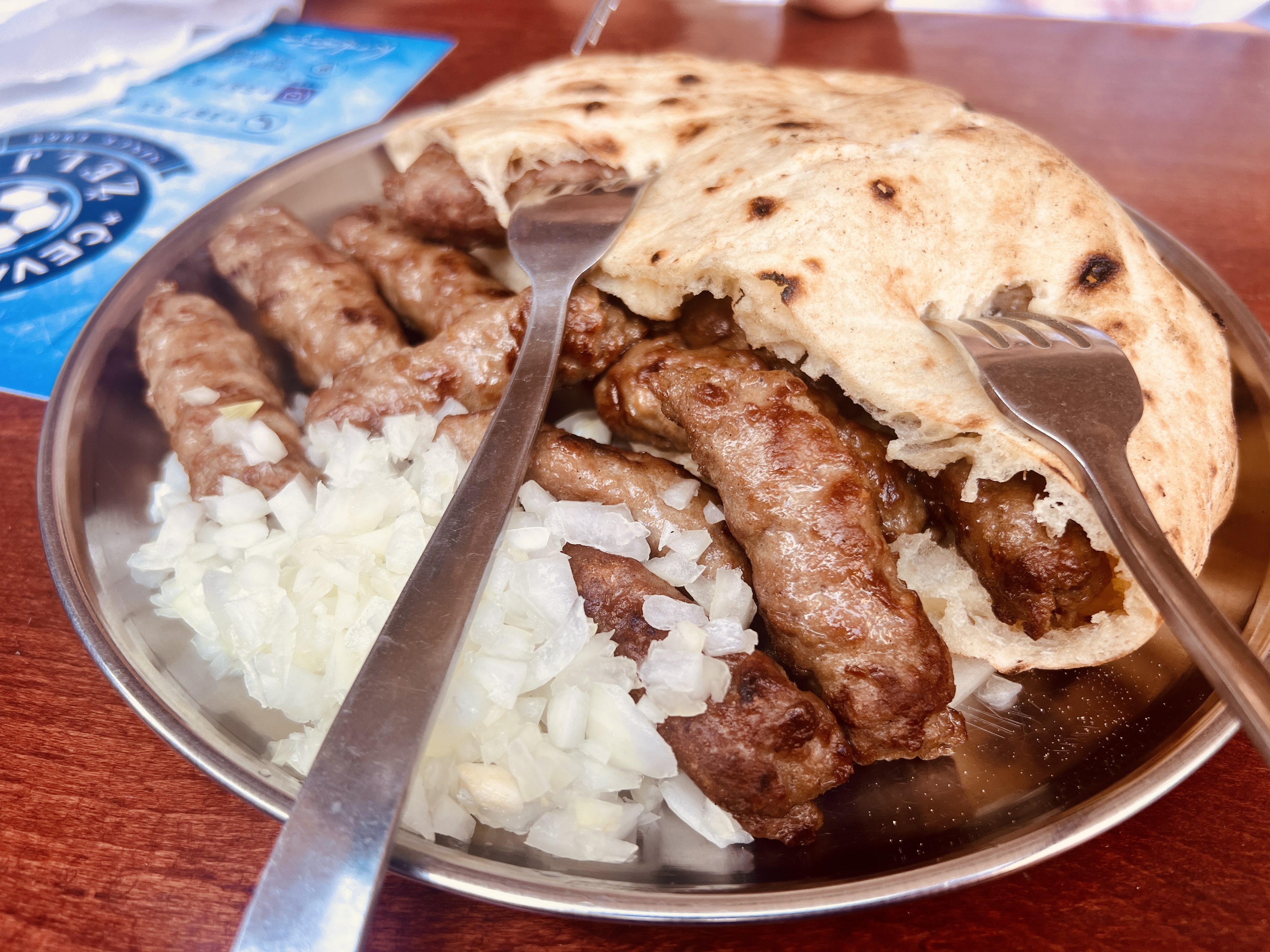
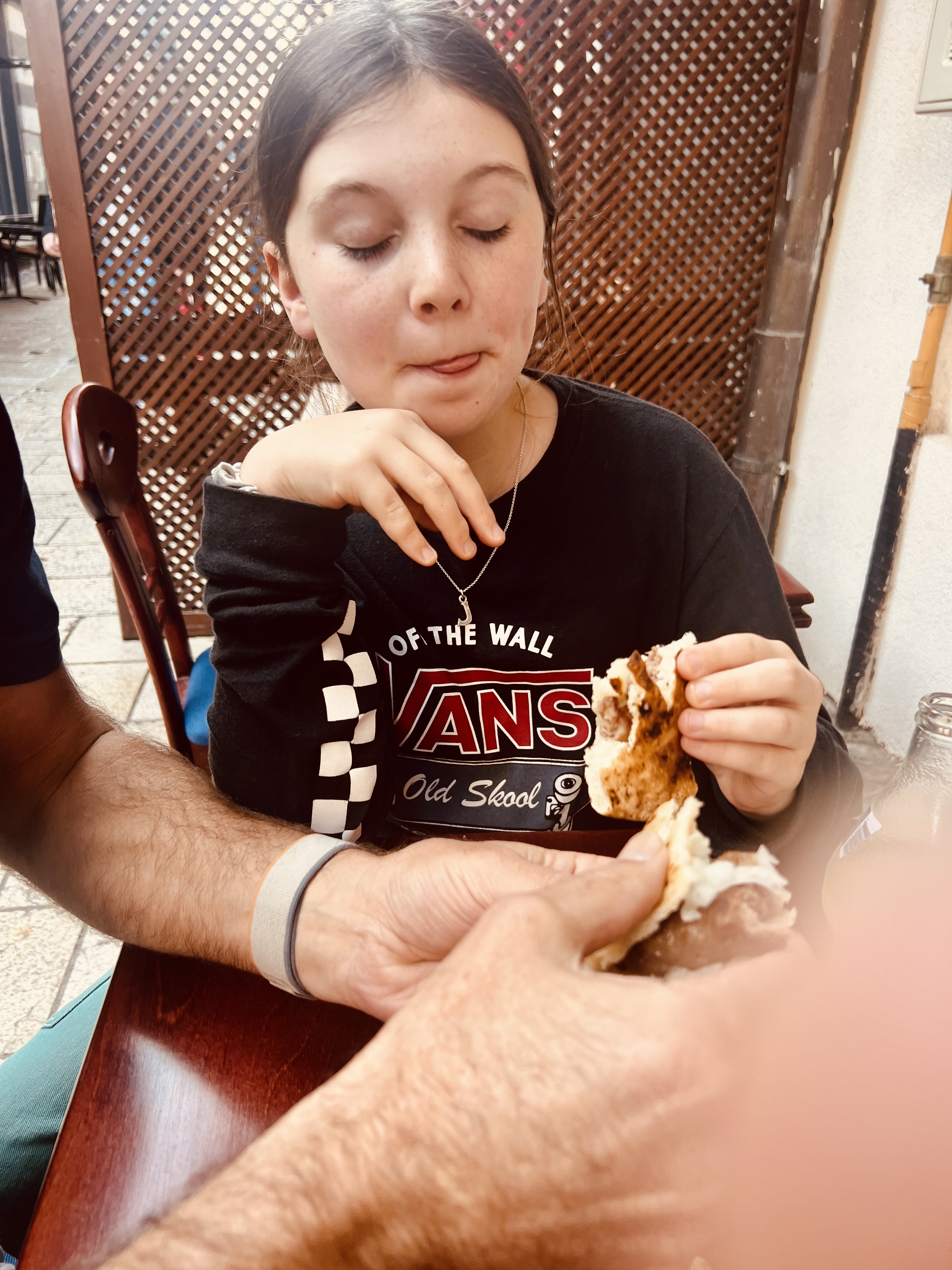
First things first, lunch and of course when in Sarajevo you must eat Ćevapi. And thanks to Ana’s recommendation we found ourselves at Ćevabdžinica Željo. 30 Ćevapi and 3 large flat breads later we were fuelled and ready to go.
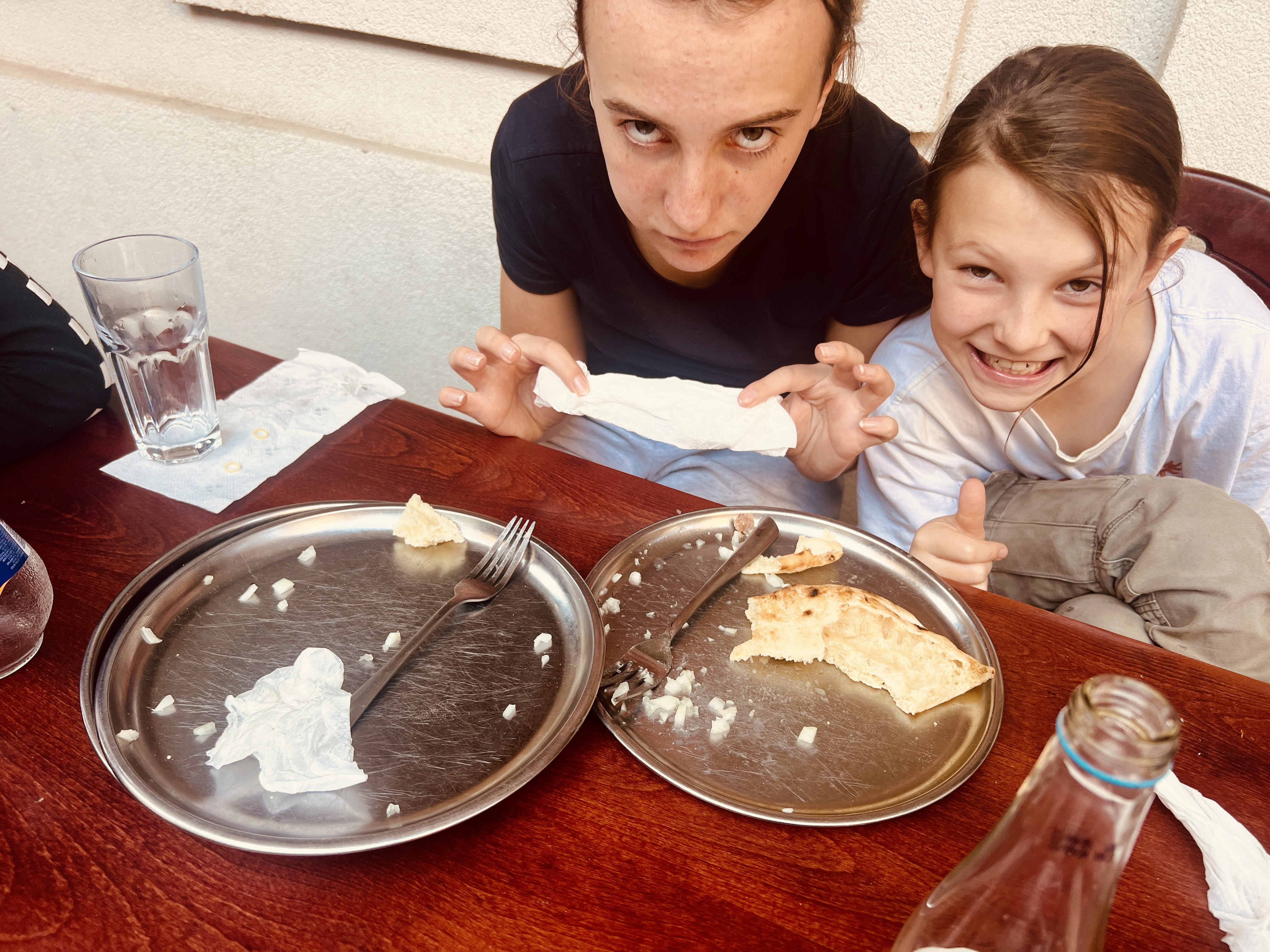
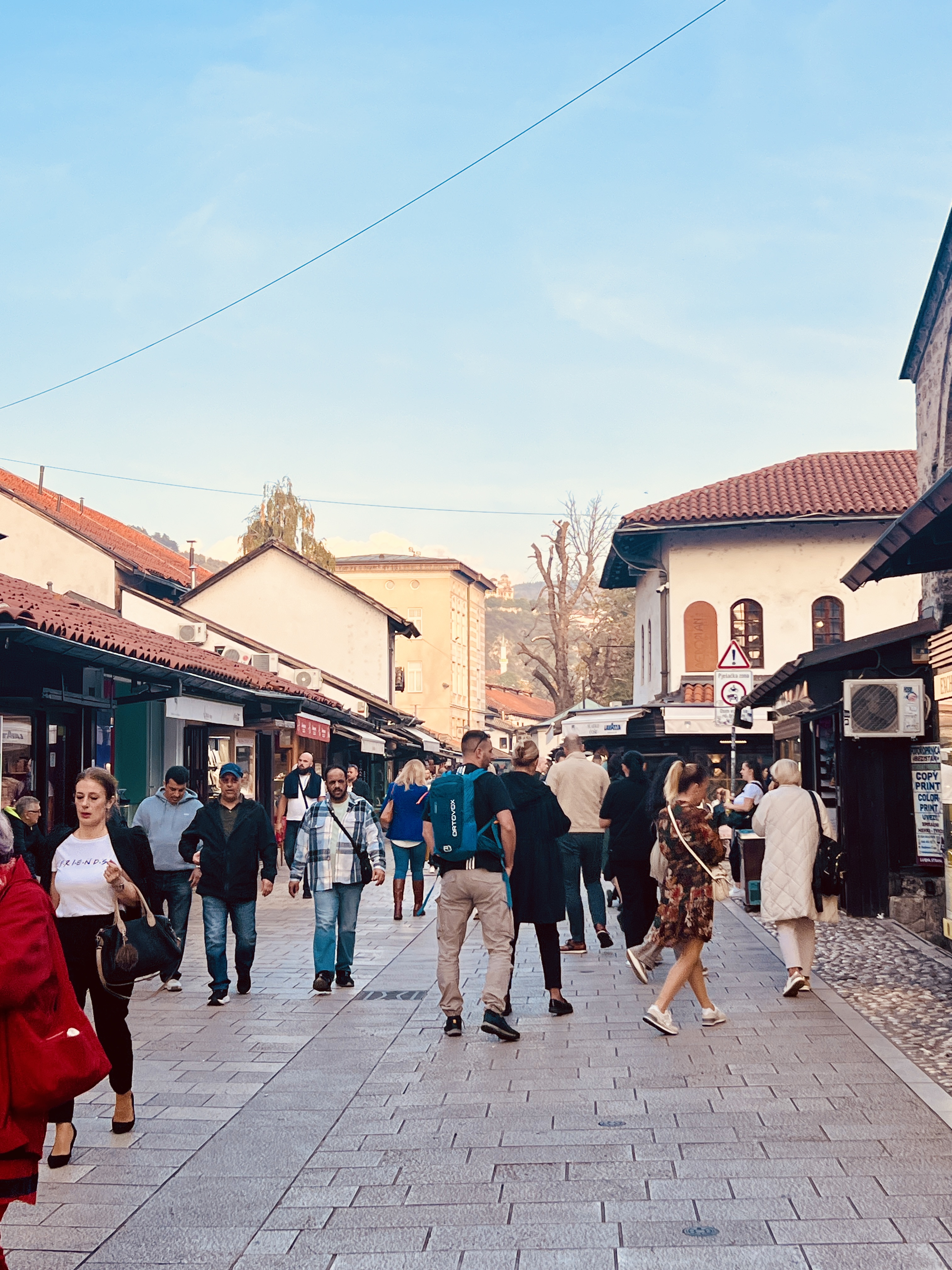
We met our guide Ahmed at the city hall and spent the next 3 hours wandering the streets and learning about the fascinating history of the city and the region. The city centre is bustling and mostly restored – you have to look quite carefully to see the repaired artillery damage. This restoration has been funded by a range of foreign governments – from the Saudis, to Pakstan to Luxembourg to name but a few.
This all gave the place a lovely vibe and it was easy to forget the extent of the damage from the war just 30 years ago. That is, until you start talking to people. The extent of impact of the conflict can not be understated. Our guide was 10 when the city was beseiged, and talked about a childhood of playing with bullets and a world where everyone had family who were killed or injured. Across the country the internal displacement hit more than 50% the population. Literally everyone over the age of 25 was directly impacted, and those who were younger would be impacted by their experience of their parents. Our guide was reticent to talk about the Bosnian War, preferring to talk to more ancient history, and when he did open up it was clear that the pain was still very much fresh.
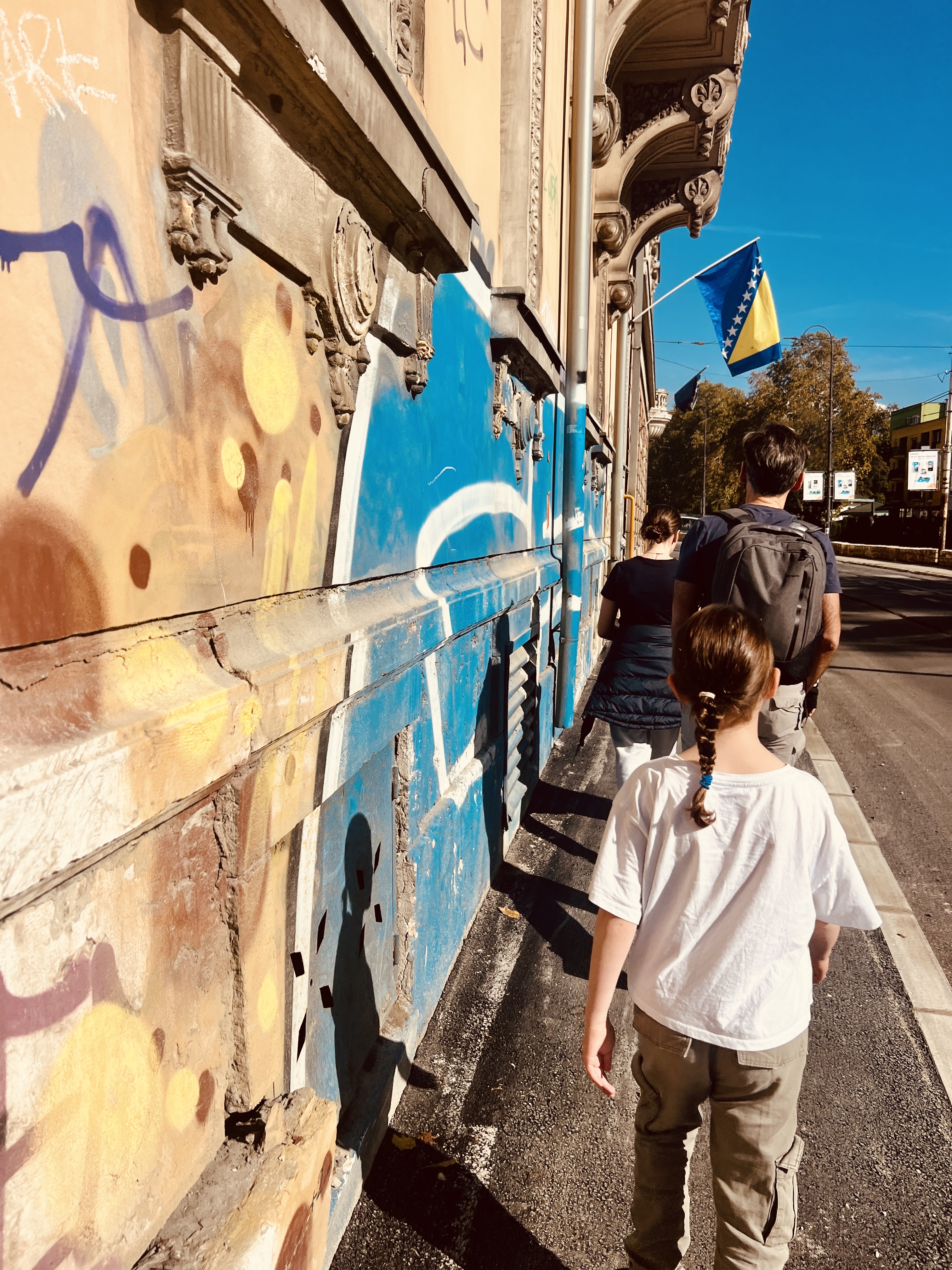
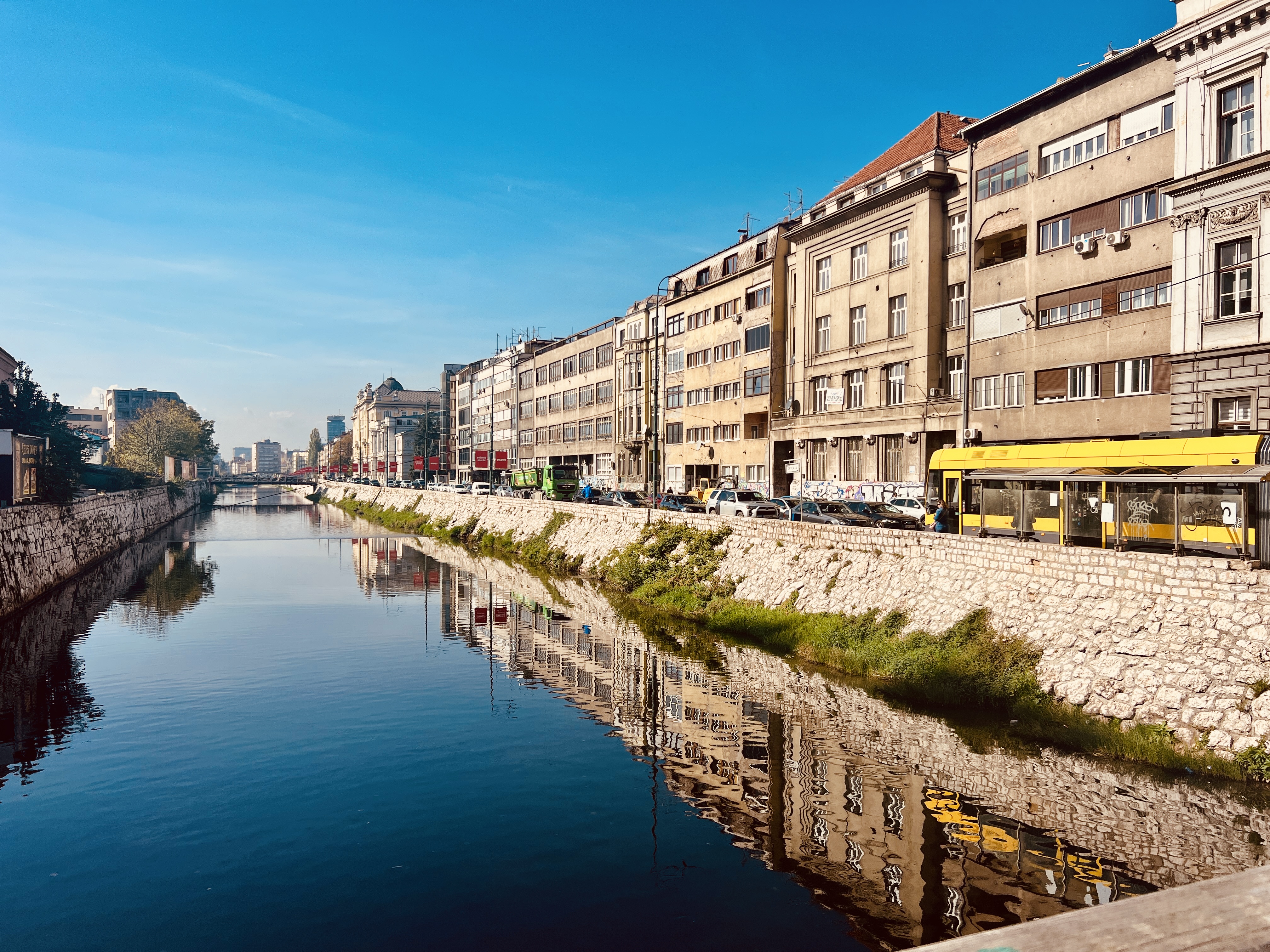
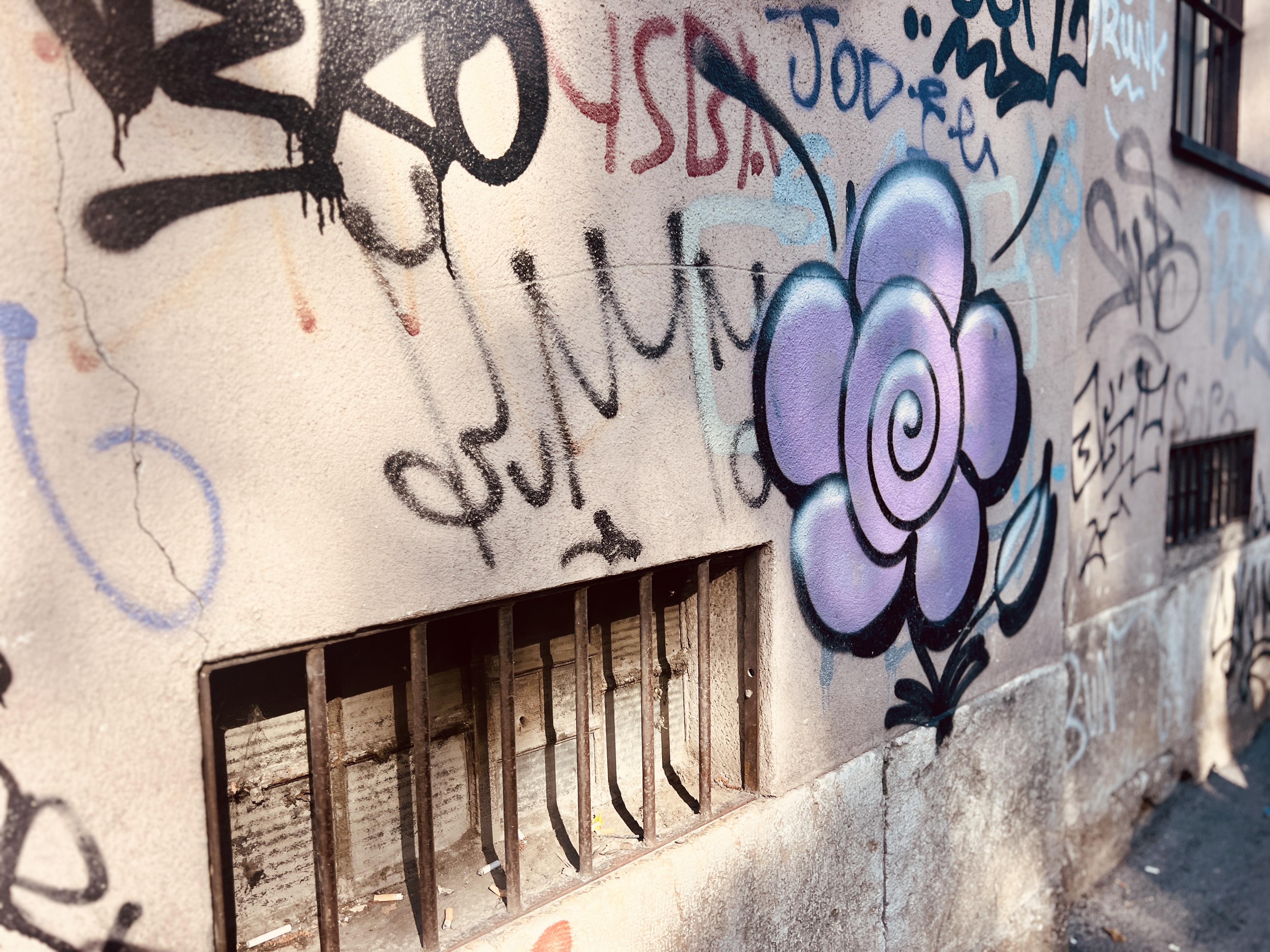
It made us appreciate the extent of impact that conflict brings – not just from a death or injury toll or damage to property, but the less obvious but equally insidious psychological impact that endures long after the treaties have been signed and the buildings repaired.
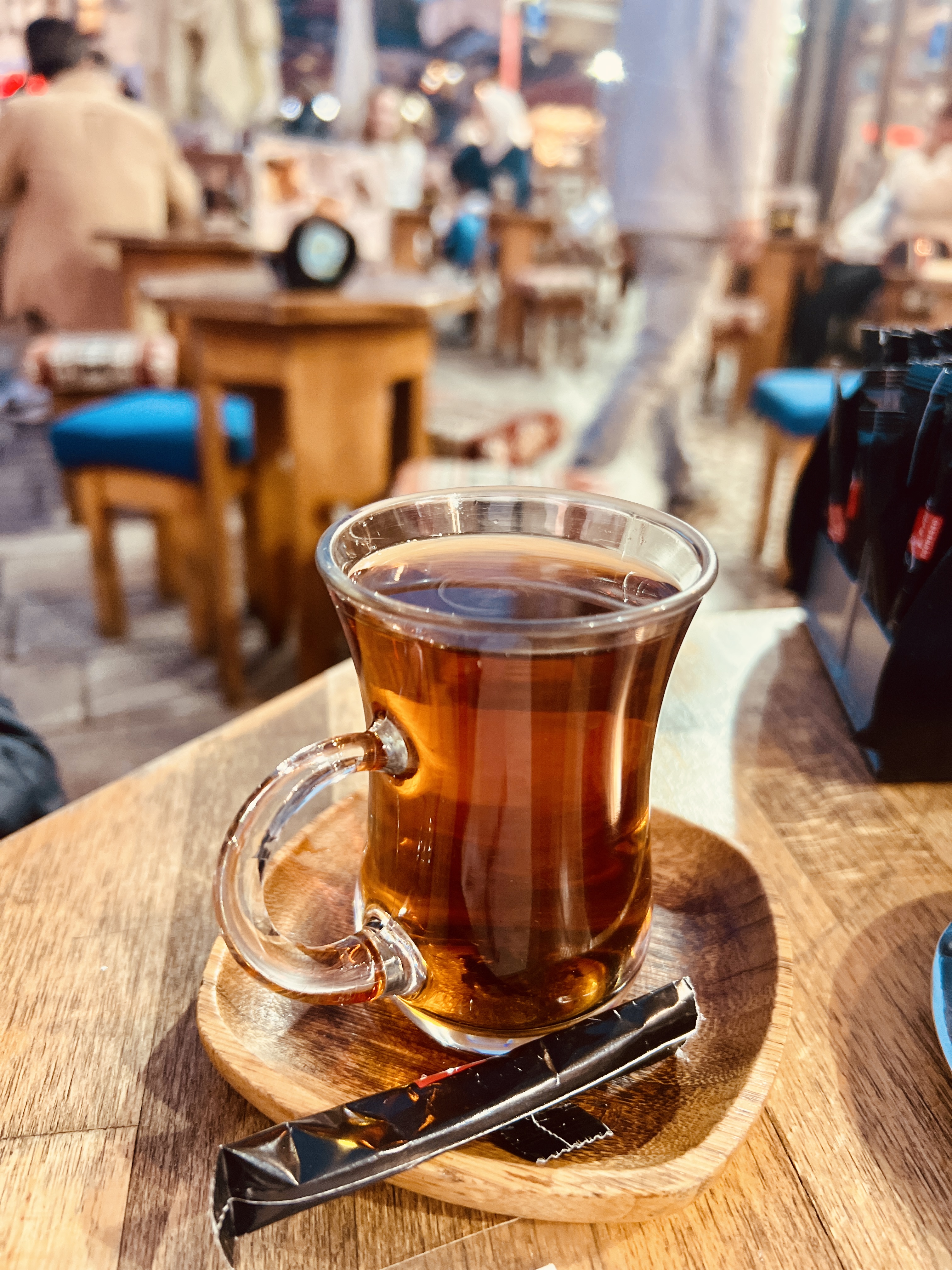
Our brief experience in the city was a mixture of appreciation of the beauty of the place, and the fascinating vibe of a real ‘east meets west’ experience in Central Europe, and a sadness for the impact of the war on the current generation of the people who lived here. It would have been easy to believe that we were in the Middle East whilst we were sipping tea at sunset in the old town.
We could have stayed so much longer.
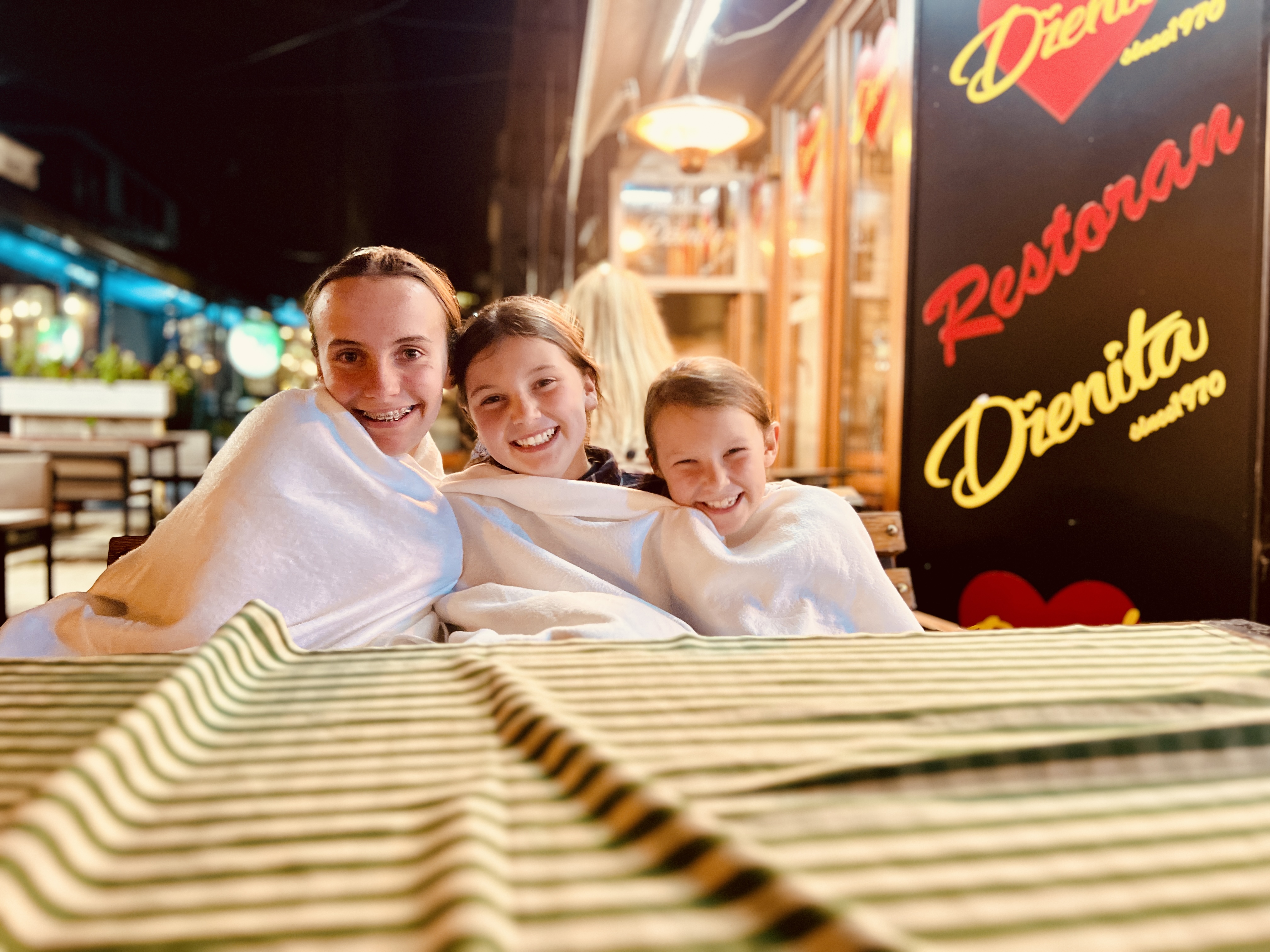
The following morning we hit the road again for our longest drive (some 6 hours) towards our last border crossing – from Bosnia to Serbia and on to Novi Sad. We were treated to more amazing scenery as we headed through ski fields on our way to the border. Bosnia really is the most incredibly beautiful country.
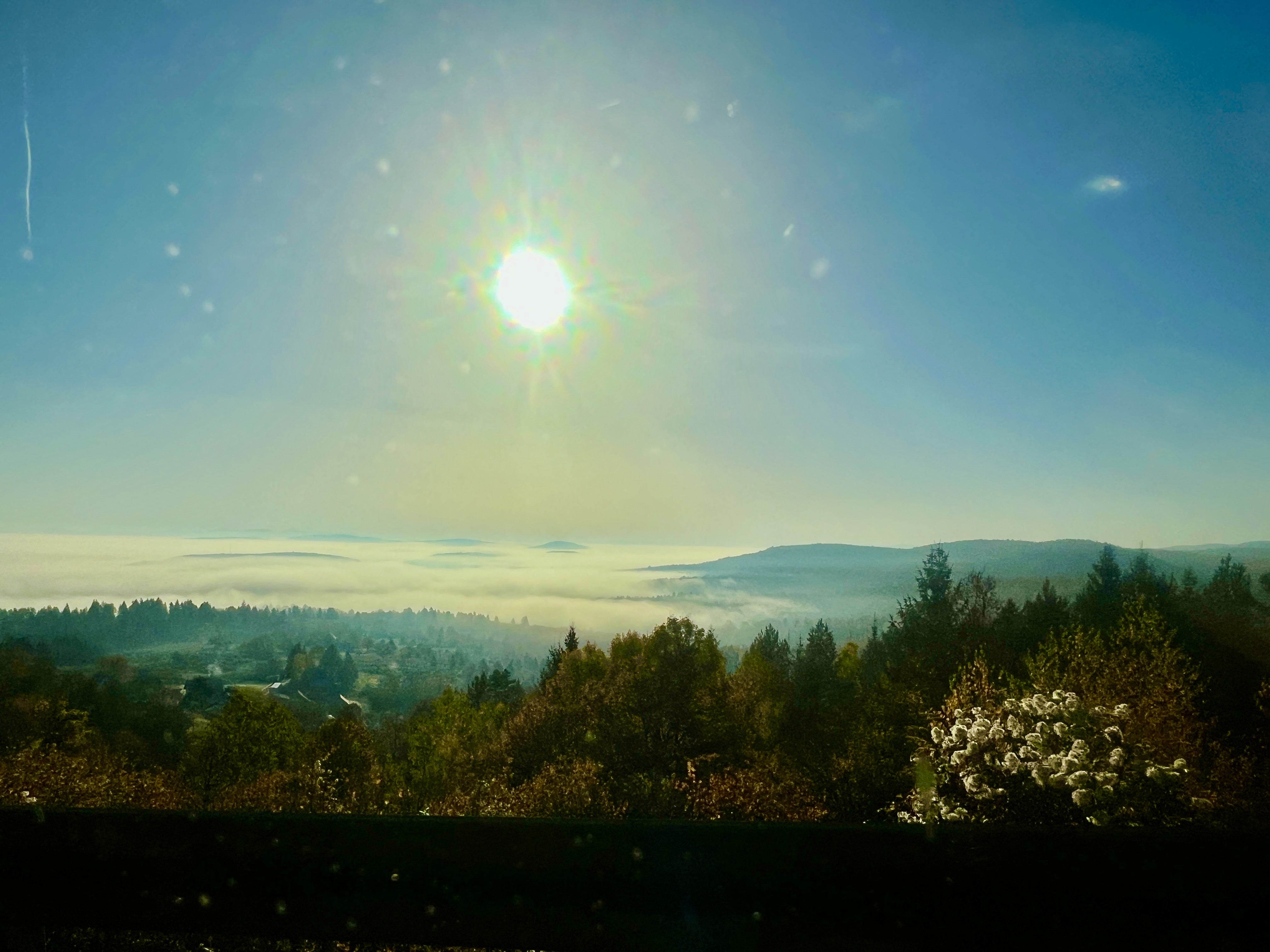
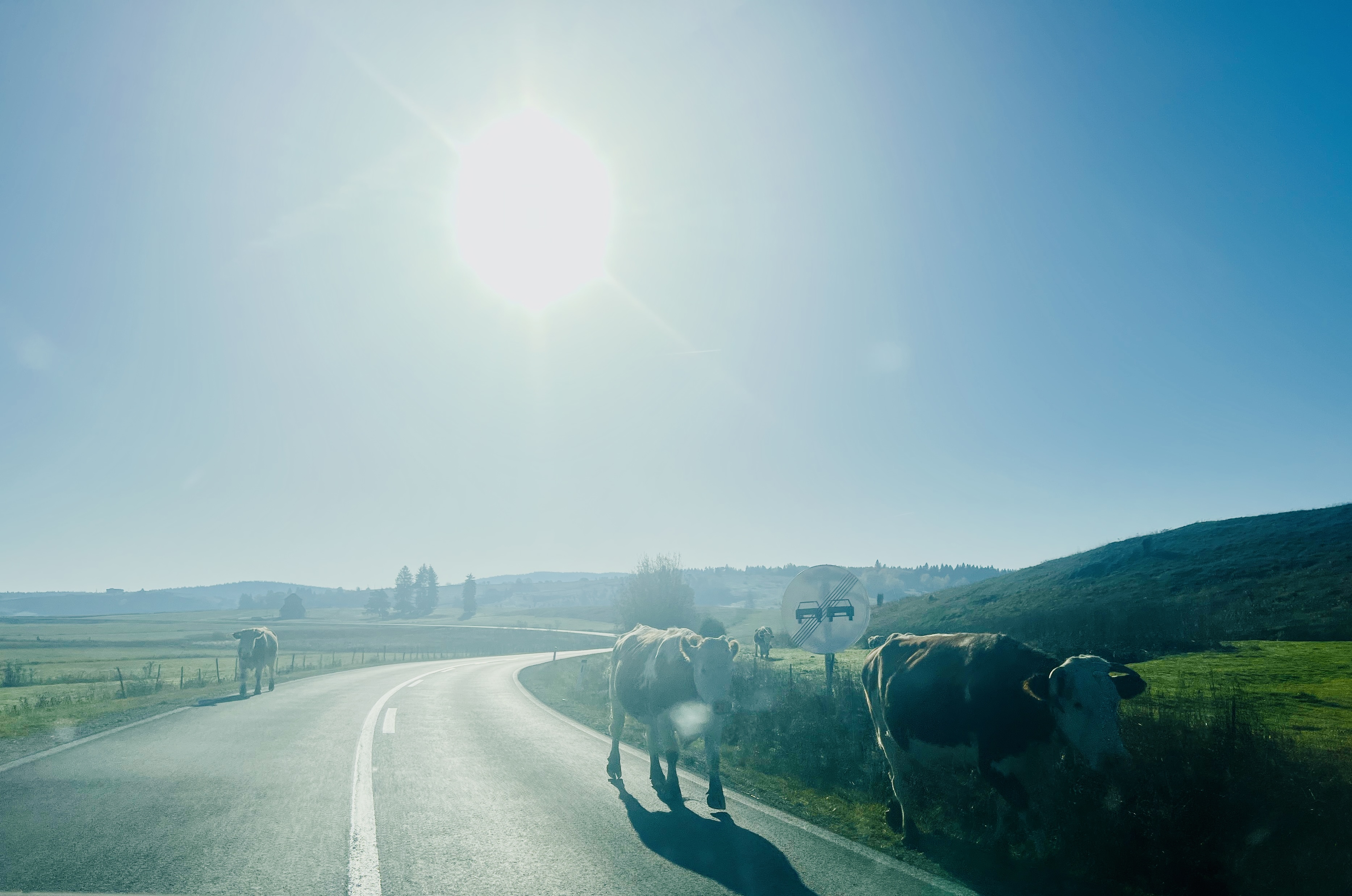
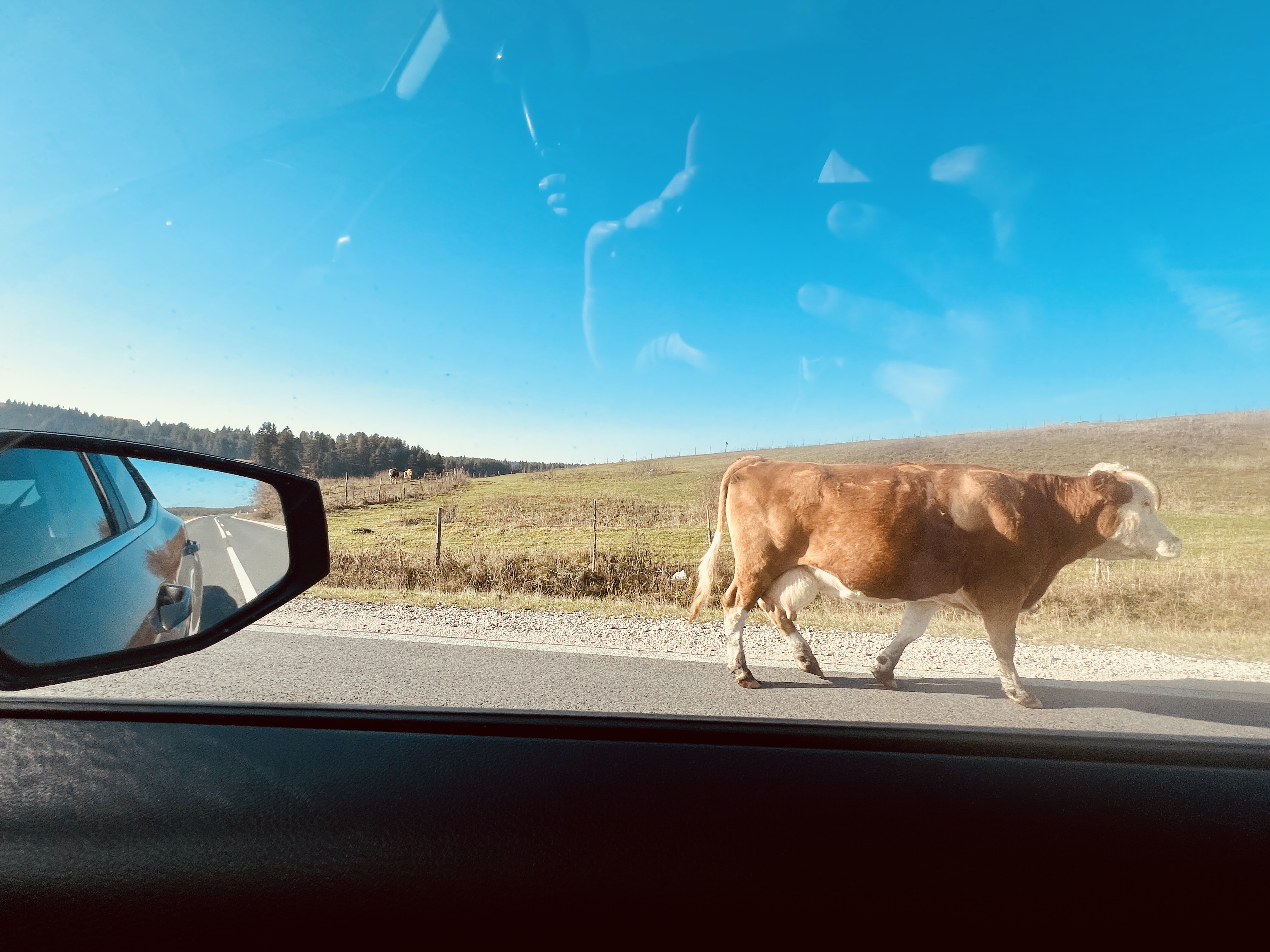
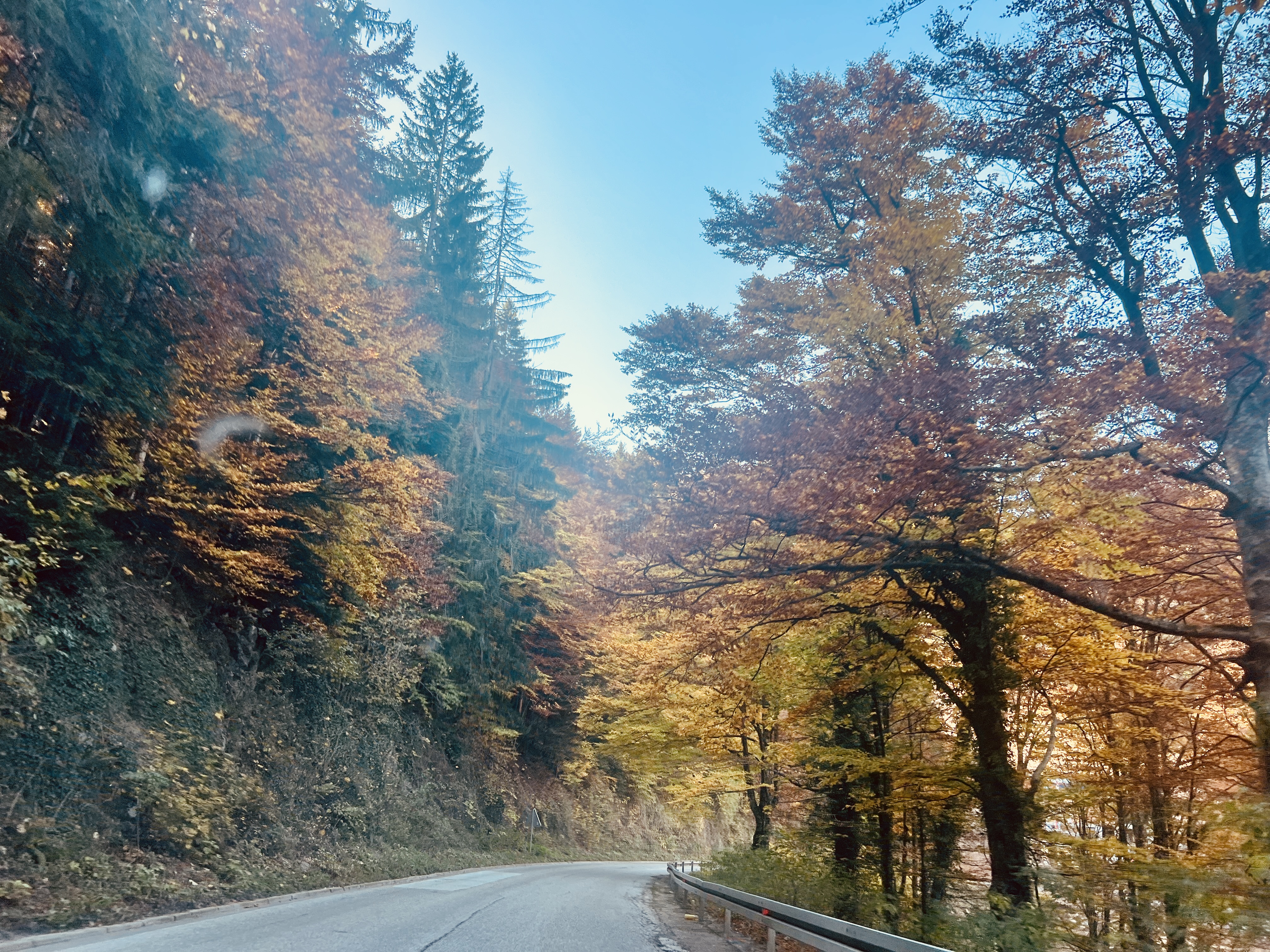
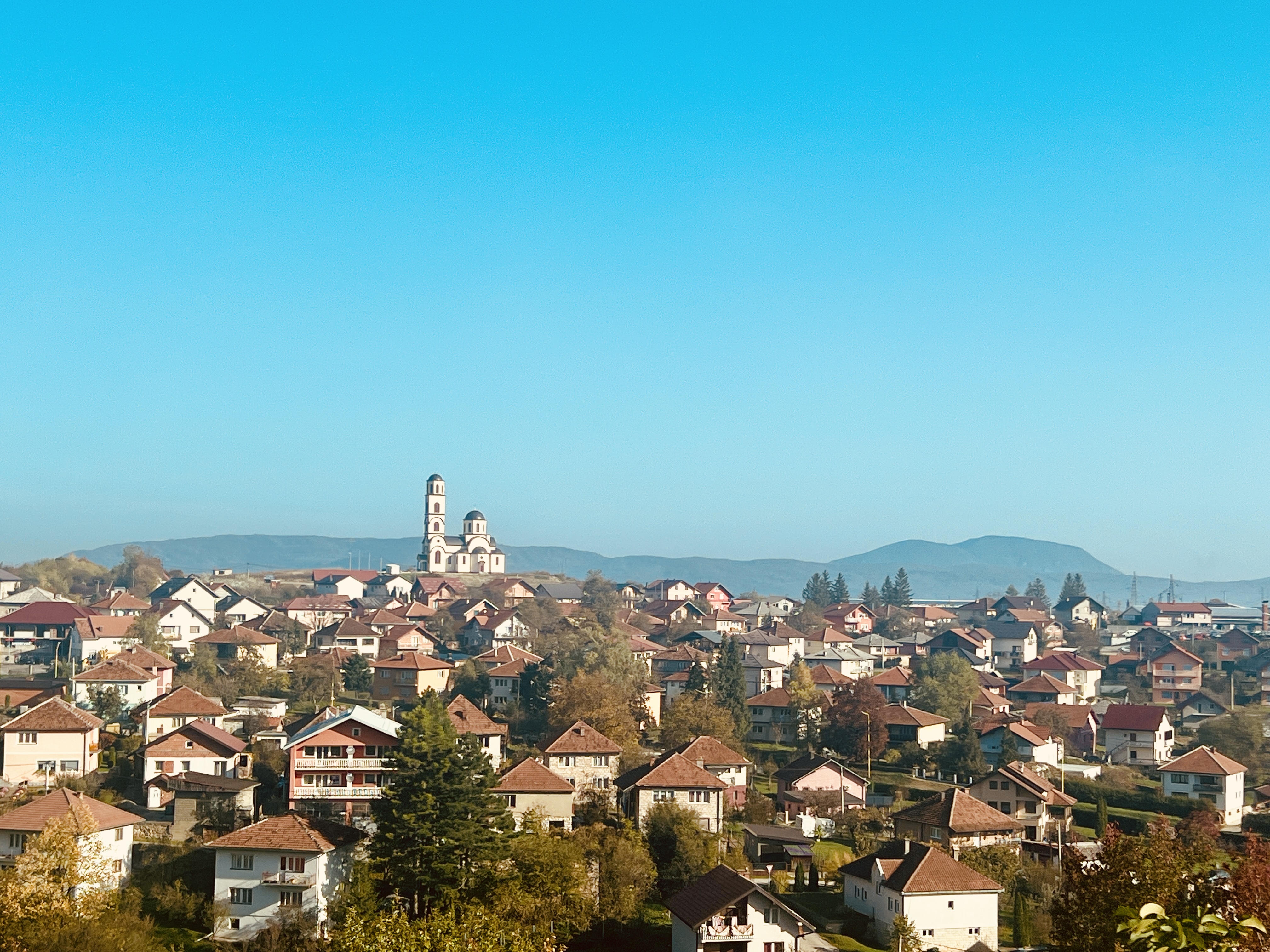
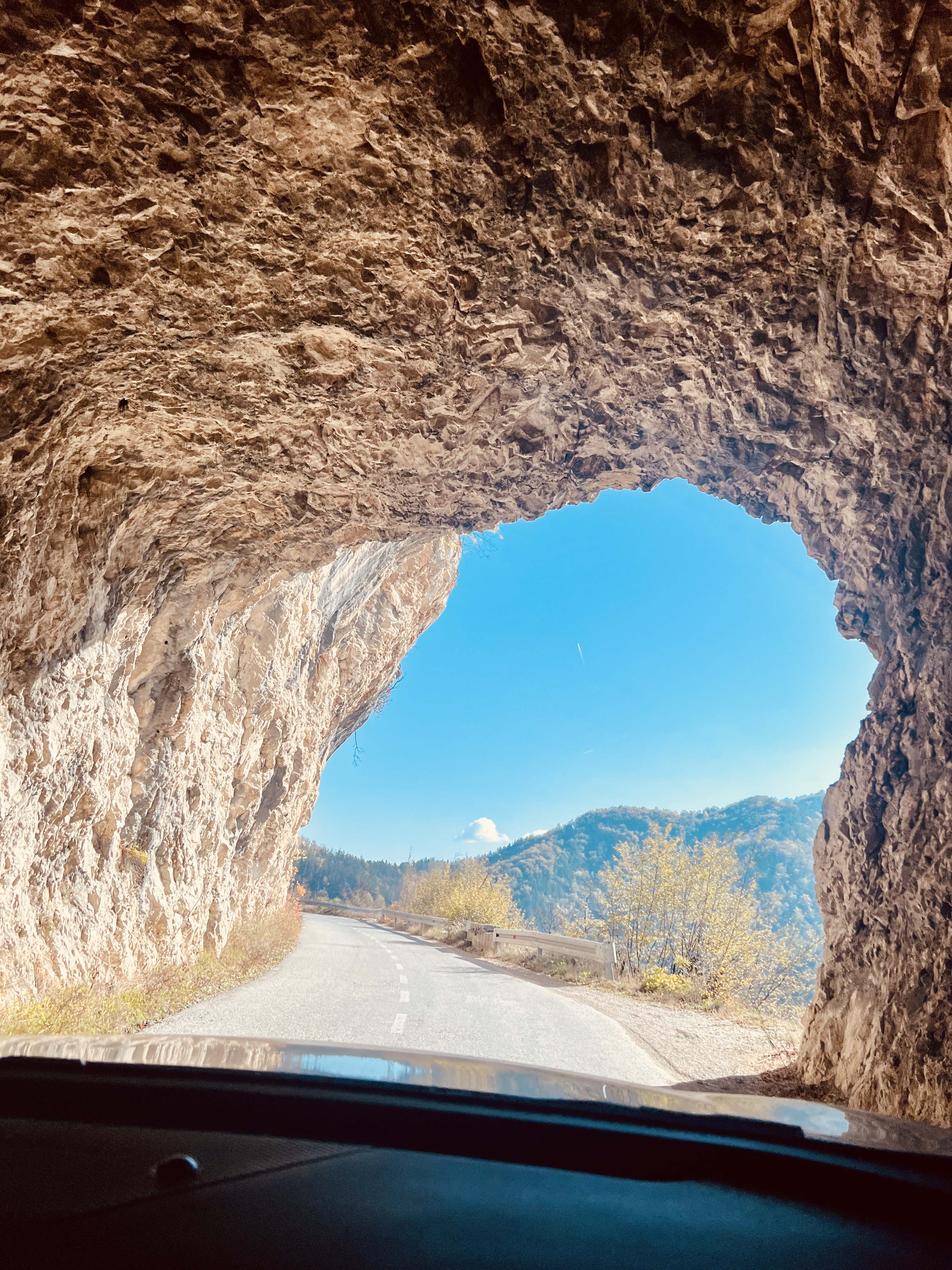
Playlists were longer today – 1 hour each – and interspersed with podcasts on the history of the Balkan Wars and Serbian language tutorials. The peanut gallery in the back seats finally came to its senses as Ant was voted top of the pops today with a compelling journey of Australian rock to uplifting trance, Brit Pop and Italian classics. No doubt the girls were just feeling sorry for me being last all the time, but I’ll take it.
As we crossed into the Srbska Republic the script changed from Latin to Cyrillic, and we immediately started trying to decipher various signs. The first one we cracked was ‘Zona Skola’ or school zone, which meant that every time we passed a school zone for the rest of the trip, we would all need to proudly call this out. We will never look at another school zone sign the same way again!
Before we crossed the border we took a brief detour to the town of Srebenica, the site of the biggest massacre in the Bosnia War and the trigger for NATO bombings. The museum itself was shut but we got the opportunity to wander around the incredibly moving cemetery and pay our respects to the 8300 civilians who were massacred across 3 days by the Republika Srpska forces. Seeing the ages of the victims – starting at 14 years old – really hit it home for our girls, and started some really challenging conversations around what it would have been like living in this beautiful country during the conflict. This is why we visit these places.
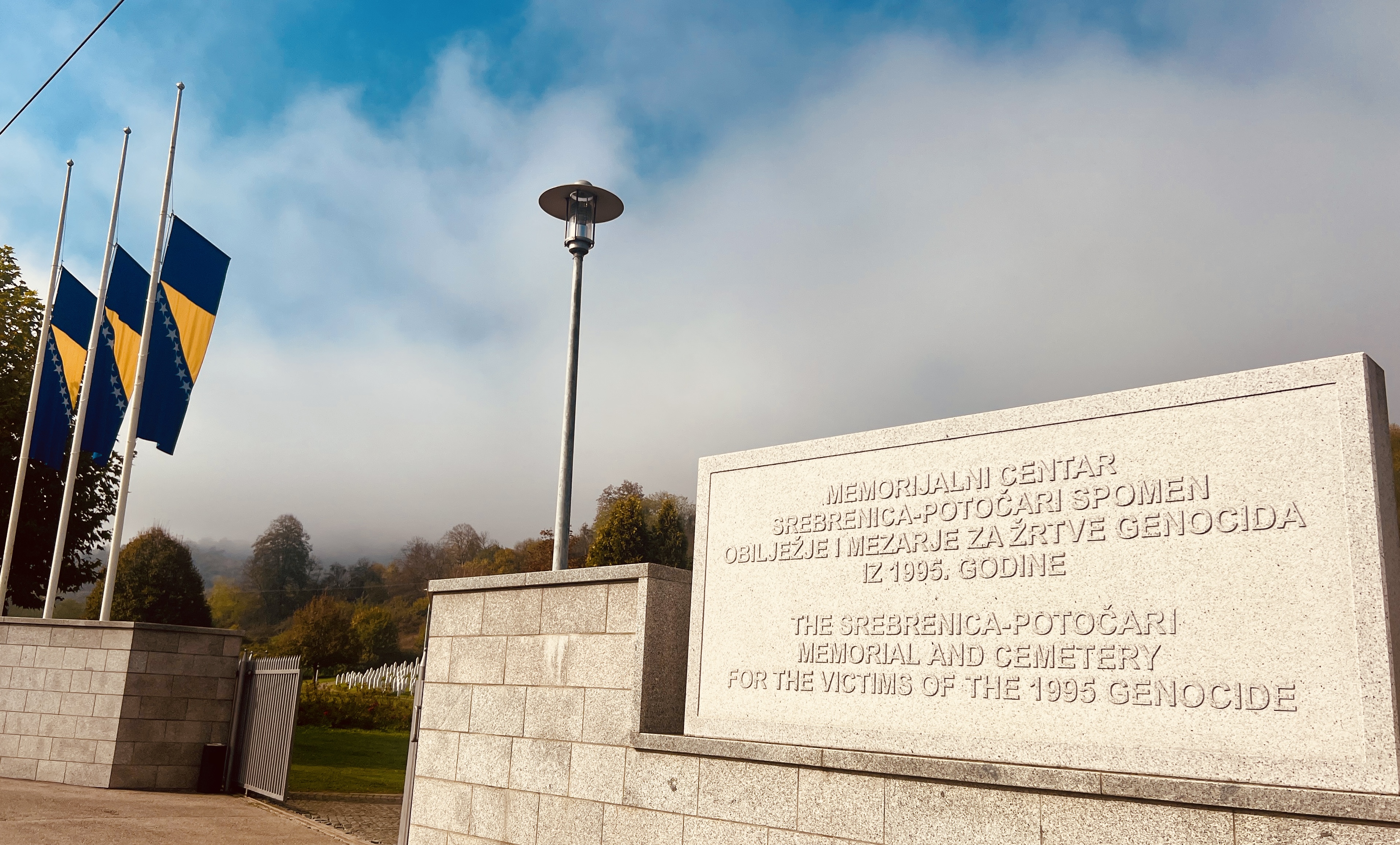
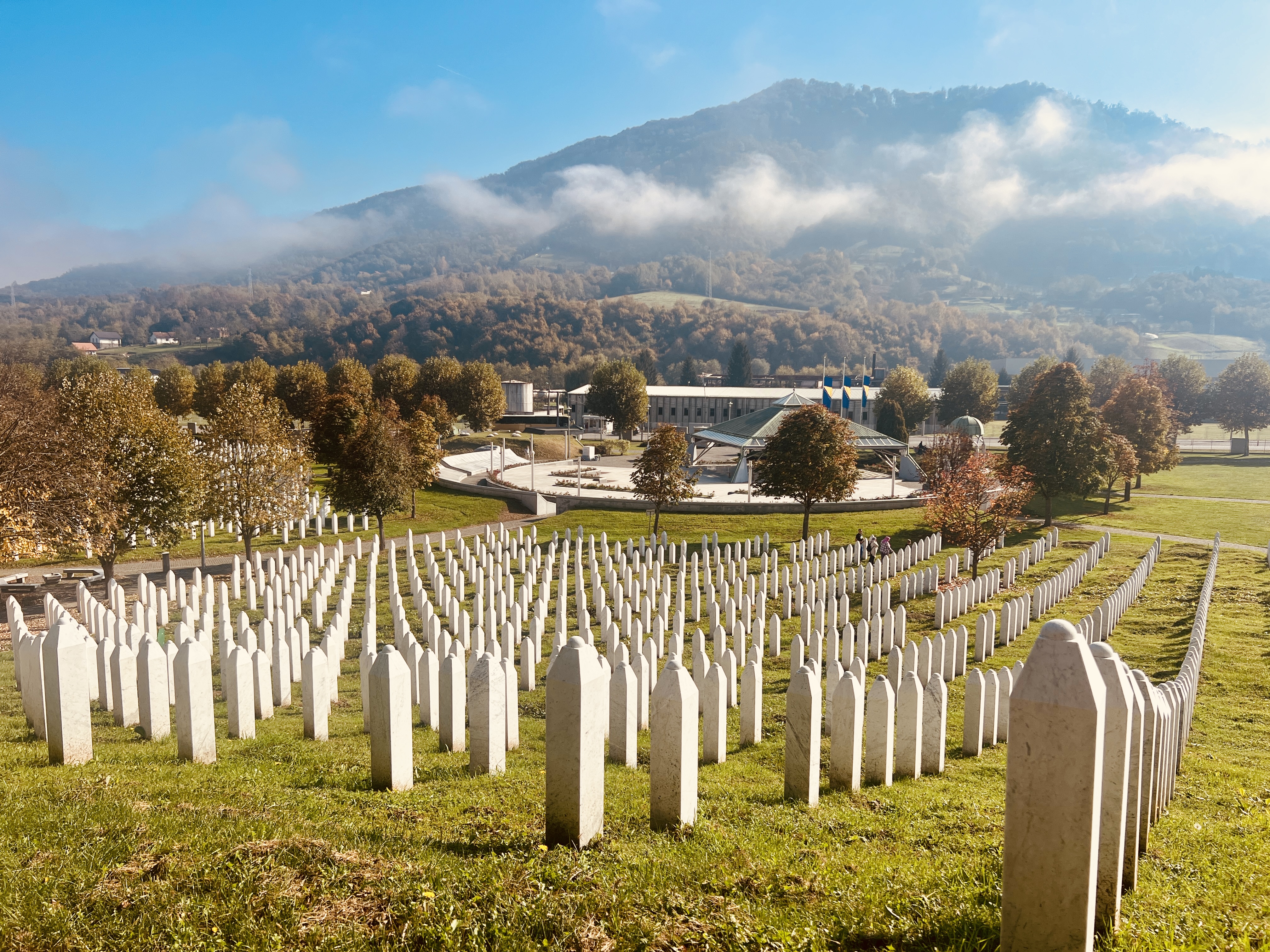
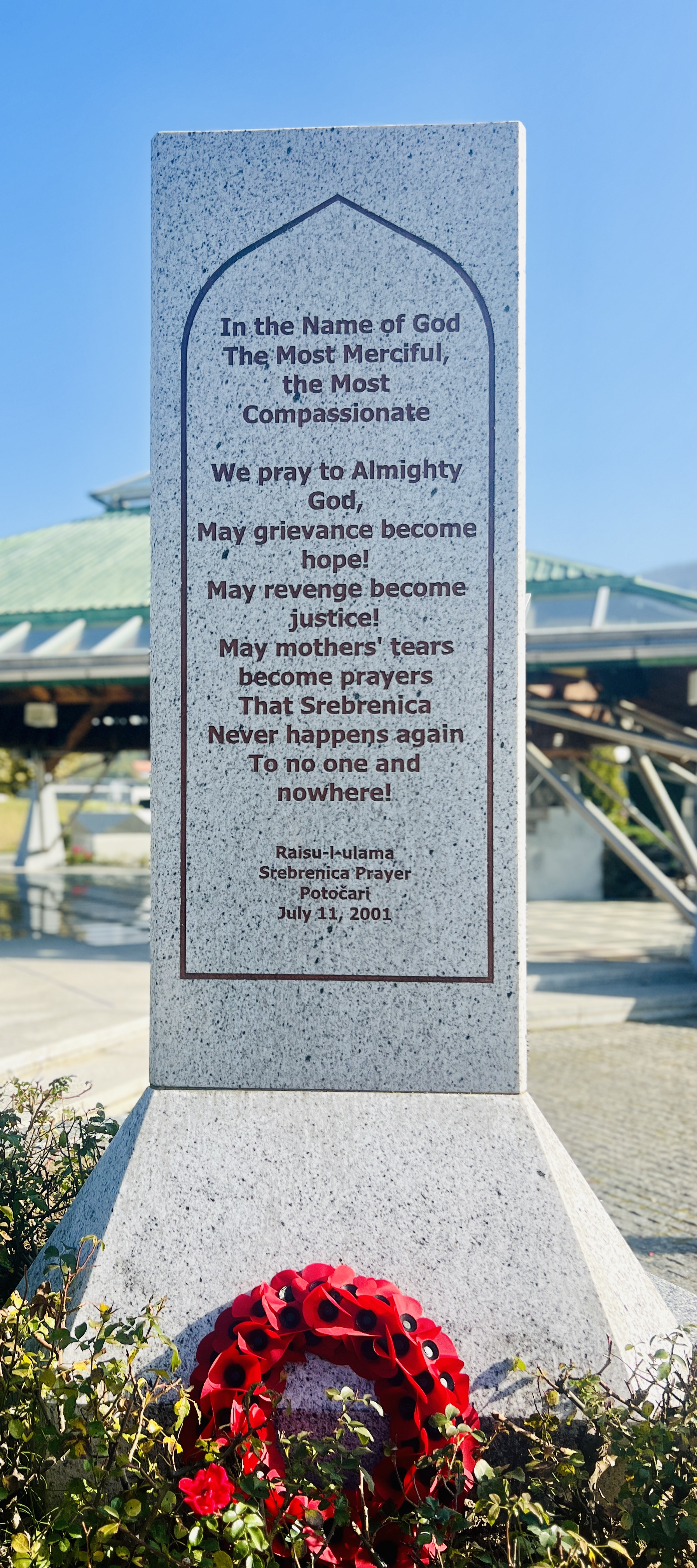
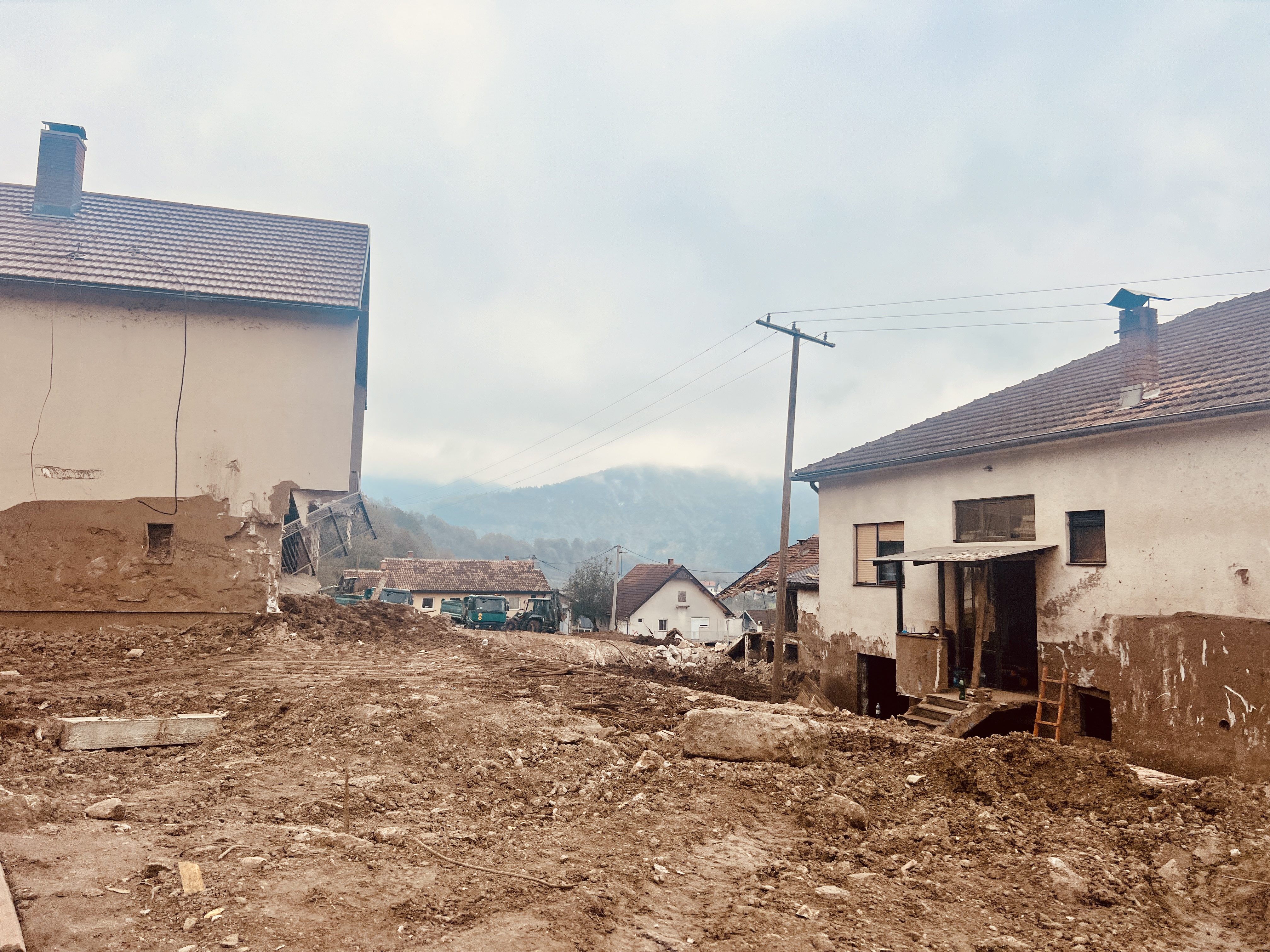
From there it was a short hop to our final border crossing into Serbia. Sadly a couple of weeks before we arrived Bosnia was hit with some serious floods. We drove through a town that was absolutely destroyed. Later we heard 8 people had died.
Fair to say that we were intrigued about what we were going to see in Serbia. Serbia is generally portrayed as the ‘big brother’ of this region, due to its leading role in the Yugoslav government and it the various conflicts since its collapse, and its fair to say that there is not a lot of love lost between Bosniacs or Albanians (or indeed Croats, but we haven’t had as much exposure to them on this trip) population and the Serbs. It’s easy to only look at one side of the story, and we were keen to keep an open mind as we made our way through the border.
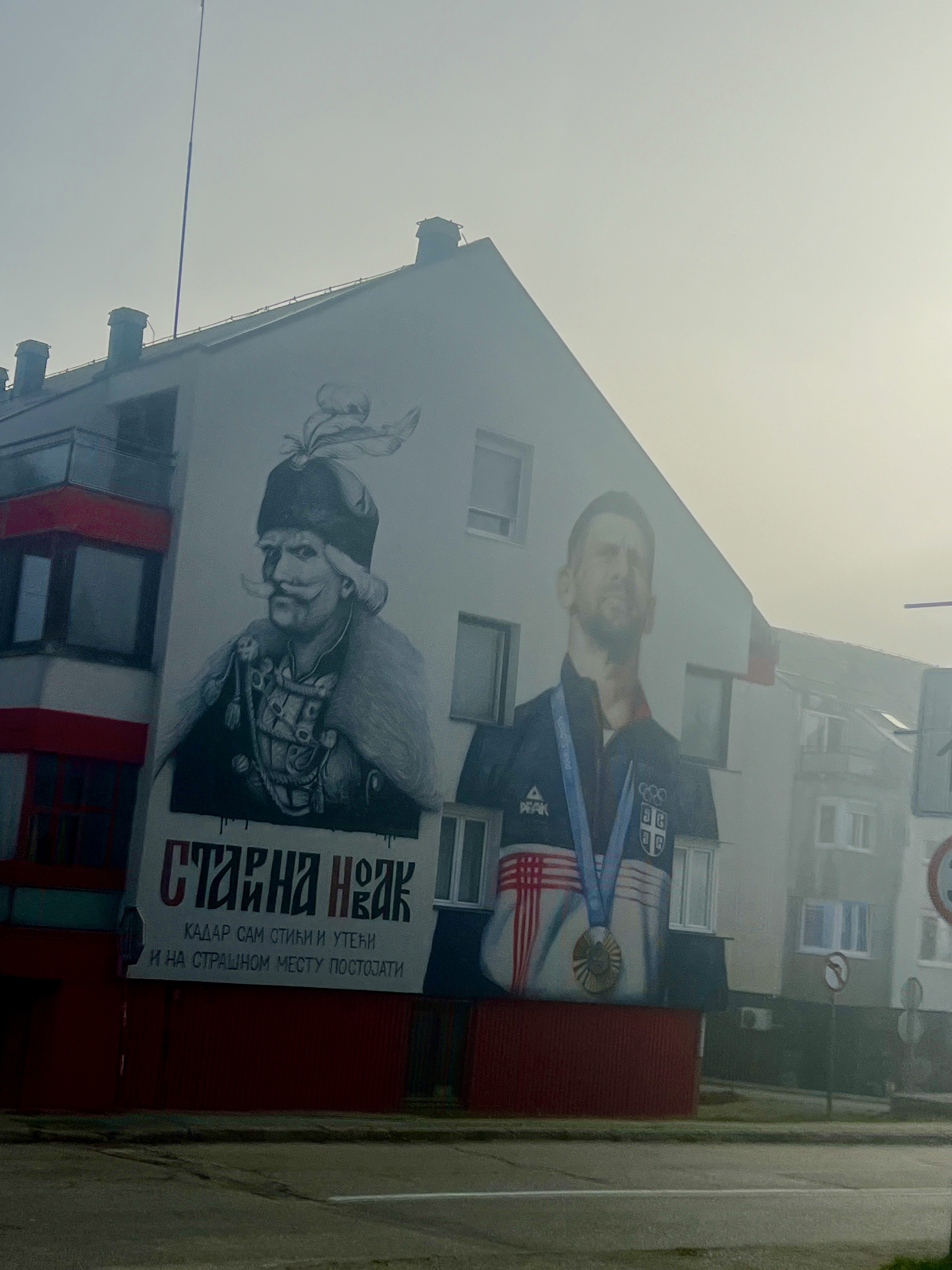
But mostly what we were looking forward to in Serbia was seeing Alan and Ana, and meeting their bunnies, Fluffy and Daisy.
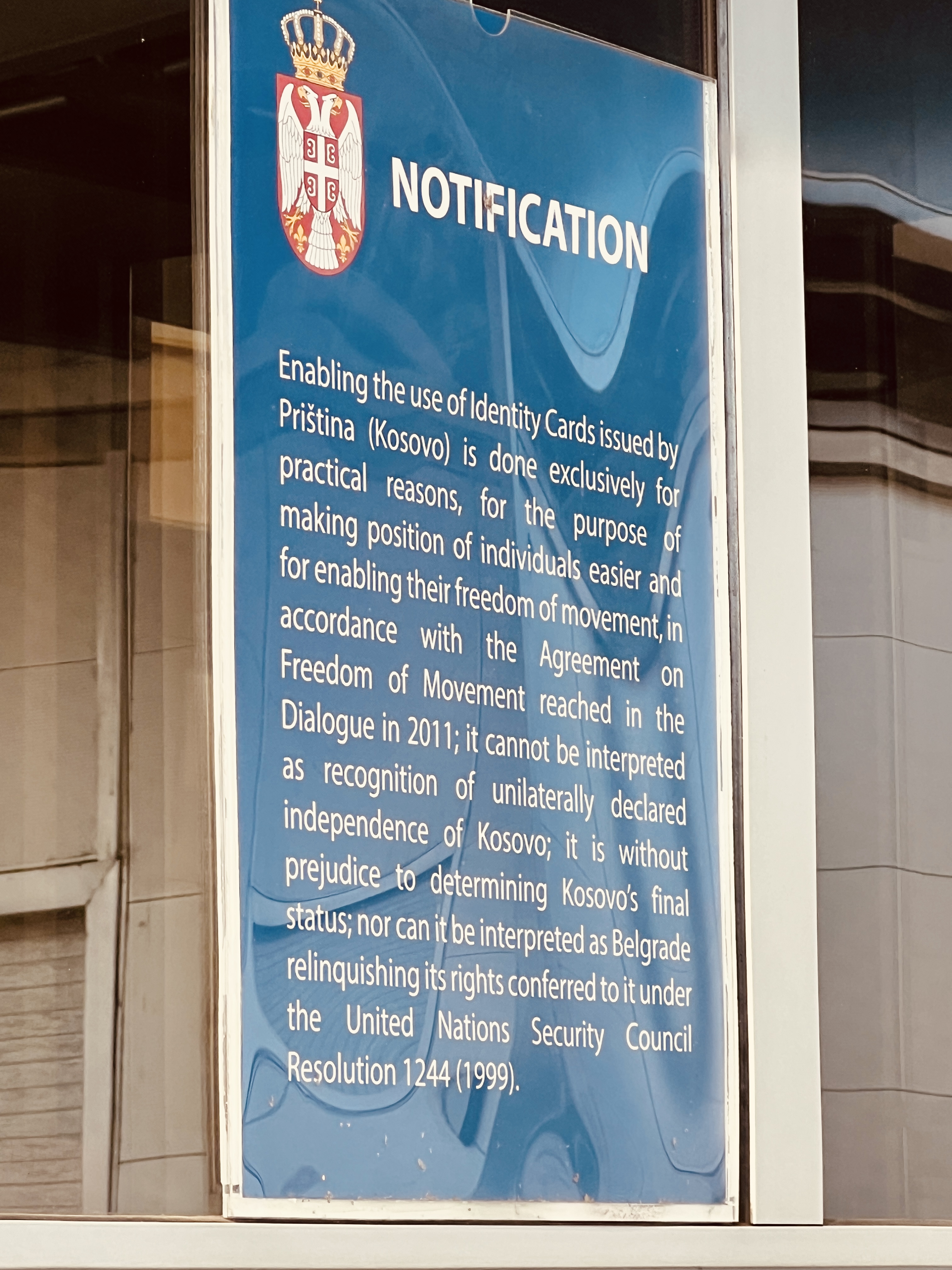
The first thing we saw was a sign noting that Serbia would accept Kosovan ID cards, but this should not be taken as an acknowledgement of Kosovo as a separate country. The conflict continues to this day.
Novi Sad and Belgrade, Serbia
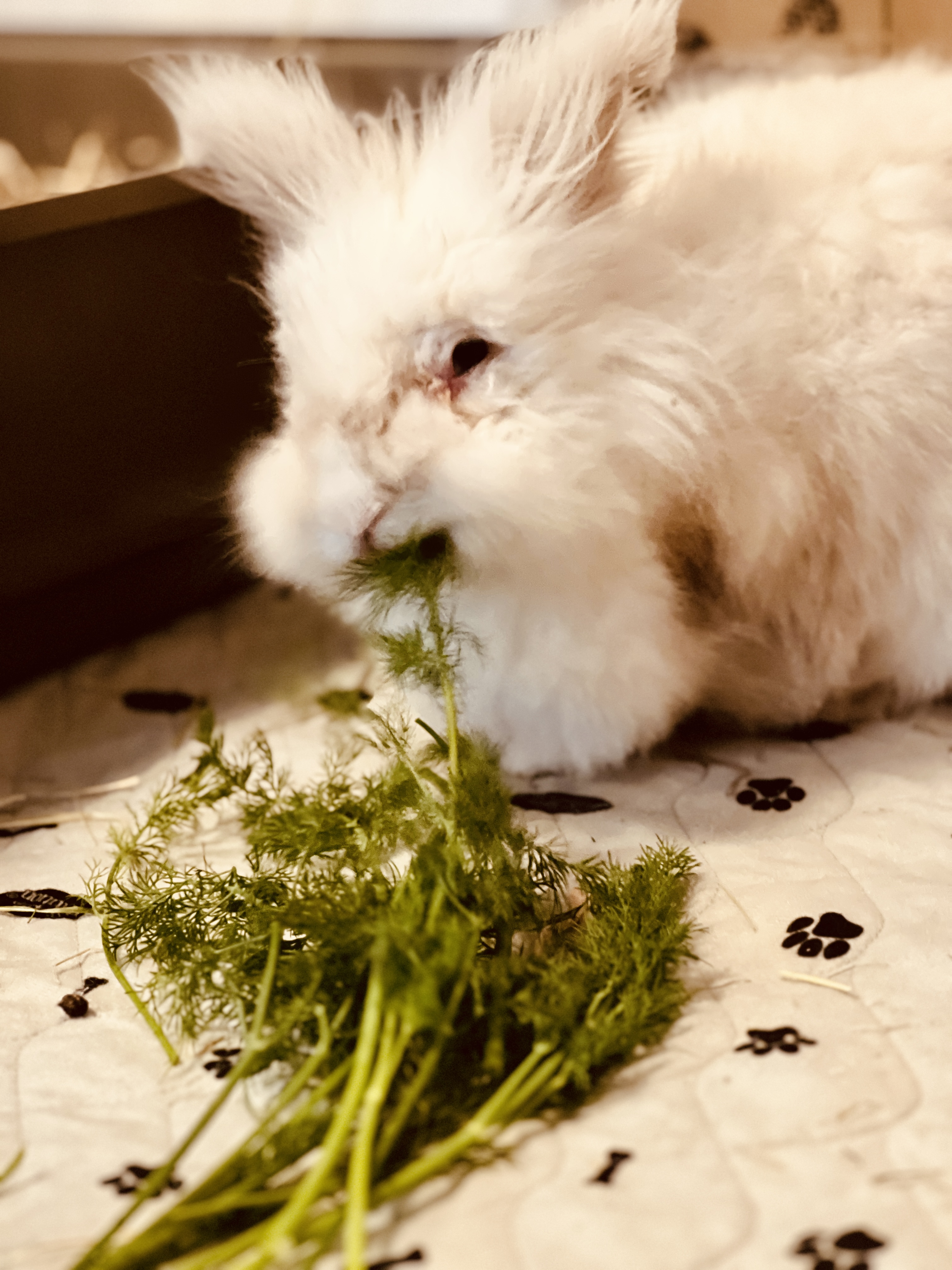
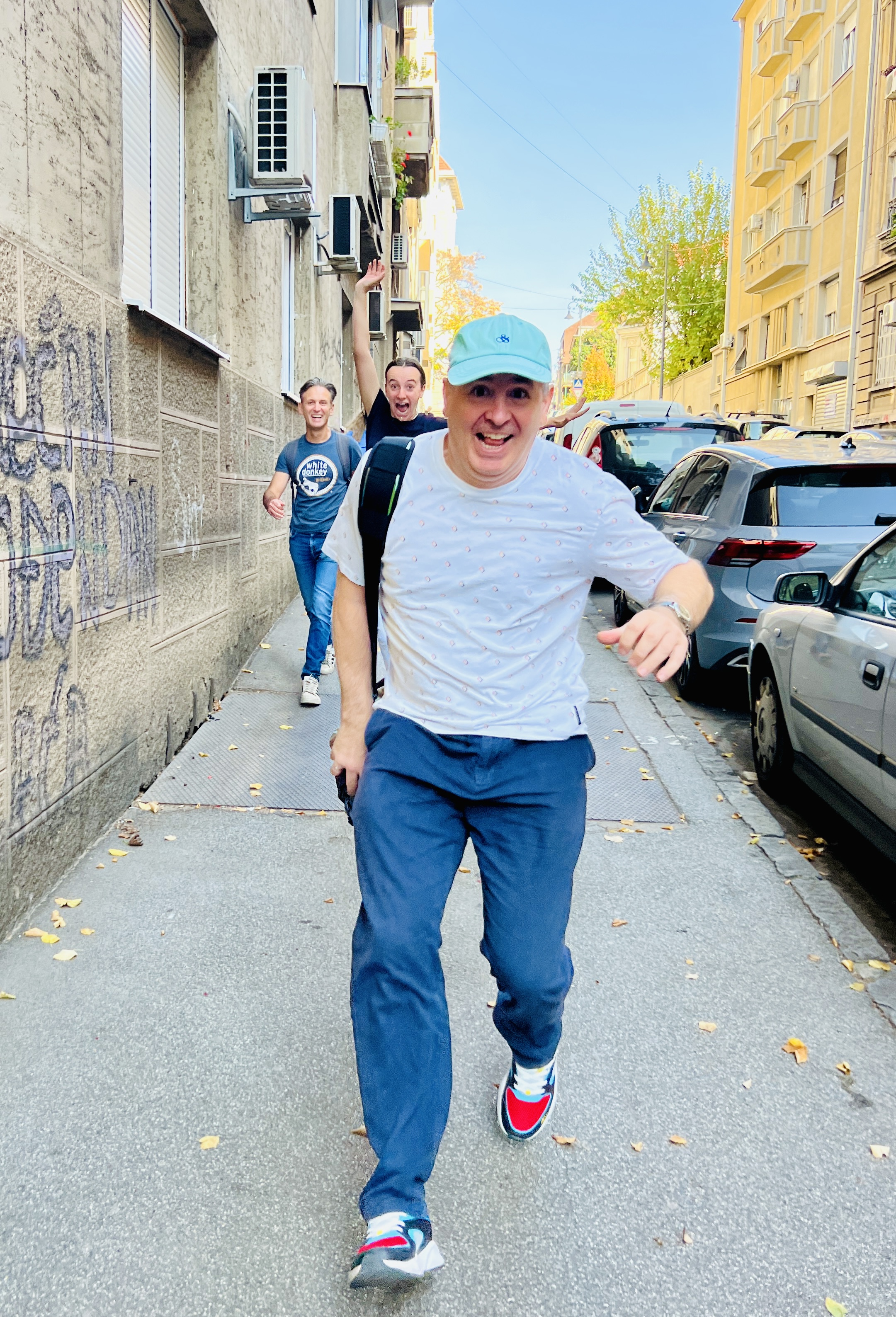
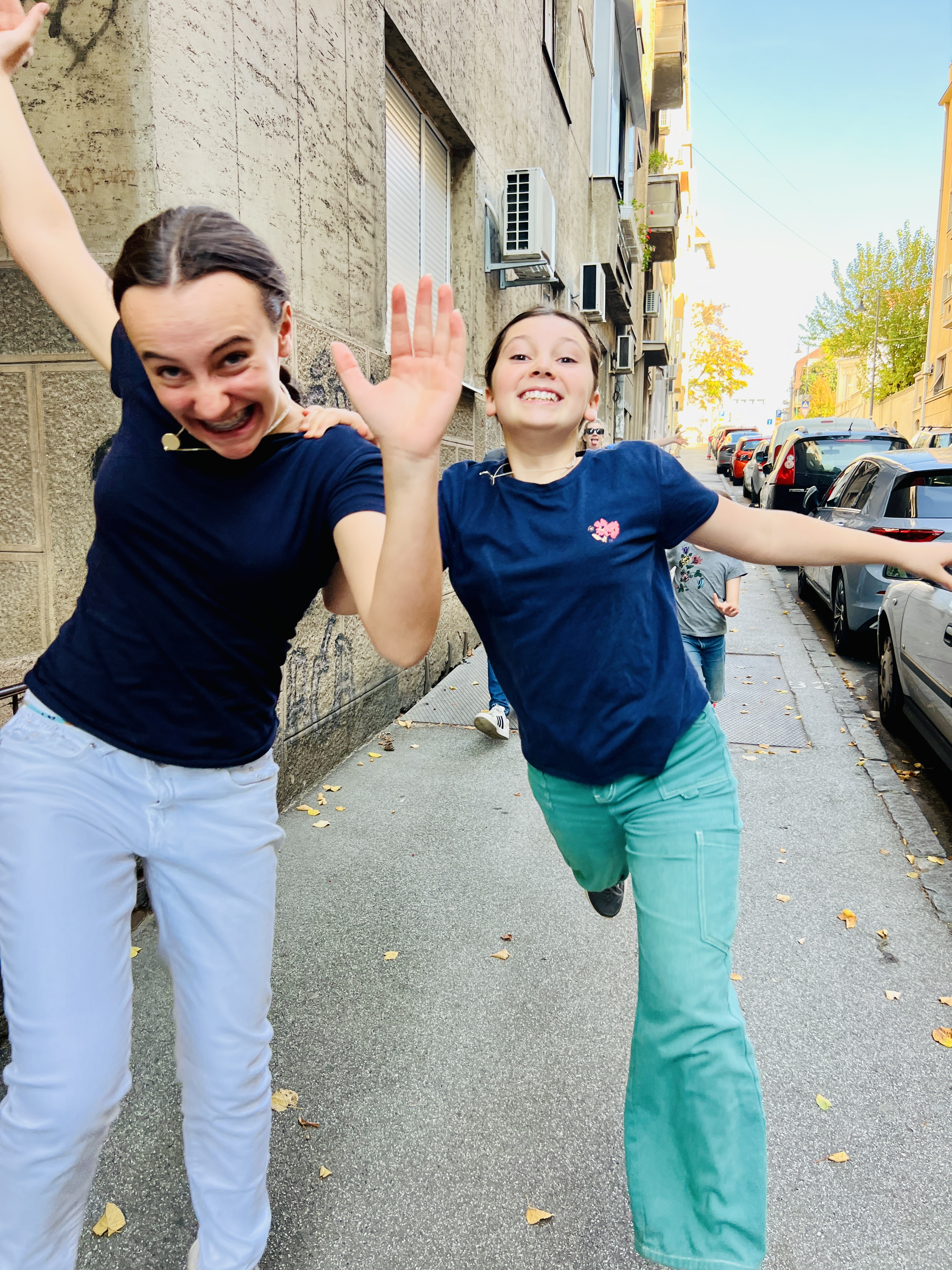
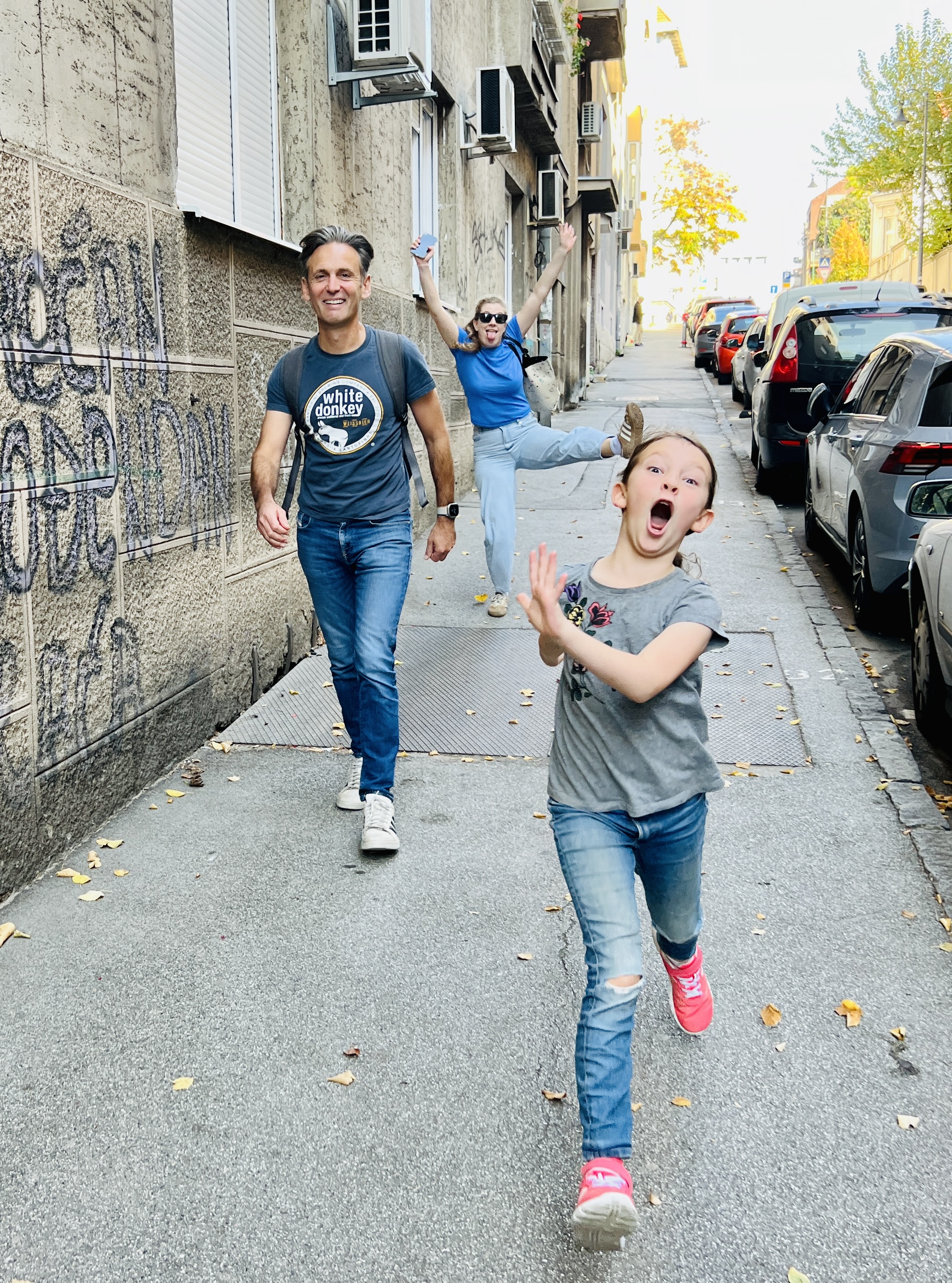
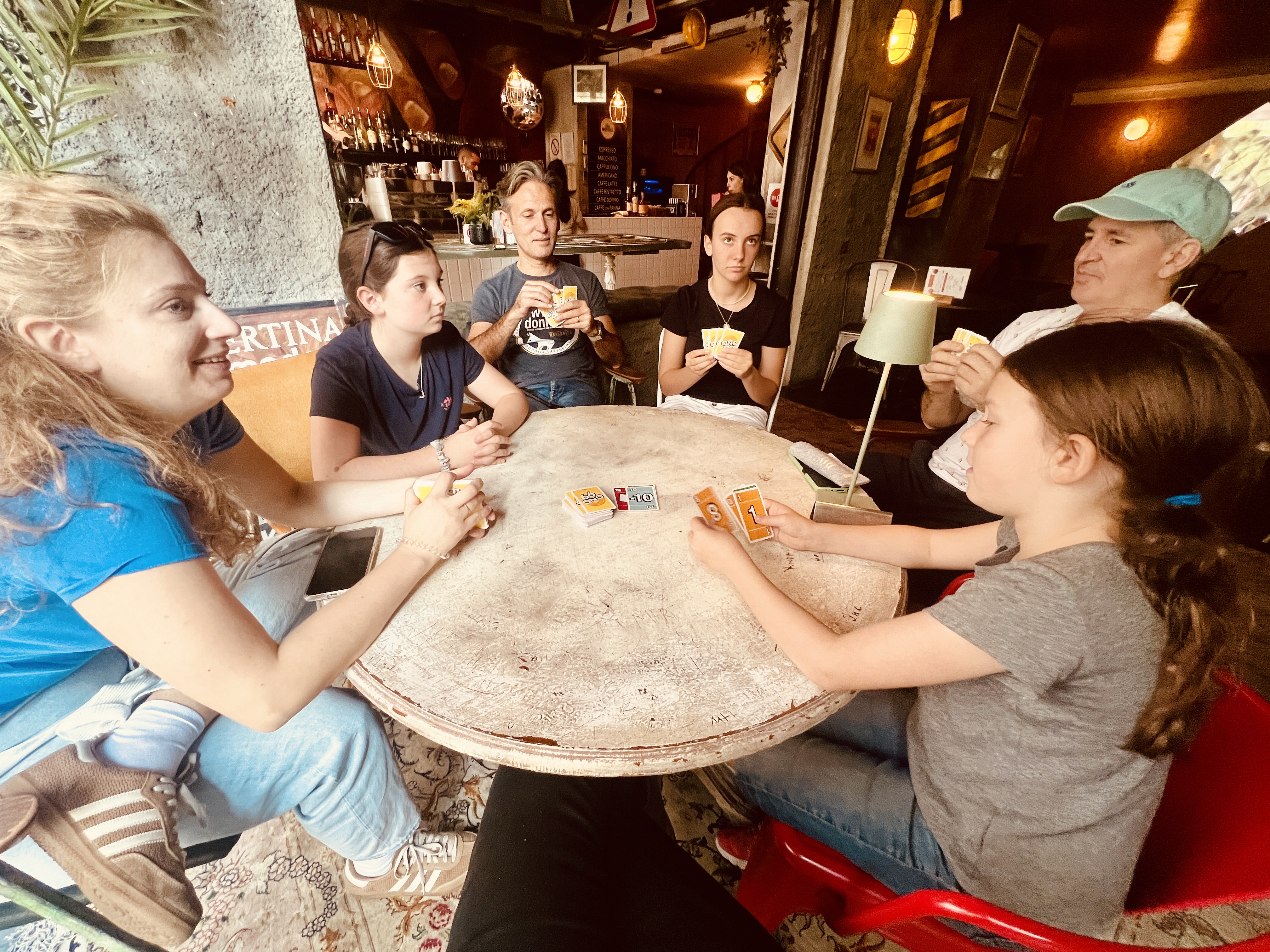
The last couple of days of our Balkan Adventure was much more low key than the previous week or so – much to Alan, Ana, and the girls’ relief. We hung out at their flat in Novi Sad, playing numerous games of ‘Ono 99’, patting the bunnies and generally catching up over pear rakija.
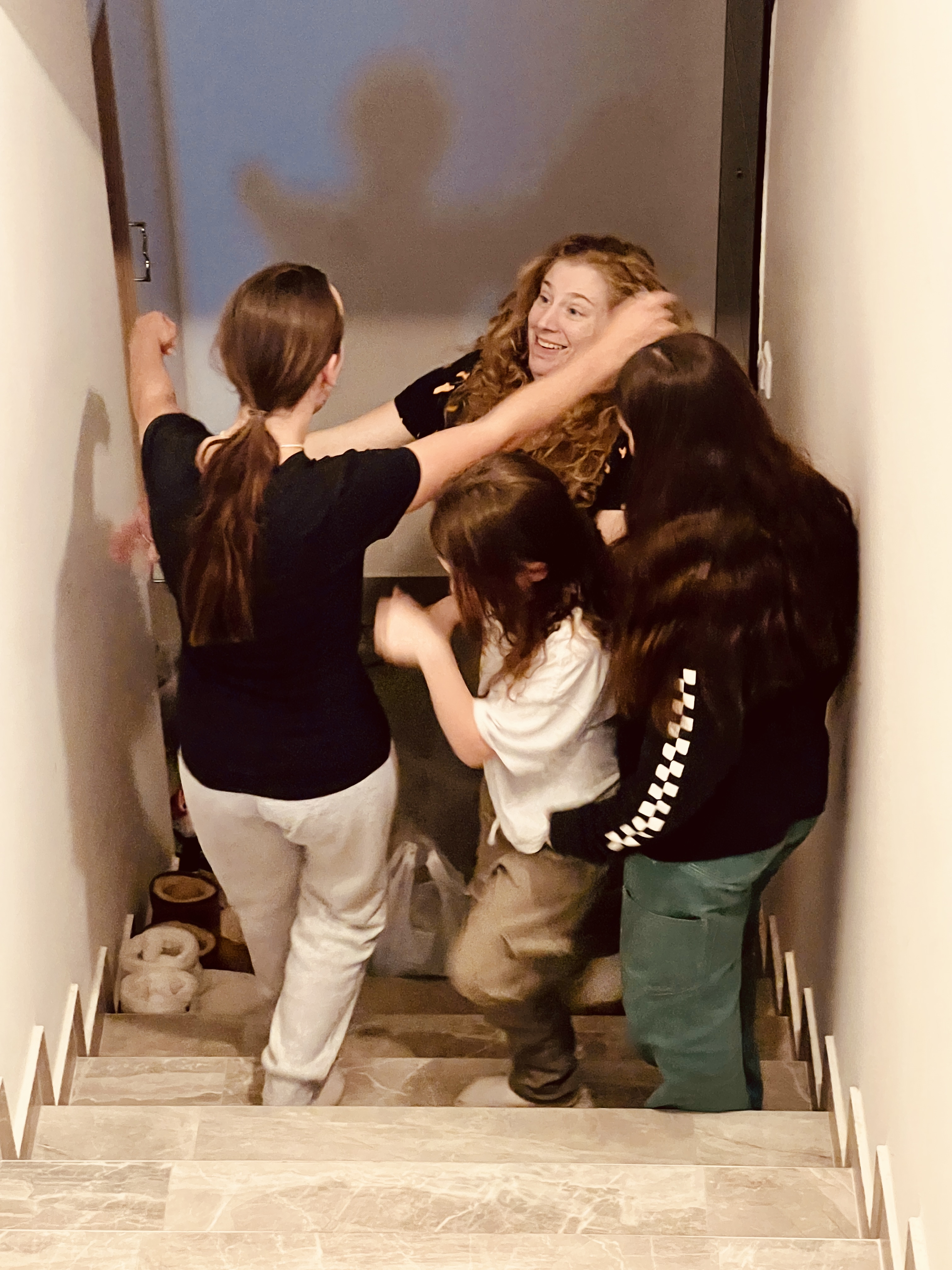
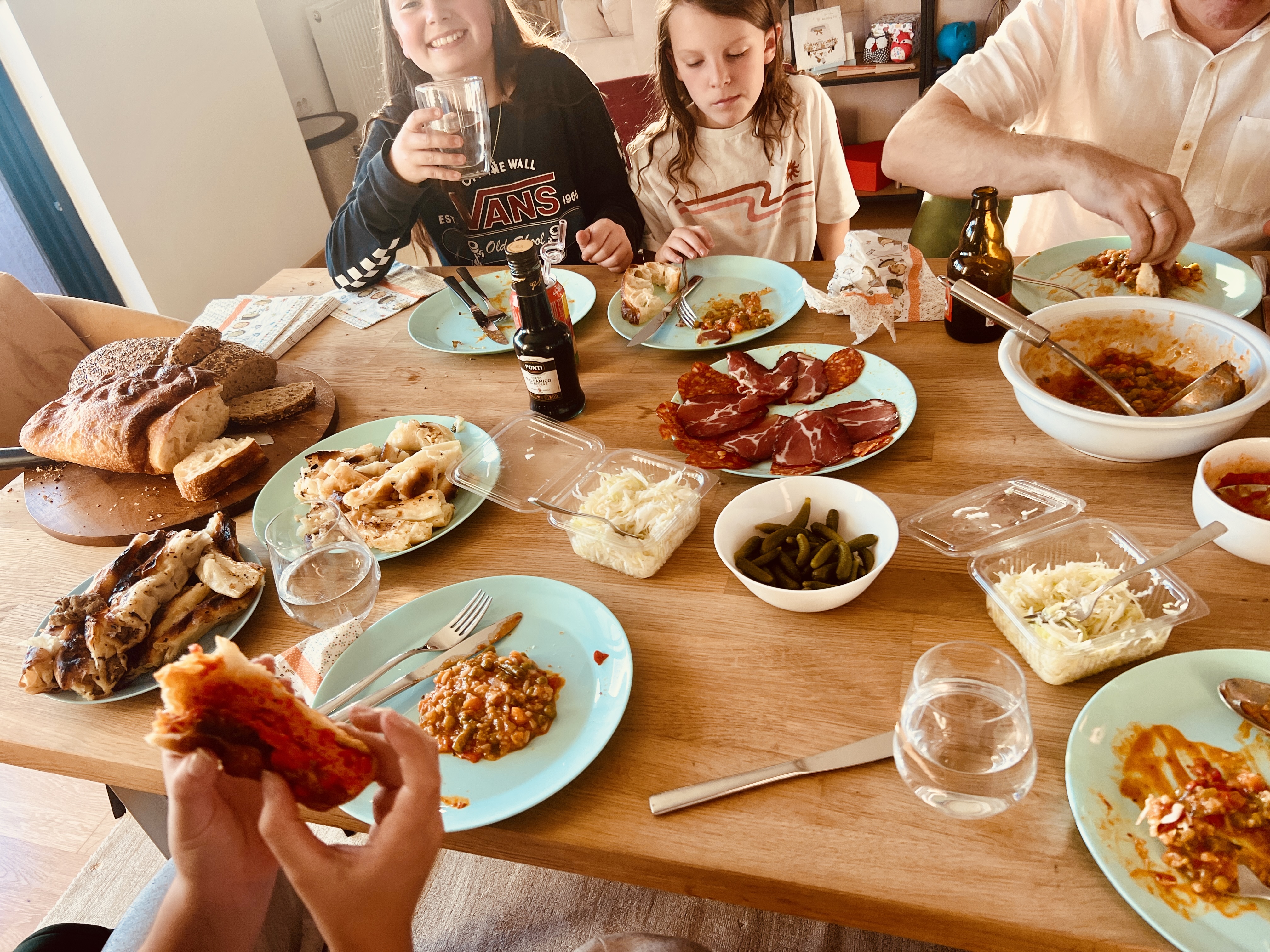
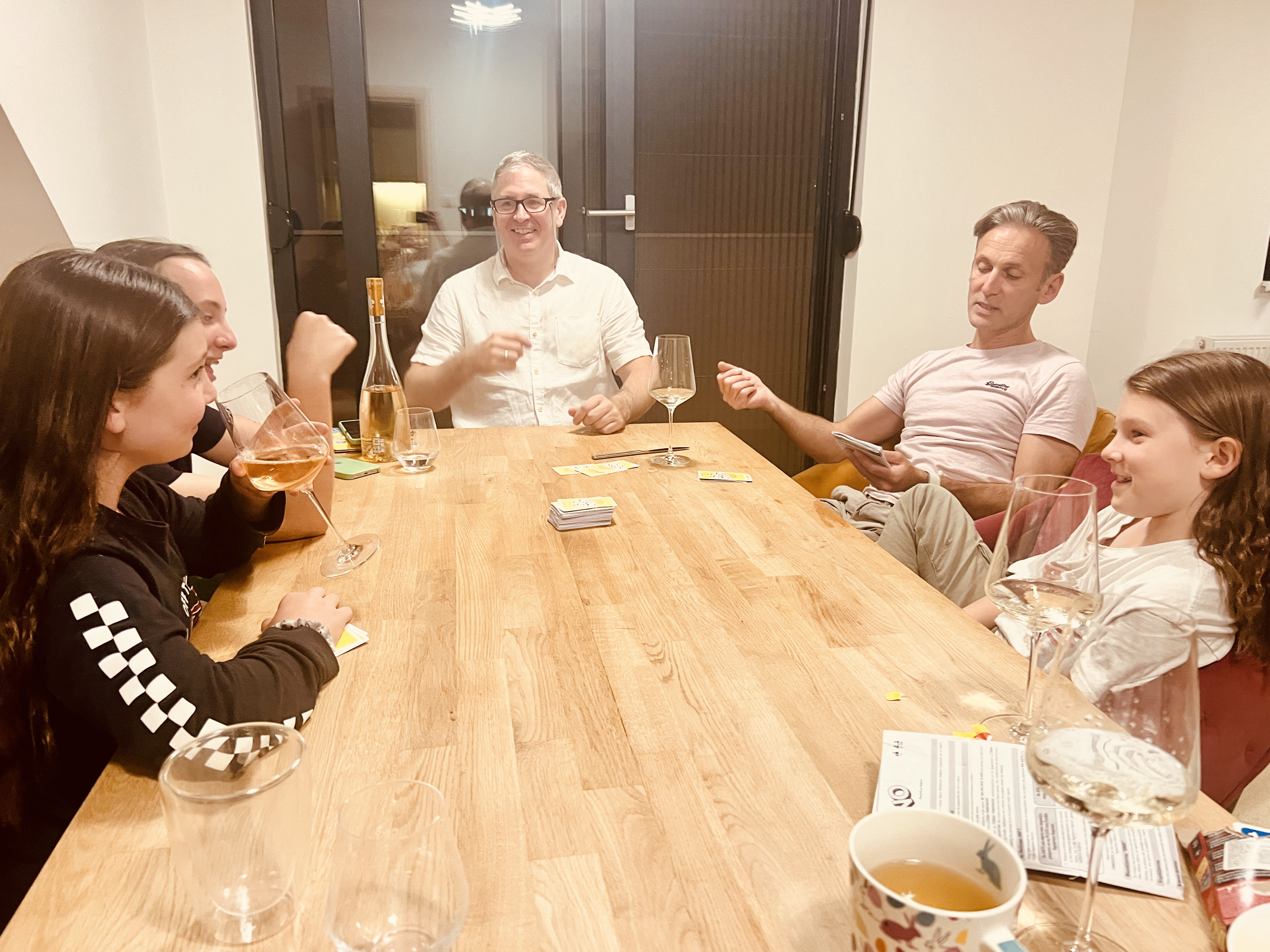
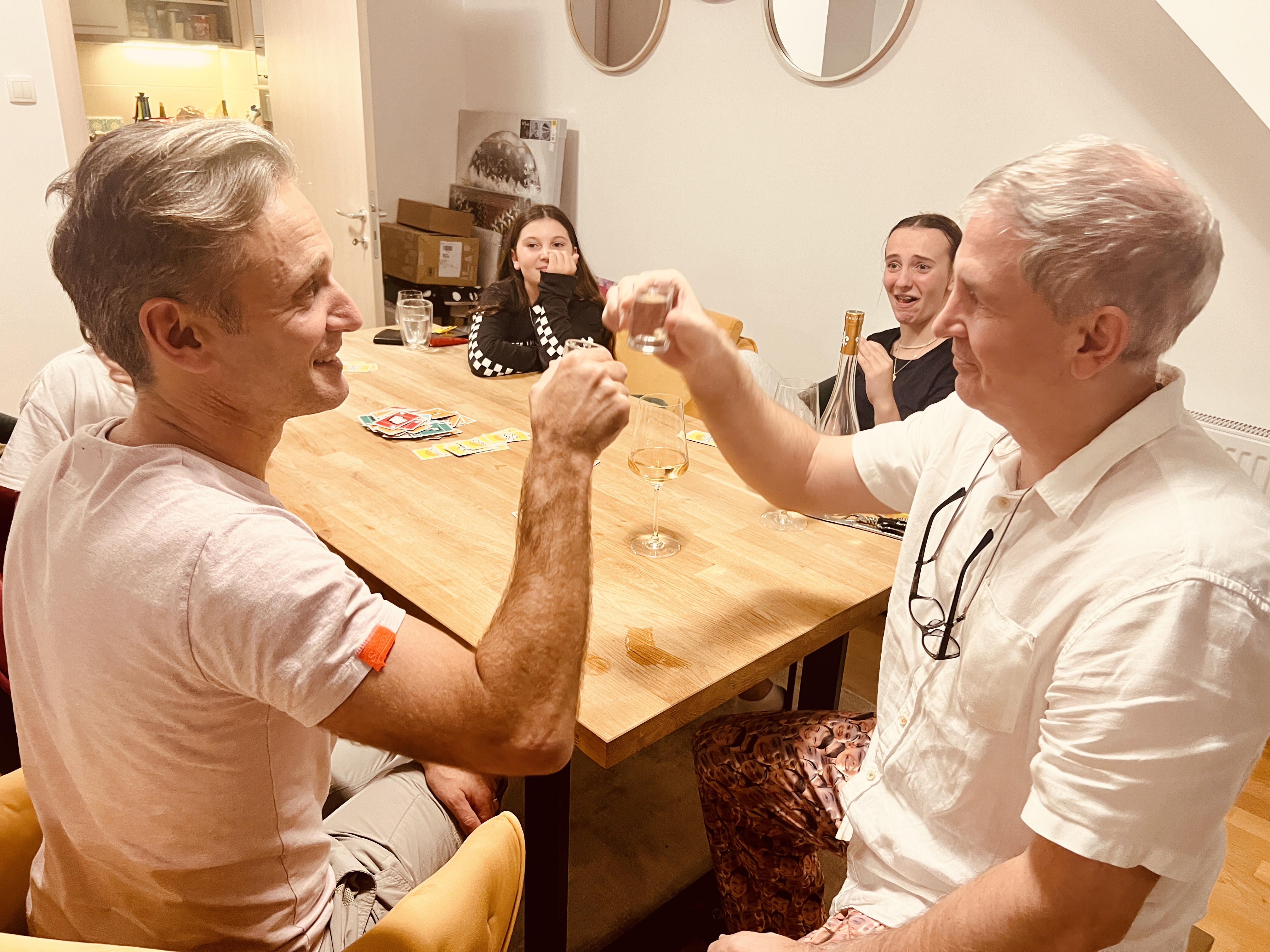
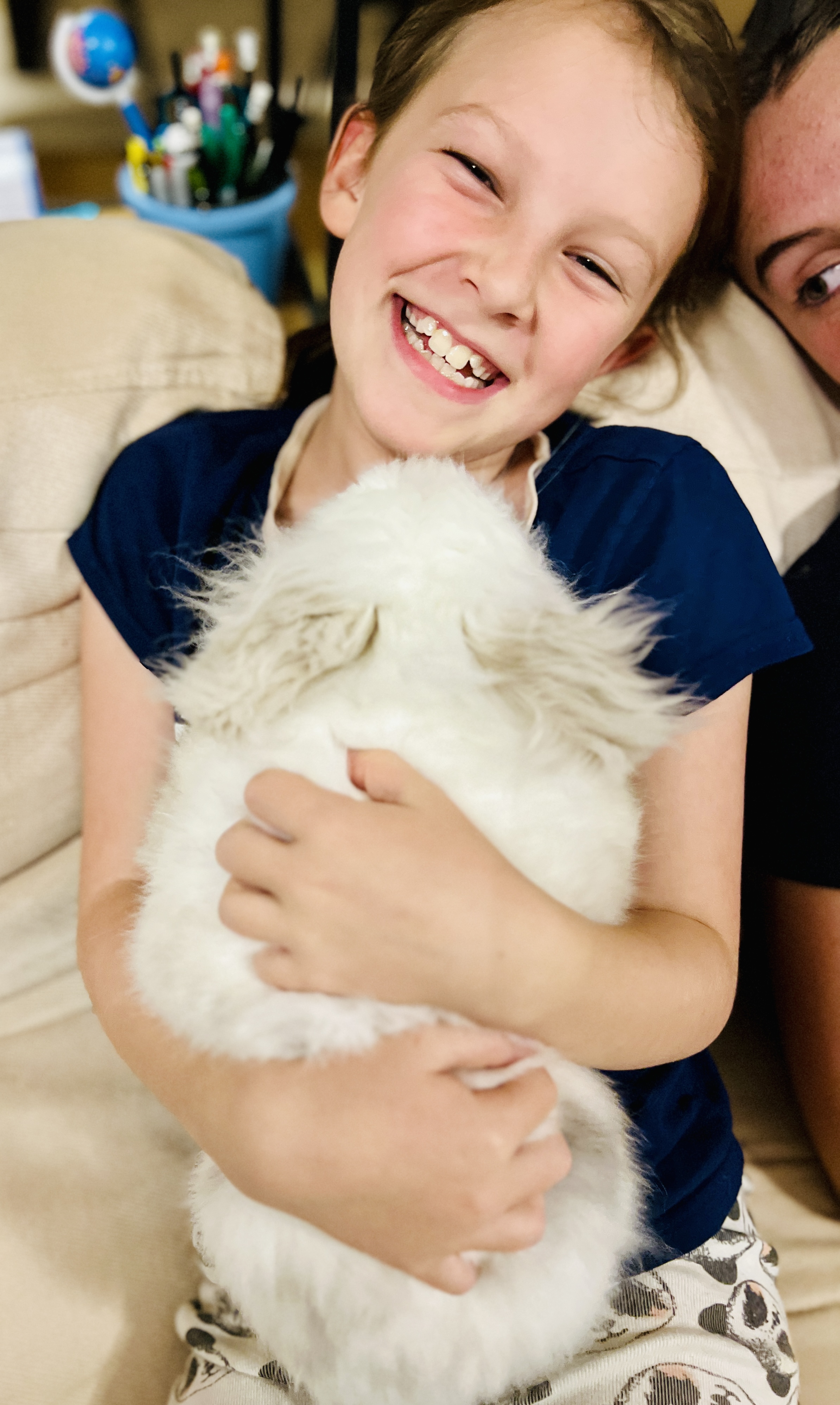
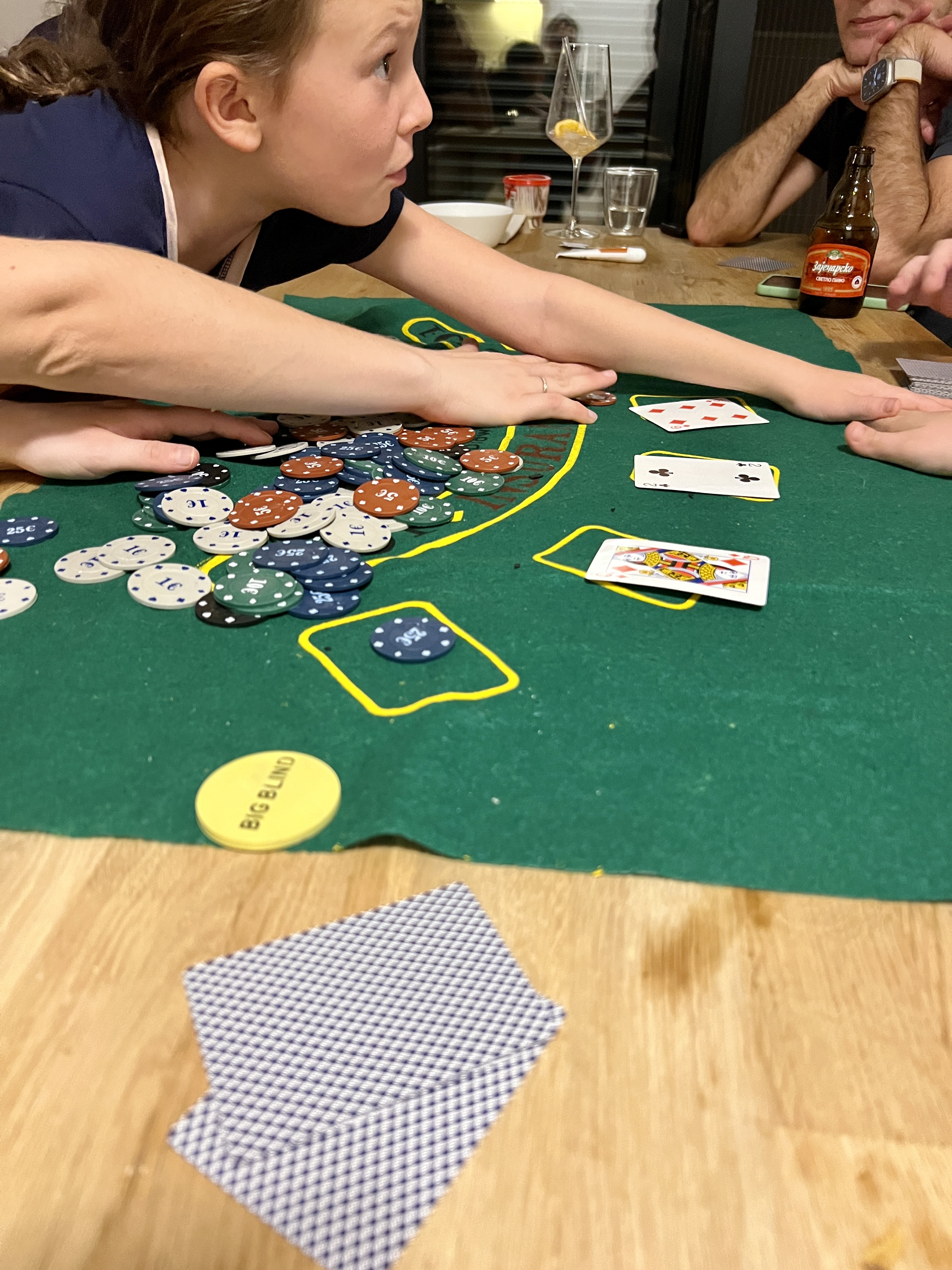
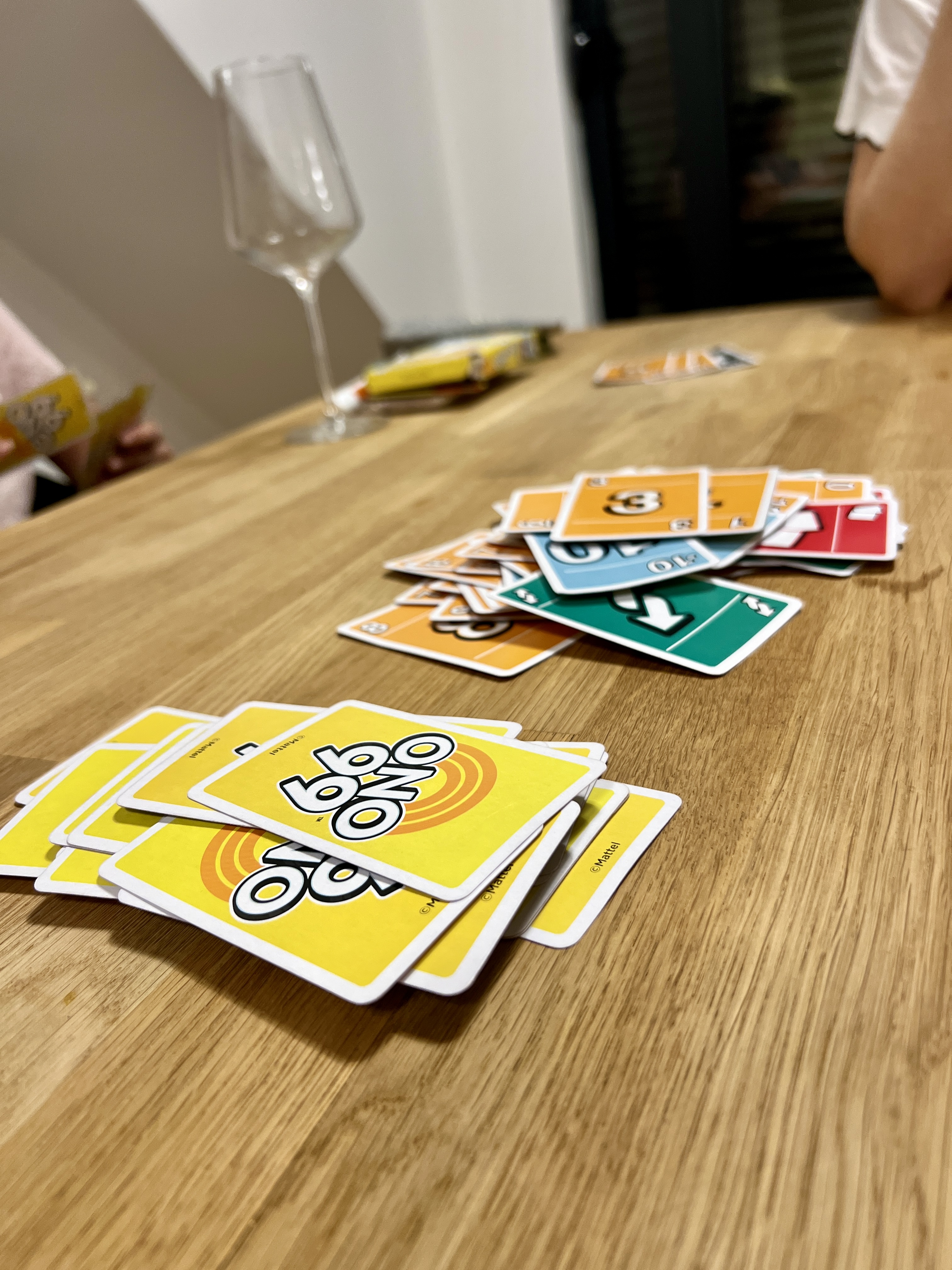
As always it was great to see them, and so nice to be able to do it ‘on their turf.’ They are such incredible hosts (even kicking themselves out of their own place so we could stay there).
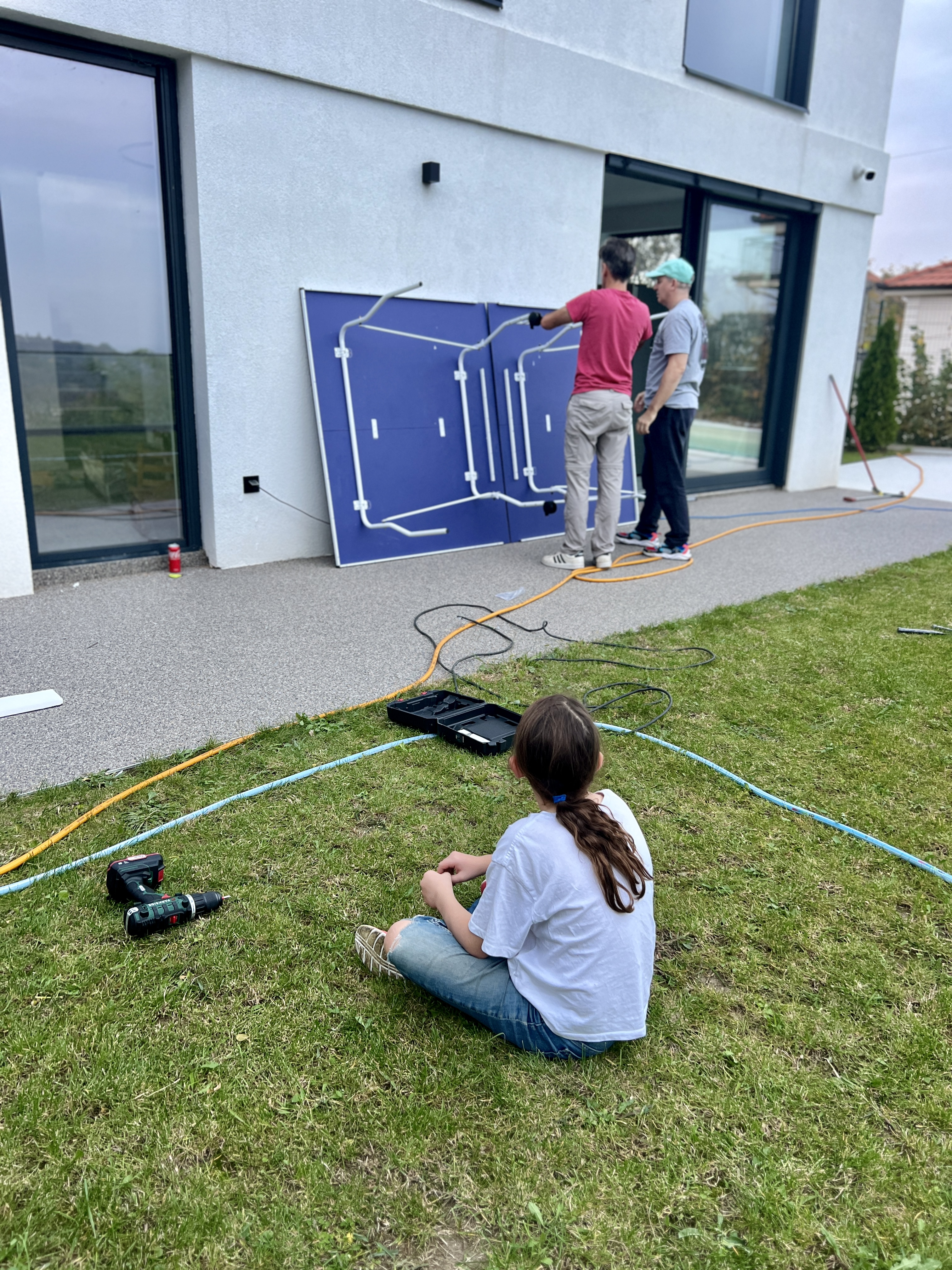
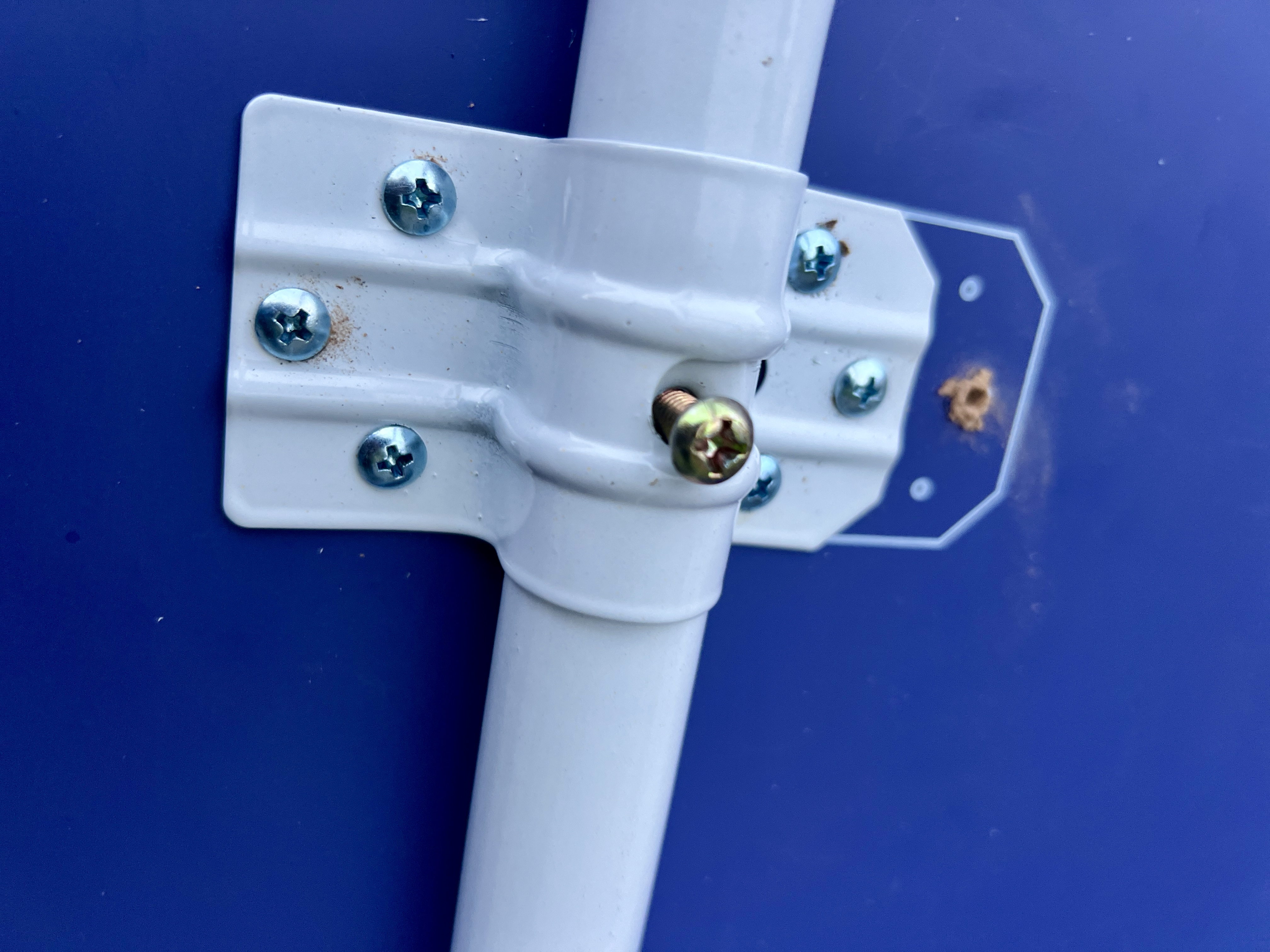
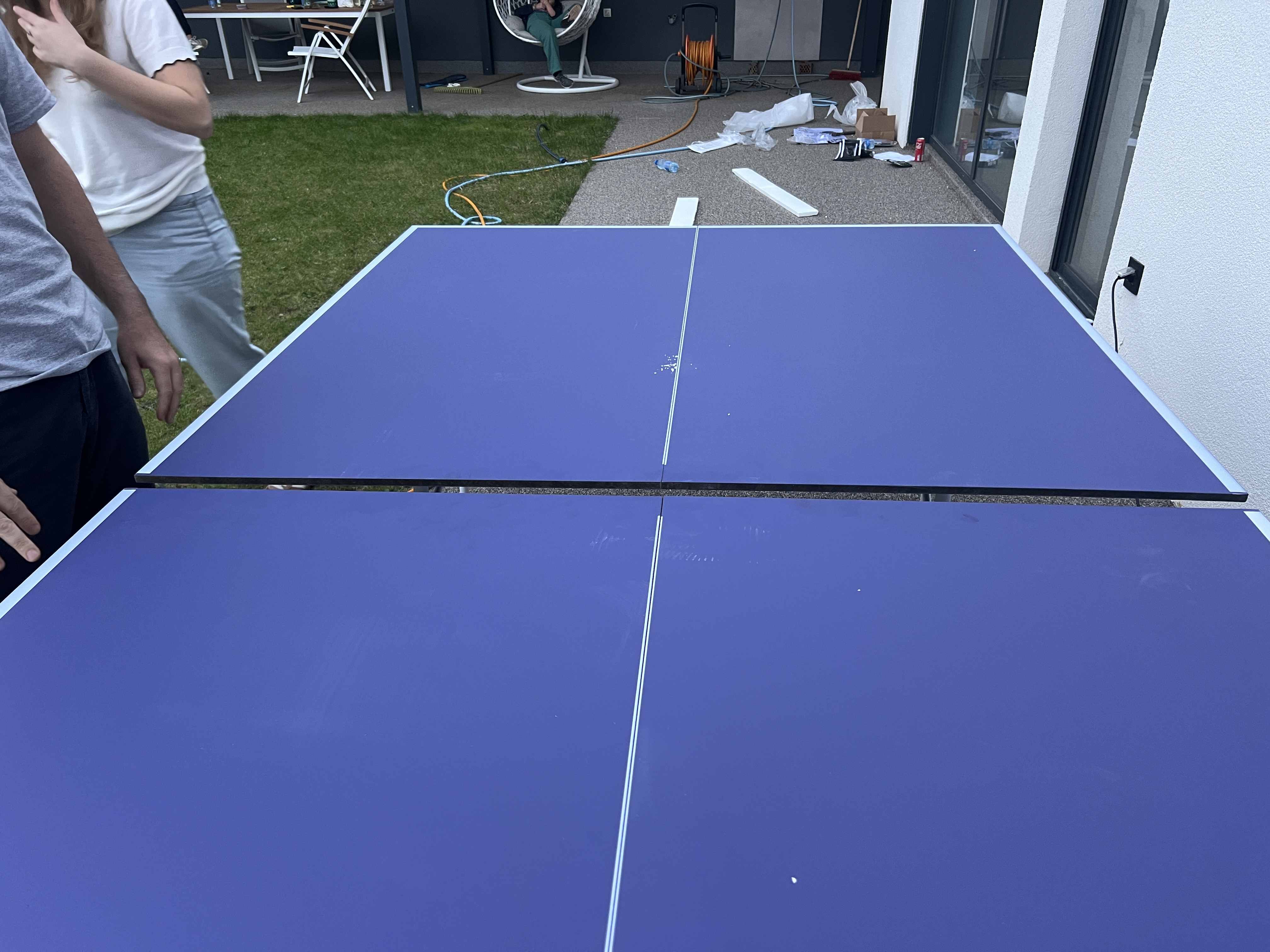
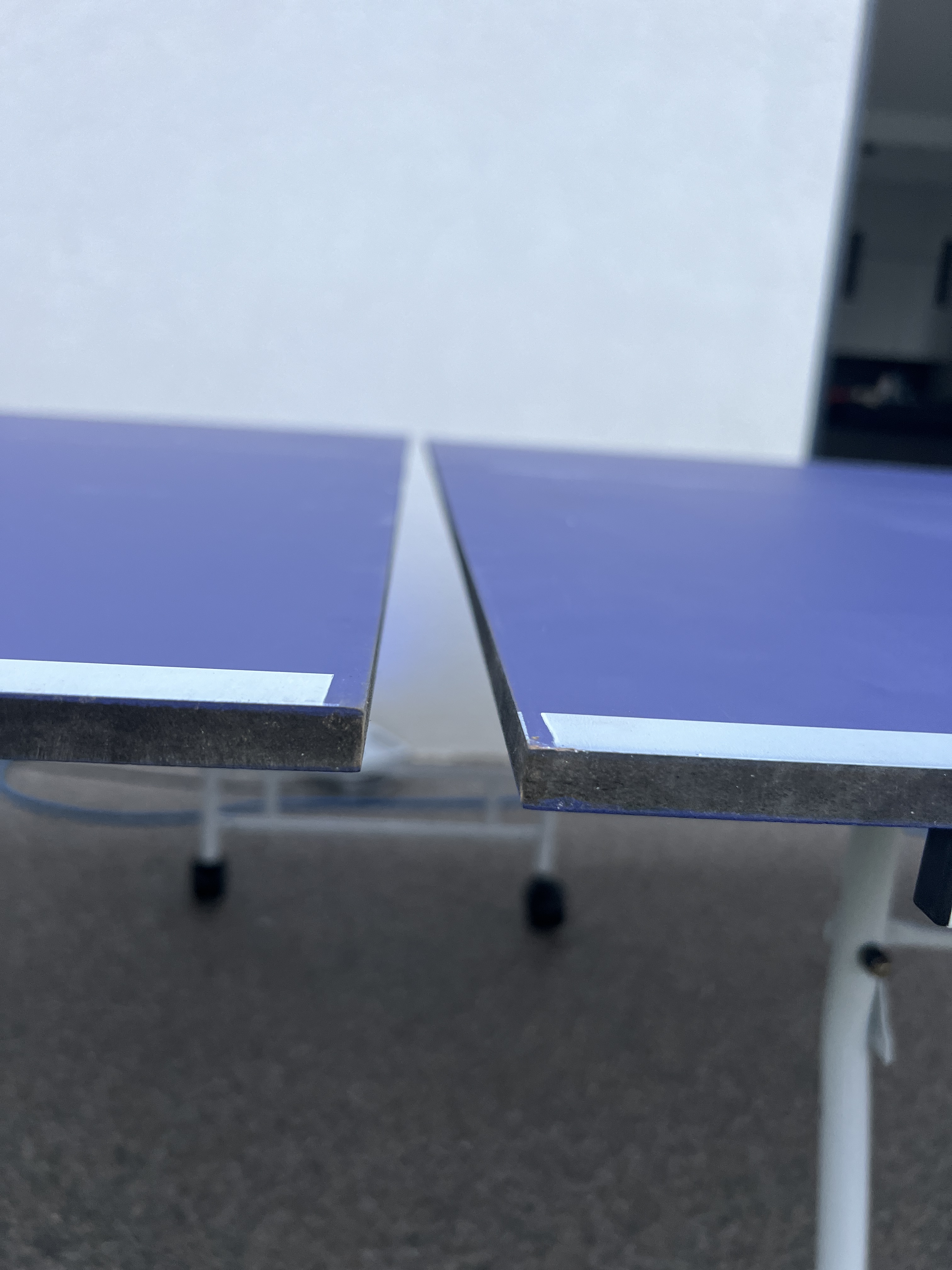
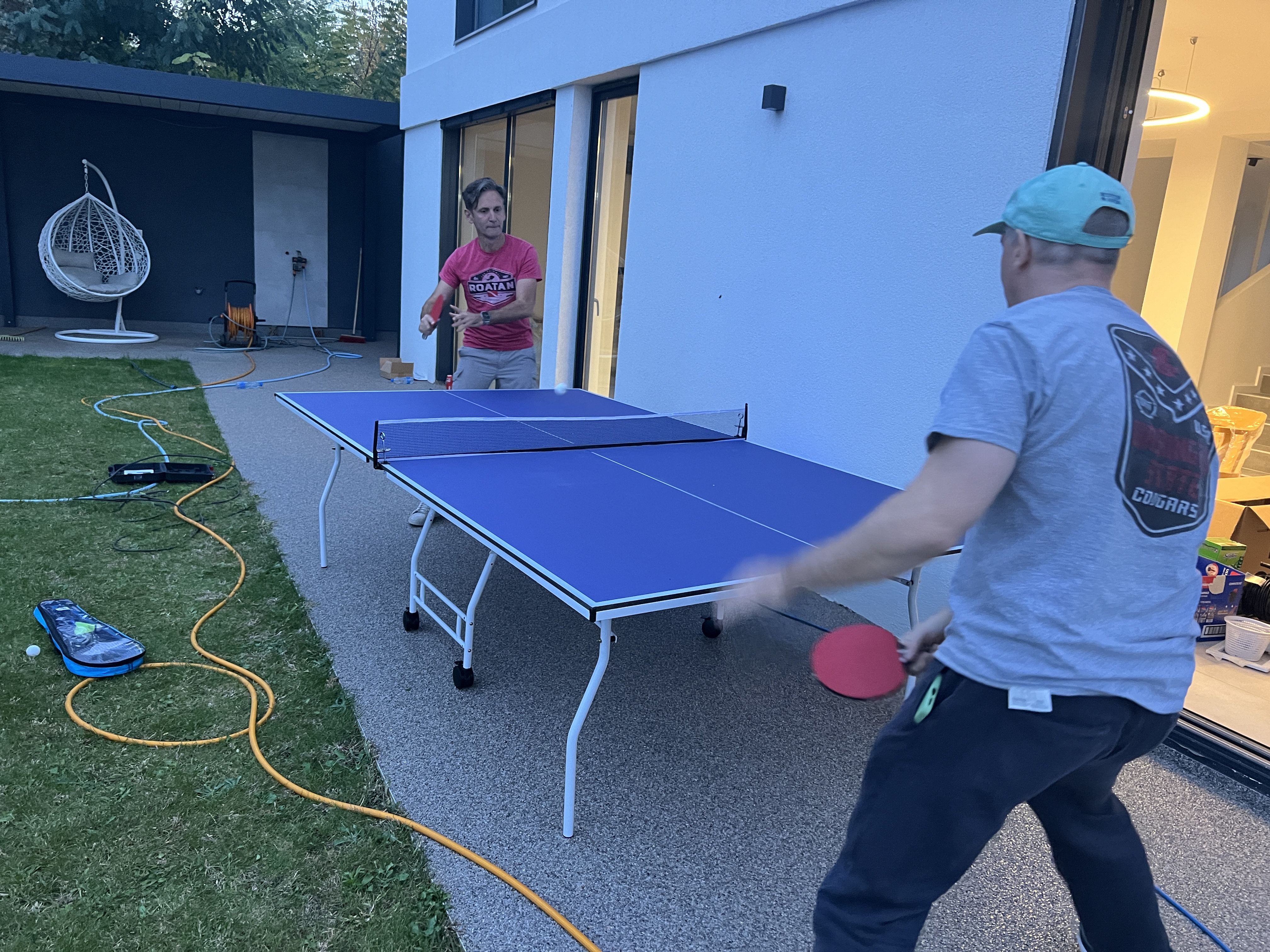
We got to check out the amazing house that they are building just out of town, and even got to (fairly unsuccessfully it must be said) construct and road test a new table tennis table – that will undoubtedly be the site of numerous future death matches.
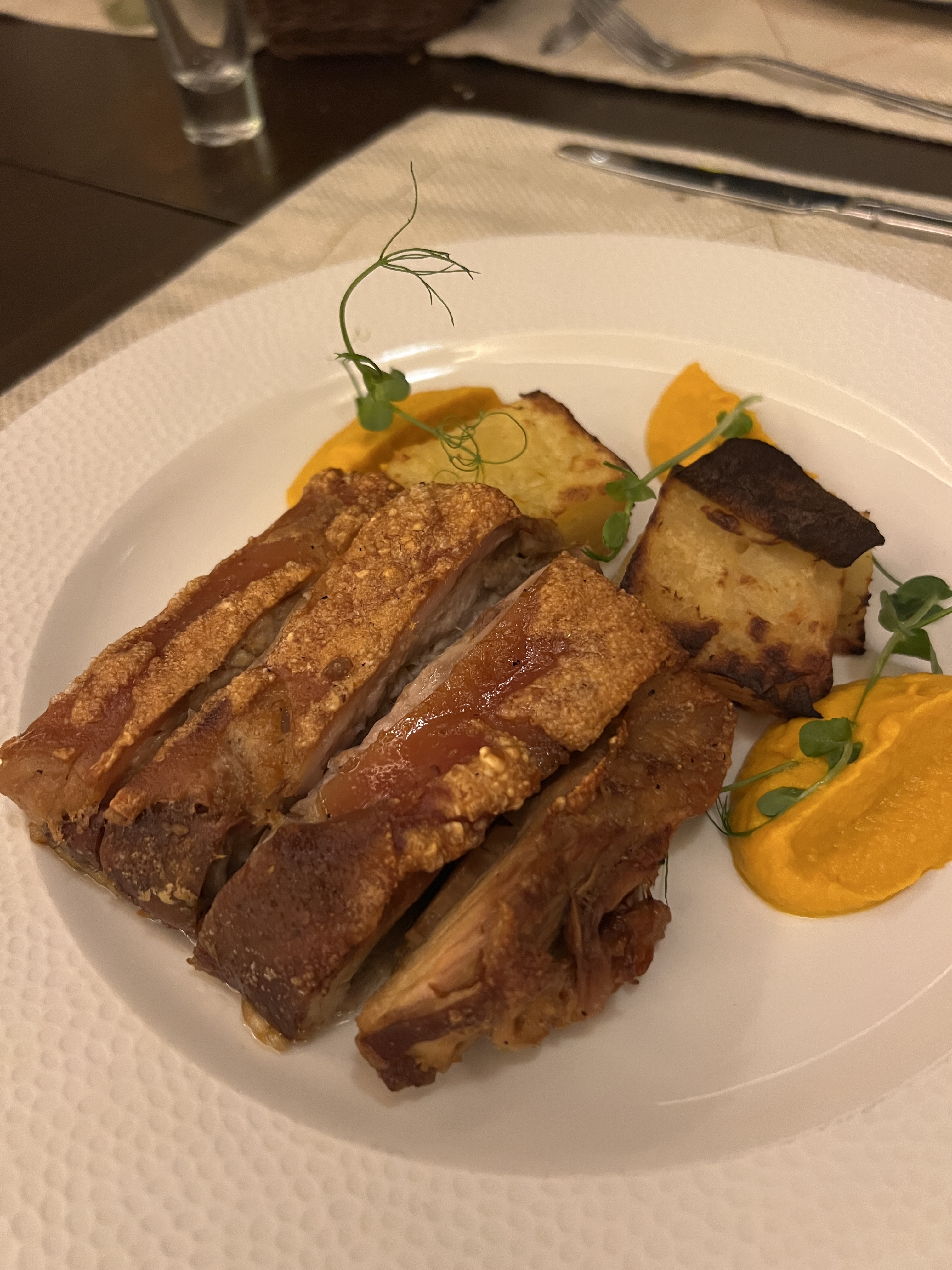
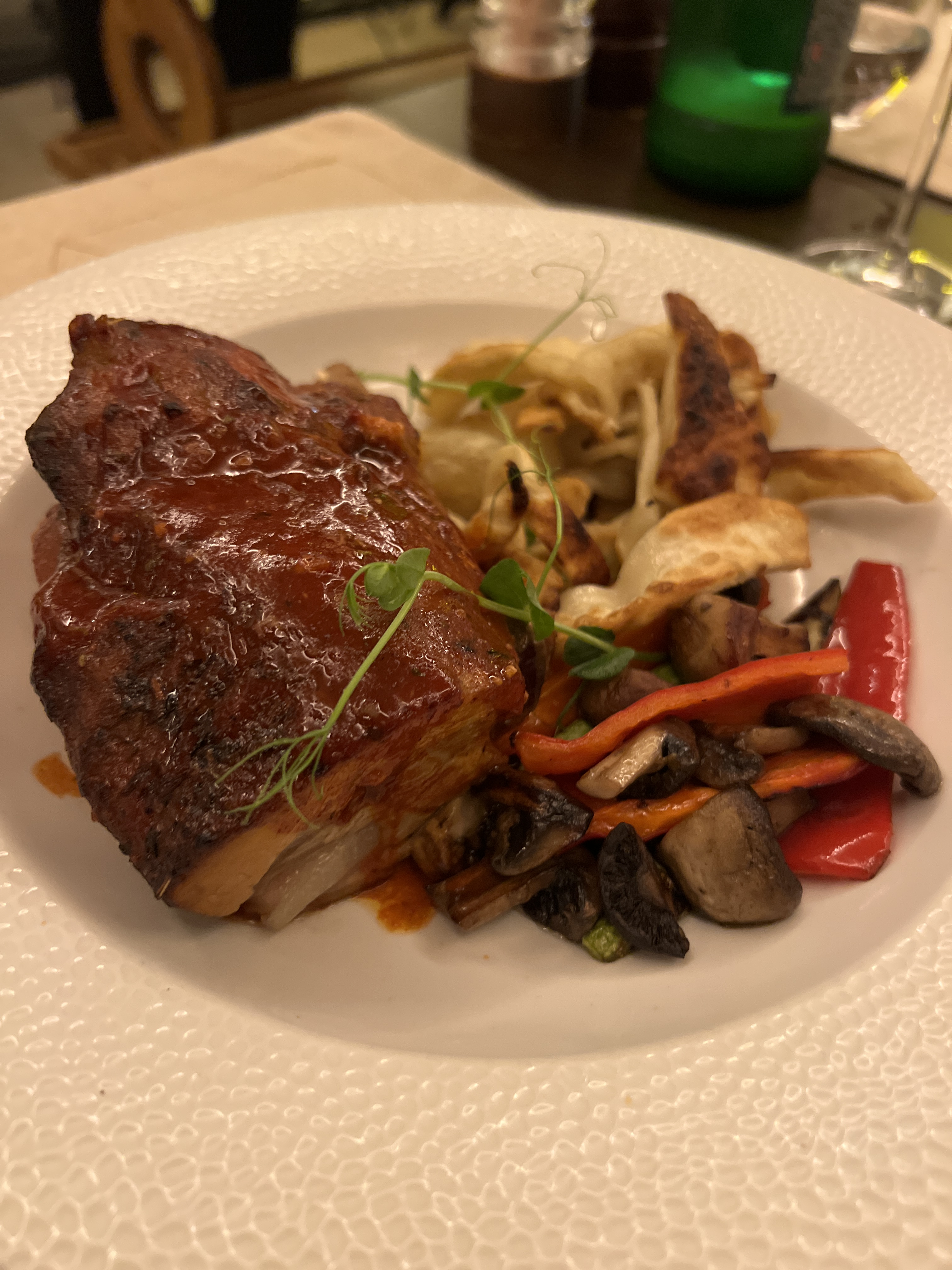
We also went for an amazing meal at ????, which was fancier than we had dressed for but the soup was out of this world.
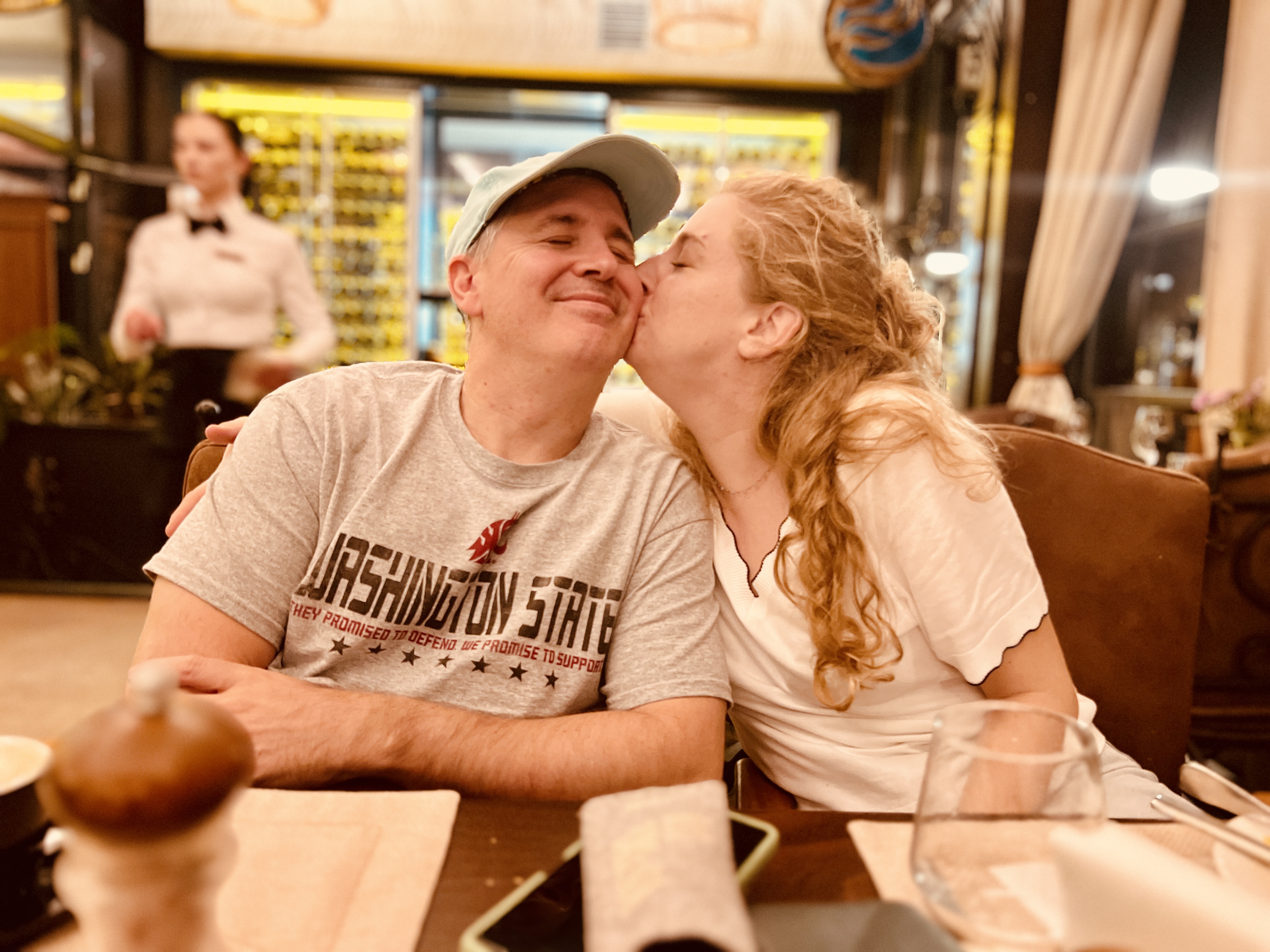
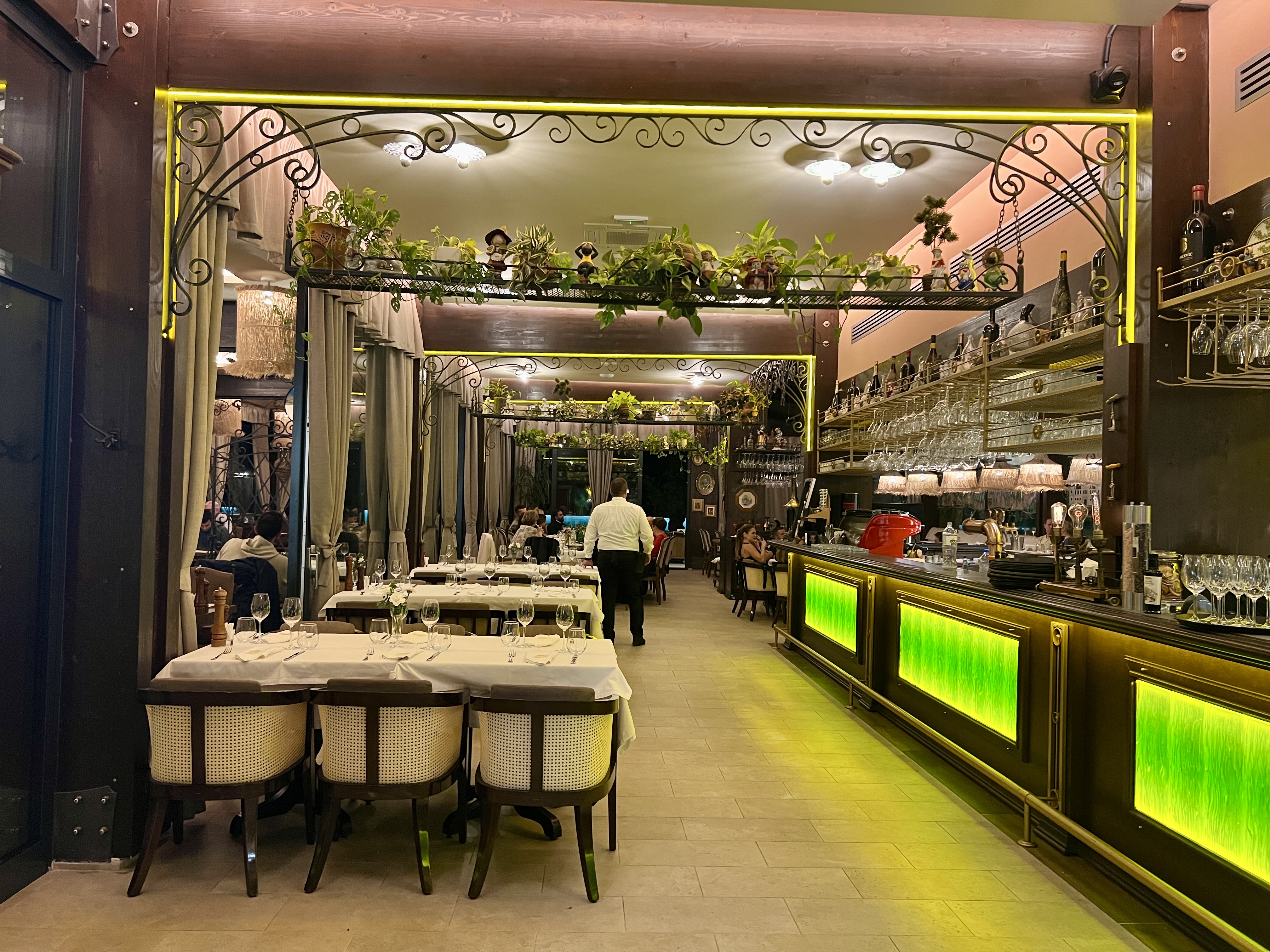
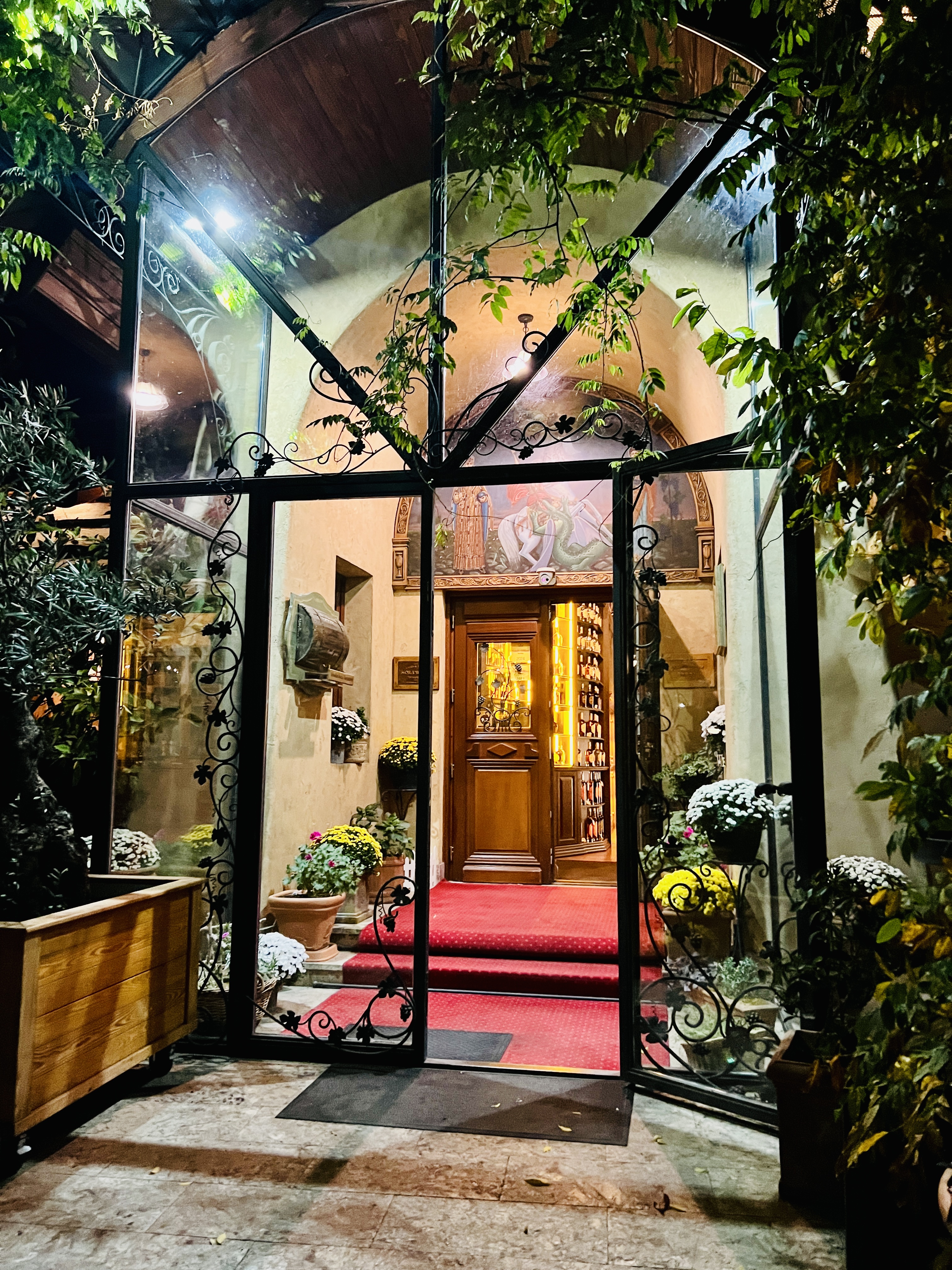
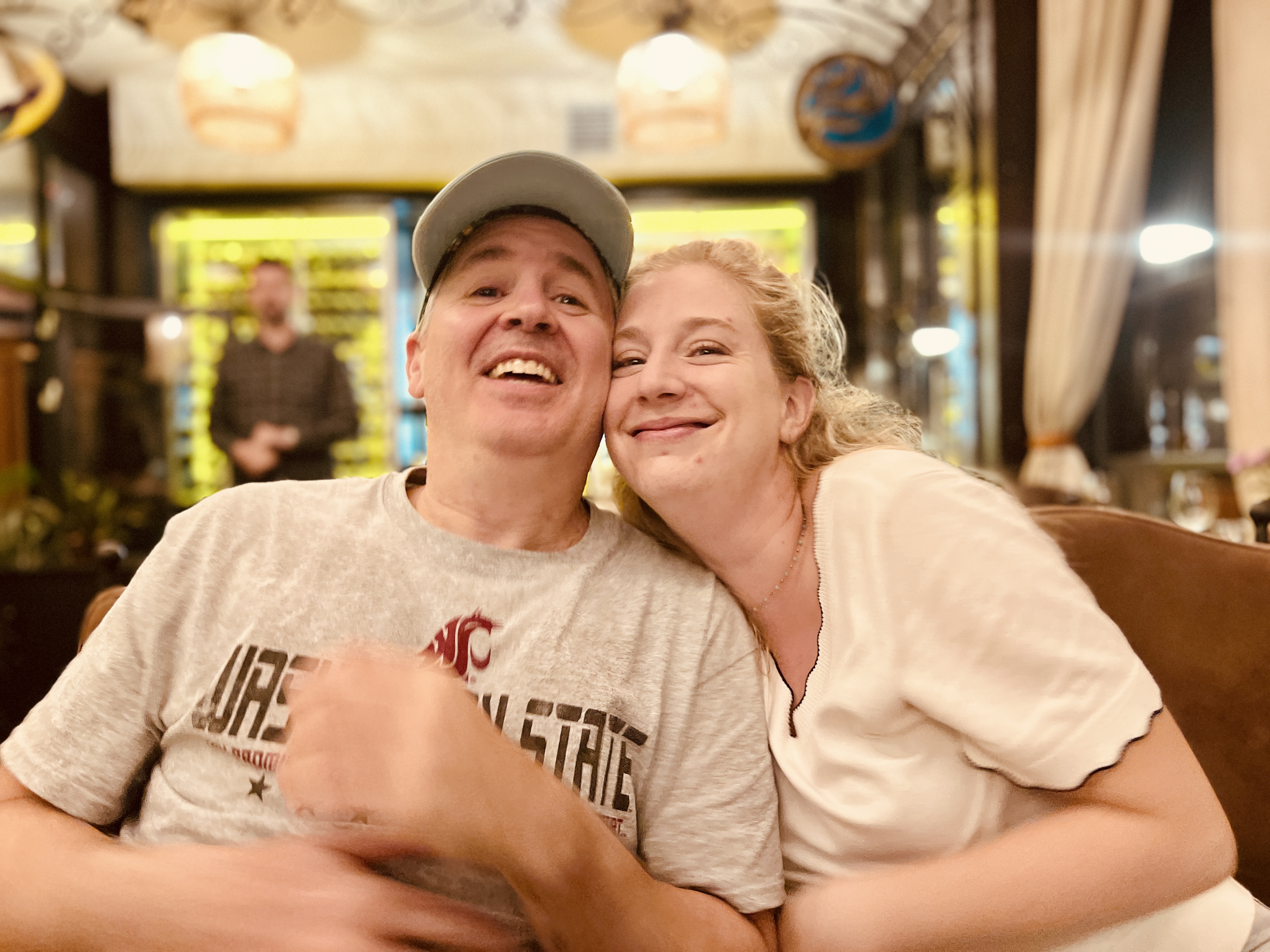
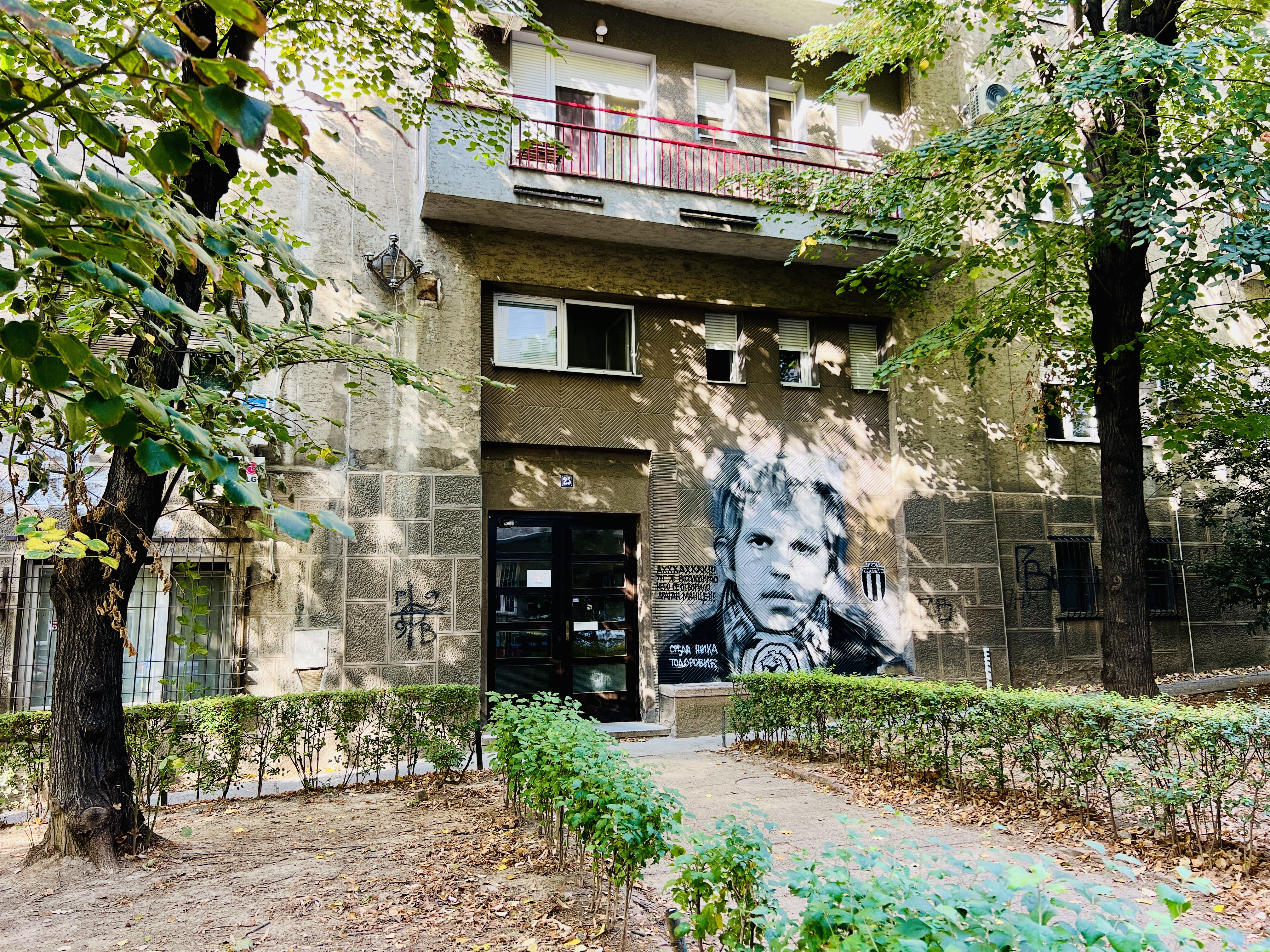
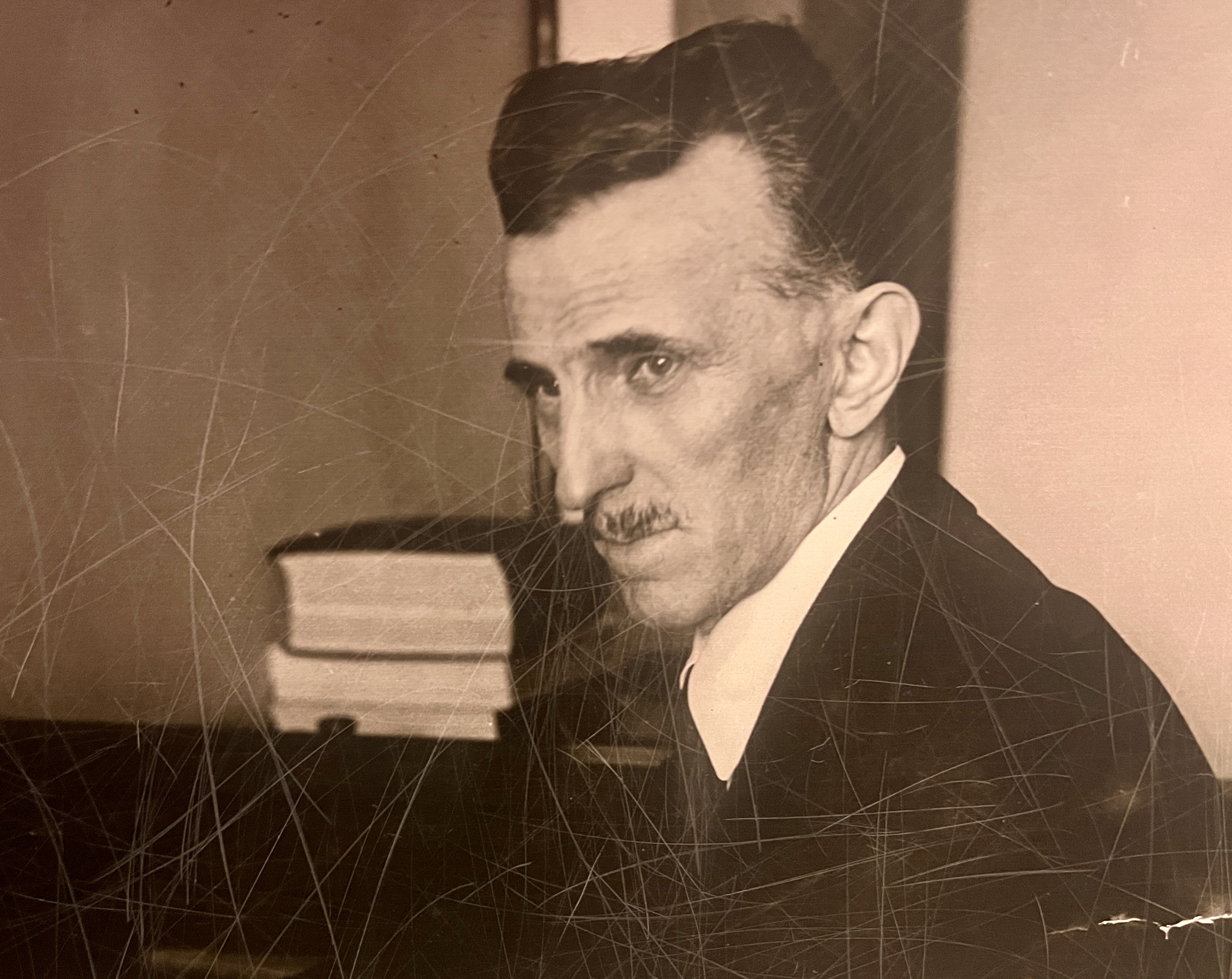
On our last full day in the region we took the train to Belgrade and got to explore the capital a bit – the highlight being the excellent Nicolas Tesla museum and all the interactive experiments that would literally make your hair stand on end as well as the Temple of Saint Sava (founder of the Serbian Orthodox church).
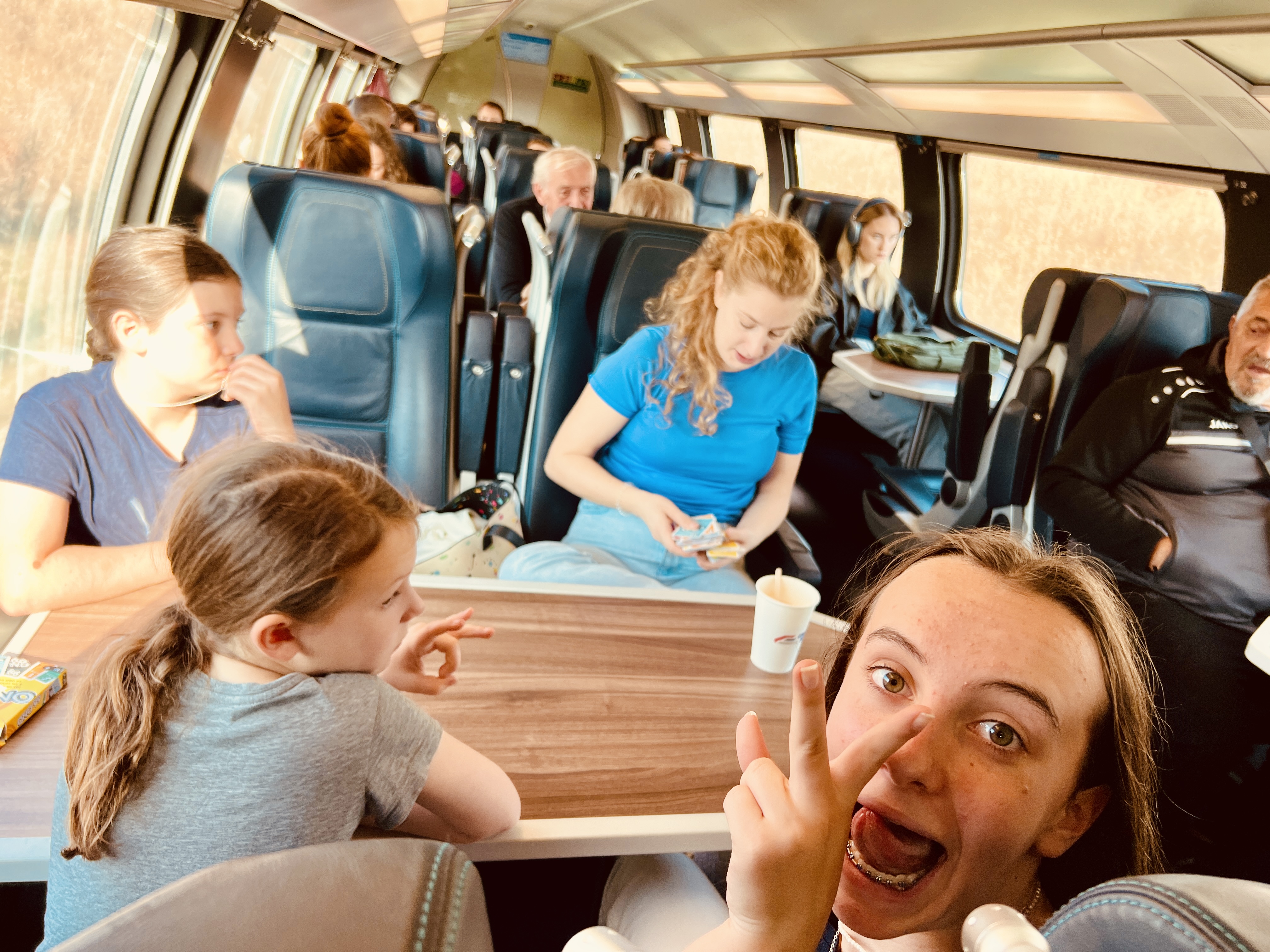
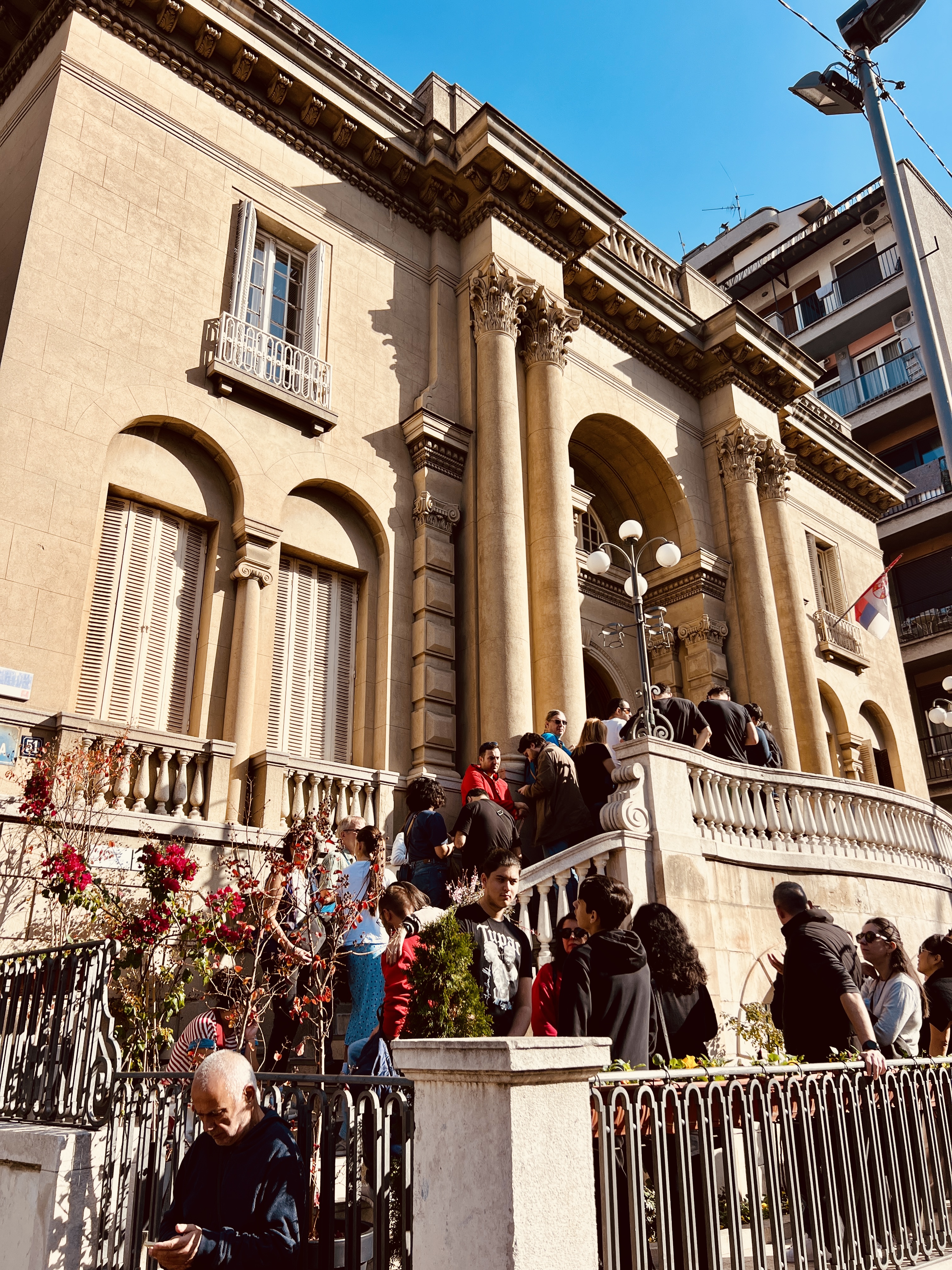
The church although started in 1935 came to a halt during the war when the Germans used the space for storage. As communism and religion don’t really mix, in wasn’t until the late 1980’S s that construction started up again. It was modelled after the Hagia Sophia.
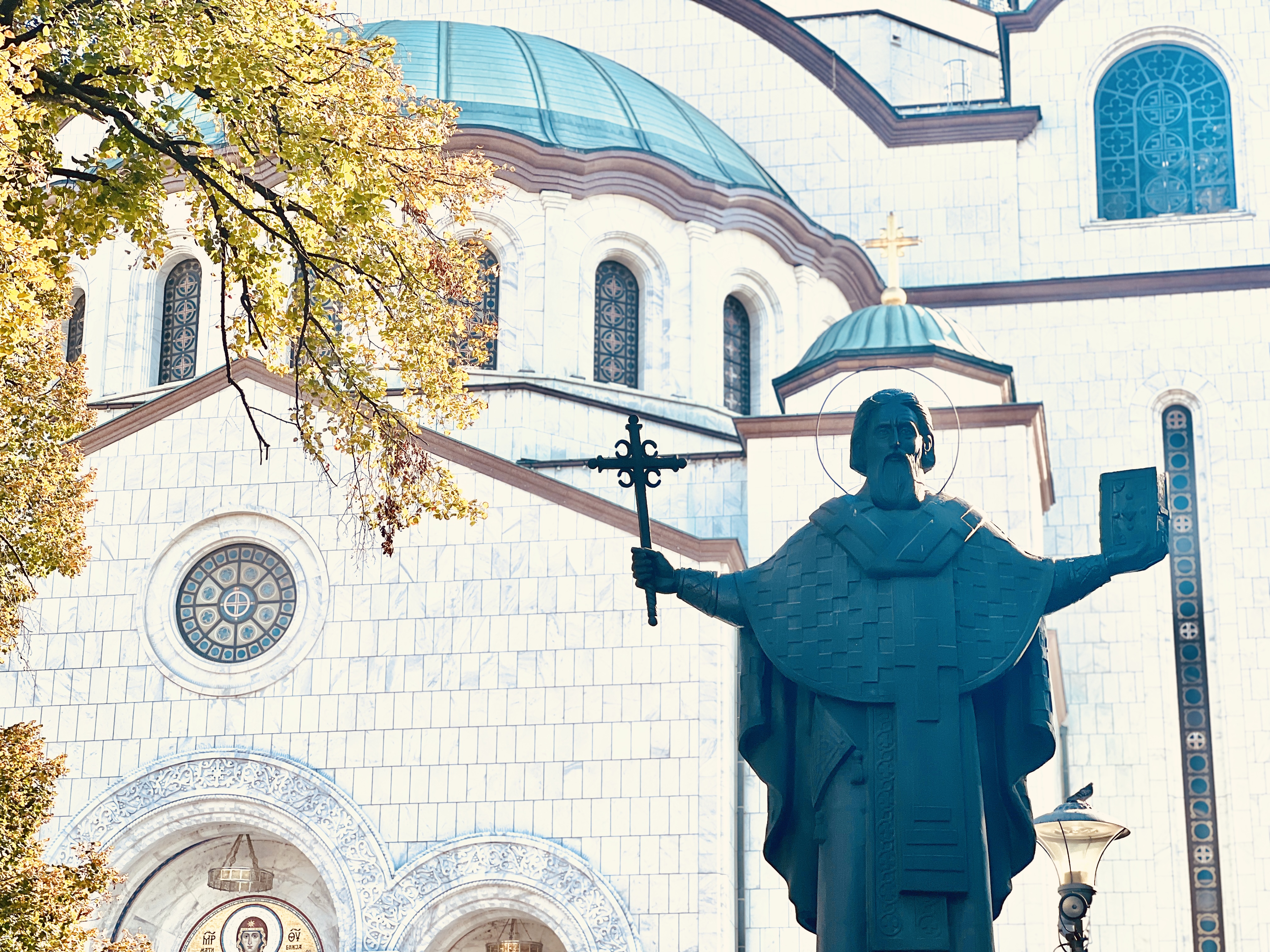
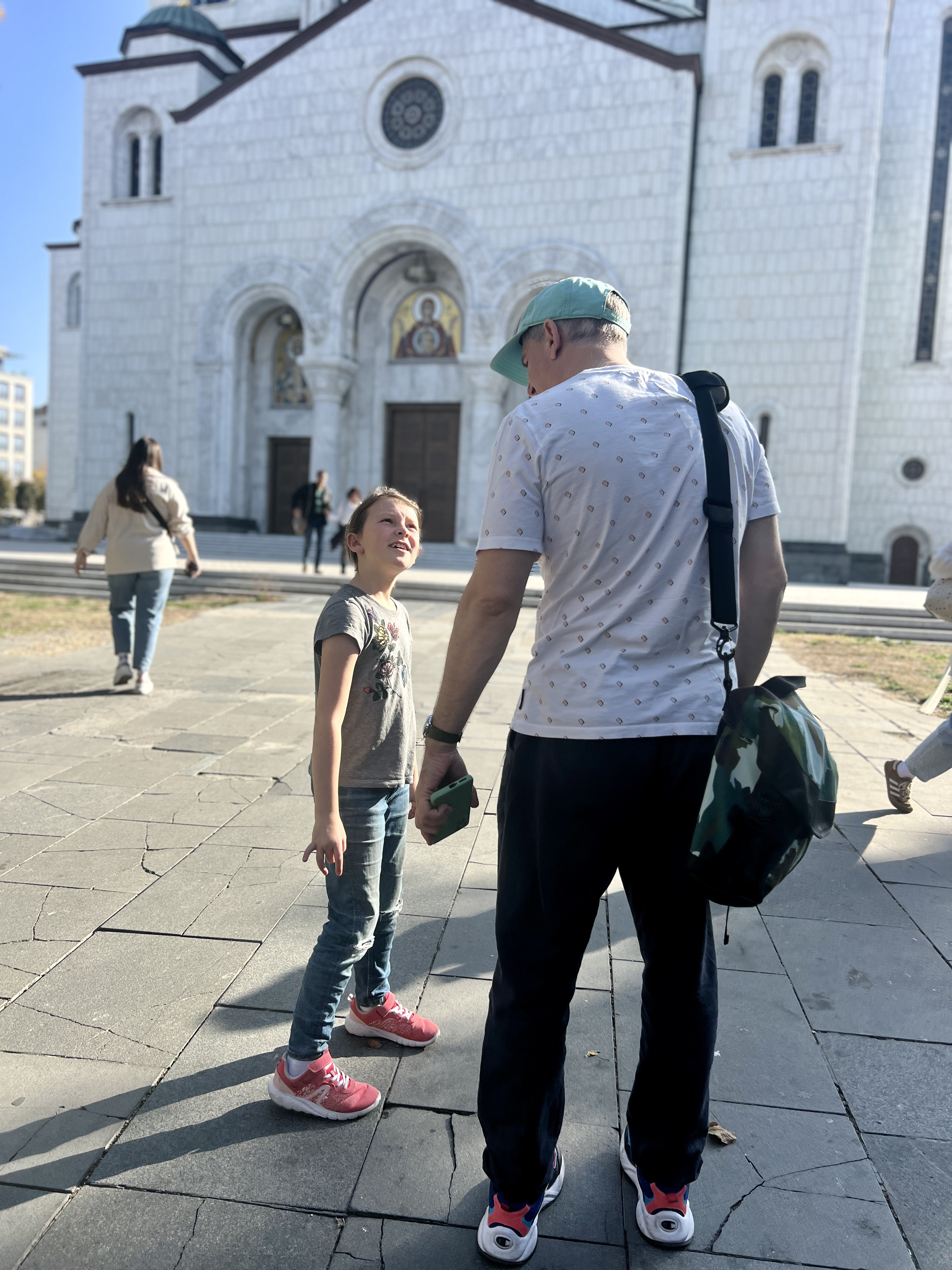
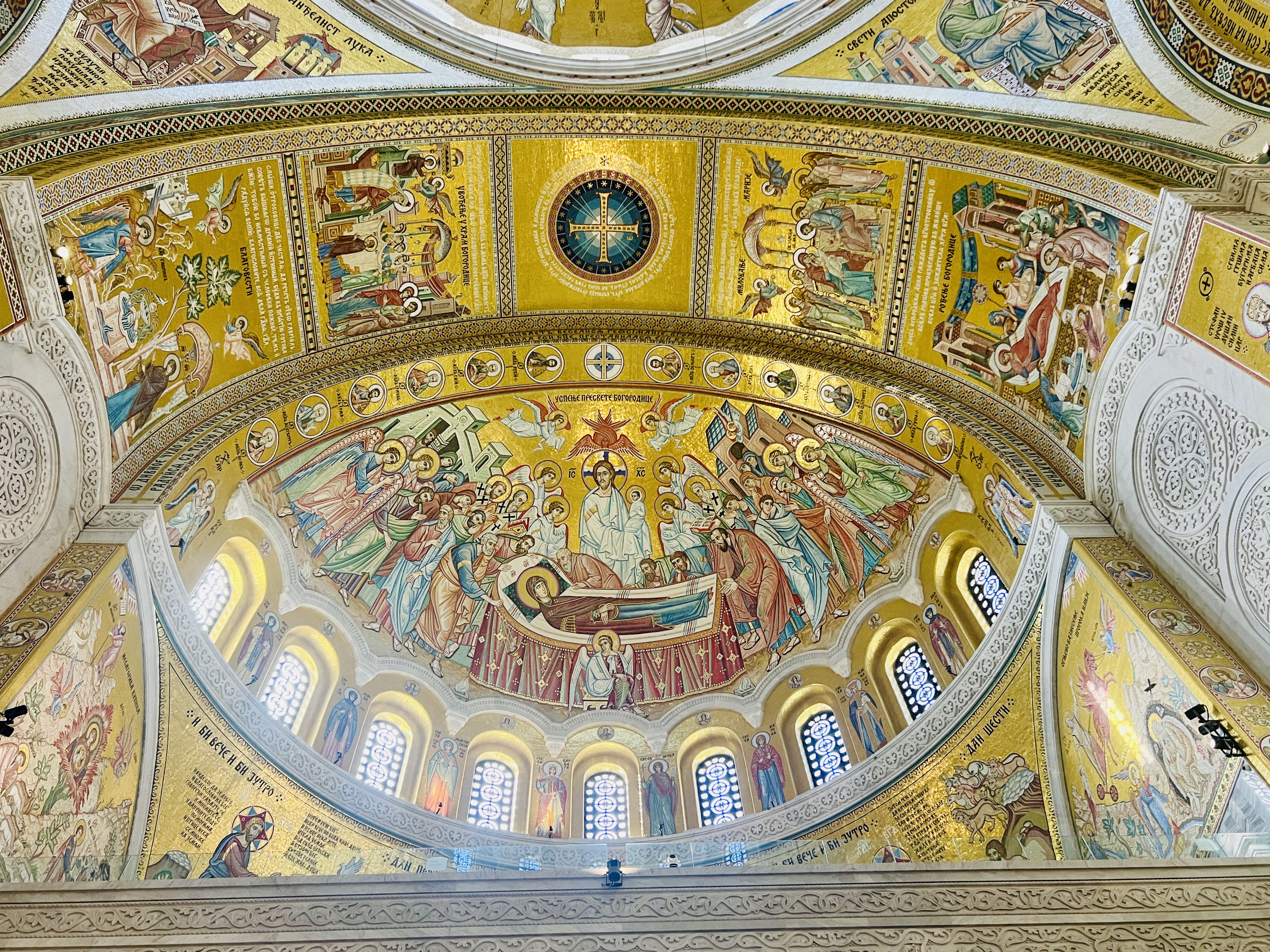
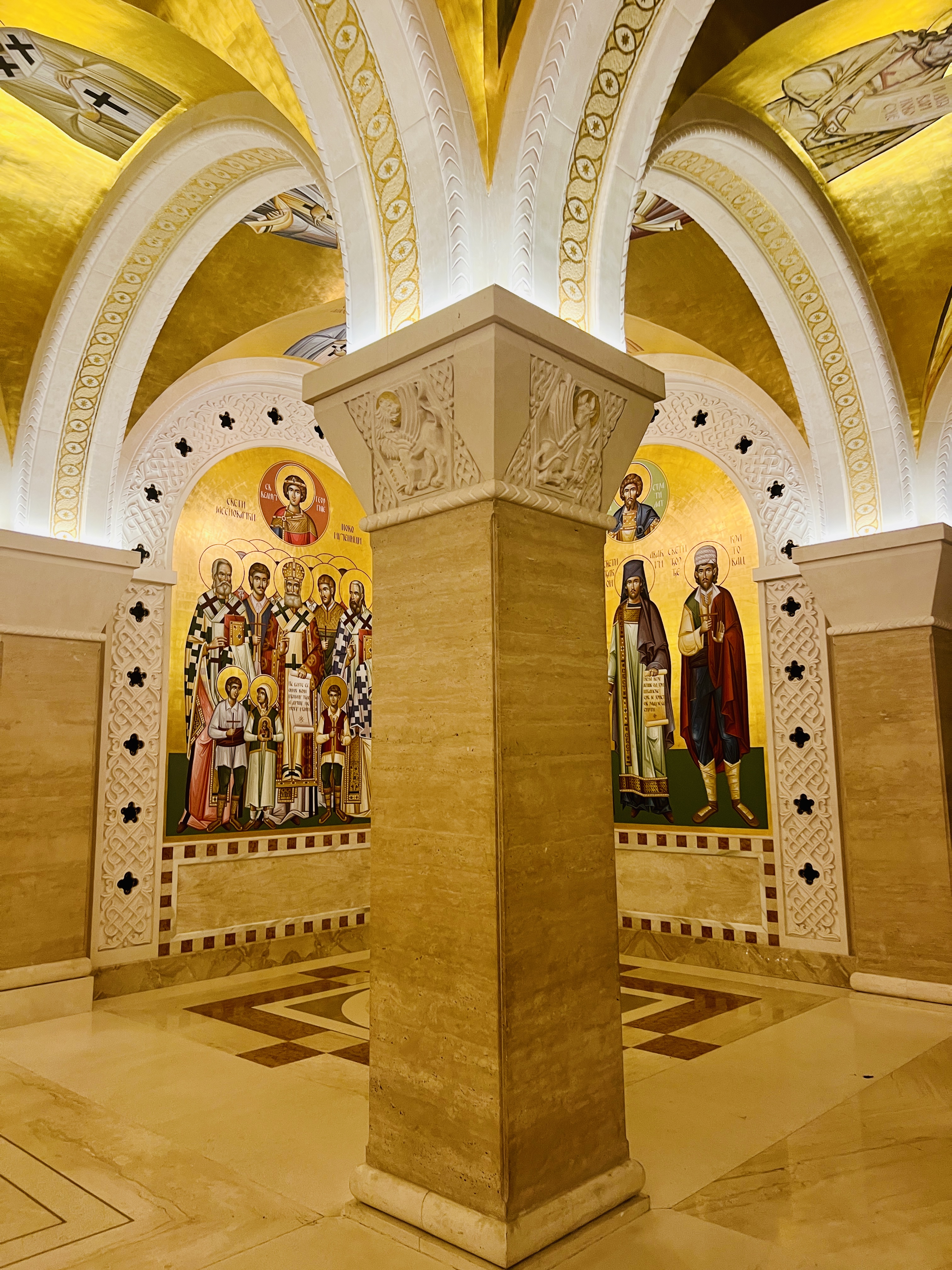
But mostly we just got to catch up with good friends and marvel at how they are able to connect with our girls – who absolutely adore them. Watching our girls get to know our friends has been one of the great joys of our time over here.
And that was a wrap.
For us, the Balkans had surpassed expectations. The recent and ancient history, the people, the food, the natural beauty and the mixing pot nature of the region sitting in south Central Europe made it absolutely fascinating. It was a fun and compact area to travel around, and another step towards exposing the kids to the reality of the world around them. Each country was different and overall it clearly didn’t feel like Western Europe or the life that our kids were used to.
As we made our way to Belgrade Airport to fly out on our last day we got some immediate ‘in the moment’ feedback from the girls.
One of the best trips ever, they said.
Right up there with Japan.
Jessie looked vexed. She has been trying to force rank our various trips into a top 3 and finding it increasingly difficult to do so. Struggling to compare Japan or Spain with Byron Bay, Finland, Honduras, Meribel or the Balkans. I’m pretty sure I didn’t have this issue as a kid.
They are all becoming independent and even a little bit ‘street wise’ on our various trips. They are packing and carrying their own stuff (this time Sienna even remembered to pack pyjamas, and there wasn’t a cactus in sight). They are learning to get around in broken phrases of different languages, and have the confidence to engage with locals to get things done. They are not getting phased when things go a bit sideways. They are learning how to navigate around places even if they can’t read the street signs or understand the language (although it has to be said that Google Maps and Google Translate make this stuff so much easier than it used to be).
Most importantly, they are learning to love travel and exploration.
 Joseph FAMILY ADVENTURES 2023 - 2025