1 April to 4 April
Leaving Valladolid, our first stop of the day was to Cenote Dzitnup, a two-for-one deal. These are a bit more off the beaten track than Ik Kil and there was basically no one there.
We were provided with an unnecessary but unavoidable ‘tour’ of the cenote complex – here are the (clearly marked) stairs to the cenotes, here are the showers, here are bathrooms… and where is my tip? We managed to extricate ourselves with a modest contribution and descended the first winding stairway.
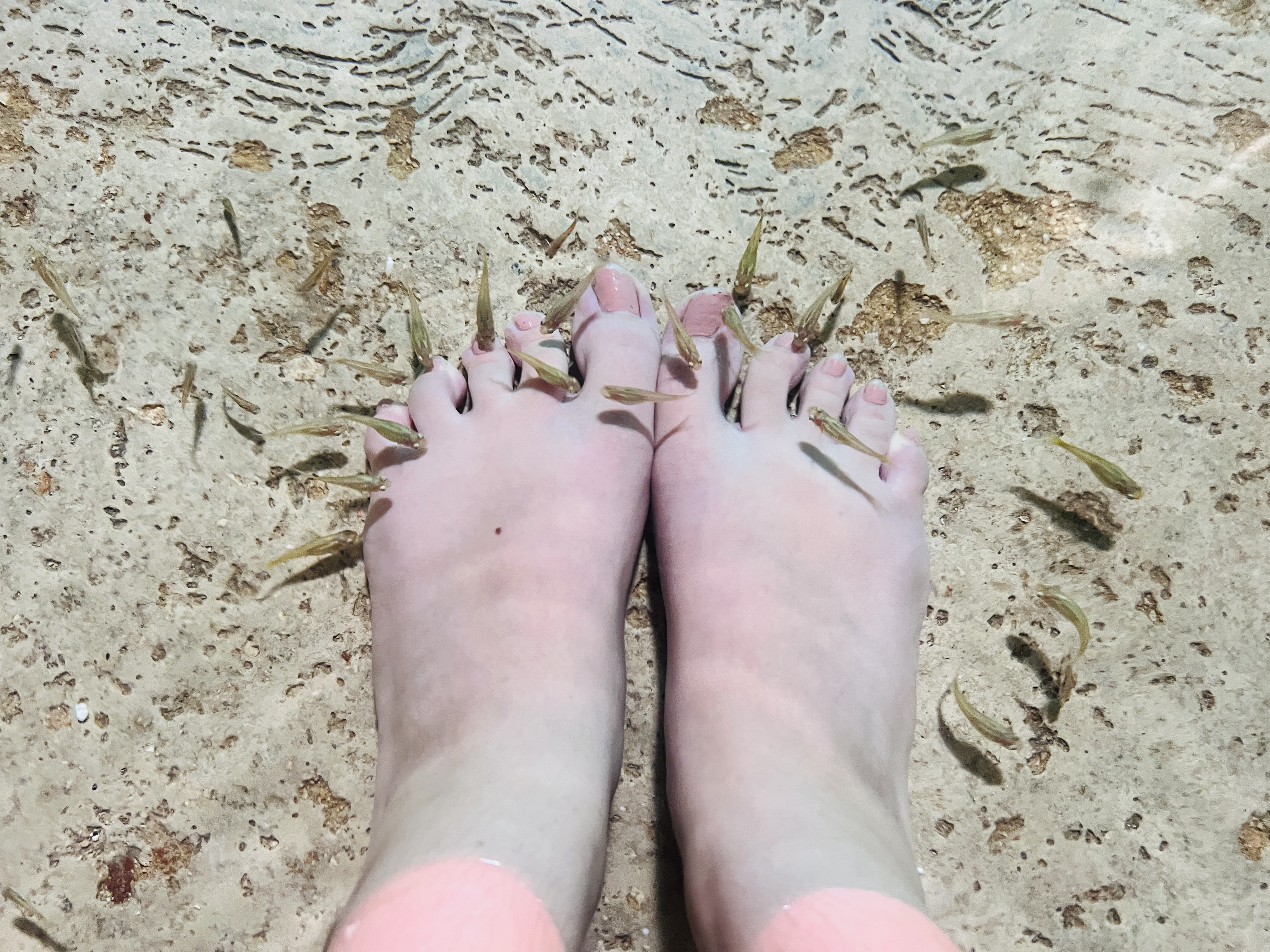
The roof of the first cenote, Cenote Samula, had partly collapsed, leaving half the water in sparkling sunshine, with the rest concealed under it’s limestone roof. It had the obligatory crystal clear, coolish water and a myriad of small and medium sized fish. The smallest ones seemed to enjoy nibbling on the toes of tourists, much to the amusement of our girls, who were more content to sit on the ledge and get a free, natural pedicure whilst I floated in the sun.
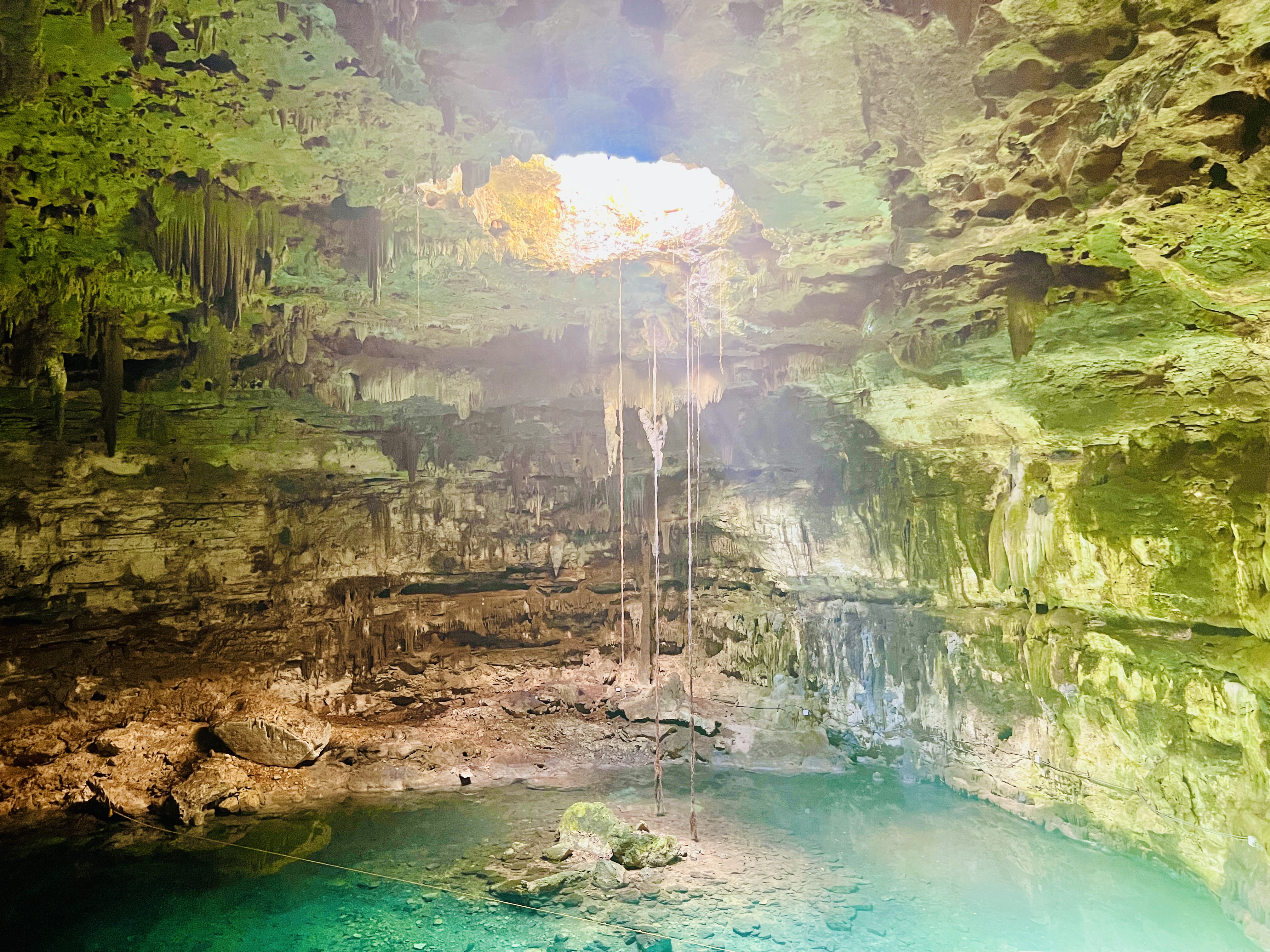
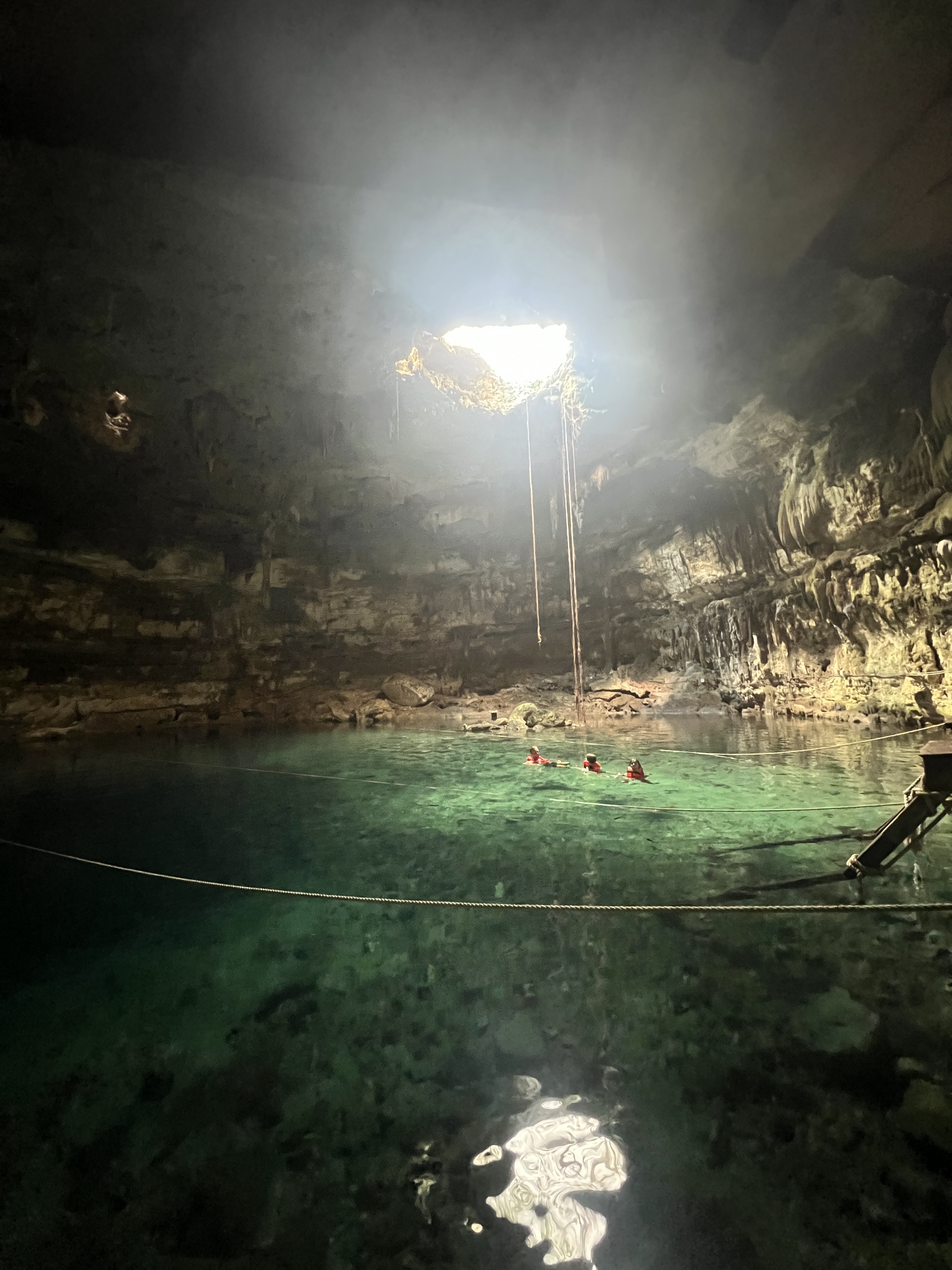
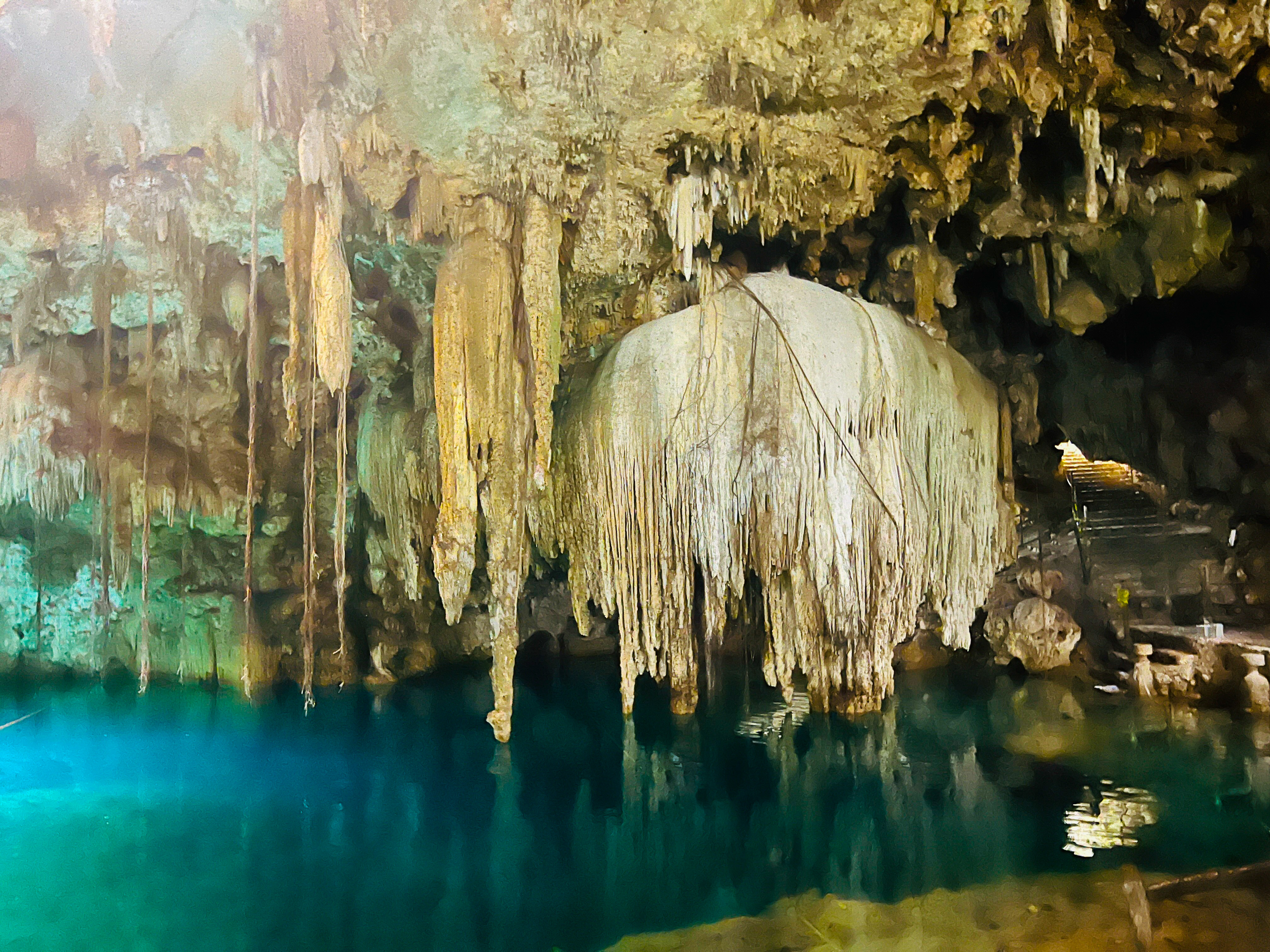
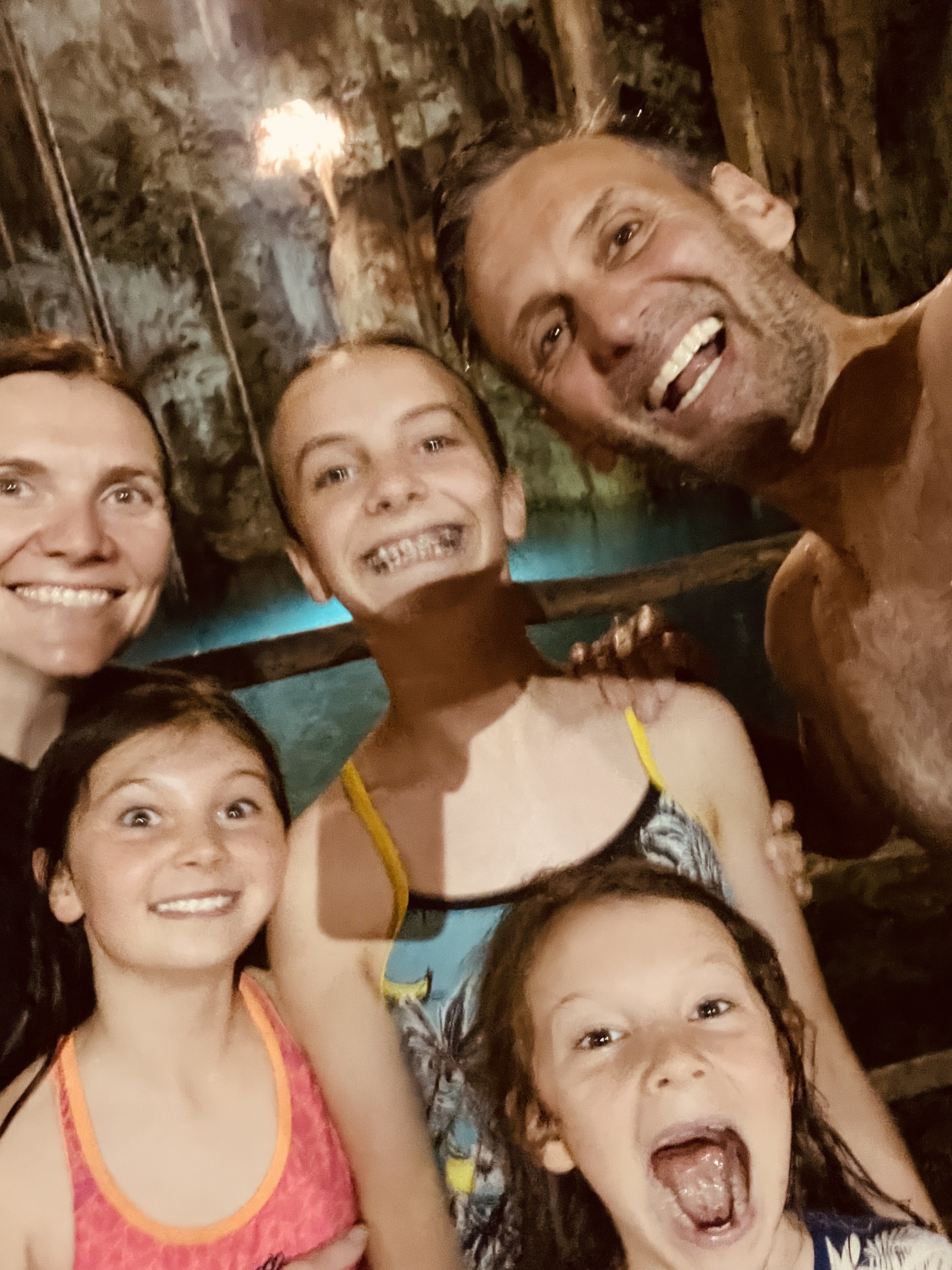
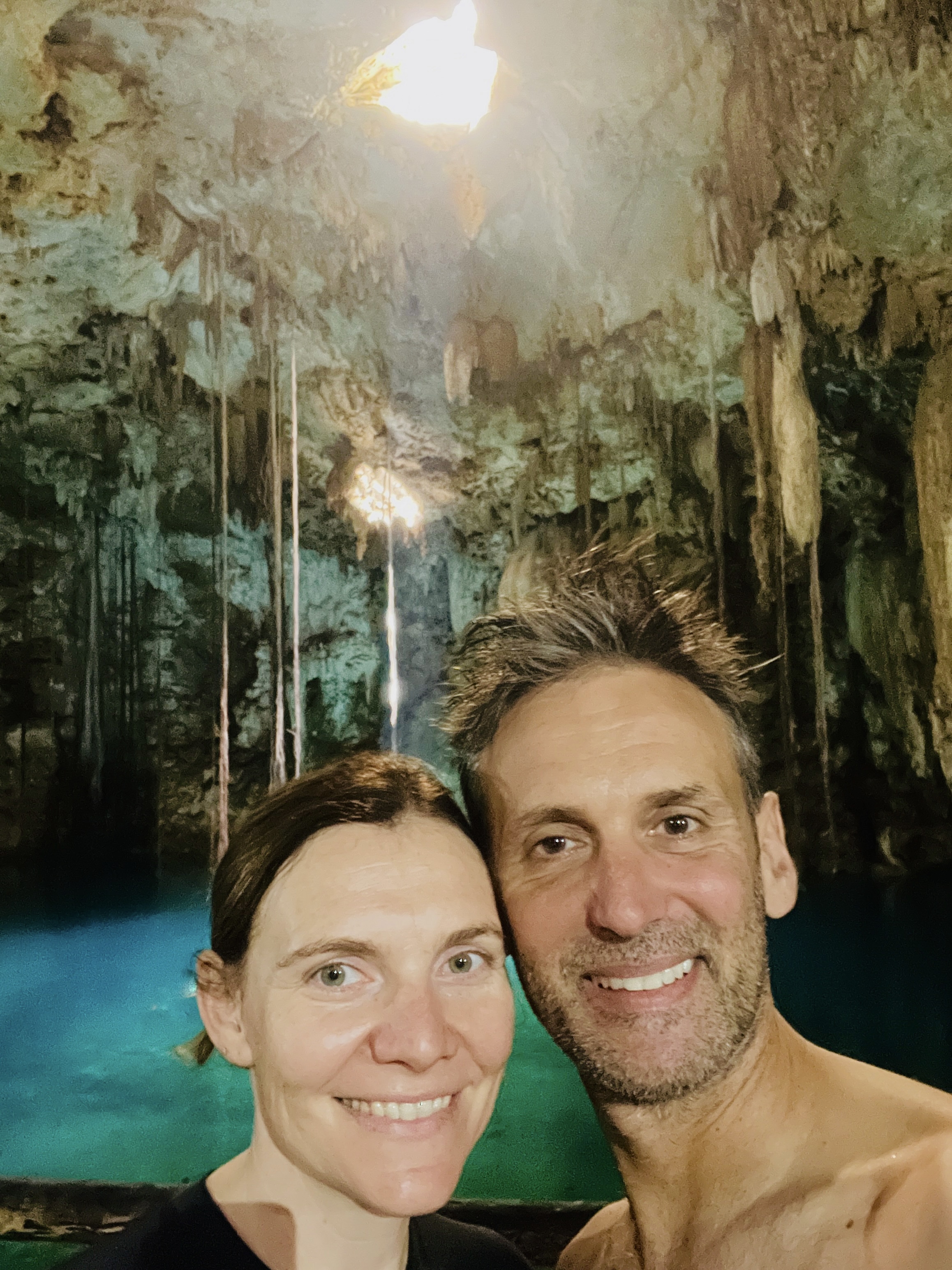
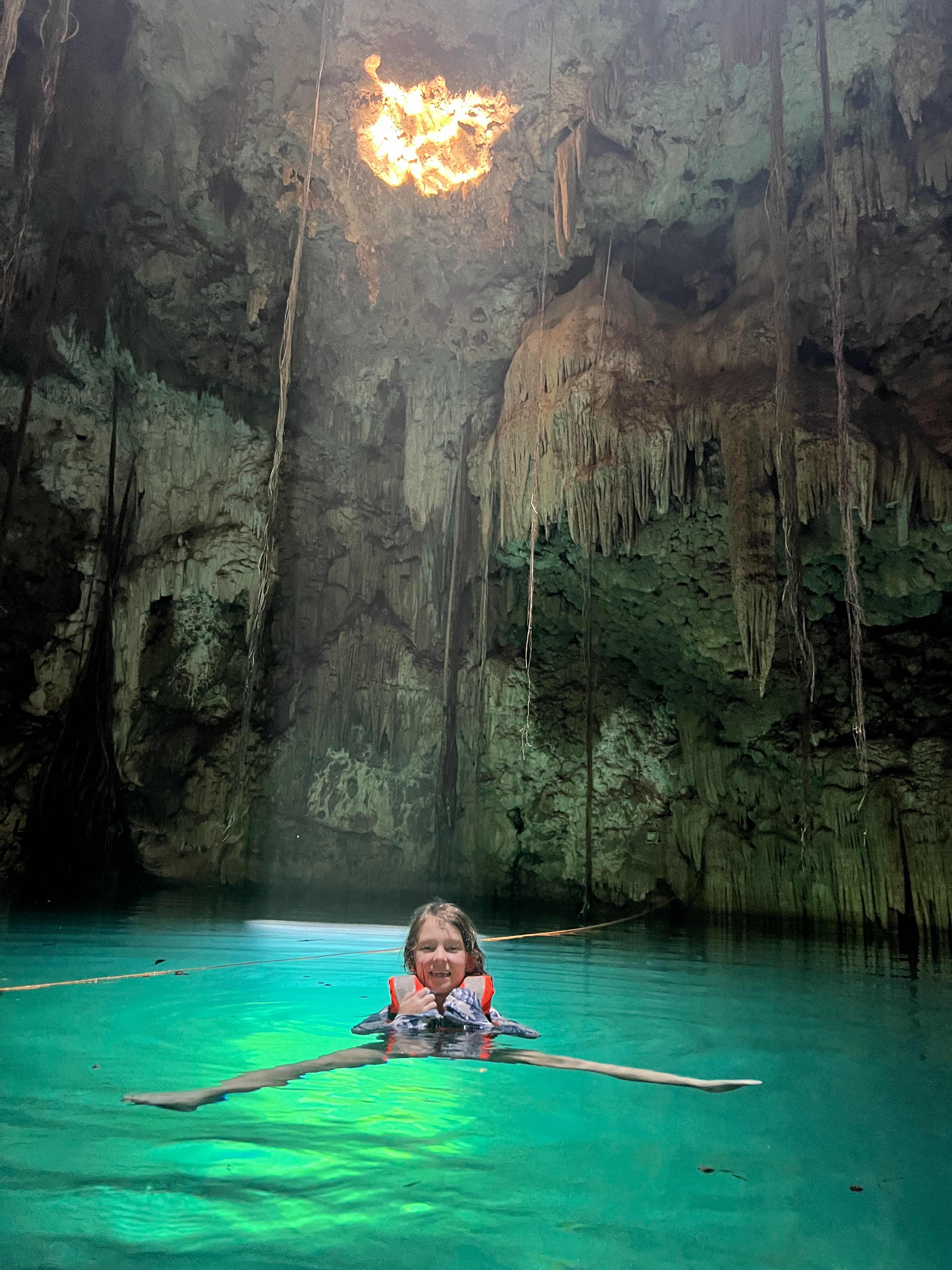
The second of cenote, Cenote Xkeken, was basically a cave, with a single narrow hole in the roof which cast a spotlight into the sparkling water. Stalactites dripped down from the ceiling and bats nestled in the crevices. It was a place of incredible peace and beauty, until we arrived at least. Within minutes the only other 2 people there had escaped our children, and we had the place to ourselves for the next half an hour.
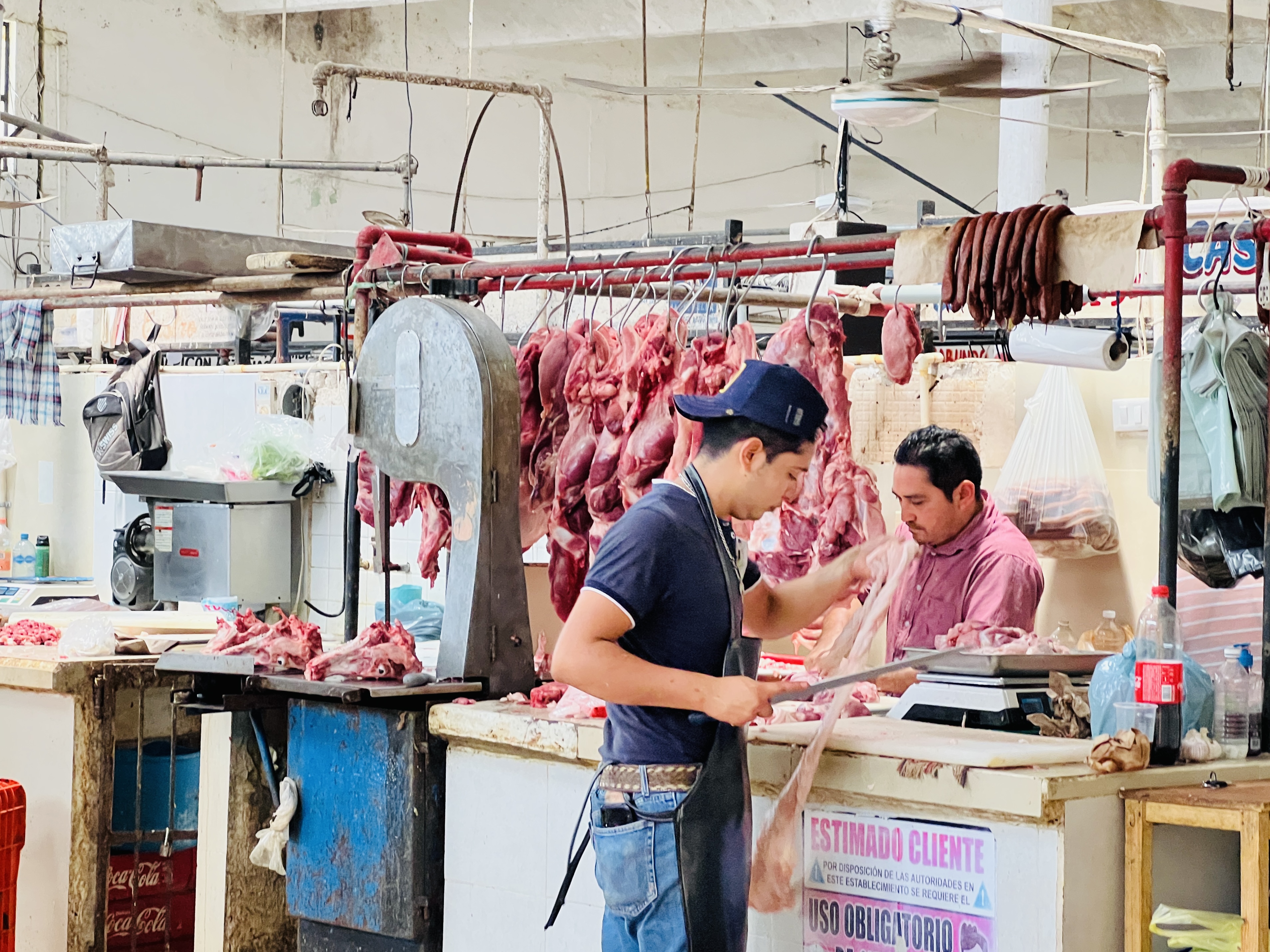
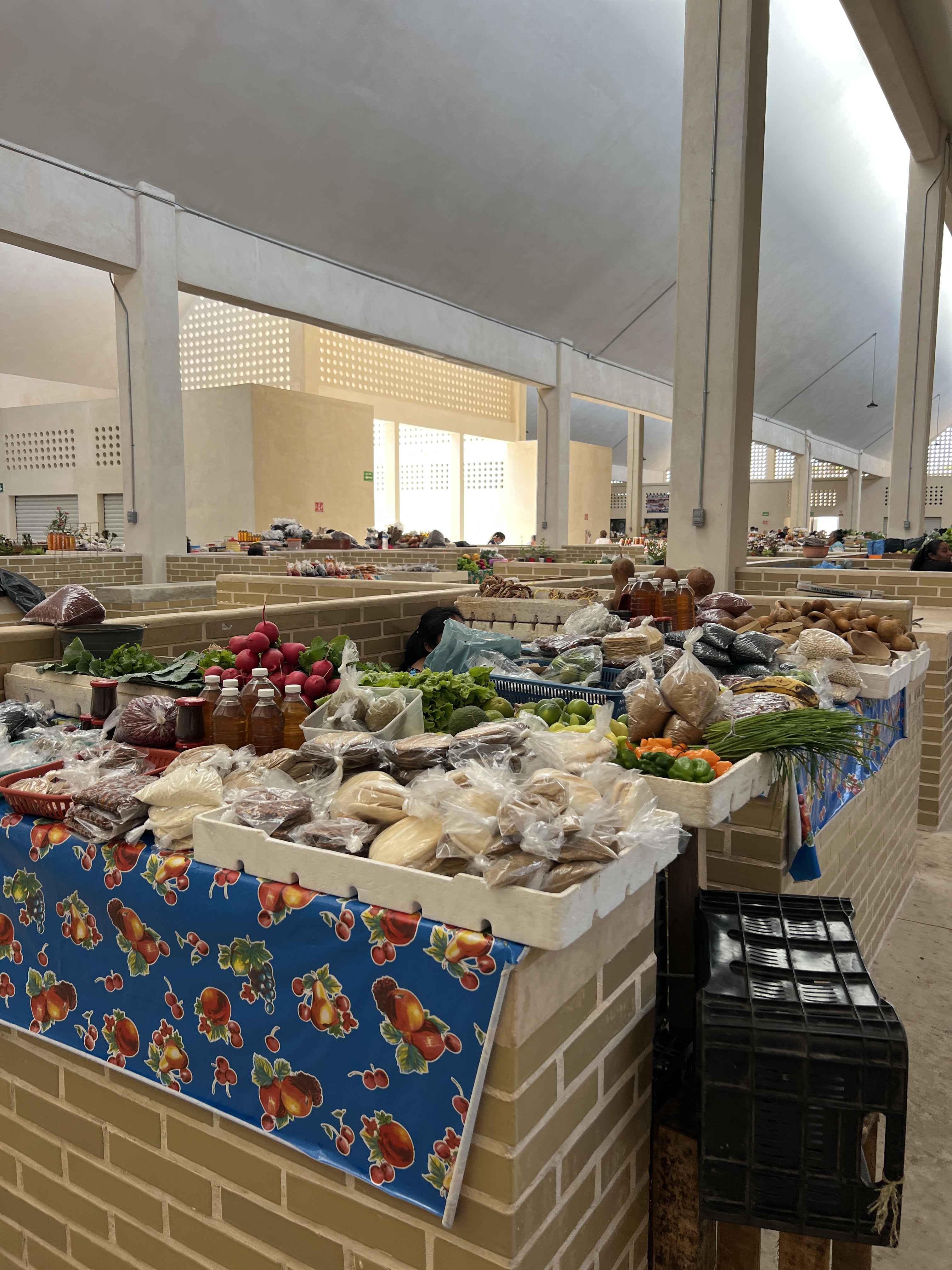
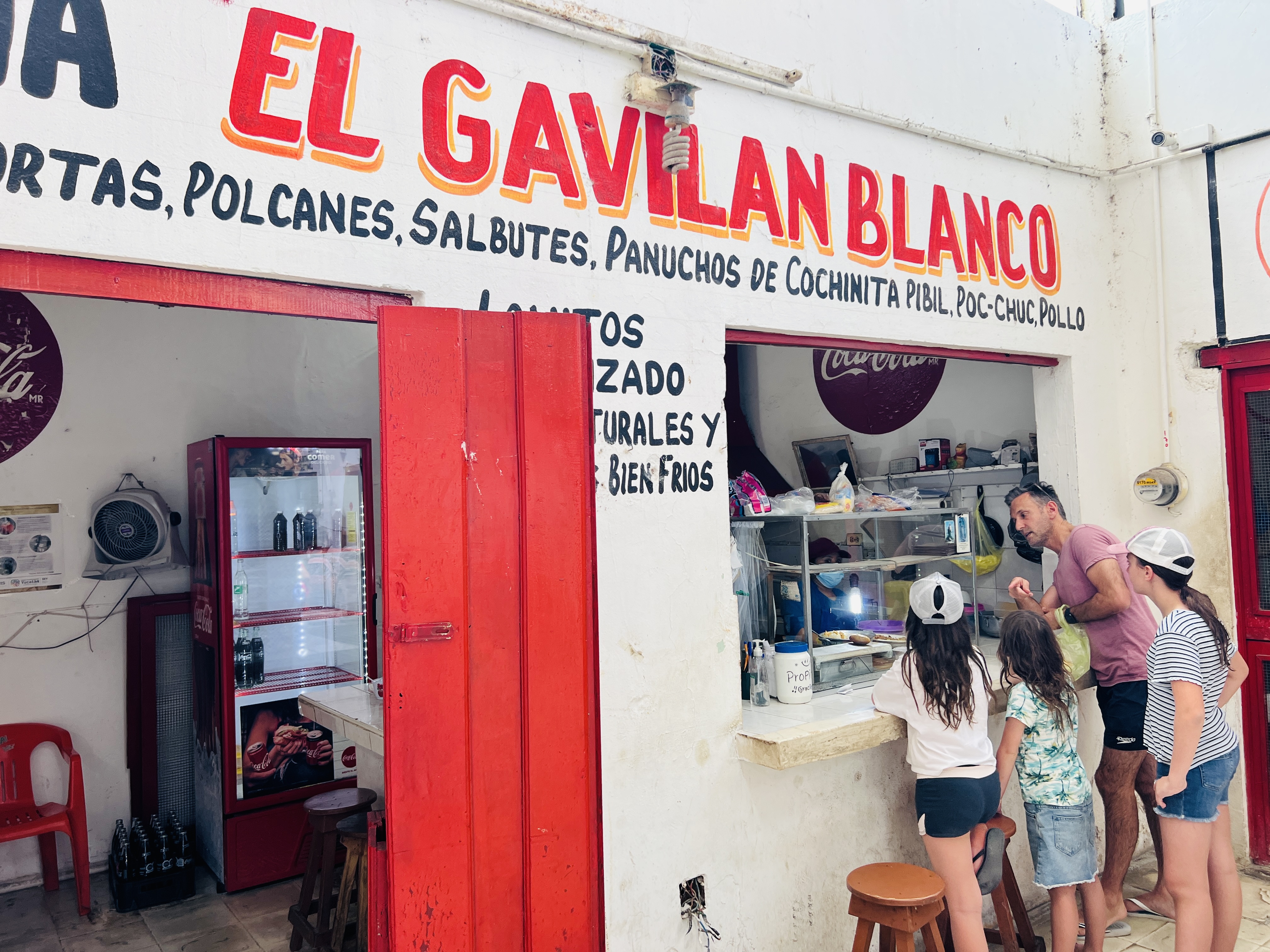
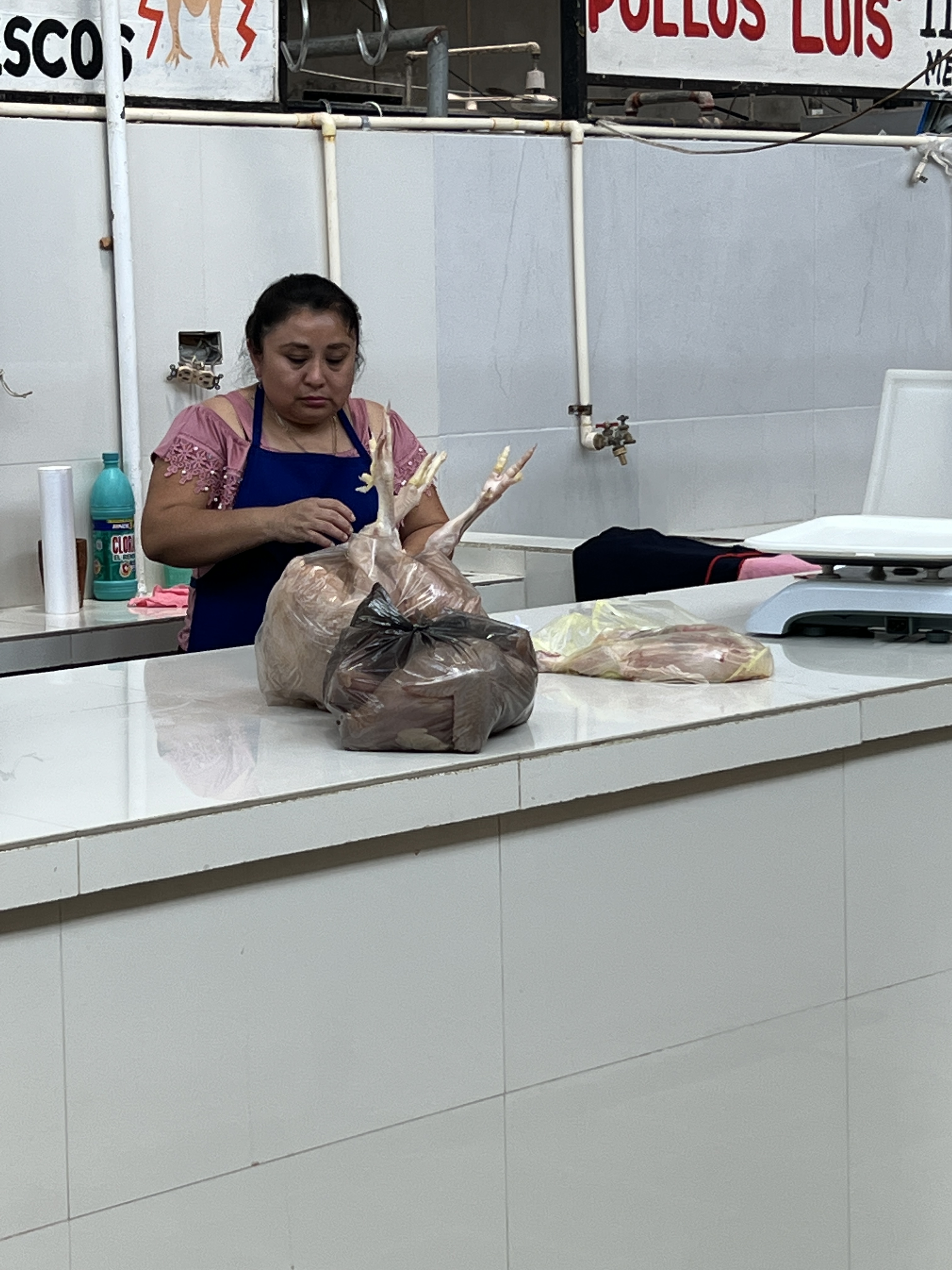
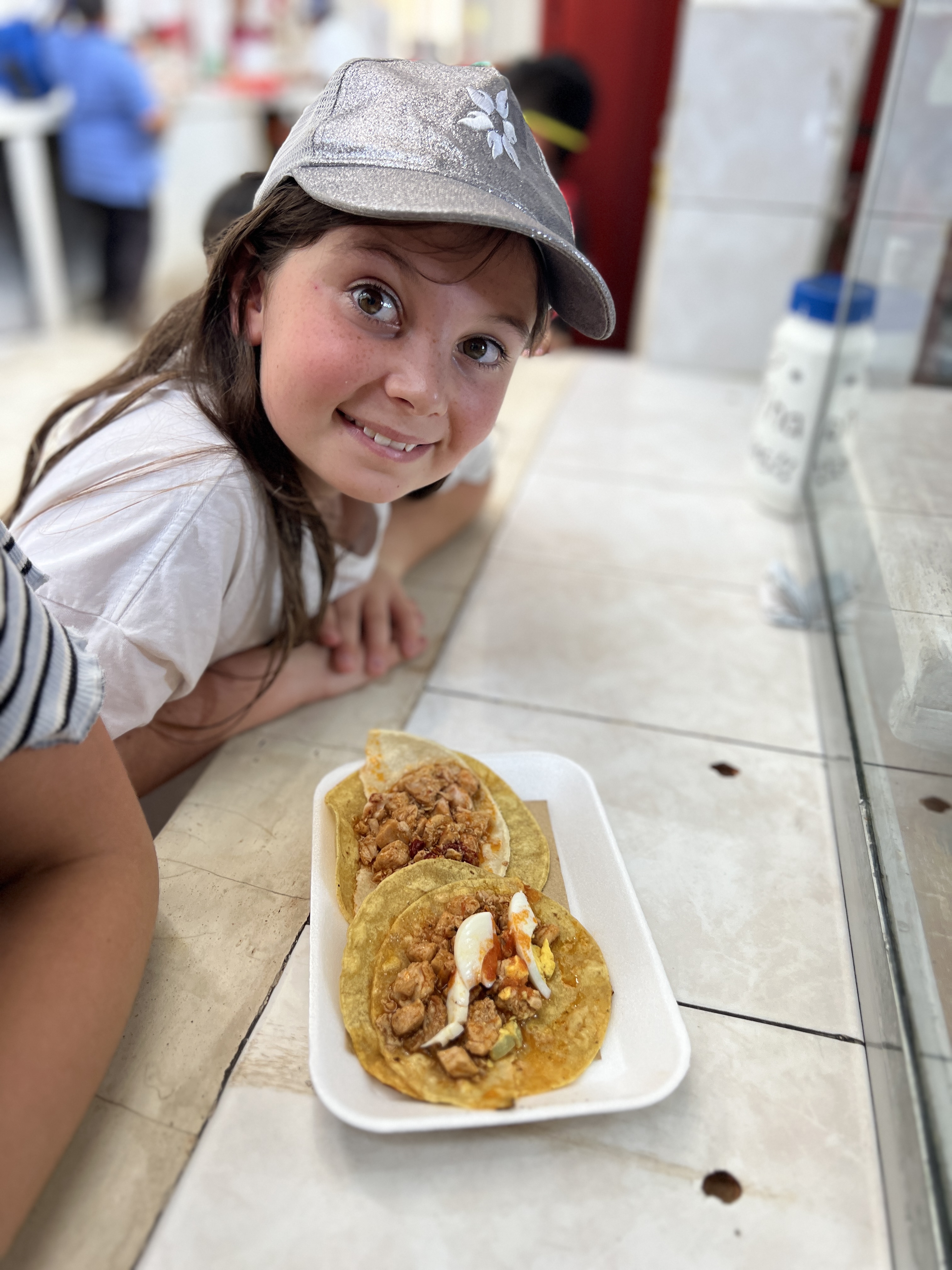
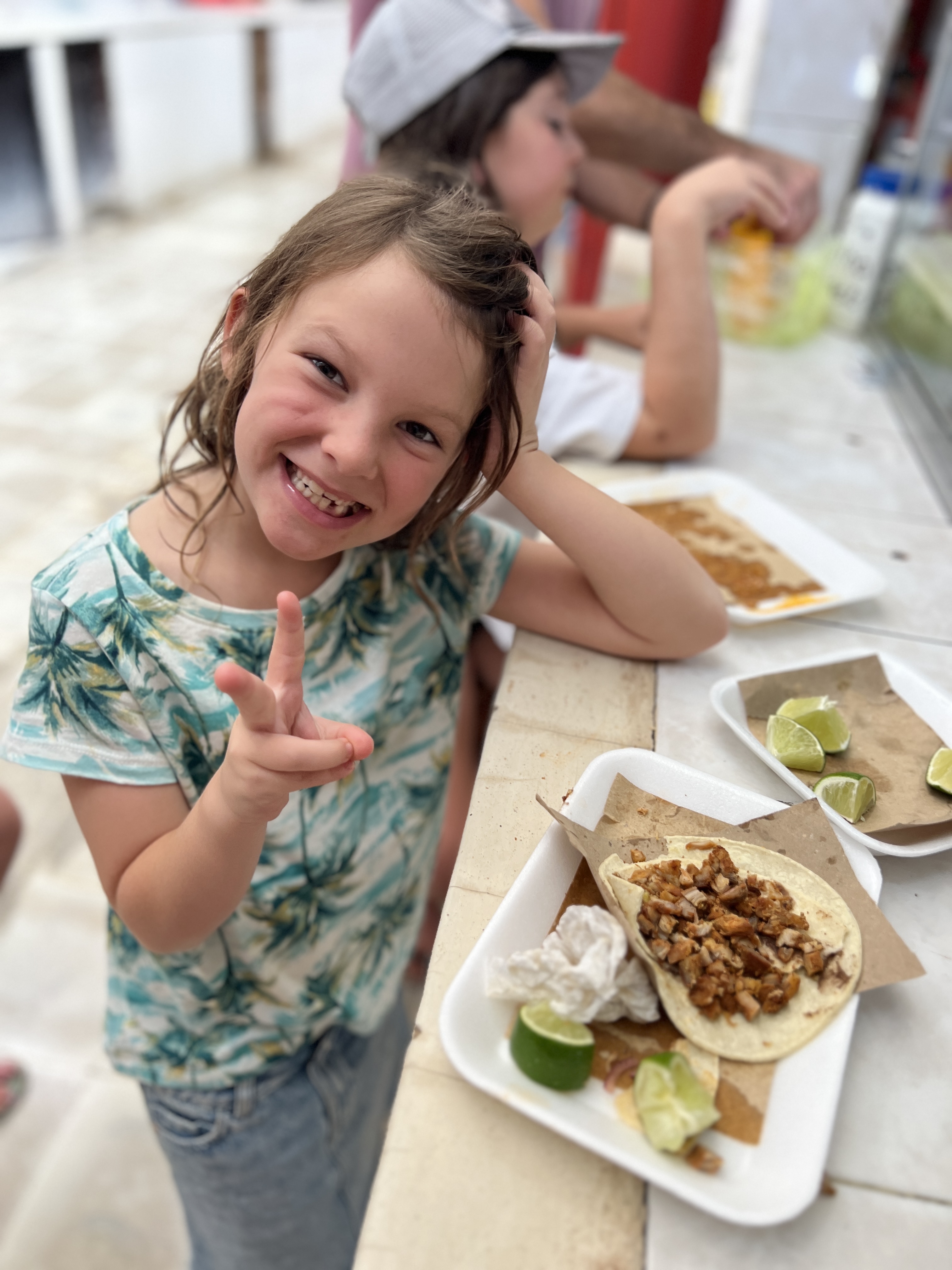
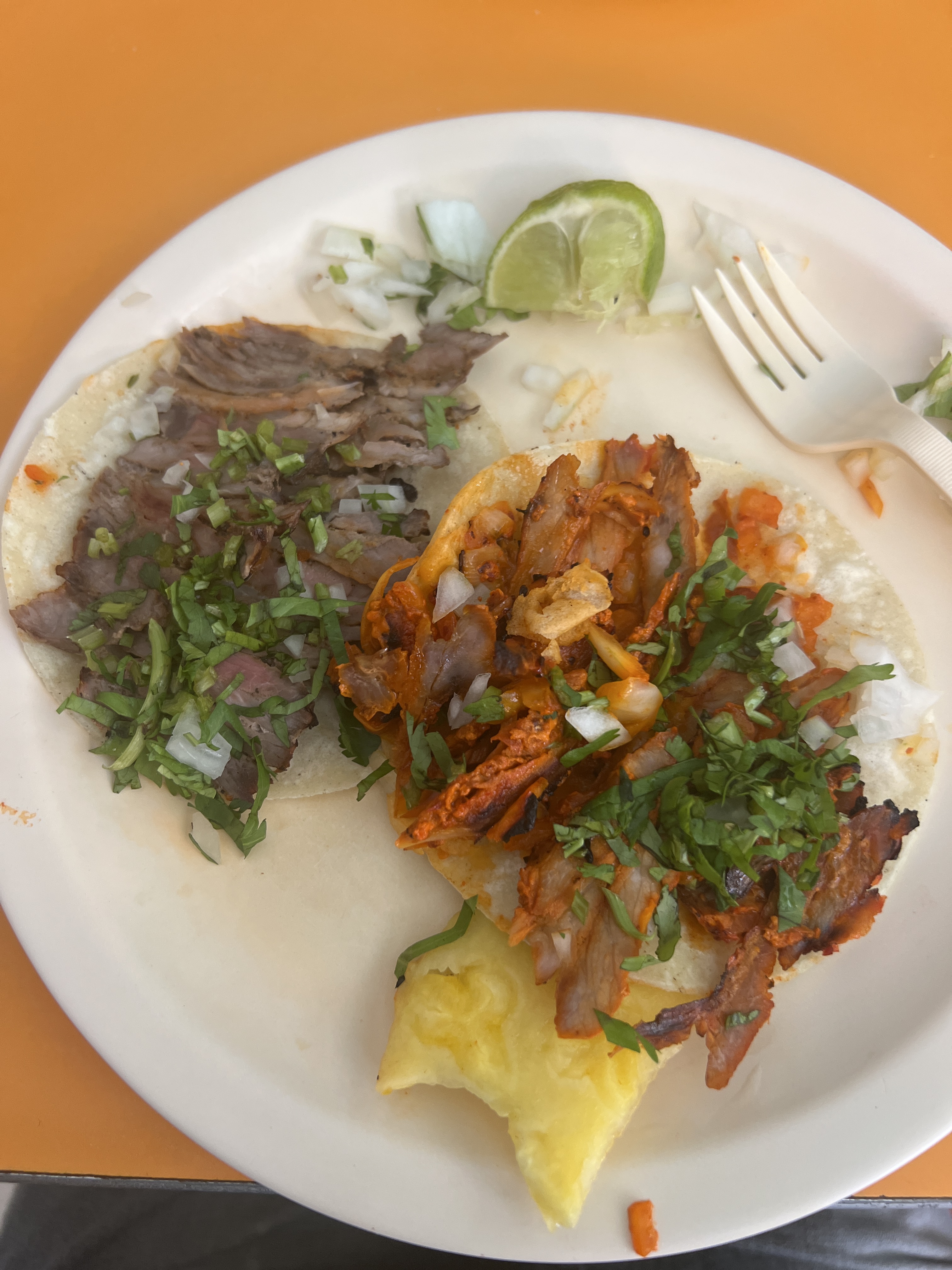
In time, Sena announced she was done with cenotes and wanted to move out for lunch. We doubled back to Valladolid for the last time and made our way to the fresh food markets. We made our way paste the butchery section, the kids openly staying at the entire animals up on hooks in the 30 degree temperatures, and headed for the relative safety of the fresh fruit. Fistfuls of fresh pineapple, mango and melon later, we feasted on amazing fresh tacos and walked out with the whole experience costing less than $10 for the family. Now this felt like travelling.
We drove out of Valladolid with a hint of sadness – both to be leaving and at the pace with which time was now flying by; and excitement to be heading towards the coast, via Cenotes Dzitnup which were enroute. The kids, sick of hearing about how wonderful Tulum was going to be, were excited at the prospect of us stopped yabbering on about it, and to finally get to see it for themselves.
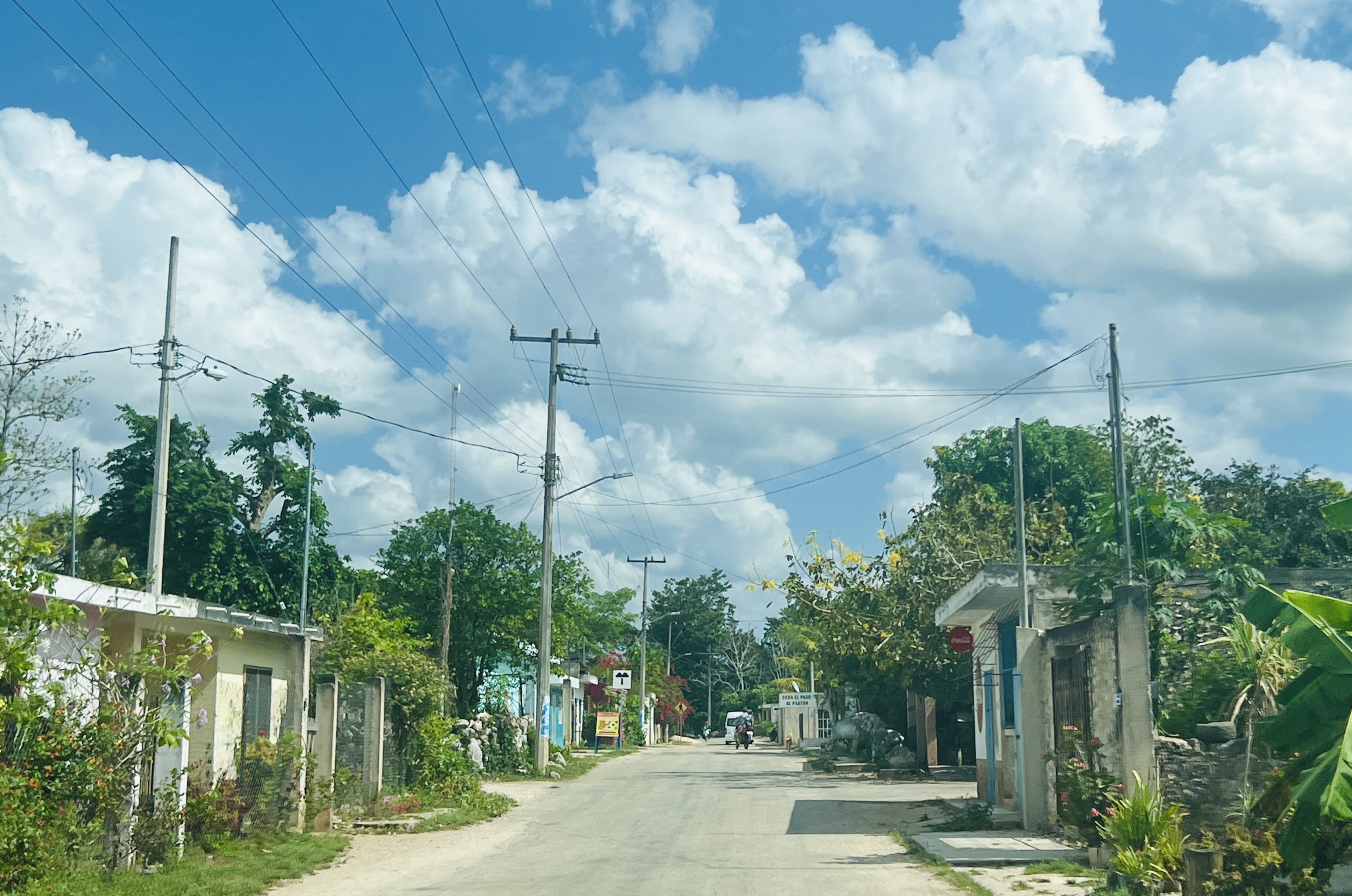
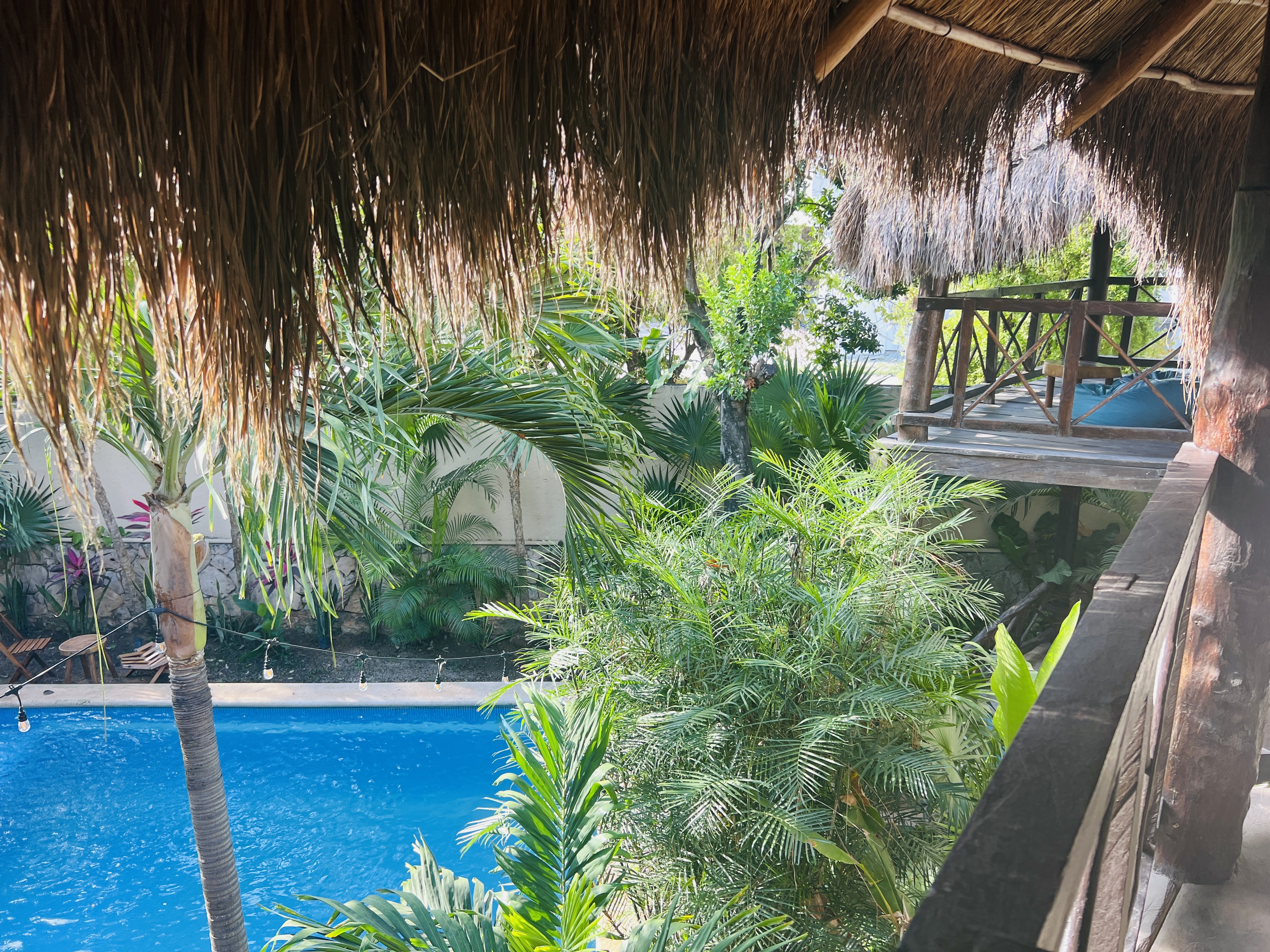
Uolis Nah, our accommodation for the next 3 nights, is actually on the road to Coba, and we hit the hotel before arriving into town. The place looked the same, with the exception of a swimming pool that had been constructed in place of the common area where the hammocks once stood. Liz was sad, but the girls were delighted. They immediately jumped in. We checked into our rooms (which looked like a tired version of what we remembered), complete with very welcome cooking facilities.

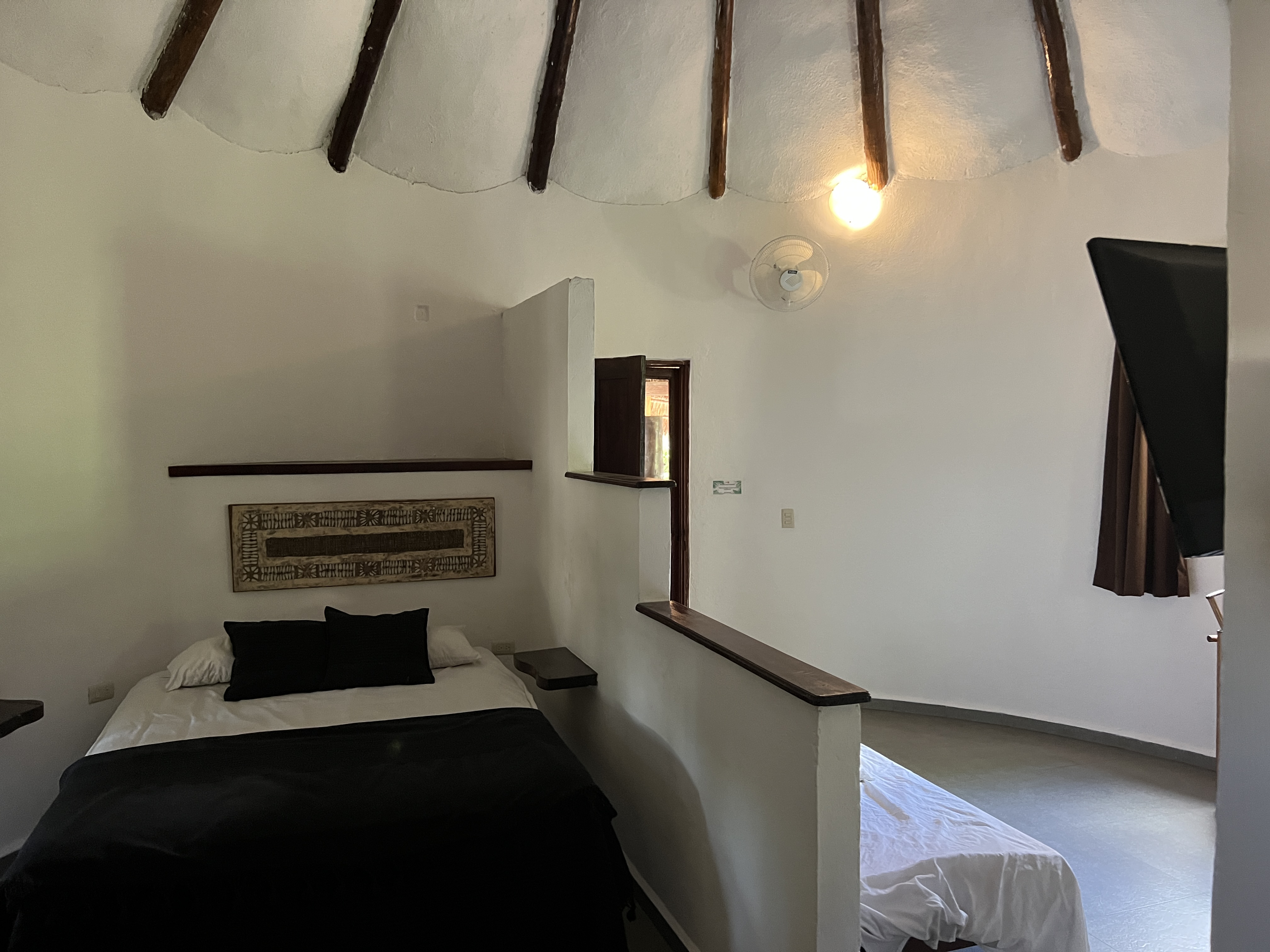
We dumped our bags and started to research a nice bar where we could have a drink and watch the sunset on the beach. The beach at Tulum is some 4 kms from the town, previously separated by jungle and undeveloped land.
This is where the warning bells started to sound.
We could find literally nowhere where you could just ‘go to the beach’.
This was in stark contrast to 15 years ago where there were literally miles of coconut palms shading the white sand beaches bordering the turquoise blue water. The ramshackle huts that previously speckled the beach and housed backpackers had been replaced by fancy resorts and restaurants that lined the 4 kms between the town and the beach, as well as the waterfront, and blocked beach access for anyone who wasn’t willing or able to pay $20 in parking + $100 USD per person in consumption. $500 US to sit at the beach for an hour felt a little excessive.
As an aside, we are more than OK with paying to sit down, have a drink and enjoy a sunset. It turns out we’re also OK to pay ridiculous amounts of money for parking at the beach (thanks to Byron Bay and Manly for that) but it feels very counter cultural as Australians to be restricting and/or paying for beach access. We were happy to pay for access to the Grand Canyon and plenty of other sites, but for some reason we were wired to believe that beaches should be free and for everyone. And yes, we realise this is entirely non sensical and shows our own cultural prejudice.
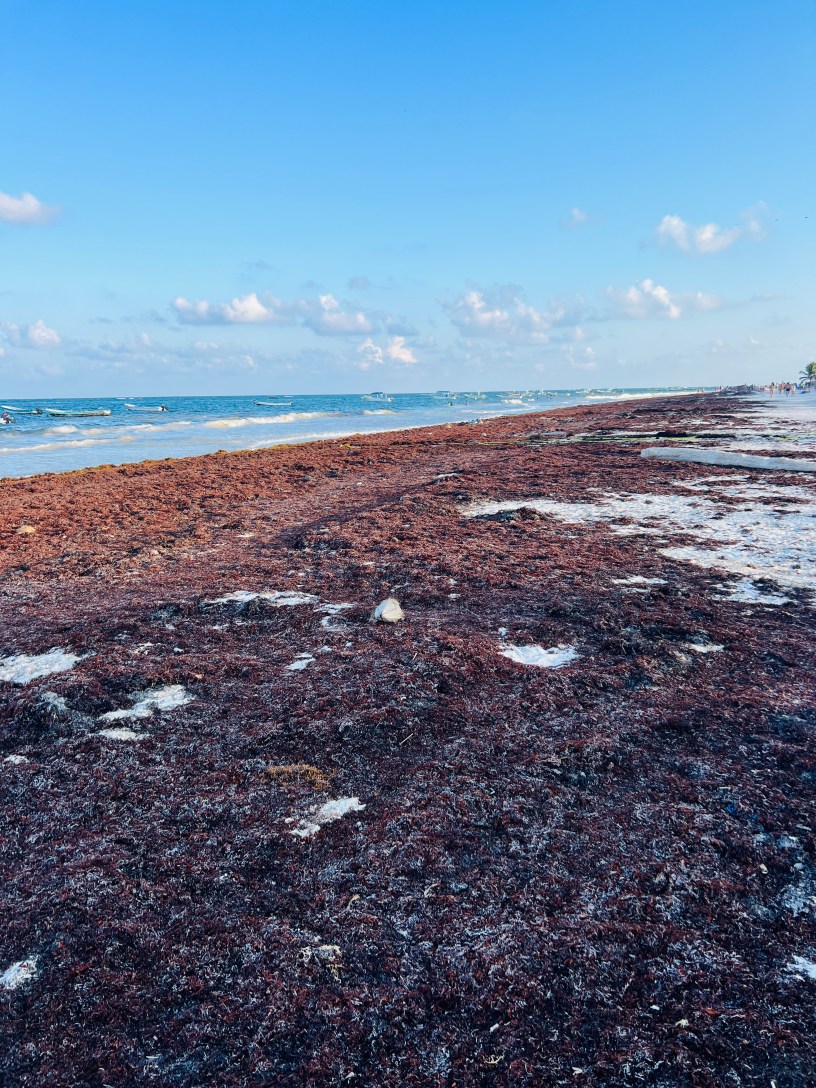
Still not believing what we were reading (or maybe just not wanting to believe it), we took a drive down to the waterfront area. The road was guarded by heavily armed camouflage wearing Civil Guard in open top jeeps, their machine guns hanging off turrets at the back. Traffic was carefully managed and largely blocked into the resort area. Beach resorts shielded behind high walls and guarded gates. The glimpse of water that we got as we drove around a rocky headline showed water full of great swathes of seaweed, with piles of the stuff literally 2 metres high all over the beach, covered almost the sand. The turquoise water was brown. The smell was unbelievable.
This was not the Tulum that we remembered. It felt like something out of the Lorax, post the Thneed craze.
We doubled back and resolved to shop and cook at home, do some research and get our bearings.
We pulled into the largest hypermarket we’ve ever seen in Central America, one that would have felt closer to the Walmart we had visited in the outskirts of Phoenix than anything we had seen in the Tulum of old. We shopped and spent double what we would have if we had eaten out. We went home to eat, discovering that our ‘cooking facilities’ across the two rooms were limited to 2 small pots, 3 plates, 2 forks and a spoon, a table and 2 chairs. Ideal for a family of 5.
Morale was low, but we put a brave face on for the girls, skulled a glass of wine and watched a movie on our bed.
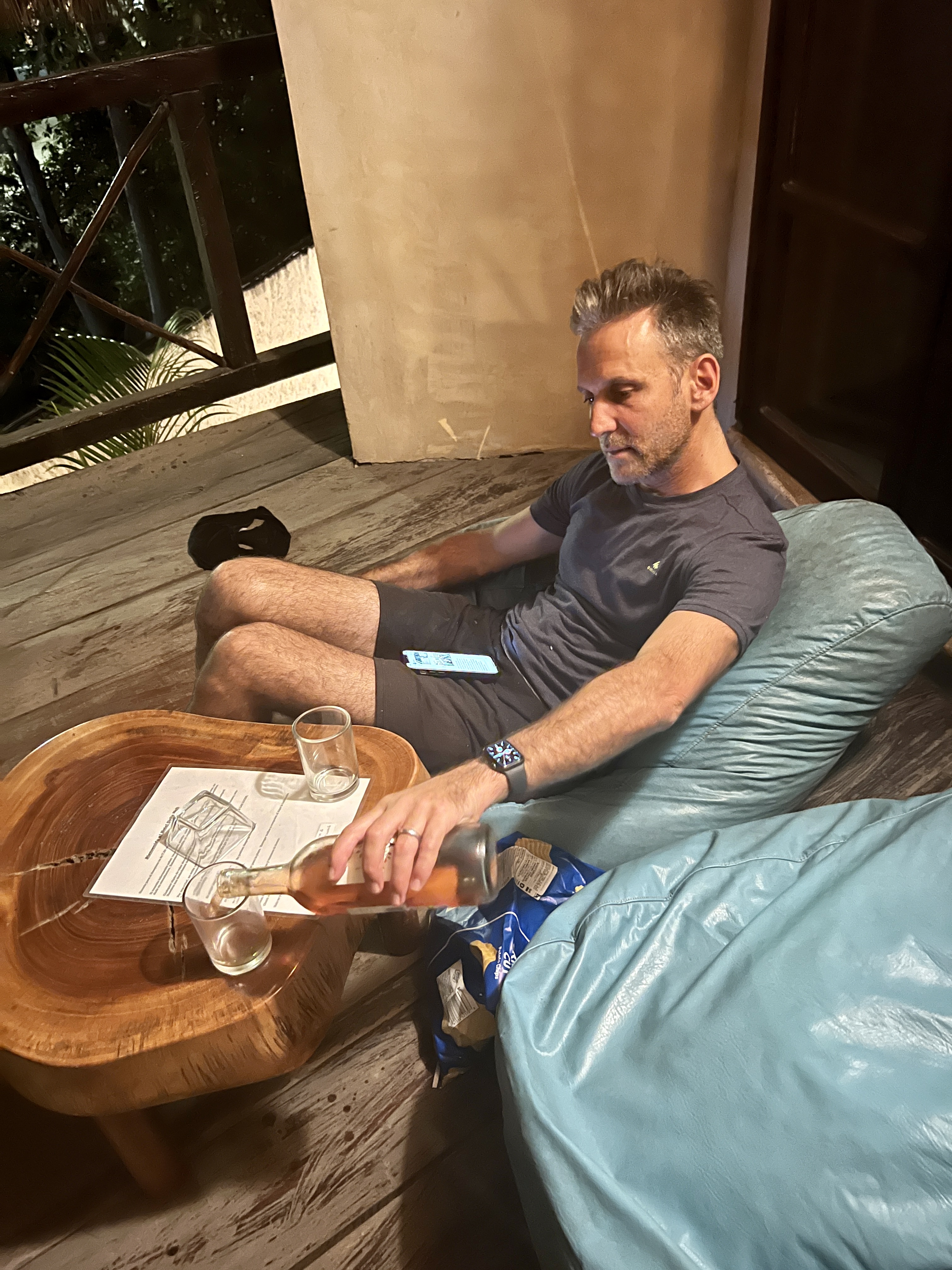
We got researching … both to discover what had happened to one of our favourite places in the world, and secondly to work out how we would spend the next few days.
So, I hear you ask, what has happened to Tulum over the last 15 years?
Firstly, massive over development. Around the late 2000s (when we were last here), Cancun had already been covered in resorts and bad nightclubs, and wealthy tourism had taken over (quite nicely to our recollection) Playa del Carman, but no further. Tulum remained a sleepy backpacker town with stunning beaches, a few interesting cafes and wonderful local restaurants, great kitesurfing and a rustic feel.
Then, word got out.
Instagram was plastered with photos of beautiful sunshine, coconut palms, white sand and turquoise water just a few hours flight from the US. Eco resorts arrived. Not-so-eco resorts arrived. Day clubs. Night clubs. Famous DJs. Famous people. Want to be famous influencers and want to be influencers. And the busloads of tourists in search of winter sun and pristine beaches. Prices sky rocketed. More resorts. More money. Less beach access. No beach access. Organised crime. Shootings. Guardia Civil jeeps to monitor the corrupt local police.
And all this happened at breakneck speed. Literally from undiscovered, to discovered, to overrun in a decade.
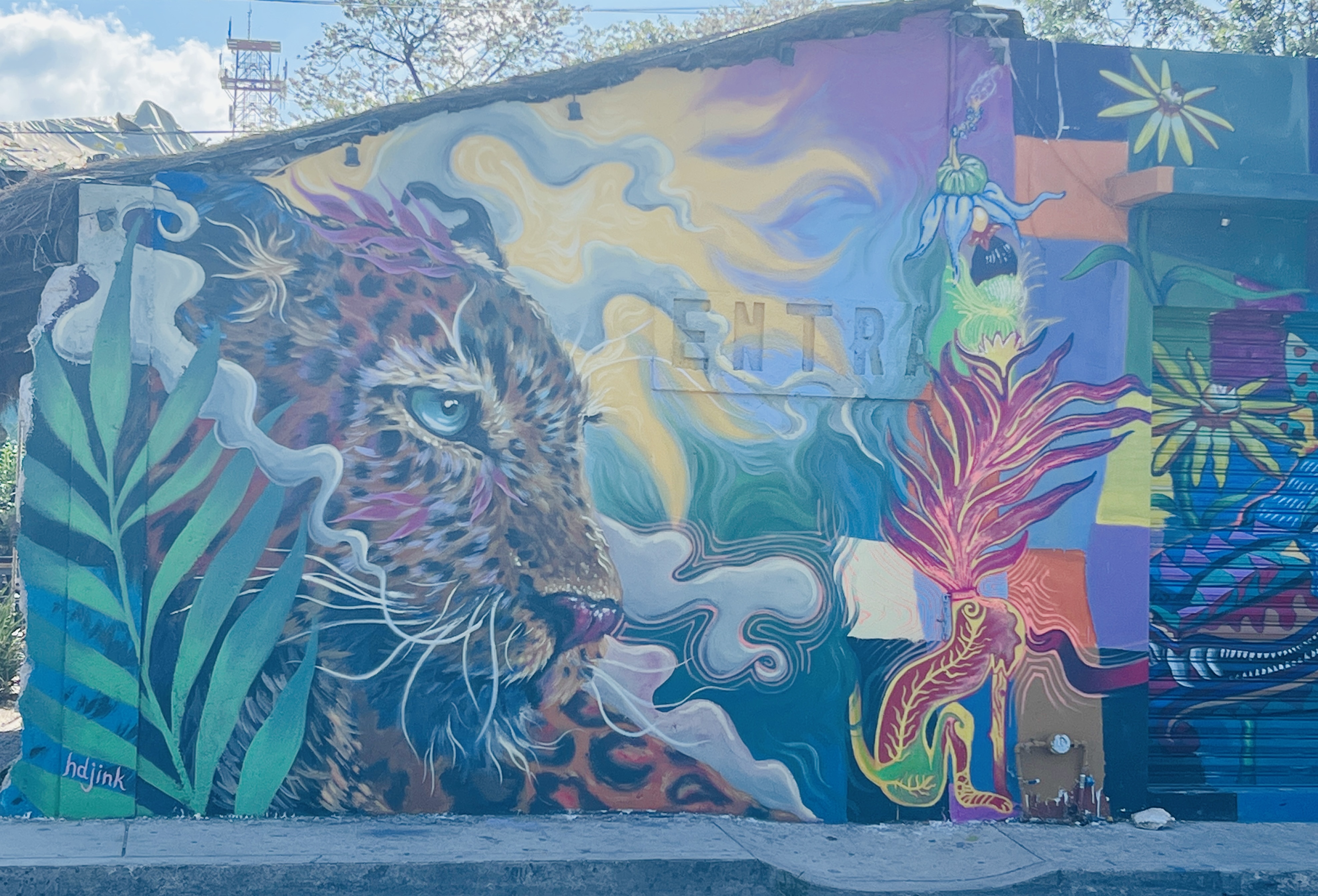
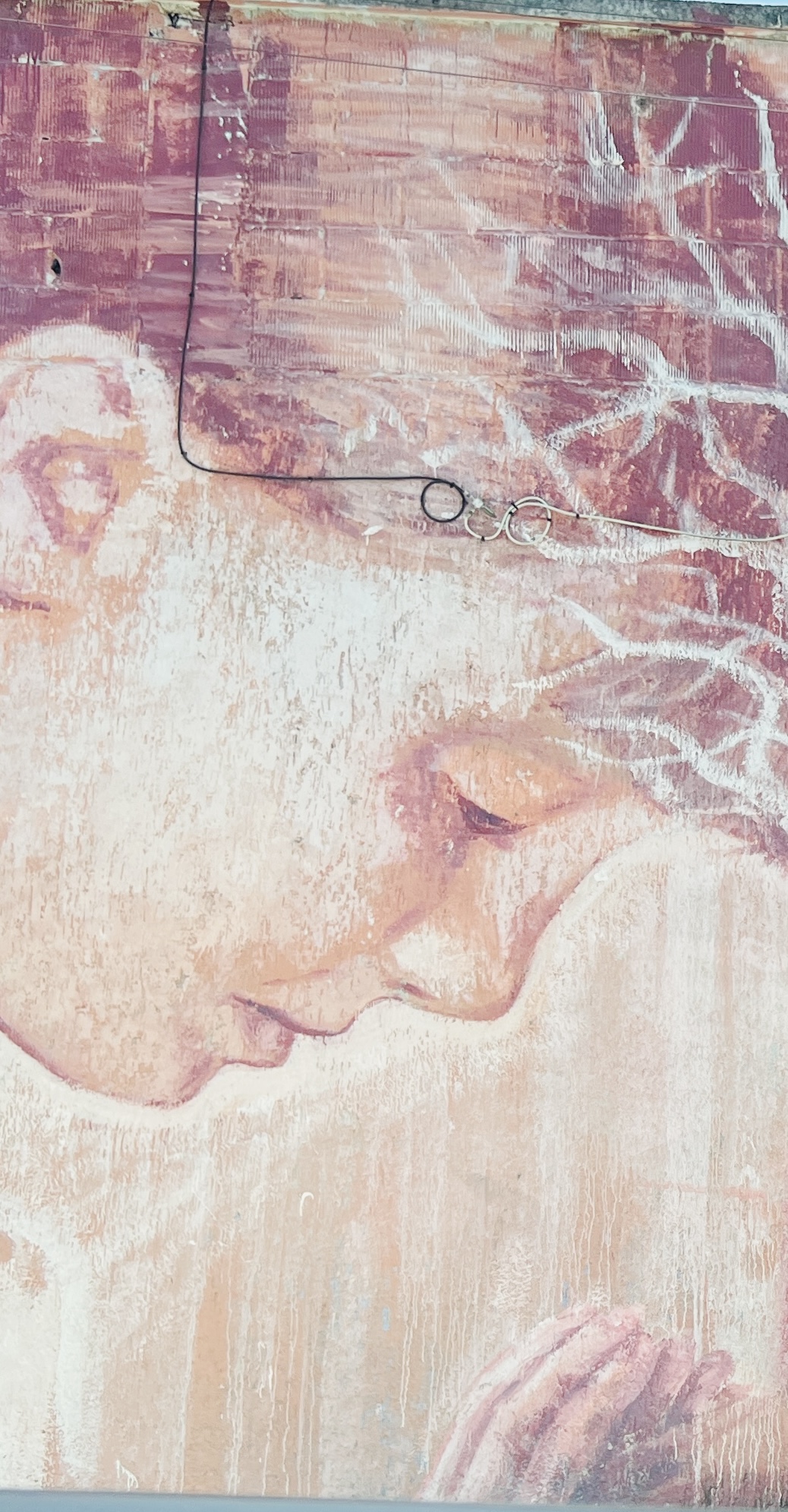
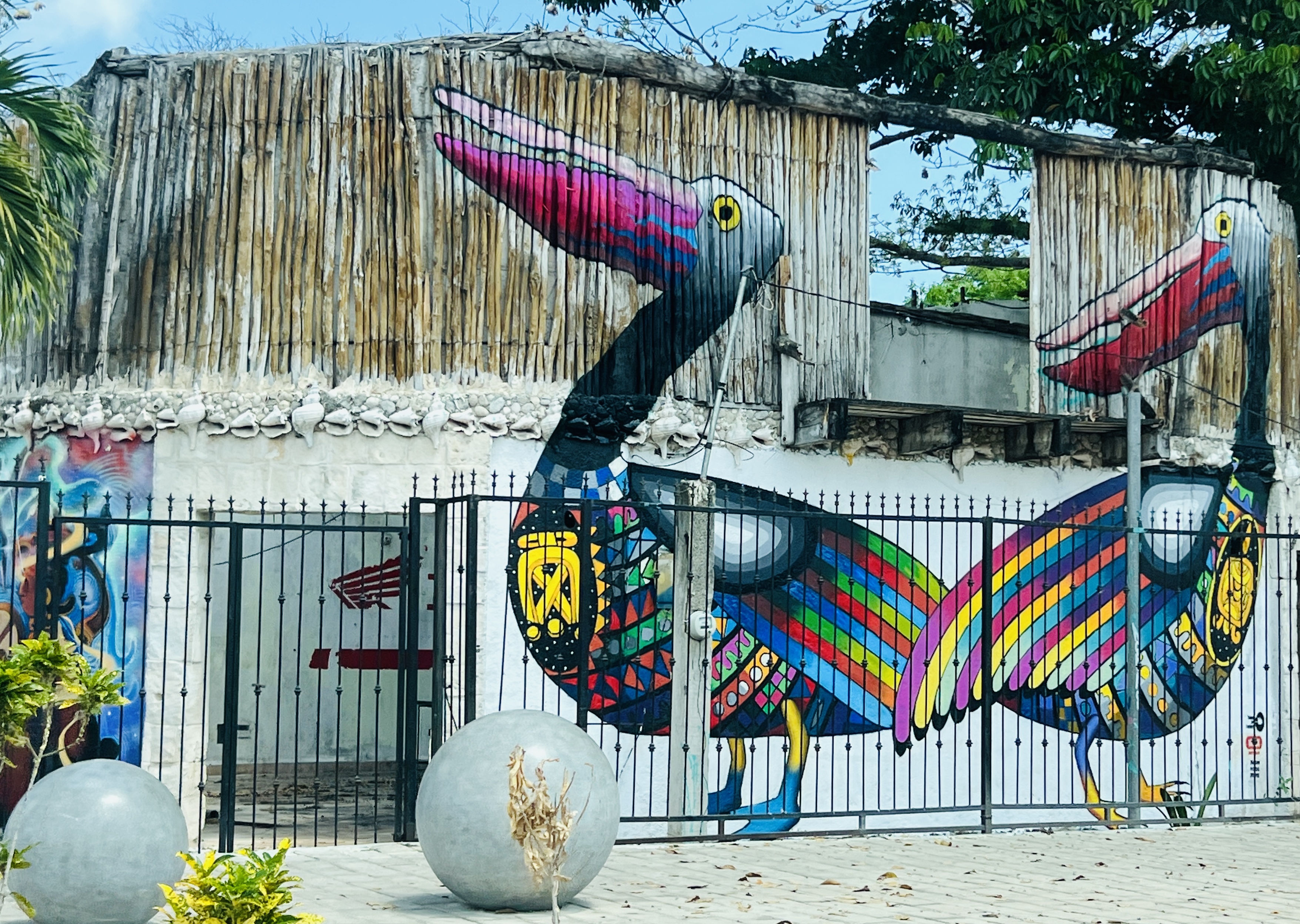
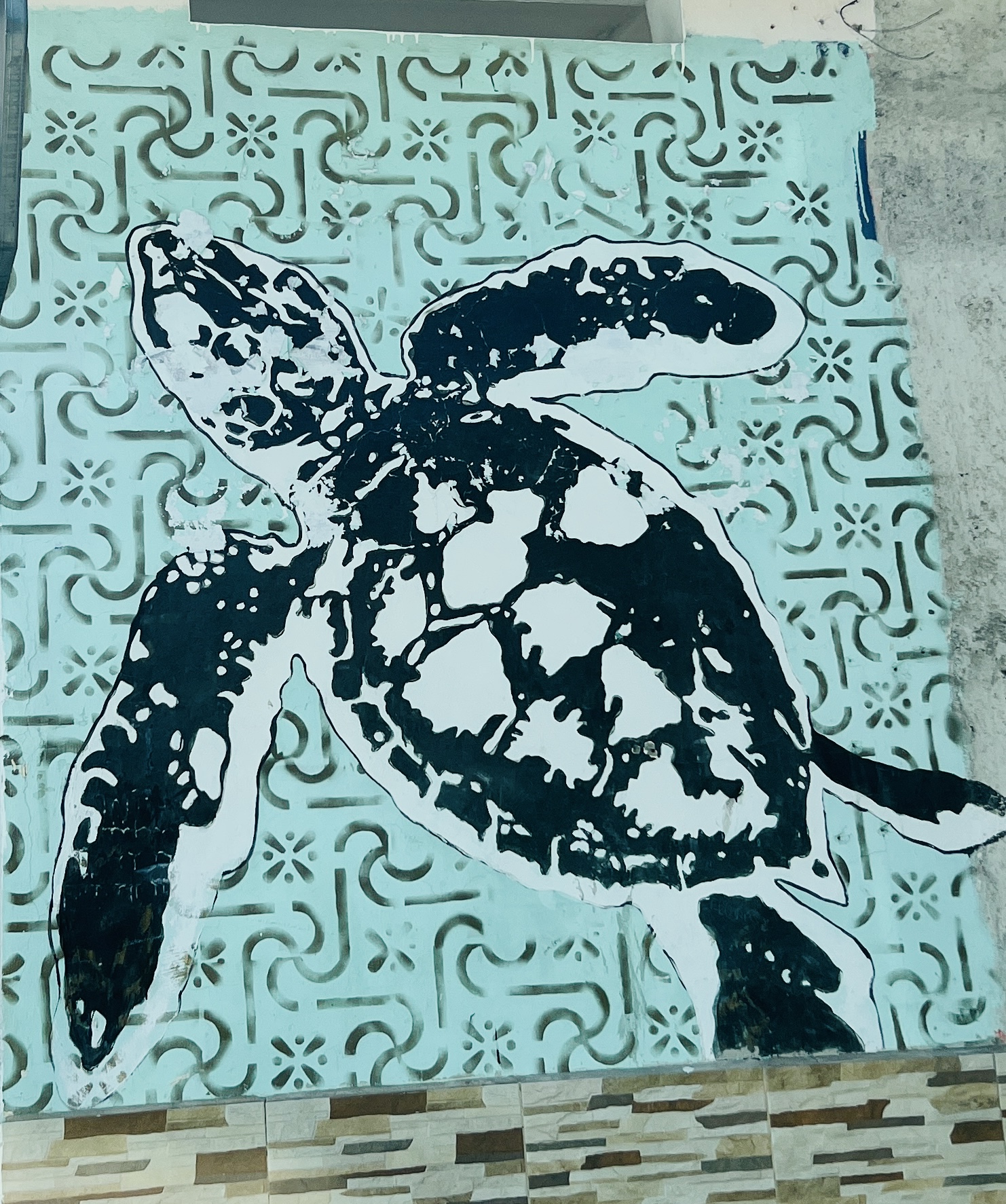
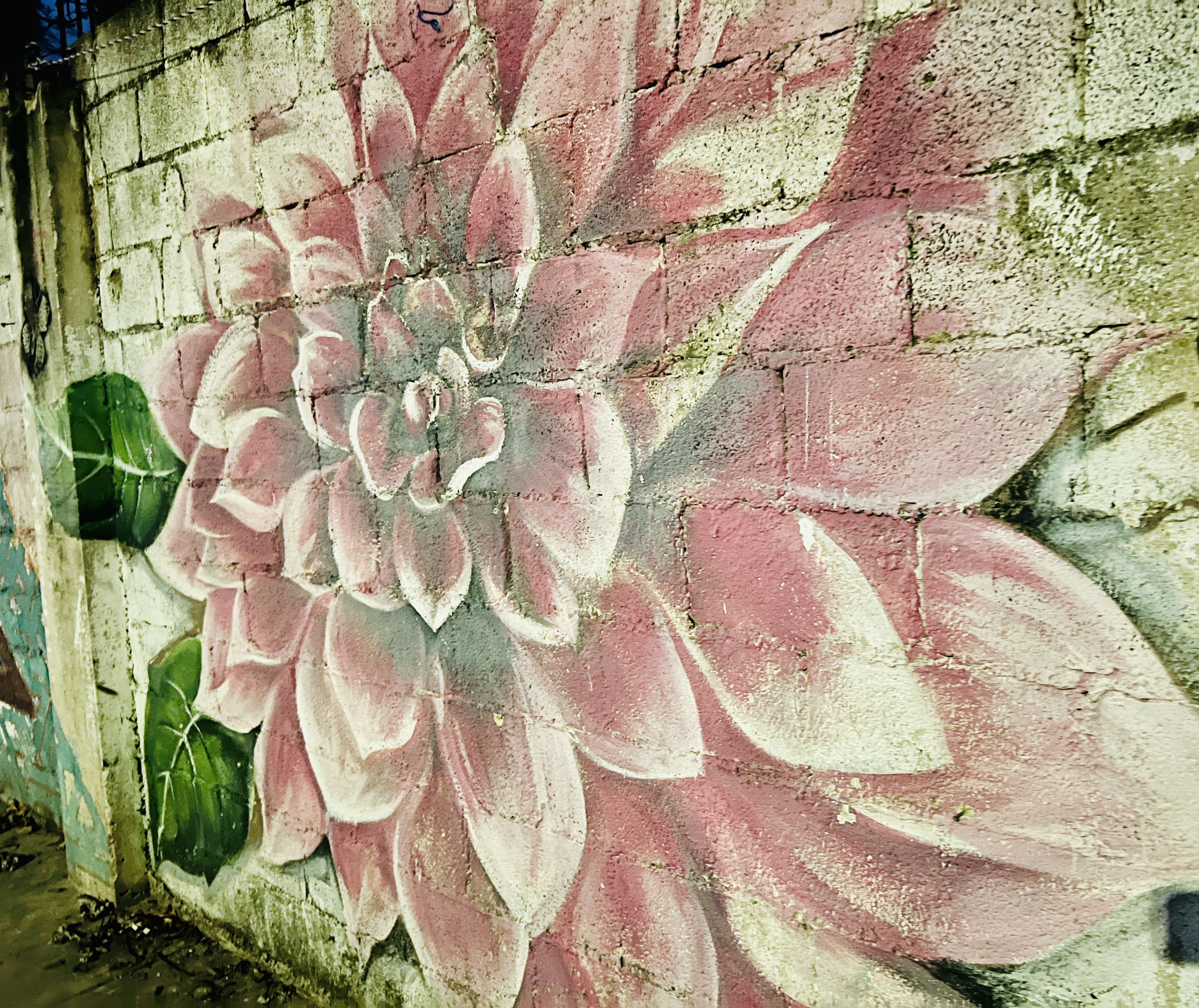
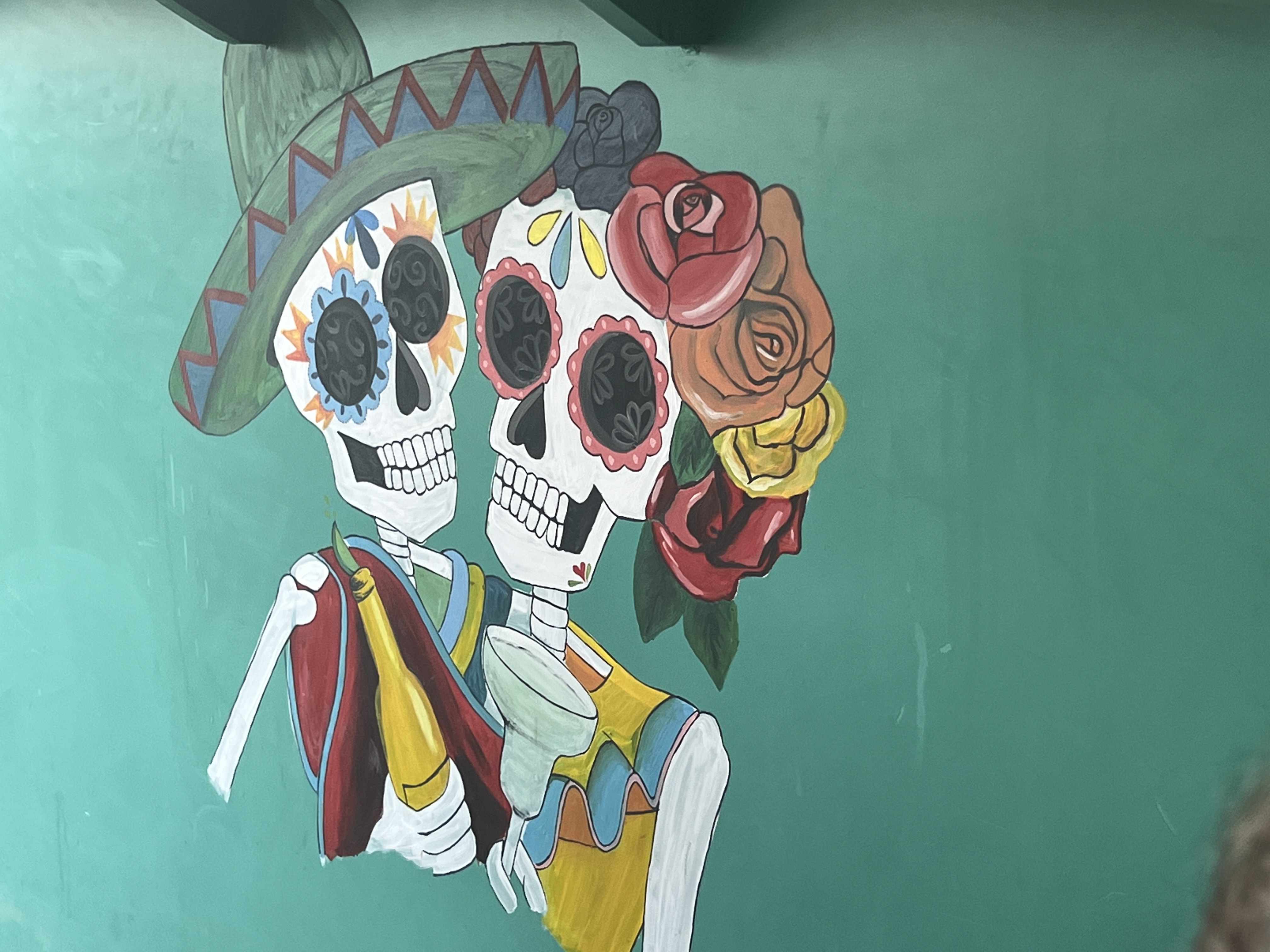
We should firstly point out that there is still goodness in the town itself, which sits 4kms off the beach. There are still (and more) lovely little restaurants, cool bars and nice little cafes taking advantage of the tropical setting. There are beautiful murals on many of the walls and you get a sense for what ‘normal life’ looks like just a few streets off the main drag.
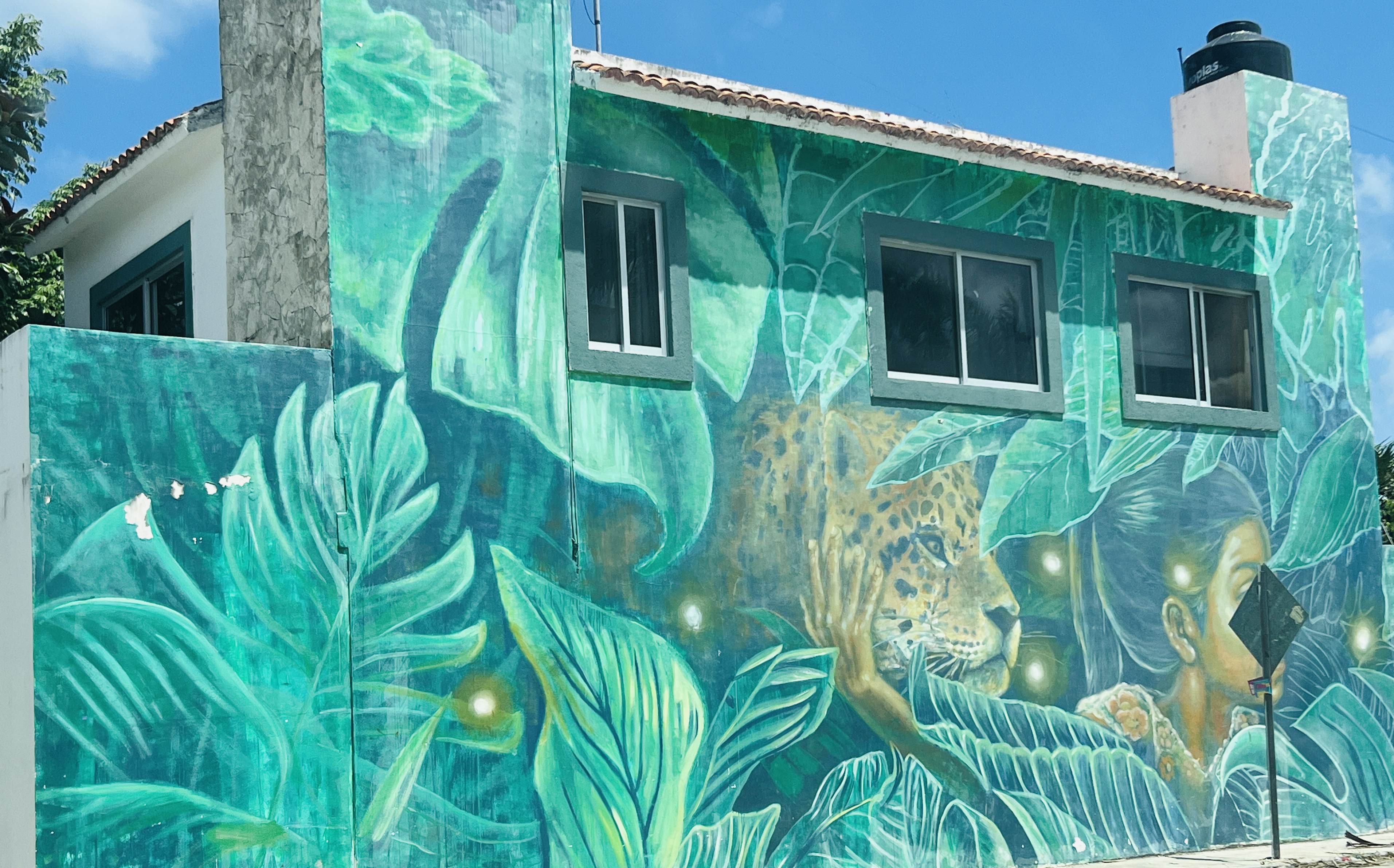
Secondly, it is understandable that the country and its people are wanting to monetise this incredible product. Amazing sunshine, amazing natural beauty. Amazing access to a proud and wonderful history.
It is the beach area of Tulum which has grown way faster than the infrastructure could catch up. Tips are overflowing. The septic system can’t cope, and there is untreated sewerage pumping into the underground water supply and out into Caribbean. The beach front vibe is experienced to the hum of diesel generators, as there is no electricity on the beach.
And then there is the seaweed.
About 8 years ago, the seaweed arrived. This can’t be blamed on local overdevelopment. Apparently this is a result of both over farming and run off in the Amazon, global warming and hurricanes which has caused seaweed to proliferate and decorate many of the beaches in this area in enormous quantities. Sometimes it disappears for a day or two, or even a month in winter, but it always comes back and in quantities that create mounds taller than me on the beach.
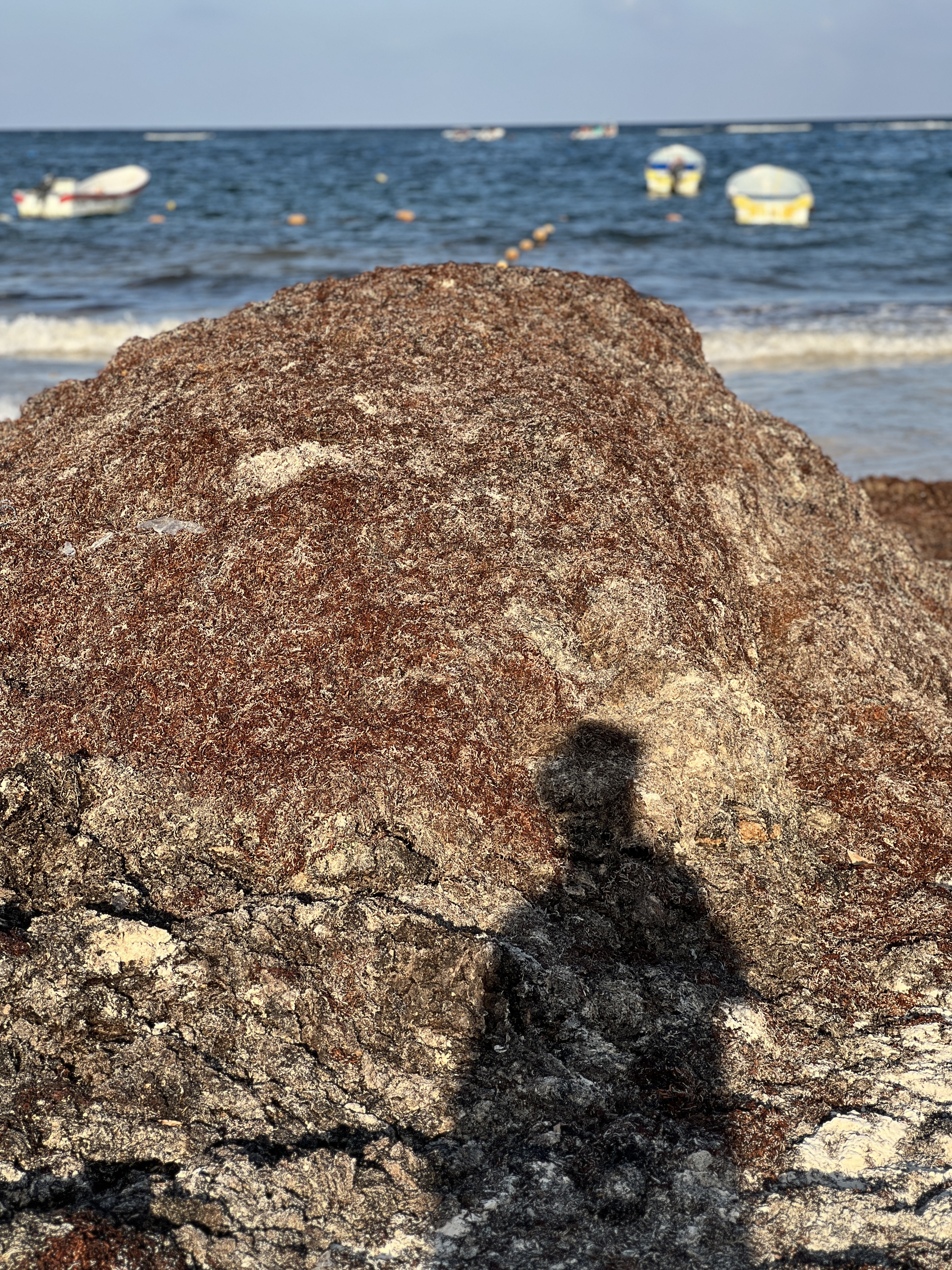
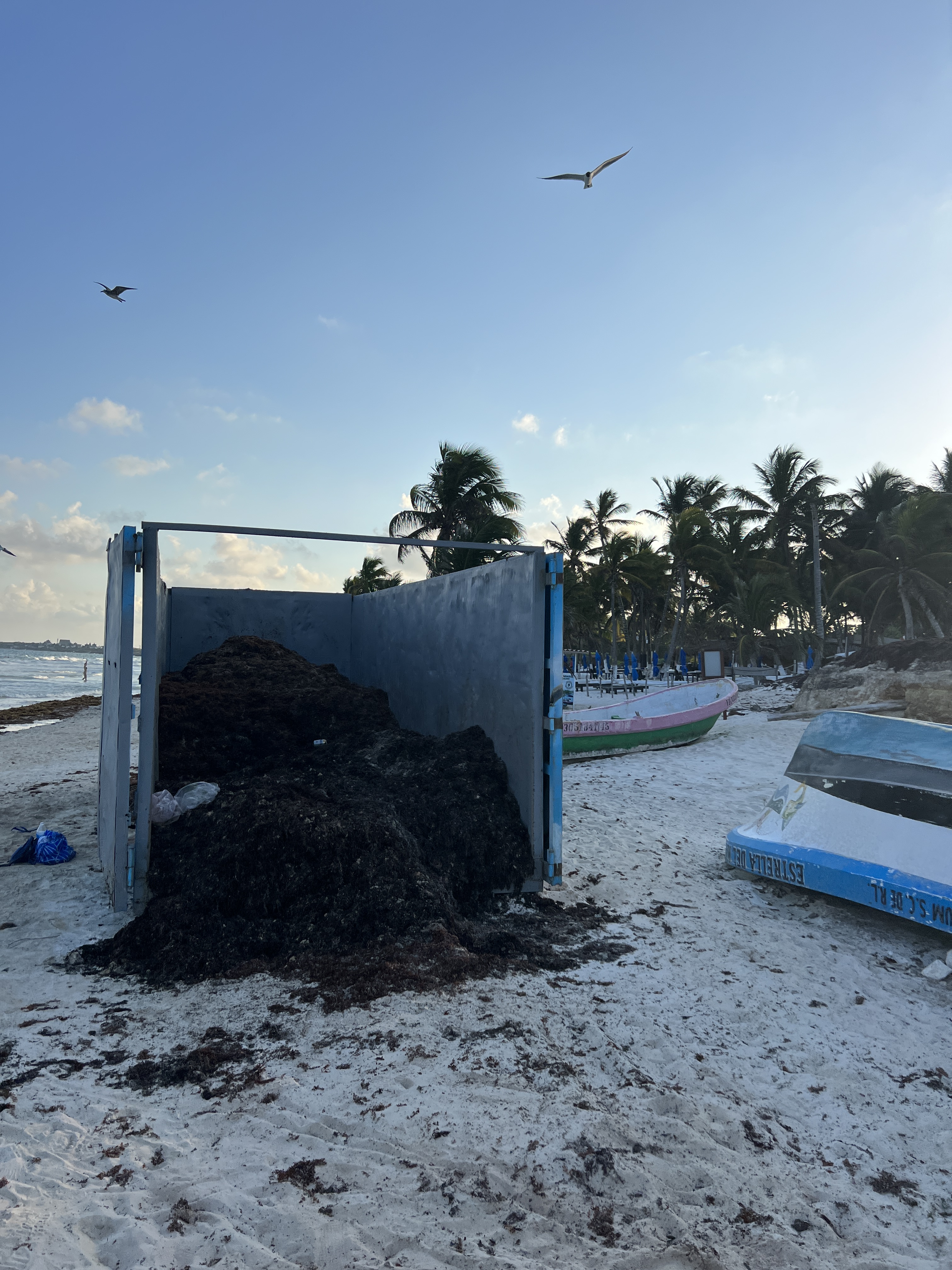
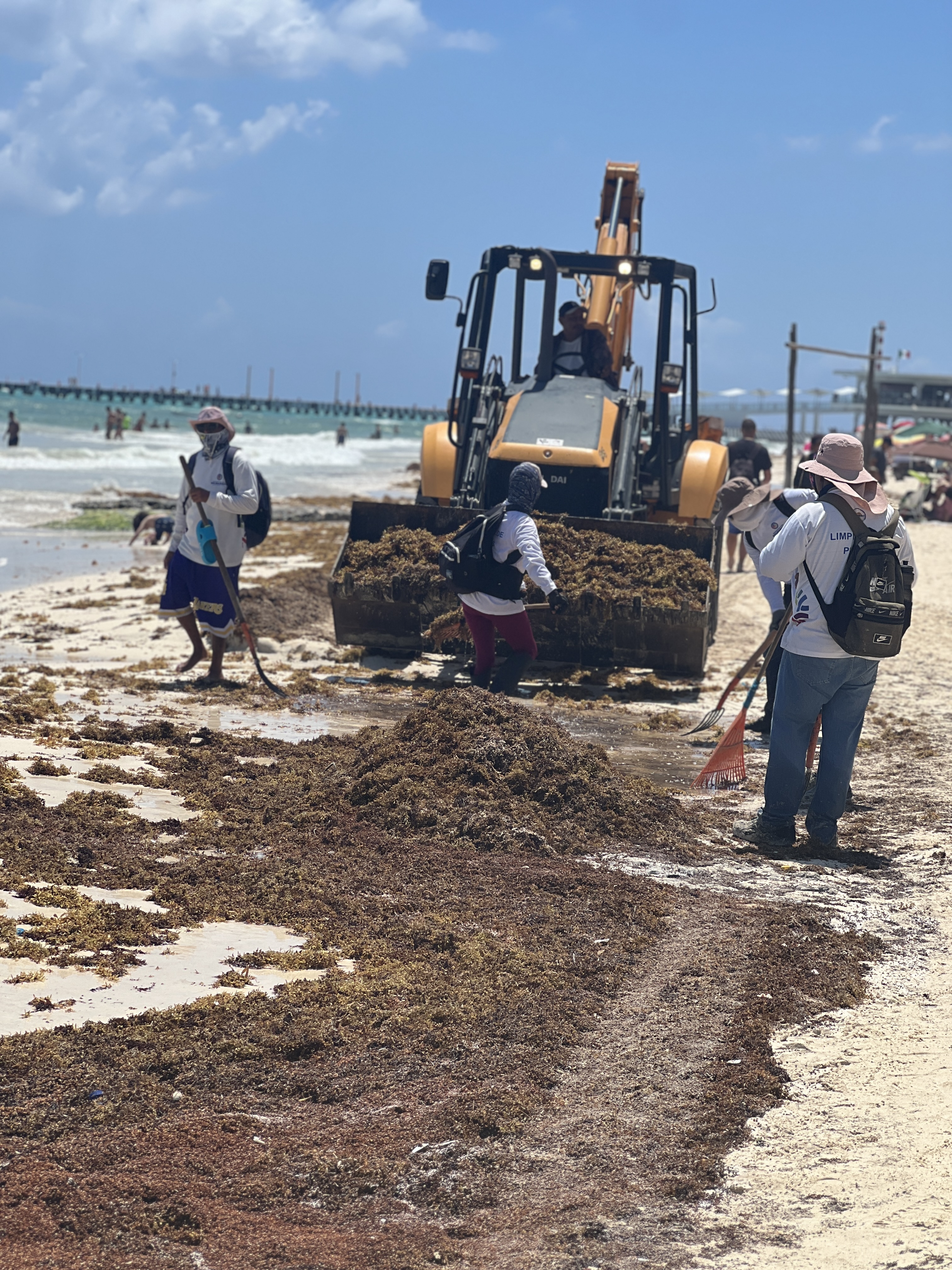
Tulum feels particularly vulnerable to this, mainly because of its pristine point of departure. Its beaches are still coconut palm fringed, but the water is brown, the sand is brown and it all stinks like rotten eggs.
That’s if you can access it at all, which, by this time, we hadn’t been able to do.
So that’s what had happened to our ‘once paradise’. A good advertisement for doing your research in advance, and not assuming that things would be as you left them 15 years ago!
We resolved to get out of the Tulum town/city and experience all the goodness that the area had to offer, and plan our days to try and avoid (or at least minimise) the crowds.
We would head north the following day to Akumal, another over-touristed destination which promised to make us jump through all sorts of hoops to merely set foot on the sand but provided the opportunity to snorkel with turtles. We had been lugging our snorkelling hear around the US, and we were ready to go.
The following morning, we made our way to Akumal, following the instructions of a blog designed to help travellers buck the system. We drove at speed past the myriad of individuals trying to convince us to park our car under their careful eye and pulled up next to a dive shop in the hope of hiring a life jacket for Sena and heading out to see some turtles.
We could spy Akumal beach through the dive shop door and it was quite lovely. There were sections of seaweed and lots of boats, but not to the extent of Tulum. As expected, it was completely covered with other tourists, and the water was more fluoro orange (lifejackets obligatory) than blue. Despite being the expected tourist soup, it was very pretty.
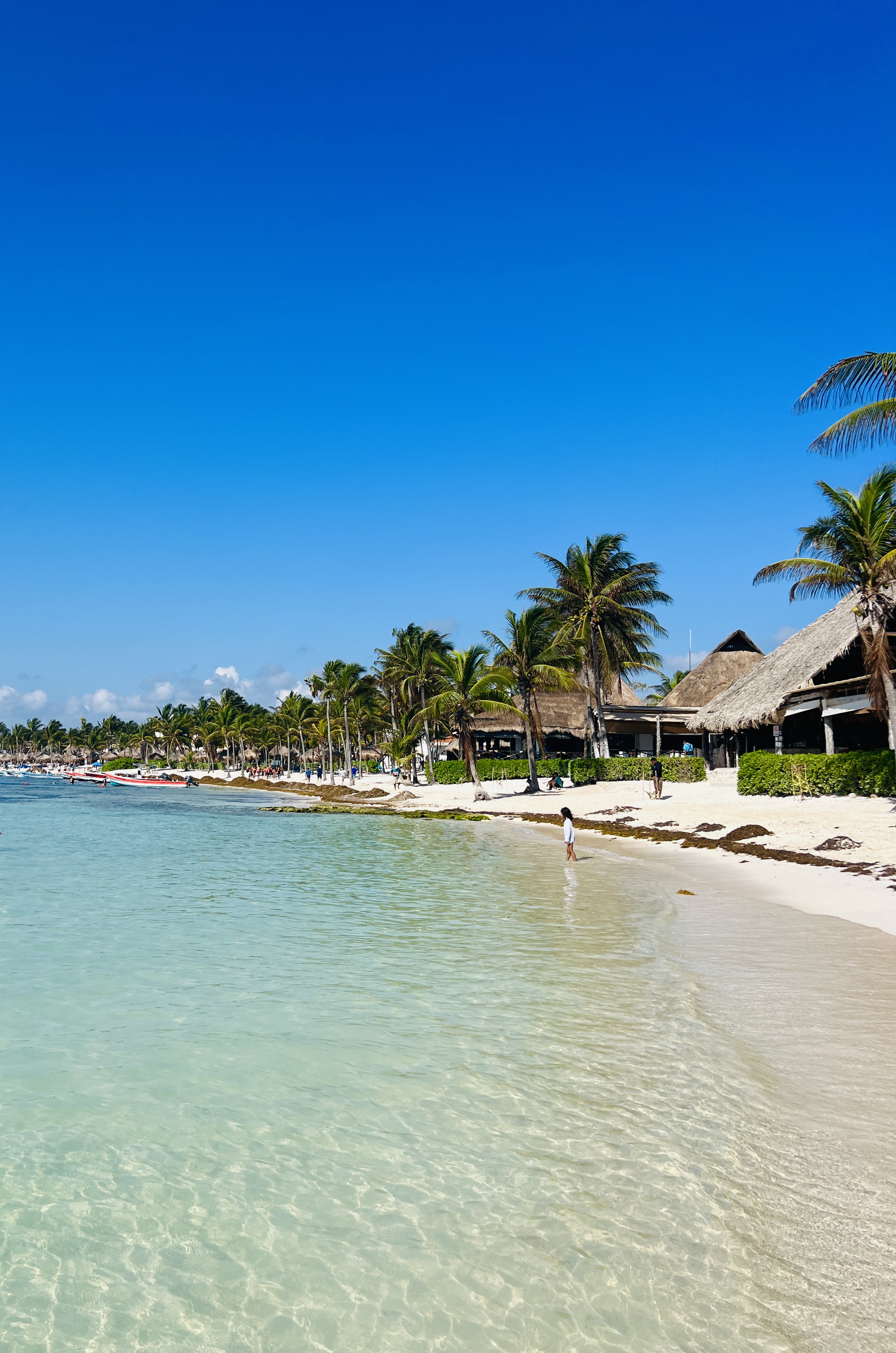
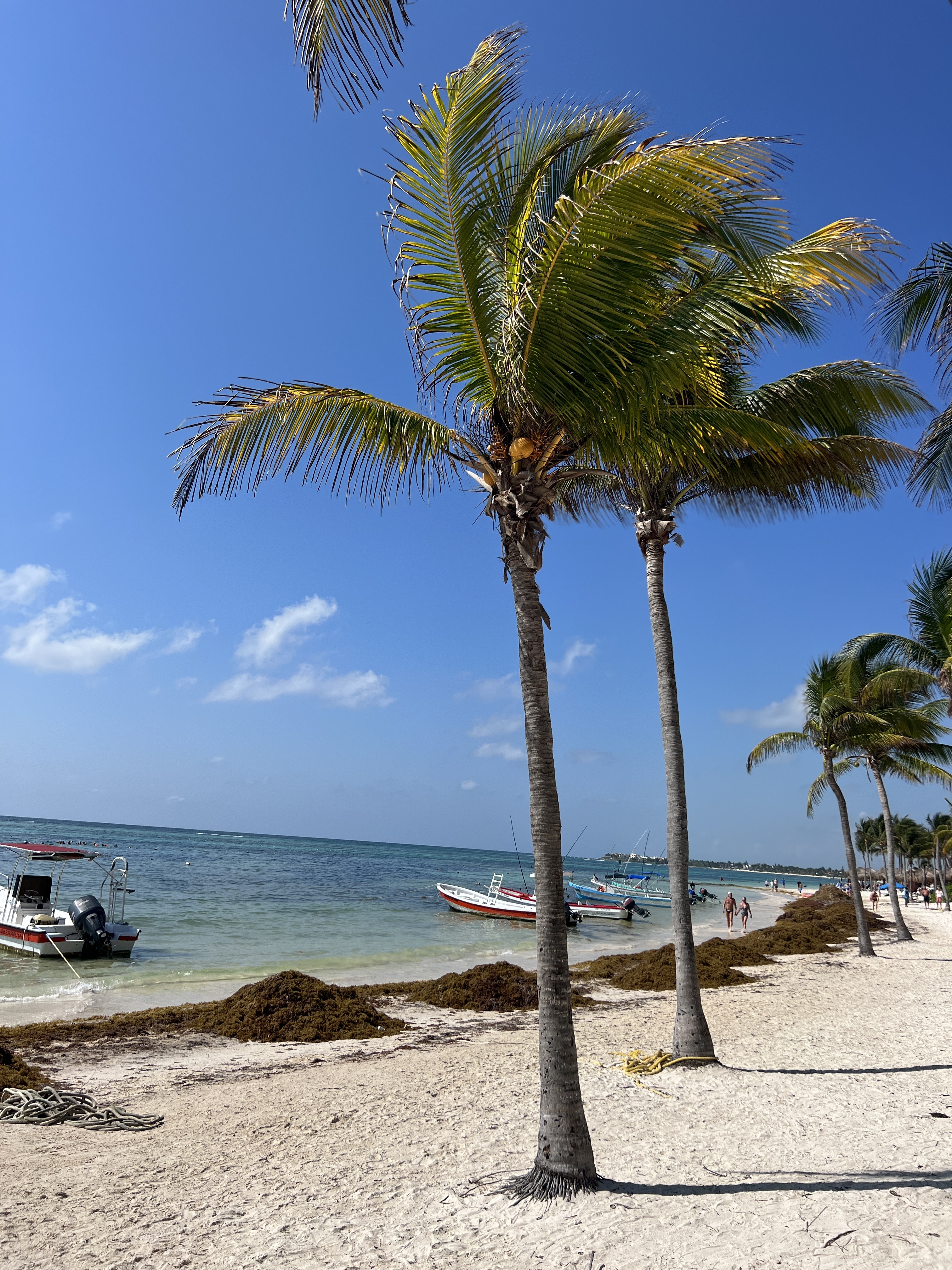
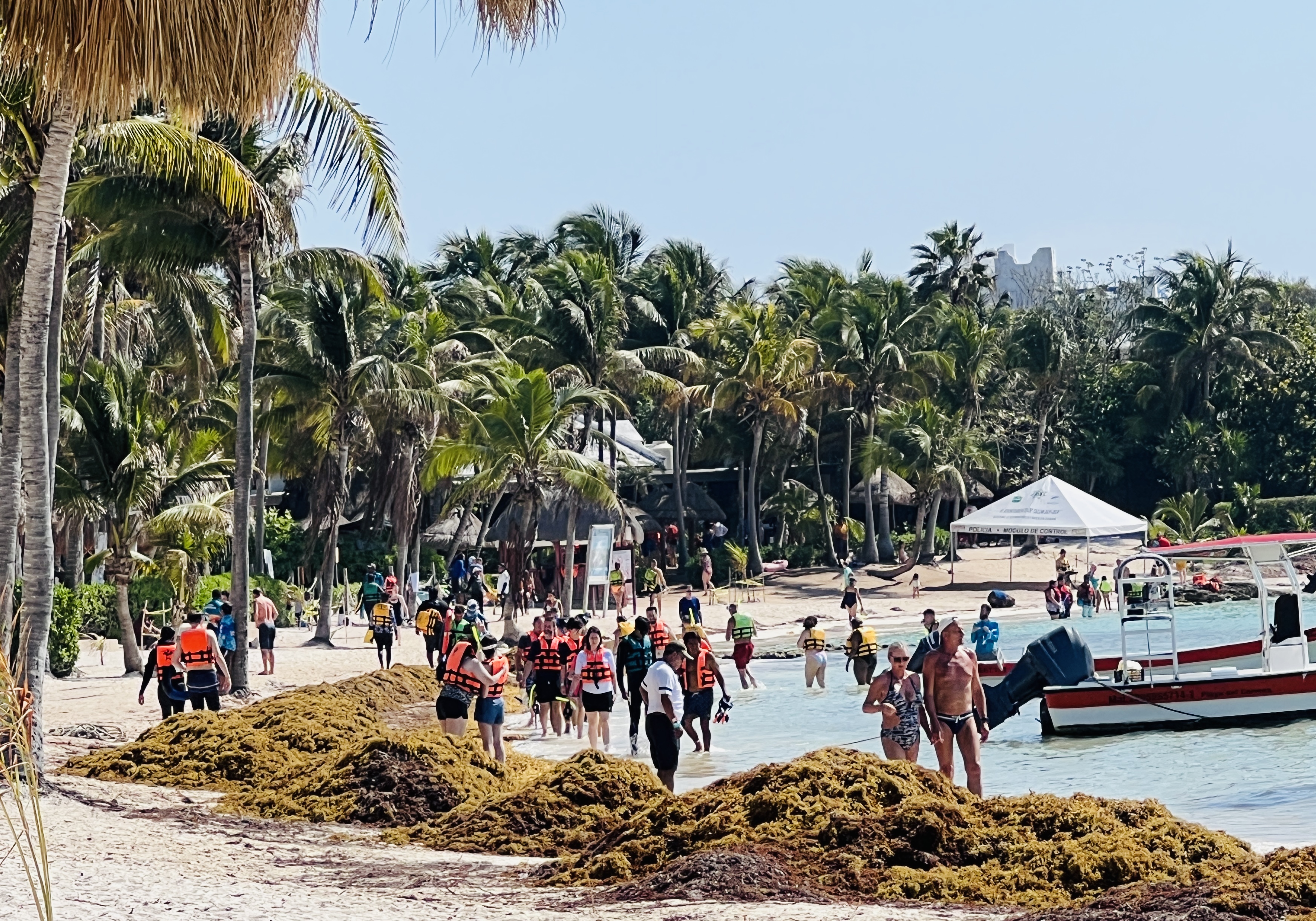
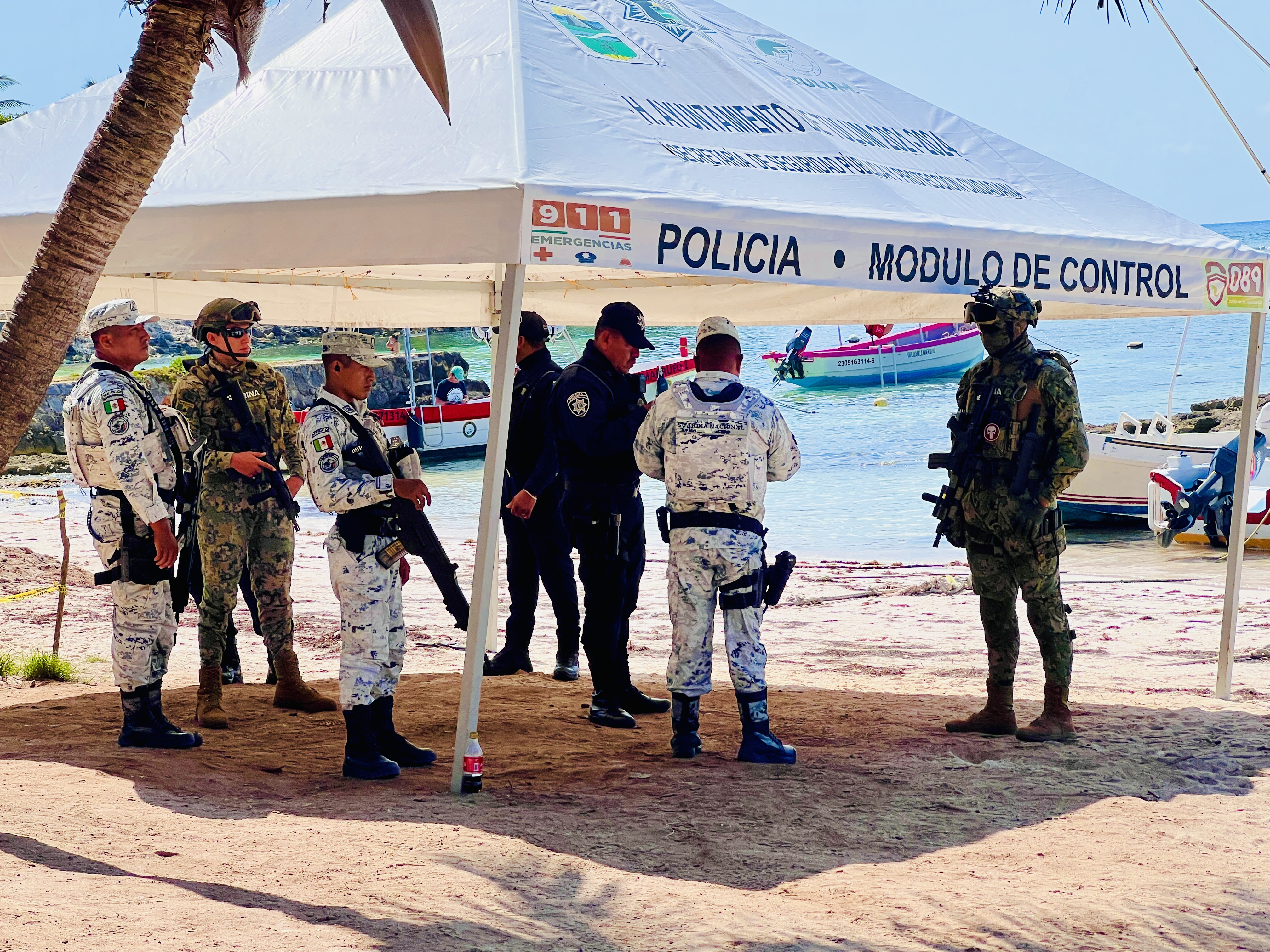
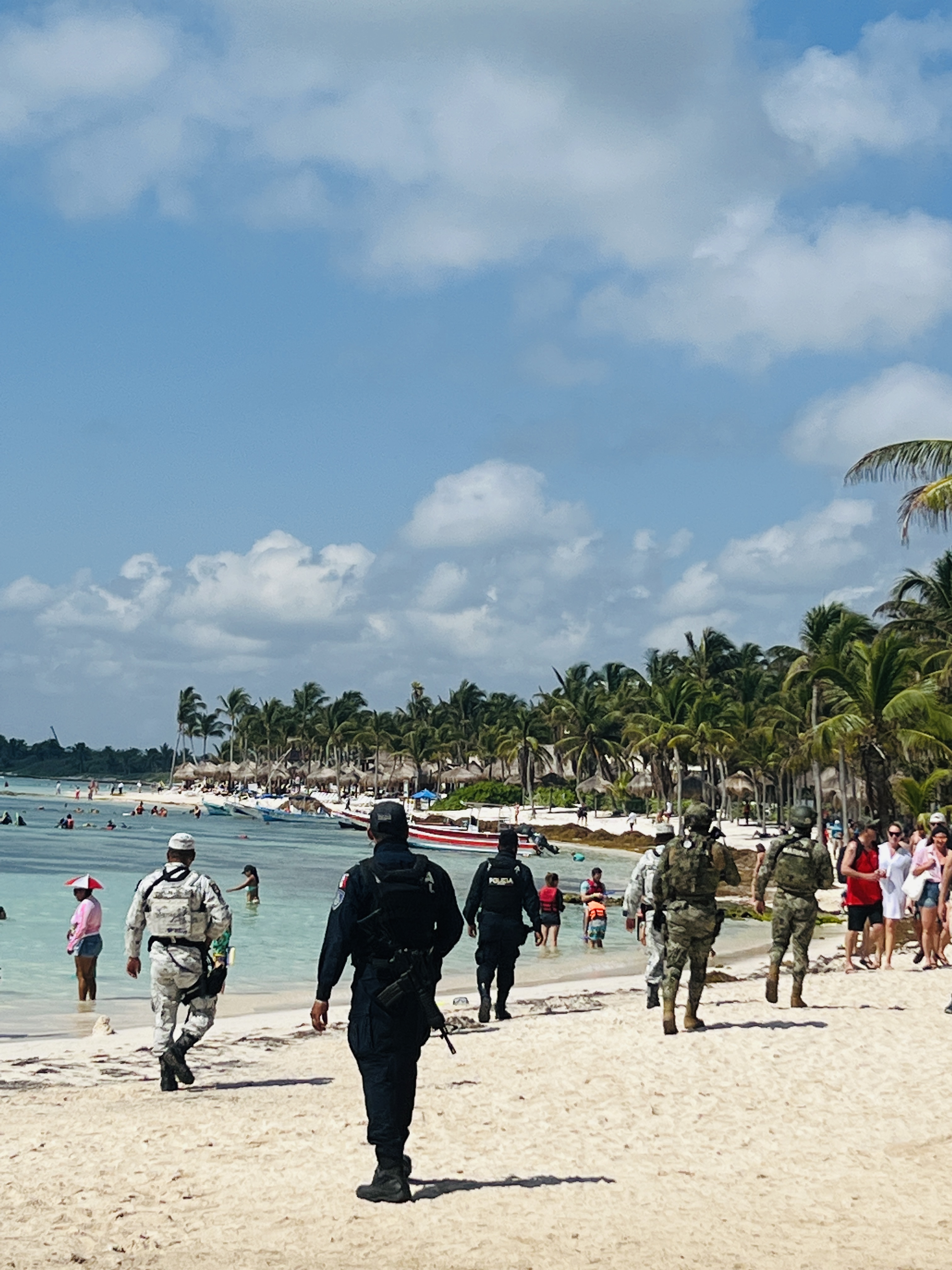
We were quickly informed that the only way to get onto the beach was to pay a fee, which would provide us access to a carefully marked area of water about the size of a small swimming pool. If we wanted to exit that area, we would need to take a guide, which would be $50 per person.
Wanting to see some turtles, we dutifully paid the money for our guided tour, donned our obligatory life jackets and jumped on a boat that would take us about 400m offshore to the edge of the reef.
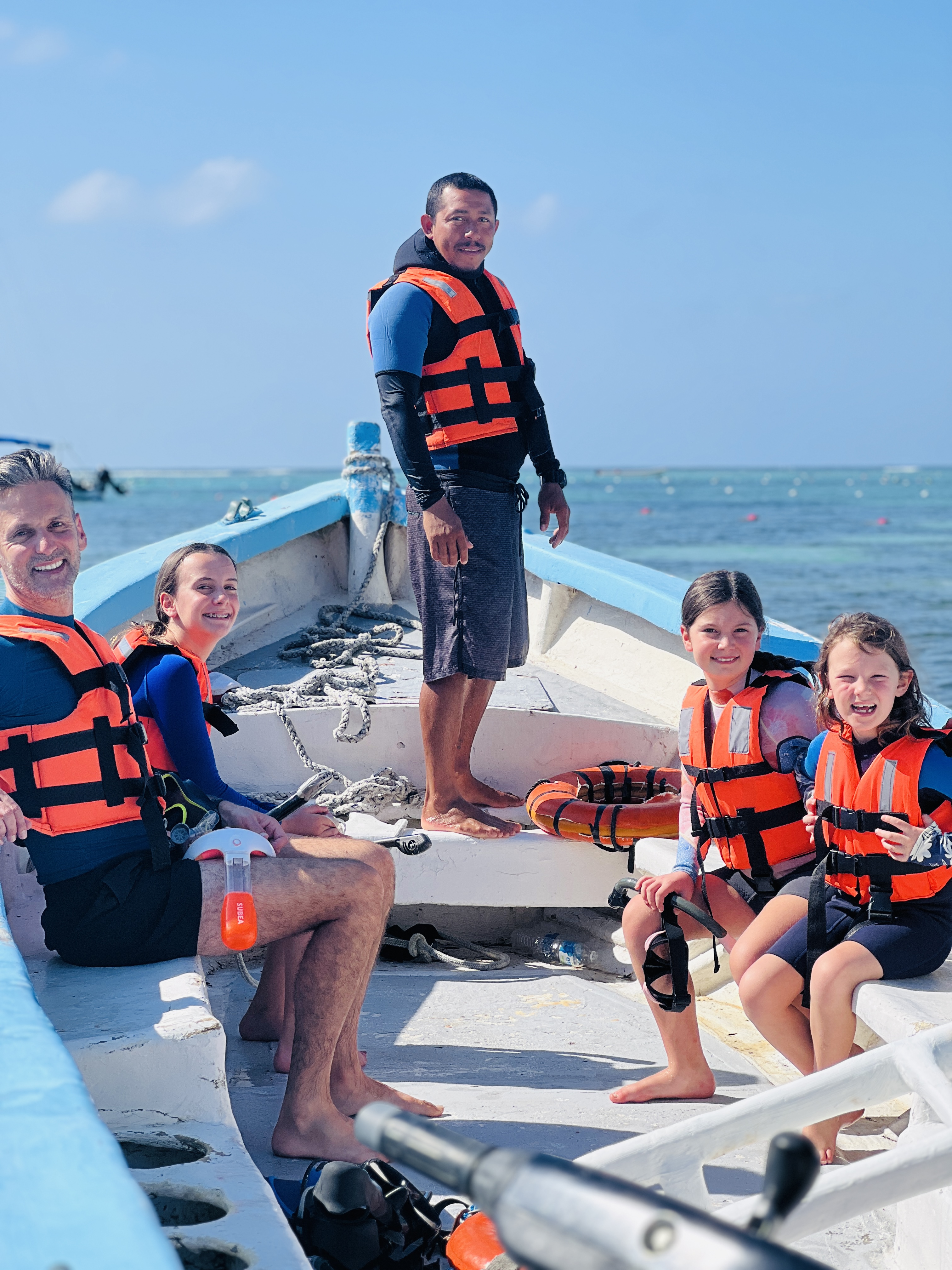
We jumped off the boat at the appointed location and then spent a lovely 45 mins or so making our way back towards shore. We were spoilt to see 5 turtles, all of whom cooperated by not swimming away from us (for some reason they seem very used to tourists?), lots of pretty fish, a couple of sting rays, octopus and star fish. And surprisingly few orange life jackets belonging to others.
It was a pretty awesome experience, and we all arrived back to shore with our spirits buoyed. We hung out on the beach for a short while, had a drink and resolved to head back into town and find the best of what Tulum had to offer.
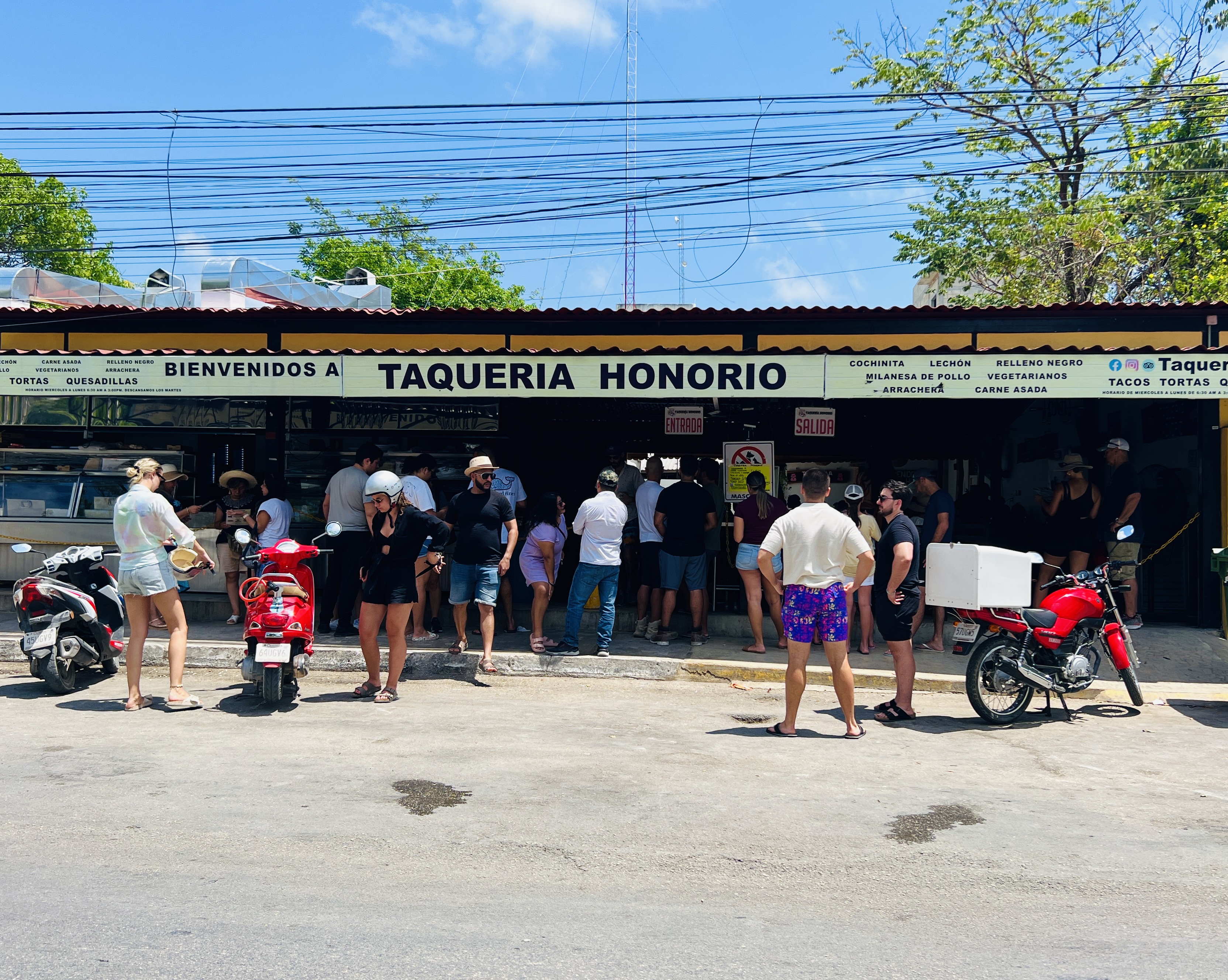
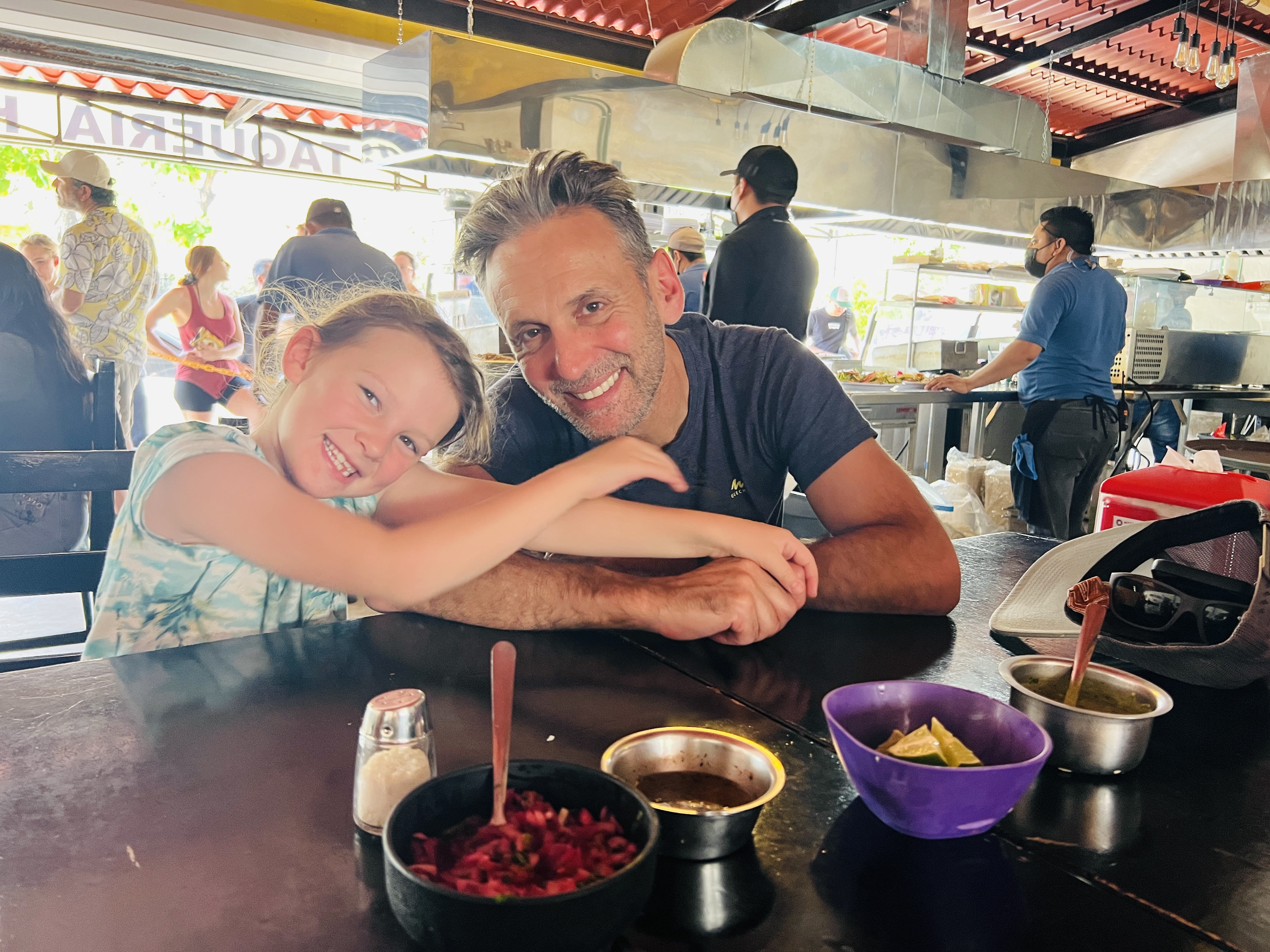
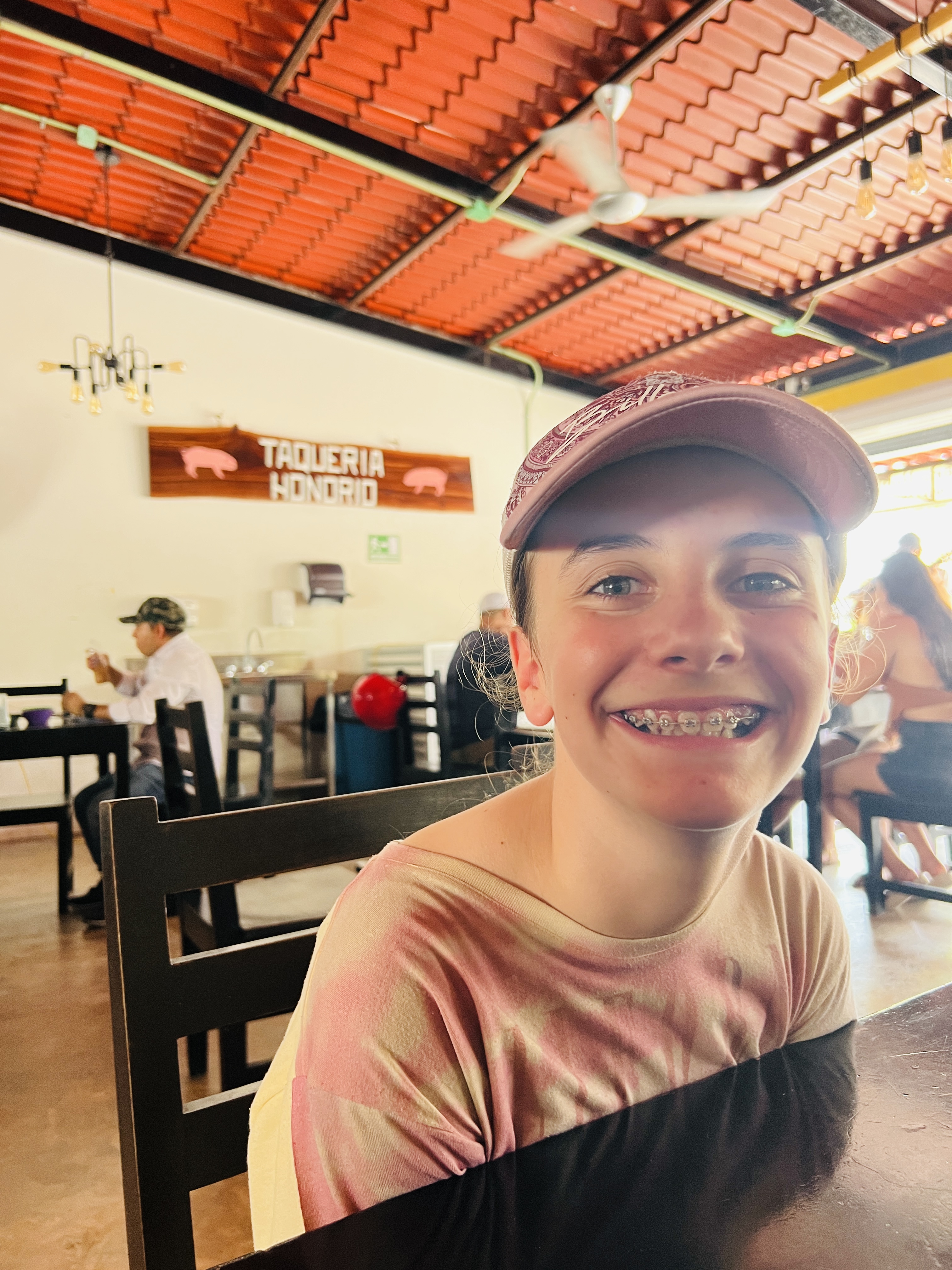
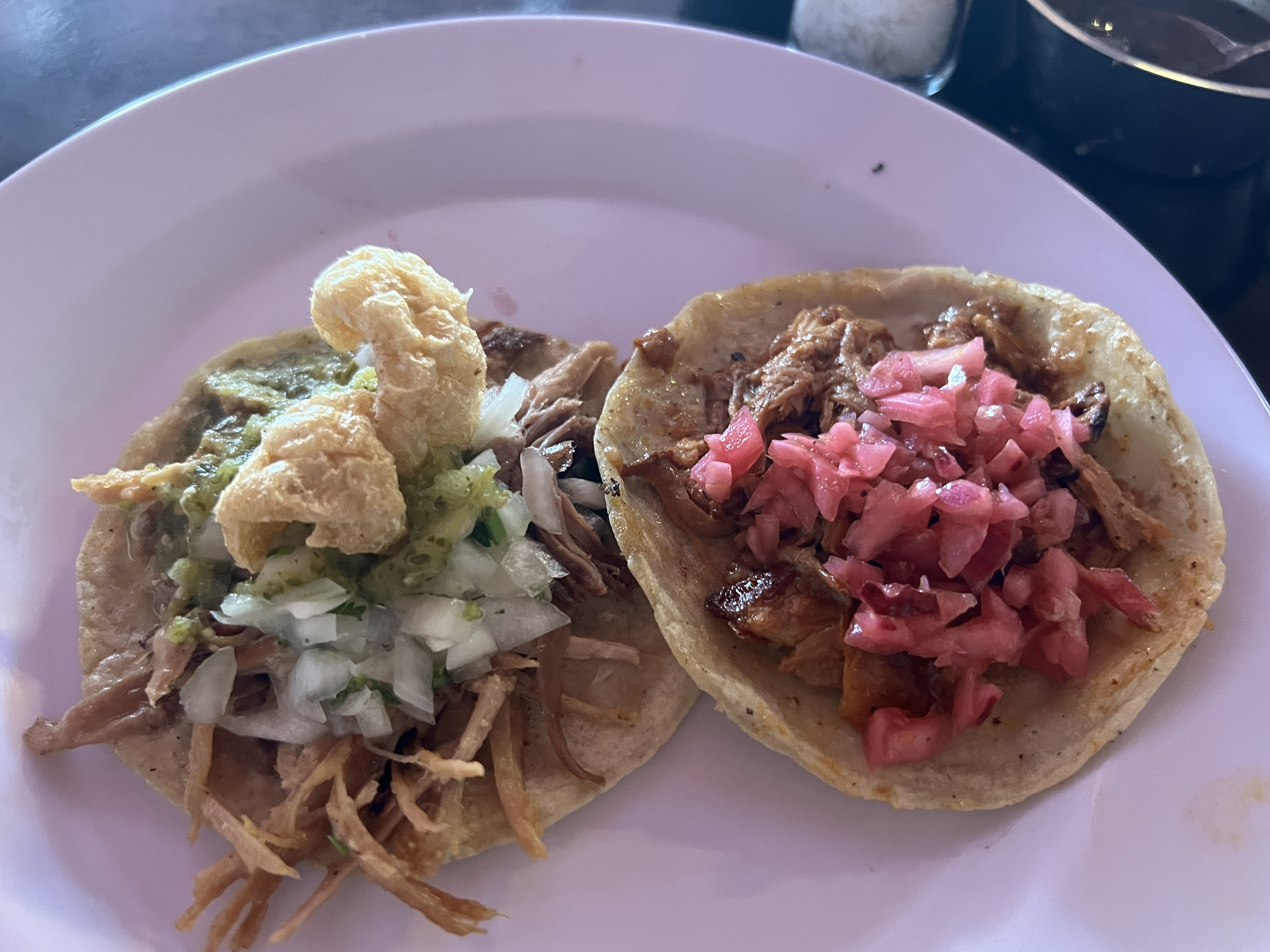
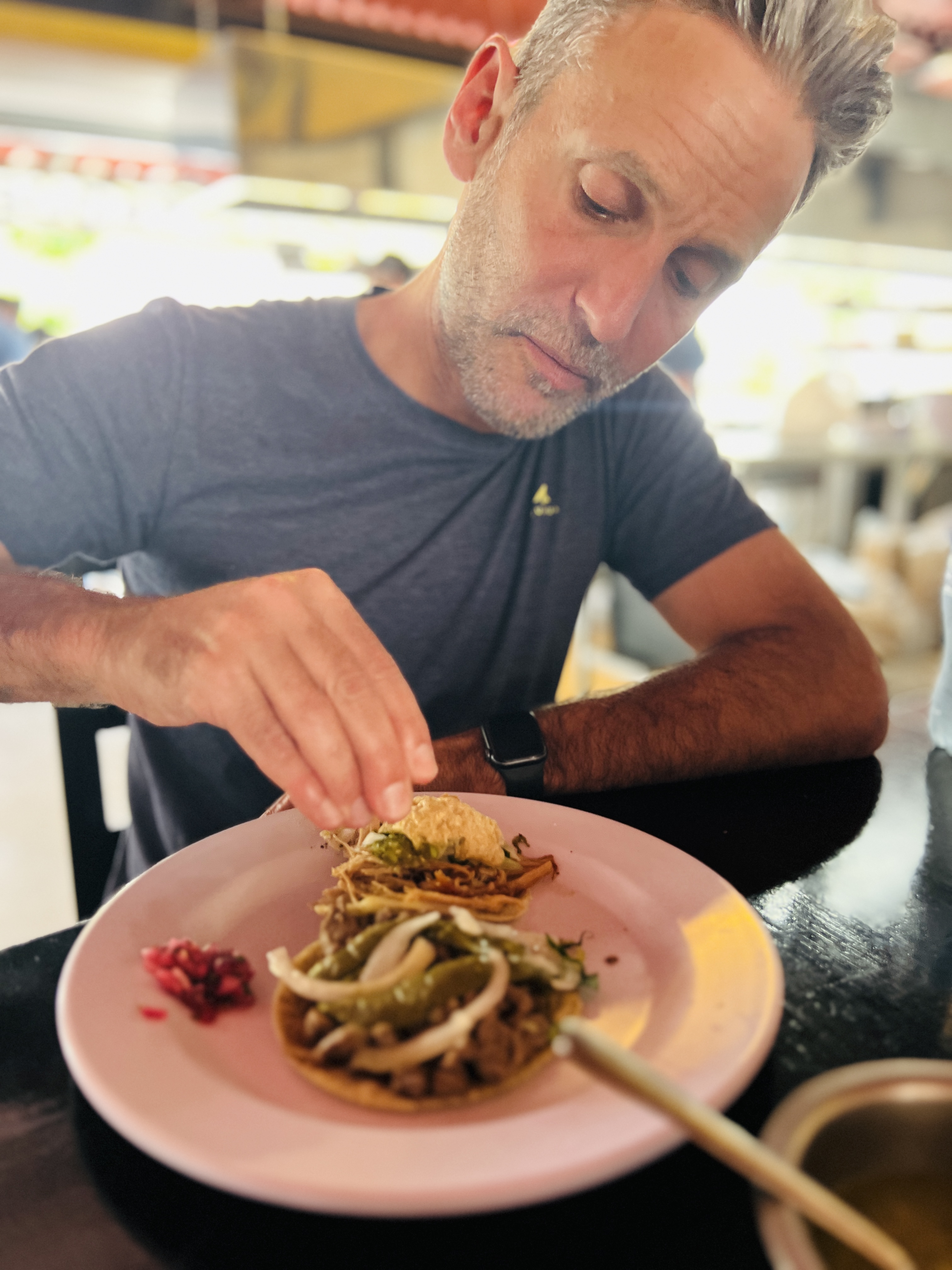
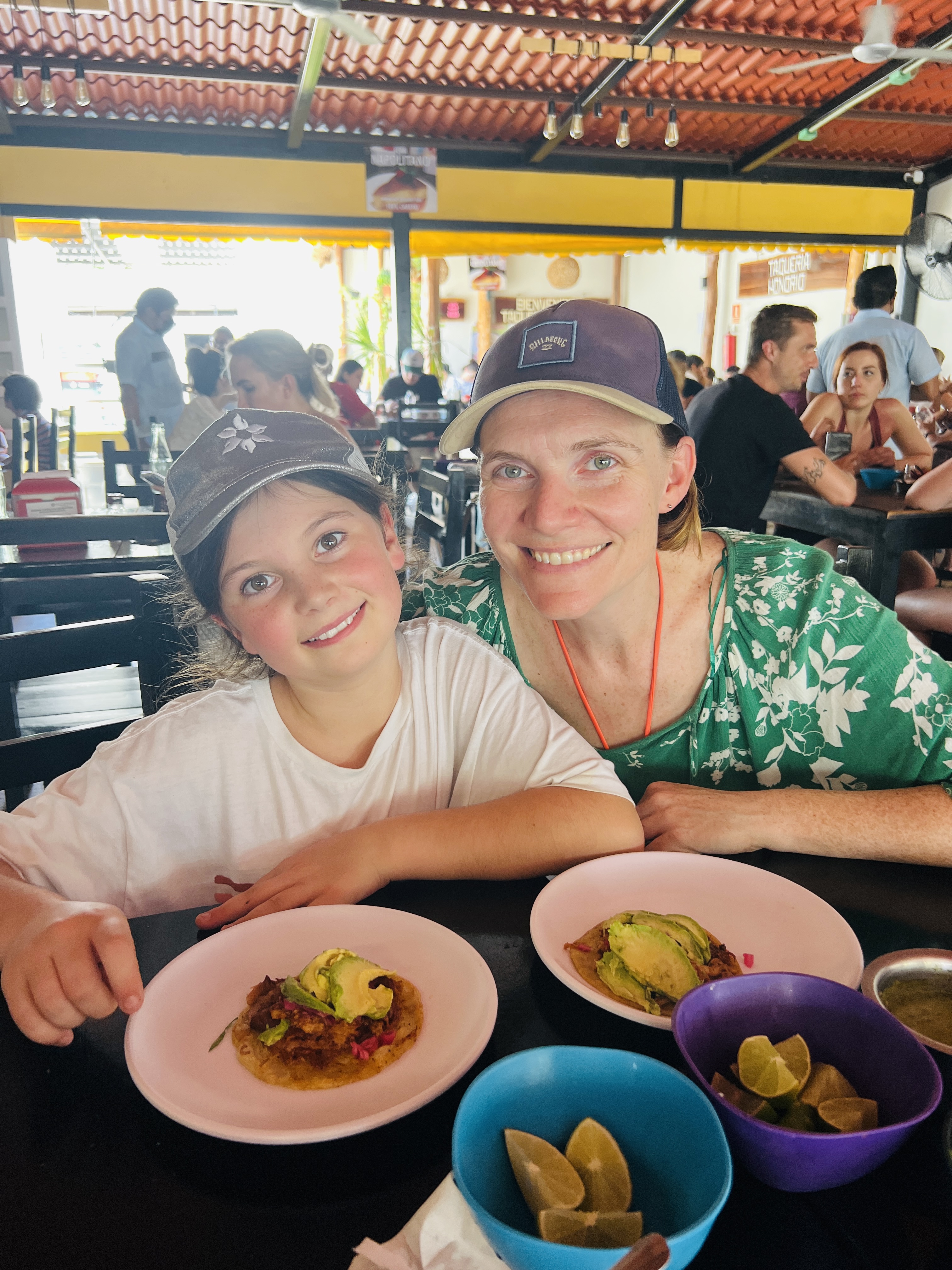
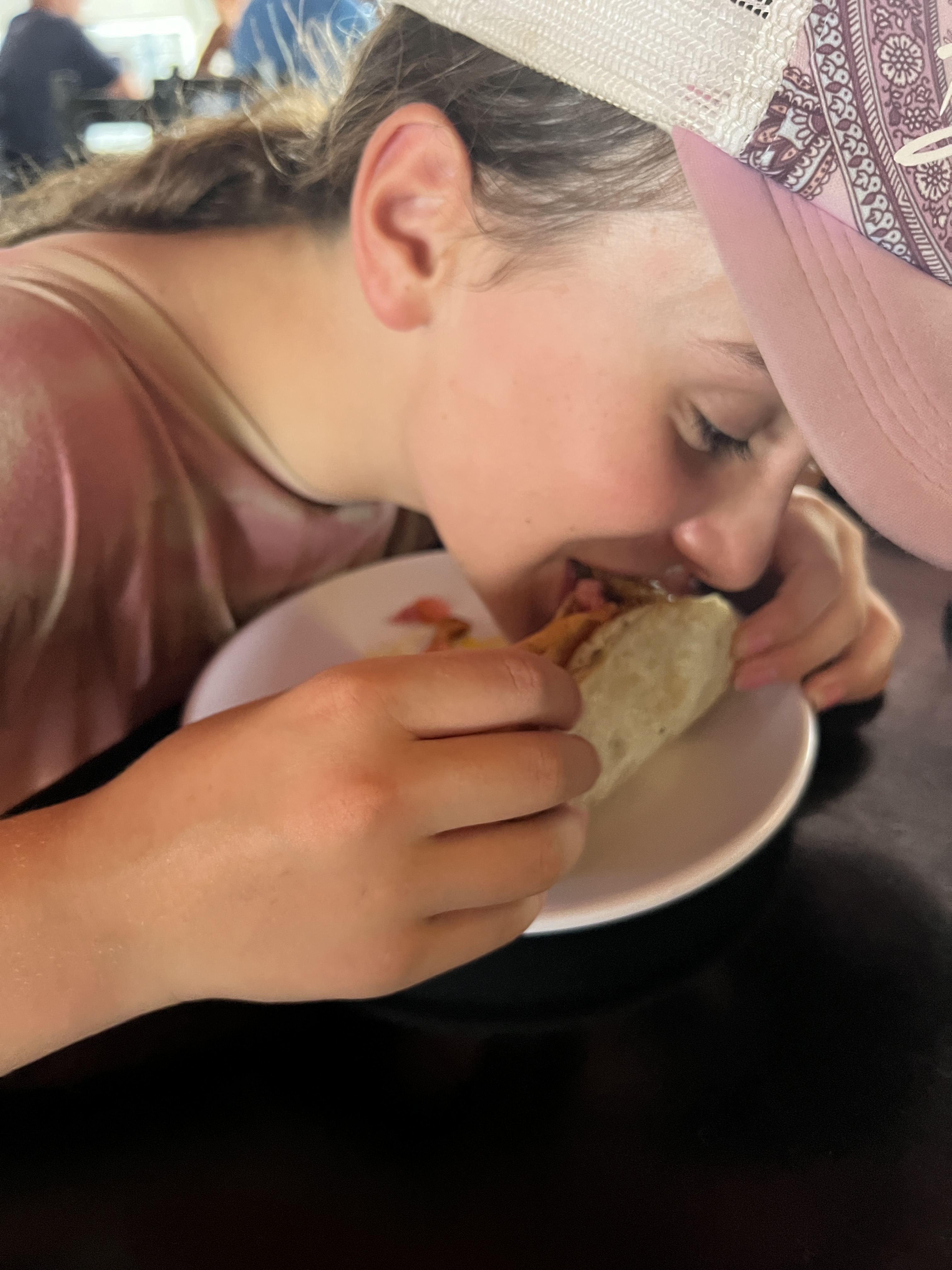
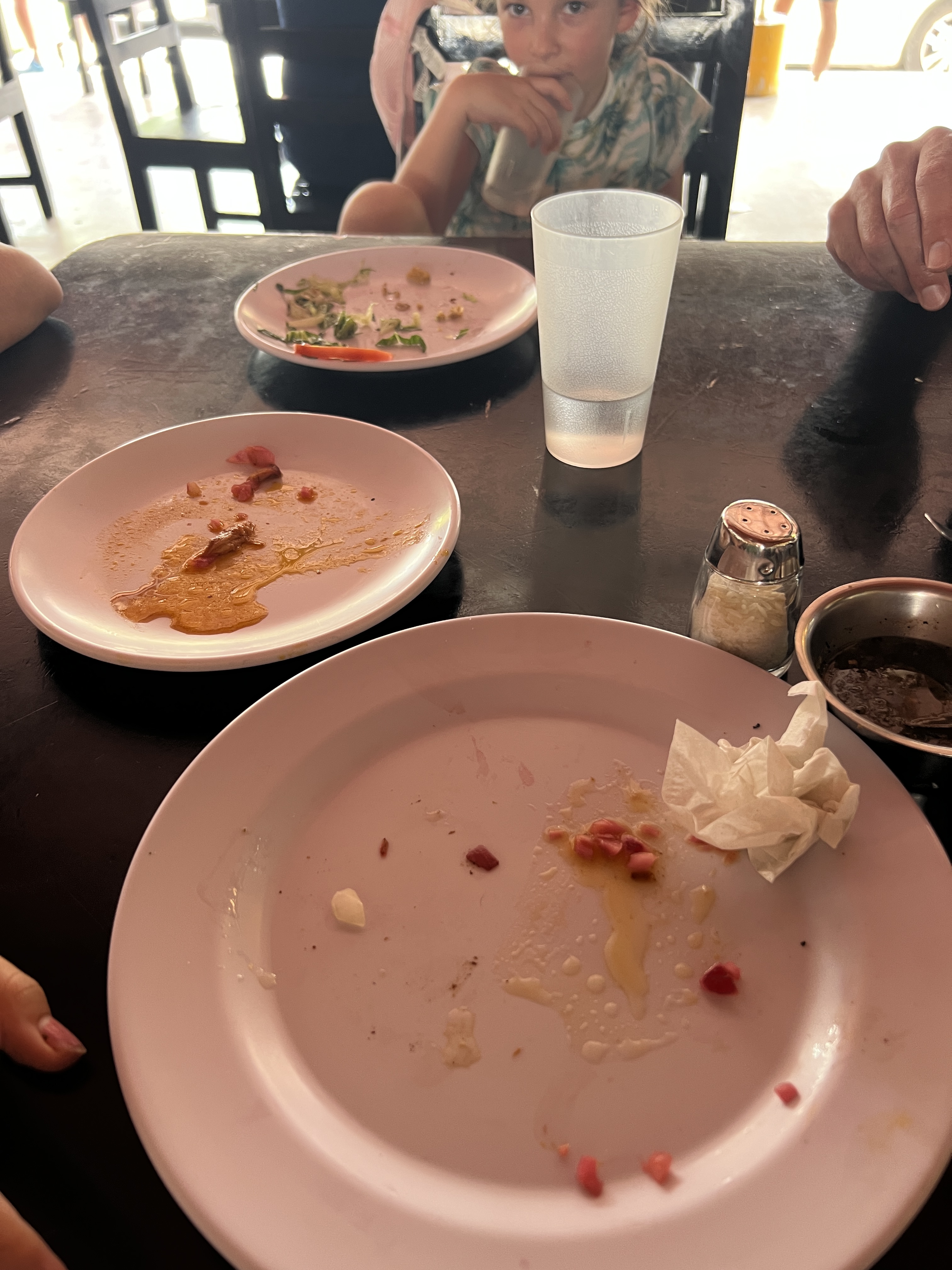
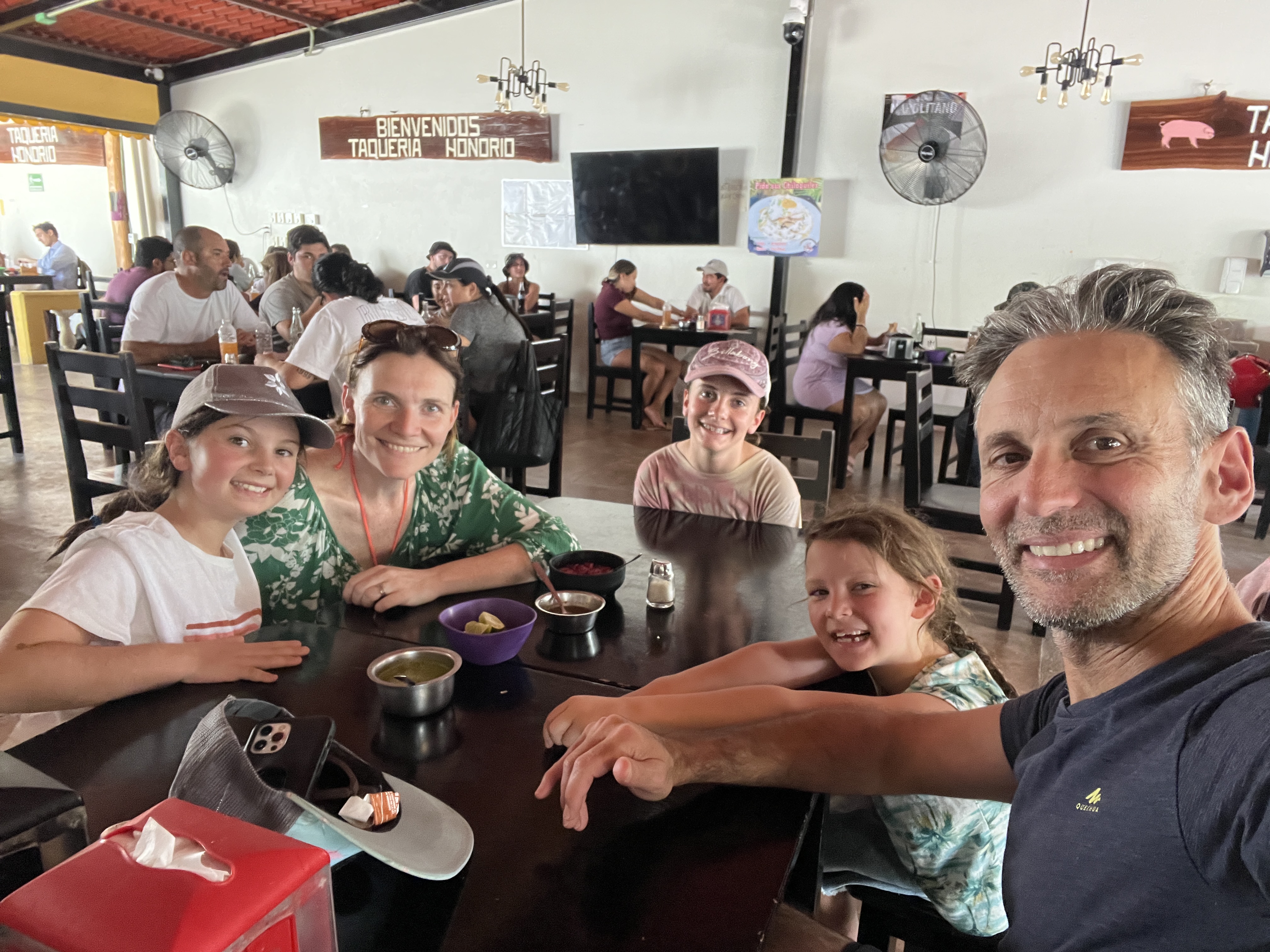
Our first stop was Taqueria Honorio, a local restaurant serving tacos and the like at scale to both tourists and locals (yes, they were here, just massively outnumbered) in a marketplace like setting. It was pretty well known and there was a line, but we got ourselves a table quickly enough and were treated to the best food we’ve had since Vegas, if not all trip (barring, perhaps, Barry’s tortilla). Simple, tasty tacos of pork, chicken, beef and vegetables with different accompaniments for each, served on a single plate with no cutlery. Drinks were served out of bottles with no glasses. These guys liked washing up as much as we did.
Satiated and feeling positive, we headed home for a few hours to do some research and plan our assault on the beach area that afternoon/evening. We were determined to set foot on the sand and look at the sea. We were happy to invest to do this but wanted to minimise the damage to our self esteem and our wallet.
We had our plan and were ready. We made our way determinedly down the beach road, getting to the turnoff with a choice to go either north or south. We wanted to try north in the first instance, as it appeared less developed with more chance to fulfil our plans.
Unfortunately, we were pipped at the first point. There was an impromptu police barricade at our turnoff, and we couldn’t head north. Unfazed by this minor setback, we did a u-turn and went the long way around, up the highway and down towards the famous Mayan ruins. We passed the first throng of people trying to convince us to park with them (still some 2 kms from the beach). We lied our way passed two armed check points, claiming a reservation at a local hotel. We hit the beach road and found a parking area, negotiating a $20 parking fee and the vague promise of another $100 of consummation at a nearby restaurant that we had no intention of ever visiting.
We strode from the carpark and up the track to the beach, still hopeful that our brief glimpse of brown water and seaweed strewn headland from yesterday was an exception, the stories were all lies and we would be greeted by the beach we both remembered.
Alas, no. We were greeted by large mounds of seaweed, brown water and a run of rustic beach bars with (unsurprisingly) no one in them. There were scores of empty boats lined up along the shoreline and in the water. The ever-reliable coconut trees still stood sentry over the scene, but they somehow looked a little sadder than we remembered.
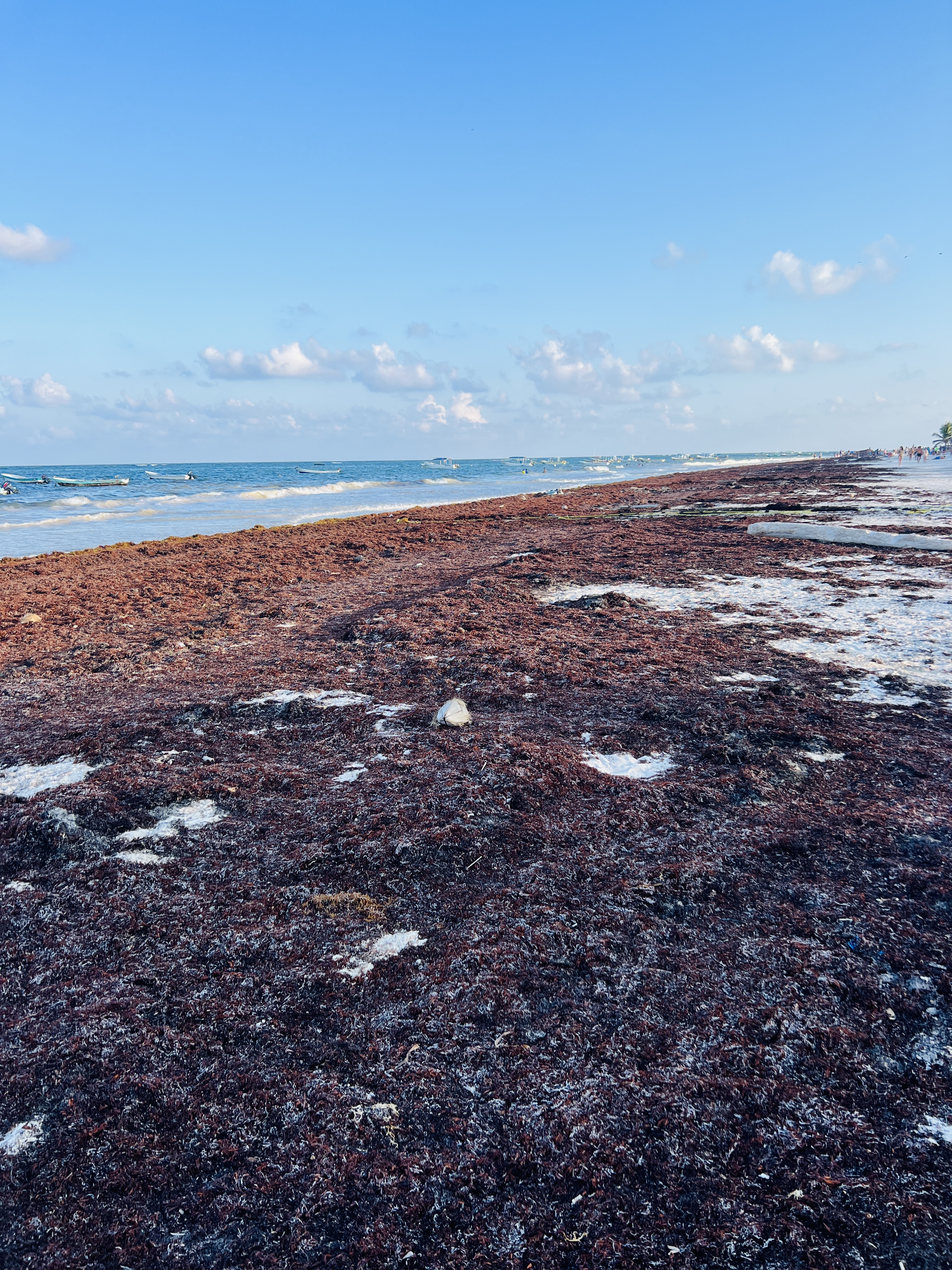
The kids were now convinced that Mum and Dad were senile or delusional, and just wanted to get out of here. We dragged them up and down the beach for half an hour or so, trying to find that perfect angle when the photos would look OK, whilst also trying to photograph the reality of what we were seeing. Eventually, we gave up and returned to the car, exiting the car park at speed for fear that the security would seek evidence of our unconsumed consummation tax.
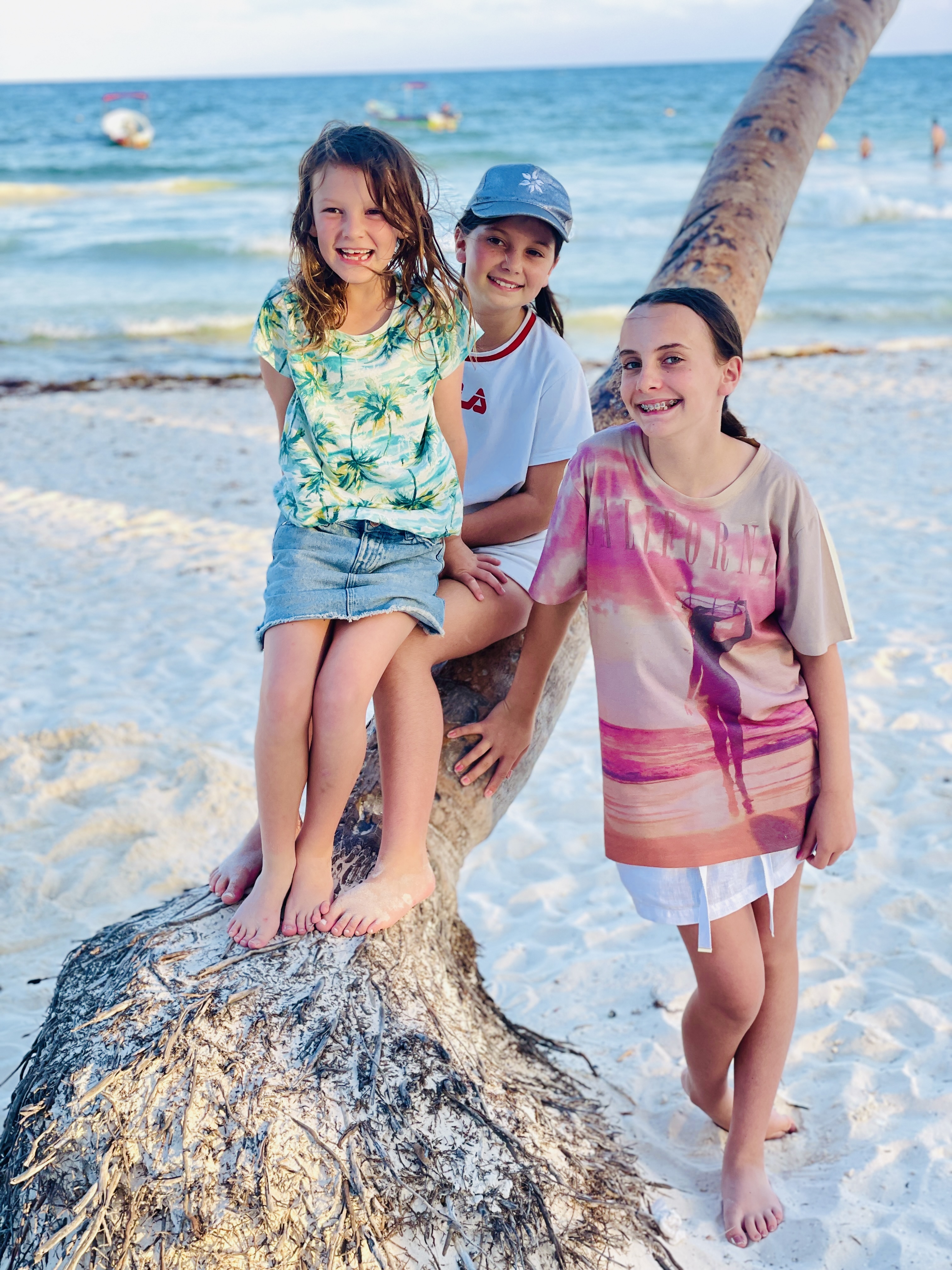
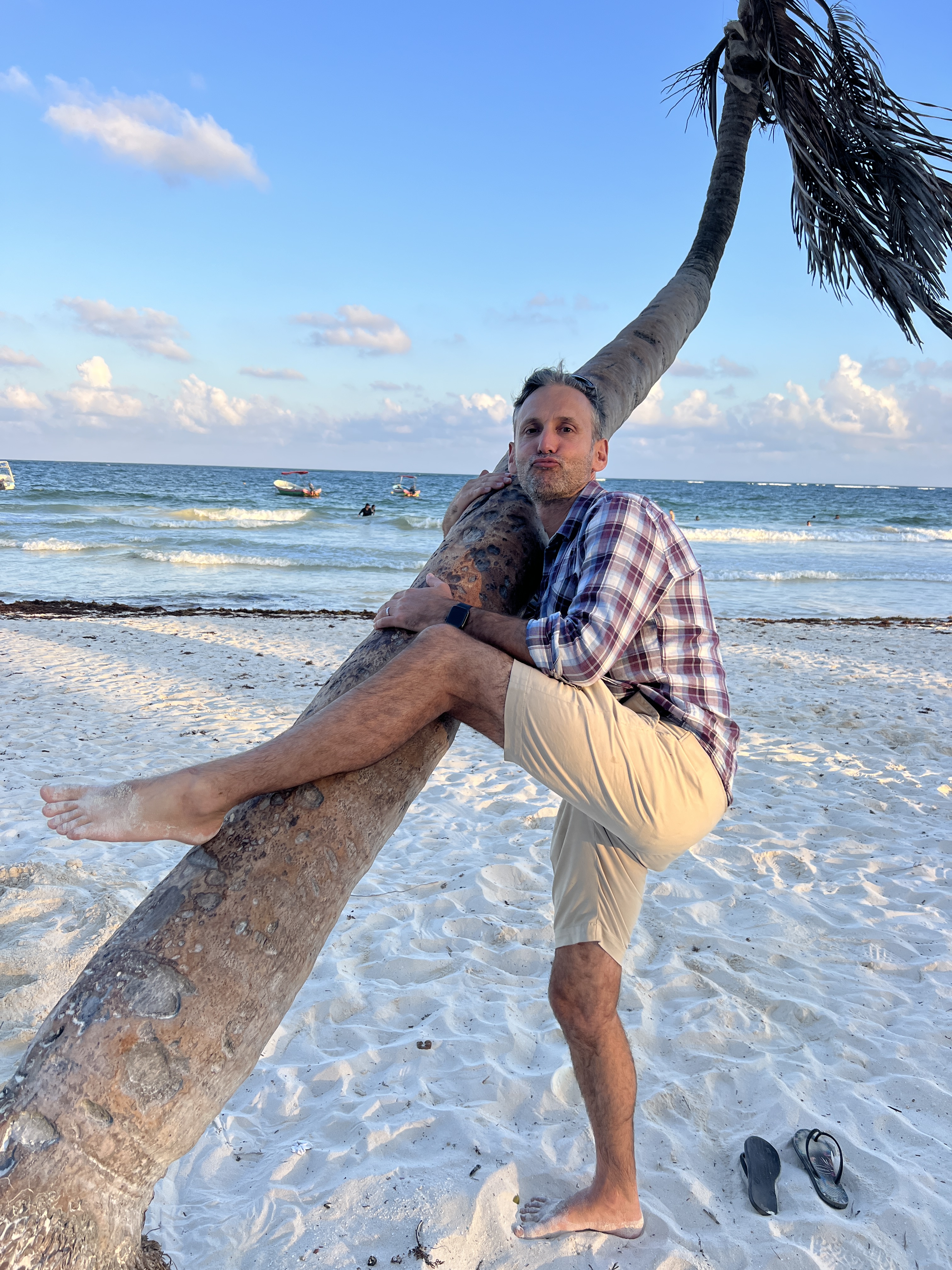
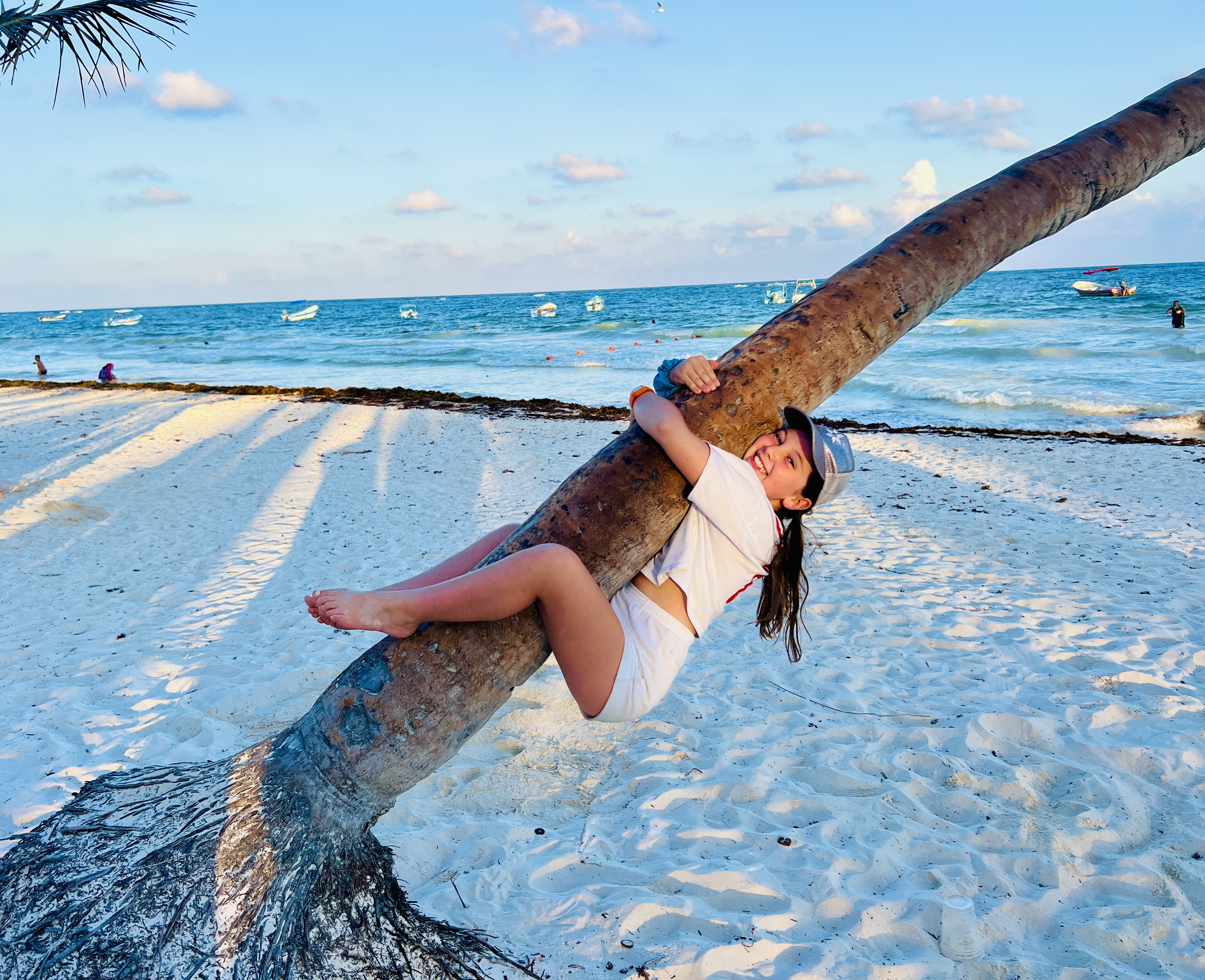
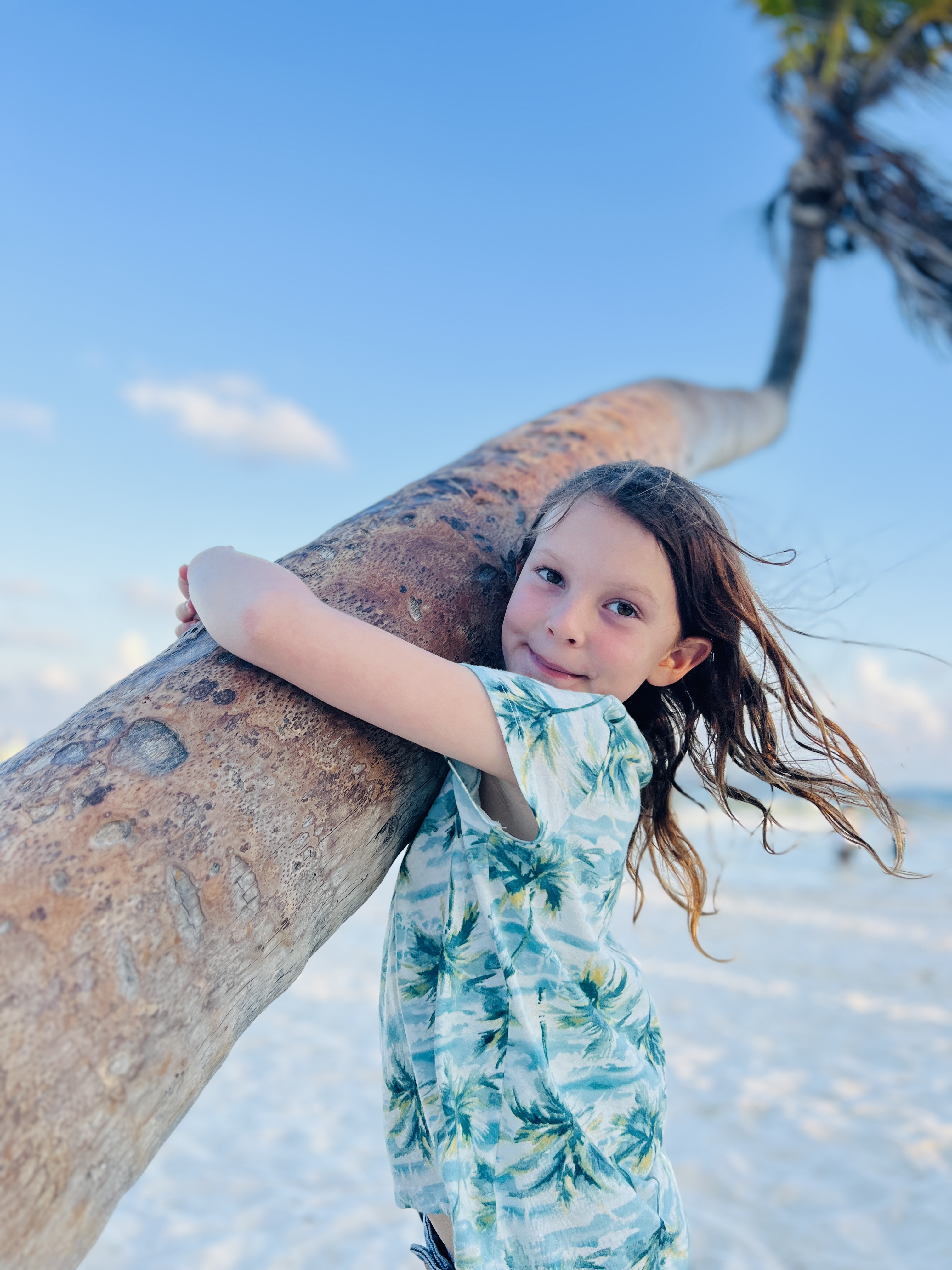
Beach access without breaking the bank? Tick.
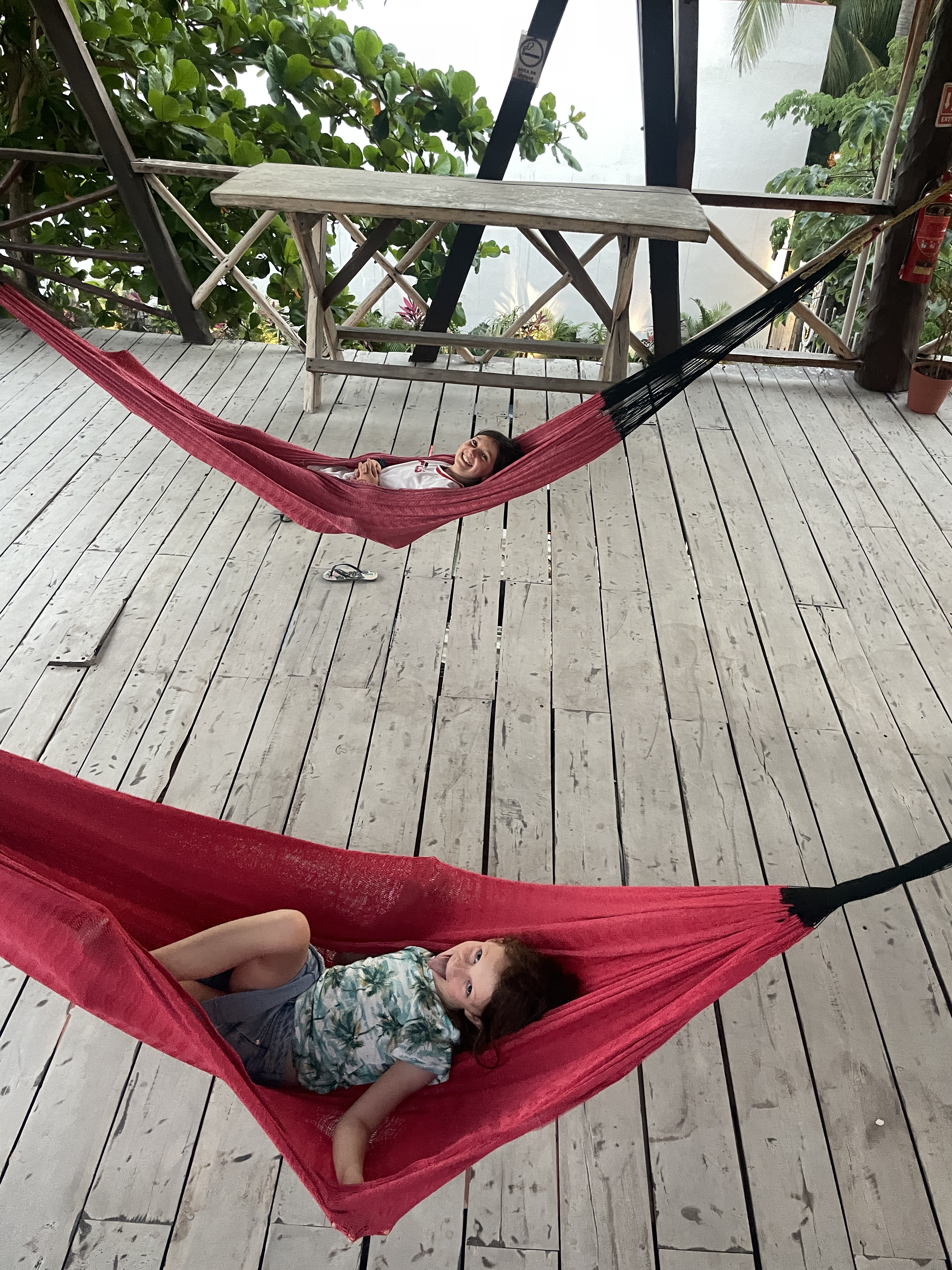
From there, we made our way a couple of kilometres south to the (even more) built up area of the beach where the majority of the major resorts, swanky restaurants and Ibiza-esque beach bars had sprung up. We found a place called Mateos Grill with a rooftop terrace and an incredible sunset over the jungle, very tasty Mojitos and a live band. We enjoyed a drink whilst Jessie and Sena wrapped themselves in a hammock to escape the noise.
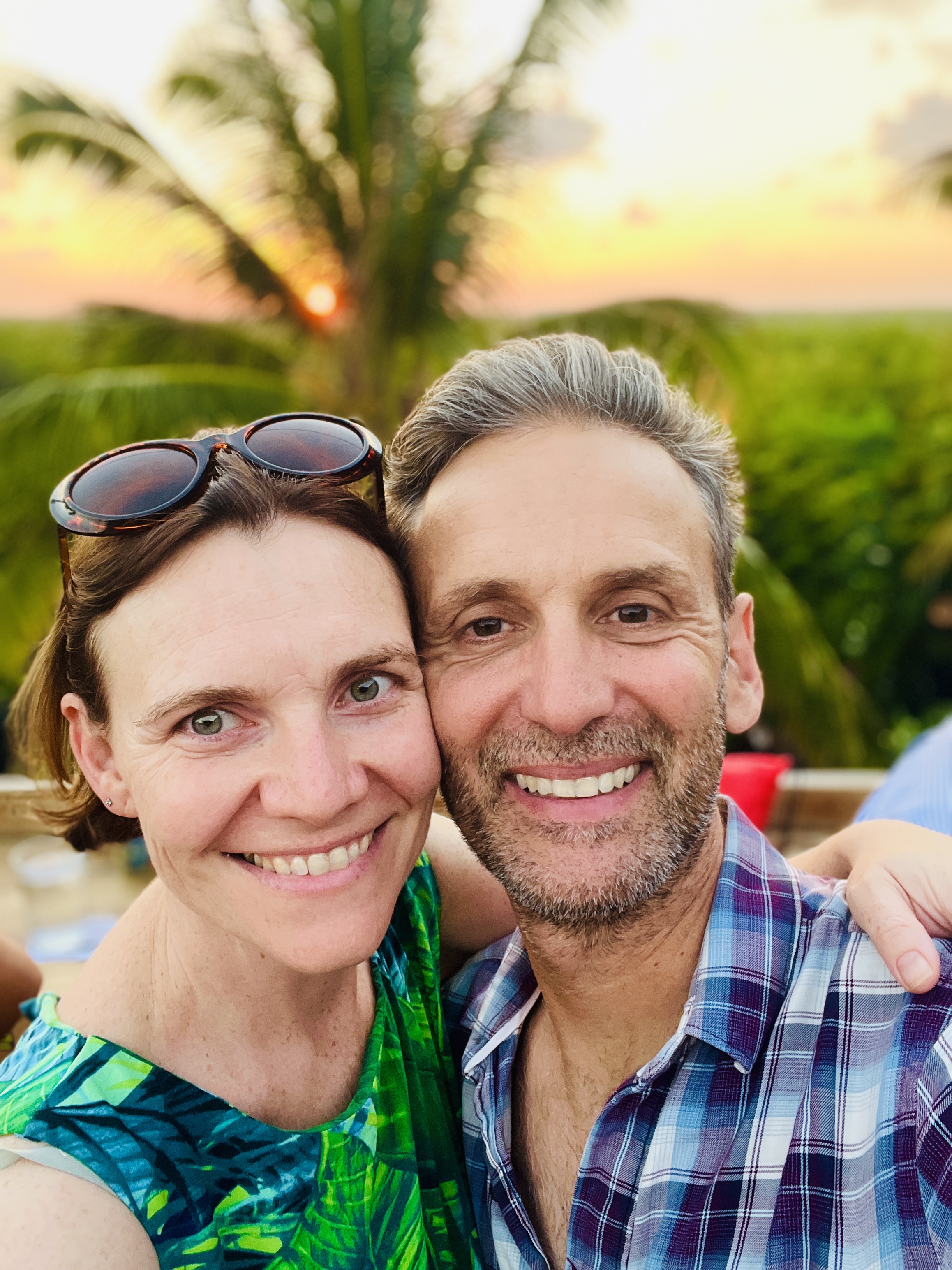
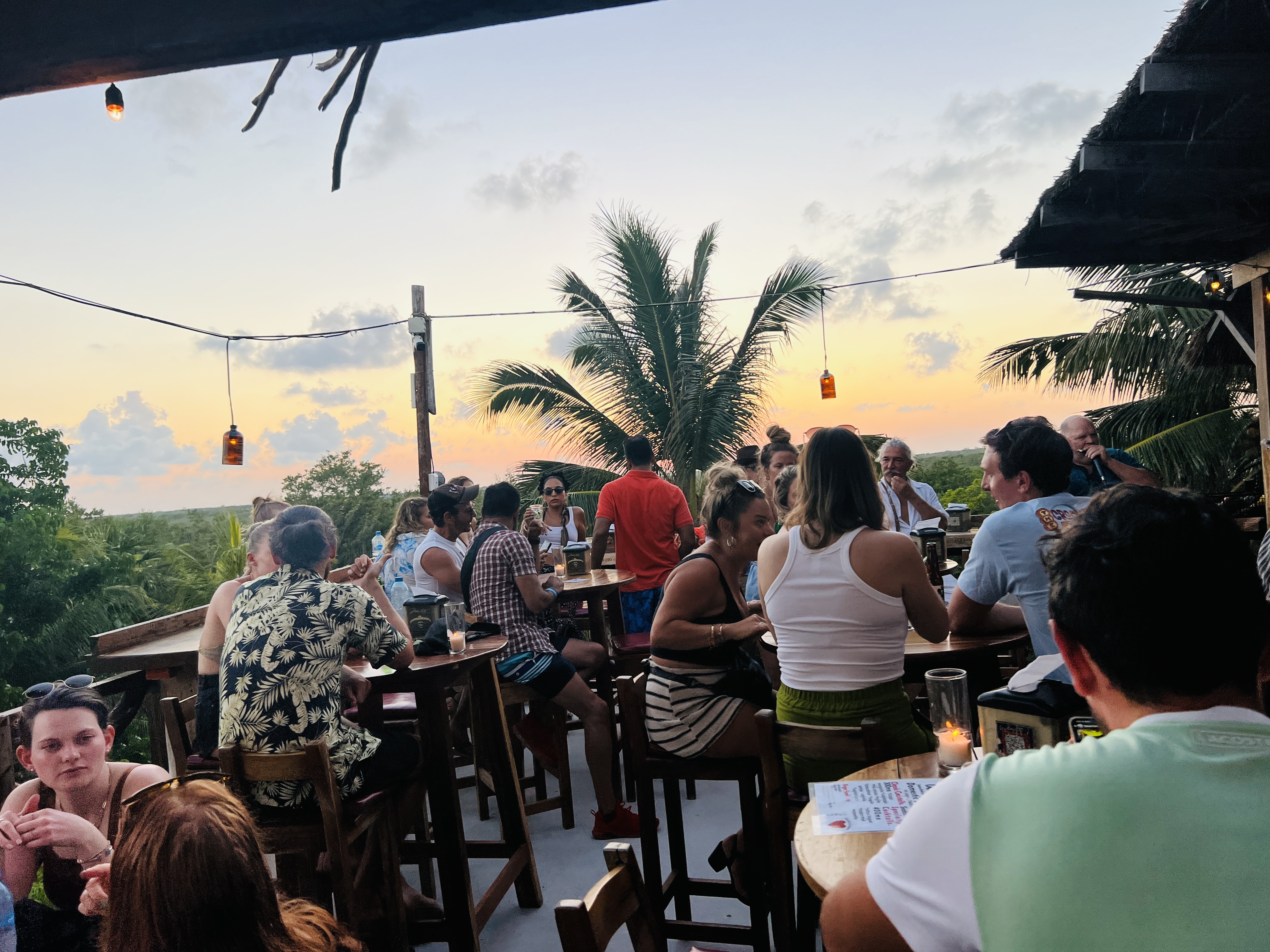
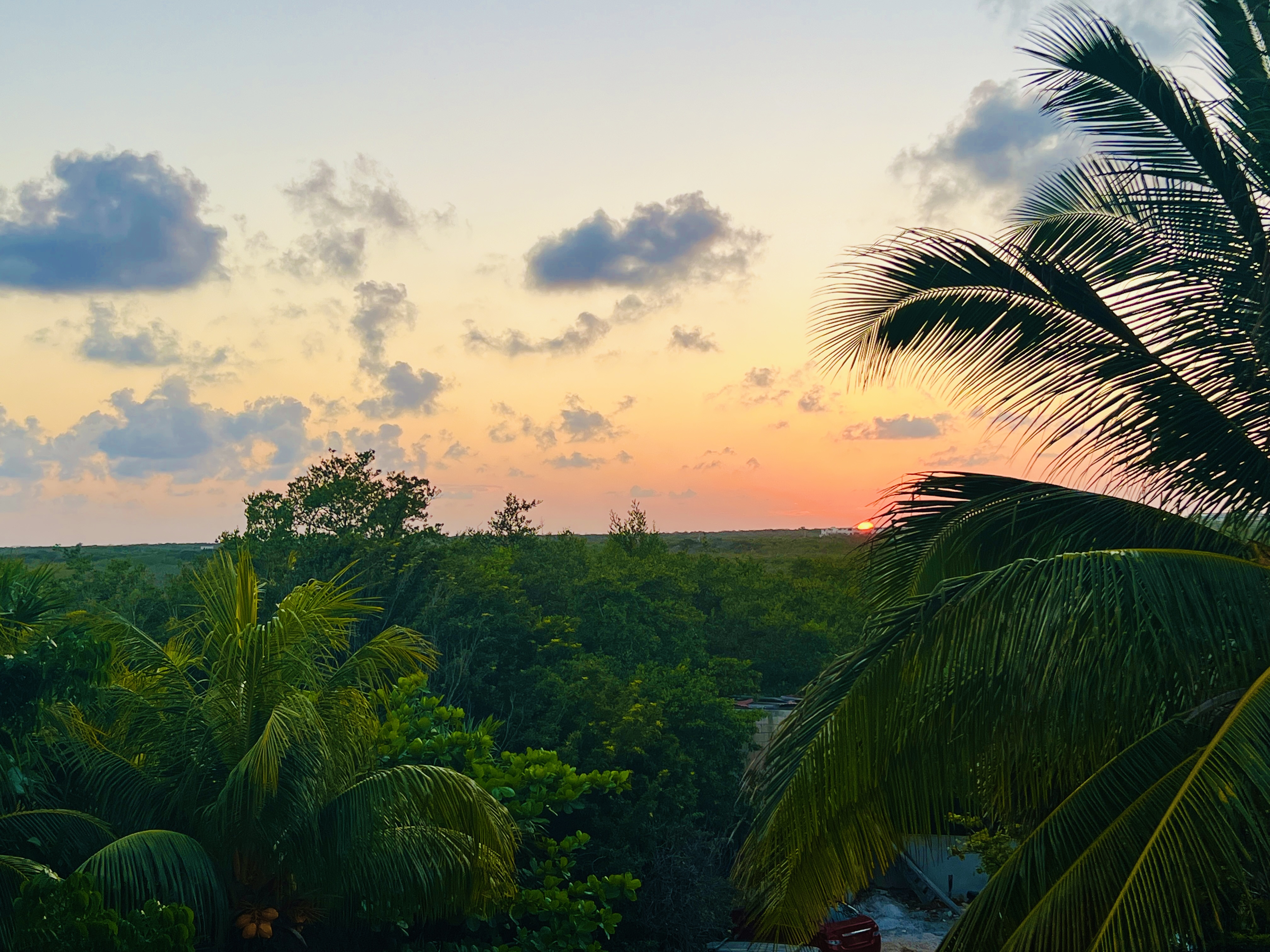
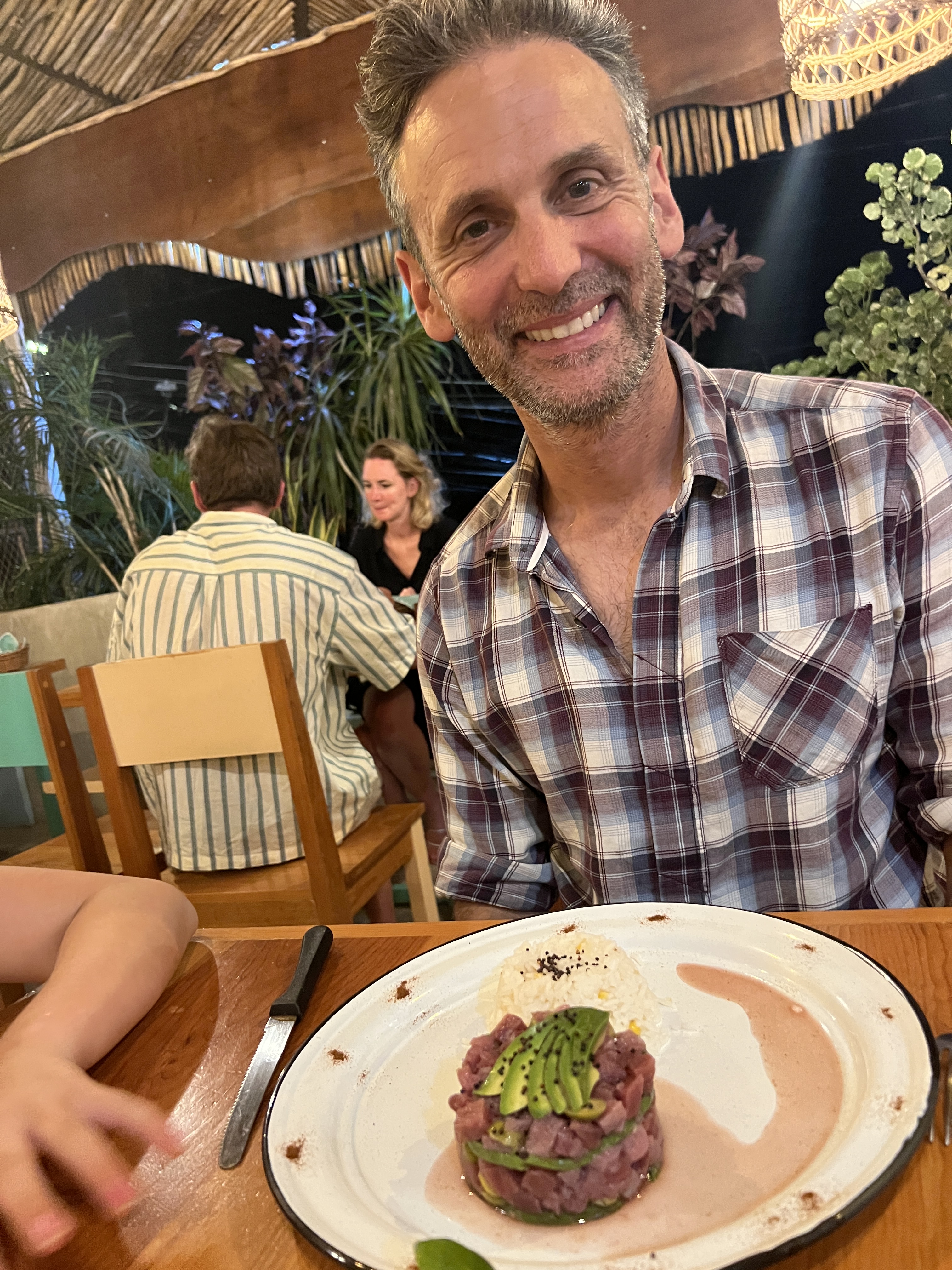
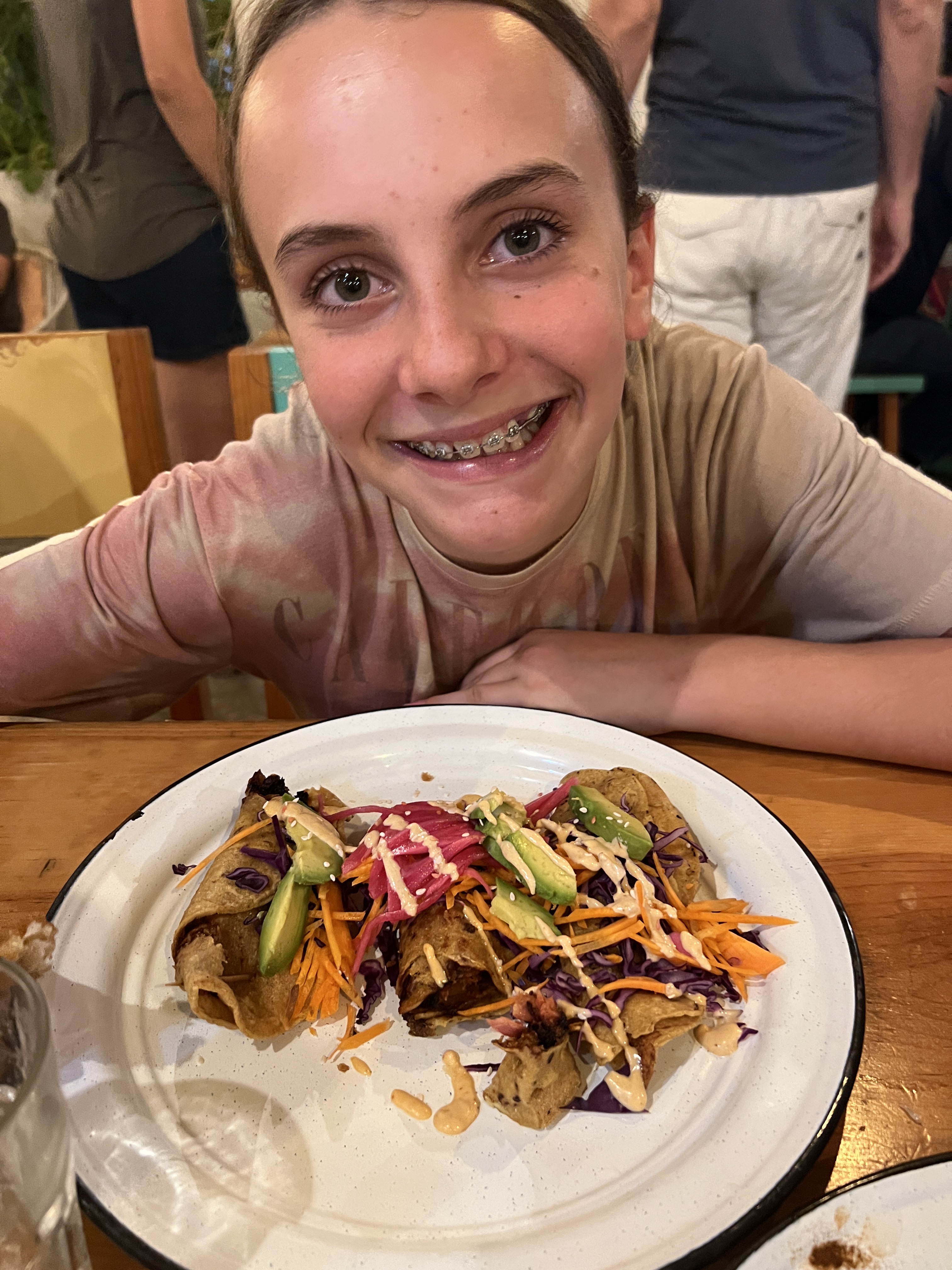
We negotiated our second parking fee of the night (still significantly cheaper than the exorbitant taxi fares from town to the beach – we’ve heard upwards of $50 to travel the 4 kms) and made our way to the lovely Sabor del Mar restaurant for a dinner of fish and fish tacos. Yum.
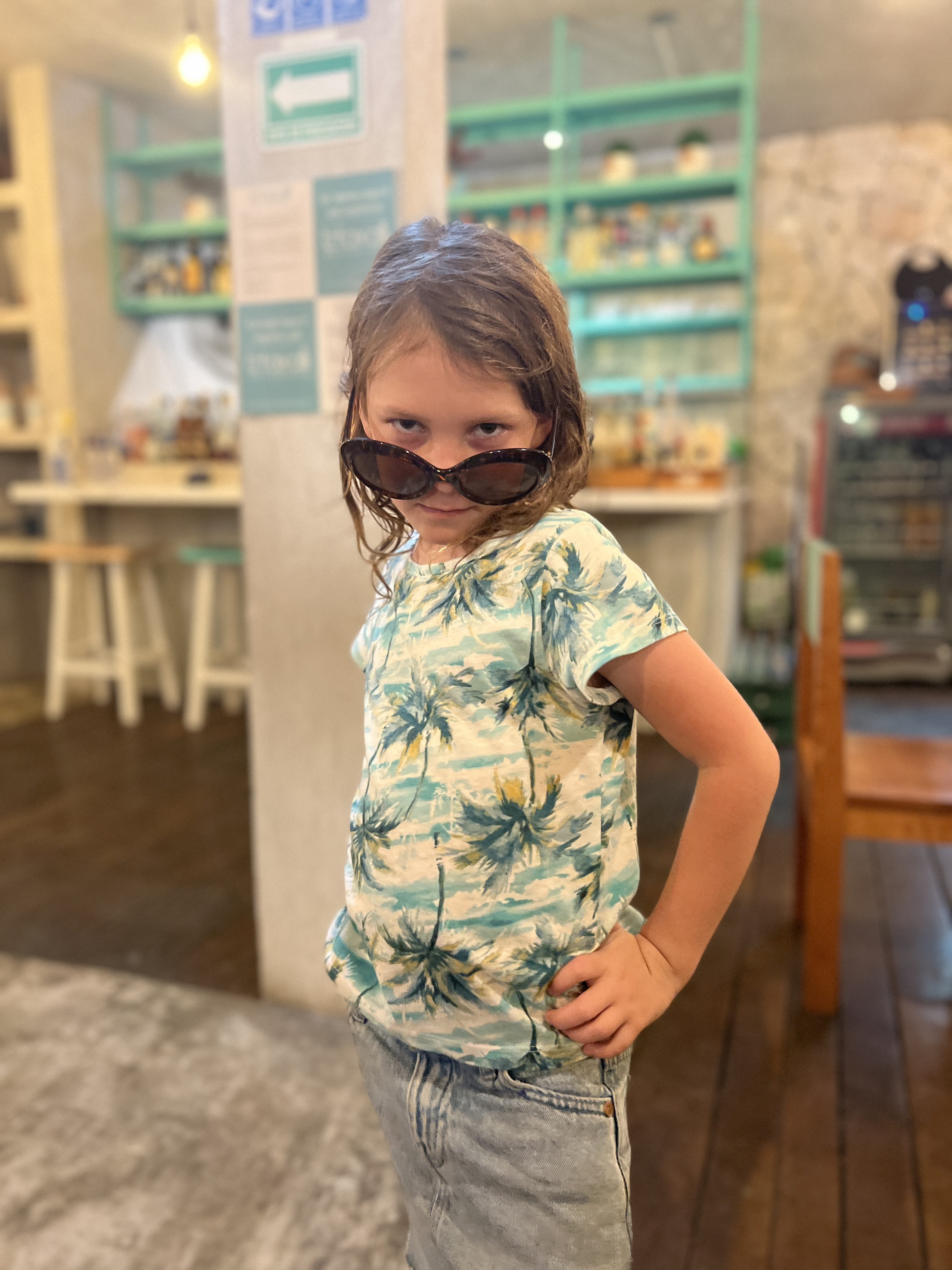
We had survived our beachside adventure without breaking the bank. We would not be back.
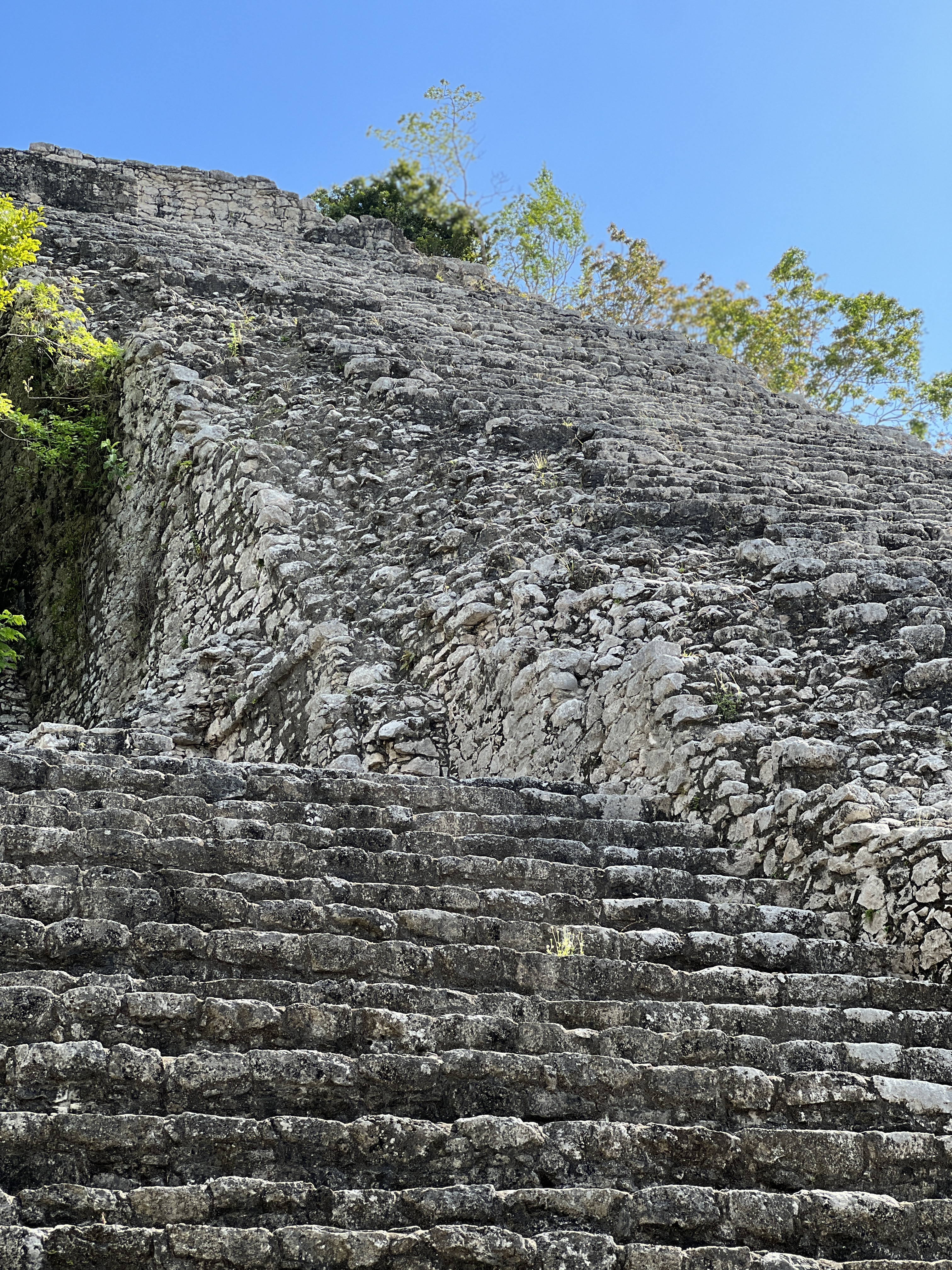
The following day we decided to have another bite of the Mayan cherry and head to the ruins of Coba. This is a large, early sight which includes the impressive Nohoch Mul pyramid which, at 42 metres is the largest in the Yucatan. Its 120 steps dwarf the 91 at Chichen Itza, however this has not been restored. There are a number of impressive buildings around the site which is spread out over several kilometres. Considering it was 32 degrees at 9am, this was always going to be a hard sell with the kids.
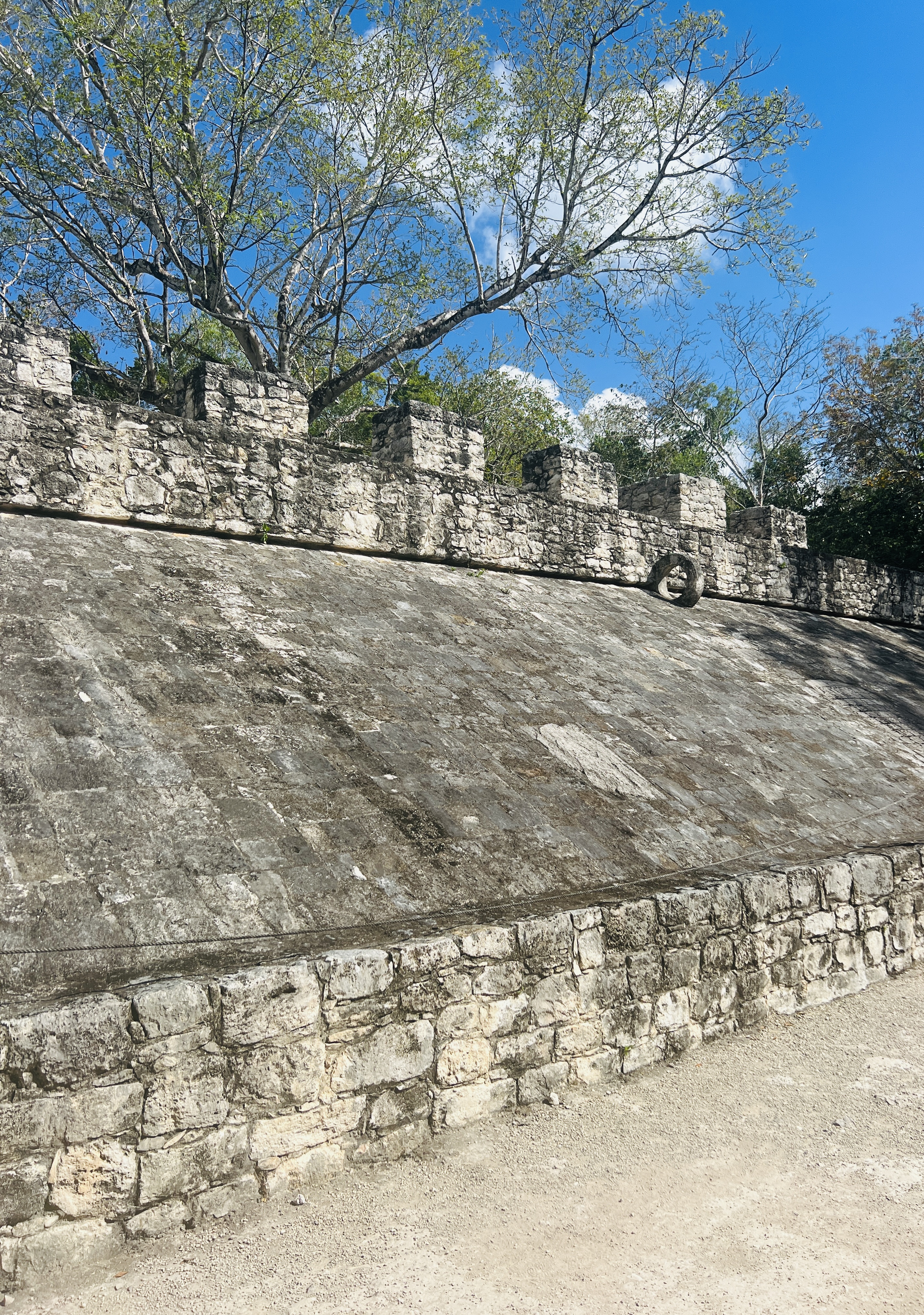
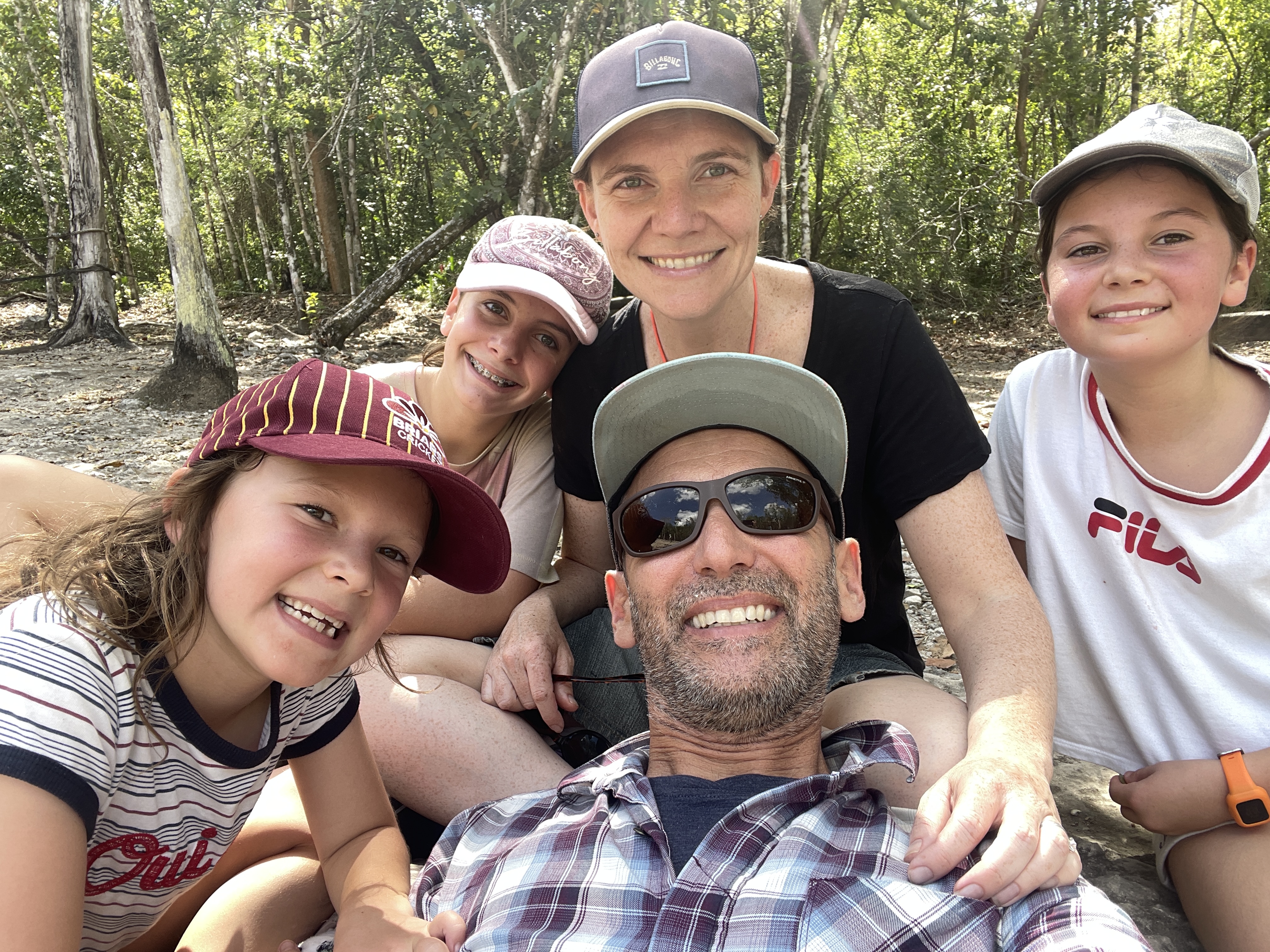
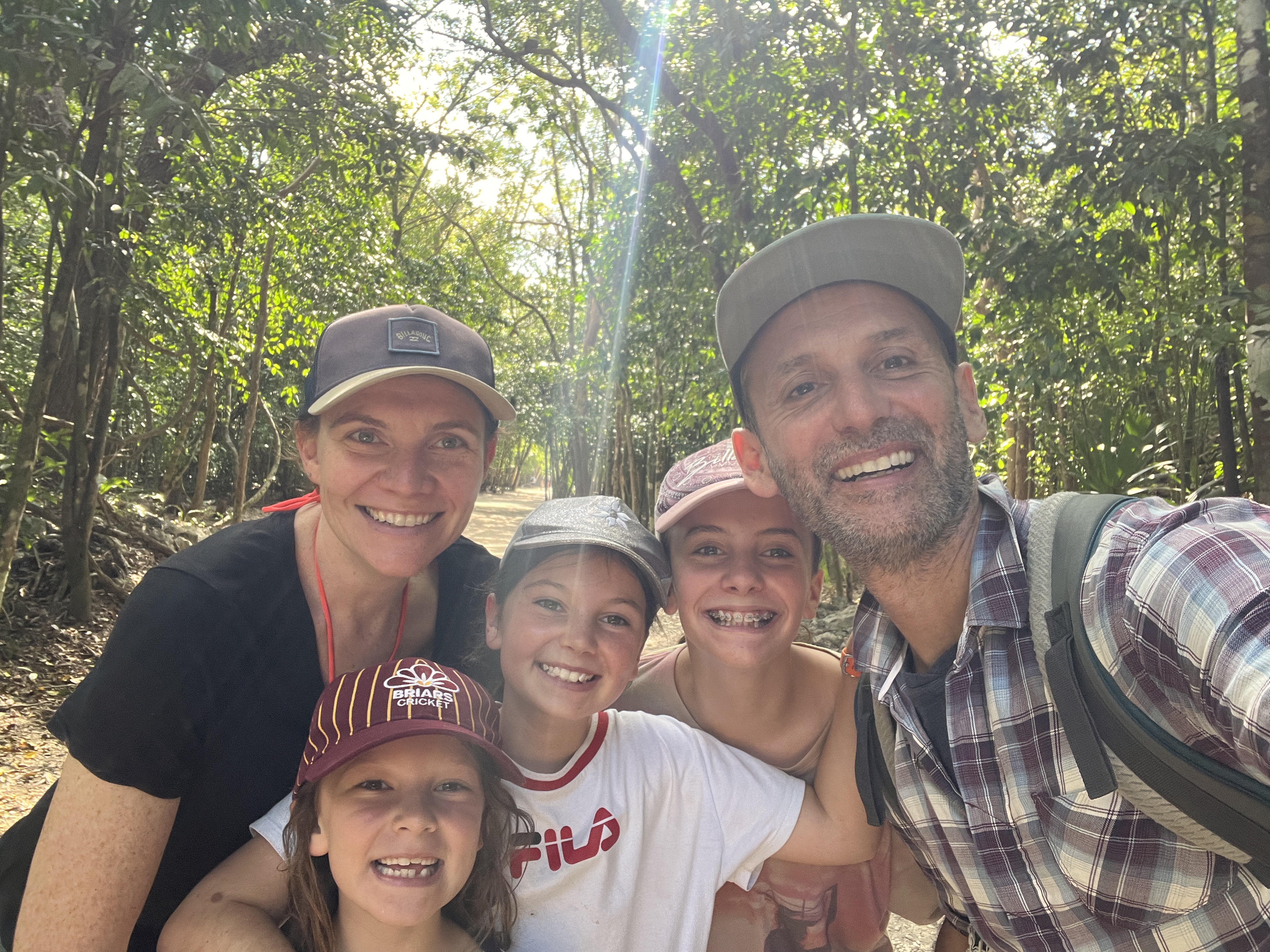
Solution? Hiring bikes – and passing the morning riding around rocky white limestone paths under the shade of the beautiful trees between sites. We spent most of our time between Nohoch Mul and the really interesting ball court (much smaller than Chichen Itza, with much larger rings and sloped walls – making everything look much easier to win – and therefore die).
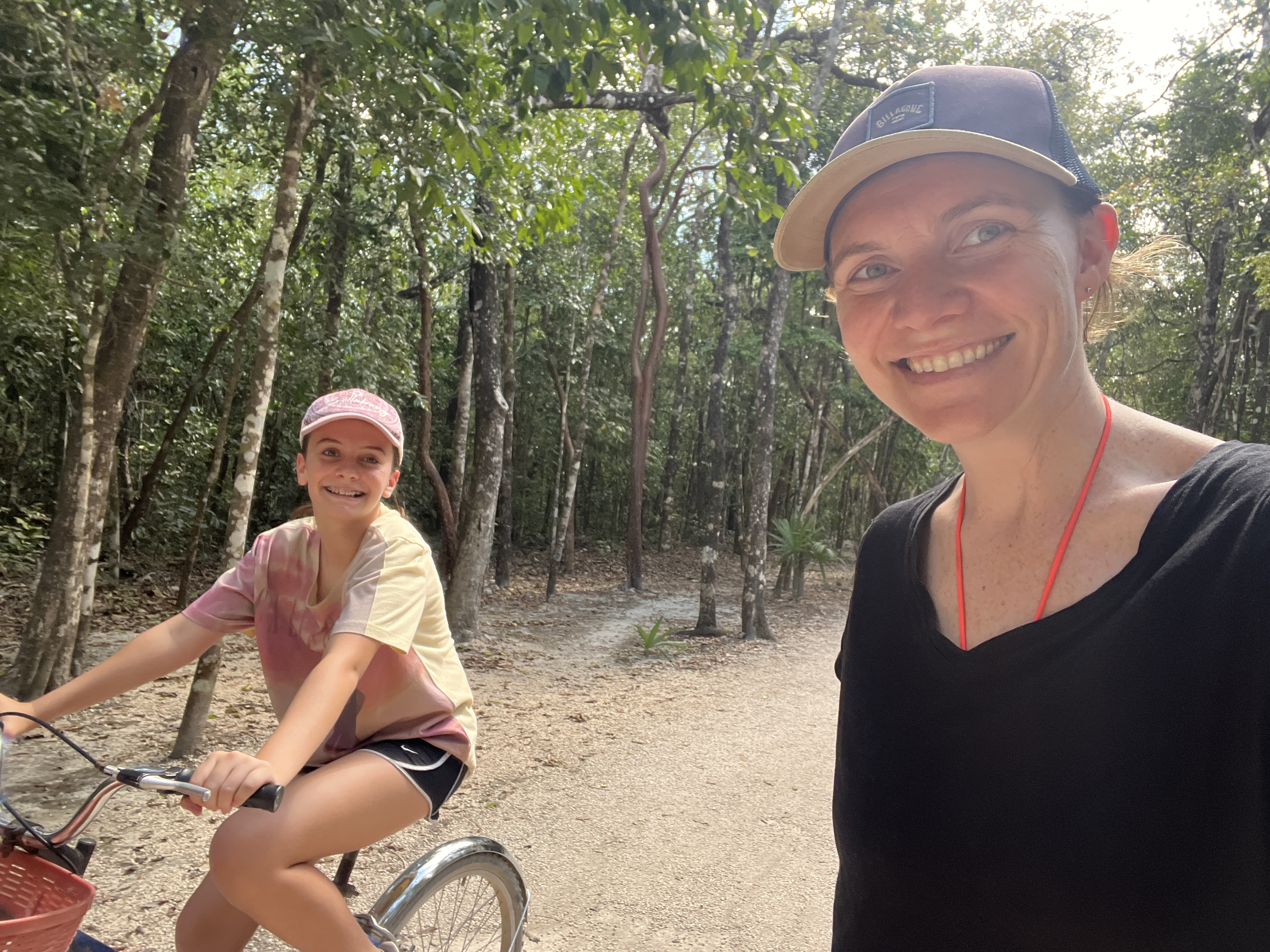
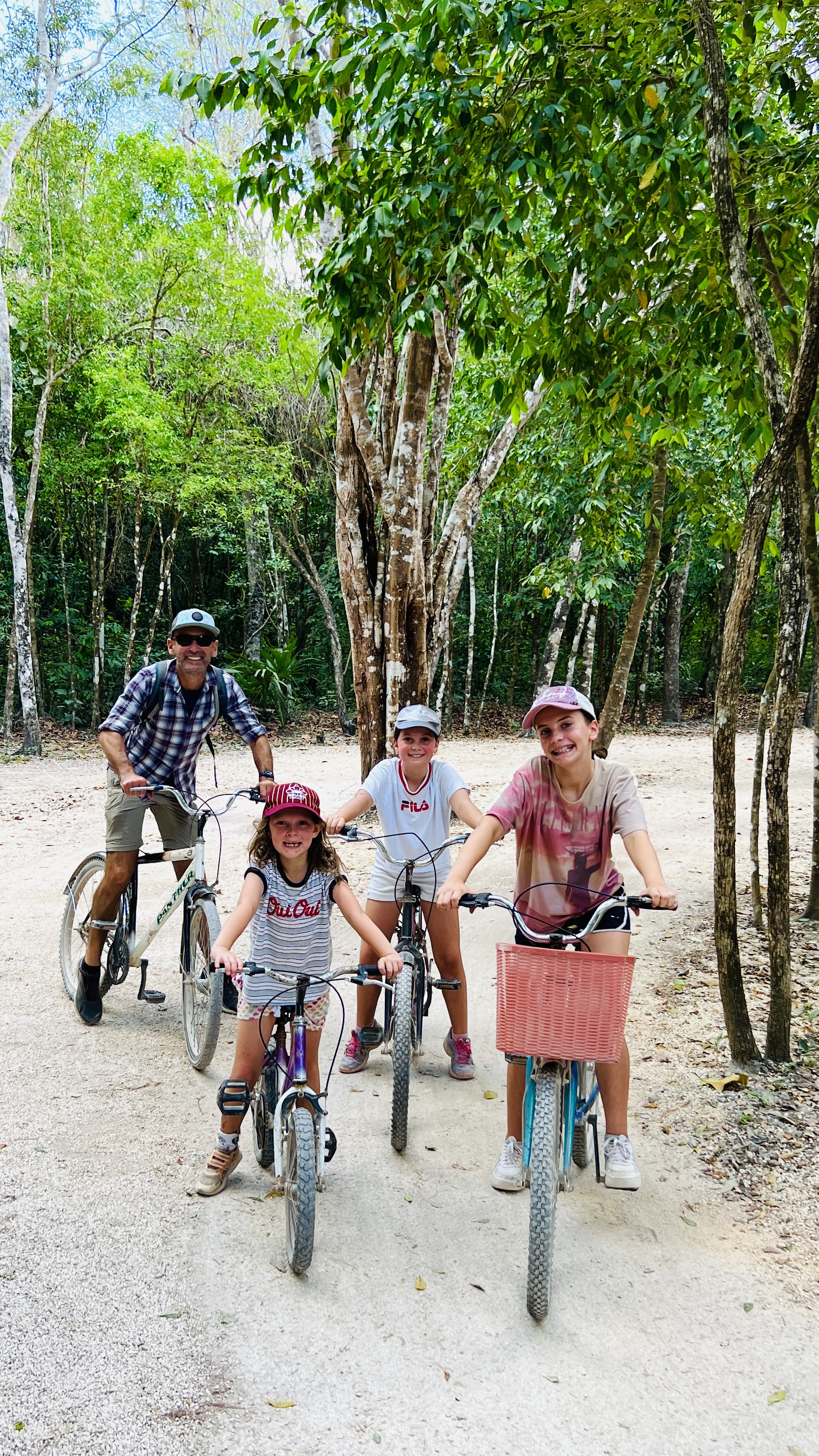
We constructed stories of what a day in the life of an average resident of the town would be doing.
Sena and Liz spent their days farming, cooking and lovingly raising chickens who would provide them eggs.
Ellie, Jessie and I decided we were part of the minor nobility. Not presumptive enough to be a king (mainly because we didn’t fancy the sacrificial bleeding out the penis that was expected of a king), but not nobody either – think Zara Phillips, currently 20th in line to the English throne, with no responsibility but (back in the day) plenty of access to all the good parties. We would spend our evenings gazing at and mapping the stars, our days playing ball (as badly as possible, to avoid dying) and then sacrificing our opposition and decorating their skulls with quetzal feathers to please the gods. The gods would then deliver us eggs.
Who can say who was wrong and who was right?
Our last stop for the morning was a beautiful underground cenote called Tankach Ha. This cenote was completely concealed in a cave with deep, crystal clear water and several diving platforms. We spent our time snorkelling in the water and jumping off the platforms into the water below.
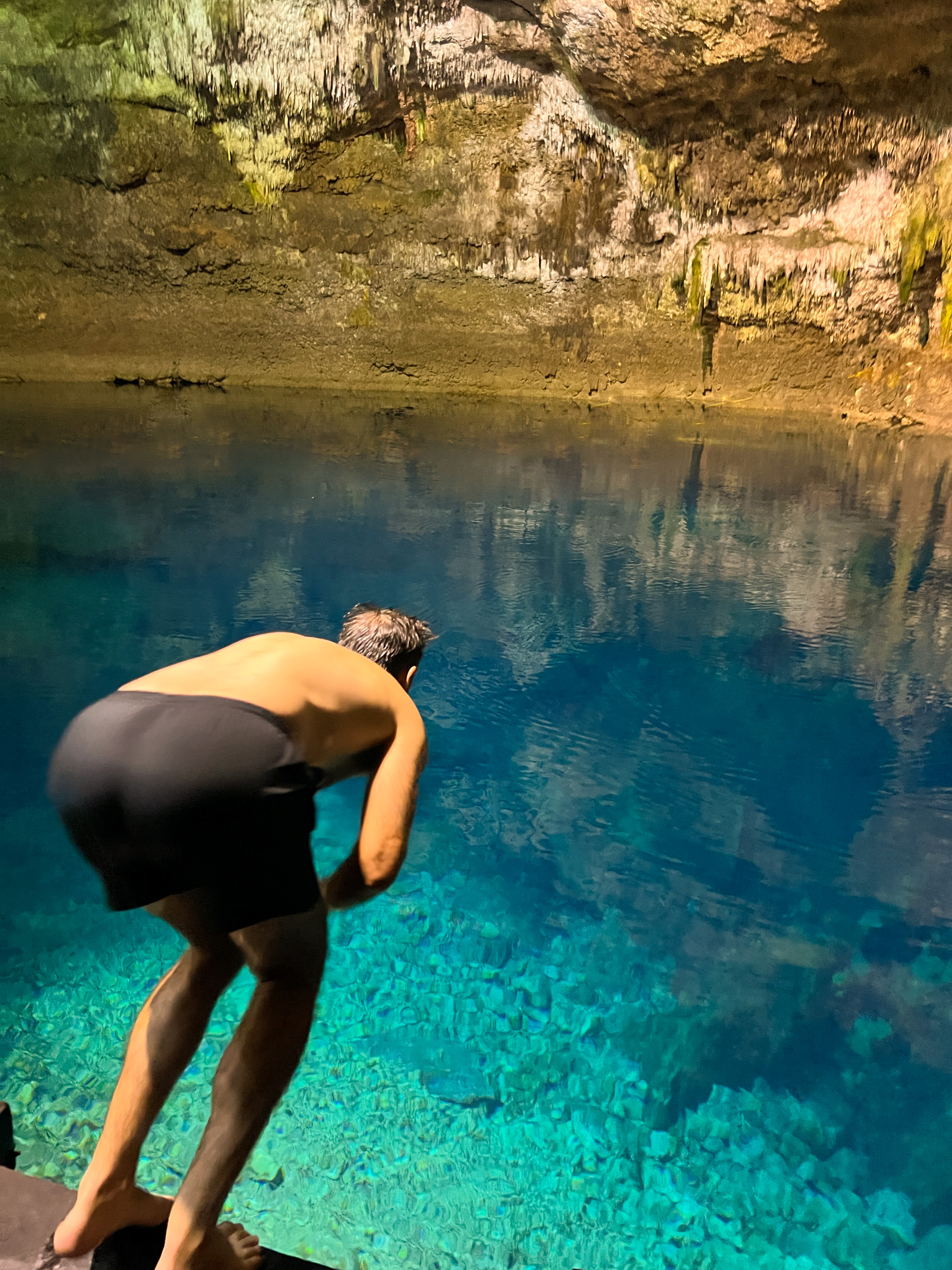
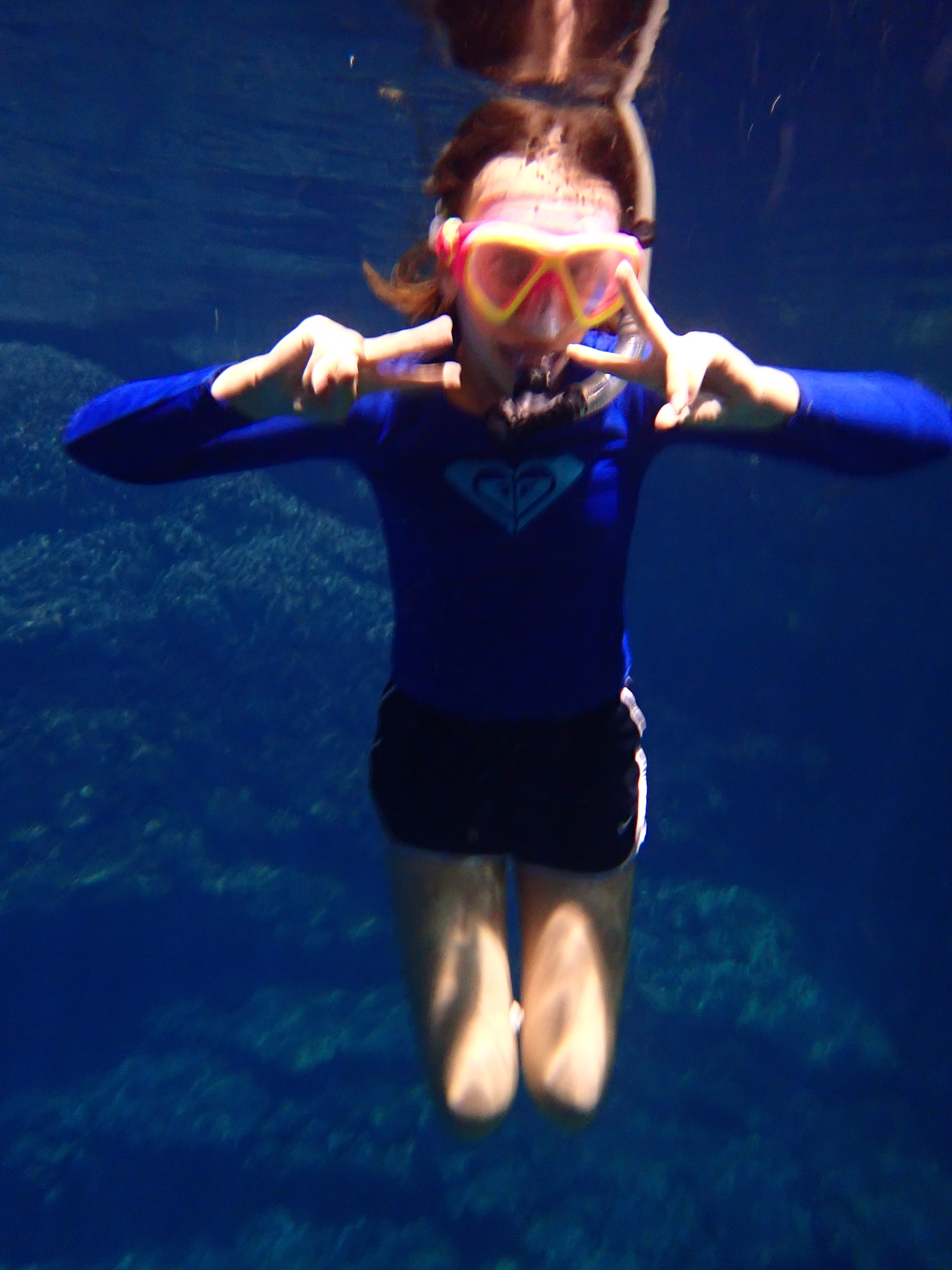
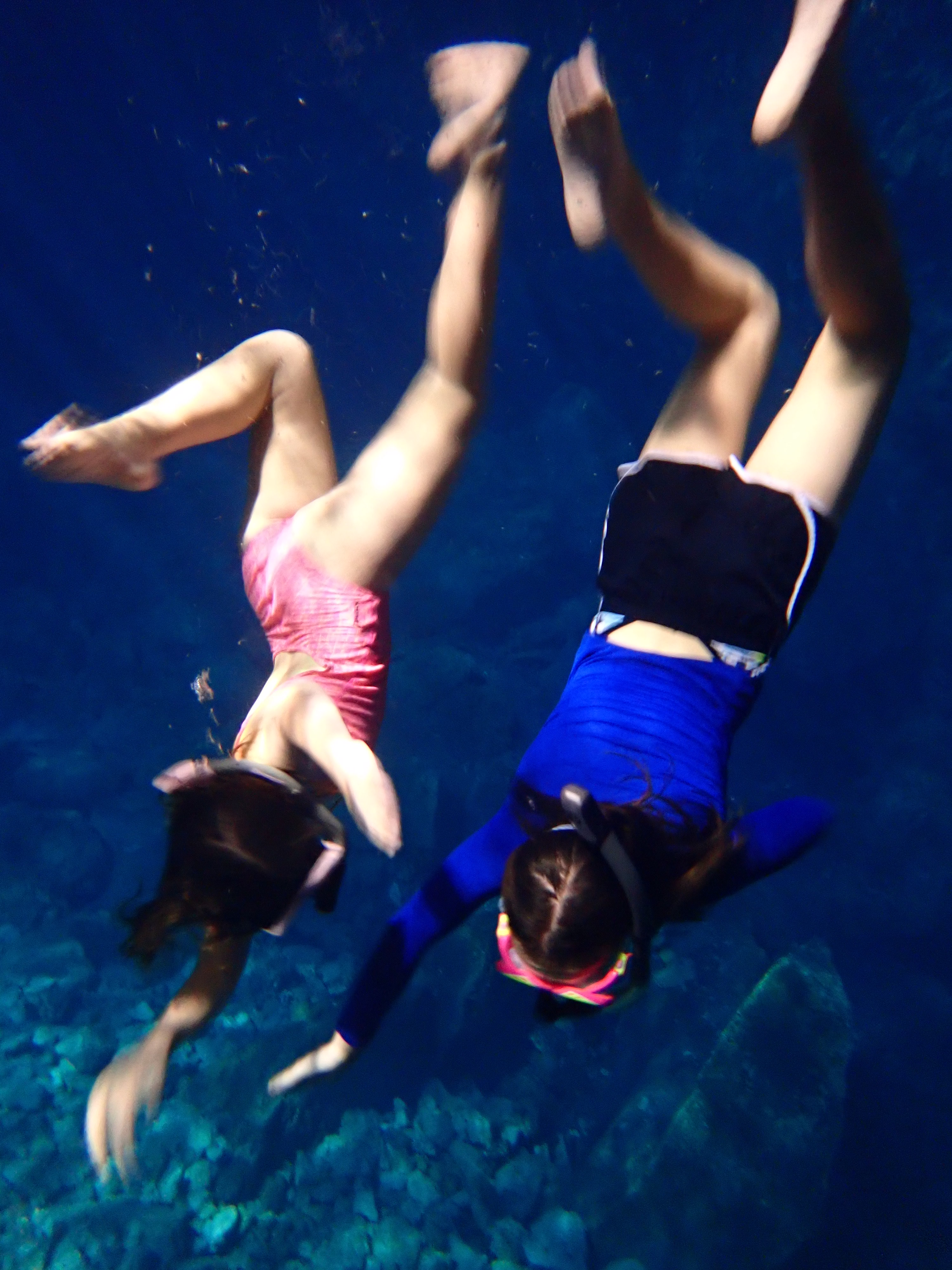
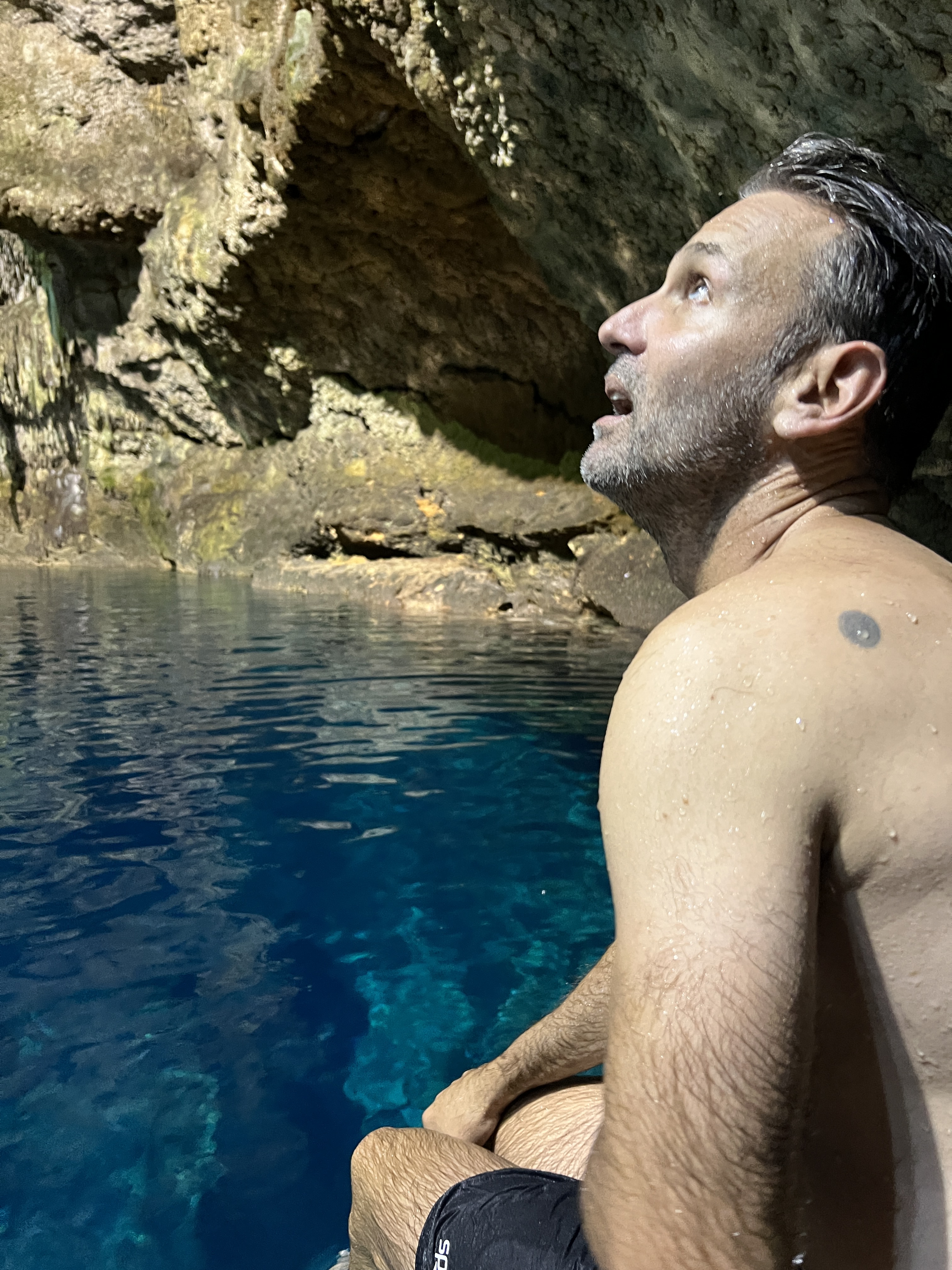
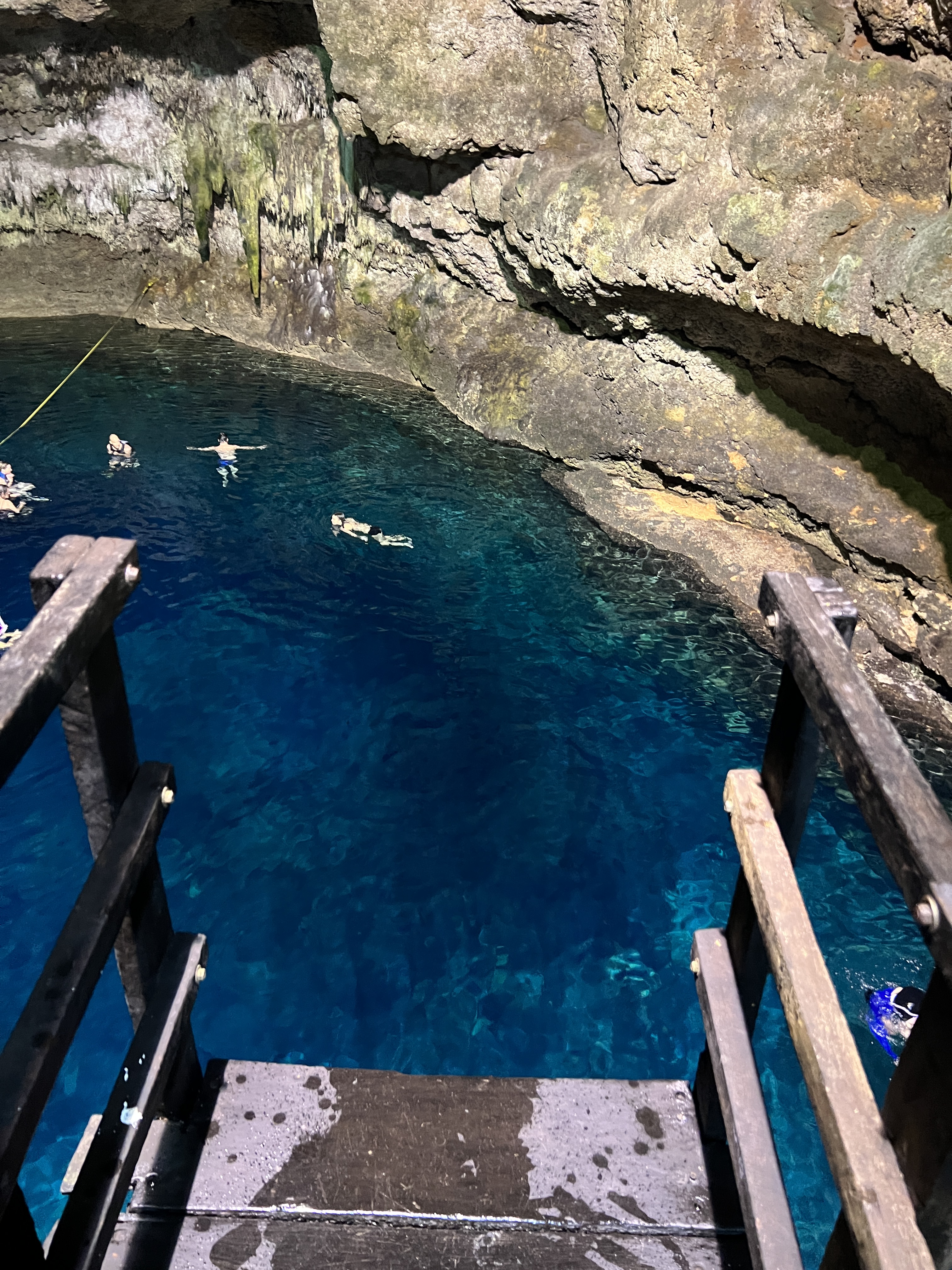
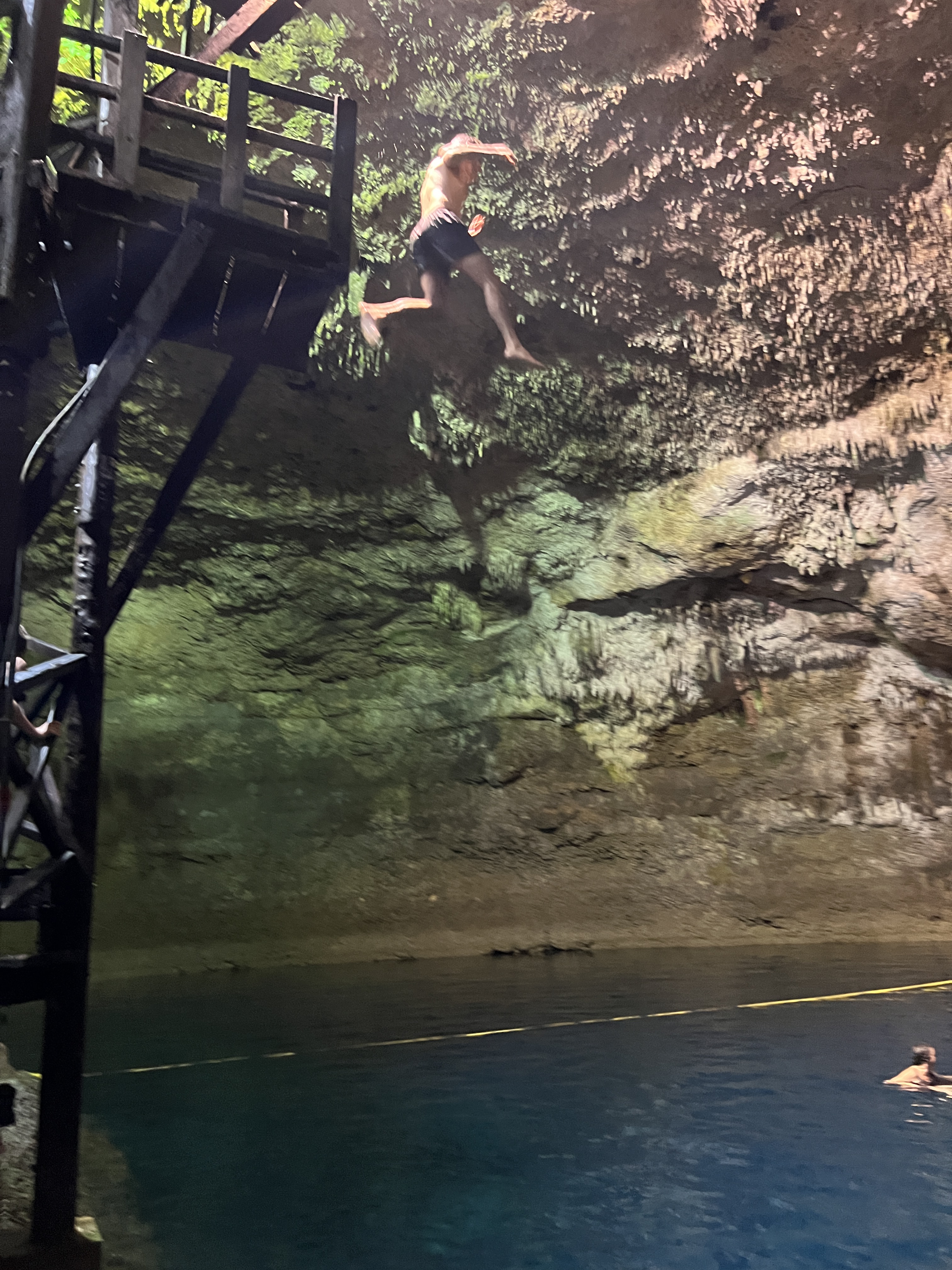
Another incredible spot, and whoever came up with the formula of historic site + heat + cenote was a genius.
Our last night in Tulum was spent at a local Taquaria enjoying another nice meal on the side the road.
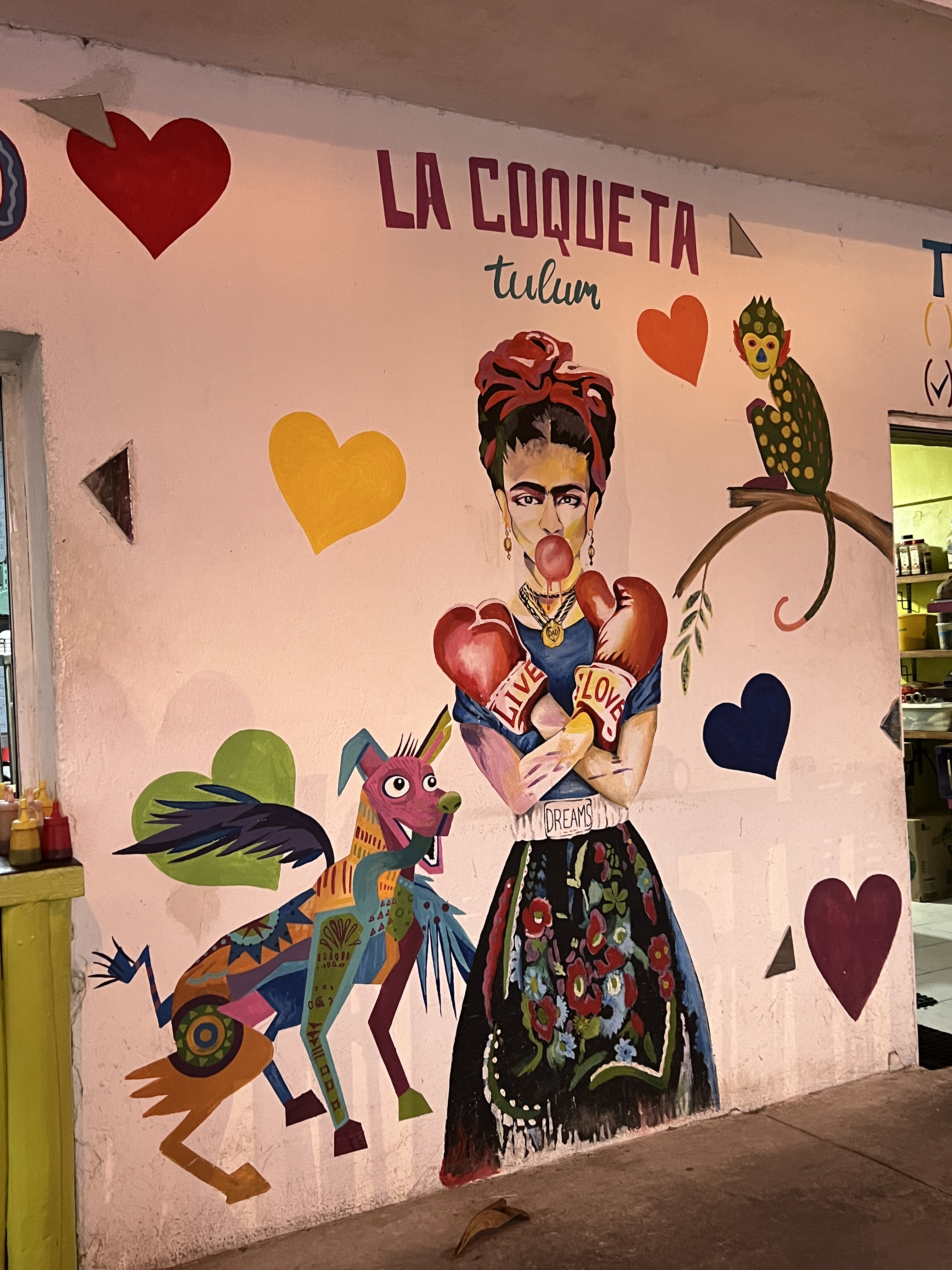
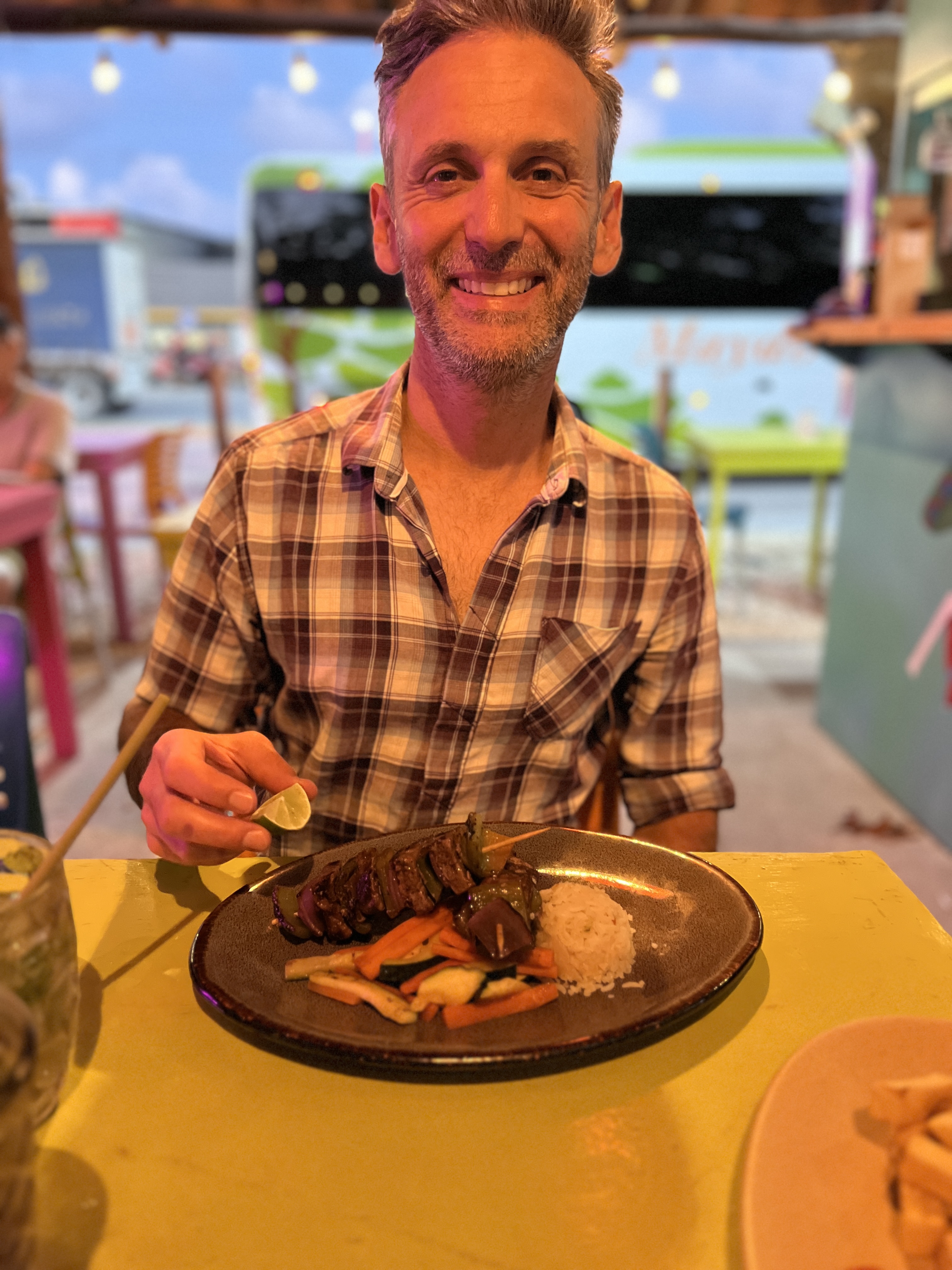
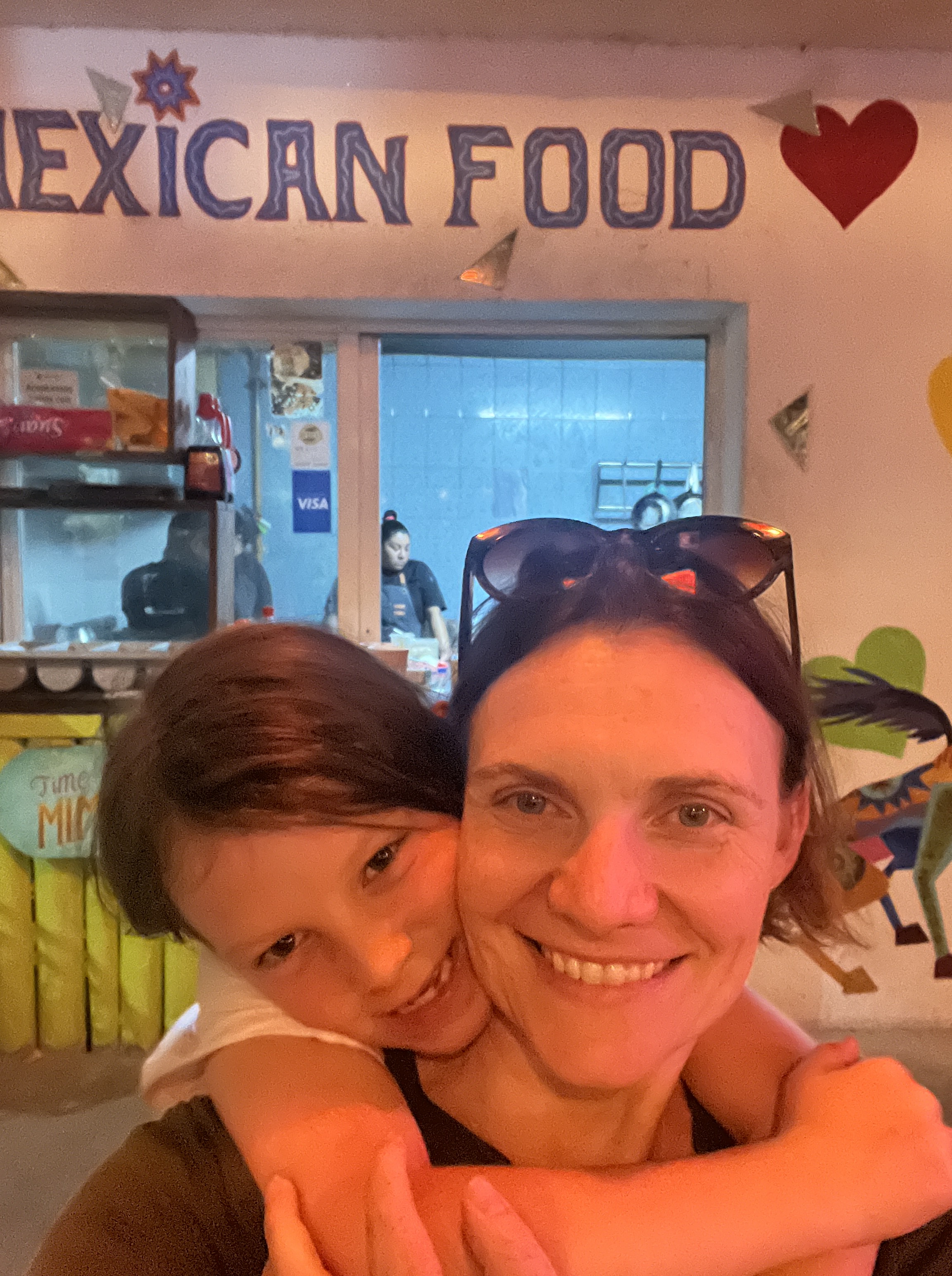
Unlike Valladolid, we are not sad to be leaving. We are sad with what this place has become. There is still goodness in the town and incredible beauty in the local area, and we have been lucky enough to visit some amazing ruins and cenotes, not to mention the snorkelling at Akumal. But we missed the Tulum of old, the beautiful beaches and the chilled out vibe. And we are worried for the direction of travel of this once beautiful spot. If things didn’t change, it would be ruined – both for future visitors (who would stop coming) but more importantly for locals who depend on the economy that tourism creates to support them.
Whilst we may someday return to Mexico, we would unlikely base ourselves in Tulum again.
The following morning we drove out for the last time and started heading north towards Playa del Carmen. We were starting to sweat the clock a fair bit. One night in Cancun, our much awaited ‘holiday within a holiday’ in Roatan, a few days in New York and we would be in London before we knew it, and the holiday bit would be over. Gulp.
We resolved to extract the last bit of goodness out of our Yucatan experience on our drive up to Cancun from where we would fly to Roatan tomorrow morning.
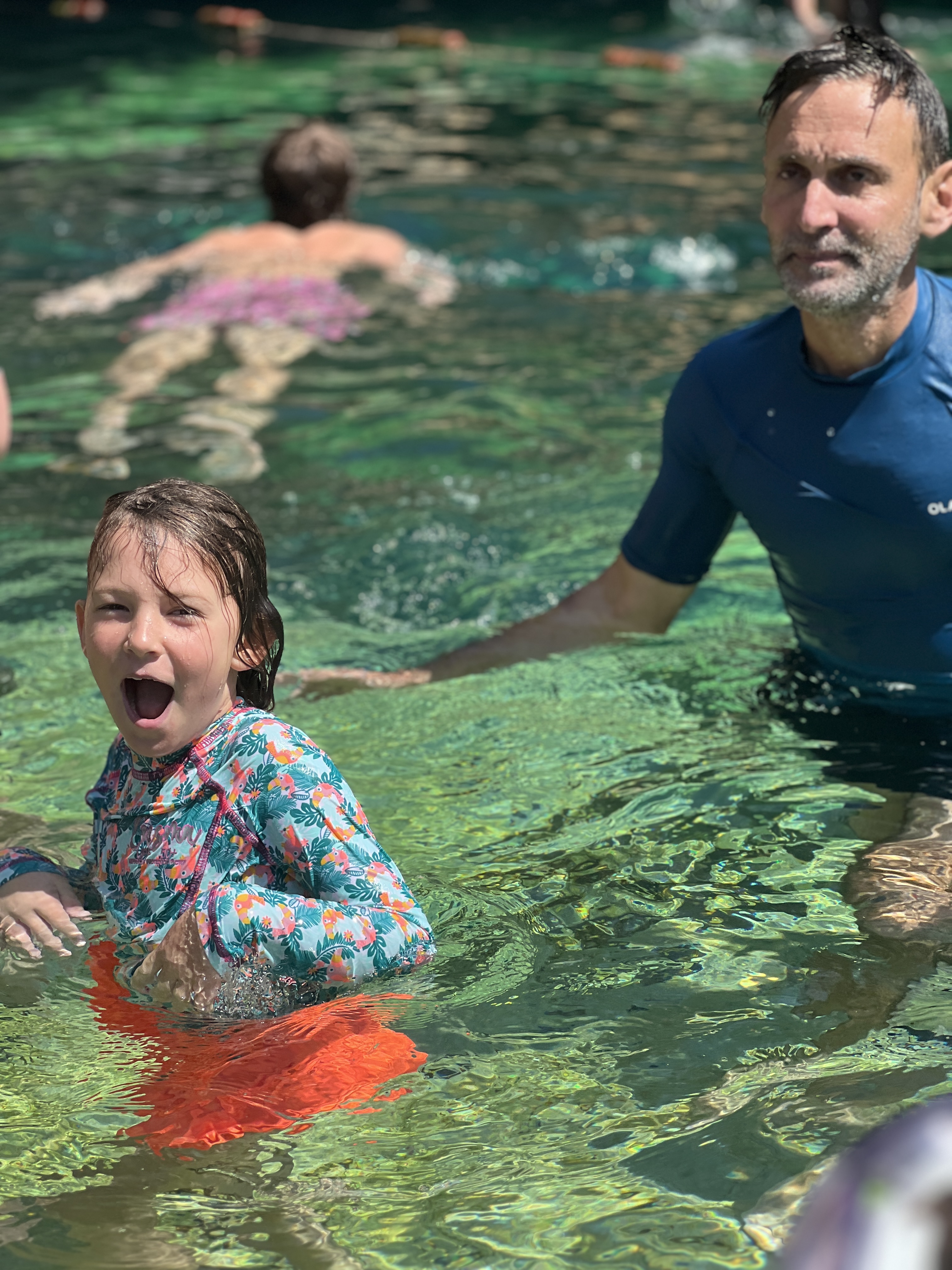
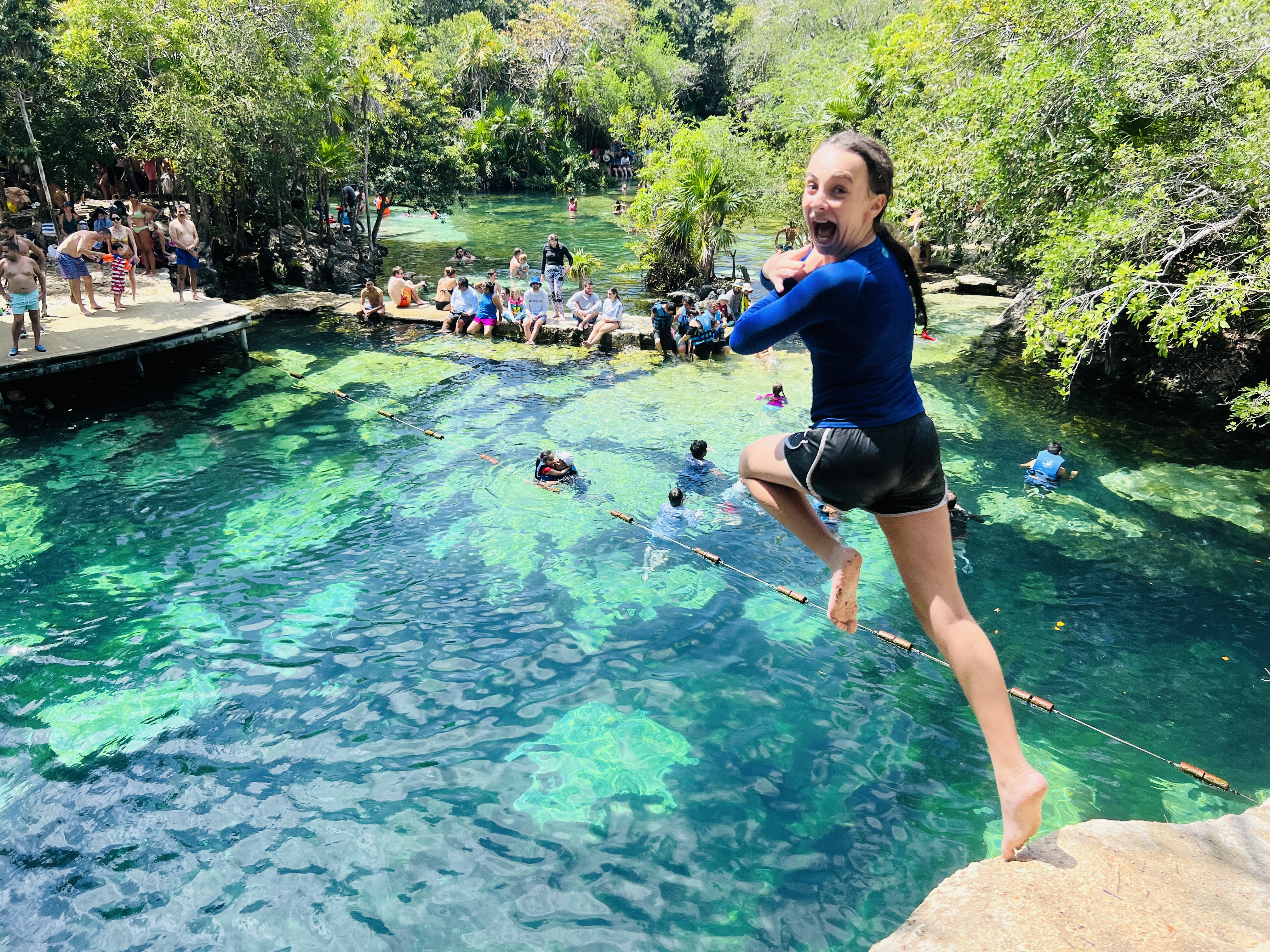
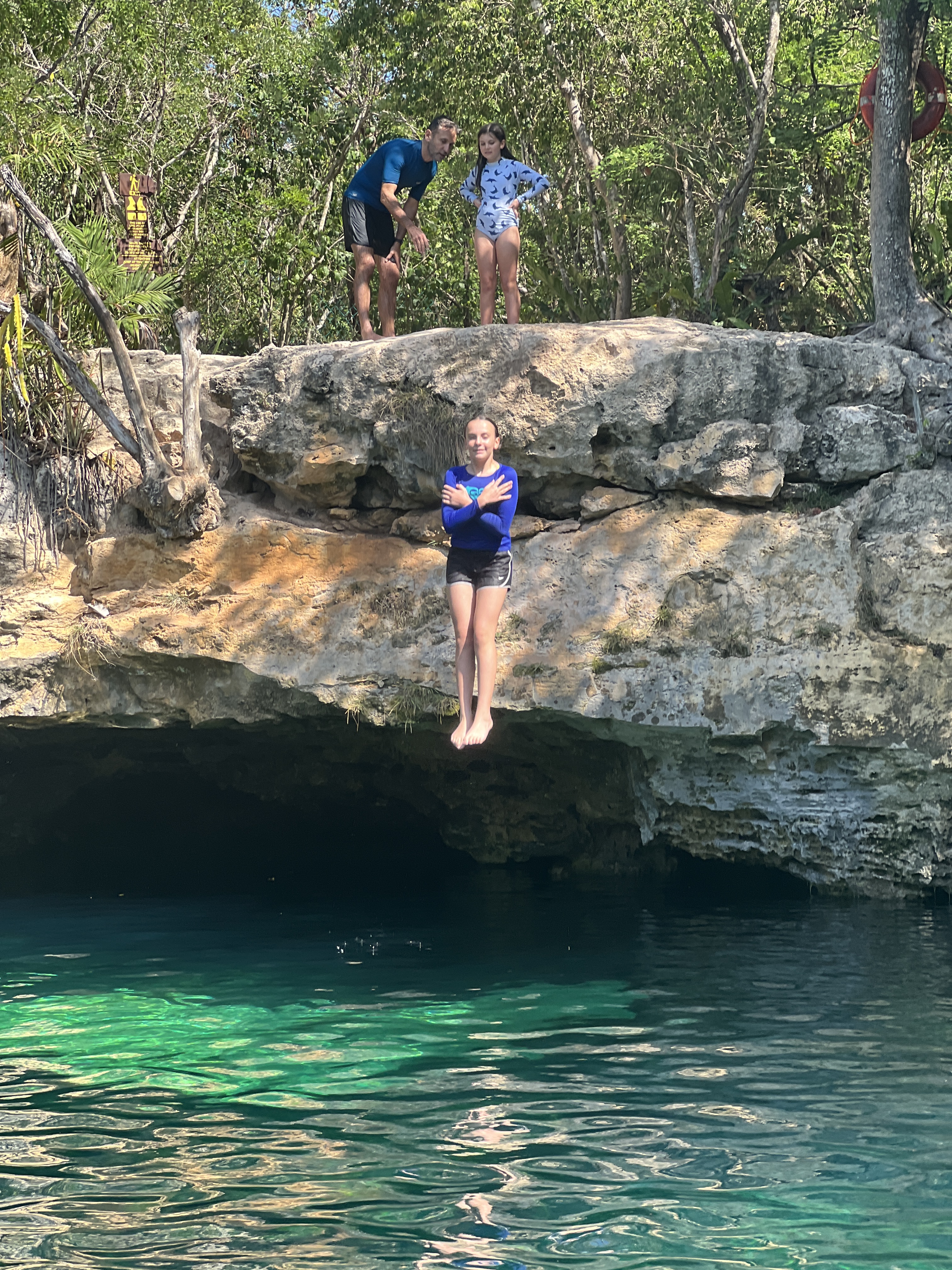
First stop was Cenote Azul, close to Playa del Carmen. This is a large, open air cenote set in a lovely jungle setting, with a reputation for getting very busy – but it was pretty quiet when we arrived. There are a number of discrete pools and caves to be explored, as well as a couple of fun jumping off points. We spent the morning snorkelling around the different pools and underground caves and jumping off everything we could.
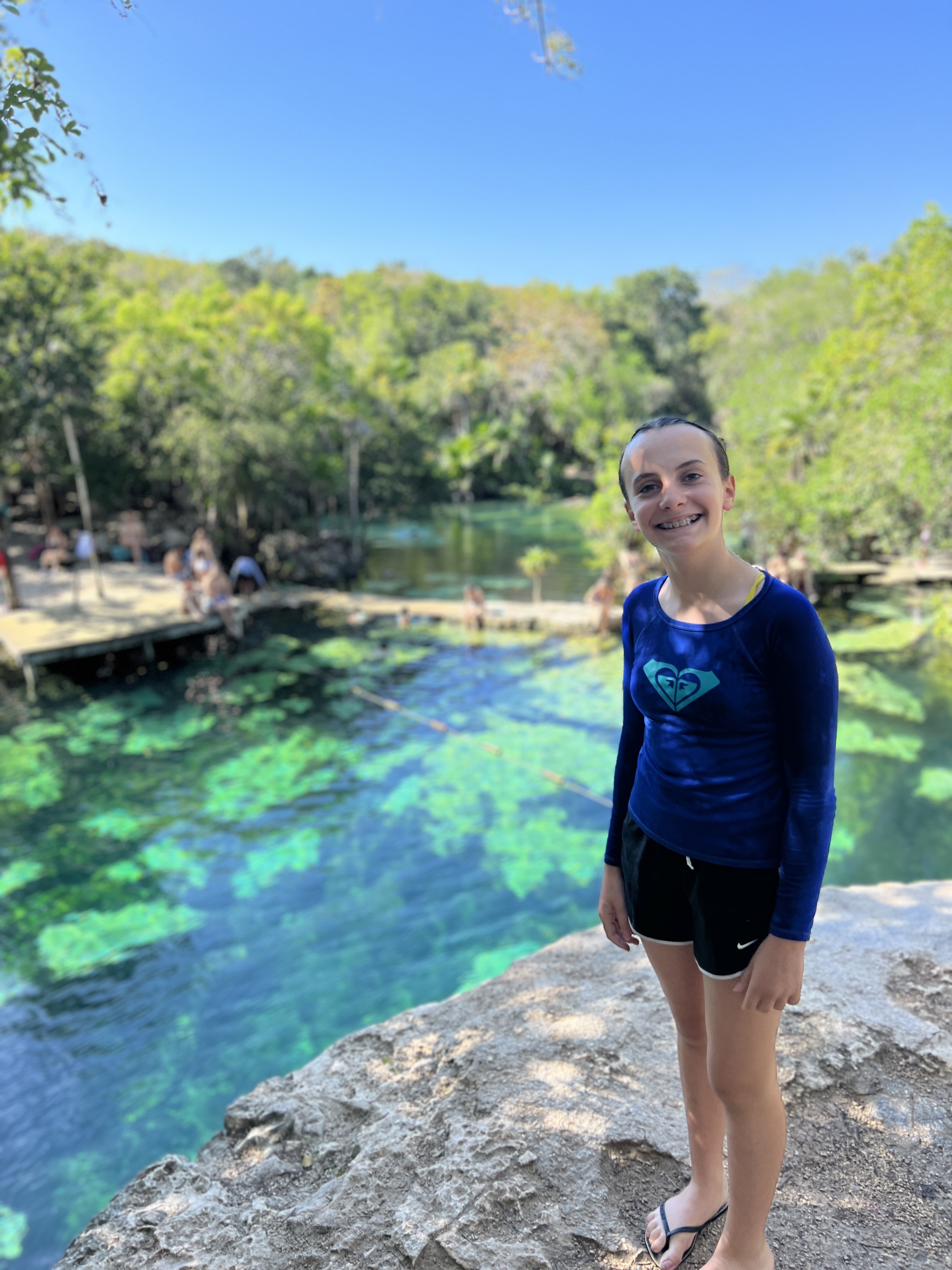
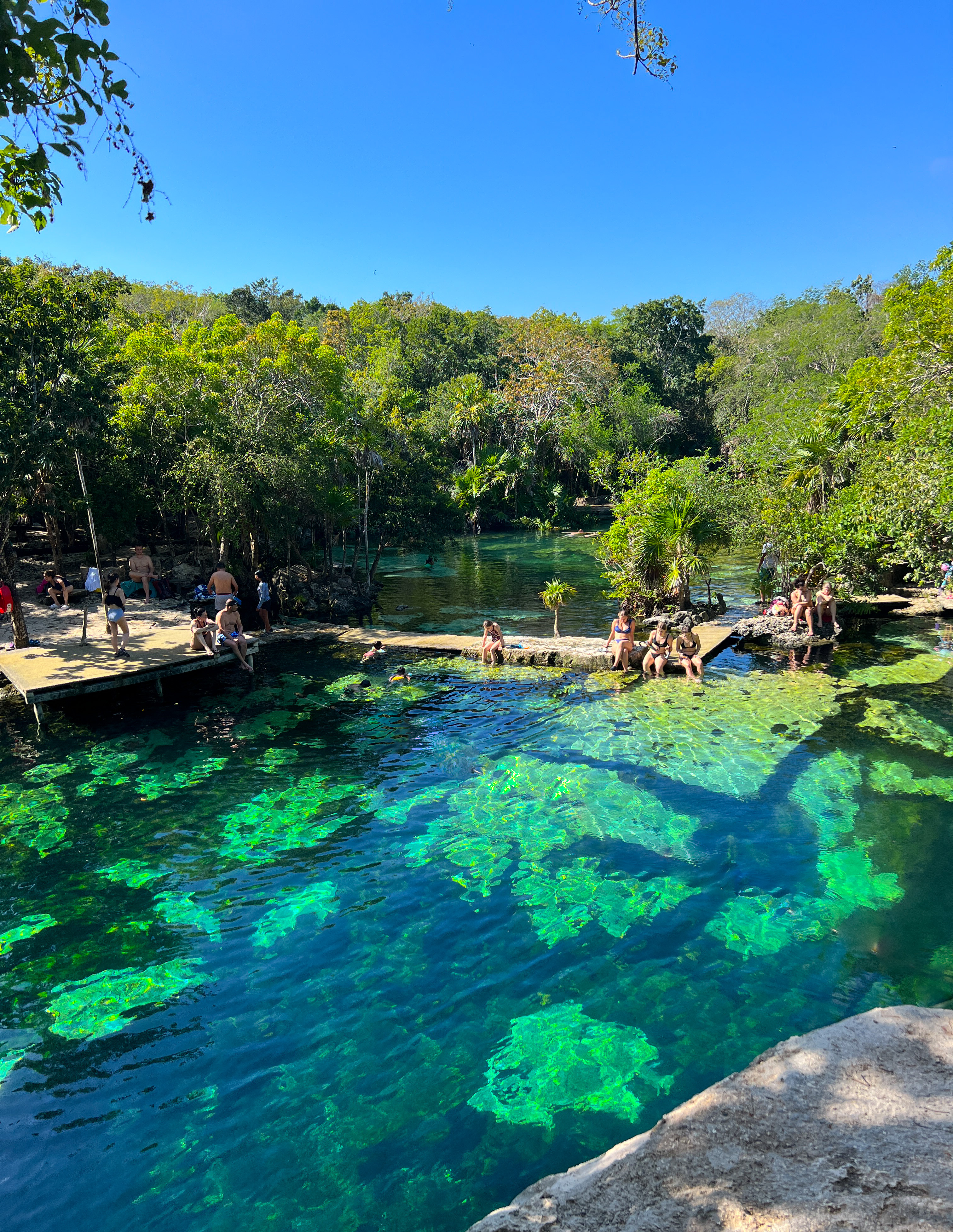
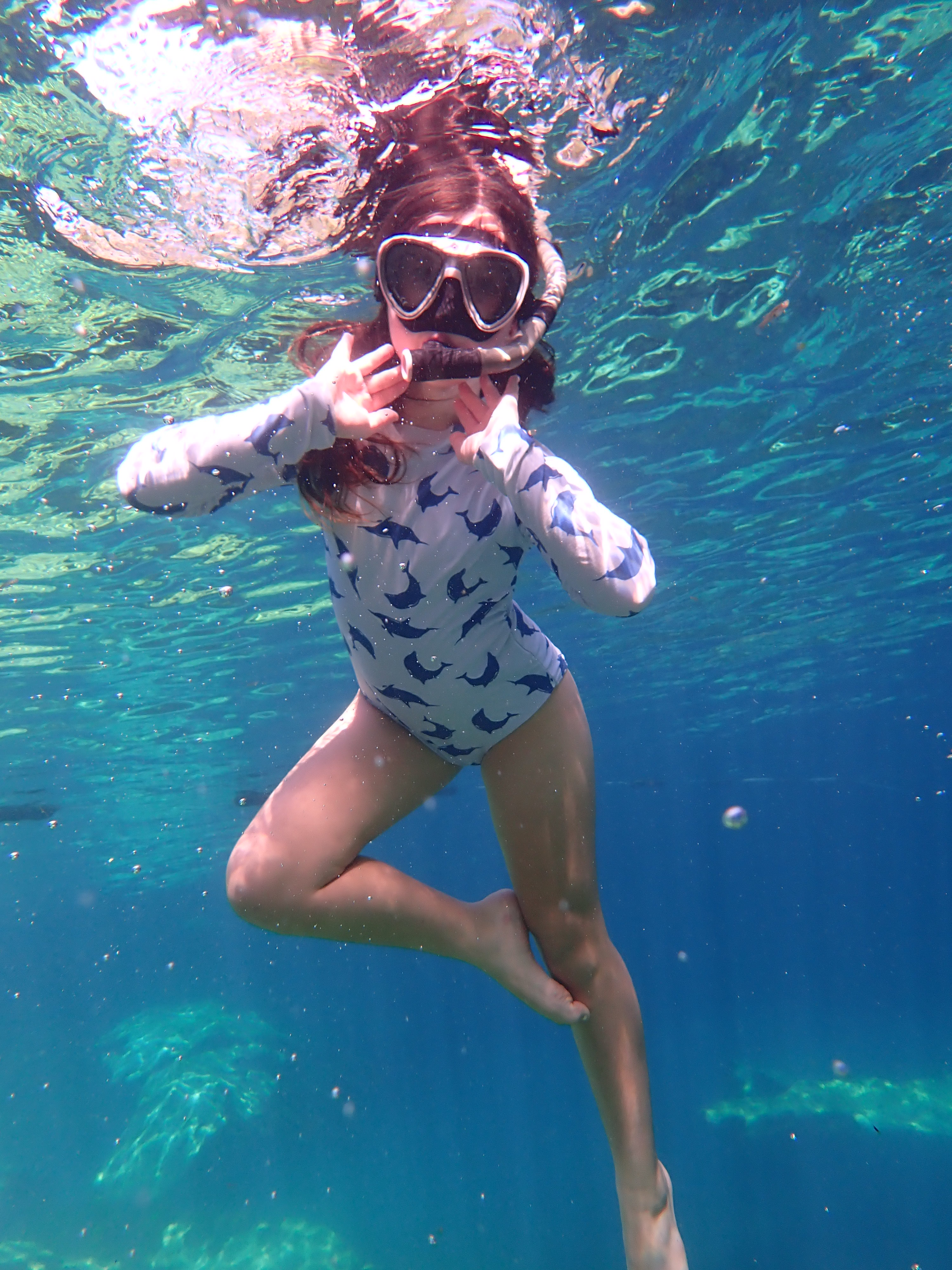
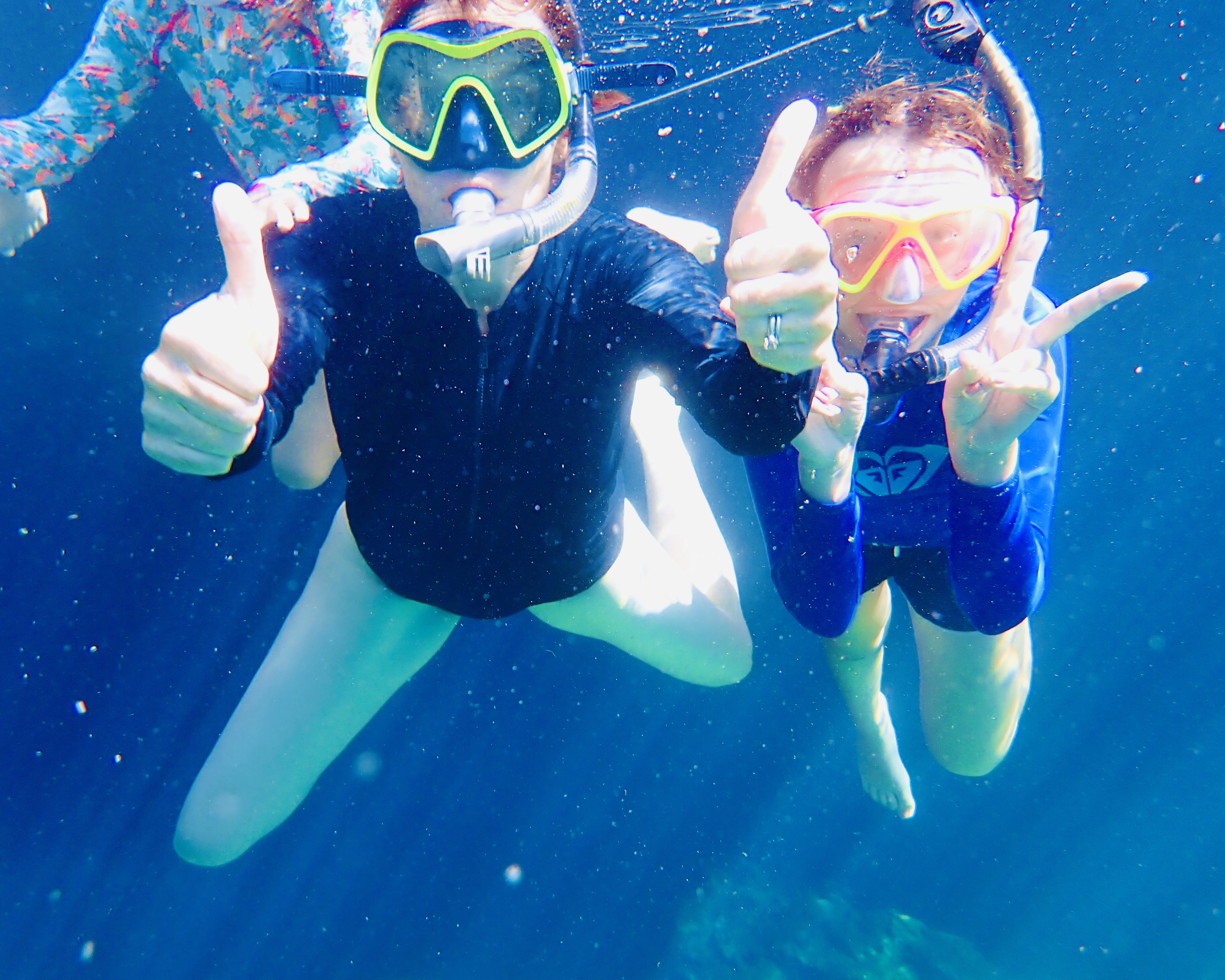
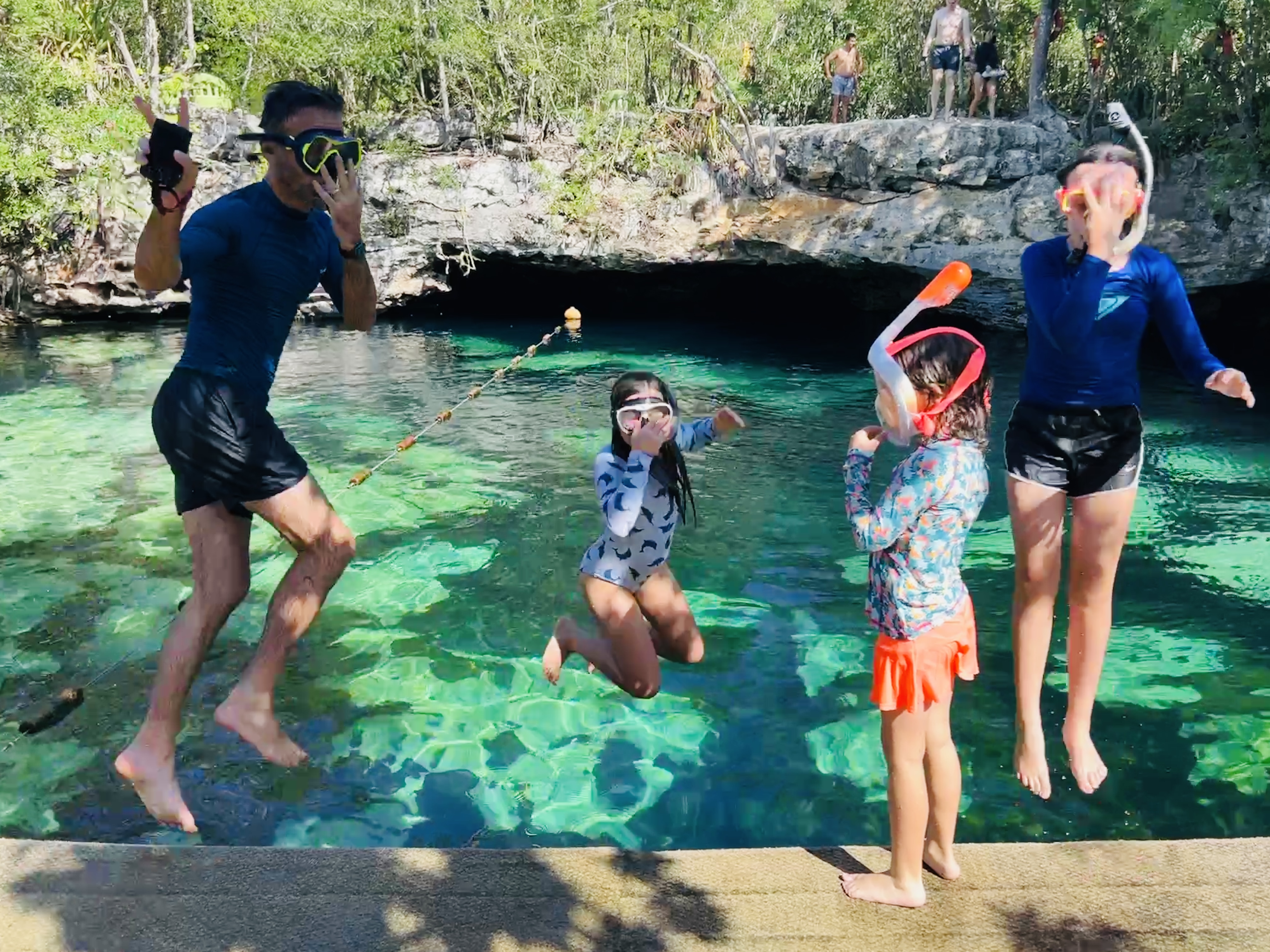
It was here that Sena discovered that she ‘liked to fly’ by throwing herself off high platforms into the water below. It turns out that she has an amazing head for heights and large drops – much to our (and others) amusement. (Side note here – the first time she lined up for the 4+ metre jump at this cenote we felt like some of the other visitors were going to call Child Protection on us, and there was a round of applause once she made the jump and safely surfaced with a big grin on her face). Needless to say, this was not her last jump.
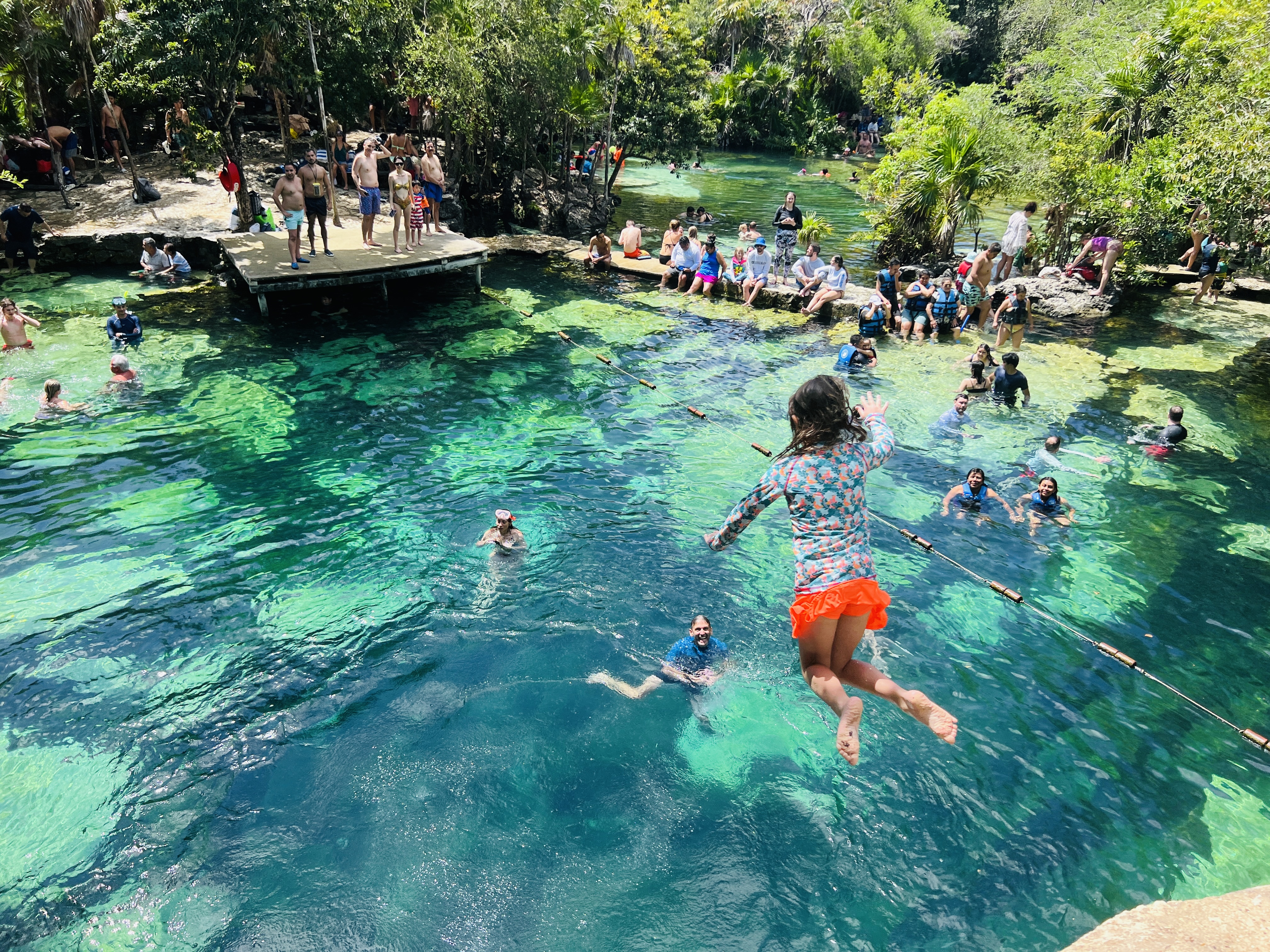
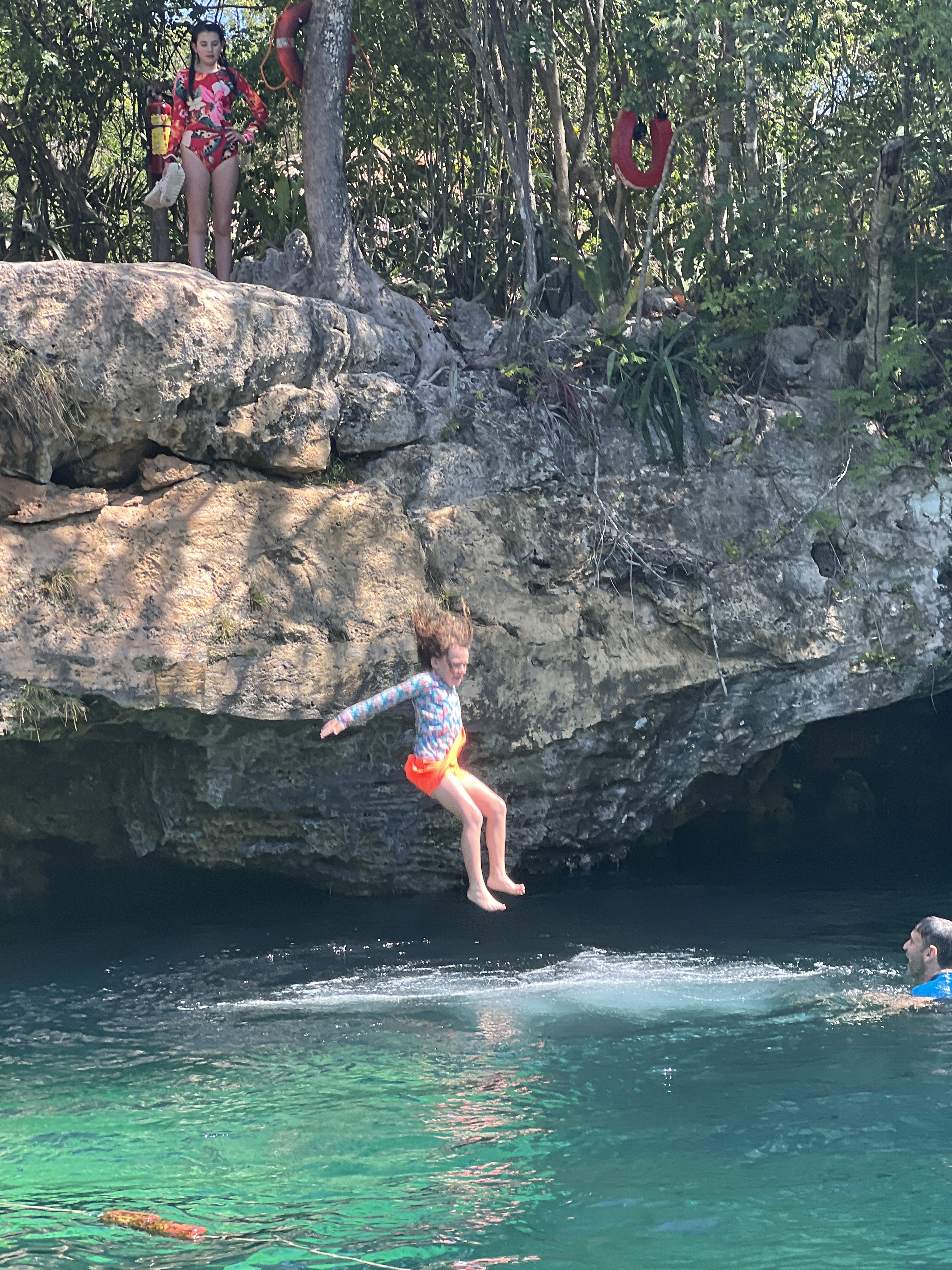
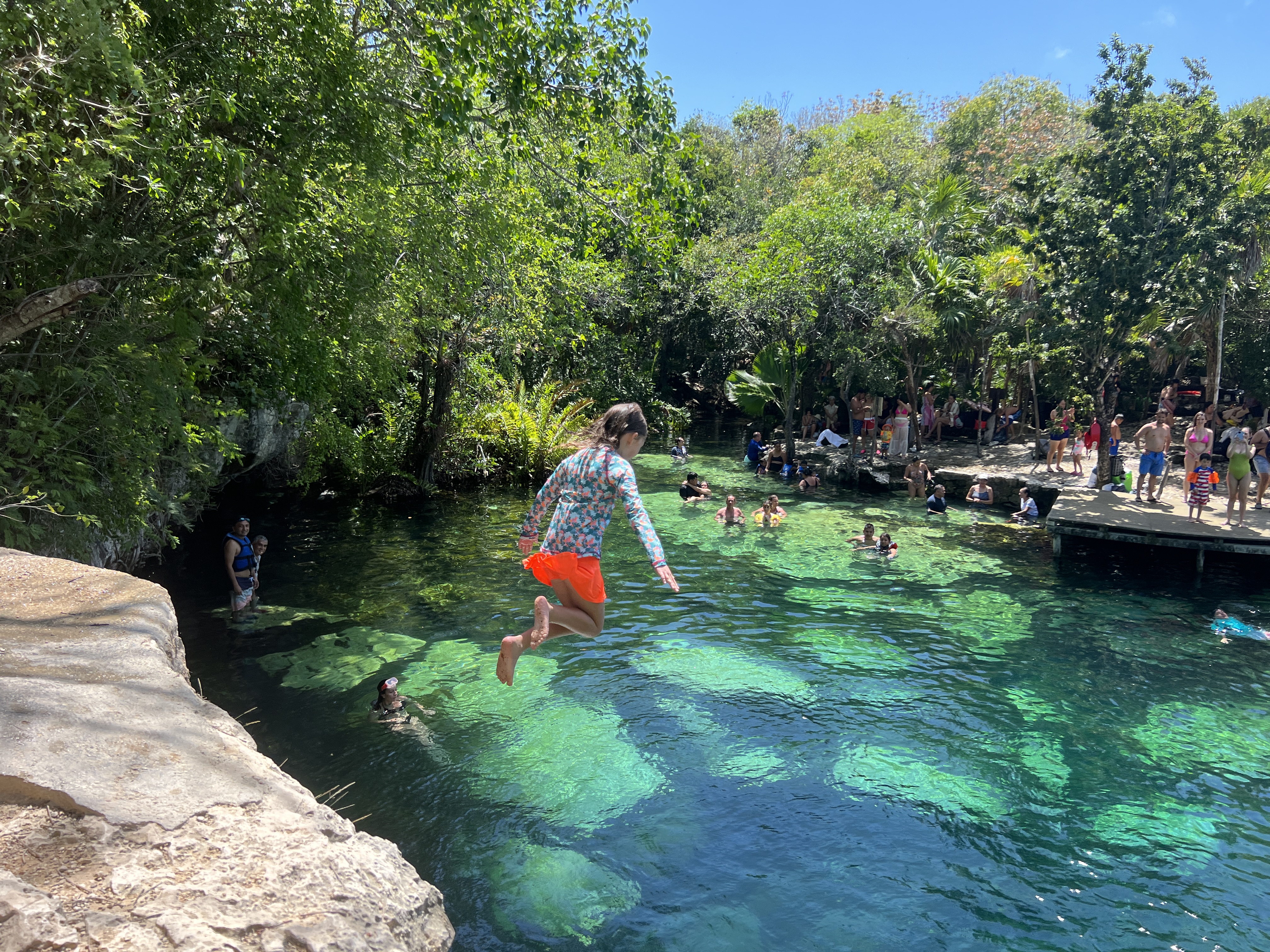
By the time we left, it was an absolute zoo – we had clearly timed our run well.
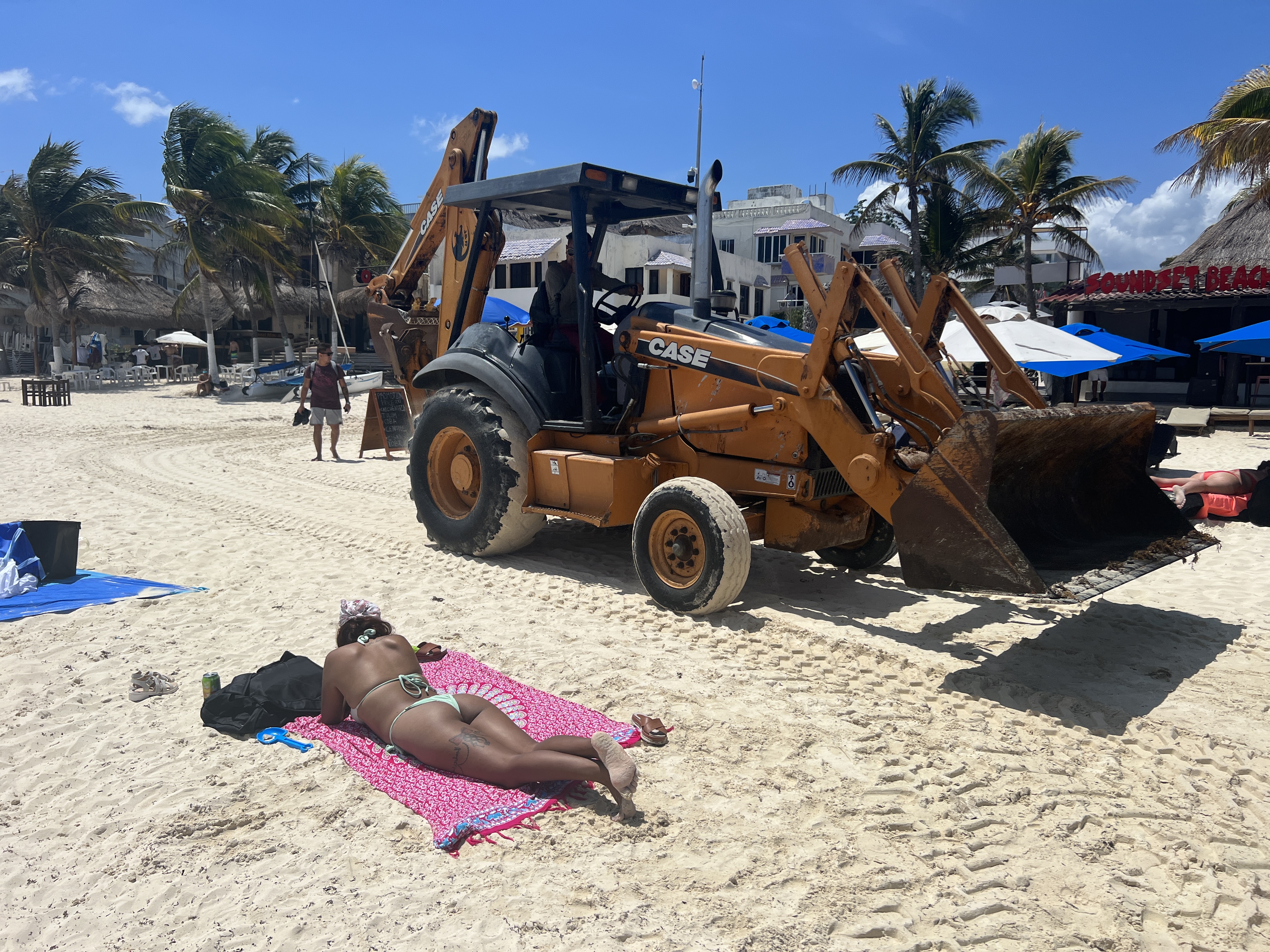
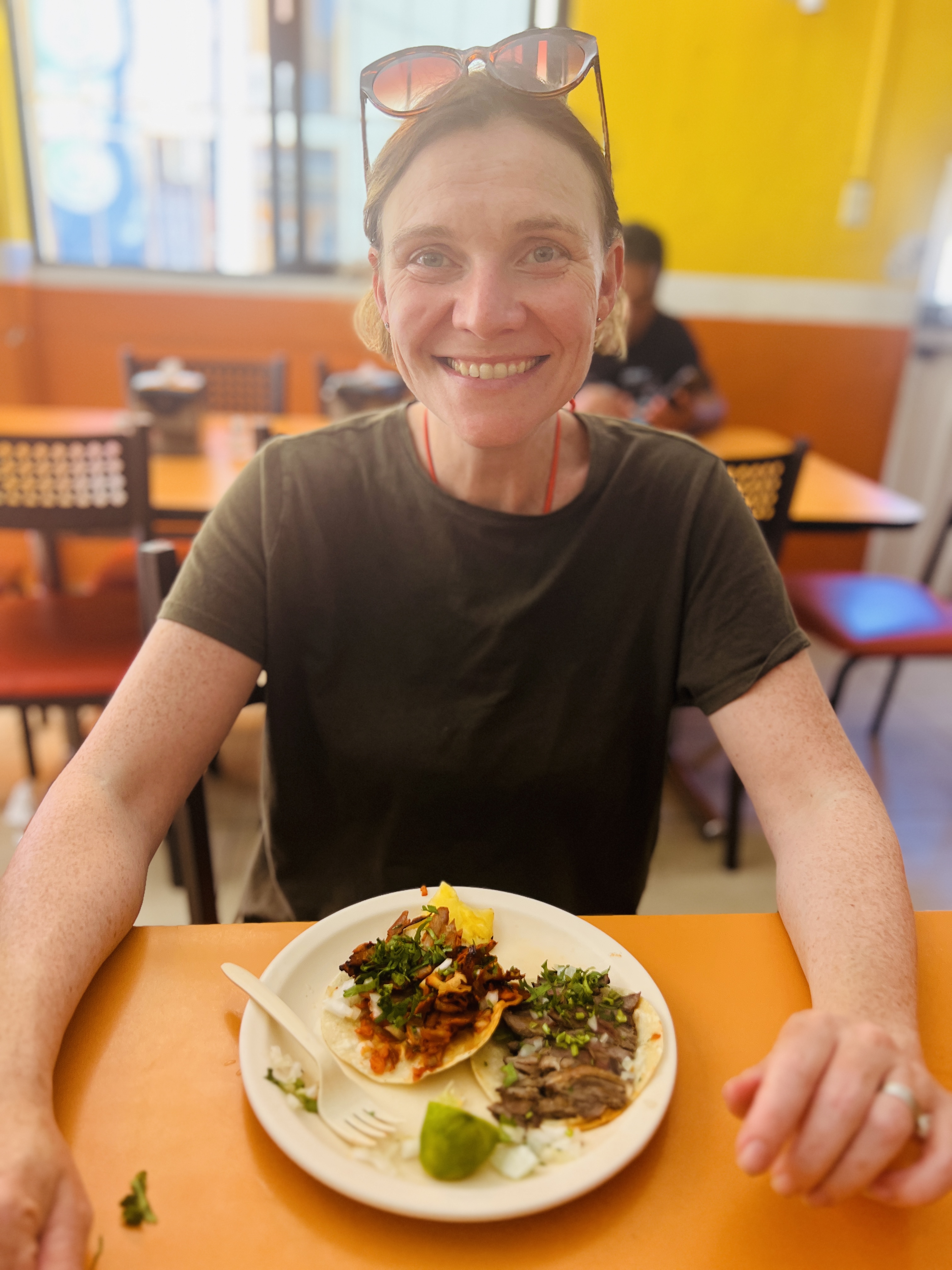
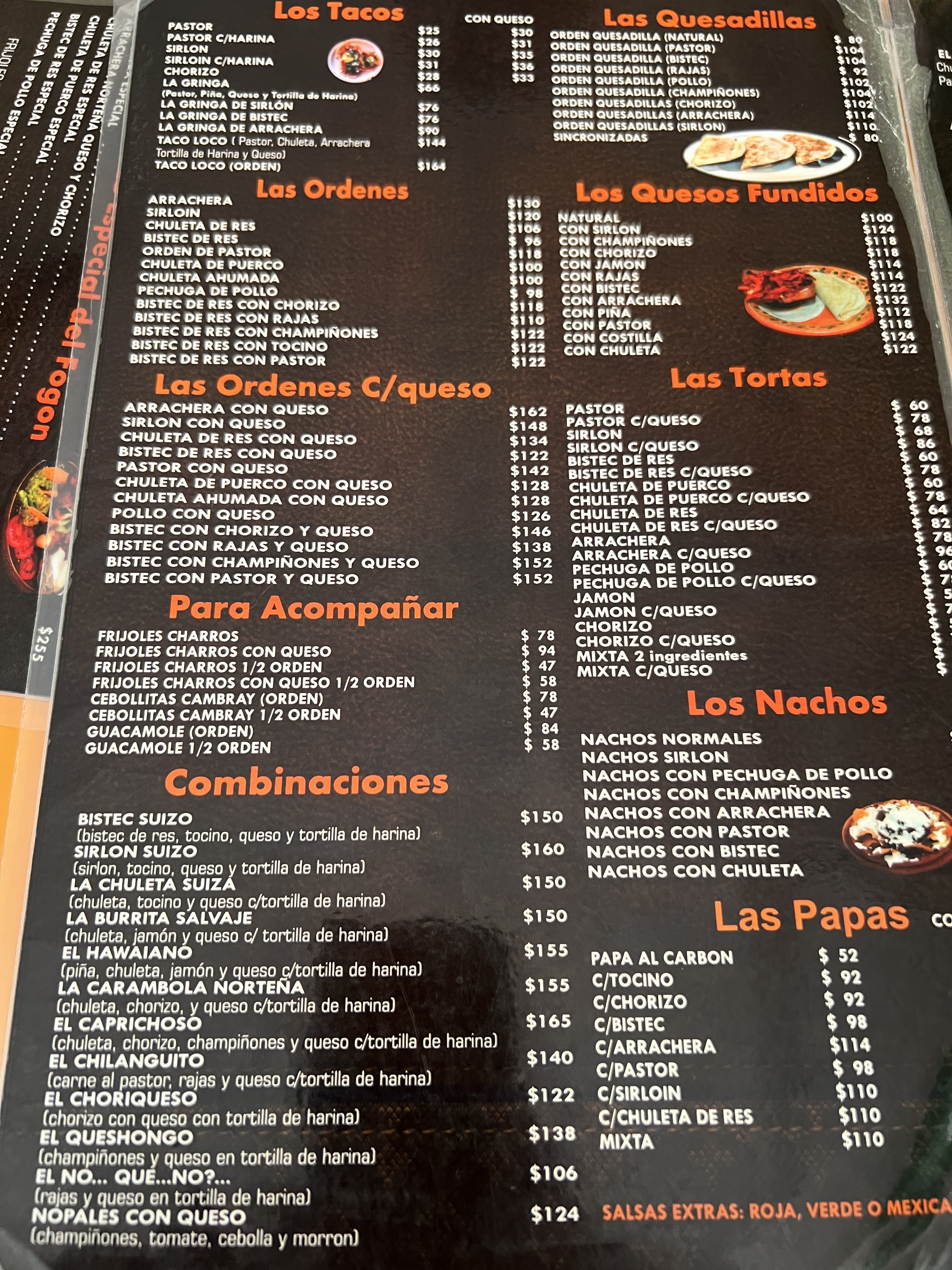
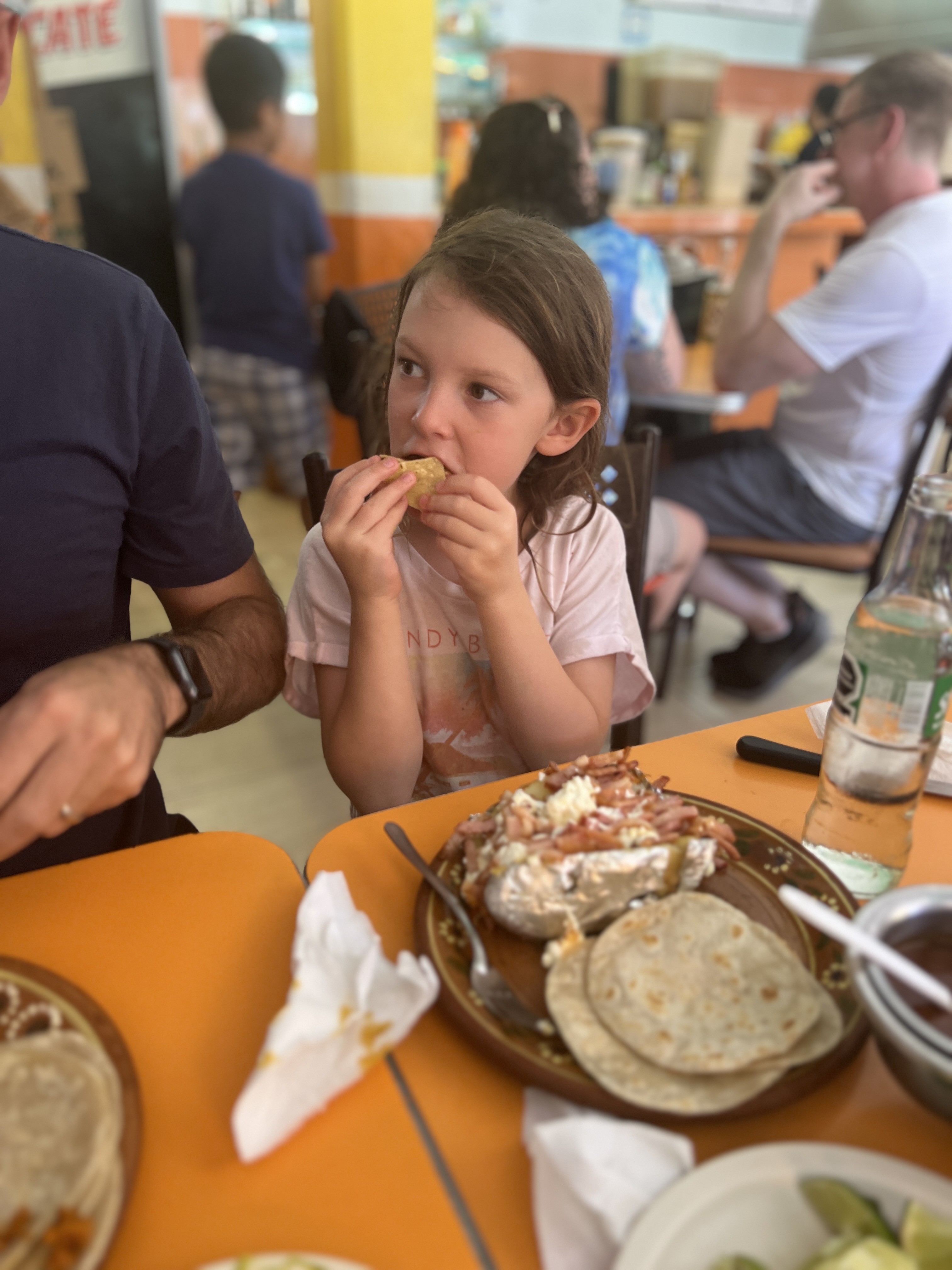
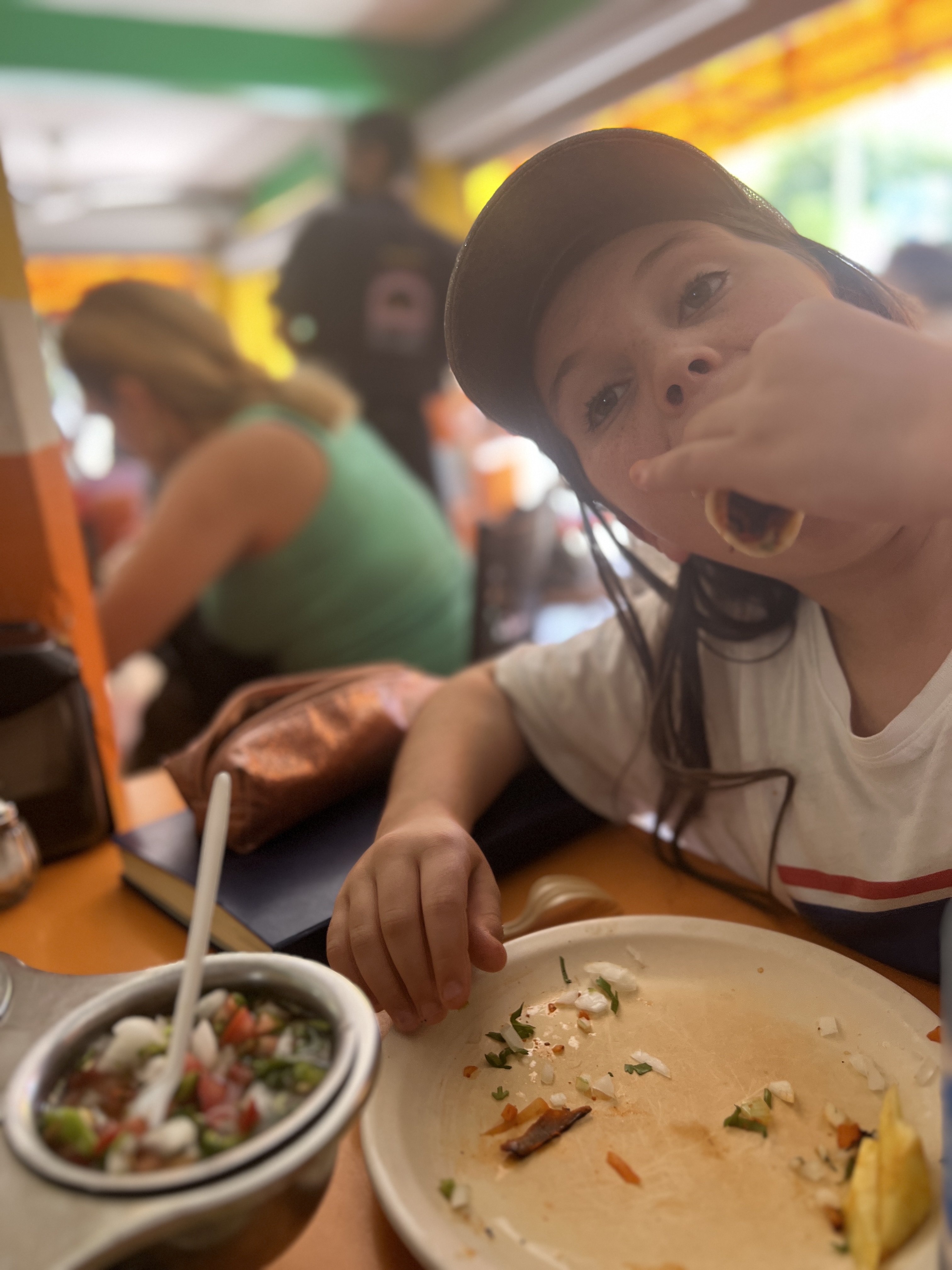
From there we stopped for lunch at El Fogon and a quick explore at Playa del Carmen – which has certainly grown over the last 15 years, but still felt more ‘in control’ than Tulum in this respect. We were able to access the beach and wander along it, walking past large piles of seaweed, beach bars and tourists desperately trying to sunbake and think tranquil thoughts whilst excavators drove within meters of their heads in the never-ending struggle against the seaweed.
For our final cenote, the kids had requested a zipline experience so we made our way inland towards Cenote Z’aak, which (unbeknownst to Google Maps) did not exist. We instead ended up at Cenote Zakil Ha, which promised a combination of ziplines and jumping off points across an open cenote.
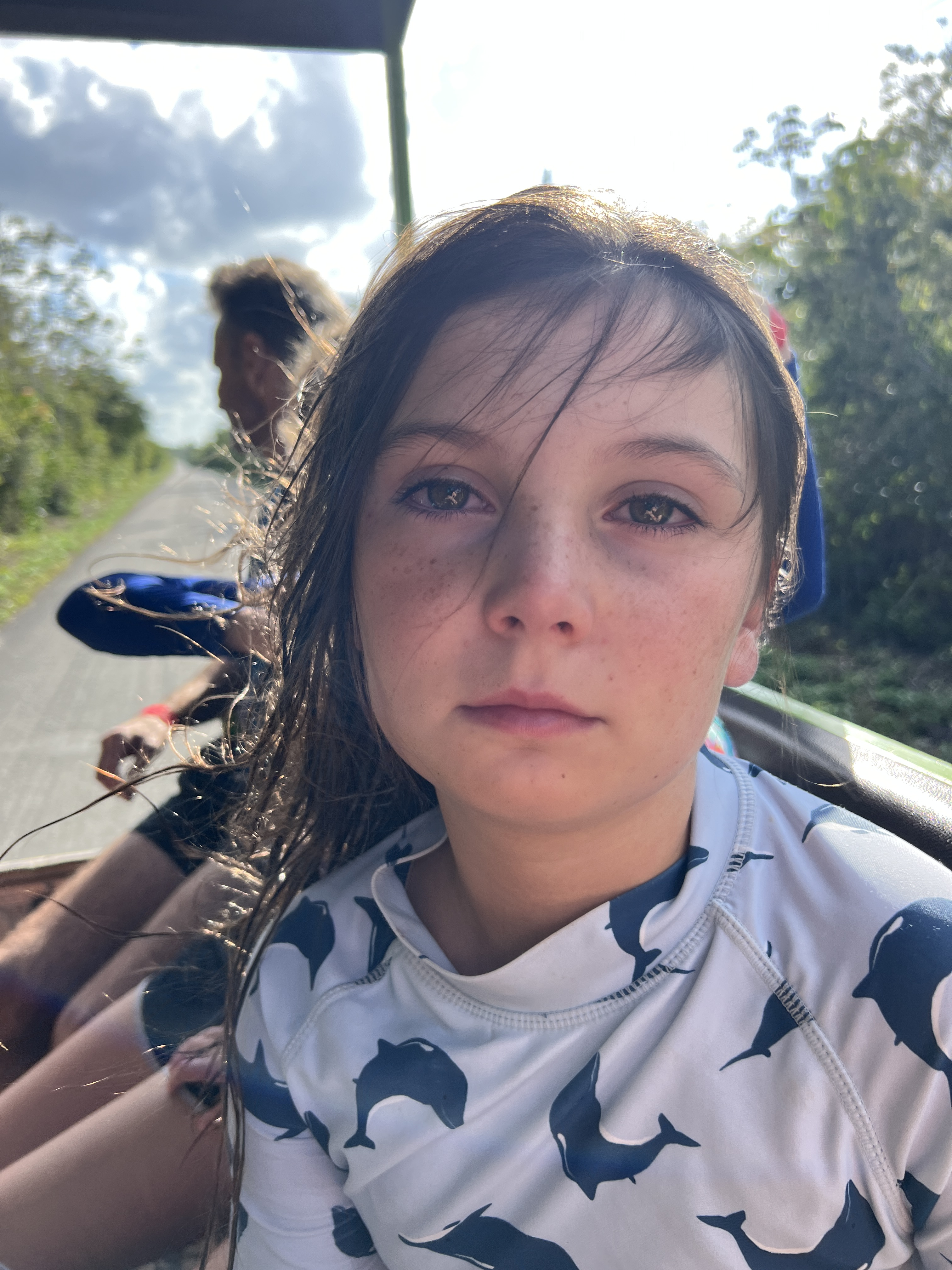
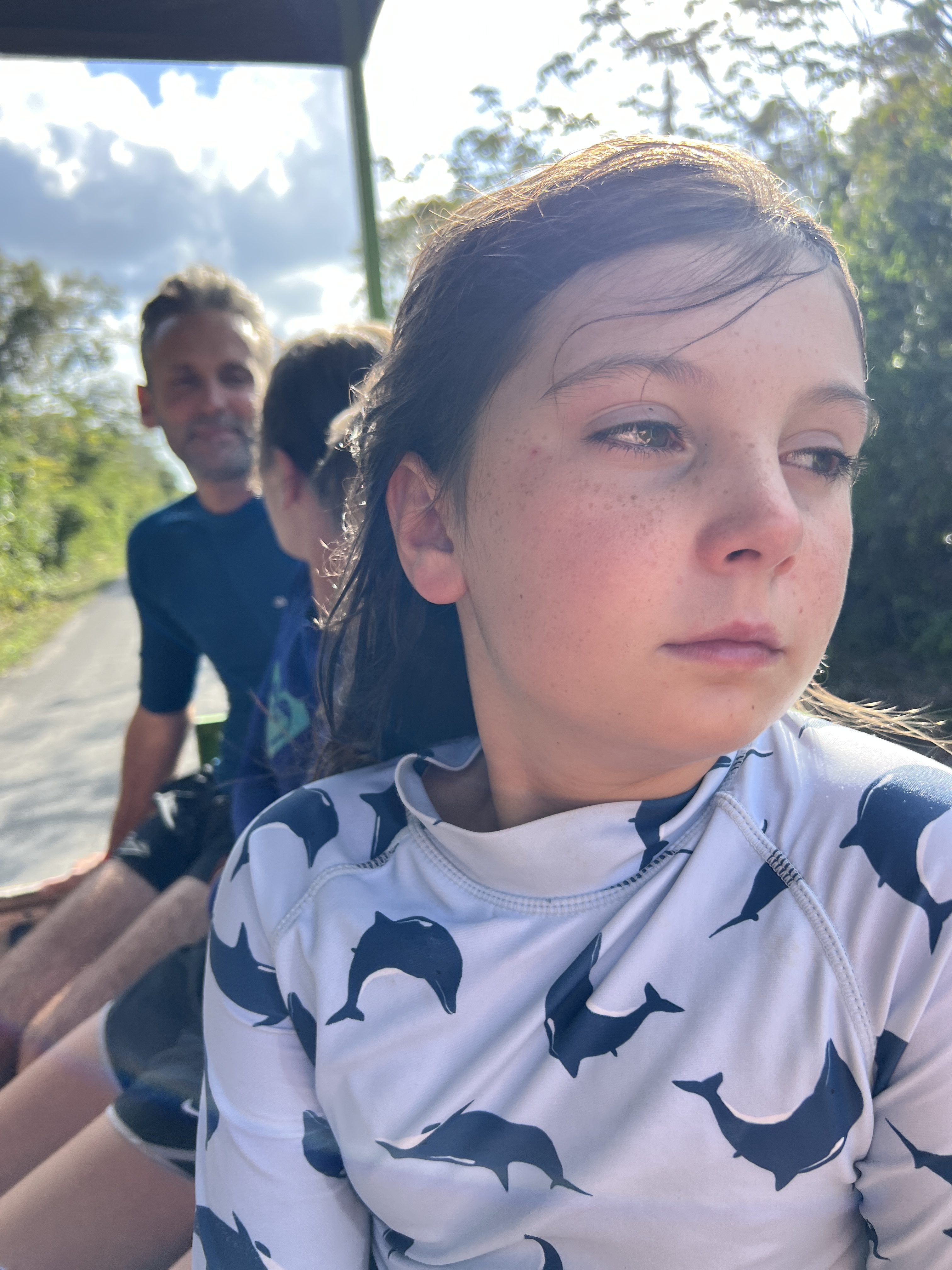
This cenote was accessed via a bumpy 10 minute journey on an open top truck (Sena was extremely concerned about the lack of seatbelts here).
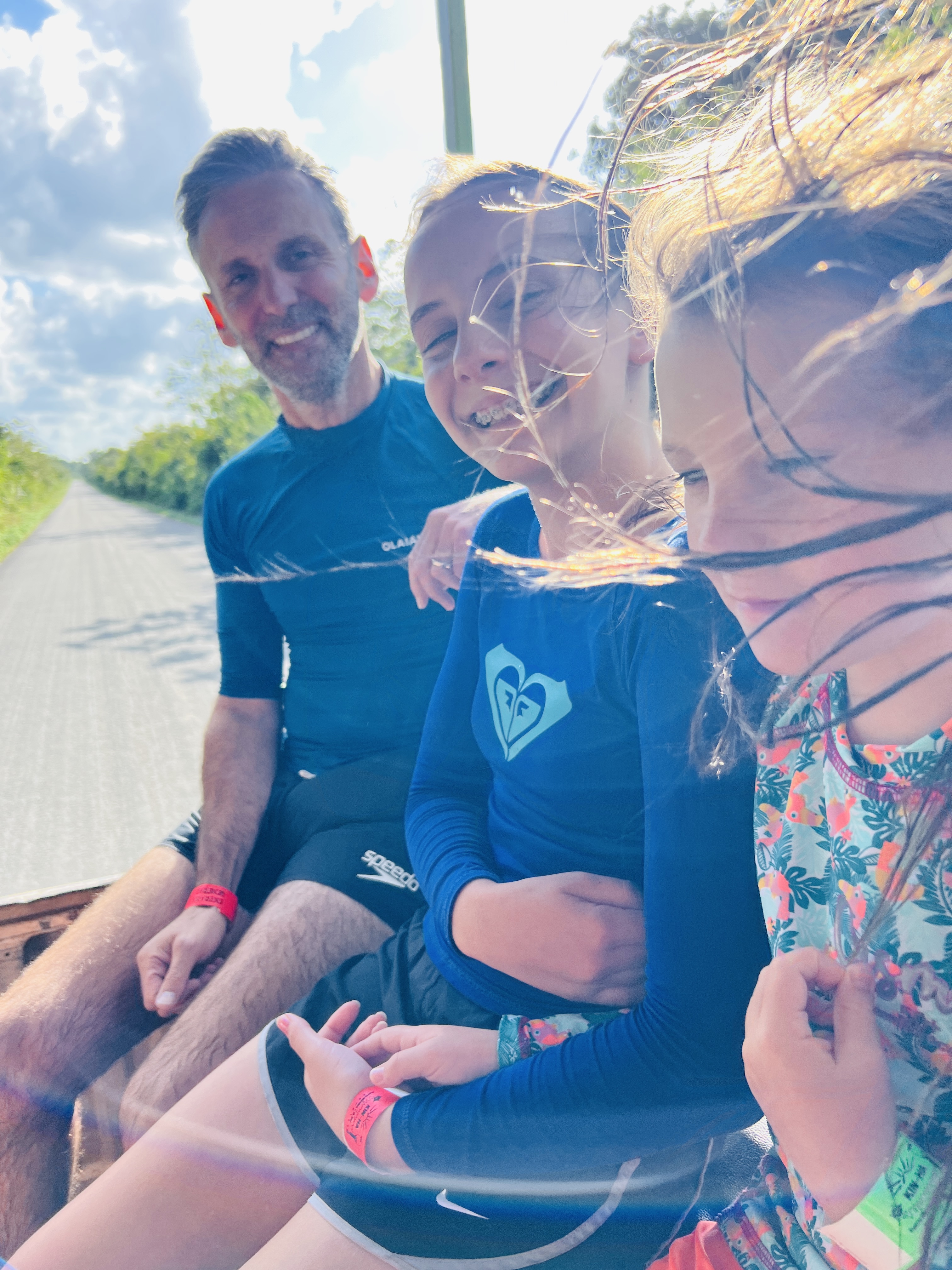
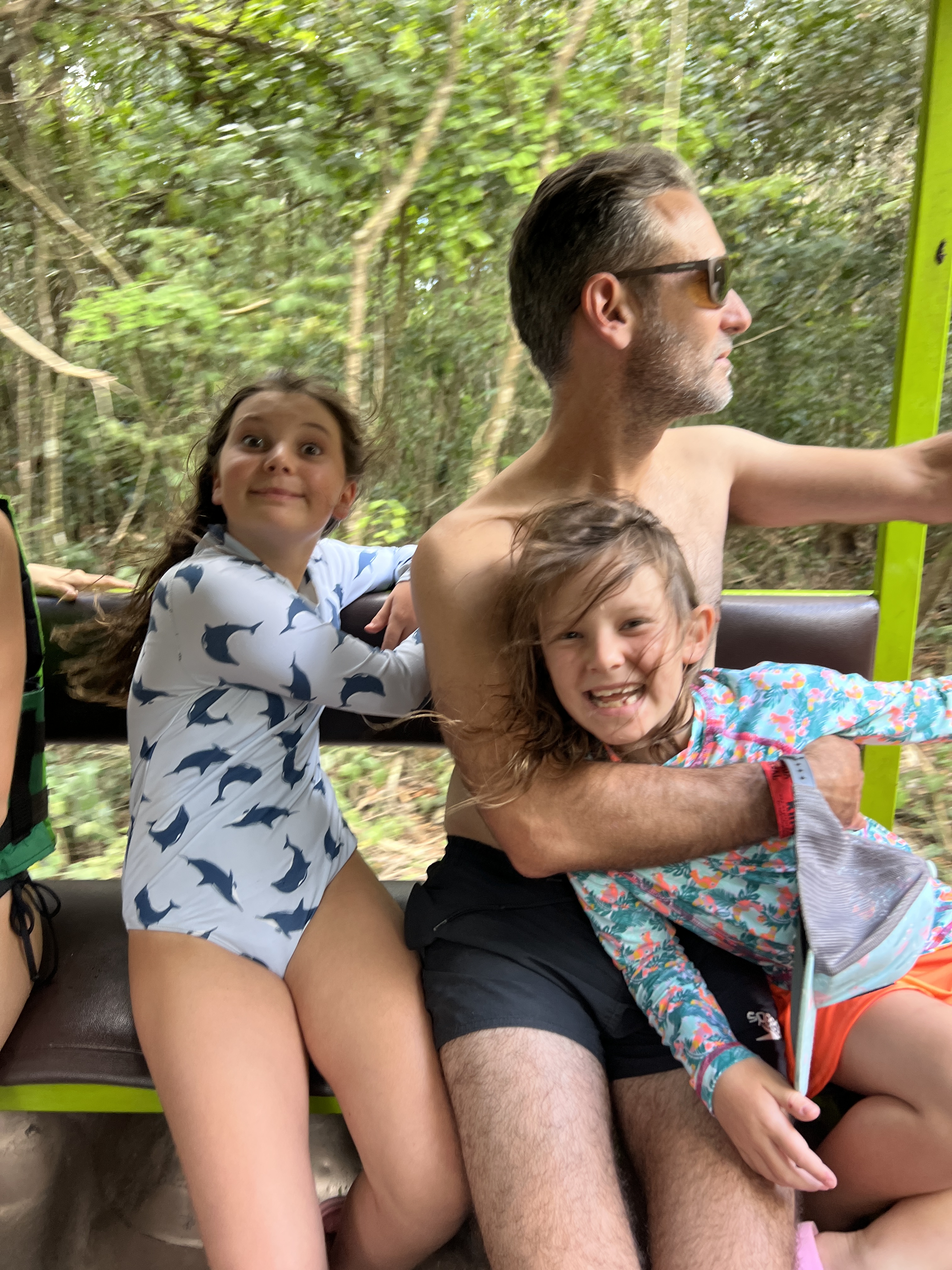
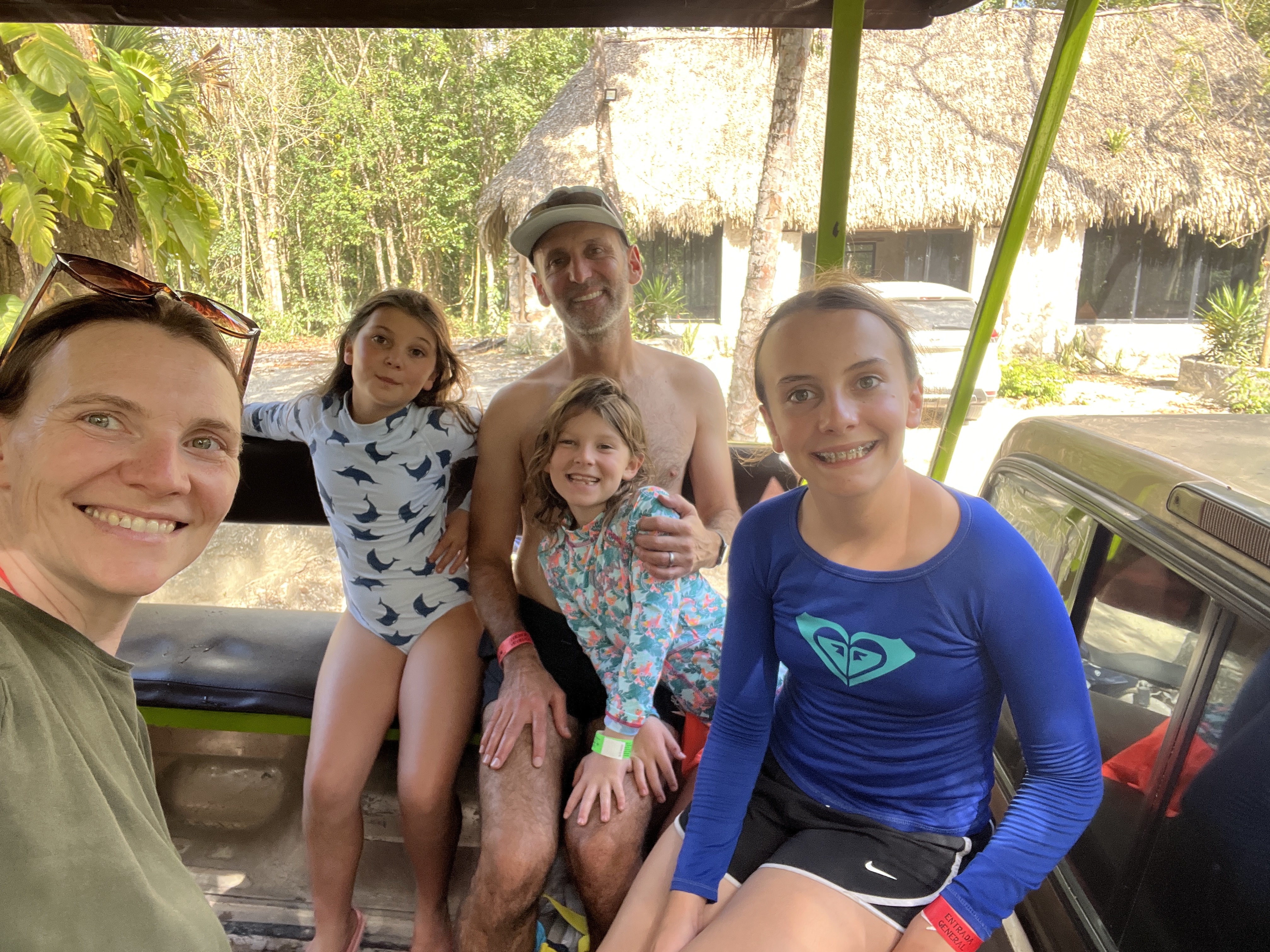
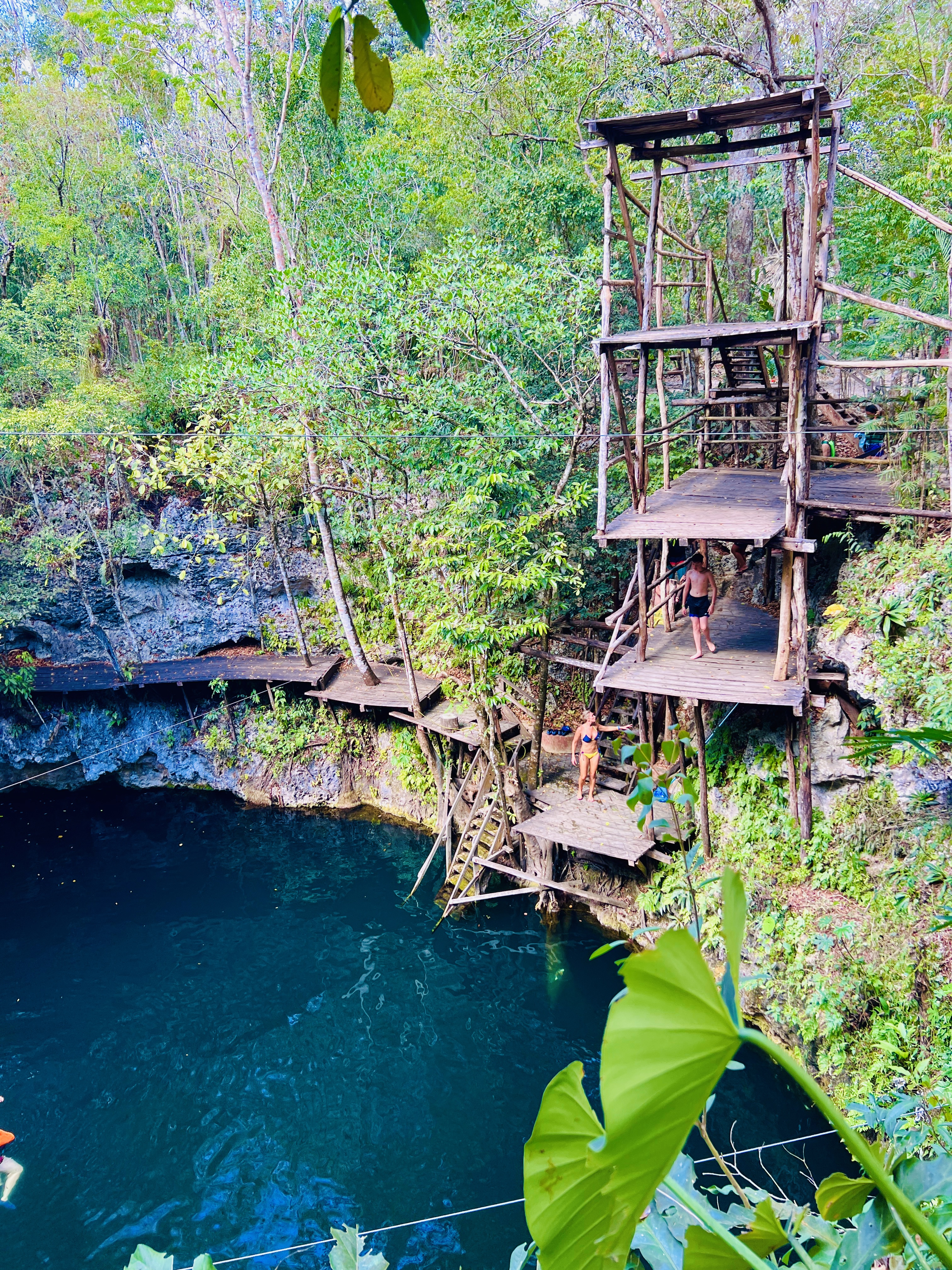
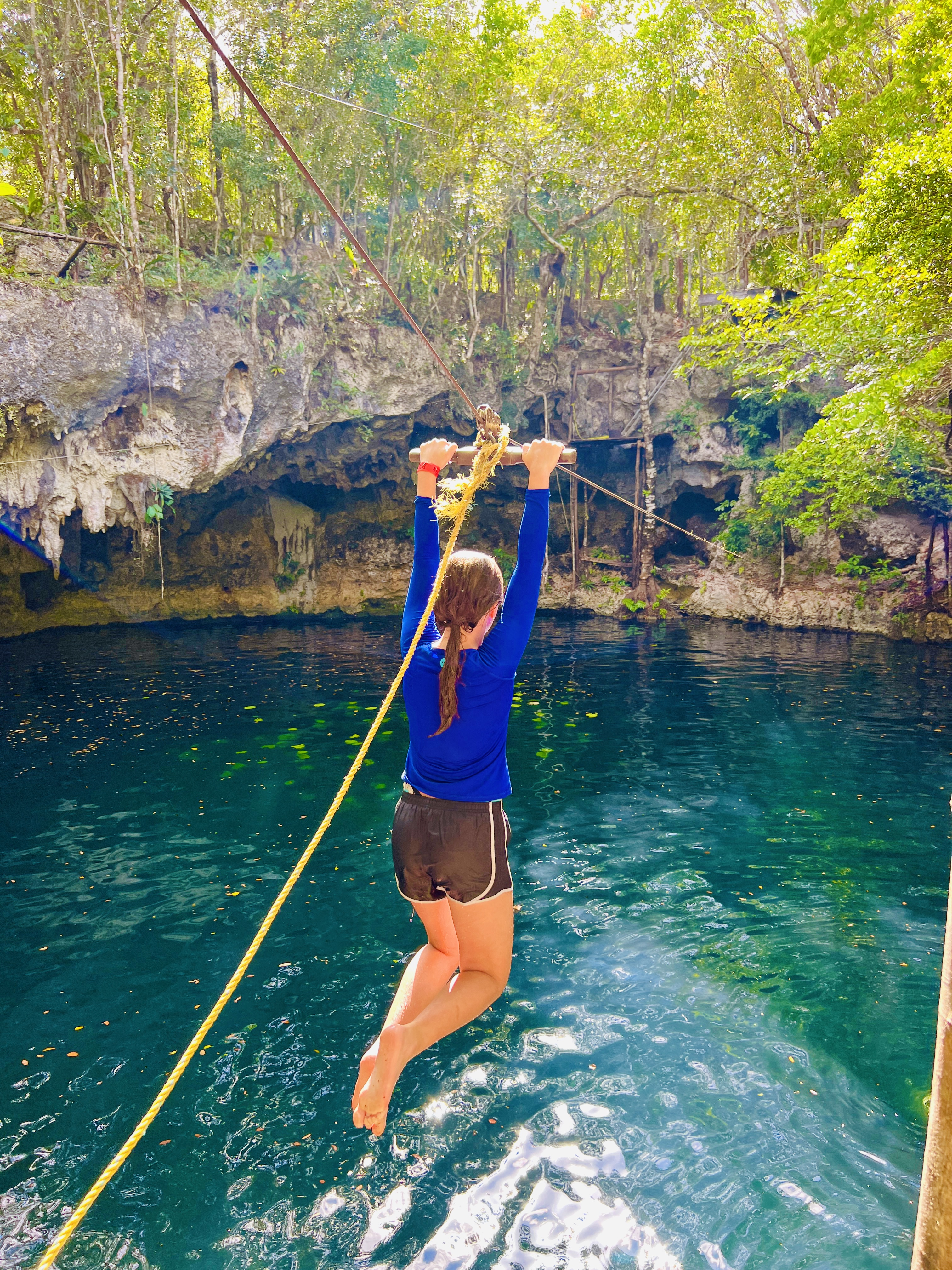
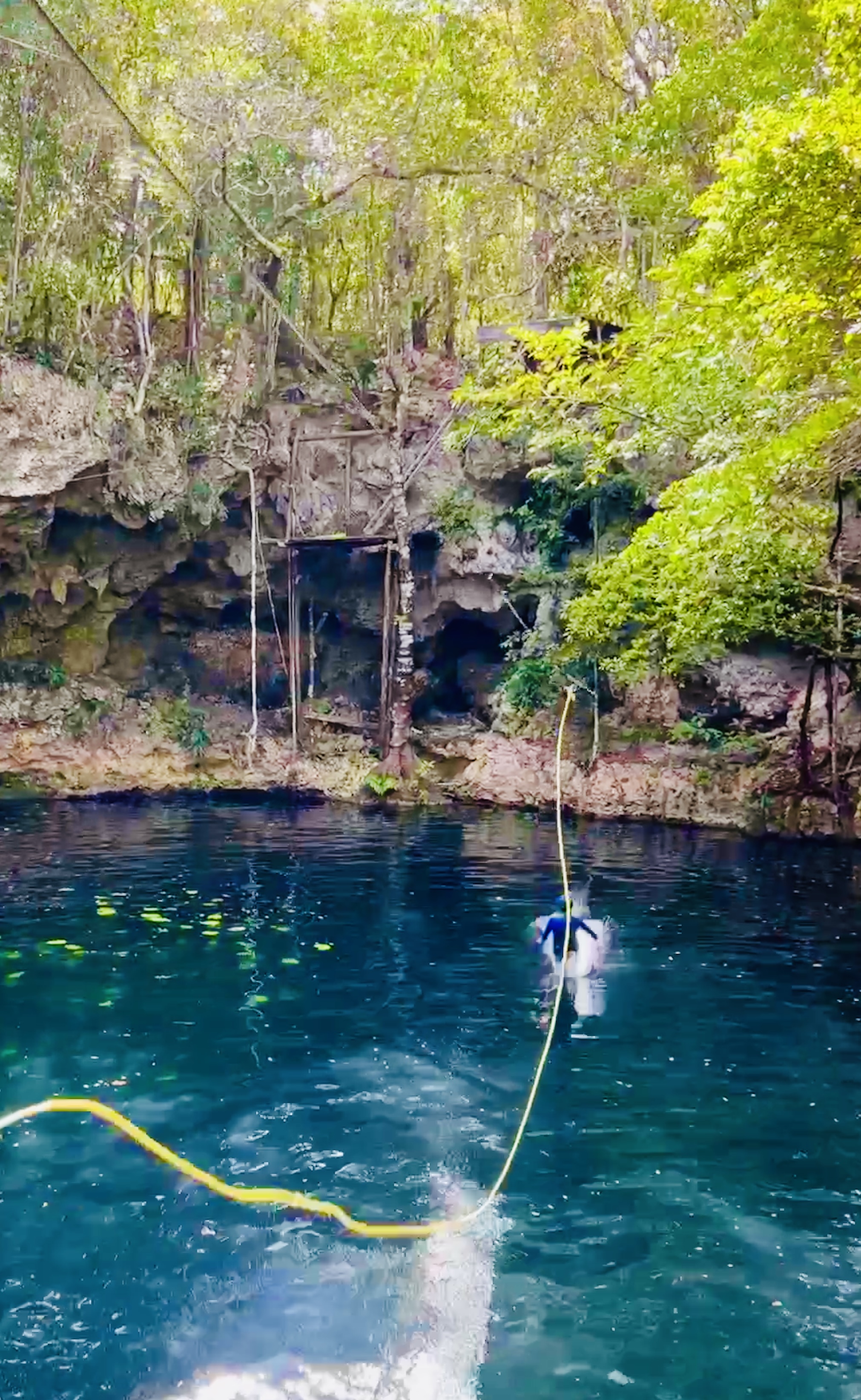
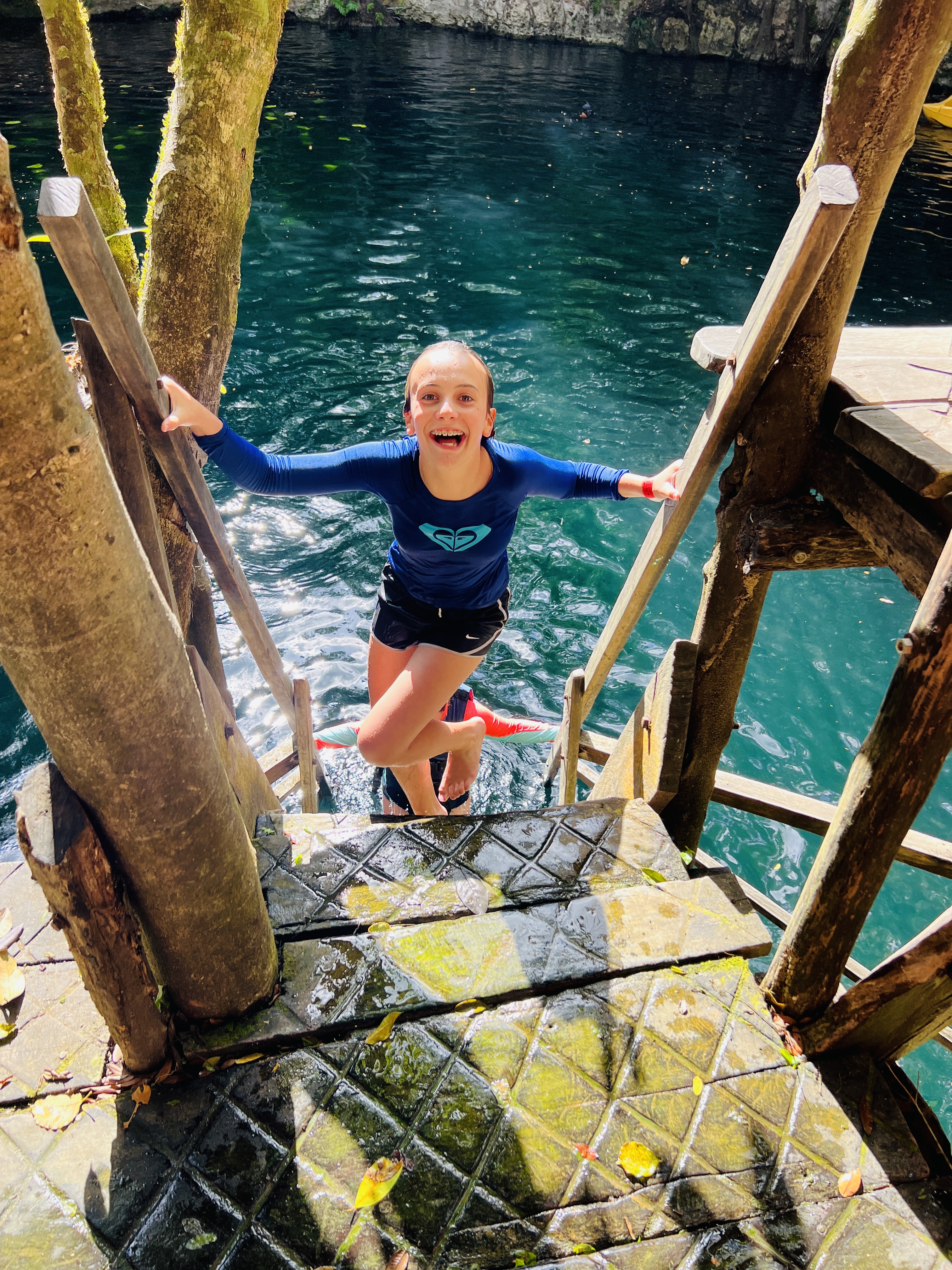
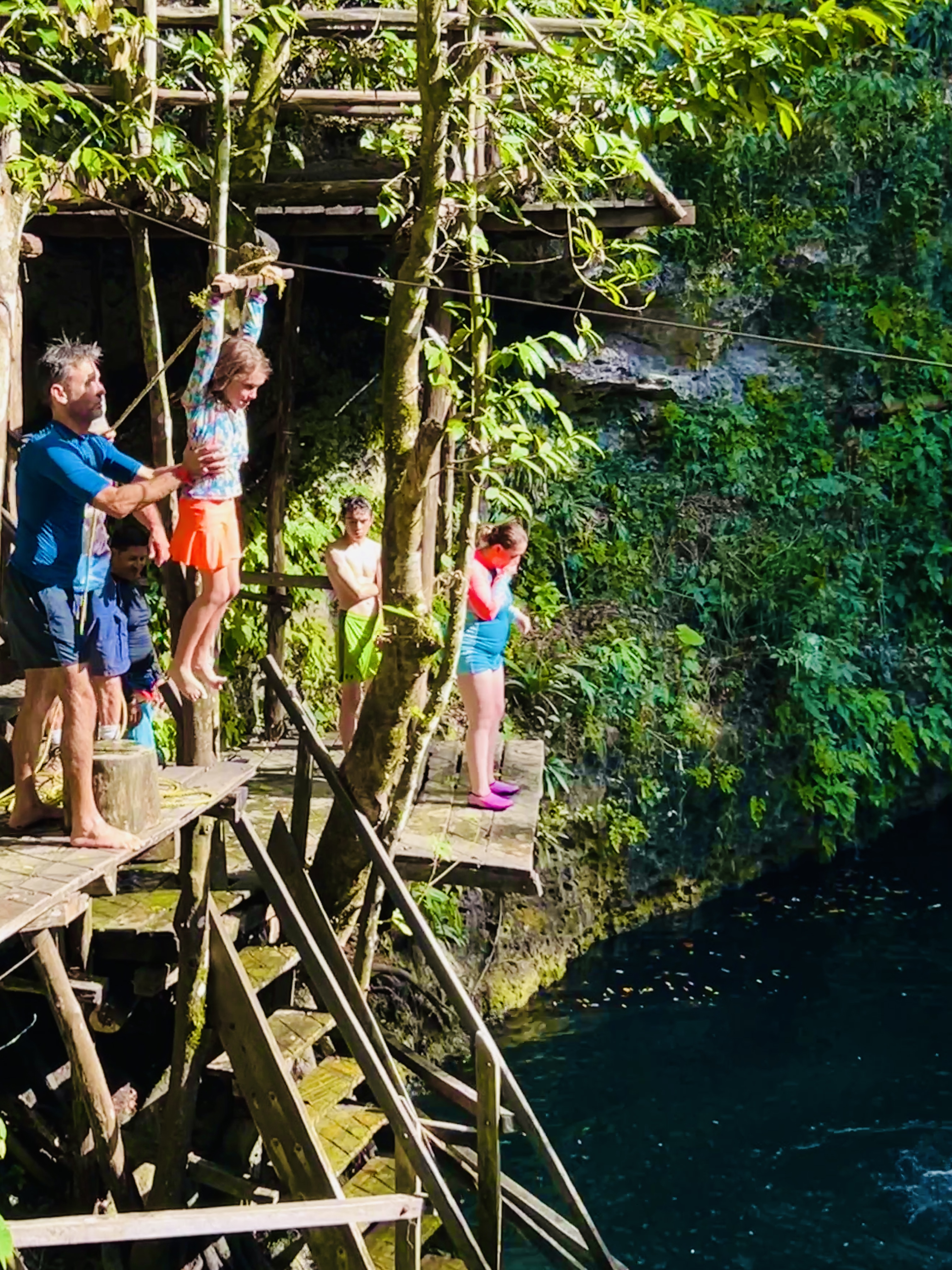
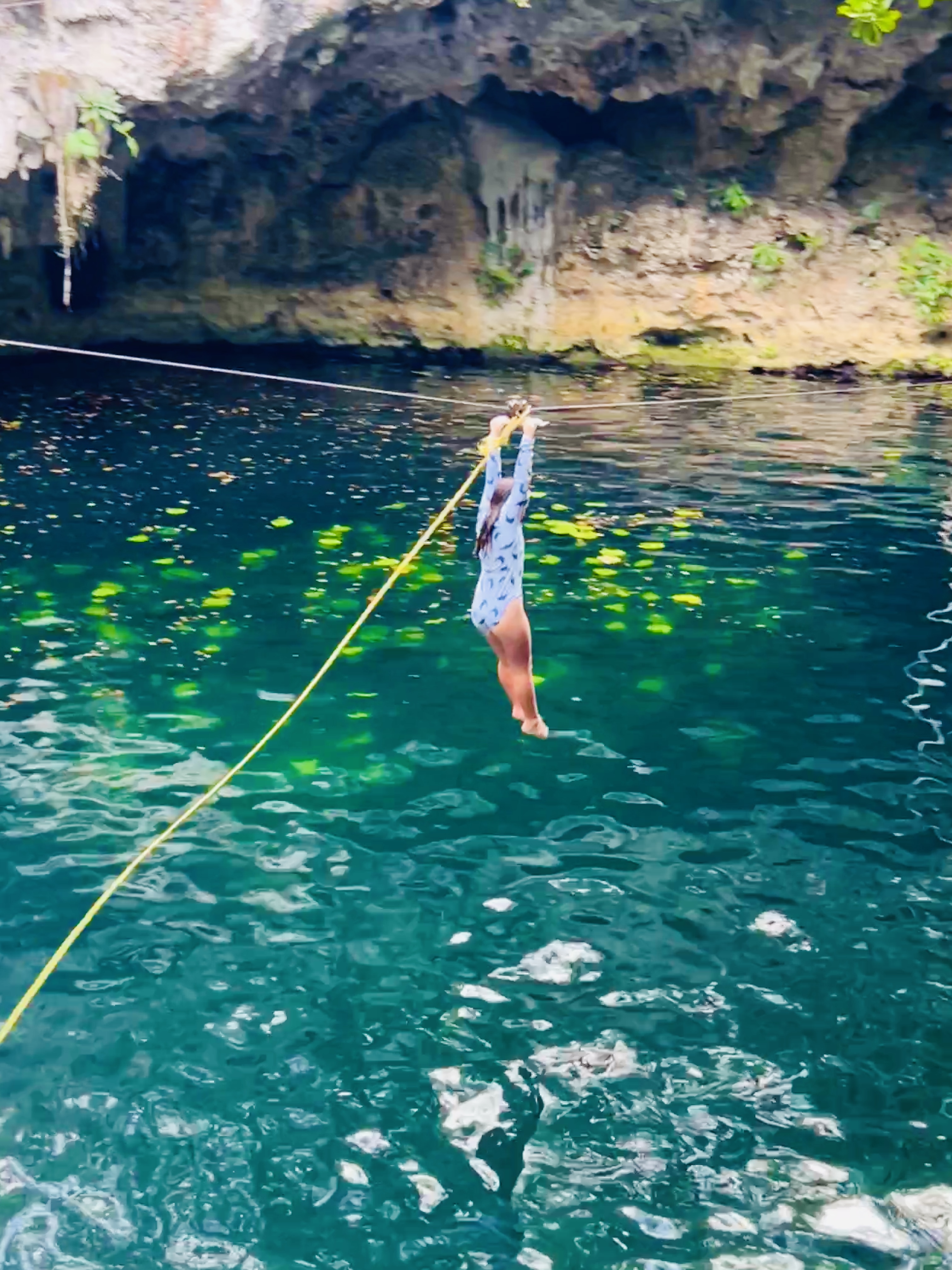
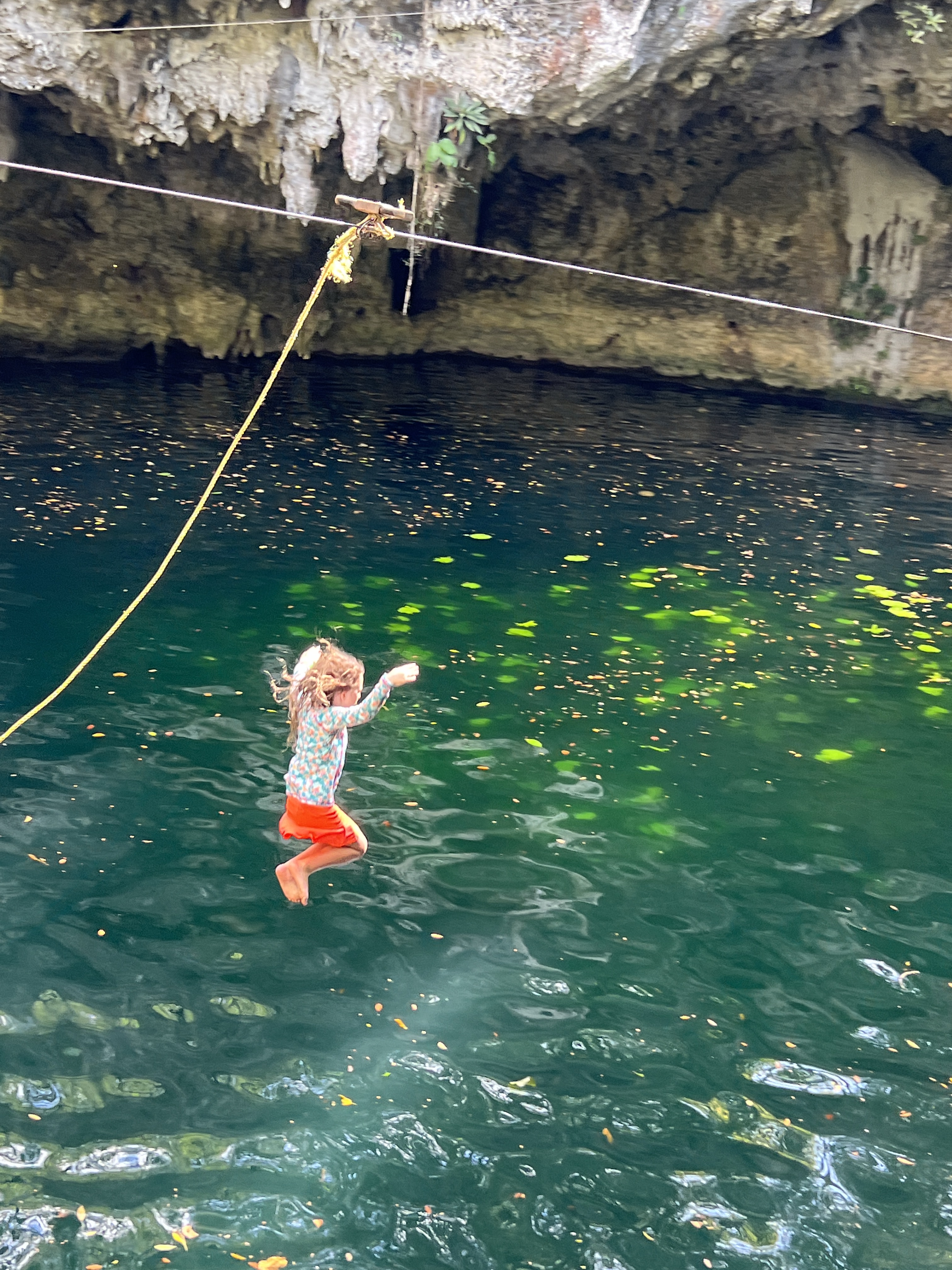
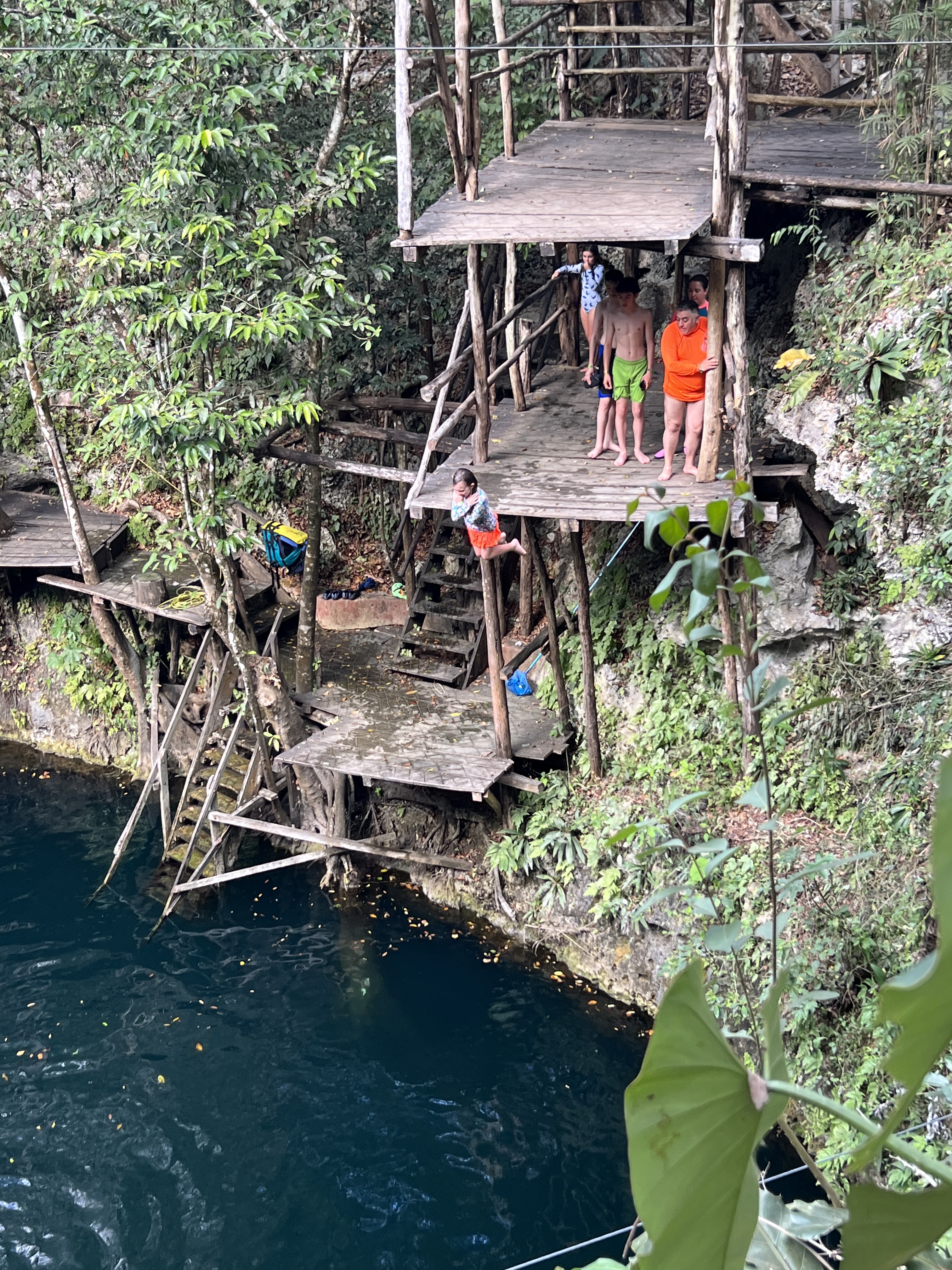
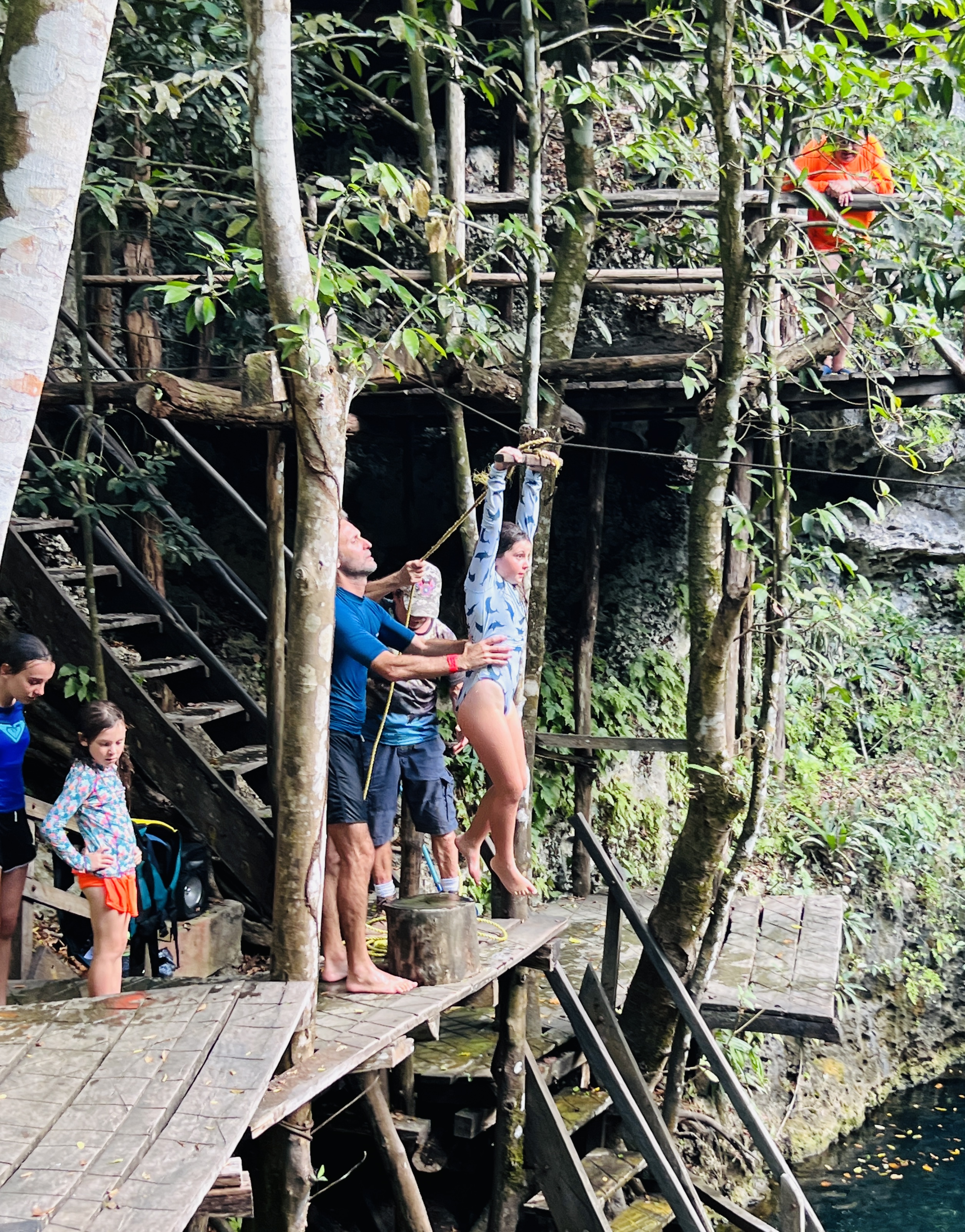
It was located in the middle of the jungle and not the prettiest cenote we had been to. Possible realising this, it had doubled down on being the most adventurous. Ziplines from 3 to 10 meters in height criss-crossed the cenote, and a diving platform from 3 to 12 meters went up one side. The whole thing was entirely rickety and looked like it could fall down at any minute.
We suppressed our slightly Australian perspective on ‘safe’ and jumped in, spending a fun hour or so jumping off various platforms and ziplines and dropping into the deep but none too clear water below. Jessie who was less inclined found her cenote zip-lining feet in no time. Sena throwing herself fearlessly off the 5m high platform was definitely one for the highlight reel.
We spent our last night in Mexico at a ‘luxury warehouse’ near Cancun Airport, which was (literally) a well decked out warehouse and more than perfect for our needs.
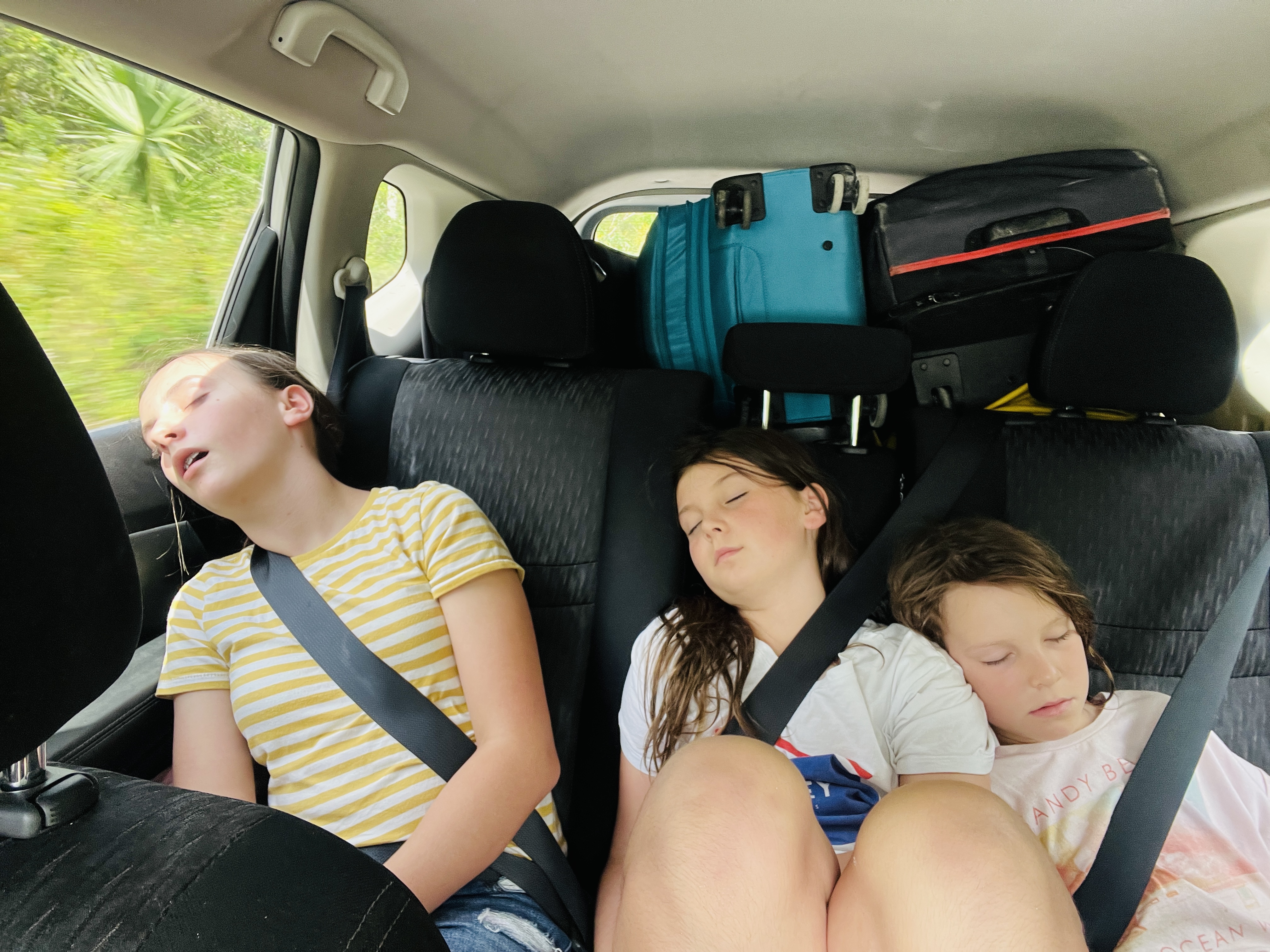
The alarm went off at 4am and we took our sleepy kids to drop off the car and onwards to the airport for our 7.30am departure to Miami and onwards to Roatan.
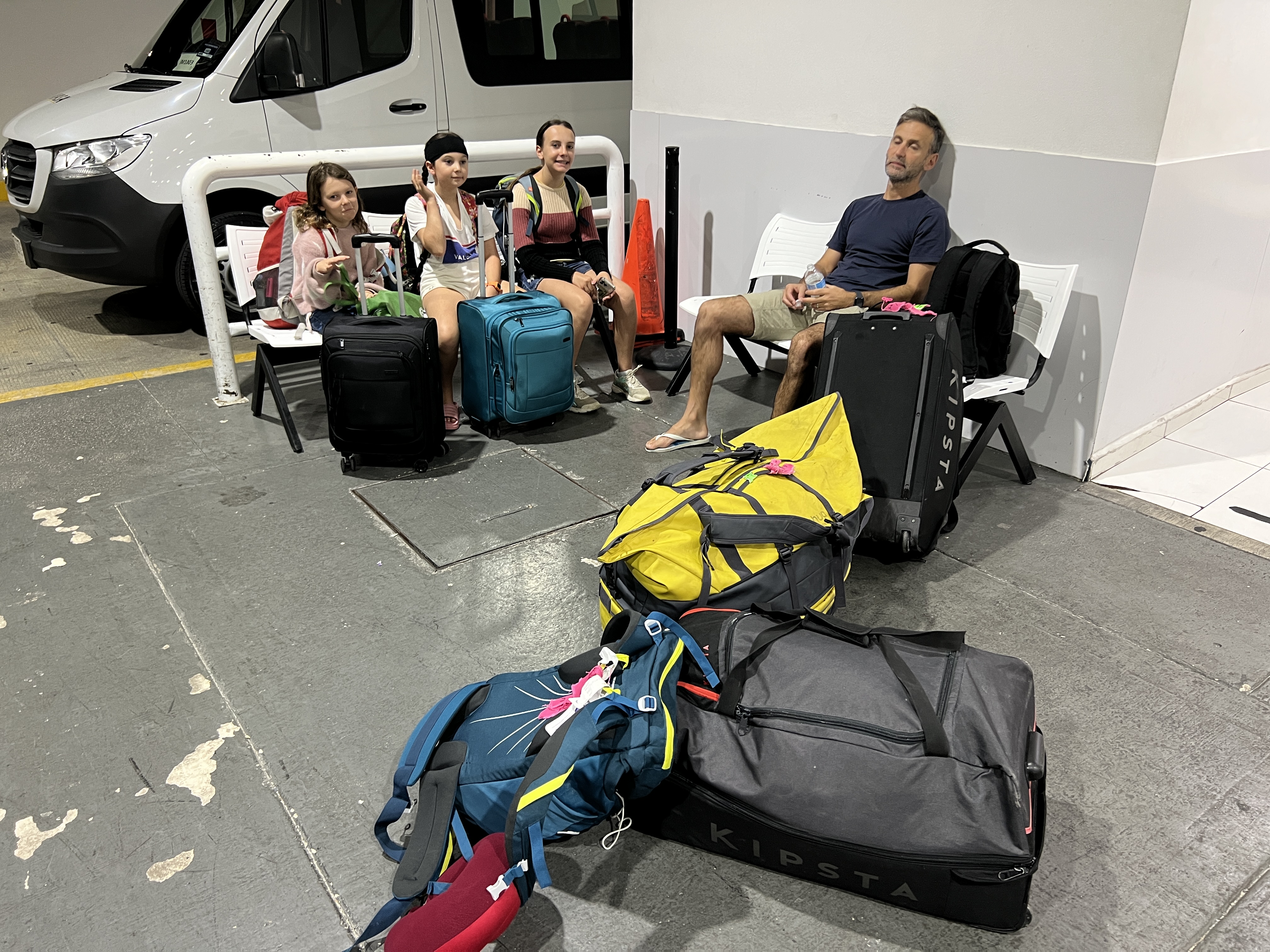
2 stops left. Whilst they promised to be highlights, it felt like the end was approaching way too quickly. We had planned this trip as a welcome break between two realities – Sydney and London. Whilst this has been an amazing adventure, the downside is that it can feel a bit like the ‘wood between the worlds’ from a C.S. Lewis book. We’re not quite in Sydney anymore and we’re definitely not in London yet either. It can feel like we’re spending 4 weeks ripping off the bandaid.
This seems to be having an interesting effect on us all individually. Everyone at one point has felt a bit homesick… usually after a full day of activity. Sudden pangs of anxiety about what awaits in London pop up at random intervals, becoming more intense now that we are 1 stop and less than a week away.
The kids, and especially Jessie, are very aware that this adventure does not end with that reassuring feeling you get when you arrie at home and land in your own bed, wake up and see all your friends. Rather this adventure will end in a new and unknown abyss (where we still have no address), new friends (not yet made) and countless days of uncertainty and trepidation.
All the emotions that come with this sometimes plays out in a 10 minute burst that is doused with cuddles and reassurance that we have each other.
 Joseph FAMILY ADVENTURES 2023 - 2025
An amazing journey with highs and lows but above all beautiful photos and memories for years to come.
LikeLike